
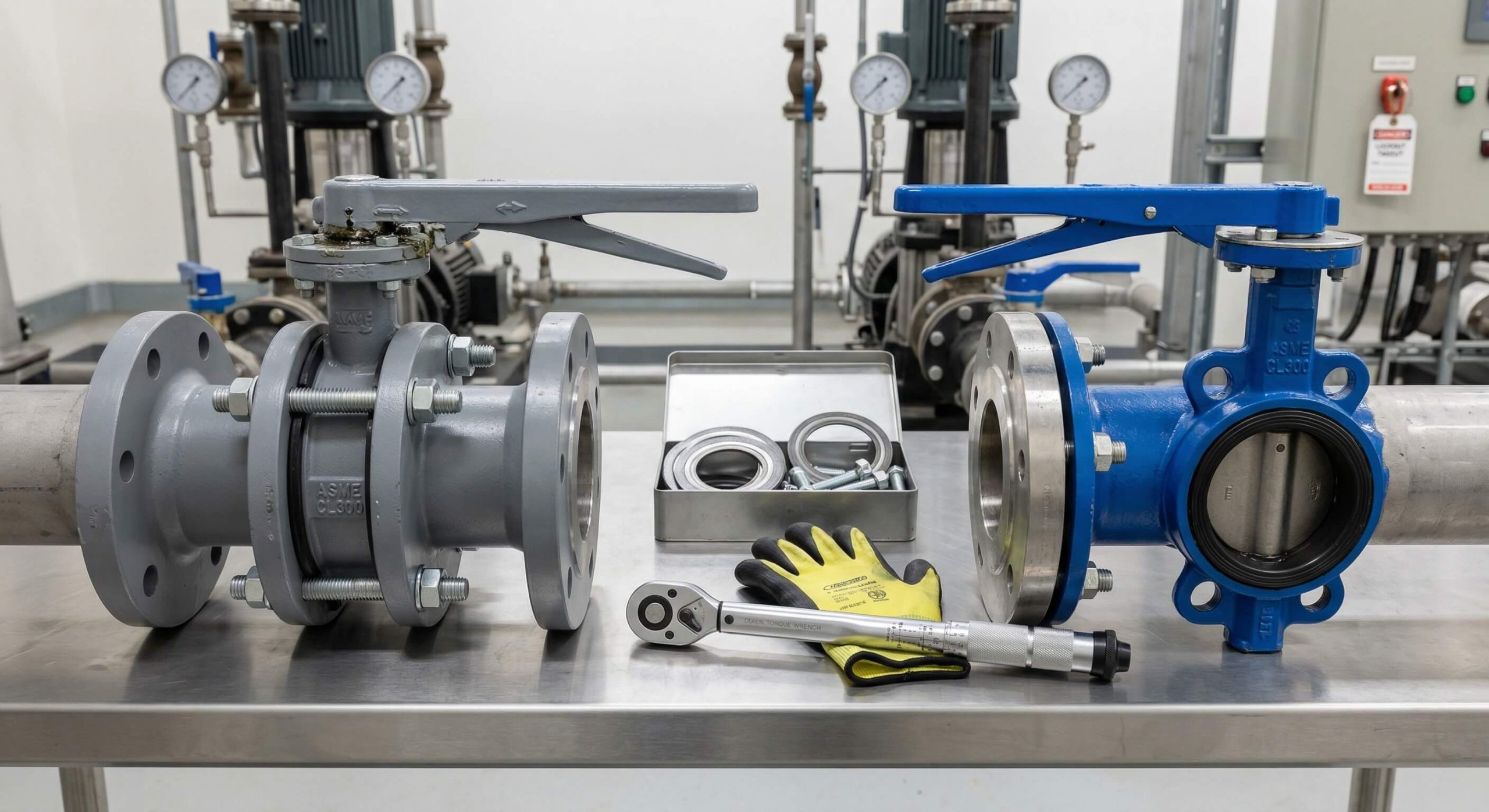
The primary difference between these two components lies in how they secure to your piping system and their ability to handle end-of-line pressure. Selecting the wrong valve for your industrial application often leads to persistent leaks, mechanical failures, and unbudgeted repair costs. When your operations face unexpected downtime or safety hazards due to poor sealing, the financial impact can be devastating for your bottom line. By understanding the specific structural advantages of a wafer lug butterfly valve, you can optimize your fluid control system for maximum reliability and maintenance efficiency.
What is a wafer lug butterfly valve?
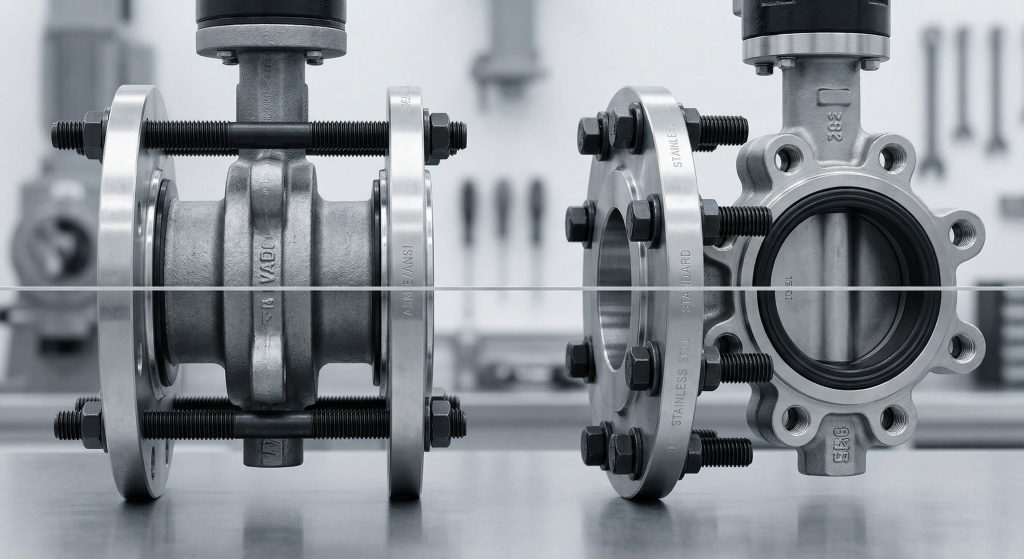
A wafer lug butterfly valve refers to the two specific body designs used to clamp or bolt a rotating disc valve into a pipeline. When you are sourcing components for a new project, deciding between the lightweight wafer and the threaded lug is your first step toward a stable installation. You will notice that while both serve the same basic function, their physical “ears” or lack thereof determine how they interact with your flanges.
Defining the Wafer Body Design
The wafer-style valve is designed to be sandwiched between two pipe flanges using long, all-thread bolts that span the entire width of the valve. Because it lacks its own threaded holes, it relies entirely on the compression from the surrounding pipes to stay in place.
Think about this:
- It is the most economical choice for standard isolation.
- The slim profile saves significant space in crowded skids.
- Installation requires careful centering to prevent disc obstruction.
- It is significantly lighter than its lugged counterpart.
Understanding the Lugged Structure
The lugged version features metal protrusions—or lugs—with threaded holes that allow you to bolt it directly to each flange independently. This design means you can remove one side of the piping without the valve falling out of the line.
The bottom line?
- Threaded lugs provide a much more secure mechanical connection.
- It is ideal for high-vibration environments where bolts might loosen.
- You can use it for dead-end service without downstream piping.
- It simplifies the maintenance of complex pump systems.
Key Takeaway: Choosing the right body style ensures your piping remains secure during both operation and scheduled maintenance.
| Feature | Wafer Style | Lug Style |
|---|---|---|
| Connection Type | Clamped (Sandwich) | Bolted (Threaded) |
| Bolt Length | Long (passes through) | Short (bolts to lugs) |
| Weight | Lightweight | Heavier |
| Dead-End Service | Not Recommended | Permitted |
This comparison highlights why the lugged design is often preferred for systems requiring frequent downstream repairs.
How does this valve control your flow?
This valve functions by rotating a circular disc 90 degrees within the pipe to either block or permit the passage of media. Whether you choose a wafer lug butterfly valve for your facility, the internal mechanism remains consistent across both body styles. You simply turn a handle or actuate a motor to position the disc perpendicular or parallel to the flow.
The Quarter-Turn Mechanism
The “butterfly” in the name comes from the disc’s movement, which swings like a wing on a central shaft to regulate flow. This design allows you to transition from fully closed to fully open with just a quarter-turn of the lever.
Here is the kicker:
- It provides much faster operation than a multi-turn gate valve.
- The disc remains in the flow path, creating a slight pressure drop.
- Throttling is possible but best suited for low-pressure drops.
- Automation is highly efficient due to the low torque requirements.
Achieving a Bubble-Tight Seal
To prevent leaks, the edge of the disc presses firmly into a resilient seat made of rubber or high-performance polymers. This interference fit ensures that even under high pressure, no fluid escapes past the valve.
Believe it or not:
- The seat acts as a built-in gasket for the flanges.
- Compression from the bolts is critical for seal integrity.
- Wiped seats prevent debris from interfering with the closure.
- Dual-shaft designs can reduce seat wear over time.
Key Takeaway: The simplicity of the quarter-turn disc makes these valves the most efficient choice for rapid flow isolation.
| Component | Function | Material Example |
|---|---|---|
| Disc | Blocks/permits flow | Stainless Steel |
| Seat | Provides tight seal | EPDM / NBR |
| Stem | Transmits torque | 416 Stainless |
| Bushing | Reduces friction | PTFE / Bronze |
Reliable sealing is the direct result of high-quality seat materials and precise disc machining.
Why use this valve for HVAC systems?
In heating, ventilation, and air conditioning systems, these valves are essential for balancing water flow and isolating equipment like chillers and boilers. A wafer lug butterfly valve is particularly valued in HVAC because it handles the large volumes of water typical in commercial buildings with ease. You will find that their compact nature allows for much smaller mechanical rooms.
Balancing Large Hydronic Loops
These valves allow you to fine-tune the amount of hot or chilled water moving through different zones of a building. By adjusting the disc position, you can ensure every floor receives the correct amount of climate control.
Think about this:
- They handle the high cycle rates of automated HVAC systems.
- The low weight reduces the need for heavy pipe supports.
- They are compatible with both glycol and treated water.
- The simple design lowers the total cost of building ownership.
Space-Saving in Mechanical Rooms
HVAC designers often have to fit massive amounts of equipment into tiny basements or rooftops. The slim profile of a butterfly valve is a lifesaver in these tight quarters.
And the best part?
- You can install them in horizontal or vertical orientations.
- They require much less clearance to operate than gate valves.
- Modular actuators can be mounted in various positions.
- Insulation jackets fit easily over the slim body.
Key Takeaway: Using these valves in HVAC projects saves you physical space and reduces overall structural weight.
| HVAC Benefit | Detail | Impact |
|---|---|---|
| Precision | Excellent for throttling water | System Balance |
| Versatility | Vertical or horizontal mounting | Design Freedom |
| Speed | 90-degree actuation | Quick Response |
| Cost | Lower price per inch | Project Savings |
The efficiency of these valves makes them the standard for modern commercial climate control infrastructure.
Where is this valve typically used?
You will find these valves deployed across a vast range of sectors, from municipal wastewater plants to high-tech manufacturing facilities. The versatility of the wafer lug butterfly valve makes it a go-to solution for any engineer dealing with non-slurry liquid transport. Because you can customize the materials, they adapt to almost any environmental challenge.
Water and Wastewater Treatment
Municipalities rely on these valves to move millions of gallons of water daily through treatment processes and distribution networks. Their durability ensures that city water supplies remain consistent and leak-free.
Here is the kicker:
- They resist corrosion from common water treatment chemicals.
- Large diameters (up to 60 inches) are easily managed.
- The resilient seats handle minor particulates in wastewater.
- Standardized flanges make them easy to replace in older plants.
Chemical and Process Manufacturing
In factories where acids, bases, or fuels are moved, these valves provide the necessary chemical resistance to prevent hazardous spills. You can select specialized liners that stand up to the most aggressive media.
Think about this:
- PTFE-lined versions offer near-total chemical inertness.
- They prevent cross-contamination in batch processing.
- High-visibility handles show the valve status at a glance.
- They meet strict safety standards for hazardous fluid control.
Key Takeaway: Their adaptability across different industries makes them one of the most versatile tools in your fluid control arsenal.
| Industry | Primary Use | Required Feature |
|---|---|---|
| Water Treatment | Pump Isolation | Corrosion Resistance |
| Oil & Gas | Fuel Transfer | Fire-Safe Design |
| Food & Bev | Ingredient Mixing | Sanitary Polishing |
| Chemical | Acid Handling | Specialized Liners |
Understanding your specific industry requirements allows you to pick the perfect valve configuration.
Which design handles higher pressure?
When your system operates at the upper limits of its pressure rating, the lug-style wafer lug butterfly valve provides superior structural integrity. While both styles may share the same nominal pressure rating (such as PN16 or Class 150), the way the lugged body carries mechanical stress is different. You will find that the independent bolting of a lug valve prevents the slight shifting that can occur with wafer styles.
Structural Integrity and Vibration
In systems with high-frequency vibrations or water hammer, the threaded lugs act as a solid anchor. This prevents the valve from “walking” or vibrating loose between the flanges, which can cause seal failure.
The bottom line?
- Lugged valves distribute bolt tension more evenly.
- They are less prone to flange misalignment under stress.
- Threaded holes eliminate the need for extra-long bolts.
- They maintain a tighter seal during thermal expansion cycles.
Dealing with Pressure Surges
Sudden spikes in pressure can deform a thin wafer body if the flanges are not perfectly parallel. The heavier casting of a lugged valve provides a rigid frame that resists this deformation.
It gets even better:
- Lug valves are better suited for higher-velocity flows.
- The design reduces the risk of external leaks during surges.
- They offer a higher factor of safety in critical lines.
- Standardization ensures the body matches the pipe’s pressure class.
Key Takeaway: For high-vibration or critical pressure applications, the lugged design offers the most reliable mechanical performance.
| Pressure Factor | Wafer Performance | Lug Performance |
|---|---|---|
| Vibration Resistance | Moderate | High |
| Bolt Tension | Shared across assembly | Independent per flange |
| Frame Rigidity | Lower | Higher |
| Safety Margin | Standard | Enhanced |
The increased mass and independent bolting of the lugged style make it the robust choice for heavy-duty service.
Can you perform end-of-line maintenance?
The ability to safely disconnect a section of pipe while leaving the valve in place is a massive operational advantage for any facility manager. Only the lug-style wafer lug butterfly valve is capable of this “dead-end” service. If you install a wafer valve and try to remove the downstream pipe, the valve will simply fall out, potentially causing a major spill.
The Lug’s Maintenance Advantage
Because the lug valve is bolted directly to the upstream flange, it stays securely attached even when the other side is gone. This allows you to repair pumps or tanks without draining your entire system.
Think about this:
- It eliminates the need for a secondary isolation valve.
- You save hours of labor during scheduled maintenance.
- It provides a safe barrier for technicians working downstream.
- The valve remains pressurized and functional on the “live” side.
Wafer Style Limitations
A wafer valve relies on the “sandwich” pressure from both sides to create a seal and stay centered. Without that downstream pipe and flange, there is nothing to hold the valve against the upstream side.
The bottom line?
- Wafer valves cannot be used as a pipe end.
- Attempting dead-end service with a wafer is a safety violation.
- They require a full system shutdown for downstream repairs.
- Always check local codes before choosing your valve style.
Key Takeaway: Investing in lug-style valves for critical equipment connections pays for itself through reduced maintenance downtime.
| Scenario | Wafer Valve | Lug Valve |
|---|---|---|
| Normal Flow | Safe | Safe |
| Pipe Removal | Dangerous / Not Possible | Safe / Engineered For |
| System Drain | Required for repair | Not required for repair |
| Safety Rating | Lower for maintenance | Higher for maintenance |
The lugged design is the only viable option if your facility requires modular maintenance without full shutdowns.
How do you install your valve correctly?
Proper installation of a wafer lug butterfly valve is the most significant factor in preventing premature seat wear and leaks. You must ensure that the valve is perfectly centered between the flanges before tightening any bolts. If the disc is not centered, it will hit the edge of the pipe when you try to open it, causing permanent damage.
Centering and Alignment Steps
Before you begin, inspect the flange faces for debris or old gasket material. Centering is easier with a lugged valve because the lugs act as guides, but wafer styles require more manual precision.
Here is the kicker:
- Always install the valve in the “slightly open” position.
- Check that the disc can rotate fully without hitting anything.
- Use a cross-pattern (star pattern) when tightening bolts.
- Never use additional gaskets; the seat is the gasket.
Applying Correct Bolt Torque
Over-tightening is just as dangerous as under-tightening. If you apply too much pressure, you can crush the resilient seat, which makes the valve nearly impossible to turn.
Believe it or not:
- Use a calibrated torque wrench for all industrial installs.
- Consult the manufacturer’s torque chart for your specific size.
- Re-check bolt tension after the first few thermal cycles.
- Uneven torque is the #1 cause of flange-face leaks.
Key Takeaway: Taking the time to center your valve and torque bolts correctly prevents 90% of common operational failures.
| Step | Action | Purpose |
|---|---|---|
| Inspection | Clean flange faces | Prevent Seepage |
| Alignment | Center the disc | Prevent Mechanical Hit |
| Tightening | Star pattern torque | Even Compression |
| Testing | Cycle the valve | Verify Free Movement |
Following a standardized installation protocol ensures your system starts up without leaks or delays.
Is this valve a cost-effective choice?
Balancing the initial purchase price with the total cost of ownership is the mark of a smart procurement manager. While the wafer lug butterfly valve is generally more affordable than a ball or gate valve, the two body styles have different price points. You will find that the wafer valve is almost always the cheaper option upfront due to its lower metal content.
Comparing Initial Purchase Price
Because wafer valves use less raw material and require simpler casting molds, they are highly competitive for large-scale projects. If you are buying hundreds of valves for a new facility, these savings add up quickly.
Think about this:
- Wafer valves are easier and cheaper to ship due to weight.
- Smaller actuators can be used on these lightweight bodies.
- They are the standard choice for low-budget municipal bids.
- Material costs fluctuate less for these smaller components.
Evaluating Long-Term Savings
The “hidden” cost of a wafer valve is the labor required when something breaks downstream. If you have to shut down an entire production line to fix one pipe, the money you saved on the valve is lost in minutes of downtime.
The bottom line?
- Lug valves reduce future maintenance labor costs.
- They prevent expensive production halts during repairs.
- Durable materials reduce the frequency of replacements.
- Standardized parts mean lower inventory costs over time.
Key Takeaway: Use wafer valves for general lines to save money, but invest in lug valves for critical equipment to save on labor.
| Cost Factor | Wafer Style | Lug Style |
|---|---|---|
| Purchase Price | Lowest | Moderate |
| Shipping Cost | Lower | Higher |
| Maintenance Cost | Higher (Line Shutdown) | Lower (Independent) |
| Total Value | Best for static lines | Best for dynamic systems |
Smart spending involves analyzing how the valve will be serviced five years after installation.
What materials fit your specific media?
The longevity of your wafer lug butterfly valve depends entirely on whether the body, disc, and seat can withstand the fluid passing through them. You must match the material’s chemical compatibility and temperature range to your specific application. Using a standard EPDM seat in a line carrying petroleum products, for example, will cause the seat to swell and fail in days.
Selecting Body and Disc Metals
Most industrial valves use ductile iron for the body because it offers a great balance of strength and cost. For the disc—the part that actually touches the fluid—stainless steel is the most common choice for its corrosion resistance.
Here is the kicker:
- Ductile iron is more impact-resistant than standard cast iron.
- Stainless steel 316 is the “gold standard” for chemical lines.
- Aluminum bronze discs are preferred for seawater applications.
- Nylon coatings can add extra protection to iron discs.
Choosing the Right Resilient Seat
The seat is the “heart” of the valve and the component most likely to fail if misapplied. You should always verify the temperature and chemical limits of the polymer before installation.
Think about this:
- EPDM is perfect for water and HVAC (up to 250°F).
- Buna-N (NBR) is the go-to for oils and fuels.
- Viton (FKM) handles high temperatures and harsh chemicals.
- PTFE liners are used for the most aggressive acids.
Key Takeaway: Matching materials to your media prevents catastrophic leaks and extends the life of your infrastructure.
| Media Type | Recommended Disc | Recommended Seat |
|---|---|---|
| Potable Water | Stainless Steel | EPDM (NSF 61) |
| Natural Gas | Ductile Iron / SS | Buna-N (NBR) |
| Sulfuric Acid | Hastelloy / PTFE | PTFE Liner |
| High-Temp Steam | Stainless Steel | Metal-to-Metal |
Choosing the correct material combination is the most important decision you make during the specification phase.
When should you replace your valve?
Even the highest quality valves eventually reach the end of their service life, and knowing when to pull them is key to preventing accidents. You should establish a routine inspection schedule to catch minor issues before they become major leaks. If you notice that your wafer lug butterfly valve is becoming difficult to turn, it is likely a sign of seat swelling or internal corrosion.
Warning Signs of Failure
The most obvious sign of trouble is leakage past the disc when the valve is closed. However, you should also watch for “weeping” around the stem, which indicates that the internal seals are worn.
The bottom line?
- Increased torque usually means the seat is degrading.
- Visible corrosion on the body can lead to structural failure.
- Cracked or brittle seats will not provide a tight seal.
- Actuator sluggishness might be caused by valve internal friction.
Routine Inspection Protocols
In critical systems, you should cycle and inspect your valves at least twice a year. This prevents the disc from getting “stuck” in one position due to mineral buildup or chemical deposits.
And the best part?
- Regular lubrication of the stem extends seal life.
- Ultrasonic testing can detect internal leaks you can’t see.
- Record-keeping helps you predict when a batch of valves will fail.
- Phased replacements prevent massive, plant-wide shutdowns.
Key Takeaway: Proactive replacement is always cheaper and safer than reacting to a high-pressure valve blowout.
| Symptom | Probable Cause | Action |
|---|---|---|
| Hard to Turn | Seat Swelling / Debris | Inspect & Clean |
| Stem Leak | O-ring Failure | Replace Packing |
| Internal Leak | Disc/Seat Wear | Replace Valve |
| Exterior Rust | Coating Failure | Sand & Repaint |
A well-maintained valve system is the foundation of a safe and profitable industrial operation.
Summary of Solutions
Navigating the choice between wafer and lug styles comes down to your specific needs for maintenance, pressure handling, and budget. While wafer valves offer a lightweight and cost-effective solution for general flow control, lug-style valves provide the mechanical security required for dead-end service and high-vibration environments. By selecting the correct materials and following rigorous installation standards, you ensure long-term reliability for your facility.
If you are ready to upgrade your piping system or need technical guidance on the best configuration for your project, contact us today to speak with our engineering experts.
Our Vision: To empower global industries with precision-engineered fluid control solutions that redefine reliability and operational efficiency.
Frequently Asked Questions (FAQ)
- Can I use a wafer valve for dead-end service?
No, it is unsafe because wafer valves require pressure from both flanges to stay secure and centered. - What’s the best material for high-heat lines?
Viton (FKM) or metal-seated designs are best, as standard EPDM will degrade quickly above 250°F. - How do I know if my valve is leaking?
Check for pressure drops downstream when the valve is closed or look for visible fluid around the stem and flanges. - Can I automate a lug-style valve?
Yes, lug-style valves are excellent for automation because their rigid mounting provides a stable platform for pneumatic or electric actuators. - What’s the best way to align flanges?
Use alignment bolts or the lugs themselves as a guide, ensuring the disc is slightly open to prevent edge damage during tightening.