
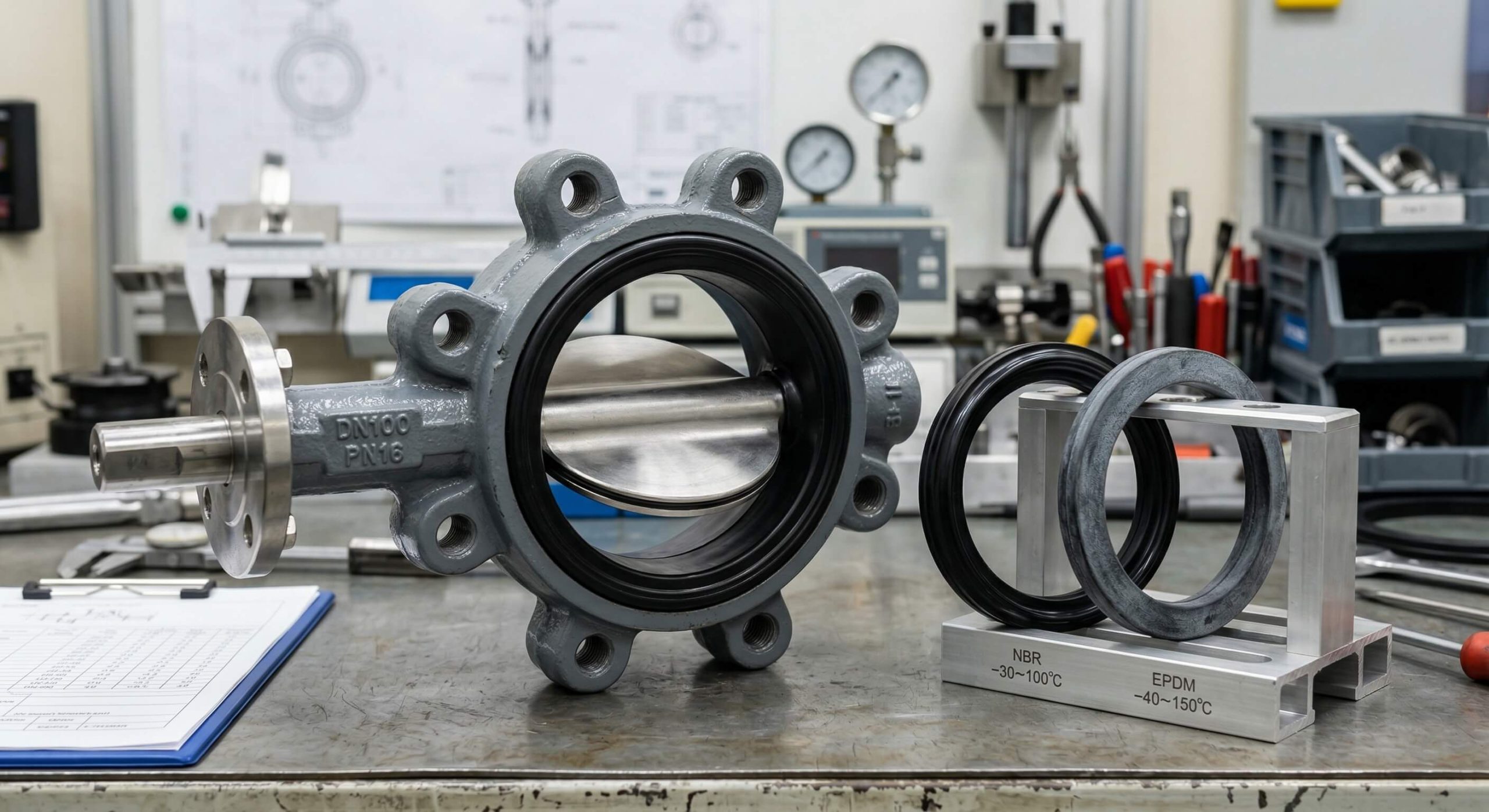
Selecting between BUNA-N and EPDM depends primarily on whether your application requires resistance to petroleum-based oils or high-temperature steam sterilization. You may find that using the wrong butterfly valve seat material leads to rapid seal swelling, internal leakage, and catastrophic batch contamination. This degradation doesn’t just halt production; it forces expensive emergency repairs and ruins equipment lifespan. By matching the specific elastomer properties to your process media today, you secure a zero-leakage environment and long-term operational stability.
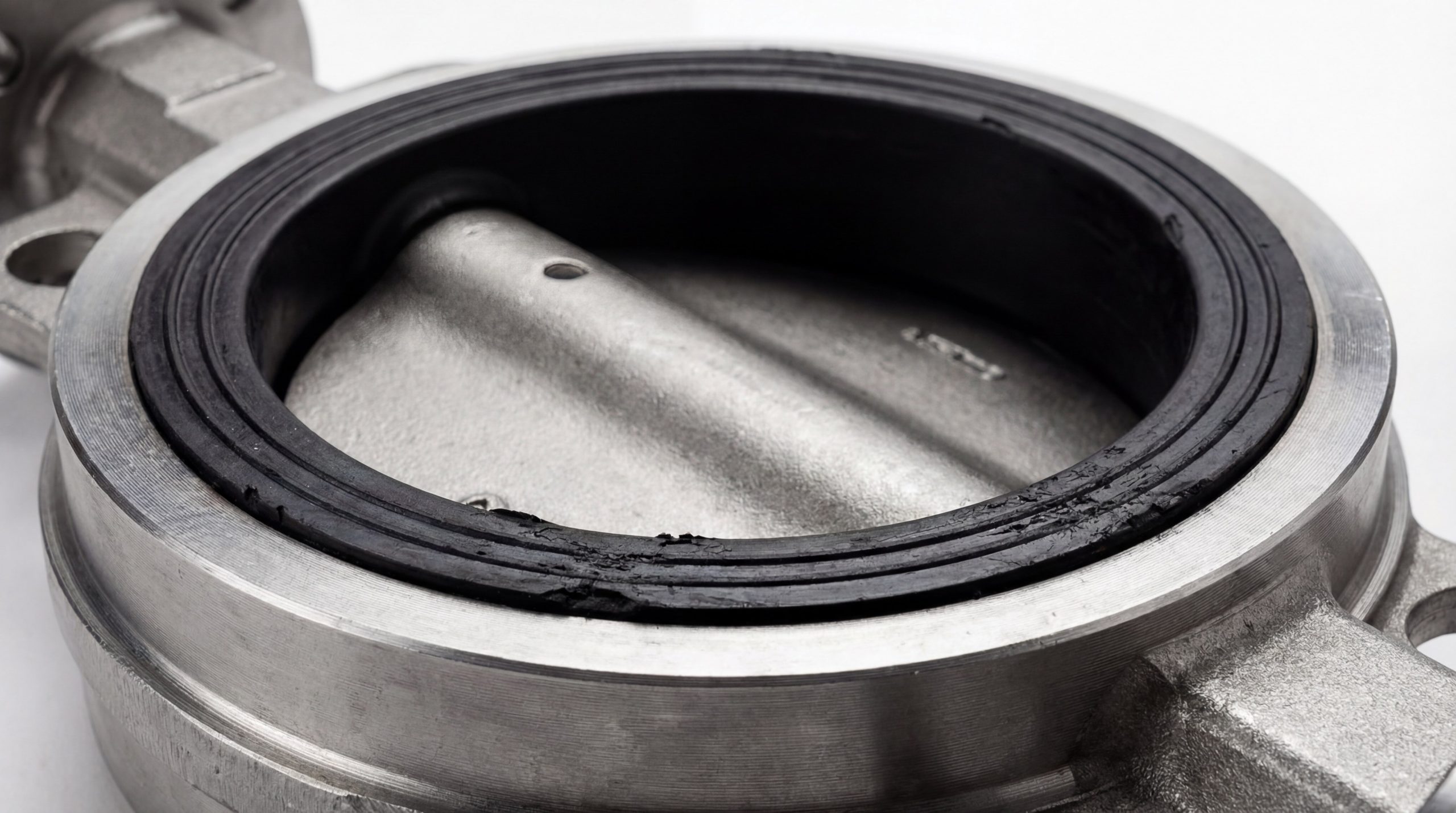
What is a butterfly valve seat material?
A butterfly valve seat material is the resilient elastomer lining inside the valve body that creates a tight seal against the rotating disc. It ensures that fluid does not bypass the disc when the valve is in the closed position. This component is the primary wear part and must withstand constant friction and pressure. Choosing a high-quality material is essential for any butterfly valve installation.
How does the seat function?
The seat acts as the “heart” of the sealing mechanism by deforming slightly to accommodate the disc edge. Believe it or not, this simple rubber-like ring is what stands between a secure system and a dangerous leak. It provides the necessary elasticity to maintain a bubble-tight shut-off over thousands of cycles.
- Compresses against the valve disc
- Protects the metal valve body from corrosive media
- Absorbs vibration during high-flow operations
Key Takeaway: The seat material dictates the valve’s pressure rating and chemical compatibility, serving as the most critical barrier in fluid control.
| Component | Primary Function | Standard Materials |
|---|---|---|
| Valve Seat | Leak-proof sealing | BUNA-N, EPDM, PTFE |
| Disc Interface | Mechanical shut-off | Stainless Steel, Ductile Iron |
Compare the elasticity of different polymers to determine which provides the best compression set for your specific pipeline pressure.
Why choose the right butterfly valve seat material?
Choosing the correct butterfly valve seat material prevents premature failure caused by chemical incompatibility or thermal stress. If you install an elastomer that cannot handle your process temperature, it will harden and crack within weeks. This leads to internal bypassing that is often difficult to detect until a major failure occurs.
How does selection impact costs?
The truth is, the initial cost of the seat is negligible compared to the cost of a plant shutdown. A well-selected material extends the mean time between failures and reduces the need for frequent maintenance intervention.
- Reduces secondary damage to actuators
- Lowers total cost of ownership
- Ensures compliance with sanitary safety standards
Key Takeaway: Proper material selection is a strategic investment that safeguards your facility’s productivity and protects your bottom line.
| Selection Factor | Impact of Correct Choice | Risk of Incorrect Choice |
|---|---|---|
| Temperature | Maintains flexibility | Material hardening/cracking |
| Media Type | Prevents chemical swelling | Seal disintegration |
Analyze the historical failure rates of your current valves to identify if material mismatch is the root cause of your maintenance backlog.
When is BUNA-N the best butterfly valve seat material?
BUNA-N is the ideal butterfly valve seat material for any system handling petroleum-based oils, fats, or hydrocarbons. It is a synthetic rubber known as Nitrile that offers exceptional resistance to swelling in oily environments. You will find it frequently used in industrial manufacturing and fuel transport systems.
What are Nitrile’s oily advantages?
Look at it this way: BUNA-N is specifically engineered to thrive where other rubbers fail. It maintains its structural integrity even when submerged in vegetable oils or mineral-based lubricants for extended periods.
- High resistance to animal fats
- Superior abrasion resistance
- Excellent performance with hydraulic fluids
Key Takeaway: BUNA-N is the definitive choice for oil-rich environments where seal swelling must be avoided at all costs.
| Application | Best Material | Reasoning |
|---|---|---|
| Vegetable Oil Processing | BUNA-N | Repels organic fats |
| Fuel Lines | BUNA-N | Resistant to hydrocarbons |
Review your process fluid’s hydrocarbon content to ensure BUNA-N is the most chemically stable option for your sealing needs.
Is EPDM a superior butterfly valve seat material?
EPDM is often considered superior when the butterfly valve seat material must withstand high temperatures, steam, or aging from weather exposure. It excels in water-based systems and provides a broad range of chemical resistance for non-oil applications. You should specify EPDM for HVAC, water treatment, and most beverage production lines.
Why use EPDM for steam?
The best part? EPDM does not degrade when exposed to pressurized steam, unlike many other common elastomers. It remains flexible and maintains its sealing memory even after repeated thermal cycling.
- Outstanding heat resistance up to 150°C
- Excellent ozone and weather resistance
- Compatible with many diluted acids
Key Takeaway: For any water-based application involving heat or steam, EPDM offers the longest service life and most reliable performance.
| Media Type | EPDM Performance | Temperature Range |
|---|---|---|
| Hot Water | Excellent | Up to 150°C |
| Petroleum | Poor | Not Recommended |
Examine your system’s maximum temperature peaks to verify if EPDM can handle the highest thermal stress points without melting.
How does chemical use affect butterfly valve seat material?
Chemical concentration and temperature directly dictate the lifespan of your butterfly valve seat material by altering its molecular structure. Some chemicals cause elastomers to swell and soften, while others make them brittle and prone to shattering. This is why you must cross-reference your media with a check valve or butterfly valve compatibility chart.
What about acidic environments?
Here is why it matters: Acids react differently with Nitrile and EPDM. While EPDM is generally more robust against diluted acids and alkalis, BUNA-N may fail if the pH levels fluctuate too far from neutral.
- EPDM resists oxidizing chemicals
- BUNA-N handles many solvents better
- Concentration levels change compatibility
Key Takeaway: Chemical compatibility is non-negotiable; always verify the specific concentration of your media before selecting a seat polymer.
| Chemical Type | BUNA-N Compatibility | EPDM Compatibility |
|---|---|---|
| Diluted Acids | Fair | Good |
| Animal Fats | Excellent | Poor |
Determine the maximum chemical concentration in your line to prevent “soft-seal” failure during peak processing hours.
Which butterfly valve seat material handles high heat?
EPDM is the primary butterfly valve seat material for high-heat applications, capable of operating effectively at temperatures that would destroy BUNA-N. In contrast, BUNA-N typically begins to harden and lose its seal once temperatures exceed 100°C. You must carefully monitor your thermal limits to prevent permanent seal deformation.
Does thermal cycling cause damage?
The truth is, frequent heating and cooling can be more damaging than steady heat. EPDM’s molecular structure allows it to expand and contract repeatedly without losing its original shape or “memory.”
- Prevents compression set at high temps
- Maintains seal during steam cleaning
- Reduces maintenance in boiler systems
Key Takeaway: When your process temperature climbs toward 150°C, EPDM is the only viable resilient seat option for maintaining a bubble-tight seal.
| Material | Max Continuous Temp | Steam Compatibility |
|---|---|---|
| BUNA-N | ~100°C | Poor |
| EPDM | ~150°C | Excellent |
Verify the peak temperature during your sterilization or washdown cycles to ensure they do not exceed the elastomer’s thermal threshold.
Does oil impact your butterfly valve seat material?
Oil will cause EPDM to swell, soften, and eventually disintegrate, making BUNA-N the mandatory butterfly valve seat material for any oily media. Even small amounts of petroleum-based lubricants in a ball valve or butterfly system can cause EPDM seals to fail. You must avoid EPDM if there is any risk of hydrocarbon contamination.
Why does BUNA-N resist oil?
Think of it this way: the Nitrile molecules in BUNA-N are naturally repellent to non-polar substances like oil and grease. This prevents the oil from penetrating the material and causing the swelling that leads to valve jams.
- Maintains dimensions in fatty acids
- Prevents disc sticking in oily lines
- High resistance to mineral oils
Key Takeaway: BUNA-N’s oil-repellent chemistry makes it the gold standard for food processing involving fats and industrial fuel handling.
| Media | BUNA-N Reaction | EPDM Reaction |
|---|---|---|
| Mineral Oil | Stable | Severe Swelling |
| Vegetable Fat | Stable | Rapid Degradation |
Check for trace amounts of oil in your compressed air or water lines, as even minor contamination can compromise EPDM seats.
What butterfly valve seat material works for CIP?
EPDM is the most effective butterfly valve seat material for Clean-In-Place (CIP) systems because it survives both high temperatures and aggressive cleaning chemicals. CIP cycles often involve caustic sodas and hot water that would quickly degrade a standard Nitrile seat. You should choose EPDM to ensure your sanitary valves remain compliant with food and pharma standards.
How does CIP stress the seat?
It’s no secret that CIP is a brutal process for any seal. The combination of thermal shock and oxidizing agents requires an elastomer with high chemical stability and thermal resilience.
- Withstands caustic cleaning solutions
- Resists degradation from hot washdowns
- Longer lifespan in dairy processing
Key Takeaway: EPDM’s ability to endure the chemical and thermal rigors of CIP makes it the most cost-effective choice for sanitary environments.
| Process Step | Material Best Suited | Reason |
|---|---|---|
| Caustic Wash | EPDM | Chemical Stability |
| Steam Purge | EPDM | High Temp Resistance |
Calculate the frequency of your CIP cycles to determine if a premium EPDM formulation is necessary for extended maintenance intervals.
How to value your butterfly valve seat material choice?
You should value your butterfly valve seat material choice based on the total service life and the cost of potential downtime rather than the initial purchase price. While BUNA-N is generally more affordable upfront, EPDM provides better value in steam and high-temp water systems. Investing in the correct butterfly valve seat material reduces the labor costs associated with frequent replacements.
What is the true cost of failure?
Look at it this way: a single hour of downtime often costs ten times more than the valve itself. Selecting a seat that lasts two years instead of six months significantly improves your facility’s operational efficiency.
- Fewer emergency maintenance calls
- Lower inventory requirements
- Increased system safety and reliability
Key Takeaway: Focus on “cost-per-cycle” rather than “cost-per-unit” to find the most economical solution for your facility.
| Cost Category | BUNA-N (Typical) | EPDM (Typical) |
|---|---|---|
| Initial Cost | Lower | Moderate |
| Service Life (Water) | Moderate | High |
Review your maintenance logs to see how often seals are currently being replaced and adjust your material choice to maximize uptime.
How to pick the ideal butterfly valve seat material?
To pick the ideal butterfly valve seat material, you must prioritize the chemistry of your process media followed by the maximum operating temperature. If oil is present, BUNA-N is your only safe choice; if high heat or steam is present, EPDM is the necessity. You should consult a technical expert if your system involves a complex mixture of chemicals.
Which factors matter most?
The truth is, most selection errors come from overlooking cleaning chemicals or temperature spikes. Always design for the “worst-case scenario” in your pipeline to ensure the elastomer can handle occasional stress.
- Identify any presence of hydrocarbons
- Verify the peak sterilization temperature
- Check for compatibility with CIP agents
Key Takeaway: Matching the elastomer to the process chemistry is the most important step in preventing premature valve failure.
| Selection Priority | Recommended Step |
|---|---|
| 1. Chemical Media | Check for oils/fats |
| 2. Peak Temperature | Confirm steam exposure |
| 3. Cleaning Method | Verify CIP compatibility |
Consult with our engineering team to review your specific process parameters and receive a tailored material recommendation today.
Frequently Asked Questions
Can I use EPDM for a valve handling vegetable oil?
Absolutely not. EPDM will swell and disintegrate rapidly when exposed to any fats or oils. You must use BUNA-N for vegetable oil processing to ensure seal integrity.
What is the best material for high-pressure steam?
EPDM is the standard choice for steam service up to 150°C. BUNA-N cannot handle the heat or moisture of steam and will crack or harden prematurely.
Which material is more cost-effective for general water lines?
BUNA-N is typically more affordable for ambient temperature water. However, if the water is hot or contains cleaning chemicals, EPDM offers better long-term value due to its durability.
How do I know if my butterfly valve seat has failed?
Failure is usually indicated by a “leaking” valve that allows fluid to pass even when closed. You may also notice the valve becoming harder to operate if the seat has swollen.
Is EPDM compatible with pharmaceutical applications?
Yes, EPDM is widely used in pharmaceutical systems. Its resistance to steam sterilization and aggressive cleaning agents makes it a top choice for maintaining sanitary conditions.
Strategic Engineering for Fluid Control
Selecting the right butterfly valve seat material is the foundation of a reliable industrial system. At RUITO, we believe that precision engineering shouldn’t just meet standards—it should redefine them. We are committed to providing high-reliability, traceable fluid control solutions that empower engineers to build safer, more efficient facilities. By focusing on material science and rigorous testing, we ensure that every valve we deliver performs under the most demanding conditions.
If you are facing challenges with seal degradation or need technical guidance on your next project, contact us today for an expert consultation. Our team is ready to help you optimize your fluid control systems for maximum reliability and performance.