
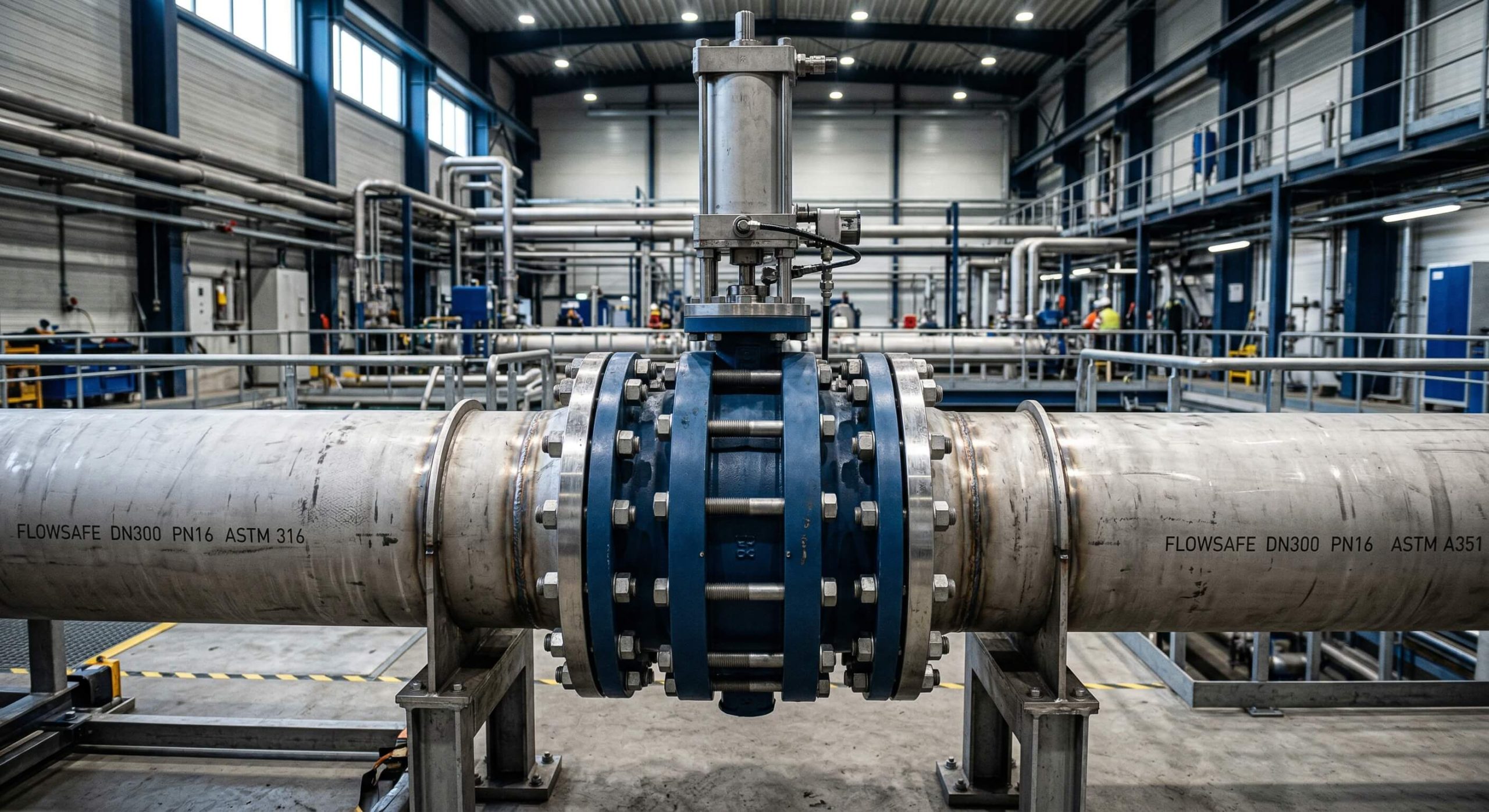
The preferred direction matters because it dictates whether fluid pressure strengthens the seal or forces it open. Plant managers often struggle with unexpected pipeline leaks causing messy spills and massive repair bills. By orienting your hardware correctly according to the manual you instantly prevent these disruptive blowouts. Properly managing butterfly valve flow requires strict adherence to manufacturer recommendations.
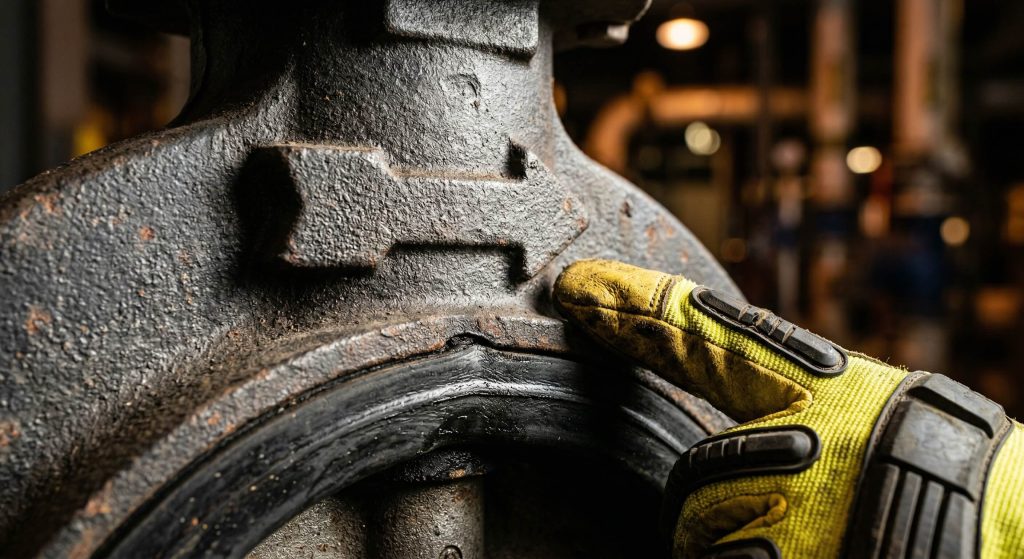
What Is the Ideal Butterfly Valve Flow?
The ideal direction is the specific pathway where incoming fluid presses the disc firmly into the seat. Aligning your butterfly valve flow accurately means reading the cast arrow on the metallic body carefully. You need to orient the unit so the media travels in that exact engineered path.
Why Follow Manufacturer Specs?
Ignoring factory specifications often leads to immediate mechanical failures. Here’s the deal: manufacturers engineer these units to handle specific stress loads from one primary side. Following their guidance guarantees long-lasting performance for your operations.
- Keeps mechanical stress within safe limits.
- Stops unexpected turbulence near the disc.
- Maintains your warranty validity.
The Core Mechanism of Control
The unit controls media by acting as a barrier supported by downstream forces. You might be wondering: does reverse positioning really break the system? Yes, reverse positioning forces the fluid to pry the disc away from the sealing surface. You must verify shaft alignment during initial setup.
Key Takeaway: Correct orientation uses system pressure as an asset to tighten your seal.
| Factor | Preferred Setup | Reverse Setup |
|---|---|---|
| Sealing Force | Supported | Opposed |
| Seat Wear | Low | High |
This comparison shows that matching the engineered path decreases long-term degradation.
Why Does Butterfly Valve Flow Matter?
It matters because correct orientation directly dictates the longevity and reliability of your piping network. Incorrectly managing butterfly valve flow creates severe structural vulnerabilities within your processing plant. You subject the internal components to unnecessary friction when you install them backward.
Key Benefits of Correct Setup
Proper orientation minimizes operational friction immediately. Think about it: less friction means your equipment lasts longer without requiring maintenance. You save money and avoid sudden operational halts.
- Lowers routine maintenance costs.
- Prevents sudden catastrophic failures.
- Improves overall network efficiency.
Risks of Ignoring Specifications
Installing units backward drastically increases the chance of sudden leaks. The truth is: the internal liner cannot withstand sustained reverse pressure over time. The material eventually warps letting media escape into the surrounding environment.
Key Takeaway: Ignoring the designed pathway directly causes rapid equipment deterioration.
| Risk Factor | Proper Orientation | Backward Orientation |
|---|---|---|
| Leakage Chance | Minimal | Severe |
| Part Lifespan | Extended | Shortened |
Data reflects how ignoring manufacturer guidelines leads directly to premature system failure.
How Does Butterfly Valve Flow Affect Seals?
The fluid direction determines whether the pressure pushes the disc into the liner or pulls it away. Setting the butterfly valve flow correctly creates a self-energizing seal. This means the system actually tightens itself as internal pressure increases.
The Pressure-Assisted Concept
A pressure-assisted design uses incoming media to reinforce the barrier. What’s the real story? The force from the media actually helps the disc sit tighter against the rubber liner. You do not have to rely entirely on the mechanical actuator to hold the position.
- Uses fluid dynamics to aid closing.
- Reduces reliance on mechanical actuators.
- Provides a tighter shutoff mechanism.
Does It Scrape the Liner?
Proper orientation prevents the disc edge from dragging harshly across the rubber. Let’s look closer: when installed correctly the disc engages the seat smoothly without gouging the material. You avoid stripping the rubber away during routine opening and closing cycles.
Key Takeaway: Correct positioning allows the internal parts to engage smoothly without causing friction damage.
| Interaction | Smooth Engagement | Harsh Scraping |
|---|---|---|
| Seal Integrity | Maintained | Destroyed |
| Actuator Strain | Low | High |
Operating in the designated orientation prevents mechanical degradation of the soft components.
Can Butterfly Valve Flow Reduce Torque?
Yes, moving fluid in the correct direction lowers the rotational force required to turn the disc. Managing your butterfly valve flow properly means your motors work less hard during operation. Lower torque requirements save energy and reduce strain on your machinery.
Lowering Your Operating Force
When the media assists the closure the required turning force drops. Here is the kicker: you can actually use smaller actuators if your piping is set up right. This lowers your initial purchasing costs significantly.
- Decreases energy consumption.
- Allows for smaller actuator sizing.
- Lowers initial capital expenditure.
Extending Actuator Lifespan
Motors and pneumatic cylinders last longer when they face less resistance. Consider this fact: pushing against opposing fluid forces burns out motors rapidly. You protect your investment by aligning the media path correctly.
Key Takeaway: Lowering the required turning force directly extends the life of your automated controllers.
| Metric | Correct Alignment | Reverse Alignment |
|---|---|---|
| Required Torque | Low | Extremely High |
| Motor Life | Extended | Reduced |
Lowering the turning resistance protects your expensive automation hardware from burning out.
How Does Butterfly Valve Flow Prevent Wear?
Proper orientation limits the amount of turbulent media striking the most sensitive parts of the disc. Aligning butterfly valve flow perfectly keeps the fluid moving in a streamlined pattern. This streamlining stops abrasive particles from eating away at the metal.
Protecting System Components
A streamlined path means suspended solids glide past the disc rather than crashing into it. Want to know the best part? You avoid pitting and corrosion on the metal surfaces. This saves you from replacing expensive metallic parts frequently.
- Reduces particle impact on metal.
- Lowers the risk of cavitation.
- Maintains structural integrity.
Can It Increase Reliability?
Consistent movement keeps the entire network running without hiccups. Why does this matter? Unpredictable turbulence shakes pipes and loosens fittings across the facility. You eliminate these harmful vibrations by adhering to the correct fluid path.
Key Takeaway: Smooth fluid movement prevents physical damage to both the unit and the surrounding pipes.
| Wear Factor | Streamlined Path | Turbulent Path |
|---|---|---|
| Metal Pitting | Rare | Frequent |
| Vibration Level | Low | Damaging |
Maintaining a smooth path eliminates the physical vibrations that destroy pipe connections.
What Is Reverse Butterfly Valve Flow?
Reverse movement happens when fluid enters the unit from the opposite side of the engineered arrow. Handling reverse butterfly valve flow requires special heavy-duty equipment designed for bi-directional use. Standard units will fail quickly if subjected to constant backward pressure.
The Mechanics of Backflow
Backflow hits the backside of the disc prying it away from the sealing lip. Here’s the deal: this backward force creates a tiny gap between the metal and the rubber. Media forces its way through this gap causing a constant drip.
- Pries the disc away from the seat.
- Creates micro-gaps for media escape.
- Accelerates rubber deformation.
Why Do Leakage Risks Spike?
The continuous prying action stretches the rubber liner out of shape permanently. The truth is: once the rubber loses its elasticity it never seals correctly again. You will face a permanent leak until you replace the entire liner.
Key Takeaway: Backward pressure permanently deforms the internal components and causes constant leakage.
| Flow State | Disc Position | Leak Status |
|---|---|---|
| Forward | Tightly seated | Dry |
| Backward | Pried open | Dripping |
This breakdown illustrates exactly how backward pressure compromises the physical sealing barrier.
How Does Butterfly Valve Flow Impact Pumps?
Correct orientation stabilizes the fluid entering the pump impeller preventing destructive vapor bubbles. Controlling butterfly valve flow properly near a pump suction line is mandatory for plant safety. Poor setup here destroys pump impellers in a matter of weeks.
Stopping Pump Cavitation
Vapor bubbles form when turbulent fluid enters the suction side of a pump. You might be wondering: do these bubbles cause real damage? When these bubbles collapse against the metal impeller they blow tiny holes in the steel.
- Eliminates destructive vapor bubbles.
- Protects the steel impeller.
- Maintains pump efficiency.
Stabilizing Suction Lines
A calm suction line allows the pump to draw media smoothly without struggling. Let’s look closer: keeping the valve stem parallel to the pump shaft creates a uniform velocity profile. You prevent uneven wear on the pump bearings this way.
Key Takeaway: Proper alignment near pumps prevents mechanical vibrations and catastrophic impeller damage.
| Pump Condition | Stem Parallel | Stem Perpendicular |
|---|---|---|
| Fluid Entry | Smooth | Turbulent |
| Cavitation Risk | Non-existent | High |
Aligning the stem correctly protects your highly expensive pumping machinery from physical destruction.
Does Butterfly Valve Flow Guide Orientation?
Yes, the designated path dictates exactly how you must position the stem and the handle. If you misunderstand butterfly valve flow you will likely bolt the unit in backward. You must always check the body markings before tightening any flange bolts.
Stem and Shaft Alignment
The stem must sit in a specific orientation relative to the upcoming pipe bends. Think about it: placing the stem horizontally or vertically changes how gravity affects the internal debris. You must position it horizontally in lines carrying heavy sediment.
- Keeps debris away from bearings.
- Prevents shaft binding.
- Makes manual operation easier.
Ensuring Stable Approaches
The fluid needs a straight runway to calm down before hitting the disc. What’s the real story? Bolting a unit directly to a sharp pipe bend creates a chaotic fluid strike. You must give the media room to stabilize.
Key Takeaway: Correct stem orientation prevents debris buildup and guarantees smooth mechanical operation.
| Stem Position | Debris Handling | Best Application |
|---|---|---|
| Horizontal | Excellent | Dirty media |
| Vertical | Poor | Clean water |
Choosing the right shaft position keeps internal bearings free from damaging sediment.
How to Optimize Butterfly Valve Flow?
You optimize the setup by leaving straight pipe lengths between the unit and any disturbances. Perfecting butterfly valve flow requires planning the physical layout before cutting any steel. Proper spacing prevents chaotic turbulence from ruining the installation.
Distance From Pipeline Elbows
You should install the unit at least six pipe diameters away from any upstream elbows. Here is the kicker: putting it too close to a bend subjects one side of the disc to massive force. This uneven force snaps the internal shaft over time.
- Requires six diameters of straight pipe.
- Prevents uneven disc loading.
- Stops shaft breakage.
Best Installation Practices
Always leave the disc slightly open when tightening the flange bolts. Consider this fact: tightening bolts with the disc fully closed pinches the rubber liner permanently. You ruin a brand new unit before you even turn the pump on.
Key Takeaway: Strategic spacing and careful bolt tightening guarantee a flawless installation.
| Installation Step | Correct Action | Incorrect Action |
|---|---|---|
| Spacing | Six diameters | Bolted to elbow |
| Bolt Tightening | Disc slightly open | Disc fully closed |
Following these physical spacing rules prevents immediate mechanical failure during startup.
Can Piping Alter Butterfly Valve Flow?
Yes, sudden changes in pipe diameter or sharp turns violently alter the fluid velocity. Irregular piping forces butterfly valve flow to become chaotic and highly destructive. You must design the surrounding network to support smooth fluid delivery.
Managing High Velocity Media
High-speed media acts like sandpaper against the internal metal components. Want to know the best part? Expanding the pipe diameter slightly right before the unit slows the media down safely. You protect the hardware by controlling the speed.
- Reduces media velocity safely.
- Prevents metal erosion.
- Quiets noisy pipelines.
Routine Checks for Success
You need to inspect the flanges and the actuator monthly for signs of stress. Why does this matter? Catching a small vibration early prevents a massive pipe blowout later. You maintain total control by walking the line and checking for odd noises.
Key Takeaway: Proactive network design and regular inspections keep your facility running without dangerous surprises.
| Network Feature | Good Design | Bad Design |
|---|---|---|
| Pipe Transitions | Gradual | Sudden |
| Fluid Speed | Controlled | Excessive |
Designing smooth pipe transitions eliminates the chaotic forces that destroy hardware.
Conclusion
Final Thoughts We solved the complex issue of proper installation by breaking down exactly why directional orientation dictates system longevity. Now that you understand the mechanics we can supply you with heavy-duty equipment tailored to your exact pipeline specifications. We build robust solutions that keep your operations running safely and continuously. Reach out and contact us today to upgrade your facility’s fluid control systems.
FAQ
Q1: Can I install the unit in the reverse direction if needed?
Yes, you can. However standard units will suffer accelerated wear and potential leakage so you must specify a bi-directional design if reverse pressure is expected.
Q2: What’s the best distance to keep the unit away from an elbow?
At least six pipe diameters. This distance allows the fluid turbulence to settle preventing uneven stress from snapping the internal shaft.
Q3: How do I know if the orientation is correct?
You look at the cast arrow on the metal body. The arrow must point in the exact same direction that the fluid normally travels through the pipe.
Q4: Can I use a vertical stem orientation for dirty water?
No, you should not. A vertical stem allows heavy sediment to fall directly into the bottom bearing which jams the mechanism entirely.
Q5: What’s the best way to tighten the flange bolts?
Leave the disc slightly open during tightening. If you tighten the bolts with the disc fully closed you will pinch and ruin the rubber liner permanently.