
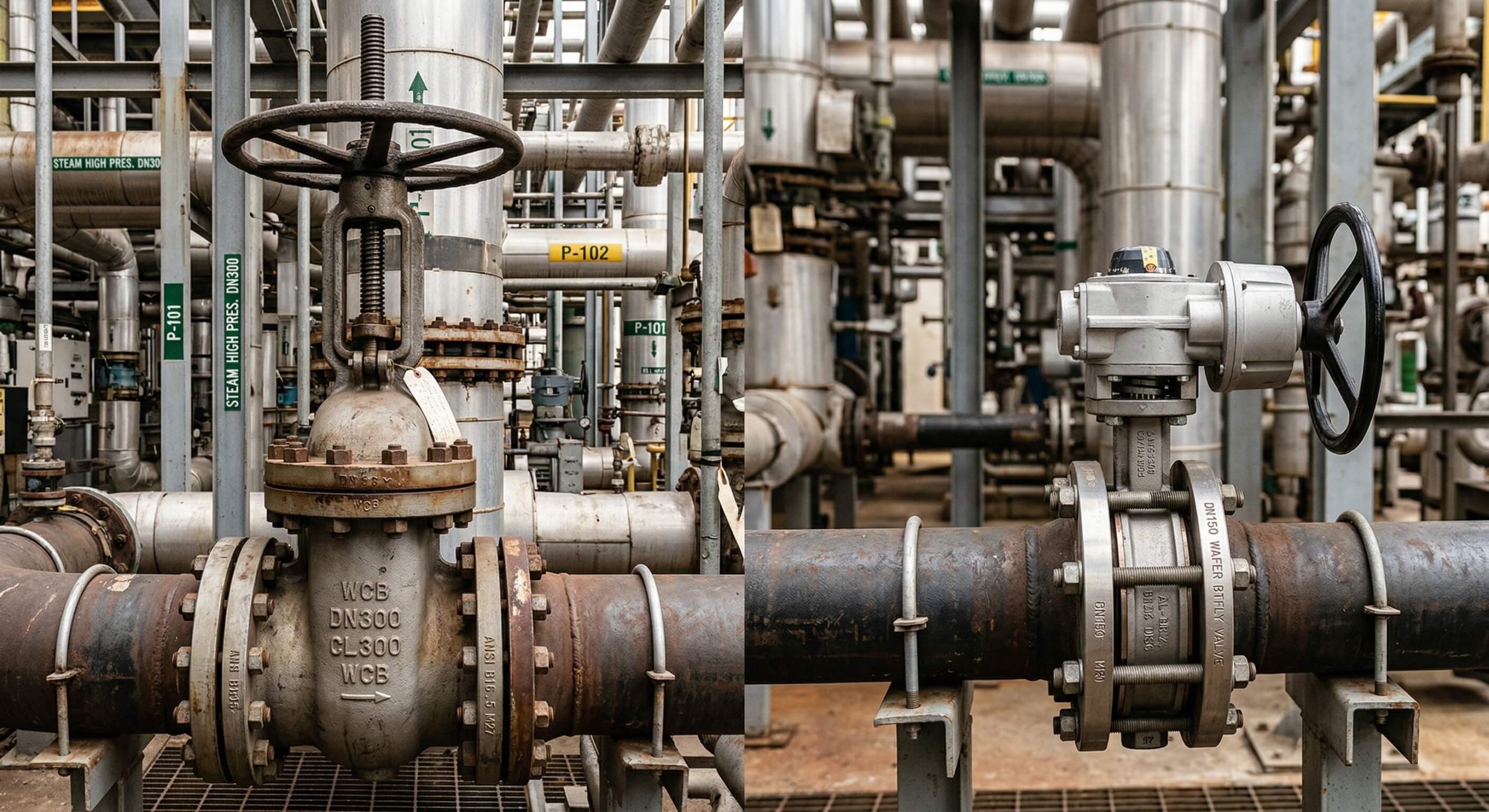
The primary difference lies in their mechanical movement, where gate valves utilize a linear motion wedge and butterfly valves employ a 90-degree rotary disk. Imagine you are managing a high-pressure industrial pipeline where a single wrong component choice leads to frequent leaks or excessive pressure drops. These operational failures cause expensive downtime and safety risks for your entire facility. Identifying the difference between gate valve and butterfly valve ensures you select a solution that optimizes flow efficiency and system longevity.
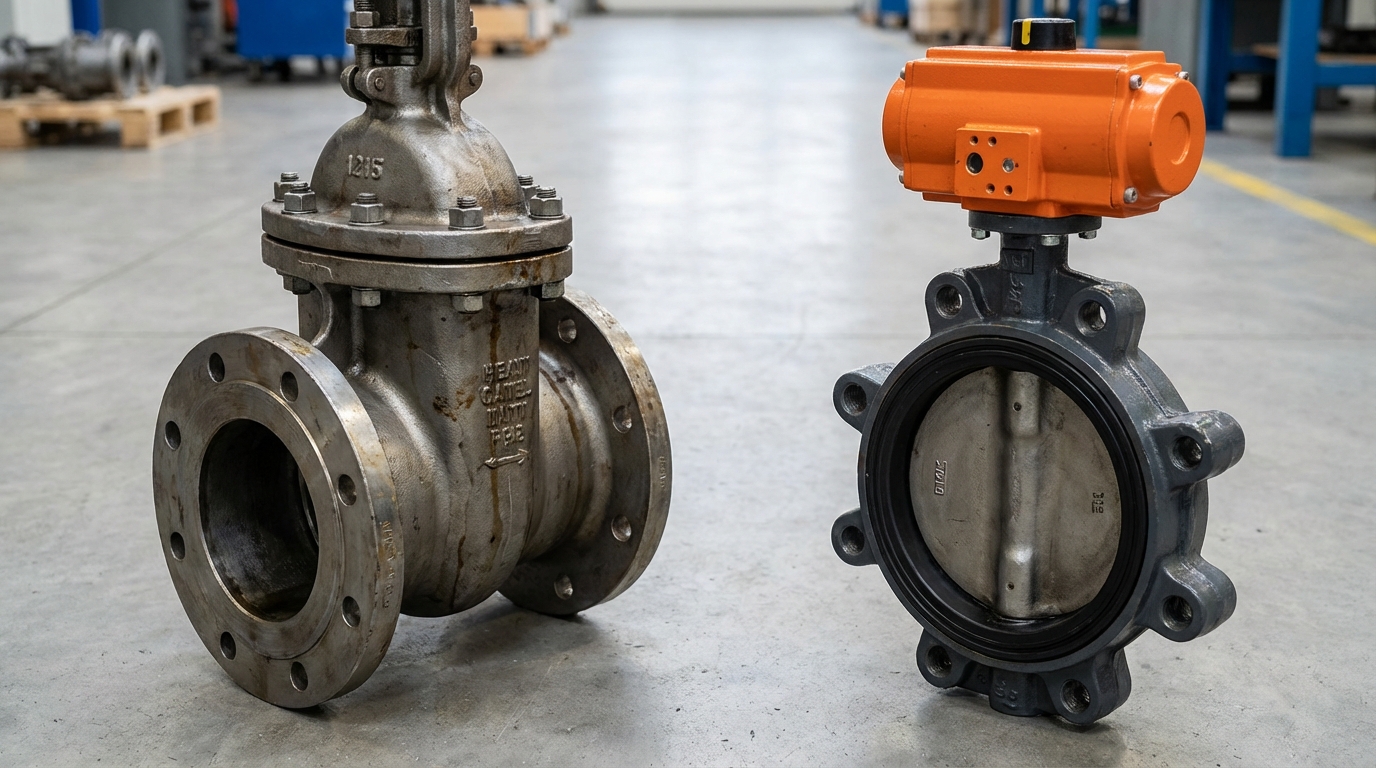
What is the difference between gate valve and butterfly valve?
The fundamental distinction is the way each valve opens and closes to control the movement of fluids within a system. You will find that the difference between gate valve and butterfly valve dictates how quickly you can respond to flow changes and the level of pressure the system can handle.
How do gate valves manage heavy-duty flow?
Gate valves operate through a vertical “gate” or wedge that moves up and down to start or stop the fluid. This linear motion requires multiple turns of the handwheel, which prevents sudden pressure surges in the line.
Think about this:
- They provide a straight-through flow path.
- Minimal pressure drop occurs when fully open.
- They are ideal for high-pressure isolation.
Key Takeaway: Gate valves are your best option for heavy-duty, high-pressure isolation where a slow, steady closure is necessary.
| Feature | Gate Valve Specification |
|---|---|
| Motion Type | Linear (Multi-turn) |
| Flow Path | Straight-through (Full bore) |
| Best Use | Isolation / On-Off |
The multi-turn design of gate valves makes them superior for preventing water hammer in critical infrastructure.
Why note the difference between gate valve and butterfly valve?
Recognizing these variations is essential for maintaining the hydraulic balance and safety of your industrial piping network. If you ignore the difference between gate valve and butterfly valve, you risk installing a component that creates unwanted turbulence or fails under high-velocity conditions.
Does flow turbulence change with valve selection?
The presence of a disk in the center of the flow path even when open makes butterfly valves more prone to creating turbulence. In contrast, the gate valve’s wedge retracts completely into the bonnet, allowing for laminar flow.
But here’s the kicker:
- Gate valves offer zero obstruction.
- Butterfly valves always have a disk in the stream.
- Turbulence affects sensor accuracy downstream.
Key Takeaway: Prioritize gate valves if your process requires perfectly smooth flow and zero internal obstruction.
| Valve Type | Flow Obstruction | Turbulence Level |
|---|---|---|
| Gate Valve | None | Low |
| Butterfly Valve | Moderate | Medium |
Minimizing turbulence is key to protecting sensitive equipment and maintaining consistent flow rates.
How does the difference between gate valve and butterfly valve show?
The physical structure and internal componentry of these two valves are visibly distinct to any trained engineer or technician. When you examine the difference between gate valve and butterfly valve, you will notice significant variations in the height of the bonnet and the length of the stem.
Is the internal disk design a major differentiator?
Butterfly valves use a thin disk mounted on a central shaft that rotates 90 degrees to block flow. This design allows for a much shorter body compared to the tall, bulky structure of a gate valve.
Consider this:
- Butterfly disks offer quick operation.
- Gate wedges provide a tighter seal.
- Shaft designs vary for high-torque needs.
Key Takeaway: The disk design of the butterfly valve makes it the champion for speed and compact installations.
| Component | Gate Valve | Butterfly Valve |
|---|---|---|
| Blocking Element | Solid Wedge | Circular Disk |
| Stem Movement | Rising or Non-rising | Quarter-turn |
The compact nature of the disk assembly allows for significant space savings in dense piping layouts.
What is the cost difference between gate valve and butterfly valve?
Budgetary considerations often drive the selection process, especially when you are dealing with large-diameter pipelines. The difference between gate valve and butterfly valve becomes most apparent in your capital expenditure when you compare the materials required for each.
Are butterfly valves more economical for large diameters?
Butterfly valves typically cost less than gate valves because they require fewer raw materials and have a simpler assembly. As pipe diameters increase, the price gap widens significantly in favor of the rotary design.
Think about this:
- Lower shipping costs due to weight.
- Simpler installation requires less labor.
- Reduced maintenance complexity over time.
Key Takeaway: Choosing butterfly valves for larger pipes can drastically reduce your project’s total procurement costs.
| Diameter (DN) | Cost Comparison (Relative) |
|---|---|
| DN50 – DN150 | Comparable |
| DN200 – DN1200 | Butterfly is 30-50% Cheaper |
Procurement managers often favor butterfly valves for municipal water projects to maximize their budget allocation.
Where is the difference between gate valve and butterfly valve key?
Different industrial environments demand specific performance traits that only one of these valve types can provide effectively. You must analyze the difference between gate valve and butterfly valve to ensure compatibility with the media being transported.
Is one better suited for wastewater and slurries?
Butterfly valves are frequently used in water treatment because their lightweight design and quick action suit low-pressure applications. Gate valves, particularly knife gate variants, are preferred for thick slurries and solid-laden media.
But here’s the kicker:
- Water plants love butterfly efficiency.
- Mining operations need gate durability.
- Chemical plants select based on seal material.
Key Takeaway: Select your valve based on the viscosity and solids content of your specific fluid media.
| Industry | Preferred Valve Type | Reason |
|---|---|---|
| Oil & Gas | Gate Valve | High Pressure |
| HVAC | Butterfly Valve | Compact / Low Pressure |
Industry-specific standards often dictate which valve type is compliant for safety and environmental regulations.
How is the difference between gate valve and butterfly valve sized?
Sizing involves more than just matching the pipe diameter; you must consider the physical footprint and weight. The difference between gate valve and butterfly valve in terms of dimensions can make or break your ability to fit equipment into a pre-existing skid.
Is the face-to-face dimension a critical factor?
Butterfly valves feature a very short face-to-face dimension, often fitting between two flanges with simple bolts. Gate valves require much more longitudinal space along the pipeline to accommodate their heavy cast bodies.
Consider this:
- Wafer styles save the most space.
- Flanged gate valves are very heavy.
- Support structures must handle the weight.
Key Takeaway: Use butterfly valves when you need to minimize the physical weight and footprint of your piping system.
| Metric | Gate Valve (DN300) | Butterfly Valve (DN300) |
|---|---|---|
| Face-to-Face | ~350 mm | ~80 mm |
| Weight (Approx) | 150 kg | 35 kg |
Reducing weight by nearly 75% allows for simpler pipe supports and easier manual handling during installation.
What is the seal difference between gate valve and butterfly valve?
Sealing integrity is the most critical factor for preventing environmental contamination and maintaining system pressure. You should evaluate the difference between gate valve and butterfly valve based on whether you need a resilient or metal-to-metal seat.
How does temperature affect sealing integrity?
Gate valves are generally superior for high-temperature applications because they can utilize robust metal seats. Butterfly valves often rely on elastomer seals, which may degrade if the fluid temperature exceeds specific limits.
Think about this:
- Metal seats handle extreme heat.
- Resilient seats provide zero leakage.
- Soft seats are easier to replace.
Key Takeaway: Opt for metal-seated gate valves in steam or high-heat processes to ensure a reliable seal.
| Seal Material | Temp Range | Sealing Class |
|---|---|---|
| EPDM / NBR | -10°C to 120°C | Class VI (Bubble Tight) |
| Metal (SS) | Up to 500°C | Class IV |
Matching seat material to your process temperature is vital for preventing premature valve failure.
Can the difference between gate valve and butterfly valve fail?
Every valve has specific failure modes that you must anticipate to prevent catastrophic system shutdowns. The difference between gate valve and butterfly valve failure often comes down to how the internal parts react to corrosion and pressure surges.
Does water hammer pose a threat to quick-acting valves?
Butterfly valves can close so rapidly that they create a shockwave known as water hammer. Gate valves are naturally protected from this issue because their multi-turn operation forces a slow and controlled closure.
But here’s the kicker:
- Fast closure breaks pipe joints.
- Slow movement saves the system.
- Actuator speed must be regulated.
Key Takeaway: Use gate valves in systems prone to pressure surges to naturally mitigate the risk of water hammer.
| Failure Risk | Gate Valve | Butterfly Valve |
|---|---|---|
| Water Hammer | Low Risk | High Risk |
| Sediment Buildup | Medium Risk | Low Risk |
Predictive maintenance schedules should be adjusted based on the inherent mechanical risks of the valve type chosen.
What is the space difference between gate valve and butterfly valve?
Vertical and horizontal clearance can severely limit your valve options in tight plant environments. When you look at the difference between gate valve and butterfly valve, you must account for the space required to fully open the device.
Does vertical clearance affect gate valve installation?
Rising stem gate valves require significant vertical space above the pipe to allow the stem to move upward. Butterfly valves only require enough room for a handle or a compact actuator to rotate.
Consider this:
- Ceiling height limits gate valves.
- Lever handles need side clearance.
- Gear operators save vertical room.
Key Takeaway: Choose butterfly valves for installations where overhead space is restricted or nonexistent.
| Dimension | Gate Valve | Butterfly Valve |
|---|---|---|
| Vertical Height | High (Rising Stem) | Low / Compact |
| Operating Area | Large | Minimal |
Planning for operational clearance ensures your team can safely access and maintain the valve without obstruction.
Is the difference between gate valve and butterfly valve clear?
The final consideration is whether the valve is intended for simple on-off service or limited flow regulation. You must understand that the difference between gate valve and butterfly valve makes one virtually useless for throttling applications.
What are the risks of using a gate valve for flow control?
Gate valves should never be used for throttling because the high-velocity fluid will vibrate the partially open wedge. This vibration leads to “wire drawing” and eventual destruction of the sealing surfaces.
Think about this:
- Gate valves are for isolation only.
- Butterfly valves offer limited control.
- Globe valves are best for precision.
Key Takeaway: Never attempt to regulate flow with a gate valve if you want to avoid permanent equipment damage.
| Function | Gate Valve | Butterfly Valve |
|---|---|---|
| Isolation | Excellent | Good |
| Throttling | Not Recommended | Limited |
Proper application of the “On-Off” rule for gate valves extends their service life by decades.
Summary of Technical Insights
Choosing the right valve solves critical problems such as internal leakage, excessive pressure loss, and high maintenance costs. By understanding the mechanical and economic nuances of these components, you can design a more efficient system. RUITO focuses on delivering precision-engineered solutions that meet global standards like ISO, CE, and WRAS. Our vision is to empower industrial engineers with reliable fluid control that minimizes risk and maximizes uptime.
If you need technical assistance or a custom quote for your next project, contact us today to speak with our engineering team.
Frequently Asked Questions (FAQ)
What’s the best valve for high-pressure isolation?
Gate valves are generally the superior choice because their robust wedge design and metal-to-metal seating capabilities handle extreme pressures better. They provide a more secure, long-term seal when the system is under intense stress.
Can I use a butterfly valve for throttling flow?
Yes, you can use a butterfly valve for basic throttling, though it is not as precise as a globe valve. However, they are much better suited for this than gate valves, which should never be used to regulate flow.
What’s the best choice for a tight budget on large pipes?
Butterfly valves are almost always the most cost-effective option for larger diameters (DN200 and above). Their lightweight construction and simpler design reduce both initial purchase price and installation labor.
Can I install a gate valve in any orientation?
While it is technically possible, you should ideally install gate valves with the stem in the upright position. This prevents sediment from settling in the bonnet, which can interfere with the wedge’s ability to seal correctly.
What’s the best valve to prevent water hammer?
Gate valves are the better choice for preventing water hammer because their multi-turn operation ensures they close slowly. This gradual reduction in flow prevents the sudden pressure spikes that damage piping.