
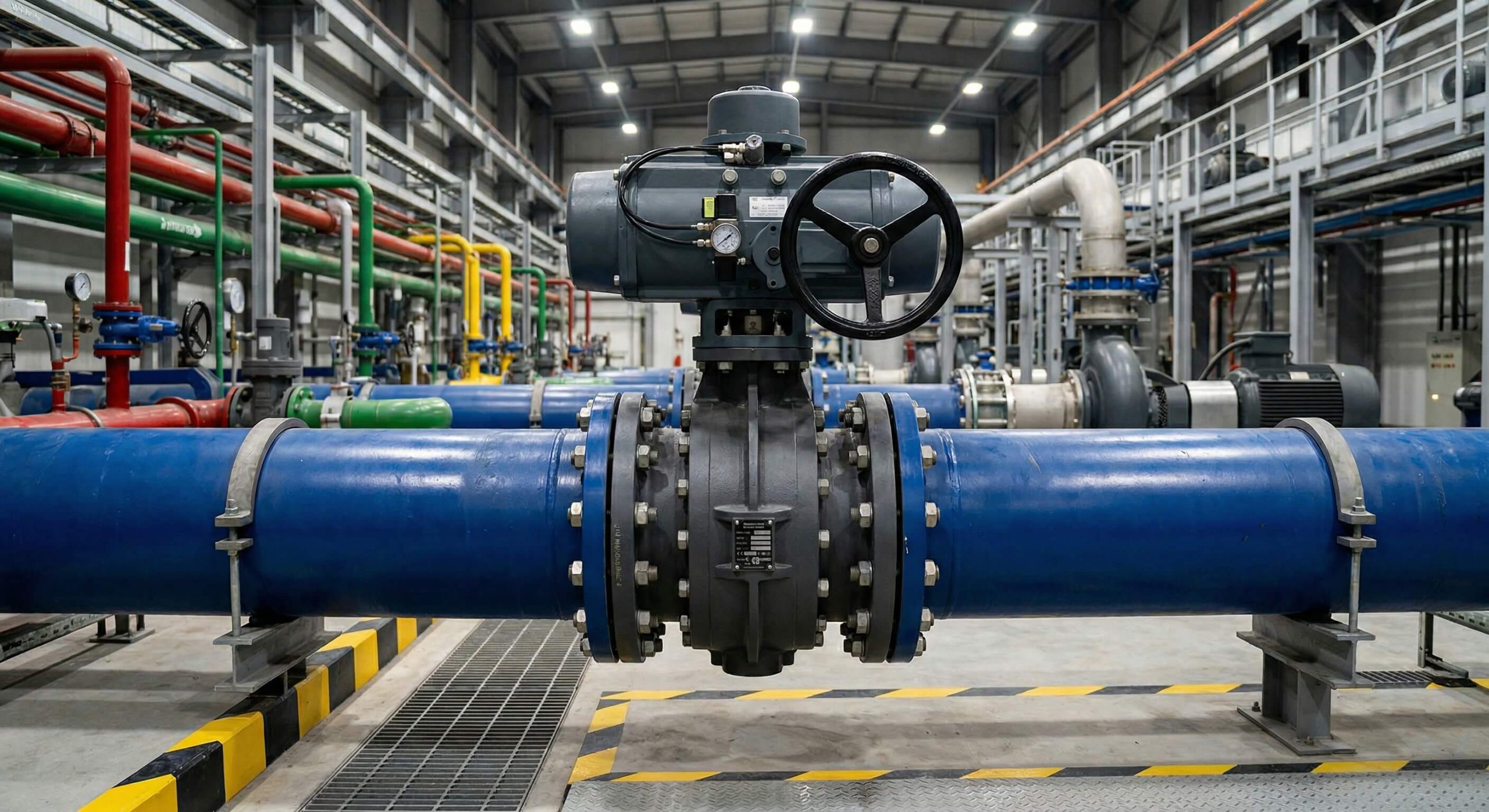
The butterfly valve working animation, working principle visually demonstrates how a quarter-turn rotation of a central disc effectively controls fluid flow. Imagine managing a massive process facility where unexpected pressure drops ruin entire batches. Unreliable piping mechanisms often create costly downtime and severe maintenance nightmares. Applying proper butterfly valve working mechanics provides a reliable, fast-acting solution against these operational headaches. We will break down this mechanism so you can secure peak pipeline performance.
What Is the Basic Concept of Butterfly Valve Working?
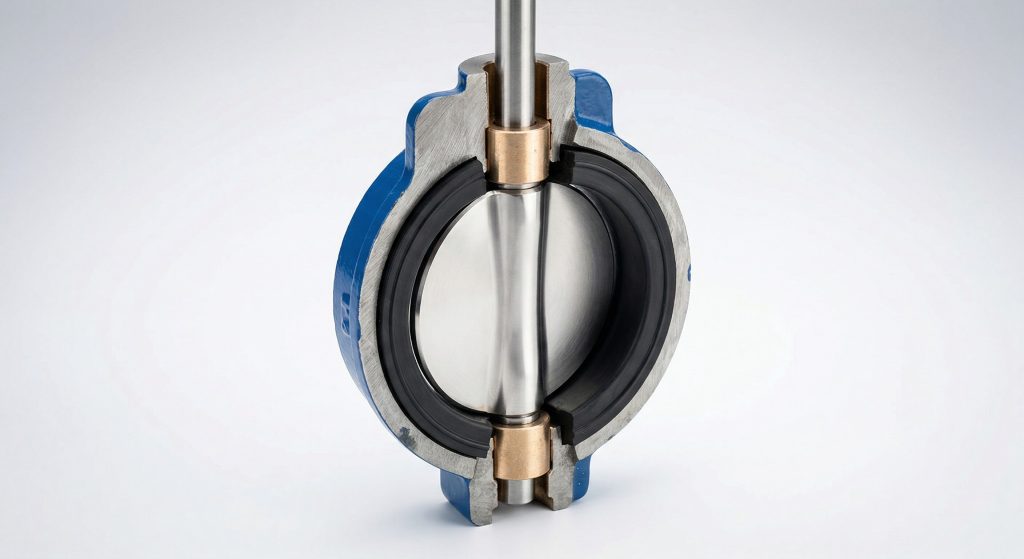
A basic concept of butterfly valve working relies on a simple quarter-turn mechanism where a rotating disc regulates fluid flow. Mastering these butterfly valve working mechanics helps you prevent costly flow control failures across your facility. An operator utilizes a central disc mounted securely onto a rotating stem. When turning that exterior handle ninety degrees, this disc either fully blocks or completely opens internal fluid pathways.
How does the disc mechanism function?
This disc mechanism functions by acting like a swinging gate that responds directly toward actuator motion. Here is the deal, understanding such movement protects against sudden pipeline pressure shocks. When aligned parallel with fluid streams, it provides minimal resistance. You should note these primary operational phases:
- Fully open state allowing maximum throughput.
- Throttling state for partial flow modulation.
- Fully closed state providing a bubble-tight seal.
Key Takeaway: Grasping this fundamental quarter-turn principle allows you to select correct actuation speeds preventing water hammer effects.
| Component | Function | Operational Impact |
|---|---|---|
| Disc | Regulates flow | Determines flow rate and sealing |
| Stem | Connects actuator | Transfers rotational torque |
| Seat | Provides surface | Secures zero leakage |
This component breakdown illustrates how few moving parts are required for maintaining reliable pipeline integrity.
How Does a Butterfly Valve Working Animation Help?
A butterfly valve working animation helps by visually dissecting internal flow dynamics without requiring physical disassembly. Watching any butterfly valve working simulation gives you an immediate grasp of how rotating discs interact with high-velocity fluids. It clarifies relationships between actuator torque and seating friction during closing phases. This visual tool proves highly valuable for training new engineers on complex industrial piping systems.
Can animation identify flow turbulence?
Animation identifies flow turbulence by highlighting pressure zones behind a rotating disc during throttling. What is the real story, visual simulations often reveal hidden cavitation risks that static diagrams completely miss. You can actually see how different disc angles alter fluid velocity vectors in real time. These insights help engineers adjust their control strategies based on these factors:
- Fluid viscosity limits.
- Upstream pressure fluctuations.
- Specific pipe diameter constraints.
Key Takeaway: Utilizing visual animations empowers your engineering team to anticipate fluid turbulence and avoid premature equipment degradation.
| Flow Condition | Animation Insight | Action Required |
|---|---|---|
| Full Open | Minimal turbulence | Monitor regular wear |
| Throttling | Cavitation visible | Adjust opening angle |
| Closing | Peak torque | Verify actuator sizing |
Reviewing these simulated flow conditions enables precise calibration for your automated control systems.
Why Is the Disc Critical for Butterfly Valve Working?
The disc remains critical for butterfly valve working because it serves as a primary barrier responsible for fluid isolation. Its physical shape directly influences butterfly valve working efficiency by dictating overall flow coefficients. If that profile becomes too bulky, it creates unnecessary pressure drops across piping networks. A streamlined design minimizes resistance, saving pumping energy while reducing long-term operational costs.
What are the main disc designs?
Main designs include concentric, double eccentric, and triple eccentric configurations for handling varying pressures. This is where it gets interesting, each specific design caters directly toward different temperature and chemical requirements. A standard concentric model works perfectly on low-pressure water systems without excessive wear. For more severe conditions, you will need high-performance designs characterized by:
- Offset stems reducing seat friction.
- Specialized metal seating surfaces.
- Enhanced handling of abrasive media.
Key Takeaway: Selecting an appropriate disc configuration guarantees you achieve tight seals without overworking any connected actuator.
| Disc Type | Offset Level | Best Application |
|---|---|---|
| Concentric | Zero offset | Standard water lines |
| Double Eccentric | Two offsets | High-pressure chemicals |
| Triple Eccentric | Three offsets | Extreme thermal ranges |
These offset levels shown above directly correlate with a mechanism’s ability for handling demanding industrial environments.
What Role Does the Actuator Play in Butterfly Valve Working?
An actuator plays a major role in butterfly valve working by providing mechanical force necessary for rotating a disc. Without properly sized actuators, butterfly valve working becomes completely unreliable, leading toward incomplete sealing or system jamming. It translates control signals into physical movement, allowing precise flow modulation across your entire facility. Choosing correct power sources determines how quickly your system responds against operational changes.
How do pneumatic and electric types differ?
Pneumatic and electric types differ primarily regarding their response times and local power supply requirements. Ready for the good part, pneumatic systems utilize compressed air for achieving incredibly fast emergency shutdowns. Electric actuators offer highly precise positioning during intricate flow throttling across sensitive batch processing. When deciding between them, you must strictly evaluate these specific criteria:
- Availability of compressed air on-site.
- Required speed of operation.
- Integration with digital control networks.
Key Takeaway: Matching actuator types with your facility’s infrastructure guarantees responsive and safe flow management.
| Actuator Type | Power Source | Primary Advantage |
|---|---|---|
| Manual | Human effort | Cost-effective simplicity |
| Pneumatic | Compressed air | Rapid fail-safe action |
| Electric | Electricity | Precise remote control |
Analyzing these actuation methods helps you balance upfront installation costs against long-term automation reliability.
How Does Pressure Affect Butterfly Valve Working Rates?
Pressure affects butterfly valve working rates by altering torque required when moving a disc against fluid streams. High differential pressures make butterfly valve working significantly more demanding on internal mechanical components. As fluid pressure increases, friction between that disc edge and resilient seats also intensifies proportionally. You must carefully calculate these dynamic forces for preventing stems from twisting under heavy loads.
Can high pressure cause cavitation?
High pressure causes cavitation if fluids drop below their vapor pressure while passing restricted disc openings. The truth of the matter is, cavitation bubbles collapsing against metal surfaces will quickly erode expensive equipment. This destructive force severely compromises structural integrity across entire piping sections. To mitigate pressure-induced damage, operators usually implement these preventive measures:
- Installing pressure-reducing stages upstream.
- Limiting maximum throttling angles.
- Selecting hardened alloy disc materials.
Key Takeaway: Proactively calculating system pressure variations protects your investments from severe structural degradation.
| Pressure Level | Torque Requirement | Cavitation Risk |
|---|---|---|
| Low (<10 bar) | Minimal torque | Very Low |
| Medium (10-25) | Moderate torque | Moderate |
| High (>25 bar) | Extremely High | Severe |
Monitoring strict pressure thresholds remains mandatory for preventing catastrophic pipeline failures during peak operations.
What Are the Common Applications for Butterfly Valve Working?
Common applications for butterfly valve working include heavy water treatment, chemical processing, and large-scale HVAC systems. Immense versatility regarding butterfly valve working allows handling massive volumes of fluids using minimal space requirements. Because of their incredibly compact footprint, engineers frequently install them inside tightly constrained mechanical rooms. They supply reliable isolation across municipal pump stations, cooling towers, and heavy manufacturing pipelines globally.
Why do municipal water systems prefer them?
Municipal water systems prefer them because they offer highly cost-effective solutions serving massive large-diameter pipelines. Here is the kicker, traditional gate mechanisms become prohibitively expensive and excessively heavy as pipe sizes increase. A lightweight nature belonging to quarter-turn designs dramatically simplifies underground installations for contractors. You will typically find them deployed across these critical municipal scenarios:
- Main distribution line isolation.
- Filtration backwash controls.
- Reservoir inlet management.
Key Takeaway: Leveraging compact designs during large-scale operations significantly reduces your structural support and installation costs.
| Industry | Typical Fluid | Primary Requirement |
|---|---|---|
| Water Treatment | Raw/Potable Water | Cost-effective scaling |
| HVAC Systems | Chilled Water | Compact installation |
| Chemical Plants | Mild Acids | Corrosion resistance |
This cross-industry usage highlights extreme adaptability regarding quarter-turn isolation mechanisms.
How Do Materials Impact Butterfly Valve Working Quality?
Materials impact butterfly valve working quality by determining resistance against corrosion, extreme temperatures, and abrasive wear. Overall longevity of your butterfly valve working mechanism depends entirely on matching construction materials with fluid media. Using standard cast iron inside highly acidic environments will predictably result in rapid degradation and severe leaks. You must select premium alloys or specialized coatings for withstanding aggressive industrial chemicals safely.
What are the best seat materials?
Optimal seat materials depend heavily upon operating temperatures and chemical makeups belonging to flowing media. Why does this matter, an incompatible seat material will quickly swell, crack, or dissolve entirely under stress. Elastomers like EPDM provide excellent sealing during standard water applications at moderate temperatures. For harsher environments, you should always specify these specialized seating options:
- PTFE for superior chemical resistance.
- Viton for high-temperature oil lines.
- Stellite metal seats for abrasive slurries.
Key Takeaway: Strictly matching seat and body materials with specific fluids guarantees durable, leak-free operations.
| Material Type | Heat Tolerance | Best Used For |
|---|---|---|
| EPDM Rubber | Up to 120°C | Potable water |
| PTFE (Teflon) | Up to 200°C | Aggressive chemicals |
| Metal Alloy | Exceeds 400°C | High-pressure steam |
Careful material selection based upon this matrix prevents premature degradation and hazardous fluid leaks.
Why Is Proper Installation Necessary for Butterfly Valve Working?
Proper installation proves necessary for butterfly valve working because incorrect alignment causes immediate binding and seating failures. Rushing an installation process guarantees your butterfly valve working mechanics will suffer from uneven stress distribution. If surrounding pipe flanges are not perfectly parallel, bolting them tight will warp that valve body. Such distortion prevents discs from sealing correctly, leading toward persistent and dangerous fugitive emissions.
How should you orient the stem?
You should orient stems horizontally whenever pumping fluids containing suspended solids or heavy particulate matter. This is critical, vertical stem placement allows debris settlement directly inside bottom bearing housings. A horizontal orientation guarantees any sediment simply washes past lower edges of that disc. During installation, always follow these mandatory alignment procedures:
- Keep discs slightly open while tightening bolts.
- Confirm adequate clearance for disc swings.
- Use torque wrenches for tightening flanges evenly.
Key Takeaway: Taking time for executing precision installations eliminates risks concerning immediate mechanical binding.
| Installation Step | Action Required | Consequence of Failure |
|---|---|---|
| Orientation | Set stem horizontally | Debris accumulation |
| Flange Alignment | Make parallel | Body distortion |
| Bolt Tightening | Use star pattern | Uneven compression |
Following strict installation protocols guarantees internal mechanisms operate without artificial friction.
What Maintenance Practices Guarantee Smooth Butterfly Valve Working?
Routine maintenance practices guarantee smooth butterfly valve working by identifying minor wear before escalating into major failures. Consistent monitoring concerning butterfly valve working conditions dramatically extends operational lifespans for installed equipment. You need regular inspections on packing glands verifying no hazardous leaks exist around stems. Lubricating external actuator components prevents rust and confirms rotation remains perfectly fluid.
Can you replace components inline?
You can easily replace certain components inline, such as actuators and stem packing, without removing entire bodies. You might be wondering, does this apply toward internal resilient rubber seats? Unfortunately, replacing primary sealing seats usually requires taking units completely out of piping networks. To minimize unexpected downtime, you should adopt these highly proactive maintenance habits:
- Conducting quarterly visual inspections on stems.
- Testing emergency closure speeds annually.
- Replacing rubber components based upon operational hours.
Key Takeaway: Implementing scheduled maintenance routines prevents catastrophic failures while drastically reducing overall facility downtime.
| Maintenance Task | Frequency | Target Component |
|---|---|---|
| Leak Inspection | Monthly | Stem packing |
| Torque Verification | Bi-annually | Actuator linkage |
| Complete Overhaul | Every 3-5 years | Seat and disc |
Adhering strictly toward this maintenance schedule directly translates into safer, more efficient fluid management.
How Does Butterfly Valve Working Compare to Other Types?
Butterfly valve working compares favorably against other types by offering lighter, faster, and more space-efficient isolation methods. When evaluating butterfly valve working versus heavy gate mechanisms, differences regarding physical footprints are immediately obvious. Gate mechanisms require significant vertical space for pulling solid wedges completely out of fluid paths. A quarter-turn rotating disc stays within flow streams, drastically reducing required installation heights and weights.
When should you avoid using them?
You should avoid using them during applications requiring fully unobstructed flow paths without any pressure drops. The truth is, because discs remain inside fluid streams even when open, they create slight turbulence. If you are running pipeline cleaning equipment through systems, a rotating disc will block their path entirely. You should opt for alternative flow control methods during these specific scenarios:
- Lines requiring mechanical pigging operations.
- Systems extremely sensitive regarding minimal pressure drops.
- Applications demanding high-precision micro-throttling.
Key Takeaway: Understanding physical limitations regarding rotating discs helps you specify correct equipment for specialized pipelines.
| Valve Type | Speed of Operation | Space Requirement |
|---|---|---|
| Butterfly | Very Fast | Minimal |
| Gate | Very Slow | Large |
| Globe | Moderate | Moderate |
Comparing operational characteristics guarantees you deploy highly efficient technology for specific spatial constraints.
Frequently Asked Questions
Q1: Can I use this mechanism for high-pressure steam applications?
Yes, but requiring specific structural modifications. Standard rubber seats will melt under extreme heat, forcing you toward upgrading into triple-offset designs featuring solid metal seating surfaces for safe operation.
Q2: What’s the best way to prevent cavitation during operation?
The best way involves maintaining appropriate pressure drops continuously. You must keep differential pressure low and avoid throttling discs below twenty-degree open angles for stopping destructive vapor bubbles from forming.
Q3: How do I know if my actuator is sized correctly?
You know it operates correctly by verifying initial torque calculations. An actuator must easily overcome both dynamic fluid forces and static seating friction without stalling or snapping central stems.
Q4: Can I install this device in a vertical pipeline?
Yes, vertical installation works perfectly fine. You simply need verification that fluid flow directions push upward for preventing heavy sediment from accumulating directly on top of closed discs.
Q5: What’s the best material for handling corrosive chemicals?
PTFE (Teflon) stands out as your most reliable option. It completely resists chemical attacks from aggressive acids and industrial solvents, far outperforming standard cast iron or basic rubber elastomer linings.
Final Thoughts
Mastering these internal mechanics guarantees you maintain safe, leak-free, and high-performing industrial operations. This breakdown resolved common questions regarding actuation, material selection, and installation techniques for quarter-turn mechanisms. We manufacture high-reliability flow control solutions tailored specifically for withstanding your most demanding pipeline conditions. Our vision focuses on empowering global industries using durable infrastructure. Please contact our team today for discussing your project requirements.