
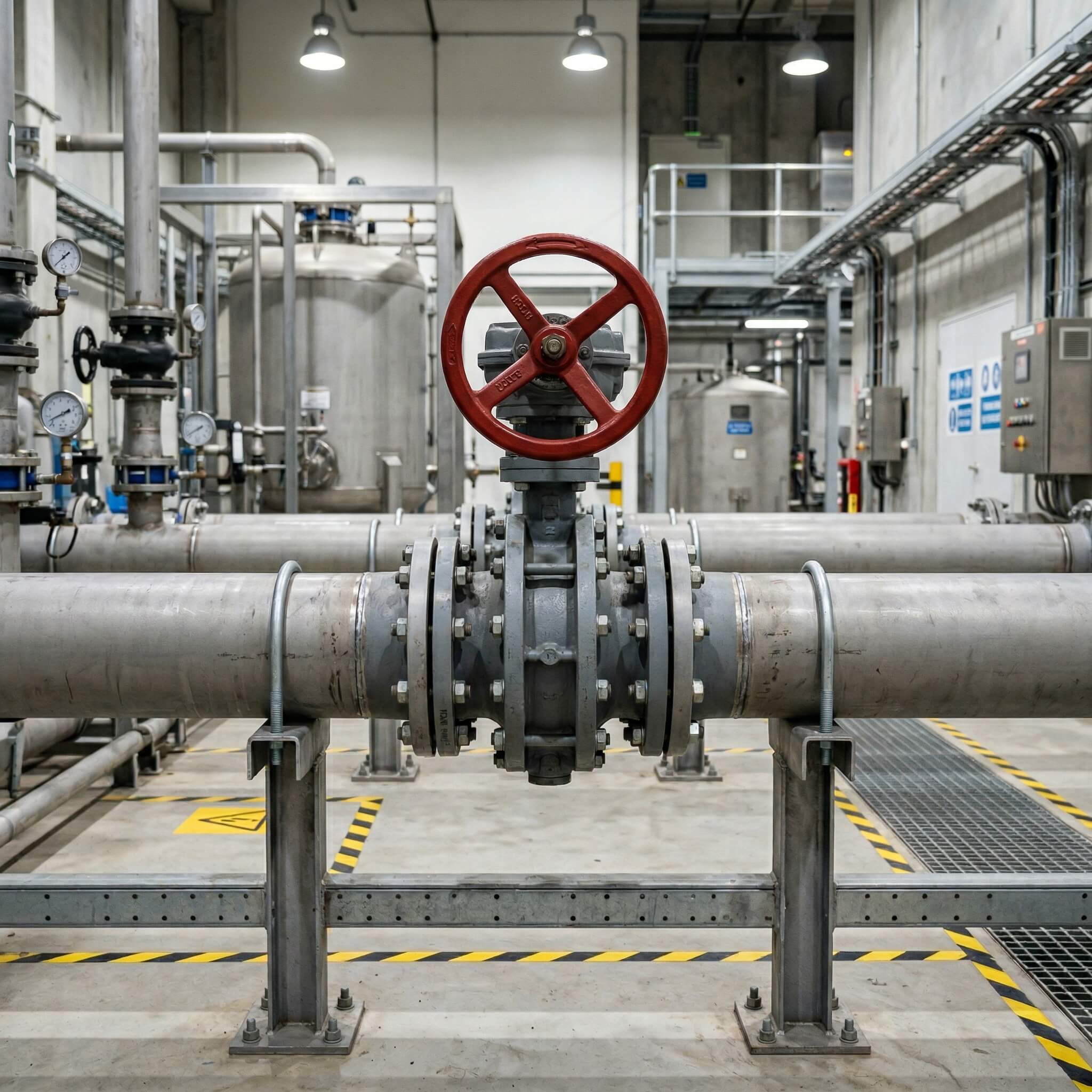
Butterfly Valve Basics involves understanding how these quarter-turn flow control devices utilize a rotating disc to regulate or isolate fluid movement within a pipeline. You might find that traditional heavy-duty valves are too bulky and expensive for your modern infrastructure projects. When you struggle with excessive weight and complex maintenance, your system efficiency drops and costs soar. The solution is simple: knowing what is butterfly valve used for allows you to integrate lightweight, high-performance components that save space and budget.
What are the primary functions of a butterfly valve?
These valves primarily function as shutoff and throttling devices that use a 90-degree rotation to manage liquid or gas flow. You should realize that understanding what is butterfly valve used for helps you decide when to prioritize speed over high-pressure resistance. These components are excellent for systems requiring rapid operation.
Reliable flow isolation
Flow isolation is the most common use for these valves because they provide a tight seal against bi-directional pressure.
Think about it.
- Zero-leakage shutoff
- Bi-directional pressure handling
- Compact face-to-face dimensions
Effective throttling capabilities
You can also use these valves for throttling when you need to regulate flow rates without full closure.
Believe it or not.
- Near-linear flow control
- Adjustable disc angles
- Lower pressure drop than globe valves
Key Takeaway: Butterfly valves provide versatile shutoff and regulation for various industrial media.
| Function | Primary Benefit | Ideal Scenario |
|---|---|---|
| Isolation | Leak-proof seal | System maintenance |
| Throttling | Flow regulation | Cooling systems |
This functional versatility makes them a staple in high-volume fluid networks.
Where does this valve find its place in the industry?
You will find these valves in sectors ranging from HVAC systems to massive municipal water treatment plants. When determining what is butterfly valve used for in your specific field, consider that their small footprint is a massive advantage in tight factory layouts.
Municipal water systems
In water treatment, these valves manage the massive volumes of potable water and raw intake required for city services.
Here is the kicker:
- Corrosion-resistant epoxy coatings
- NSF/ANSI 61 compliance
- Low torque requirements
Chemical processing plants
Chemical plants utilize these valves for handling aggressive fluids where space for bulky gate valves is non-existent.
Wait, there is more.
- PTFE-lined options for acids
- High-temperature metal seats
- Fast actuation for safety trips
Key Takeaway: Industrial applications rely on the compact design and material adaptability of these valves.
| Industry | Valve Duty | Preferred Material |
|---|---|---|
| Water Treatment | High-volume intake | Ductile Iron |
| Chemical | Corrosive transport | Stainless Steel |
Widespread industrial adoption proves that these valves meet the most demanding operational standards.
How does the quarter-turn mechanism work?
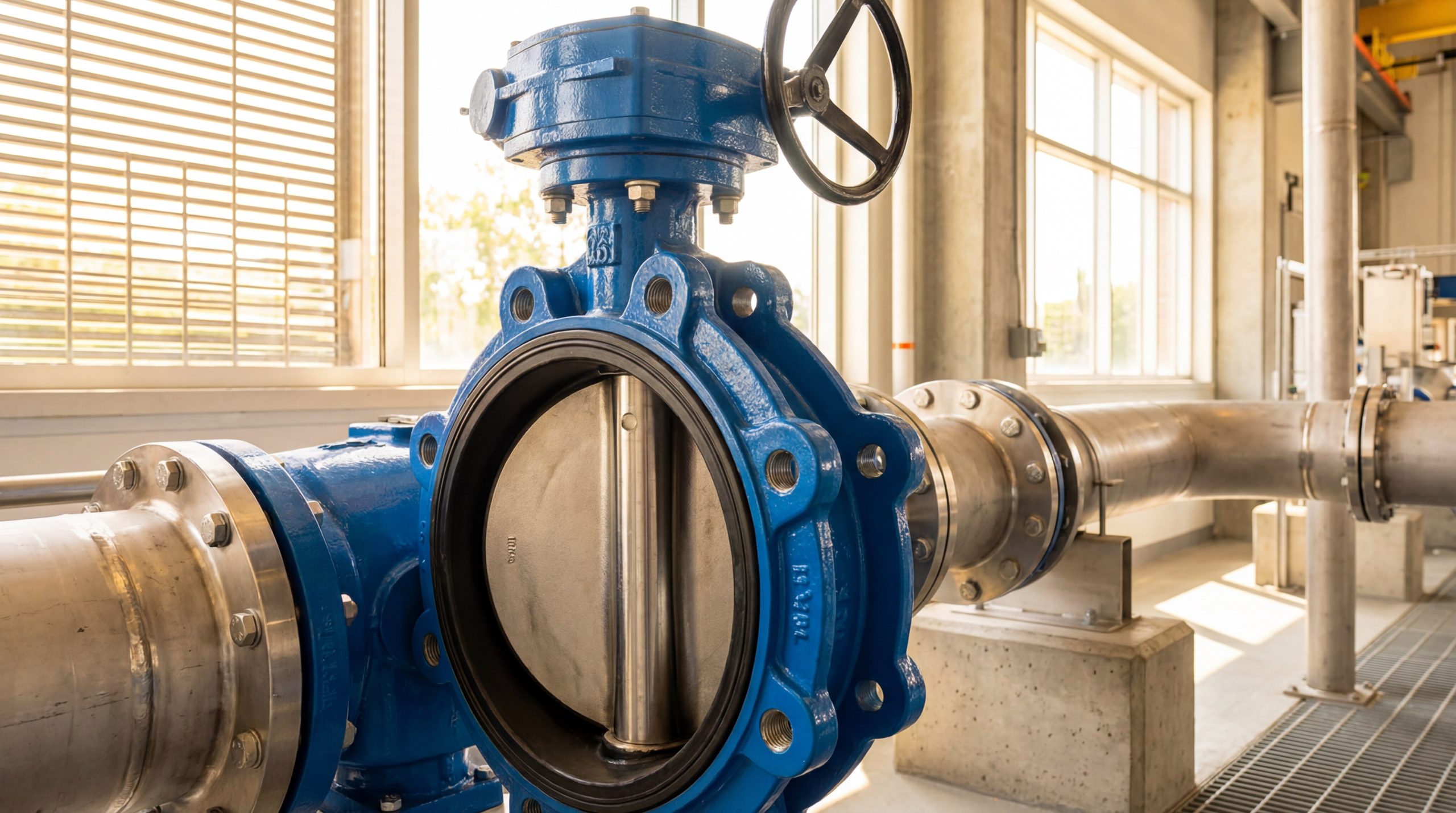
The mechanism works by rotating a disc 90 degrees via a stem connected to an external actuator or handle. To grasp what is butterfly valve used for, you must visualize the disc sitting in the center of the flow, pivoting to allow or block passage.
The role of the disc and stem
The stem transmits torque from your hand or the motor directly to the disc to change the flow path.
Check this out:
- Center-mounted disc pivot
- Blow-out proof stem design
- Streamlined disc profiles
Manual vs. automated operation
You can choose between manual hand-levers or automated electric and pneumatic actuators depending on your system’s scale.
As you might expect:
- Gear operators for large diameters
- Pneumatic trips for emergencies
- Electric units for remote control
Key Takeaway: Simple 90-degree rotation ensures fast response times and easy automation integration.
| Operation | User Action | Response Speed |
|---|---|---|
| Manual | Lever or Wheel rotation | Moderate |
| Automated | Remote signal trigger | Instant |
The simplicity of this design reduces the number of moving parts prone to failure.
Why choose a wafer style for your piping system?
A wafer style valve is chosen when you need a lightweight, cost-effective solution that sits between two pipe flanges. Understanding what is butterfly valve used for in this context highlights its role as the most economical choice for general fluid service.
Space-saving design
The wafer style is characterized by its thin profile, making it much easier to fit into existing pipelines than flanged models.
The best part?
- Minimal face-to-face length
- Significant weight reduction
- Lower material costs
Ease of installation
You can install these quickly because they are held in place by the clamping force of the flange bolts.
But wait, there is more.
- No additional bolting required
- Self-centering body shapes
- Compatible with standard flanges
Key Takeaway: Wafer styles offer the best value for space-restricted, bi-directional flow applications.
| Feature | Wafer Style | Advantage |
|---|---|---|
| Size | Very Compact | Fits tight spaces |
| Cost | Lowest | Budget optimization |
Choosing the wafer style allows for rapid system assembly without sacrificing sealing performance.
Can butterfly valves effectively handle wastewater?
Yes, specialized butterfly valves are designed to manage the abrasive and debris-filled environments found in wastewater facilities. When evaluating what is butterfly valve used for in sewage plants, the focus is on preventing clogs and resisting internal erosion.
Handling slurries and solids
These valves handle slurries by using reinforced seats and discs that can cut through minor debris during closure.
Think about it.
- Self-cleaning seat profiles
- Abrasion-resistant coatings
- High-torque closure force
Corrosion resistance in sewage
You must use materials that resist the hydrogen sulfide and other corrosive gases present in wastewater streams.
It gets better.
- Ductile iron with fusion-bonded epoxy
- 316 Stainless steel shafts
- Robust elastomer liners
Key Takeaway: Proper material selection allows these valves to survive the harsh conditions of wastewater treatment.
| Media | Challenge | Valve Solution |
|---|---|---|
| Sewage | Corrosion | Epoxy Coating |
| Slurries | Erosion | Hardened Disc |
Their ability to handle solids makes them indispensable for modern waste management infrastructure.
What are the core components within the valve body?
The core components include the body shell, a resilient or metal seat, a rotating disc, and the internal stem. When you investigate what is butterfly valve used for, you see that each part is engineered to withstand specific pressures and temperatures.
Resilience of the valve seat
The seat is the most critical part for ensuring a bubble-tight seal when the valve is fully closed.
You see:
- EPDM for standard water service
- NBR for oil and gas applications
- PTFE for chemical resilience
Strength of the disc and stem
The disc must be strong enough to withstand the full pressure of the line without deforming or cracking.
Make no mistake.
- Ductile iron or Stainless steel
- Polished edges for seat longevity
- Precision-machined stem flats
Key Takeaway: High-quality internal components determine the overall reliability and sealing class of the valve.
| Component | Material Options | Role |
|---|---|---|
| Seat | EPDM, PTFE, NBR | Sealing |
| Disc | DI, SS304, SS316 | Flow Blockage |
A robust internal architecture ensures the valve performs consistently under repetitive cycling.
How do materials impact valve performance?
Material selection dictates the temperature limits, chemical compatibility, and overall lifespan of your valve in the field. To maximize what is butterfly valve used for, you must match the valve’s metallurgy and elastomer to your specific media.
Choosing the right metallurgy
Selecting stainless steel or bronze over ductile iron can prevent catastrophic failure in marine or offshore environments.
Here is the deal.
- 316L for saltwater resistance
- Carbon steel for high-pressure gas
- Ductile iron for cost-efficiency
Importance of elastomer selection
The temperature of your fluid will determine if you need EPDM, which handles heat well, or NBR for colder oil service.
Do not forget.
- Viton for high-temperature chemicals
- Food-grade liners for sanitary use
- Reinforced seats for high cycles
Key Takeaway: Material harmony between the fluid and the valve prevents premature leakage and system downtime.
| Fluid Type | Temperature | Best Material |
|---|---|---|
| Potable Water | <120°C | EPDM |
| Crude Oil | <80°C | NBR |
Investing in premium materials upfront significantly reduces your long-term operational risks.
What steps ensure a successful valve installation?
Successful installation involves cleaning the flange surfaces, aligning the pipe correctly, and tightening bolts in a star pattern. When you understand what is butterfly valve used for, you realize that even the best valve will fail if installed with misaligned pipes.
Preparing the pipeline
You must ensure the pipe flanges are parallel and spaced correctly to avoid crushing the valve seat during insertion.
Keep this in mind:
- Remove rust and welding slag
- Check for pipe misalignment
- Verify adequate flange spacing
Critical bolting procedures
Tightening bolts evenly ensures the pressure is distributed across the entire seat, preventing localized leaks or disc jamming.
Believe it or not.
- Use a calibrated torque wrench
- Follow a cross-bolt pattern
- Leave disc slightly open during tightening
Key Takeaway: Precision during the installation phase prevents 90% of common valve operational issues.
| Step | Action | Objective |
|---|---|---|
| Alignment | Level pipe flanges | Prevent Seat Stress |
| Tightening | Star/Cross pattern | Uniform Sealing |
Adhering to these mechanical standards guarantees a leak-free start-up for your fluid system.
How can you prolong the lifespan of your valves?
Prolonging lifespan requires regular cycling, periodic seat inspections, and ensuring the media remains within specified temperature ranges. As you master what is butterfly valve used for, you will see that a small amount of preventative care saves thousands in replacement costs.
Routine operational cycling
Valves that stay in one position for months can seize up due to mineral deposits or stagnant fluid buildup.
You should know:
- Cycle at least once monthly
- Check for smooth rotation
- Verify full closure seal
Monitoring wear and tear
You need to inspect the external packing and internal seat if you notice any drop in downstream pressure.
It is worth noting.
- Replace seats before failure
- Lubricate gearboxes annually
- Tighten packing glands as needed
Key Takeaway: Proactive maintenance schedules extend the service life of high-cycle butterfly valves.
| Task | Frequency | Benefit |
|---|---|---|
| Cycling | Monthly | Prevents Seizing |
| Inspection | Yearly | Early Fault Detection |
A well-maintained valve remains a reliable asset for your facility for decades.
Why is high-quality manufacturing critical for safety?
High-quality manufacturing ensures that every valve can withstand 1.5 times its working pressure without catastrophic body failure. When people ask what is butterfly valve used for in critical safety systems, the answer is always reliable, predictable emergency shutoff.
Testing and certification standards
Reliable manufacturers put every unit through rigorous hydrostatic and pneumatic tests to confirm zero-leakage performance.
Make no mistake.
- API 598 pressure testing
- ISO 9001 quality control
- CE and DNV certifications
Material traceability and trust
You must trust that the materials inside your valve match the specification sheet to avoid chemical reactions or bursts.
Here is the kicker:
- Mill Test Certificates (MTC)
- Standardized batch tracking
- Verified metallurgy analysis
Key Takeaway: Investing in certified manufacturing protects your personnel and your high-value equipment.
| Certification | Requirement | Industry Trust |
|---|---|---|
| ISO 9001 | Management Quality | High |
| API 598 | Pressure Integrity | Essential |
Safety should never be compromised for a lower price tag when dealing with pressurized systems.
Frequently Asked Questions
Can I use these valves for high-pressure steam?
No, because standard resilient-seated valves will melt. You must use triple-offset metal-seated valves for high-temperature steam applications.
What’s the best material for saltwater service?
Stainless Steel 316 or Bronze is the best choice. These materials resist the rapid pitting and corrosion common in marine environments.
Can I install a wafer valve at the end of a line?
No, because it requires two flanges to hold it in place. You must use a lug-style valve for end-of-line or dead-end service.
What’s the best way to prevent seat leakage?
Ensure the disc is properly aligned during installation and the pipeline is free of debris. Regular cycling also prevents deposits from damaging the sealing surface.
Summary
The challenges of bulky piping systems, excessive weight, and difficult maintenance are solved by the streamlined efficiency of the butterfly valve. Our vision is to provide precision-engineered fluid control that empowers your infrastructure projects with reliability and safety. By mastering these basics, you can optimize your operations and reduce costs across the board. If you are ready to upgrade your system with ISO-certified solutions, contact us today for a technical consultation.