
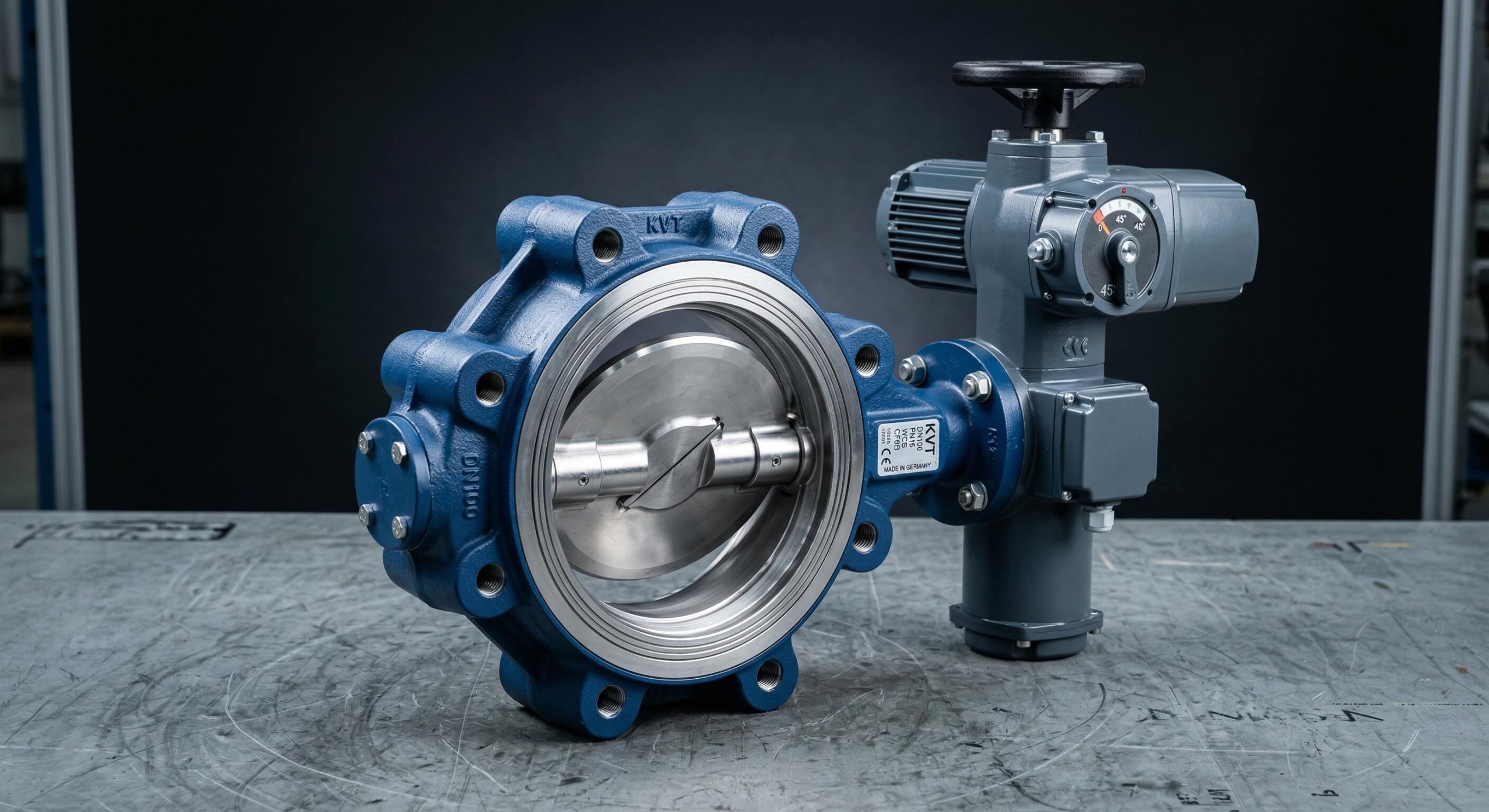
Yes, you can use butterfly valves for throttling, provided the specific design is engineered to handle intermediate flow positions and the associated pressure drops. You may find that managing high-capacity municipal water lines or industrial processes requires more than just a simple on-off switch to maintain system stability. When you rely on standard valves for complex flow control, you risk rapid seat wear, inaccurate regulation, and destructive cavitation that threatens your entire pipeline’s integrity. By implementing a precision-engineered throttling butterfly valve, you gain a solution designed to handle variable positioning without compromising service life.
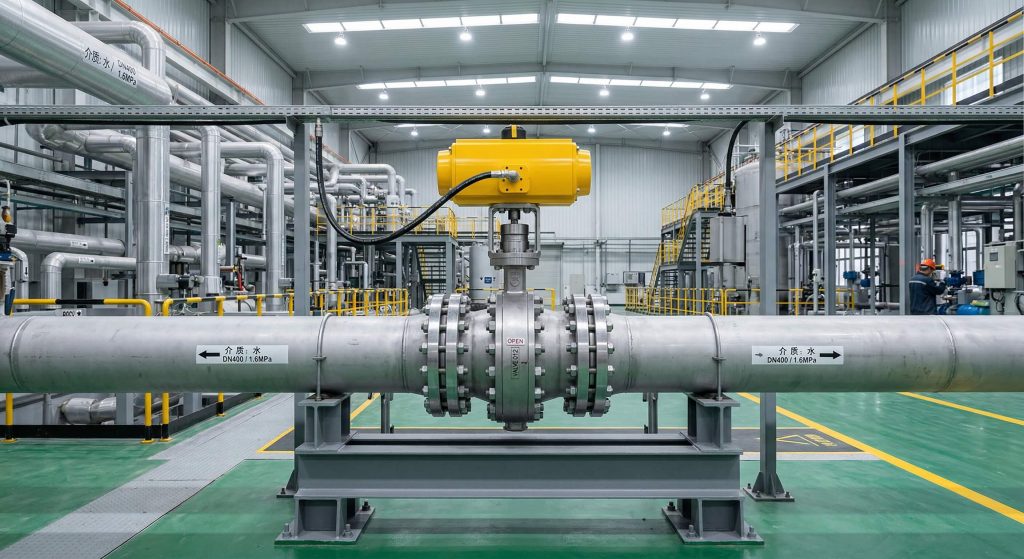
What defines a high-performance throttling butterfly valve?
A high-performance throttling butterfly valve is defined by its ability to operate reliably at various angles between 0° and 90° for extended periods. Unlike standard isolation valves, a throttling butterfly valve features a robust shaft and disc assembly capable of withstanding the dynamic forces generated by partially restricted flow.
Is it different from standard on-off valves?
Standard on-off valves are primarily designed to be either fully open or fully closed to prevent seal degradation. When you attempt to throttle with a basic model, the constant fluid velocity against a partially open disc can lead to “flutter” and mechanical failure.
- Throttling models have reinforced stems to resist torque.
- The seals are often recessed or made of tougher materials.
- Actuators provide finer incremental control for precise flow steps.
What are the primary components involved?
The effectiveness of these valves depends on the harmony between the circular disc, the centralized or offset shaft, and the high-torque actuator.
Think about this: without a high-precision actuator, even the best disc design cannot maintain the exact angle needed for flow stability.
Key Takeaway: A throttling butterfly valve is a specialized modification of the traditional design, optimized for durability during modulation.
| Feature | Standard Valve | Throttling Valve |
|---|---|---|
| Primary Use | Isolation | Flow Regulation |
| Seat Contact | Constant when closed | Reduced friction during travel |
| Actuation | Manual/Direct | Precision Automated |
Selecting a valve with the correct torque rating for intermediate positions is critical for system longevity.
How does a throttling butterfly valve regulate fluid flow?
These valves regulate flow by using an adjustable disc that rotates on a shaft to vary the open area within the pipe. A throttling butterfly valve creates a calculated pressure drop as the disc turns, which effectively modulates the volume of fluid passing through the system.
How does disc rotation change the flow path?
As you rotate the disc from the fully open position, it begins to obstruct the fluid stream, creating two distinct flow paths around the edges. This change in geometry increases fluid resistance, which is how you manage the flow rate across your industrial network.
- Angular positioning creates a variable orifice.
- Fluid resistance increases as the disc nears 90 degrees.
- Flow coefficient (Cv) values are mapped to specific angles.
What occurs during partial closure?
During partial closure, the fluid velocity increases as it passes through the smaller openings between the disc and the valve body.
Here is the deal: this increased velocity is the primary mechanism of control, but it also introduces the highest stress on the valve components.
Key Takeaway: Flow regulation is achieved by altering the valve’s Flow Coefficient (Cv) through precise angular adjustments of the disc.
| Disc Angle (Degrees) | Flow Status | Pressure Drop |
|---|---|---|
| 90° (Open) | Maximum Flow | Minimal |
| 45° | Moderate Flow | Significant |
| 10° | Low Flow | Very High |
Monitoring the pressure drop across the valve helps you ensure the system remains within safe operating parameters.
When is a throttling butterfly valve the right choice?
This valve is the right choice when you need a lightweight, cost-effective solution for modulating flow in large-diameter pipelines. A throttling butterfly valve is particularly useful in scenarios where installation space is limited, yet precise control over cooling loops or water treatment processes is mandatory.
Is it effective for high-velocity liquids?
While effective, high-velocity liquids require you to be cautious about the material selection for the disc and seat. High-velocity streams can cause erosion on softer materials, so you should opt for stainless steel or hardened alloys in these environments.
- Municipal water treatment facilities benefit from their compact size.
- Chemical cooling loops use them for temperature regulation.
- HVAC systems rely on them for balancing large air or water flows.
Can it handle gas and slurry regulation?
Throttling can be performed on gases, but slurries present a unique challenge due to the abrasive nature of the media.
The best part? Because the disc remains in the flow stream, it can actually help prevent sediment buildup if the velocity is maintained correctly.
Key Takeaway: Use these valves in large-scale applications where the economy of scale and space savings outweigh the need for the extreme precision of globe valves.
| Application Type | Suitability | Recommended Seal |
|---|---|---|
| Potable Water | High | EPDM / NBR |
| HVAC Balancing | High | Resilient Seat |
| Abrasive Slurries | Moderate | Hardened Metal |
Always verify the media compatibility with your valve supplier to avoid premature seal degradation.
Does a throttling butterfly valve handle cavitation risks?
A throttling butterfly valve can handle cavitation only if it is correctly sized and the pressure drop is managed within safe limits. Because the design forces fluid through narrow gaps, the risk of localized pressure dropping below vapor pressure is a significant concern you must address.
Why do high velocities cause vapor bubbles?
When you throttle a valve heavily, the fluid speeds up at the edges of the disc, causing a sharp drop in pressure. If this pressure falls below the liquid’s vapor pressure, bubbles form and then collapse violently, which can pit the metal surfaces of your valve.
- Pressure drops create localized vacuum zones.
- Bubble collapse generates micro-jets of high pressure.
- Surface pitting occurs on both the disc and the downstream piping.
How can you mitigate cavitation damage?
You can mitigate this damage by ensuring the valve is not sized too small for the application.
Look: using a larger valve and operating it in a more open position (30° to 70°) is often the simplest way to avoid the cavitation zone.
Key Takeaway: Cavitation is a serious threat during heavy throttling and requires careful calculation of the pressure recovery factor.
| Risk Level | Pressure Ratio (P1/P2) | Recommended Action |
|---|---|---|
| Low | < 1.5 | Standard Operation |
| Medium | 1.5 – 2.5 | Monitor for Noise |
| High | > 2.5 | Use Anti-Cavitation Trim |
Installing the valve in a location with higher downstream pressure can significantly reduce the likelihood of cavitation.
Which design makes for a superior throttling butterfly valve?
A superior design for a throttling butterfly valve typically involves an eccentric or high-performance configuration rather than a concentric one. By moving the shaft away from the centerline of the disc, the design reduces the time the disc spent in contact with the seat, preserving the seal during throttling.
Why avoid zero-offset designs for control?
Zero-offset or concentric valves maintain constant contact between the disc and the seat throughout the rotation. If you use these for throttling, the constant friction at intermediate angles will quickly shred the resilient liner.
- Concentric designs are best for simple on-off service.
- They suffer from “seat set” when left partially open.
- The torque required to move them can be inconsistent.
Are resilient seats necessary for throttling?
Resilient seats are excellent for achieving a tight shut-off, but for pure throttling, you might consider metal-seated options.
But wait, there’s more: metal-seated triple-offset valves offer the durability of a globe valve with the footprint of a butterfly valve.
Key Takeaway: High-performance eccentric designs are the industry standard for any application requiring more than basic isolation.
| Design Type | Throttling Precision | Seat Durability |
|---|---|---|
| Concentric | Low | Low |
| Double Eccentric | Medium-High | High |
| Triple Offset | High | Very High |
Investing in a double eccentric design pays for itself through reduced maintenance and fewer unplanned shutdowns.
Is the double eccentric type the best throttling butterfly valve?
The double eccentric type is widely considered the best throttling butterfly valve for general industrial and waterworks modulation. Its design allows the disc to “lift” off the seat immediately upon rotation, which eliminates the friction that typically destroys seats in other valve types.
How does the offset reduce seat wear?
By having the shaft offset in two planes, the disc moves in a cam-like motion rather than a simple circle. This means you only experience seat contact in the final few degrees of closure, which is vital for maintaining a seal after months of throttling.
- Cam-action movement prevents “scrubbing” the seat.
- Friction is nearly eliminated during the 10° to 80° range.
- The valve maintains its sealing integrity for thousands of cycles.
Does it improve flow regulation accuracy?
Yes, because the friction is lower, the actuator can move the disc in much smaller, more consistent increments.
Believe it or not: this design allows for a nearly linear flow characteristic in the middle of its travel range.
Key Takeaway: For long-term reliability in water treatment and chemical processes, the double eccentric design is the superior choice.
| Component | Benefit of Double Offset | Impact on Service |
|---|---|---|
| Shaft Offset 1 | Reduces seat contact | Longer seal life |
| Shaft Offset 2 | Enhances cam action | Lower operating torque |
| Disc Geometry | Optimized flow path | Better Cv control |
Standardizing on double eccentric models simplifies your spare parts inventory for both isolation and control.
Can a throttling butterfly valve effectively replace globe valves?
A throttling butterfly valve can replace a globe valve in many high-volume applications, though it offers slightly less precision at very low flow rates. You will find that for large pipe diameters, the butterfly design provides massive savings in both weight and initial procurement costs.
How do flow coefficients compare?
Globe valves typically have a much lower Cv for the same size because the fluid must turn 90 degrees twice inside the body. In contrast, the butterfly valve offers a “straight-through” path, which is much more efficient for high-capacity systems.
- Butterfly valves have higher flow capacities (Cv).
- Globe valves offer superior precision at <10% open.
- Butterfly designs are easier to support on long pipe runs.
Is the weight savings significant?
The weight difference is staggering, especially when you move into sizes above 12 inches.
You might be wondering: how much difference does it make? A 24-inch butterfly valve can weigh 70% less than a globe valve of the same rating.
Key Takeaway: Choose a butterfly valve for cost and weight efficiency in large systems where extreme low-flow precision is not the primary requirement.
| Comparison Metric | Throttling Butterfly | Globe Valve |
|---|---|---|
| Initial Cost | Low | High |
| Installation Space | Minimal | Large |
| Pressure Recovery | High | Low |
Use globe valves for small-bore, high-precision control, and butterfly valves for large-bore modulation.
Should you pair a gate valve with a throttling butterfly valve?
Pairing a throttling butterfly valve with a gate valve is a common strategy to ensure your system can be safely isolated for maintenance. While the butterfly valve handles the daily modulation, a dedicated gate valve provides the zero-leakage shut-off needed to work on the control valve without draining the system.
Is secondary isolation required?
In many critical industrial sectors, you are required by safety codes to have a secondary isolation point. Because throttling can cause wear over time, having a gate valve upstream allows you to swap out your control valve with minimal disruption.
- Upstream isolation protects maintenance personnel.
- System bypasses allow for continuous operation.
- Gate valves provide a robust, secondary “bubble-tight” seal.
What are common system configurations?
You will often see a “control station” where the butterfly valve is flanked by isolation valves and a bypass line.
It gets better: this configuration allows you to calibrate or repair your control equipment without ever stopping the main process flow.
Key Takeaway: A gate valve is the perfect companion to a control valve, offering security and ease of maintenance.
| Valve Role | Butterfly Valve | Gate Valve |
|---|---|---|
| Daily Function | Throttling / Control | Isolation (On/Off) |
| Flow Obstruction | Disc in stream | Clear waterway |
| Repair Access | Requires Isolation | Provides Isolation |
Always place the isolation valve upstream of the throttling valve to allow for safe depressurization during service.
Can a check valve protect your throttling butterfly valve?
Yes, installing a check valve can protect your throttling butterfly valve from the damaging effects of backflow and water hammer. In pump discharge applications, a check valve prevents the sudden reversal of fluid that could slam the butterfly disc against its limits or damage the actuator.
Can backflow damage the disc?
Backflow can exert massive force on a partially open disc, potentially bending the shaft or stripping the gears in your actuator. If you are throttling on a pump line, the check valve acts as a mechanical “deadbolt” to stop this energy before it reaches your control valve.
- Prevents reverse flow impact on the disc.
- Reduces the intensity of water hammer surges.
- Shields the delicate internal shaft and bearings.
What is the ideal installation sequence?
For the best results, you should install the check valve downstream of the pump but upstream of the throttling device.
That’s not all: this order ensures that the throttling valve only sees flow in the intended direction, maximizing its control accuracy.
Key Takeaway: Integrating a check valve is a low-cost insurance policy for your more expensive control and modulation equipment.
| Protection Target | Hazard Prevented | Recommended Valve |
|---|---|---|
| Actuator | Gear Stripping | Dual Plate Check |
| Valve Shaft | Torsional Stress | Swing Check |
| Seat Integrity | High Pressure Impact | Lift Check |
A well-placed check valve can extend the life of your control valve by several years in high-pressure systems.
How do you maintain a throttling butterfly valve properly?
Proper maintenance of a throttling butterfly valve centers on regular actuator calibration and periodic inspections of the seat and disc edges. Because the valve is constantly moving to adjust flow, you must ensure that the mechanical linkages remain tight and that debris isn’t eroding the sealing surfaces.
Is seal replacement a simple process?
In modern high-performance designs, replacing the seat is often a straightforward task that doesn’t require complete disassembly. You can usually access the seat by removing a retaining ring, which significantly reduces your downtime.
- Regular actuator calibration ensures angular accuracy.
- Periodic seat checks reveal early signs of erosion.
- Lubrication of the stem bearings prevents binding.
Do strainers extend the valve life?
Installing a ball valve or a Y-strainer upstream is one of the most effective ways to protect your throttling equipment. These devices catch welding slag, rocks, and other debris that would otherwise sandblast the disc during high-velocity throttling.
Bottom line? Clean fluid is the best friend of any control valve.
Key Takeaway: Routine filtration and a documented inspection schedule can push your valve’s operational life past the 20-year mark.
| Task | Frequency | Objective |
|---|---|---|
| Visual Inspection | Quarterly | Check for leaks / corrosion |
| Actuator Test | Semi-Annually | Verify full range of motion |
| Seal Inspection | Bi-Annually | Evaluate erosion levels |
Keep a log of the valve’s operating angles to identify if the system is drifting out of its optimal control range.
Frequently Asked Questions
Can any butterfly valve be used for throttling?
Not all designs are suitable; you must use specifically engineered high-performance or eccentric models to prevent rapid seat damage and mechanical failure.
What is the ideal opening range for throttling?
Generally, you should operate these valves between 30° and 70° open to maintain linear flow control and minimize the risk of noise and cavitation.
Does throttling cause the valve to leak over time?
Yes, if you use a standard concentric valve, the constant friction will degrade the seal; however, eccentric designs are built to mitigate this specific risk.
Can I automate my throttling process?
Absolutely, as most industrial models come with ISO 5211 mounting pads that allow you to attach electric or pneumatic actuators for remote control.
How do I select the right size for flow control?
You should base your sizing on the required Flow Coefficient (Cv) at your maximum and minimum flow rates, rather than simply matching the pipe size.
Optimize Your Flow Control Today
Choosing the right throttling butterfly valve is the difference between a high-efficiency system and a maintenance nightmare. Whether you are managing municipal water networks or complex industrial chemical processes, the right engineering makes all the difference. At RUITO, we specialize in providing high-reliability, precision-engineered valves that stand up to the most demanding conditions. If you need expert guidance on valve selection or a custom solution for your next project, contact us today to speak with our technical team.