
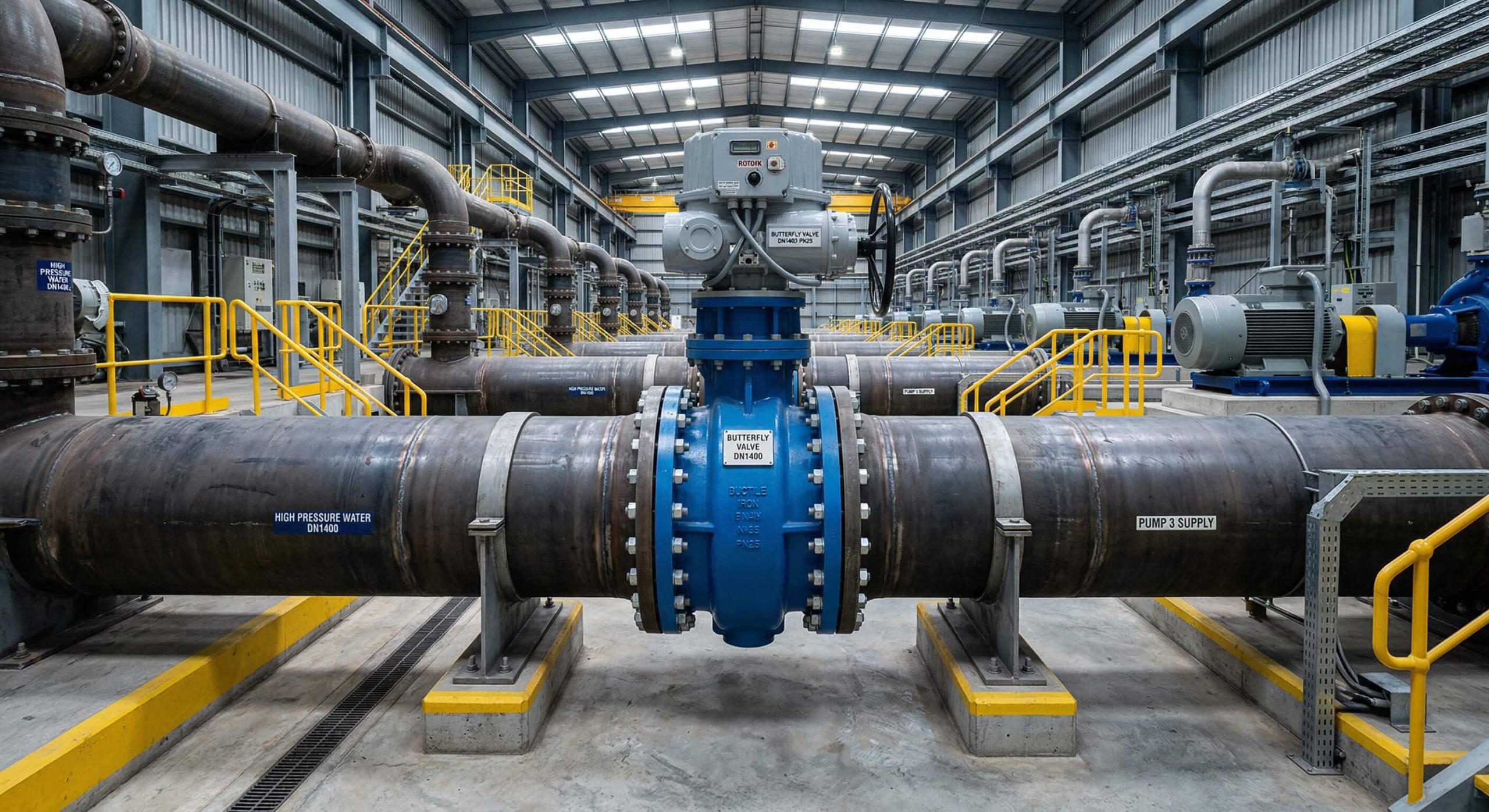
The square stem back-seated butterfly valve ensures unparalleled reliability in water management by providing a slip-free mechanical connection and a redundant sealing safety barrier. In large-scale water systems, you often face the risk of stem leakage or actuator decoupling, which can lead to costly downtime. A failure in a standard valve shaft can compromise an entire distribution network, resulting in significant water loss and maintenance headaches. By choosing a high-performance square butterfly valve, you implement a solution designed for high-torque applications and leak-free performance.
Why is square stem design critical for water systems?
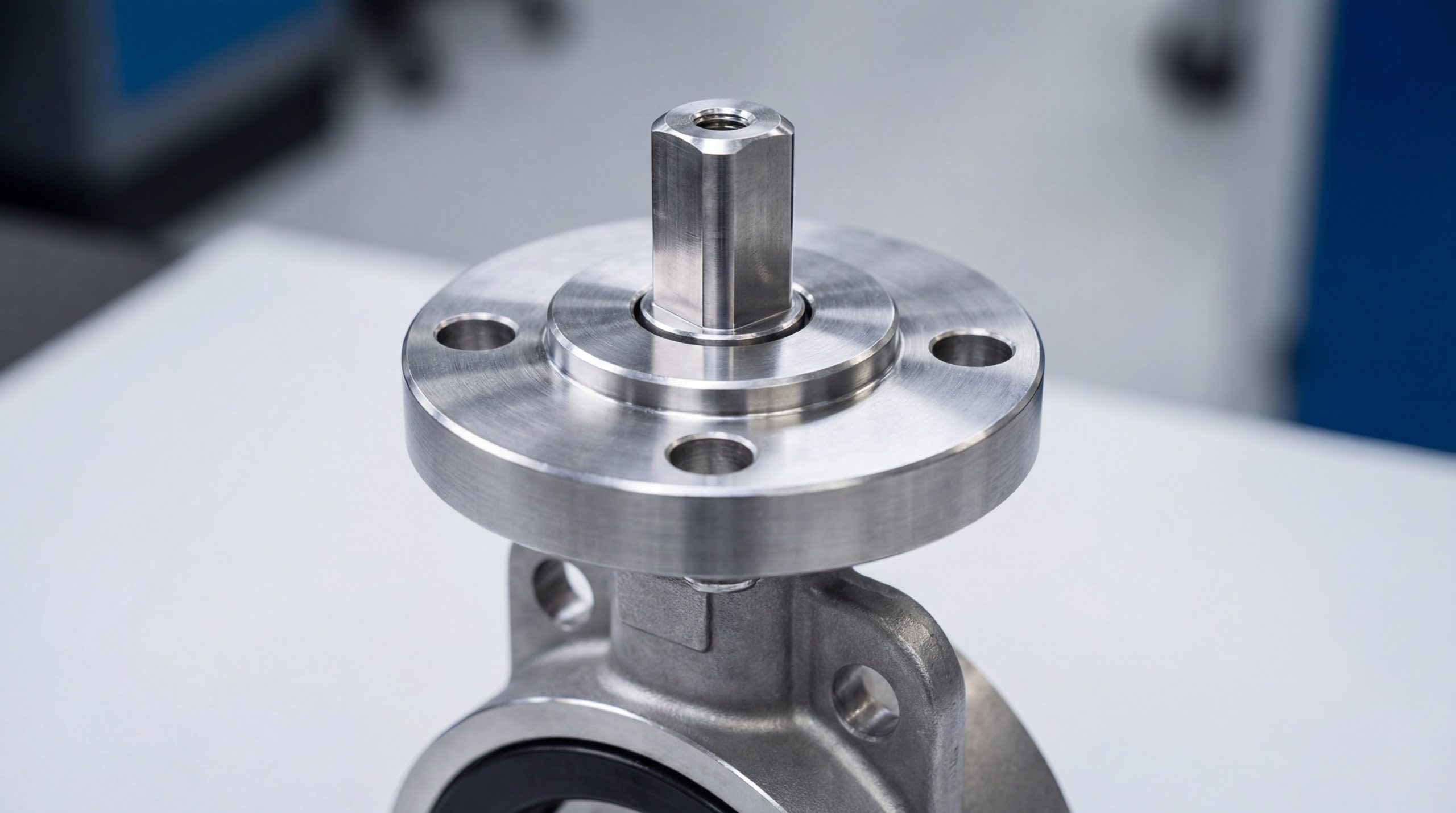
The square stem design provides a positive, direct-drive connection that eliminates the possibility of keyway shearing or slippage during operation. When you operate a square butterfly valve, the torque is distributed evenly across four flat surfaces rather than a single pin or key. This geometry is essential for maintaining control accuracy in high-flow municipal environments.
Maximizing Torque Transmission Efficiency
In heavy-duty water applications, the interface between the actuator and the valve disc is a common point of mechanical failure.
Think about it:
Standard keyed shafts can develop play over time, but the square profile maintains a rigid, zero-clearance fit.
- Eliminates the risk of internal mechanical slippage.
- Distributes torsional stress across the entire stem head.
- Reduces wear on the actuator coupling interface.
- Provides a visible indicator of disc position.
Key Takeaway
The transition to a square stem interface significantly reduces the mechanical “slop” that often plagues traditional industrial valve designs.
| Feature | Benefit | Operational Impact |
|---|---|---|
| Square Geometry | No Keyway Needed | Reduced Component Fatigue |
| 4-Point Contact | Higher Torque Capacity | Improved System Safety |
| Direct Drive | Precise Disc Control | Accurate Flow Regulation |
Analysis: Utilizing a square mechanical interface fundamentally shifts the reliability profile from a friction-dependent connection to a superior geometric lock.
What makes the back-seated feature a superior seal?
A back-seated feature acts as a secondary safety seal that isolates the stem packing from the line pressure when the valve is fully open. This means your square butterfly valve can maintain integrity even if the primary seals begin to degrade under high-pressure conditions. It provides an essential layer of protection for both the environment and your downstream equipment.
Ensuring Secondary Leakage Protection
The back-seat design is engineered to engage when the valve reaches its full stroke, creating a metal-to-metal or metal-to-soft seal.
The best part?
This feature allows you to perform emergency packing adjustments without shutting down the entire water line.
- Prevents fluid from reaching the stem packing during open cycles.
- Extends the service life of the primary sealing components.
- Minimizes the risk of external environmental contamination.
- Protects the actuator from corrosive media ingress.
Key Takeaway
Secondary back-seating transforms the valve into a fail-safe component by providing a backup barrier against stem-related leaks.
| Component | Function | Advantage |
|---|---|---|
| Back-Seat Bushing | Secondary Fluid Barrier | Safe Maintenance Under Pressure |
| Stem Packing | Primary Dynamic Seal | Standard Leak Prevention |
| O-Ring Buffer | External Dust Protection | Longevity of Internal Parts |
Analysis: Redundancy in sealing is the most effective strategy for preventing the catastrophic failure of municipal water infrastructure.
How does a square butterfly valve improve flow control?
Superior flow control is achieved through the elimination of mechanical hysteresis, allowing the disc to respond instantly to actuator commands. A square butterfly valve offers more precise throttling than a standard gate valve because there is no lost motion in the stem connection. This precision is vital for chemical dosing and pressure regulation in modern treatment plants.
Achieving Stable Throttling Performance
When you need to maintain a specific flow rate, the rigid connection of the square stem ensures the disc remains perfectly aligned.
Here is the deal:
Without the play found in traditional keyed shafts, the valve can maintain stable positions in turbulent flow streams.
- Consistent response across the full 90-degree turn.
- Reduced vibration during high-velocity water discharge.
- Improved accuracy for automated PID control loops.
- Lower torque requirements for high-frequency cycling.
Key Takeaway
The mechanical synchronization between the stem and disc allows for granular adjustments that are impossible with inferior shaft designs.
| Control Factor | Square Stem Impact | System Benefit |
|---|---|---|
| Hysteresis | Near-Zero Play | Precise Flow Regulation |
| Disc Stability | Anti-Flutter Design | Extended Seat Life |
| Repeatability | High Performance | Automated Process Stability |
Analysis: Eliminating mechanical slop is the prerequisite for moving from basic fluid isolation to advanced, high-precision flow modulation.
Where are these valves applied in municipal treatment?
Municipal treatment plants utilize the square butterfly valve in high-cycle applications such as filter backwashing and pump discharge isolation. These environments require a valve that can handle frequent operation without losing its sealing capability or mechanical alignment. Their compact footprint also makes them ideal for retrofit projects in cramped urban facilities.
Reliability in Filtration and Pumping Stations
High-cycle environments demand a valve that doesn’t require constant mechanical intervention to stay operational.
It gets better:
The square stem design resists the “rounding off” effect that occurs in high-frequency applications with standard keyed shafts.
- Ideal for automated filtration bed sequences.
- Provides reliable isolation for high-service pumps.
- Used in gravity-fed distribution reservoirs.
- Standard choice for large-diameter raw water intake.
Key Takeaway
The combination of geometric strength and compact design makes these valves the workhorse of municipal water infrastructure.
| Application | Key Requirement | Valve Solution |
|---|---|---|
| Filter Backwash | High Cycle Frequency | Wear-Resistant Square Stem |
| Pump Discharge | High Torque Resistance | Direct-Drive Reliability |
| Intake Lines | Large Bore Efficiency | Low-Profile Design |
Analysis: Selecting a valve with a square stem interface ensures that the most frequent points of failure are engineered out of the municipal system.
Can square stem valves handle high-pressure environments?
Yes, the square stem geometry provides significantly higher torsional strength, making it ideal for the high-pressure demands of water distribution. When you pair a square butterfly valve with modern high-torque actuators, you ensure the valve will close reliably even during a pressure surge. The back-seated feature further protects the stem assembly from the forces generated by high-velocity fluid.
Structural Integrity Under Pressure Spikes
In a high-pressure system, the stem is subjected to immense bending and twisting forces that can deform a round shaft.
Look at the facts:
The square head provides a larger surface area for load distribution, preventing localized stress concentrations.
- Exceeds standard PN16 and PN25 torque requirements.
- Maintains disc alignment during emergency shut-down events.
- Reduces the risk of stem blowout under extreme surge.
- Compatible with high-output pneumatic and electric actuators.
Key Takeaway
Torsional strength is the primary defense against valve failure in high-pressure networks where water hammer is a risk.
| Pressure Rating | Stem Material | Advantage |
|---|---|---|
| PN16 | Stainless Steel 410 | High Torsional Strength |
| PN25 | Stainless Steel 316 | Corrosion and Pressure Resistance |
| PN40 | 17-4 PH Stainless | Maximum Load Capacity |
Analysis: Engineering the stem with a square profile allows for higher safety margins without increasing the overall size of the valve body.
What materials ensure longevity in corrosive water?
Material selection is the foundation of a square butterfly valve that can survive decades of service in treated or raw water. You must ensure that the stem and disc are made from alloys that resist pitting and galvanic corrosion in varying pH levels. High-grade stainless steels and specialized epoxy coatings are standard for valves in these critical environments.
Utilizing Corrosion-Resistant Alloys
In water management, the interface between the stem and the disc is often the most vulnerable to chemical attack.
Why does this matter?
Corrosion in the stem-to-disc connection can lead to a complete loss of control, leaving the valve stuck in position.
- SS316 stems offer superior resistance to chlorinated water.
- Ductile iron bodies with epoxy coating prevent external rust.
- EPDM or NBR seats provide zero-leakage performance.
- Nickel-plated discs resist cavitation and erosion.
Key Takeaway
Matching the material specification to the specific chemical profile of the water prevents premature mechanical failure.
| Component | Common Material | Application |
|---|---|---|
| Stem | SS410 / SS316 | High Torque / High Corrosion |
| Disc | Al-Bronze / SS304 | Seawater / Treated Water |
| Seat | EPDM / PTFE | Potable Water / Chemicals |
Analysis: The physical longevity of a valve is directly proportional to the chemical compatibility of its internal wetted components.
Why is precise actuation easier with square stems?
Actuation is simplified because the square stem provides a standardized, high-strength interface that meets ISO 5211 mounting requirements. When you install an actuator on a square butterfly valve, you eliminate the need for custom brackets or complex coupling kits. This standardization reduces the potential for alignment errors during the installation process.
Seamless Actuator Integration
Direct mounting on a square stem ensures that the center of the actuator aligns perfectly with the center of the valve.
The result?
There is no side-loading on the stem, which is the primary cause of premature packing wear and leakage.
- Direct ISO 5211 flange compatibility.
- Reduced height for compact installation spaces.
- Lower installation costs by eliminating adapters.
- Faster commissioning of automated systems.
Key Takeaway
Standardizing the interface between the drive and the valve reduces the complexity and cost of automated water control.
| Mounting Style | Component Requirement | Accuracy |
|---|---|---|
| Direct Mount | Square Stem + ISO Flange | Maximum |
| Bracket Mount | Coupling + Bridge | Moderate |
| Keyed Mount | Custom Adapters | Variable |
Analysis: Simplifying the mechanical interface reduces the number of components that can fail or become misaligned over time.
How do back-seated valves reduce maintenance costs?
Maintenance costs are reduced because the back-seat feature allows for on-line packing adjustments, preventing the need for system-wide shutdowns. A square butterfly valve with these features requires fewer interventions over its lifecycle compared to standard industrial designs. By investing in these higher-specification valves, you significantly lower your total cost of ownership.
Minimizing Downtime and Labor Costs
Traditional valves often require the entire line to be drained before a simple packing leak can be repaired.
But there is a catch:
If your valve doesn’t have a back-seat, a $50 seal replacement could cost $5,000 in labor and downtime.
- Reduces the frequency of emergency repairs.
- Extends the interval between major overhauls.
- Protects external hardware from fluid damage.
- Simplifies the inspection of the stem assembly.
Key Takeaway
Designing for serviceability ensures that routine maintenance does not escalate into a major operational disruption.
| Task | Standard Valve | Back-Seated Valve |
|---|---|---|
| Packing Adjustment | System Shutdown | Live Operation |
| Stem Seal Life | Standard | Extended |
| Emergency Repair | High Cost | Minimal Cost |
Analysis: The true value of a valve is found in its ability to be serviced with minimal impact on the broader water distribution network.
Is the square butterfly valve suitable for desalination?
Yes, the square butterfly valve is highly effective in desalination plants where high salinity and pressure are constant challenges. These systems demand materials like Duplex stainless steel and a stem design that can handle the extreme torque required for high-pressure reverse osmosis stages. The back-seat provides an additional safety barrier against the highly corrosive brine.
Handling Aggressive Brine Environments
In a desalination facility, every component must withstand the relentless corrosive force of high-pressure seawater.
It’s simpler than you think:
The square stem ensures that even if salt crystals form, the mechanical connection remains strong enough to break through the buildup.
- Duplex materials resist chloride stress corrosion.
- Back-seat isolates sensitive parts from brine.
- Reinforced stem handles high RO pressures.
- Compact design fits on modular desalination skids.
Key Takeaway
The mechanical robustness of the square stem is essential for the high-torque demands of modern seawater processing.
| Environment | Requirement | Valve Performance |
|---|---|---|
| High Salinity | Pitting Resistance | Duplex / Super Duplex |
| RO Pressure | Torsional Strength | Reinforced Square Stem |
| Continuity | Long Service Life | Back-Seated Redundancy |
Analysis: Desalination requires the highest level of mechanical and material integrity to maintain continuous water production in harsh conditions.
What safety standards apply to back-seated valves?
Back-seated valves must adhere to rigorous international standards such as API 609 and EN 593 to ensure they perform under industrial stress. A square butterfly valve that meets these standards has undergone extensive hydrostatic and torque testing to verify its structural limits. When you specify these valves, you are ensuring compliance with global safety and performance benchmarks.
Verifying Compliance and Certification
Certification provides the peace of mind that the valve will perform as specified in your critical water infrastructure.
Beyond the basics:
Standards like ISO 9001 and WRAS ensure that the materials and manufacturing processes are of the highest quality.
- API 609 covers design and pressure ratings.
- EN 593 dictates the performance for water services.
- WRAS certification ensures safety for potable water.
- ISO 5211 standardizes the actuator interface.
Key Takeaway
Adhering to international standards is the only way to guarantee that a valve is safe for public water systems.
| Standard | Focus Area | Importance |
|---|---|---|
| API 609 | Valve Design | Industry Consistency |
| WRAS | Potable Water | Public Health Safety |
| ISO 5211 | Actuation | Interoperability |
Analysis: Global certifications serve as the ultimate validation for the engineering choices made during the valve design process.
Frequently Asked Questions (FAQ)
Can I use a square butterfly valve for both clean and wastewater?
Yes, the square butterfly valve is versatile enough for both, provided you select the appropriate seat and disc materials to handle potential debris in wastewater.
What’s the best way to determine the correct stem size for my actuator?
You should refer to the ISO 5211 mounting flange size and the square dimension (e.g., 14mm or 17mm) to ensure a perfect fit without adapters.
How do I know if a valve is truly back-seated?
Usually, you can verify this by checking the technical drawing or seeing if the stem has a secondary shoulder that seals against a bushing in the fully open position.
Can I replace the stem packing while the valve is in the system?
Yes, if the valve has a back-seated design, you can fully open it to engage the seal and safely replace the packing under line pressure.
Conclusion
The square butterfly valve with a back-seated design is the definitive choice for professionals seeking to de-risk their water management systems. By addressing the common failures of stem slippage and leakage, these valves ensure long-term operational stability. We stand behind our commitment to providing high-reliability, certified fluid control solutions for municipal and industrial projects worldwide. If you are ready to enhance your system’s performance, contact us today to discuss your technical requirements with our engineering team.