
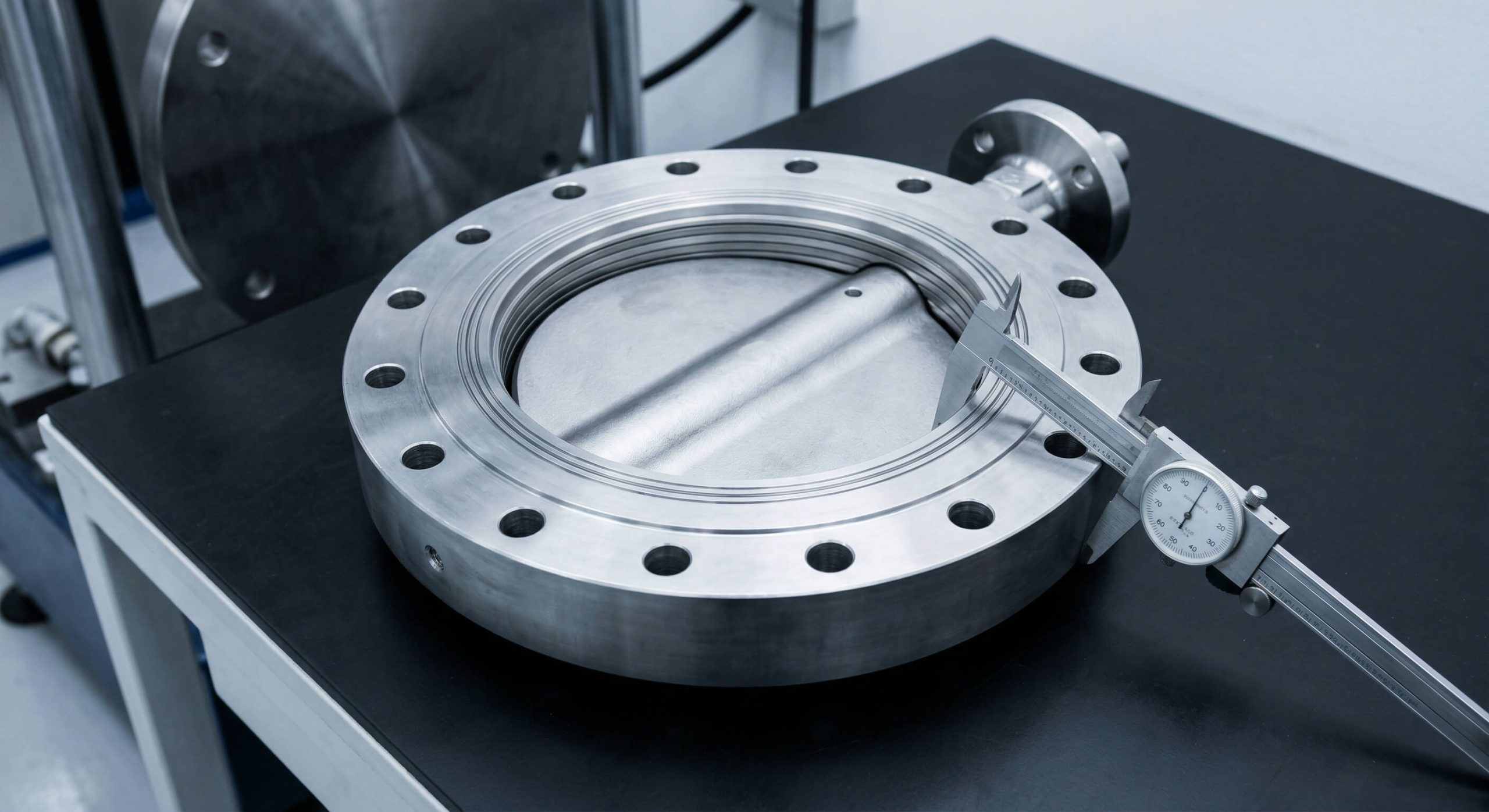
A butterfly valve pressure rating is the maximum internal pressure a valve is designed to withstand at a specific temperature without leaking or structural failure. These ratings are standardized under two primary systems: the European PN (Nominal Pressure) system measured in bar and the North American ASME Class system measured in PSI. Selecting the correct butterfly valve pressure rating ensures your water, oil, gas, or steam systems operate within safe mechanical limits.
Selecting an incorrect rating is a recipe for industrial disaster. Using a valve rated for lower pressure than the system’s peak can lead to catastrophic seal blowouts, dangerous leaks, and immediate project shutdowns. Beyond the safety risks, the financial fallout is immense through unplanned maintenance and ruined actuators. If your system hits 20 bar but your valve is capped at PN16, the failure isn’t a matter of “if,” but “when.” This guide breaks down the technical nuances of PN16, PN25, PN40, and Class 150 standards so you can specify solutions that guarantee long-term operational integrity.
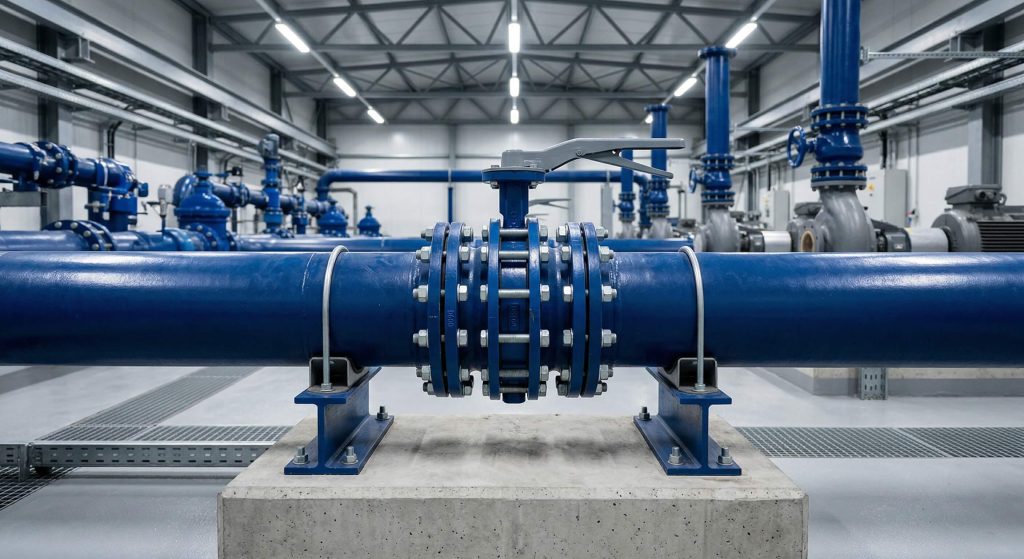
What Is the Definition of Butterfly Valve Pressure Rating?
A butterfly valve pressure rating defines the structural capacity of the valve body and internal components to contain pressurized media at a given temperature. You must view this rating as a dynamic limit rather than a static number.
Think about this:
The rating represents the “safe zone” for your piping infrastructure. If you exceed this limit, you risk permanent deformation of the disc or stem.
Understanding Nominal Pressure (PN)
Nominal Pressure, denoted as PN, is a metric-based classification used primarily in Europe and Asia. It indicates the maximum pressure in bar that a valve can handle at an ambient temperature of 20°C.
- PN10: Rated for 10 bar.
- PN16: Rated for 16 bar.
- PN25: Rated for 25 bar.
The Importance of Pressure-Temperature Correlation
You must remember that as the temperature of the media increases, the allowable pressure decreases. This is known as the “pressure-temperature derating” curve.
- Strength Loss: Metals soften at high heat.
- Seal Integrity: Soft seats like EPDM have lower thermal limits.
- Safety Margin: Always calculate for the worst-case temperature scenario.
Key Takeaway: The pressure rating is the maximum design limit that ensures the valve remains bubble-tight and structurally sound during operation.
| Rating System | Standard | Unit of Measure | Global Region |
|---|---|---|---|
| PN System | EN 1092-1 | Bar | Europe / Asia |
| Class System | ASME B16.34 | PSI | North America |
Analytical Guide: Use this table to identify which regional standard applies to your project documentation before ordering hardware.
How Does PN16 Butterfly Valve Pressure Rating Impact Water Systems?
A PN16 butterfly valve pressure rating signifies a maximum working pressure of 16 bar, which is approximately 232 PSI. This is the “workhorse” specification for DN50 butterfly valve applications in municipal water treatment and commercial HVAC lines.
Believe it or not:
PN16 is the most common standard found in building services worldwide. It provides an ideal balance between material cost and pressure containment for most low-to-medium stress environments.
Suitability for HVAC and Irrigation
You will find PN16 valves in chilled water loops and irrigation systems where pressures rarely exceed 12 bar. This provides a healthy safety margin for standard operation.
- Standard Materials: Usually cast or ductile iron.
- Seat Types: Typically EPDM or Nitrile.
- Installation: Uses standard EN 1092-1 PN16 flanges.
Managing Low-Pressure Gas Lines
While primarily used for water, PN16 is also suitable for low-pressure compressed air and non-corrosive gas delivery. You just need to ensure the seat material is chemically compatible with the gas.
- Gas Safety: Prevents shell leakage at typical distribution pressures.
- Weight Advantage: PN16 valves are lighter and easier to install than high-pressure variants.
Key Takeaway: PN16 is the industrial standard for utility water systems, offering a 16-bar limit that covers most commercial infrastructure needs.
| Application | Recommended Rating | Max Bar | Max PSI |
|---|---|---|---|
| Irrigation | PN16 | 16 | 232 |
| Potable Water | PN16 | 16 | 232 |
| HVAC Cooling | PN16 | 16 | 232 |
Analytical Guide: If your system operates below 12 bar, PN16 offers the most cost-effective and reliable solution for your piping needs.
Why Choose a PN25 Butterfly Valve Pressure Rating for Industry?
A PN25 butterfly valve pressure rating allows for a maximum pressure of 25 bar (363 PSI), providing a 56% increase in capacity over PN16. This rating is essential for industrial process lines that experience significant pressure fluctuations or surges.
But here is the catch:
Using a PN16 valve in a 15-bar system leaves almost no room for “water hammer” or pump start-up spikes. That is why engineers often move up to PN25 for critical process safety.
Structural Reinforcement in PN25 Valves
You will notice that PN25 valves have thicker body walls and reinforced disc designs. These structural upgrades prevent the valve from warping under increased mechanical stress.
- Material Upgrades: Often utilizes high-grade ductile iron or WCB steel.
- Stem Strength: Thicker stems to handle higher torque requirements.
Applications in High-Rise Pumping
High-rise buildings and long-distance water transmission often require the PN25 standard. These systems must push water against gravity or across miles of pipe, creating high static pressure.
- Pumping Stations: Handles the back-pressure from large centrifugal pumps.
- Fire Protection: Ensures integrity during high-flow emergency events.
Key Takeaway: PN25 provides the necessary safety overhead for industrial processes where pressure stability is not guaranteed.
| Feature | PN16 | PN25 | Difference |
|---|---|---|---|
| Wall Thickness | Standard | Heavy Duty | Increased Strength |
| Max PSI | 232 | 363 | +131 PSI |
| Typical Use | Commercial | Heavy Industrial | Higher Margin |
Analytical Guide: Choose PN25 when your steady-state pressure exceeds 14 bar to ensure a proper safety factor against surges.
What Are the Limits of PN40 Butterfly Valve Pressure Rating?
A PN40 butterfly valve pressure rating is designed for high-stress environments, supporting up to 40 bar (580 PSI). This rating is standard for high-pressure butterfly valve selection in chemical processing and steam networks.
In other words:
This is the boundary where standard concentric valves often give way to high-performance offset designs. At 40 bar, the force against the disc is massive, requiring specialized engineering.
Material Strength for PN40 Systems
You cannot use standard cast iron for PN40 applications. These valves typically require cast steel (WCB) or stainless steel (CF8M) to withstand the internal energy of the system.
- Shell Integrity: Heavily tested to ensure no porosity under high pressure.
- Sealing Surface: Often utilizes metal-to-metal or reinforced PTFE seats.
High-Stress Industrial Environments
PN40 valves are the preferred choice for petrochemical refineries and steam distribution. These systems demand reliability because a valve failure at 40 bar can be lethal.
- Steam Lines: Handles high-temperature vapor without deformation.
- Chemical Feed: Resists high-pressure corrosive media.
Key Takeaway: PN40 is a heavy-duty industrial rating that requires premium materials and high-performance designs to manage 40-bar loads safely.
| Rating | Pressure (Bar) | Pressure (PSI) | Material Minimum |
|---|---|---|---|
| PN40 | 40 Bar | 580 PSI | Cast Steel / Stainless |
| Usage | Steam / Oil | High-Pressure Gas | Critical Infrastructure |
Analytical Guide: Always verify that your PN40 valve has undergone shell and seat leak testing according to API 598 standards before installation.
Is Class 150 Butterfly Valve Pressure Rating Different From PN16?
The Class 150 butterfly valve pressure rating is a North American standard that allows for 285 PSI (19.6 bar) at 100°F. While it is often compared to PN16, it actually offers a higher pressure ceiling.
The truth is:
You cannot simply swap a PN16 valve for a Class 150 valve without checking your flanges. The bolt patterns and hole diameters are fundamentally different.
ASME vs. EN Standardization
Class 150 follows the ASME B16.5 and B16.34 standards. In contrast, PN16 follows the EN 1092-1 European standards, meaning they serve different engineering ecosystems.
- Class 150: Rated for 285 PSI (Ambient).
- PN16: Rated for 232 PSI (Ambient).
Dimensional and Flange Variations
You must pay attention to the physical connection points. Even if the pressure ratings were identical, the physical geometry of the valve body usually prevents cross-standard installation.
- Bolt Circle: Class 150 uses inch-based spacing.
- Hole Count: Often differs from PN metric standards for the same pipe size.
Key Takeaway: Class 150 is stronger than PN16 but requires ASME-compliant flanges for a safe and leak-free installation.
| Standard | Max Pressure (Bar) | Max Pressure (PSI) | Typical Region |
|---|---|---|---|
| Class 150 | 19.6 Bar | 285 PSI | USA / Canada |
| PN16 | 16.0 Bar | 232 PSI | Europe / China |
Analytical Guide: If your project involves international shipping, specify the flange standard alongside the pressure rating to avoid installation delays.
Does Temperature Lower Your Butterfly Valve Pressure Rating?
Temperature is the most critical variable that can degrade your butterfly valve pressure rating. As the heat of the media rises, you must select metal seats or high-performance materials to prevent the rating from collapsing.
It gets better:
By understanding the pressure-temperature curve, you can prevent thermal expansion from blowing out your gaskets. A valve rated for 285 PSI at 100°F might only handle 230 PSI at 400°F.
The Thermal Expansion Risk
You will find that high temperatures cause the valve components to expand at different rates. This can lead to increased friction or even “locking” of the disc within the seat.
- Seat Softening: Rubber liners lose elasticity and sealing power.
- Metal Fatigue: Prolonged heat weakens the molecular structure of the body.
Calculating the Pressure-Temperature Curve
You must consult the manufacturer’s specific charts for your valve material. Different alloys, such as 316 Stainless vs. Carbon Steel, react differently to heat.
- Ductile Iron: Fast derating at high temperatures.
- Stainless Steel: Maintains higher pressure integrity at elevated heat.
Key Takeaway: Never assume the room-temperature rating applies to hot steam or oil; always derate the pressure based on operating temperature.
| Temperature (°F) | Class 150 (PSI) | PN16 Equivalent (Bar) |
|---|---|---|
| 100°F | 285 PSI | 19.6 Bar |
| 300°F | 250 PSI | 17.2 Bar |
| 500°F | 170 PSI | 11.7 Bar |
Analytical Guide: Use the derating data above to ensure your valve doesn’t fail when the system reaches its maximum thermal load.
Which Standards Certify a Butterfly Valve Pressure Rating?
A butterfly valve pressure rating is only as reliable as the standard that governs it. Most high-pressure applications rely on API 609, which dictates the dimensions and pressure-temperature limits for industrial valves.
Wait, there’s more:
Certification isn’t just about the design; it’s about the testing. Every rated valve should undergo a shell test and a seat closure test before it leaves the factory.
API 609 and ASME B16.34 Compliance
These standards ensure that a valve from one manufacturer will perform similarly to one from another. They define the minimum wall thickness and material properties required for each pressure class.
- API 609: Specific to butterfly valve design and pressure classes.
- ASME B16.34: Covers pressure-temperature ratings for all steel valves.
Testing and Material Certification
You should always request Material Test Reports (MTRs) for high-pressure valves. This documentation proves the metal alloy meets the stress-limit requirements of the specified rating.
- API 598: The standard for valve inspection and pressure testing.
- EN 12266-1: The European equivalent for pressure testing.
Key Takeaway: Industry standards like API 609 provide the legal and engineering framework that guarantees a valve’s pressure rating is accurate.
| Standard | Focus Area | Common Pressure Classes |
|---|---|---|
| API 609 | Design / Face-to-Face | Class 150, 300, 600 |
| EN 12516 | Body Strength | PN10, PN16, PN25, PN40 |
| API 598 | Leakage Testing | All Ratings |
Analytical Guide: Cross-reference your valve’s API/EN certification with your system’s safety requirements to ensure full compliance.
Can Seat Material Change a Butterfly Valve Pressure Rating?
The butterfly valve pressure rating is often limited by the seat material rather than the metal body. To reach higher pressures, you often need double or triple offset designs that utilize metal or reinforced seats.
As it turns out:
The seat is usually the weakest link in the assembly. While a steel body can handle PN100, a soft EPDM seat might fail or “blow out” long before that level is reached.
Soft vs. Metal Seating Performance
You will find that soft seats (EPDM, PTFE, Viton) are excellent for bubble-tight sealing at low pressures. However, high-pressure systems require metal-to-metal contact to maintain seal integrity.
- Soft Seats: Best for PN10/PN16 water systems.
- Metal Seats: Required for PN40+ or high-temperature steam.
How Design Offsets Enhance Ratings
You can achieve higher pressure ratings by using offset designs. These configurations reduce the friction between the disc and seat, allowing for tighter seals under high mechanical load.
- Concentric: Standard for PN16.
- Double Offset: Excellent for Class 150/300.
- Triple Offset: The gold standard for high-pressure PN40 and Class 600.
Key Takeaway: The seat material and valve design (concentric vs. offset) are just as important as the body material in determining the final pressure rating.
| Seat Material | Max Rating (Approx) | Temperature Limit | Common Media |
|---|---|---|---|
| EPDM | PN16 | 120°C | Water / HVAC |
| PTFE | PN25 | 200°C | Chemicals |
| Metal | PN40+ | 500°C+ | Steam / Oil |
Analytical Guide: Upgrade to a metal-seated triple offset valve if your application involves both high pressure (PN40) and high temperature.
How Do You Match Flanges to a Butterfly Valve Pressure Rating?
Matching your flanges to the butterfly valve pressure rating is a critical step in leak prevention. You must ensure the valve end connection matches the drilling and pressure rating of the surrounding pipe flanges.
Looking for a secret?
The flange rating must always be equal to or greater than the valve rating. If you put a PN16 valve between PN10 flanges, the flange becomes the weak point and will likely leak.
Wafer vs. Lug vs. Flanged Connections
You have three main options for connecting a butterfly valve to your system. Each has specific strengths depending on the pressure rating and the need for downstream maintenance.
- Wafer Type: Lightweight and fits between flanges; best for PN16.
- Lug Type: Has threaded holes; allows for “dead-end” service at full pressure rating.
- Flanged Type: Has its own flanges; used for very large valves or extremely high pressure.
Bolt Pattern and Gasket Alignment
You must verify that the bolt circle diameter (BCD) matches your piping standard. Misalignment by even a few millimeters can cause uneven pressure on the gasket, leading to a blowout.
- Metric (PN): Follows EN 1092-1 spacing.
- Imperial (Class): Follows ASME B16.5 spacing.
Key Takeaway: A valve’s pressure rating is irrelevant if the flange connection is mismatched, as the seal will fail at the interface.
| Connection | Best For | Typical Rating | Maintenance Benefit |
|---|---|---|---|
| Wafer | Economy | PN10 / PN16 | Easy Install |
| Lug | Safety | PN16 / PN25 | Dead-end Service |
| Double Flanged | Reliability | PN25 / PN40 | High Integrity |
Analytical Guide: Always use Lug-type valves if you anticipate needing to remove downstream piping while the system is under pressure.
How to Prevent Failure of a Butterfly Valve Pressure Rating?
Preventing failure starts with accurately assessing your system’s peak loads against the butterfly valve pressure rating. You must also account for accurate actuator and torque sizing to ensure the valve can close effectively against high pressure.
Let’s face it:
Most failures happen because the user ignored “surge pressure” or “water hammer.” These momentary spikes can easily exceed a PN16 rating even if the steady-state pressure is only 10 bar.
Detecting Leakage and Deformation
You will notice signs of failure long before a blowout occurs. Look for external leaks at the stem or a “drop-off” in downstream pressure, which indicates the disc is deforming under load.
- Stem Leakage: Often caused by exceeding the pressure limit of the packing.
- Disc Drag: High pressure can bend the stem, causing the disc to rub against the body.
Maintenance for High-Pressure Reliability
You must implement a regular inspection schedule for high-pressure valves. Check for seat wear and ensure that the actuator is providing enough torque to maintain a tight seal.
- Lubrication: Keeps the stem moving freely under load.
- Seal Inspection: Check for EPDM “nibbling” or metal seat pitting.
Key Takeaway: To prevent failure, select a rating that covers your highest expected surge pressure and maintain the valve’s mechanical integrity.
| Failure Mode | Warning Sign | Prevention Step |
|---|---|---|
| Seat Blowout | Immediate Leak | Upgrade Pressure Rating |
| Stem Shear | Valve Won’t Turn | Correct Actuator Sizing |
| Disc Bend | Internal Leakage | Use Triple Offset Design |
Analytical Guide: If your system experiences frequent pump cycling, always spec a valve rating one level higher than the calculated working pressure.
Conclusion
Understanding butterfly valve pressure rating standards is the difference between a high-performing industrial system and a dangerous liability. Whether your project requires the municipal reliability of PN16 or the high-stress capacity of PN40 and Class 150, matching the valve to the system’s pressure and temperature peaks is non-negotiable.
RuitoFlow is a premier manufacturer specializing in high-performance butterfly valves engineered for the most demanding pressure environments. Our products are rigorously tested to exceed API 609 and EN 12516-1 standards, ensuring that you receive uncompromised reliability regardless of your application. Don’t leave your system’s safety to chance. Contact us today for a technical consultation or a custom quote tailored to your specific pressure requirements.
FAQ: Butterfly Valve Pressure Ratings
- Can I use a PN40 valve in a system that only requires PN16?
Yes, you can absolutely “up-rate” a valve. A PN40 valve is structurally stronger and will handle PN16 pressures with ease, though it will be heavier and more expensive. However, you must ensure the flange bolt patterns match, as PN40 and PN16 flanges often have different dimensions and hole counts. - What is the PSI equivalent of a PN25 butterfly valve?
A PN25 rating is approximately 363 PSI. This makes it significantly stronger than the standard PN16 (232 PSI) and suitable for high-rise water systems or industrial process lines. - Does the butterfly valve pressure rating change if I use a different liner?
Absolutely. Soft liners like EPDM, PTFE, or Viton have much lower temperature thresholds than metal seats. As the temperature rises, these soft materials lose their structural integrity, which effectively lowers the safe pressure rating of the entire valve assembly. - Why is Class 150 sometimes called PN20?
In some international standards, ASME Class 150 is approximated as PN20. This is because its maximum ambient pressure rating (285 PSI) converts to roughly 19.6 bar, which rounds to the nearest standard PN increment of 20. - How does a “surge pressure” rating differ from a standard rating?
Standard ratings (PN/Class) refer to continuous, steady-state working pressure. Surge ratings account for brief, momentary spikes caused by events like “water hammer.” It is best practice to select a standard rating that exceeds your highest expected surge for maximum safety.