
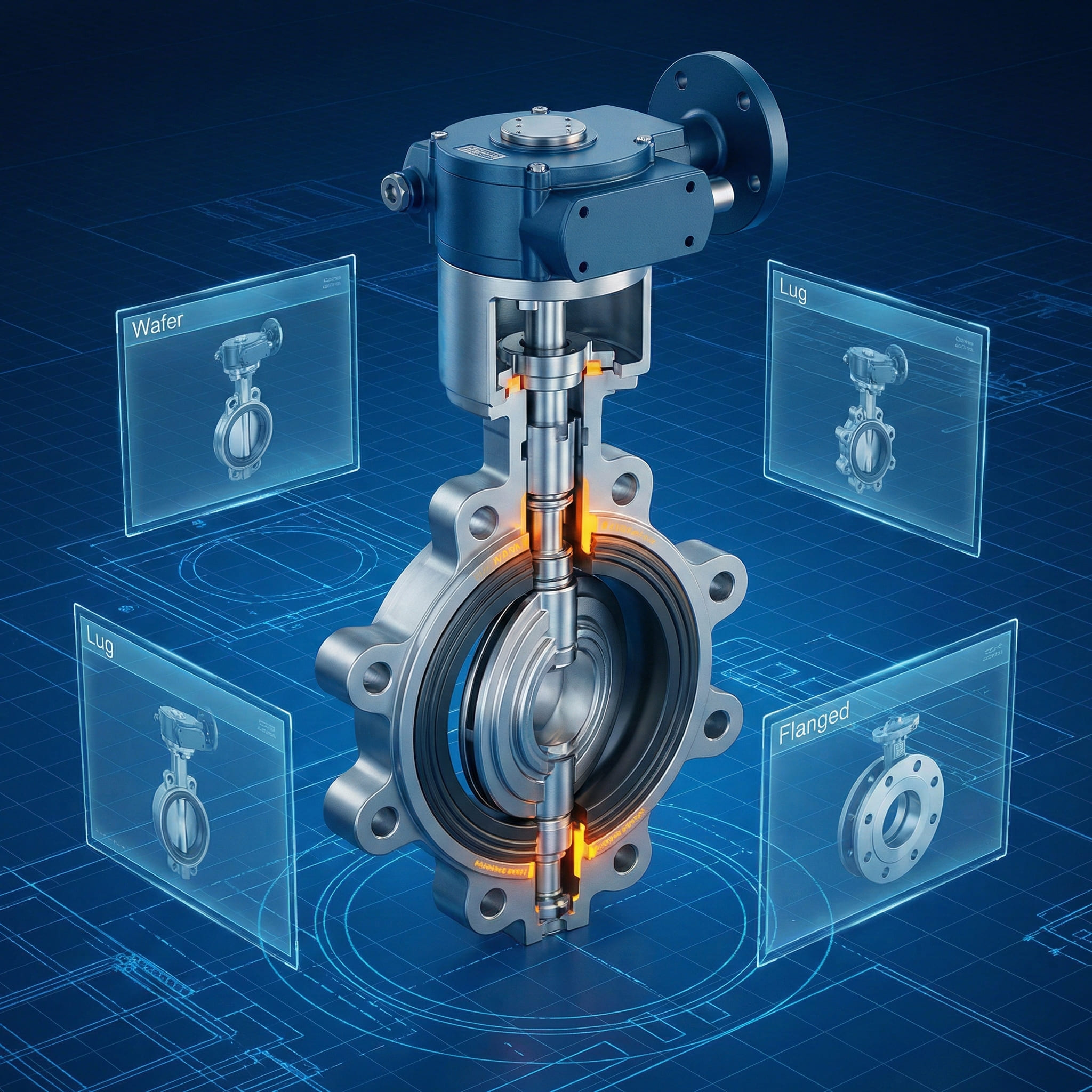
Butterfly valves are quarter-turn rotary motion valves used to control, regulate, or isolate the flow of various media through a piping system. Selecting the wrong valve for your industrial application often leads to system inefficiency, frequent leaks, and costly operational downtime. When your infrastructure faces high-pressure demands or corrosive media, the agitation caused by poor valve performance can compromise both safety and production targets. This butterfly valve selection guide provides the technical solution you need to optimize your flow control systems with absolute precision.
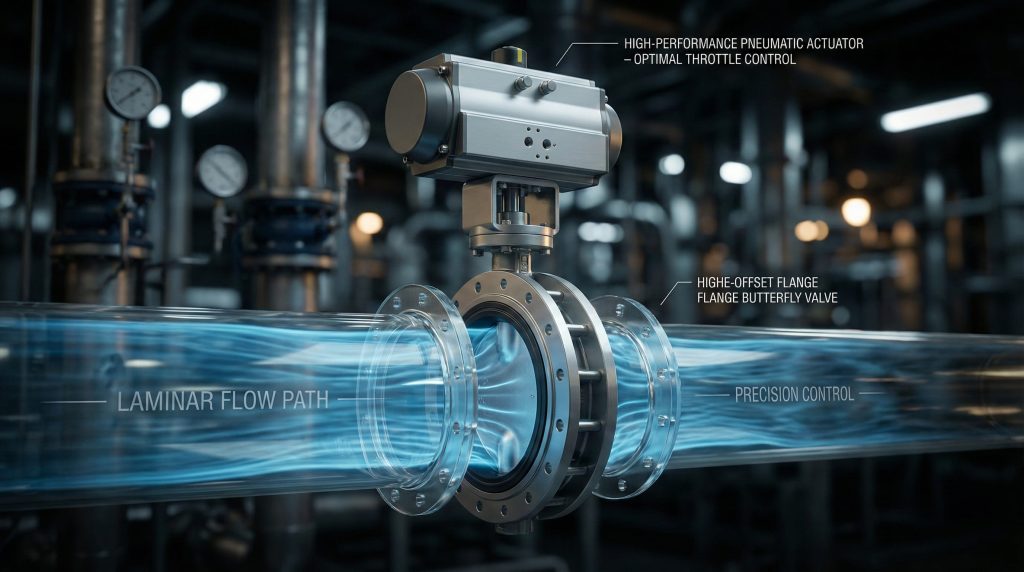
Why is a butterfly valve selection guide essential?
A selection guide is essential because it ensures engineers identify the correct mechanical specifications for specific fluid dynamics. This butterfly valve selection guide acts as a roadmap to prevent premature wear and chemical degradation in your piping networks.
Identifying core valve functions
You must recognize that these valves are primary tools for stopping, starting, and regulating flow. Their quarter-turn operation allows for rapid response times in your critical systems.
Here is the deal:
- On/off service is the primary application.
- Throttling is highly effective for flow regulation.
- Automation is easily integrated into these units.
Reviewing major advantages
You will find that these valves offer a compact design and lower weight compared to gate or globe valves. They provide a high coefficient of flow for your facility operations.
Look at the facts:
- They feature a space-saving profile.
- You benefit from reduced installation costs.
- Maintenance routines are significantly simplified.
Acknowledging potential drawbacks
You should note that unguided disc movement can sometimes be affected by severe flow turbulence. Certain designs may also be difficult to clean if you are working in highly sterile environments.
The best part?
- Proper sizing mitigates most turbulence issues.
- Specialized coatings can improve cleanliness.
- Selection tools help you avoid common pitfalls.
Key Takeaway: Following a structured evaluation ensures you maximize the lifecycle of your flow control components and avoid expensive system failures.
| Feature | Description |
|---|---|
| Motion | Quarter-turn rotary |
| Primary Use | On/Off and Throttling |
| Profile | Compact and lightweight |
This structural overview confirms that butterfly valves are the most versatile choice for modern industrial piping configurations.
How to use a butterfly valve selection guide for types?
This guide categorizes valves by their disc and seat configuration to match your system pressure and temperature requirements. Using a butterfly valve selection guide allows you to distinguish between concentric and eccentric designs based on sealing needs.
Concentric designed valves
You rely on a frictional interference seal between the disc and the seat in these standard models. They are generally best suited for your lower pressure applications where soft seating is sufficient.
Look at the facts:
- Economical for general water service.
- Easy to replace seat components.
- Zero-leakage performance in low-pressure zones.
Double eccentric designed valves
You may know these as high-performance valves because they feature an offset sealing plane. This design reduces seat wear by minimizing contact until the final closure point in your process.
Here is the deal:
- Reduced friction extends the valve’s life.
- You can use them in higher pressure tiers.
- They handle moderately abrasive media effectively.
What are triple eccentric valves?
You will utilize these for a metal seat with a conical sealing principle for extreme conditions. They are ideal for your high-temperature and high-pressure environments where a zero-leakage metal seal is mandatory.
Check this out:
- They handle temperatures over 500°C.
- You get a fire-safe sealing solution.
- The friction-free stroke prevents seat deformation.
Key Takeaway: Selecting the specific geometry suited to your pressure levels prevents seat erosion and ensures bubble-tight shut-off.
| Type | Sealing Method | Best Application |
|---|---|---|
| Concentric | Interference | Low pressure/Soft seat |
| Double Offset | Eccentric Disc | High performance/Reduced wear |
| Triple Offset | Conical Metal | Critical sealing/High temp |
Analyzing these structural types helps you match the valve’s mechanical complexity to the actual severity of your application.
Does your butterfly valve selection guide cover materials?
A robust guide must account for the chemical compatibility of the body, disc, and seat materials with your process media. Consulting a butterfly valve selection guide helps you avoid material failure in corrosive environments.
Selecting body metals
You have several options including ductile iron, carbon steel, and specialized alloys. For your offshore or marine environments, aluminum bronze or specialized stainless steels are often preferred.
Here is the deal:
- Ductile iron is great for water.
- Carbon steel handles higher temperatures.
- Stainless steel prevents external corrosion.
Disc material options
You must remember that the disc is in constant contact with your media. Options range from coated ductile iron for general service to polished stainless steel for your food-grade applications.
Look at the facts:
- Nylon coatings protect against mild chemicals.
- Stainless discs offer excellent longevity.
- Polished surfaces prevent media buildup.
Special alloys for severe applications
You may require alloys like Monel or Hastelloy in high-temperature steam or corrosive gas services. These materials prevent pitting and stress corrosion cracking that could destroy standard valves.
Think about it:
- Titanium offers extreme chemical resistance.
- Super Duplex handles high-salinity fluids.
- Inconel is used for extreme thermal cycles.
Key Takeaway: Matching material properties to your chemical process prevents catastrophic leaks and reduces the frequency of part replacements.
| Material | Advantage | Common Use |
|---|---|---|
| Ductile Iron | High strength/Low cost | Water/Air lines |
| Stainless Steel | Corrosion resistance | Chemical/Food |
| Exotic Alloys | Extreme durability | Acids/High temp |
Correct material selection acts as the first line of defense against the chemical degradation of your infrastructure components.
How to choose seats via a butterfly valve selection guide?
The seating material is critical for achieving your required leakage class and maintaining system integrity. A butterfly valve selection guide highlights the trade-offs between elastomeric, PTFE, and metal seats for your project.
Resilient vs metal seats
You will use resilient seats made of EPDM or BUNA-N for water and air applications. Metal seats are required when your system temperature exceeds the limits of soft polymers.
Look at the facts:
- EPDM handles most water treatment needs.
- Viton is excellent for oily media.
- Metal seats endure high-velocity steam.
Achieving zero leakage
You can achieve zero leakage with high-performance double or triple offset designs. These utilize specialized sealing geometries to eliminate gaps even when you are dealing with gas.
Here is the deal:
- Soft seats provide Class VI seals.
- Triple offset metal seats achieve zero leakage.
- Lapping processes ensure perfect contact.
High pressure considerations
You must ensure the seat is robust enough to resist deformation and “blow-out” under load. In high-pressure systems, the seat housing must support the seal during every cycle.
Consider this:
- Reinforced PTFE adds structural strength.
- Metal seats require precise alignment.
- Retainer rings must be securely fastened.
Key Takeaway: Choosing the right seat material ensures your system meets environmental safety standards and prevents costly media loss.
| Seat Type | Temperature Range | Leakage Class |
|---|---|---|
| Elastomeric | Low to Medium | VI (Bubble-tight) |
| PTFE/RTFE | Medium | VI |
| Metal-to-Metal | High to Extreme | IV or V |
Understanding the limits of each seat material allows you to maintain a reliable seal across various temperature and pressure fluctuations.
Does a butterfly valve selection guide help with pressure?
Engineers must use a guide to calculate maximum pressure drop and ensure the valve operates without cavitation. Referencing a butterfly valve selection guide helps you balance flow capacity with precise control.
Calculating system pressure drop
You should aim for the valve to absorb 25% to 50% of the total system pressure drop for control applications. This ensures you maintain effective throttling control throughout the operation.
Look at the facts:
- Too low ΔP causes poor control.
- High ΔP leads to noise and vibration.
- Sizing tools calculate the exact Cv required.
Throttling limits and capacity
You will find that butterfly valves are excellent for throttling but must be sized correctly for your needs. Operating your valve too close to the seat can cause rapid seat erosion.
Here is the deal:
- Stay between 20° and 70° open.
- Avoid “chatter” by matching torque.
- Use high-performance discs for better control.
Preventing cavitation and choke
You must select designs that mitigate the effects of bubbles forming and collapsing in your line. A guide helps you identify when the liquid pressure might drop below the vapor pressure.
Keep in mind:
- Cavitation destroys discs in hours.
- Anti-cavitation trims are available.
- Hardened materials resist bubble impact.
Key Takeaway: Proper pressure analysis prevents structural damage to your valves and ensures your control loops remain stable and responsive.
| Factor | Impact on Valve | Solution |
|---|---|---|
| High ΔP | Cavitation/Noise | Multi-stage trim |
| Low ΔP | Poor control | Correct sizing |
| Max Velocity | Erosion | Hardened materials |
This data emphasizes that pressure management is not just about containment, but also about maintaining flow quality.
How do applications fit a butterfly valve selection guide?
Standardized applications listed in a butterfly valve selection guide help you identify which valve style matches your industry standards. Matching your environmental factors to the right design ensures long-term operational success.
Industrial cooling water
You will typically use large-diameter, resilient-seated wafer or lug valves for these systems. These are cost-effective for your high volume and relatively low-pressure cooling needs.
Look at the facts:
- Ductile iron is the standard body.
- EPDM seats provide long-term sealing.
- Manual or pneumatic actuators are common.
Vacuum service requirements
You must ensure the valve can hold a seal against atmospheric pressure in your vacuum applications. This often requires you to use specialized O-rings and highly polished seats.
Here is the deal:
- Bi-directional sealing is often required.
- Surface finish on the disc is critical.
- Specialized grease may be needed for seals.
Slurry and abrasive handling
You should select valves with streamlined discs and abrasion-resistant liners for your slurry lines. This prevents clogging and extends the service life of your internal components.
Check the requirements:
- Polyurethane liners resist wear.
- Stainless steel discs prevent pitting.
- Through-bolt designs simplify maintenance.
Key Takeaway: Selecting a valve pre-engineered for your specific industry application reduces the need for frequent custom modifications.
| Application | Recommended Type | Key Feature |
|---|---|---|
| HVAC/Cooling | Resilient Seated | Cost-effective |
| Oil and Gas | Double/Triple Offset | Fire safe/High pressure |
| Mining | Lined Butterfly | Abrasion resistance |
Defining your application early in the selection process ensures that the valve’s mechanical design supports your operational environment.
Can a butterfly valve selection guide explain actuation?
A guide must address how the valve is operated, whether through manual, pneumatic, or electric means. This butterfly valve selection guide helps you choose the right power source for your automation needs.
Electric motor actuators
You will find these are common for your remote operations where compressed air is unavailable. They offer you precise positioning and are generally maintenance-free once installed.
Here is the deal:
- Best for slow, steady operation.
- Easy to wire into control systems.
- High torque capacity for large valves.
Pneumatic power benefits
You likely see pneumatic actuators used in process plants because they are fast and reliable. They are easily configured for your fail-open or fail-close safety operations.
Look at the facts:
- Fastest response times available.
- Inherently explosion-proof designs.
- Low cost for high-frequency cycling.
Manual control methods
You should use a simple hand lever or a worm gear operator for valves that are rarely operated. These provide a dependable and low-cost solution for your flow isolation needs.
Believe it or not:
- No power source is required.
- Gearboxes make large valves easy to turn.
- Locking devices prevent unauthorized use.
Key Takeaway: Selecting the right actuation method ensures your system can be safely controlled and monitored under all operating conditions.
| Power Source | Speed | Complexity |
|---|---|---|
| Manual | Slow | Low |
| Pneumatic | Fast | Medium |
| Electric | Medium | High |
Comparing actuation types allows you to balance installation costs with the functional requirements of your automated control network.
How to find quality using a butterfly valve selection guide?
Reliability is paramount, and a butterfly valve selection guide leads you toward manufacturers that adhere to international quality standards. Choosing certified products ensures your facility remains compliant with safety regulations.
Industry standards and compliance
You must ensure your valves meet API, ANSI, or ISO standards before installation. These certifications guarantee that your valve has been tested for pressure integrity and fire safety.
Look at the facts:
- API 609 covers design standards.
- ISO 5211 ensures actuator compatibility.
- CE/PED marks indicate safety compliance.
Performance metrics to track
You should look for data on cycle life, torque consistency, and leakage rates. High-quality valves maintain their performance over thousands of cycles in your facility.
Here is the deal:
- Low torque reduces actuator costs.
- High cycle life reduces maintenance.
- Traceable materials ensure reliability.
Choosing the right manufacturer
You need a reputable manufacturer that provides comprehensive technical documentation and material test reports. Responsive after-sales support is essential for your troubleshooting and maintenance needs.
Consider these traits:
- Extensive testing facilities.
- Global distribution networks.
- In-house engineering expertise.
Key Takeaway: Prioritizing quality over initial cost prevents the recurring expenses associated with leaks, failures, and safety violations.
| Metric | High Quality | Low Quality |
|---|---|---|
| Certifications | API/ISO/CE | None/Self-certified |
| Torque | Constant/Predictable | Variable/High |
| Documentation | Full MTRs/Drawings | Limited/Generic |
Verifying these quality indicators ensures that the valves you install will perform reliably under the most demanding conditions.
Does a butterfly valve selection guide address body style?
The physical connection to your pipe is a core part of any butterfly valve selection guide. The body style dictates how you will install and maintain the valve within your existing piping.
Wafer body design
You will use the wafer style when you need to clamp the valve between two pipe flanges. It is the most compact and economical choice for your system.
Look at the facts:
- Lightest weight for easy handling.
- Lowest cost among body styles.
- Cannot be used for dead-end service.
Lug body design
You should choose lug valves if you need to bolt the valve to one flange without a nut on the other. This makes them ideal for your dead-end service and downstream maintenance.
Here is the deal:
- Allows downstream pipe removal.
- Threaded inserts provide secure fit.
- Better for high-vibration areas.
Flanged connection types
You will typically see double-flanged valves used for very large diameters in heavy-duty pipelines. They provide a robust connection and are easier for you to align during installation.
Check the benefits:
- Maximum structural integrity.
- Used in water transmission lines.
- Easy to seal with standard gaskets.
Key Takeaway: Selecting the correct body style ensures your piping system remains flexible for future maintenance and repairs.
| Style | Installation | Dead-end Service? |
|---|---|---|
| Wafer | Between flanges | No |
| Lug | Bolted to flange | Yes |
| Flanged | Double bolted | Yes |
Choosing the right body style simplifies the installation process and determines the long-term serviceability of the valve location.
Where to find a butterfly valve selection guide for products?
The final step is reviewing a specific catalog to match your theoretical needs with available hardware. A butterfly valve selection guide from a trusted provider ensures you find the exact dimensions for your project.
Comprehensive product portfolio
You will benefit from having a wide selection, from resilient seated valves to high-performance triple offset models. This ensures you don’t have to compromise on your technical specs.
Look at the facts:
- All pressure classes are covered.
- Various material combinations available.
- Sizing for small to large bores.
Custom engineering solutions
You might find that standard valves don’t always fit your legacy piping or unique chemical processes. Look for providers who can customize materials or dimensions for your specific needs.
Here is the deal:
- Custom face-to-face dimensions.
- Specialized trim materials.
- Unique actuation configurations.
Accessing technical support
You should rely on technical experts who can help verify your calculations and safety codes. A good guide is only as effective as the professional support you receive behind it.
Think about this:
- Experts verify Cv calculations.
- Support helps with site integration.
- Troubleshooting is available 24/7.
Key Takeaway: Partnering with a manufacturer that offers both a wide product range and technical expertise ensures your project’s total success.
| Step | Action |
|---|---|
| 1 | Verify media compatibility |
| 2 | Confirm pressure/temp rating |
| 3 | Select body and seat style |
Finalizing your selection with professional verification guarantees that your infrastructure will operate at peak performance for years.
Summary and Next Steps
By applying the principles in this guide, you can ensure your flow control system remains efficient and leak-free. Whether you need a simple wafer valve or a complex triple-offset solution, understanding the technical nuances of materials, pressure, and actuation is key to long-term success. Our brand is committed to providing the highest engineering standards and reliable hardware for every industrial challenge. For personalized assistance or to request a quote for your project, please contact us today.
Frequently Asked Questions
Can I use a butterfly valve for high-pressure steam?
Yes, it is possible if you select a triple-eccentric design. You must use metal seats to handle the intense temperature and pressure without compromising the integrity of the seal.
What’s the best material for a butterfly valve disc in seawater?
Aluminum bronze is generally the best choice. It offers superior resistance to chloride-induced corrosion and cavitation compared to standard stainless steels.
How does a lug valve differ from a wafer valve?
A lug valve features threaded bolt holes that allow it to be bolted directly to a single flange for dead-end service. A wafer valve must be clamped between two flanges and cannot hold pressure if the downstream pipe is removed.
Are butterfly valves suitable for throttling flow?
Yes, they are highly effective for throttling applications. For the best control and longevity, you should position the disc between 20 and 70 degrees of the open position.
When should I choose a pneumatic actuator over an electric one?
Choose pneumatic when you require high-speed operation or a fail-safe mode. It is the industry standard for plants with existing compressed air lines and high-frequency cycling needs.