
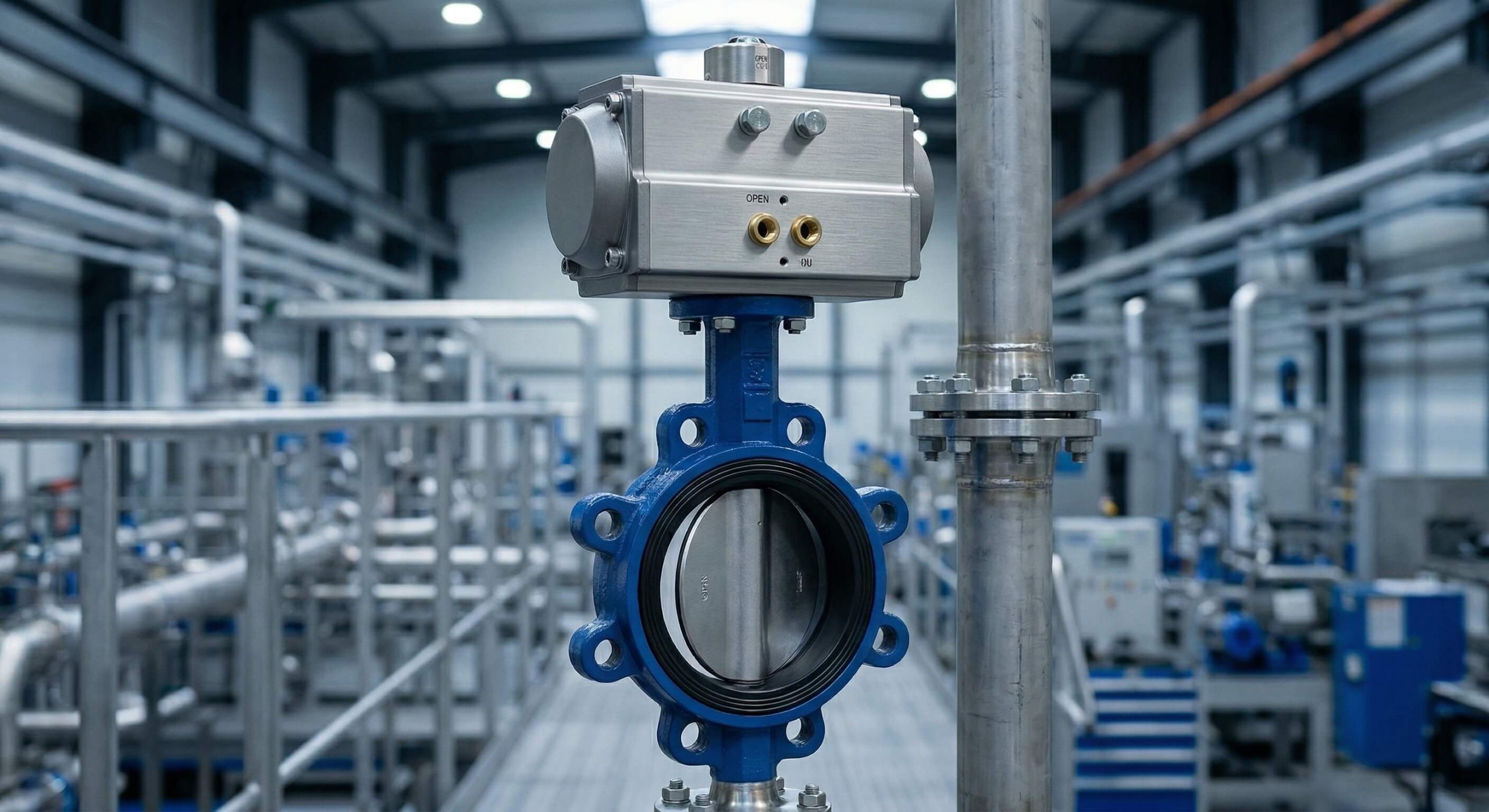
A butterfly valve pneumatic governs fluid flow utilizing compressed gas mechanisms. Plant operators often face unexpected pipeline pressure fluctuations during daily operations. Inconsistent liquid movement ruins entire chemical batches rapidly. Deploying these sophisticated devices solves fluid regulatory challenges beautifully.
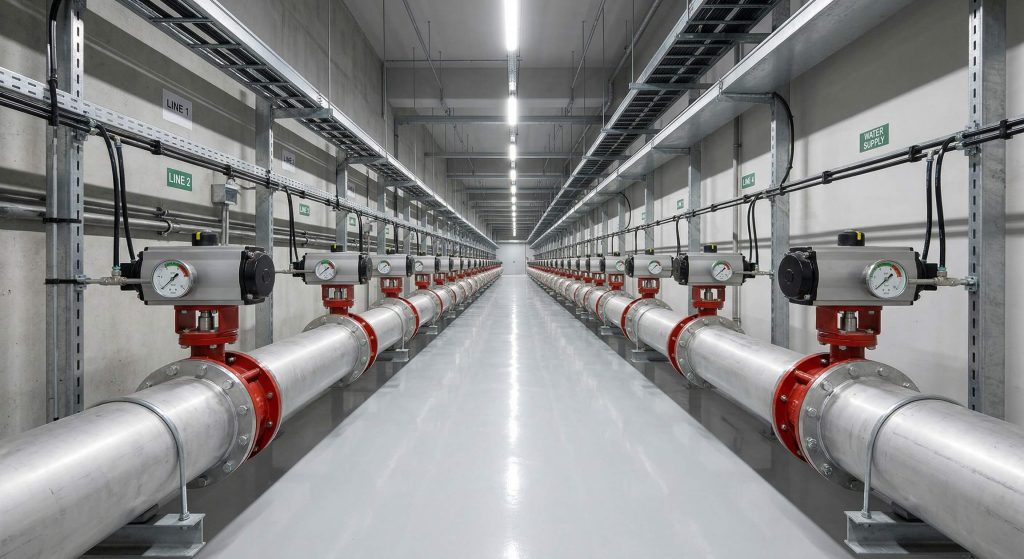
What is a butterfly valve pneumatic system?
A butterfly valve pneumatic represents an automated pipeline mechanism utilizing gas pressure. Factories integrate these rugged tools for precise liquid control daily. You will notice immediate efficiency improvements quickly after installation. Such equipment drastically minimizes manual human labor requirements permanently.
How do primary components function?
The central rotating disc sits inside a sturdy metal housing. Actuators push mechanical pistons forcefully when receiving air signals. Here’s the deal: precise alignment prevents unwanted liquid leaks entirely. Such exactness guarantees maximum operational safety across production floors.
- Actuators generate rapid mechanical movement.
- Discs pivot along central axes smoothly.
- Seals block internal passages securely.
Why are they highly reliable?
Industrial environments demand extremely durable infrastructure for constant operations. Quality alloys resist corrosive substance degradation over long periods. Constant automation removes unpredictable human error factors completely.
Key Takeaway: You gain exceptional process stability when implementing this hardware correctly.
| Component | Primary Function | Typical Material |
|---|---|---|
| Actuator | Drives internal motion | Aluminum alloy |
| Disc | Regulates liquid volume | Stainless steel |
| Seat | Prevents fluid leakage | Durable rubber |
This chart illustrates critical parts providing extreme durability for extensive usage.
How does a butterfly valve pneumatic operate?
A butterfly valve pneumatic initiates rotation through targeted air blasts. Operators send signals directing compressed gas into specific chambers. The internal diaphragm shifts forcefully upon receiving this pneumatic energy. This action turns a connected stem ninety degrees rapidly.
What role does compressed air play?
Pressurized gas acts as the primary driving force behind movement. Regulators control exact pressure levels entering these mechanical chambers. You might be wondering: consistent airflow guarantees perfectly timed actuation. Sudden pressure drops trigger automatic failsafe closure protocols instantly.
- Regulators monitor incoming gas streams.
- Chambers hold pressurized air temporarily.
- Vents release exhausted gas safely.
Can I automate my entire control process?
Modern facilities connect these units directly with central computer networks. Sensors detect pipeline irregularities before sending corrective digital signals. Automated systems adjust flow rates without requiring human presence.
Key Takeaway: You achieve seamless operational fluidity by utilizing computerized automation protocols.
| Action State | Air Pressure Direction | Valve Position |
|---|---|---|
| Signal Sent | Enters main chamber | Rotating |
| Max Pressure | Held steady | Fully Open |
| Signal Lost | Vents out rapidly | Closed |
This table demonstrates distinct operational phases occurring during standard fluid regulation.
Which actuators power a butterfly valve pneumatic?
Selecting proper actuation mechanisms defines your butterfly valve pneumatic performance. Engineers evaluate specific factory needs before installing particular driving units. You must analyze available compressed air resources thoroughly beforehand. Picking incorrect components causes severe mechanical failures eventually.
How do single-acting mechanisms work?
Single-acting designs utilize internal springs for returning discs backward. Air pressure opens the passage while coiled metal closes it. What’s the real story? Power losses cause immediate secure shutdown automatically.
- Springs provide strong physical resistance.
- Air overcomes mechanical tension easily.
- Failsafes protect entire systems efficiently.
Why choose double-acting mechanisms?
These variants require active gas pressure for both opening directions. They lack return springs completely within their outer metallic housing. Such designs deliver higher torque outputs across large pipe diameters.
Key Takeaway: You secure peak fluid control by matching actuators with system demands.
| Actuator Type | Power Source | Failsafe Action |
|---|---|---|
| Single-Acting | Air & Spring | Closes automatically |
| Double-Acting | Air only | Remains in place |
| Electric | Power grid | Requires battery |
This data compares primary driving forces dictating automated pipeline component behavior.
How does a butterfly valve pneumatic aid water treatment?
A butterfly valve pneumatic handles massive water volumes effortlessly daily. Municipal plants rely on these mechanisms for filtering processes. You can regulate purification chemical distributions accurately alongside raw water. Such reliable hardware prevents dangerous backflow contamination incidents securely.
Do they handle high pressure well?
Water grids generate immense internal forces requiring sturdy equipment. Cast iron bodies withstand constant stress without cracking open. Ready for the good part? Thick rubber seats absorb shocks brilliantly.
- Casings resist external physical impacts.
- Seals prevent high-pressure blowouts.
- Discs maintain shape under stress.
How do they guarantee precision control?
Actuators adjust disc angles minutely depending on digital instructions. Gradual movements prevent destructive water hammer effects entirely. Plant supervisors monitor flow rates utilizing connected diagnostic software.
Key Takeaway: You protect delicate purification networks by installing rugged regulation equipment.
| Treatment Phase | Valve Role | Reason |
|---|---|---|
| Intake | Controls raw volume | Prevents flooding |
| Chemical Mix | Doses exact amounts | Maintains safety |
| Distribution | Manages outbound flow | Sustains pressure |
This summary highlights critical roles played during municipal water purification stages.
Why choose a butterfly valve pneumatic for chemicals?
Aggressive substances require a specialized butterfly valve pneumatic for safety. Standard materials dissolve rapidly when contacting harsh industrial acids. You must install components lined with specialized protective plastics. Such advanced engineering prevents catastrophic environmental spills permanently.
Can they manage corrosive fluids safely?
Polytetrafluoroethylene linings coat internal metal surfaces completely. These synthetic barriers repel acidic molecules exceptionally well. This is where it gets interesting… zero metallic parts touch dangerous chemicals directly.
- Teflon resists extreme pH levels.
- Encapsulated discs remain pristine.
- Specialized O-rings seal tightly.
What makes them ideal for abrasive media?
Slurries contain tiny solid particles scraping against pipe walls constantly. Hardened seating materials resist physical wear during continuous operations. Facilities replace modular parts rather than discarding whole units.
Key Takeaway: You avoid expensive toxic leakages by utilizing chemically inert pipeline hardware.
| Media Type | Recommended Lining | Risk Factor |
|---|---|---|
| Strong Acids | PTFE / Teflon | High corrosion |
| Slurries | Hardened Polyurethane | High abrasion |
| Solvents | Special Fluoroelastomer | Chemical swell |
This chart details material selections required for handling specific hazardous liquids.
What role does a butterfly valve pneumatic play in HVAC?
Climate systems utilize a butterfly valve pneumatic for temperature regulation. Large commercial buildings circulate massive chilled water volumes continuously. You can maintain comfortable environments effortlessly using automated adjustments. Such precision saves significant electrical power costs monthly.
Do they regulate air flow efficiently?
These devices manage cold airflow through massive ductwork networks. Narrow profiles minimize unwanted turbulence inside tight ventilation spaces. Listen closely: exact angling directs breezes exactly where needed.
- Actuators respond rapidly.
- Discs create minimal drag.
- Sensors provide temperature feedback.
How do they save installation space?
Compact designs fit easily between cramped ceiling utility areas. Traditional gate variants require extensive vertical clearance for operation. Contractors prefer installing slimmer options during new building construction.
Key Takeaway: You increase building energy efficiency while preserving valuable ceiling real estate.
| HVAC Application | Primary Function | Benefit |
|---|---|---|
| Chilled Water | Regulates cooling fluid | Saves energy |
| Air Ducts | Directs ventilation | Improves comfort |
| Boiler Feeds | Manages hot water | Promotes safety |
This table outlines specific climate control tasks handled by compact mechanisms.
Why use a butterfly valve pneumatic for oil pipes?
Petroleum extraction demands a rugged butterfly valve pneumatic for reliability. Crude oil flows under extreme pressure across vast distances. You must guarantee absolutely flawless performance amidst harsh outdoor conditions. Such uncompromising standards prevent devastating environmental disasters completely.
Can they withstand extreme temperatures?
Desert refineries bake under relentless sunlight throughout summer months. Freezing arctic platforms face brutal icy winds constantly. Truth be told: specialized alloys expand without compromising structural integrity.
- Metal seats resist freezing.
- Graphite seals survive heat.
- Casings deflect debris effectively.
How do they prevent fire hazards?
Flammable liquids require specialized fire-safe engineering designs universally. Secondary metal seating engages automatically if rubber components melt. This backup mechanism stops fuel from feeding nearby flames.
Key Takeaway: You secure volatile energy extraction sites utilizing heavily reinforced mechanical safeguards.
| Environment | Primary Challenge | Valve Adaptation |
|---|---|---|
| Desert | Extreme heat | Thermal expansion joints |
| Arctic | Freezing cold | Low-temp carbon steel |
| Offshore | Saltwater rust | Marine-grade coating |
This summary displays protective adaptations necessary for global energy production sectors.
How to size a butterfly valve pneumatic correctly?
Properly sizing your butterfly valve pneumatic guarantees efficient fluid dynamics. Oversized units cause irregular flow patterns during operation. You must calculate anticipated liquid velocities meticulously before purchasing. Such diligent planning prevents premature mechanical degradation ultimately.
What flow rates should you consider?
Engineers measure cubic meters passing through pipes hourly. High velocities demand stronger internal components for stability. Here is the secret: matching capacity prevents dangerous cavitations entirely.
- Calculators determine ideal dimensions.
- Viscosity impacts required torque.
- Pressure drops dictate limits.
Does pipe diameter dictate the sizing?
Matching internal pipe dimensions guarantees seamless physical installation. Flanges must align perfectly for secure bolt attachments. Reducing adapters cause unwanted pressure bottlenecks occasionally.
Key Takeaway: You sustain systemic longevity by measuring pipeline parameters extremely accurately beforehand.
| Pipe Diameter | Recommended Valve Size | Flow Capacity |
|---|---|---|
| 4 Inches | 4 Inch Unit | Moderate |
| 8 Inches | 8 Inch Unit | High |
| 12 Inches | 12 Inch Unit | Maximum |
This data provides standard correlation metrics for matching equipment dimensions properly.
Can a butterfly valve pneumatic reduce factory downtime?
A dependable butterfly valve pneumatic keeps production lines moving continuously. Broken pipeline equipment halts entire manufacturing facilities instantly. You avoid losing profitable hours by installing reliable automated machinery. Such proactive upgrades boost annual revenue generation significantly.
How does quick actuation prevent delays?
Rapid opening sequences supply raw materials exactly when needed. Sluggish mechanisms disrupt perfectly timed assembly line rhythms. Listen to this: split-second responses maintain synchronized manufacturing choreography.
- Air pressure delivers instant power.
- Lightweight discs turn swiftly.
- Frictionless bearings accelerate motion.
Are there automated feedback loops?
Smart positioners send real-time diagnostic data directly toward control rooms. Technicians identify minor issues before catastrophic failures occur. Predictive maintenance schedules replace reactive emergency repairs completely.
Key Takeaway: You increase operational profitability by eliminating unexpected mechanical interruptions entirely.
| Maintenance Strategy | Action Taken | Resulting Uptime |
|---|---|---|
| Reactive | Fix after breaking | Very Low |
| Preventative | Scheduled checks | High |
| Predictive | Sensor monitoring | Maximum |
This chart illustrates how modern digital monitoring drastically improves continuous operations.
How to maintain your butterfly valve pneumatic?
Maintaining your butterfly valve pneumatic requires consistent inspection routines. Neglected equipment develops severe internal friction over time. You should clean external moving parts regularly using approved solvents. Such simple habits extend functional lifespans incredibly.
What are the daily inspection routines?
Workers must check pneumatic air lines for audible hissing noises. Moisture traps require frequent draining for peak performance. Fact is: clean air prevents internal actuator rusting perfectly.
- Listen for escaping gas.
- Wipe away accumulated grime.
- Check digital sensor readouts.
When should you replace the seals?
Rubber components harden gradually after years of continuous usage. Minor fluid drips indicate compromised internal barrier integrity. Technicians swap these inexpensive parts quickly during scheduled shutdowns.
Key Takeaway: You preserve valuable capital investments through diligent proactive equipment care.
| Inspection Task | Frequency | Purpose |
|---|---|---|
| Air Line Check | Daily | Prevent pressure loss |
| Seal Inspection | Monthly | Stop fluid leaks |
| Full Overhaul | Annually | Guarantee long-term function |
This table outlines mandatory maintenance schedules keeping automated hardware running smoothly.
Conclusion
Implementing automated flow control upgrades eliminates frustrating production bottlenecks entirely. We provide rugged engineering solutions capable of withstanding extreme conditions. We believe superior craftsmanship drives global industrial progress forward. Please contact us today for personalized technical consultations!
FAQ
Q1: Can I use it for heavy slurries?
Yes, you can manage thick slurries effectively. Specialized hardened linings resist abrasive particle damage perfectly.
Q2: What’s the best actuator type for me?
It depends entirely upon your specific factory setup. Single-acting provides failsafe security while double-acting delivers greater torque.
Q3: How do I know if it is failing?
You will notice inconsistent fluid pressure downstream initially. Audible air leaks or minor liquid drips also signal trouble.
Q4: Will it work without compressed air?
No, normal automated operation requires steady gas pressure. However, manual overrides allow human intervention during power outages.
Q5: Does it require frequent complex calibration?
No, modern digital positioners manage internal calibration automatically. You only perform basic visual inspections periodically for safety.