
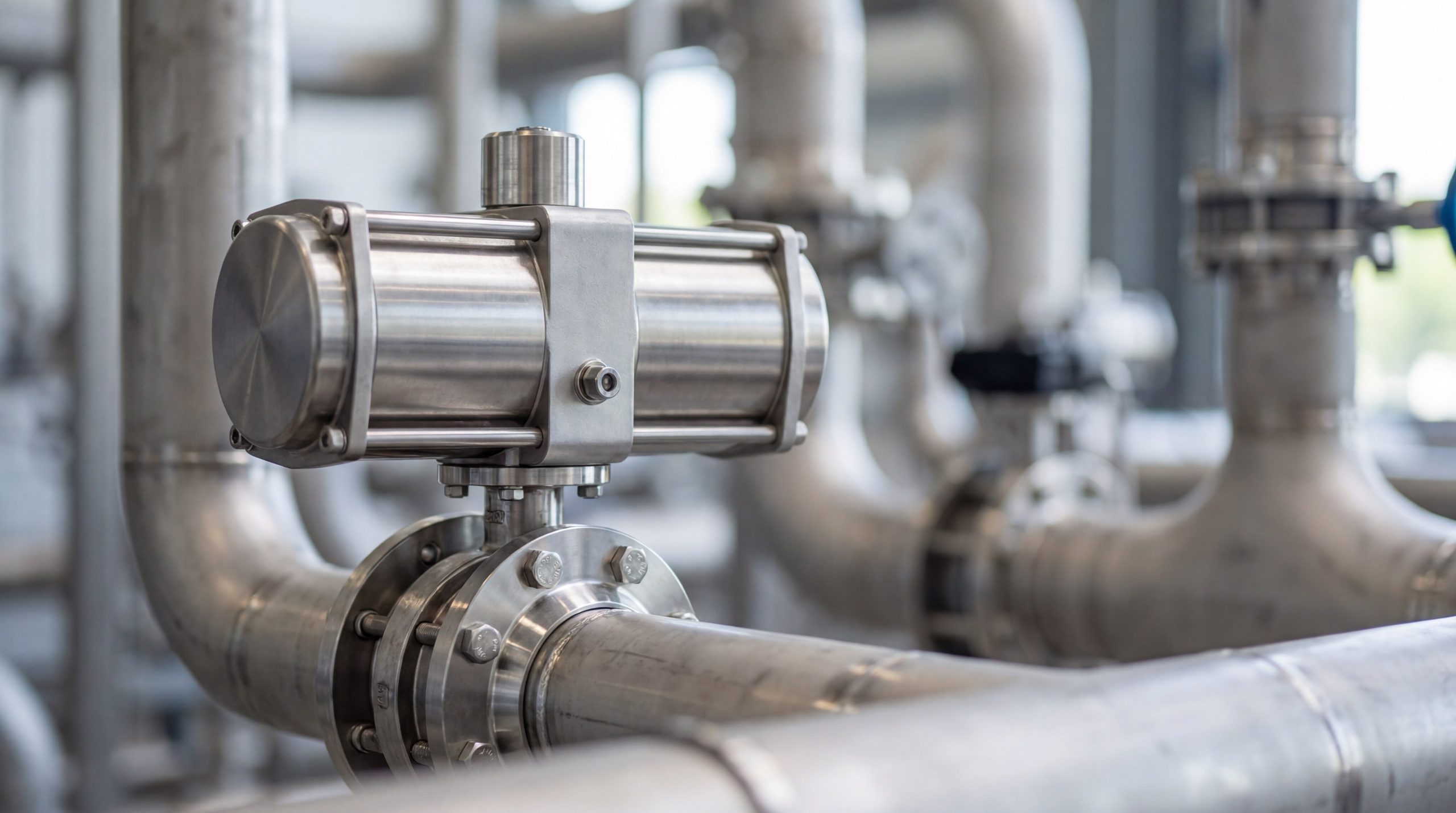
The pressure loss and flow resistance coefficient of pneumatic butterfly valves are critical metrics that determine how much energy is required to move fluid through your piping system. You might notice your pumps consuming excessive electricity while your flow rates remain disappointingly low despite full operation. This inefficiency often stems from overlooked friction within your valve bodies, leading to heat buildup and potential equipment failure. By mastering the pressure drop butterfly valve variables, you can optimize your industrial process for maximum throughput and minimum waste.
What causes a high pressure drop butterfly valve effect?
The primary causes of high pressure drop are the internal geometry of the valve body and the physical obstruction created by the disc. When you install a butterfly valve, the central disc remains in the flow path even when fully open, creating a permanent source of turbulence. This inherent design means that a pressure drop butterfly valve effect is unavoidable, though its magnitude varies based on engineering quality.
Is internal geometry a major factor?
Internal geometry dictates how smoothly fluid transitions through the valve body. If the casting is rough or the transitions are abrupt, you will face significant energy loss. Here is the kicker: even minor imperfections in the valve lining can create micro-vortices that sap your system’s pressure.
- Surface roughness of the casting.
- Body cavity depth and width.
- Alignment of the seat with the pipeline.
Key Takeaway: Superior internal finishes and streamlined body designs are essential for reducing the baseline resistance of your pneumatic systems.
| Factor | Influence | Mitigation |
|---|---|---|
| Surface Finish | 15% | Electropolishing |
| Cavity Design | 35% | Streamlined casting |
| Disc Alignment | 50% | Precision actuation |
This table shows that while surface finish matters, the physical alignment and design of the cavity are the dominant drivers of resistance.
How to calculate pressure drop butterfly valve resistance?
Calculating the pressure drop butterfly valve resistance requires using the specific gravity of your fluid along with the valve’s flow coefficient. You must apply the standard Darcy-Weisbach or similar fluid dynamics equations to determine the energy lost across the device. Understanding these numbers allows you to predict system behavior before you even turn on the pumps.
What is the standard formula for loss?
The standard formula calculates the differential pressure by squaring the flow rate and dividing it by the valve’s Cv value. You need to ensure all units are consistent to avoid catastrophic errors in your pump sizing. But that’s not all; you must also consider the fluid’s density at operating temperature for a truly accurate result.
- $\Delta P = G \times (Q / Cv)^2$
- $G$ represents the specific gravity of the liquid.
- $Q$ is the flow rate in gallons per minute.
Key Takeaway: Mathematical modeling is the only way to guarantee that your valve selection won’t choke your entire process line.
| Variable | Symbol | Importance |
|---|---|---|
| Flow Rate | Q | Exponential |
| Flow Coefficient | Cv | Inverse Square |
| Specific Gravity | G | Linear |
The exponential nature of flow rate means that doubling your speed will quadruple your pressure loss, making Cv optimization vital.
Does disc shape affect pressure drop butterfly valve flow?
Disc shape directly affects the pressure drop butterfly valve performance by altering the wake and turbulence patterns downstream. A thick, blunt disc creates a massive “shadow” in the flow stream, leading to energy dissipation and potential vibration. Modern engineering focuses on thinning the profile of the disc to allow fluid to pass with minimal interruption.
Are streamlined discs better for efficiency?
Streamlined discs are specifically designed to mimic an airfoil, reducing the drag coefficient as fluid passes over the edges. You will find that wafer butterfly valve models often employ these thin-profile discs to maximize their efficiency in tight spaces. Believe it or not, a well-designed disc can reduce your energy costs by up to twenty percent over its lifetime.
- Airfoil-shaped edges.
- Reduced center-post thickness.
- Polished disc surfaces.
Key Takeaway: Investing in a streamlined disc design is one of the most effective ways to lower your total cost of ownership.
| Disc Type | Drag Coeff | Benefit |
|---|---|---|
| Flat Plate | High | Low cost |
| Streamlined | Low | High efficiency |
| Cambered | Variable | Precise control |
Streamlined discs offer the best balance for high-velocity systems where every fraction of a bar matters for pump longevity.
Why is pressure drop butterfly valve data vital for sizing?
Accurate pressure drop butterfly valve data is vital for sizing because it ensures that your actuators and pumps are perfectly matched to the load. If you undersize your valve, the resulting pressure loss will force your pumps to run outside their efficiency curve. This leads to premature motor burnout and inconsistent process temperatures that can ruin your product quality.
Can sizing prevent system bottlenecks?
Proper sizing ensures that the valve does not become the narrowest point of your entire infrastructure. You must look at the flow velocity at the valve seat to ensure it stays within the recommended limits for your specific fluid. Here is the catch: if the valve is too large, you lose control sensitivity; if it is too small, you lose energy.
- Pump curve alignment.
- Velocity limit adherence.
- Control range optimization.
Key Takeaway: Sizing is a balancing act between maintaining control precision and minimizing parasitic energy losses in the pipeline.
| Sizing Status | Pressure Loss | Control Quality |
|---|---|---|
| Undersized | Excessive | Poor (Saturated) |
| Optimized | Minimal | Excellent |
| Oversized | Negligible | Poor (Deadband) |
Optimized sizing ensures the valve operates in its linear range while keeping the resistance coefficient at an acceptable level.
How does opening angle impact pressure drop butterfly valve?
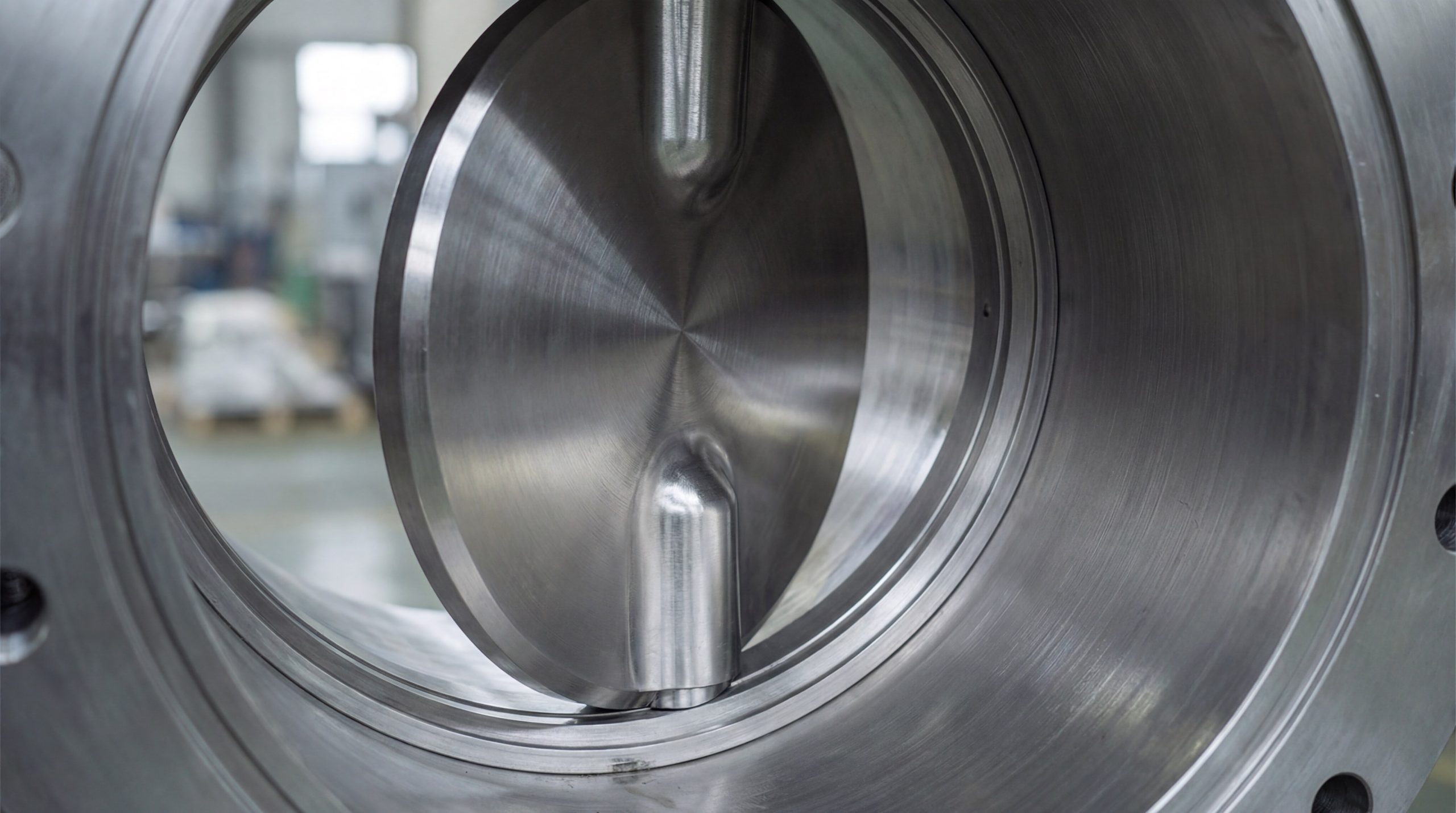
The opening angle of the disc is the most dynamic factor influencing the pressure drop butterfly valve resistance during operation. At a 90-degree angle, the resistance is at its minimum because the disc presents its smallest cross-section to the fluid. As you close the valve, the resistance coefficient increases exponentially, significantly altering the system’s hydraulic balance.
Why is low-angle throttling risky?
Throttling at angles below 30 degrees creates extreme turbulence and localized pressure drops that can lead to cavitation. You should avoid running your pneumatic valves in this range for extended periods to prevent damage to the seat and disc. Here is the kicker: the noise you hear during low-angle operation is actually the sound of energy being wasted and hardware being destroyed.
- High localized velocity.
- Severe turbulence.
- Risk of seat erosion.
Key Takeaway: To maintain efficiency, your system should be designed so that the valve operates primarily between 40 and 70 degrees open.
| Angle | Resistance $(\zeta)$ | Flow State |
|---|---|---|
| 90° | 0.2 – 0.5 | Laminar-like |
| 45° | 2.5 – 5.0 | Transitional |
| 10° | 50.0+ | Fully turbulent |
As the angle decreases, the resistance coefficient $(\zeta)$ skyrockets, proving that butterfly valves are best used for on/off or moderate throttling.
Which seal types reduce pressure drop butterfly valve loss?
The choice of seal or seat type affects the pressure drop butterfly valve loss by determining how much the sealing surface protrudes into the flow path. Soft-seated valves often have a larger profile to ensure a bubble-tight shutoff, which can slightly increase friction. Conversely, high-performance designs use geometric offsets to move the seal out of the flow stream as soon as the valve begins to open.
Do eccentric seats help flow?
Eccentric and triple offset butterfly valve designs minimize the time the disc spent in contact with the seat during opening. This reduces the friction at the edges and allows for a clearer flow path around the perimeter of the disc. Here is the secret: triple offset designs virtually eliminate seat wear while providing some of the lowest resistance coefficients in the industry.
- Offset shaft geometry.
- Reduced seat interference.
- Cam-action opening.
Key Takeaway: Selecting an offset design is a superior choice for high-cycle applications where both sealing and flow efficiency are priorities.
| Seal Type | Protrusion | Durability |
|---|---|---|
| Concentric | Moderate | Standard |
| Double Offset | Low | High |
| Triple Offset | Minimal | Ultra-high |
Minimal protrusion in triple offset designs ensures that the flow path is as unobstructed as possible, lowering the overall pressure drop.
Can cavitation increase pressure drop butterfly valve risk?
Cavitation occurs when the localized pressure drop butterfly valve effect causes the fluid pressure to fall below its vapor pressure. This creates vapor bubbles that then collapse violently downstream, causing physical damage and a massive increase in apparent resistance. If you ignore the signs of cavitation, you are essentially allowing your valve to be sandblasted from the inside out.
Is excessive noise a warning sign?
The sound of “marbles” rattling in your pipe is a definitive sign that cavitation is occurring due to high pressure drops. You will notice that as cavitation intensifies, the flow rate will “choke,” meaning that increasing the pressure differential no longer increases the flow. Make no mistake: this state represents the absolute limit of your valve’s operational efficiency.
- Pitting on the disc edge.
- Vibration in the actuator.
- Choked flow conditions.
Key Takeaway: Cavitation is a destructive phenomenon that signifies your valve is being operated far beyond its efficient hydraulic limits.
| Symptom | Physical Cause | Long-term Effect |
|---|---|---|
| Rattling Noise | Bubble collapse | Material fatigue |
| Flow Plateaus | Vapor blockage | System inefficiency |
| Pitting | High-speed impact | Leakage |
When flow plateaus, the energy you are adding to the system is being consumed by the phase change of the fluid rather than movement.
How to minimize pressure drop butterfly valve in air systems?
Minimizing pressure drop butterfly valve loss in compressed air systems requires careful attention to pipe alignment and valve bore matching. Air is a compressible fluid, meaning that any restriction causes a drop in density and a subsequent increase in velocity and friction. You must ensure that the internal diameter of your lug butterfly valve perfectly matches the schedule of your piping.
Does bore matching matter for air?
Bore matching prevents the formation of “steps” at the flange connection where air can become trapped in turbulent eddies. If the valve bore is smaller than the pipe, you create a permanent orifice plate effect that drains your compressor’s energy. But that’s not all; even a few millimeters of misalignment can lead to a measurable drop in downstream air pressure.
- Smooth flange transitions.
- Accurate bore sizing.
- High-speed actuator response.
Key Takeaway: For air systems, a seamless transition from pipe to valve is the most effective way to preserve expensive compressed air energy.
| Component | Checkpoint | Goal |
|---|---|---|
| Gasket | Alignment | No protrusion |
| Flange | Parallelism | Even compression |
| Valve Bore | ID Matching | Zero step |
Ensuring zero steps at the connections stabilizes the air velocity and prevents the energy-sapping turbulence common in poorly installed lines.
What is the Cv value for pressure drop butterfly valve math?
The Cv value is the fundamental constant used to describe the pressure drop butterfly valve capacity in a standardized format. It is defined as the number of gallons of water per minute that will flow through the valve with a pressure drop of one psi. When you compare two valves, the one with the higher Cv will always offer lower resistance for the same flow rate.
How is Cv accurately calculated?
Cv is typically determined through flow loop testing under controlled laboratory conditions provided by the manufacturer. You can convert this value to the metric Kv coefficient by multiplying it by 0.865 if you are working with European standards. Here is the kicker: the Cv value changes dramatically as the valve moves from the closed to the open position.
- Test fluid: Water at 60°F.
- Pressure drop: 1 psi.
- Measurement: Gallons per minute.
Key Takeaway: Always use the “Full Open Cv” when calculating maximum system capacity and “Throttling Cv” for control loop tuning.
| Metric | Definition | Conversion |
|---|---|---|
| Cv | Imperial Flow | $1.0$ |
| Kv | Metric Flow | $0.865 \times Cv$ |
| $\zeta$ | Resistance | $f(Cv, Area)$ |
The mathematical relationship between Cv and the resistance coefficient allows engineers to bridge the gap between empirical data and theoretical physics.
When should you monitor pressure drop butterfly valve levels?
You should monitor the pressure drop butterfly valve levels during initial commissioning and at regular intervals during the plant’s operational life. A sudden increase in pressure drop often indicates that debris is trapped in the valve or that scale has built up on the disc. By tracking these trends using a double eccentric butterfly valve with integrated sensors, you can perform maintenance before a failure occurs.
Is preventative maintenance required?
Monitoring the differential pressure allows you to schedule cleanings during planned shutdowns rather than responding to emergency pipe bursts. You will find that a valve that was once efficient can become a major energy drain if the coating begins to peel or if the seat becomes distorted. Here is the secret: your pressure gauges are the most honest diagnostic tools in your entire facility.
- Daily sensor logging.
- Monthly trend analysis.
- Annual physical inspection.
Key Takeaway: Real-time pressure drop monitoring is the most reliable way to detect internal valve health issues without stopping production.
| Timeframe | Action | Objective |
|---|---|---|
| Startup | Baseline Log | Performance target |
| 6 Months | Trend Review | Wear detection |
| 2 Years | Full Overhaul | Efficiency restoration |
Comparing current data against the baseline log helps you identify gradual performance degradation that would otherwise go unnoticed until it’s too late.
Conclusion
By analyzing the pressure loss and flow resistance coefficients of your pneumatic butterfly valves, you have taken the first step toward a more efficient and reliable industrial system. We have explored how internal geometry, disc shape, and opening angles combine to dictate the energy footprint of your fluid handling processes. Our mission is to provide you with precision-engineered flow control solutions that minimize waste and maximize your operational uptime. To optimize your specific application and reduce your energy costs, contact us today for a professional consultation.
FAQ
- Can I use a standard butterfly valve for high-accuracy throttling?
It is possible, but you must account for the non-linear resistance coefficient which makes control difficult at very low or very high angles. - What’s the best way to reduce noise caused by pressure drop?
The best way is to select a valve with a higher Cv or to use an anti-cavitation trim that breaks up the flow into smaller, less turbulent streams. - Is it possible for a pneumatic actuator to increase pressure loss?
Yes, if the actuator is incorrectly calibrated or lacks the torque to reach the full 90-degree open position, it will leave the disc slightly closed. - How do I know if my valve is undersized?
If you observe a pressure drop that is significantly higher than the manufacturer’s datasheet for your flow rate, the valve is likely undersized or obstructed. - Does the fluid temperature affect the flow resistance?
Yes, temperature changes the fluid’s viscosity and density, which are direct inputs into the pressure drop calculation formulas.