
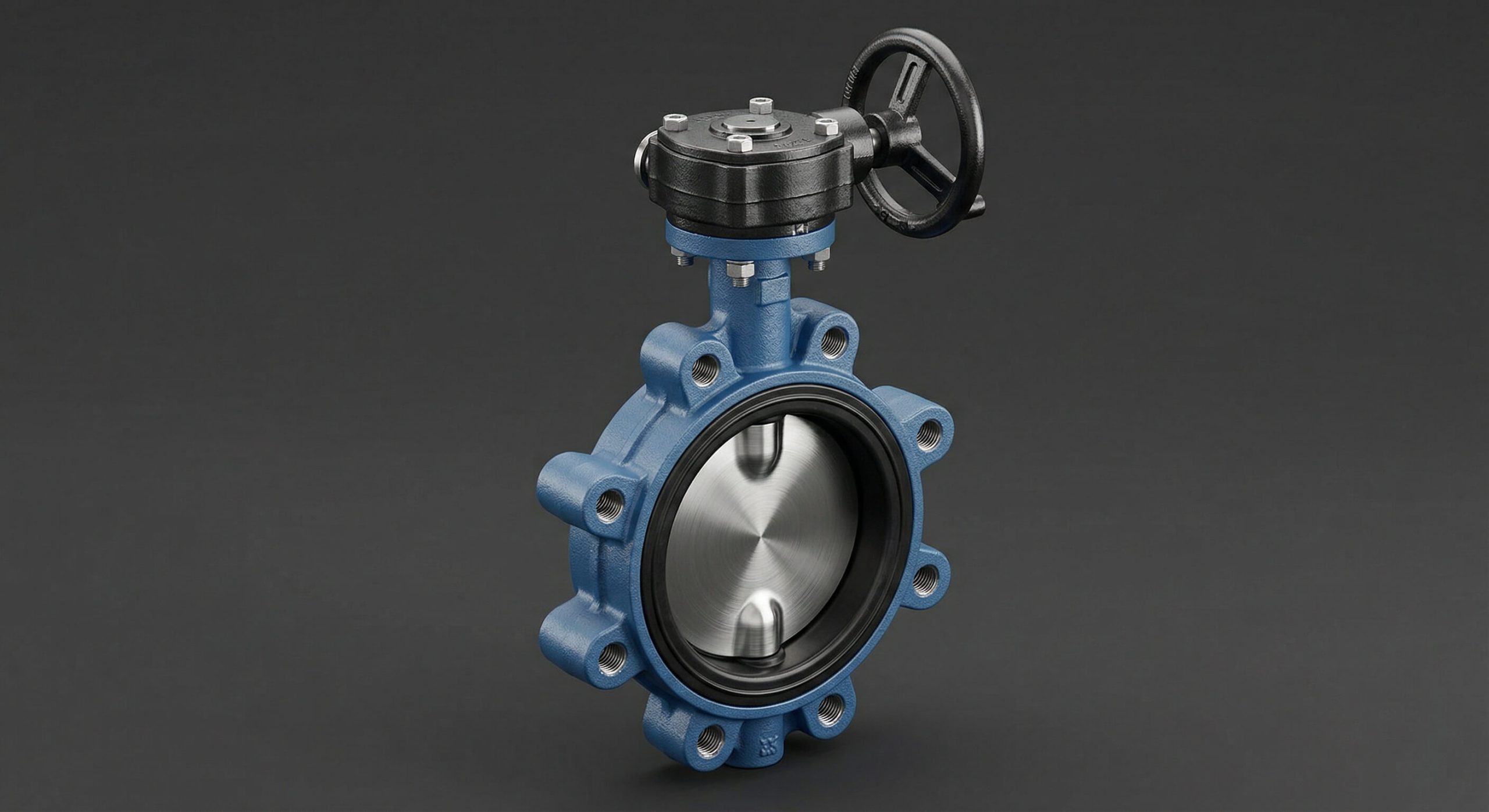
A dn 150 butterfly valve is a specific type of flow control device designed for 6-inch diameter piping systems, utilizing a rotating disc to regulate or isolate the flow of media. This quarter-turn valve is widely appreciated for its compact design and efficient operation in various industrial environments.
You might be struggling with significant pressure drops or persistent leaks in your heavy-duty piping systems, causing costly operational delays. These issues often arise from using incorrectly sized or poorly manufactured valves that cannot withstand the specific demands of your medium. Implementing a high-quality DN150 solution provides the reliable sealing and durability needed to optimize your system’s performance and safety.
What is a dn 150 butterfly valve and why use it?
A dn 150 butterfly valve is an industrial component used to manage the flow of fluids within a 6-inch pipe by rotating a disc 90 degrees. It offers a lightweight alternative to traditional gate valves, making it much easier to install and maintain in tight spaces.
How does the 6-inch size optimize flow?
Think about it: the 150mm bore provides an excellent balance between flow capacity and structural integrity for medium-sized lines.
- Minimal turbulence during full-open operation.
- High flow coefficient (Cv) values for efficient throughput.
- Reduced weight compared to 6-inch gate or globe valves.
Key Takeaway: The DN150 size is the industry standard for balancing high flow rates with a manageable footprint in most commercial and industrial systems.
| Feature | Advantage |
|---|---|
| Compact Size | Easy installation in restricted areas |
| Quarter-Turn | Rapid shut-off and modulation |
| Low Weight | Reduced piping support requirements |
Use the following data to assess if a butterfly design meets your specific flow velocity requirements.
What are the specs of a standard dn 150 butterfly valve?
Standard specifications for a dn 150 butterfly valve include adherence to international design codes such as API 609 or EN 593 to ensure safety and interchangeability. You will typically find these valves rated for PN10, PN16, or ANSI Class 150 pressure environments.
Which design standards apply to DN150?
But here is the catch: not all valves are built to the same thickness or testing protocols, so verifying standards is vital.
- API 609: Standard for category A and B butterfly valves.
- ISO 5211: Standard for actuator mounting flanges.
- ASME B16.5: Connection standards for flange compatibility.
Key Takeaway: Adhering to recognized technical specifications ensures that your 6-inch valve will integrate perfectly with existing flanges and actuation hardware.
| Parameter | Standard Value |
|---|---|
| Nominal Diameter | 150mm / 6 Inches |
| Face-to-Face | 56mm (Wafer type standard) |
| Pressure Ratings | PN10, PN16, ANSI 150 |
Refer to these metrics when drafting your system submittals to ensure full compliance with engineering layouts.
Which body types fit a dn 150 butterfly valve?
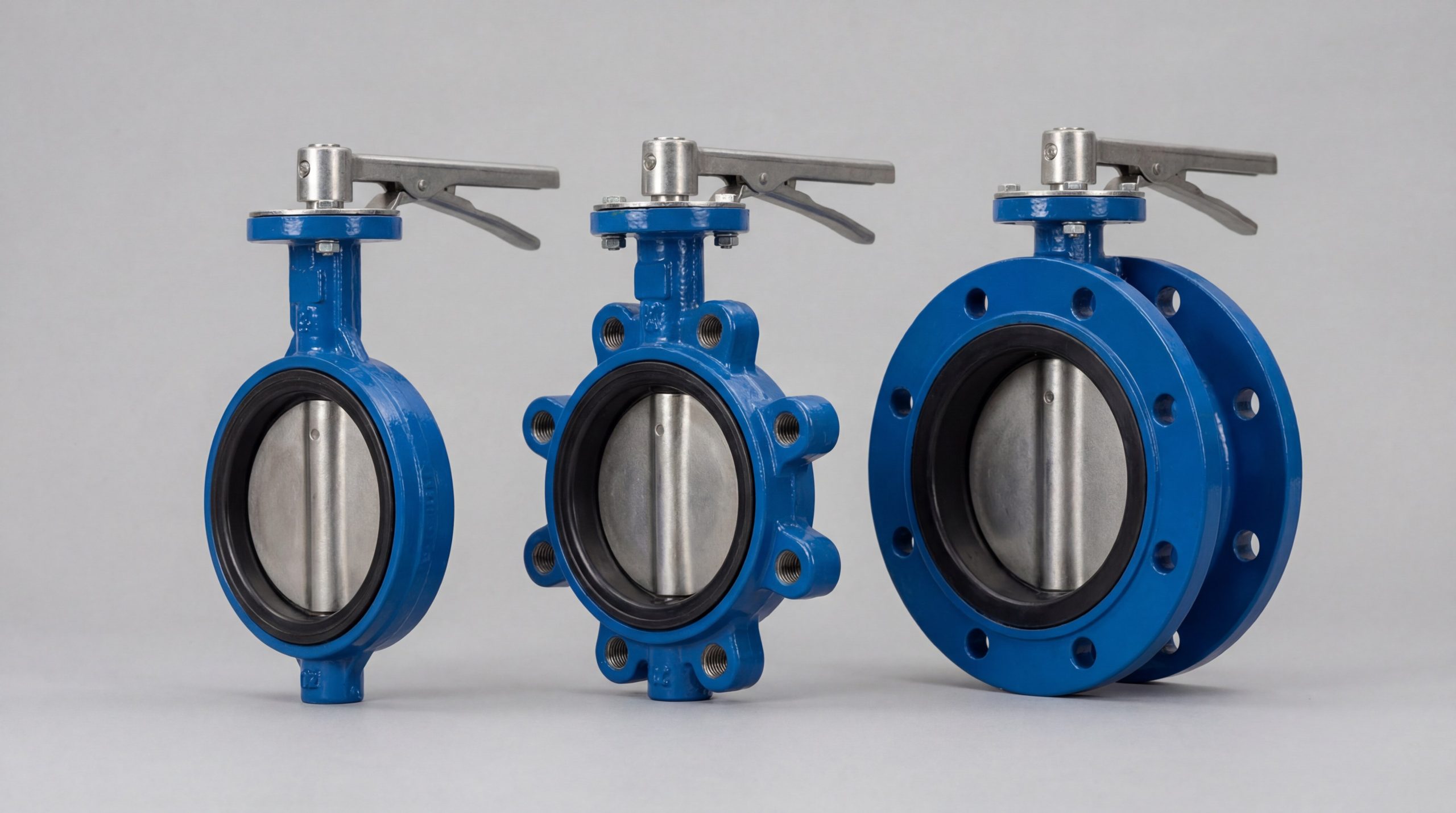
The most common body styles for a dn 150 butterfly valve are the wafer, lug, and double-flanged configurations, each serving a distinct installation purpose. Choosing the right body type is essential for ensuring the structural integrity of your piping network under different load conditions.
When is a lug style better?
The best part? Lug types allow for dead-end service, meaning you can remove downstream piping without draining the entire system.
- Individual threaded inserts for secure bolting.
- Higher structural stability for end-of-line applications.
- Easier alignment during the initial installation process.
Key Takeaway: Select a wafer body for general cost-efficiency, but opt for a lug design if you anticipate the need for downstream maintenance.
| Body Type | Best For | Connection Method |
|---|---|---|
| Wafer | General flow control | Sandwiched between flanges |
| Lug | Dead-end service | Bolted directly to flanges |
| Flanged | Heavy-duty/Large bore | Double-bolted connection |
Examine your piping maintenance schedule to determine if the isolation capabilities of a lug valve are worth the additional investment.
What materials build a durable dn 150 butterfly valve?
Constructing a durable dn 150 butterfly valve requires selecting metals and polymers that can withstand the temperature and chemical properties of your specific media. Standard configurations often utilize ductile iron for the body to provide a cost-effective yet robust housing.
How to select the right seat material?
Here is the deal: the seat is the primary wear part, so its material compatibility with your fluid is non-negotiable.
- EPDM: Perfect for water and HVAC applications up to 120°C.
- NBR: Ideal for oil, gas, and hydrocarbon-based fluids.
- PTFE: The go-to choice for highly corrosive chemical lines.
Key Takeaway: Matching the disc and seat materials to your process fluid prevents premature seal failure and extends the overall service life of the unit.
| Material Component | Common Options | Application |
|---|---|---|
| Valve Body | Ductile Iron, WCB, SS316 | Structural support |
| Valve Disc | Nylon Coated DI, SS304, SS316 | Flow modulation |
| Seat/Liner | EPDM, NBR, Viton | Sealing and leakage prevention |
Consult chemical resistance charts before finalizing your material selection to avoid unforeseen degradation of internal seals.
How does a dn 150 butterfly valve ensure zero leakage?
A dn 150 butterfly valve ensures zero leakage by utilizing a resilient seat that creates a compressive seal against the disc edge when closed. This interference fit is designed to prevent even microscopic amounts of fluid from passing through the valve under full rated pressure.
What is a resilient seated design?
Take a look at this: the rubber liner is often molded to the body, creating a smooth flow path and a bubble-tight shut-off.
- Compressible elastomer liner absorbs disc pressure.
- Secondary stem seals prevent external leakage.
- Polished disc edges reduce friction and seat wear.
Key Takeaway: Resilient seating is the most effective way to achieve a bubble-tight seal in 6-inch valves handling low-to-medium pressure liquids.
| Sealing Feature | Function | Benefit |
|---|---|---|
| Interference Fit | Tight contact at closure | Zero leakage (Bubble-tight) |
| Shaft O-rings | Prevents stem leaks | Protected external environment |
| Phenolic Backing | Keeps seat in place | Prevents seat “blowout” |
Review your leakage testing requirements to confirm if a standard resilient seat meets your project’s specific tightness class.
Where is a dn 150 butterfly valve used most often?
You will encounter a dn 150 butterfly valve in a vast array of sectors, ranging from municipal water treatment to high-rise HVAC systems. Its versatility makes it the preferred choice for engineers looking for reliable isolation in 6-inch utility lines.
How does it perform in water treatment?
Believe it or not: these valves are essential for backwash cycles and filtration management due to their quick response time.
- Corrosion-resistant coatings for potable water.
- Simplified automation for large plant networks.
- Wide availability of replacement parts for long-term use.
Key Takeaway: The DN150 size is a workhorse in utility management, offering the durability needed for constant cycling in municipal and industrial water systems.
| Industry | Primary Use | Requirement |
|---|---|---|
| HVAC | Chilled water control | Low pressure drop |
| Chemical | Acid/Base transport | Material compatibility |
| Fire Protection | Sprinkler main lines | UL/FM approval |
Assess your industry’s specific safety certifications to ensure the valve you choose is compliant with local fire or health regulations.
What are the dn 150 butterfly valve limits?
Every dn 150 butterfly valve has physical limitations regarding maximum operating pressure and temperature that you must strictly observe. Exceeding these limits can lead to catastrophic failure of the seat or deformation of the valve disc.
What is the maximum working pressure?
Why does this matter? Operating a PN10 rated valve in a PN16 system will lead to immediate leakage or mechanical damage.
- Standard PN16 valves are rated for 16 bar.
- Temperature limits are usually set by the elastomer seat.
- High-velocity flow can cause “fluttering” in some designs.
Key Takeaway: Always operate within the defined pressure-temperature curve of the valve to prevent safety hazards and equipment damage.
| Limit Type | Standard Constraint | Consequence of Overload |
|---|---|---|
| Pressure | 16 Bar (Max) | Seal rupture or disc bending |
| Temperature | -10°C to 120°C (EPDM) | Seat melting or hardening |
| Velocity | 5 m/s for liquids | Vibration and erosion |
Compare your system’s peak surge pressures against the valve’s rated working pressure to ensure an adequate safety margin.
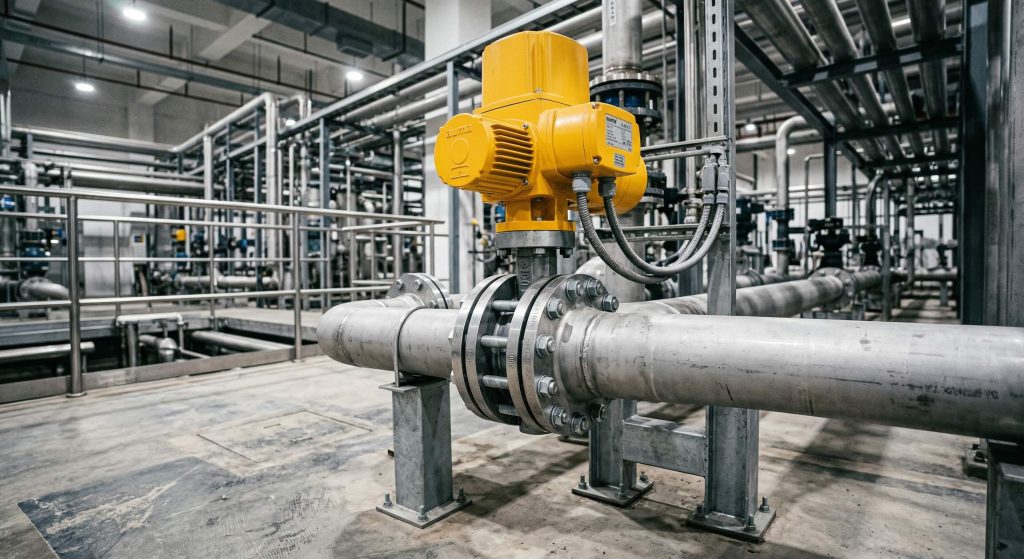
How to automate a dn 150 butterfly valve?
You can easily automate a dn 150 butterfly valve to improve process control and reduce the labor required for manual operation. Using standard ISO mounting pads allows for the seamless integration of various actuator types without needing custom brackets.
What are the benefits of electric actuators?
Think about it: electric actuation allows you to control your 6-inch lines from a central SCADA system with high precision.
- Adjustable travel stops for exact positioning.
- Battery backup options for fail-safe requirements.
- Lower infrastructure costs compared to pneumatic lines.
Key Takeaway: Automation transforms a simple isolation valve into a precise flow management tool that enhances overall plant efficiency.
| Actuator Type | Speed | Control Capability |
|---|---|---|
| Manual Lever | Manual | Simple On/Off |
| Pneumatic | Very Fast | High-frequency cycling |
| Electric | Moderate | Precise modulating control |
Evaluate your power availability and cycle frequency to choose between a pneumatic or electric drive for your DN150 unit.
How to maintain a dn 150 butterfly valve effectively?
Effective maintenance of your dn 150 butterfly valve begins with proper installation and includes regular functional testing to ensure the disc moves freely. You should schedule periodic inspections to check for signs of seat wear or stem leakage before they become critical failures.
What are the essential installation steps?
Don’t forget this: the disc must be slightly open during installation to prevent the seat from being pinched by the flanges.
- Ensure flange faces are clean and parallel.
- Center the valve perfectly between bolts.
- Tighten bolts in a star pattern for even pressure.
Key Takeaway: Preventive maintenance and correct installation techniques are the most effective ways to maximize the return on your valve investment.
| Inspection Task | Frequency | Action |
|---|---|---|
| Visual Check | Monthly | Look for leaks or corrosion |
| Operational Test | Quarterly | Cycle the valve full open/close |
| Seat Inspection | Annually | Check for elastomer degradation |
Maintain a detailed log of all maintenance activities to identify patterns of wear and predict when replacement parts will be needed.
Why source a dn 150 butterfly valve from experts?
Sourcing your dn 150 butterfly valve from expert manufacturers ensures you receive a product that has undergone rigorous pressure and shell testing. Professional suppliers offer the technical documentation and support necessary to integrate these valves into complex industrial projects seamlessly.
What support do professional suppliers offer?
The best part? Expert suppliers provide more than just hardware; they offer the engineering insights that prevent costly selection errors.
- Provision of 3D CAD models for design accuracy.
- Material traceability through MTR certificates.
- Post-purchase technical troubleshooting and advice.
Key Takeaway: Working with a specialized manufacturer reduces your project risk and ensures that your flow control infrastructure is built to last.
| Supplier Benefit | Impact on Project | Value |
|---|---|---|
| Certifications | Guaranteed quality | Reduced liability |
| Tech Support | Faster troubleshooting | Lower downtime |
| Customization | Exact fit for purpose | Optimized performance |
Verify the manufacturer’s quality management certifications, such as ISO 9001, to ensure consistent production standards for every unit.
Conclusion
By understanding the specifications, material options, and body styles of the dn 150 butterfly valve, you can effectively resolve system inefficiencies and prevent the risks associated with improper flow control. Selecting the right DN150 solution ensures that your operations remain stable, leak-free, and cost-effective over the long term.
At Ruitoflow, our vision is to provide the world with high-precision flow control solutions that empower industrial growth and environmental safety. To find the perfect valve for your next project or to receive a professional technical consultation, contact us today.
Frequently Asked Questions (FAQ)
Can I use a dn 150 butterfly valve for throttling?
Yes, though it is primarily designed for isolation, it can effectively throttle flow when the disc is positioned between 30 and 70 degrees open. However, prolonged throttling at very small openings may lead to seat erosion or cavitation.
What is the average weight of a manual dn 150 butterfly valve?
Approximately 7 to 10 kilograms for a wafer body type equipped with a manual lever. Lug and flanged versions will be significantly heavier due to the additional metal required for the bolt holes and flanges.
How do I know if my DN150 valve needs a gear operator?
Usually, you should consider a gear operator if the operating torque exceeds what a human can comfortably apply with a standard lever, which often occurs at higher pressure ratings. For a DN150 size, gear operators are highly recommended for PN16 services to ensure smooth control.
What’s the best seat material for a hot water system?
EPDM is unquestionably the best choice for hot water applications up to 120 degrees Celsius. It offers excellent resistance to heat and aging while maintaining a tight seal over thousands of cycles.
Can I install this valve with the stem pointing downwards?
No, it is highly discouraged as sediment can collect in the stem seal area, leading to premature wear and potential leakage. The preferred orientation is with the stem vertical or horizontal to ensure debris does not interfere with the sealing mechanism.