
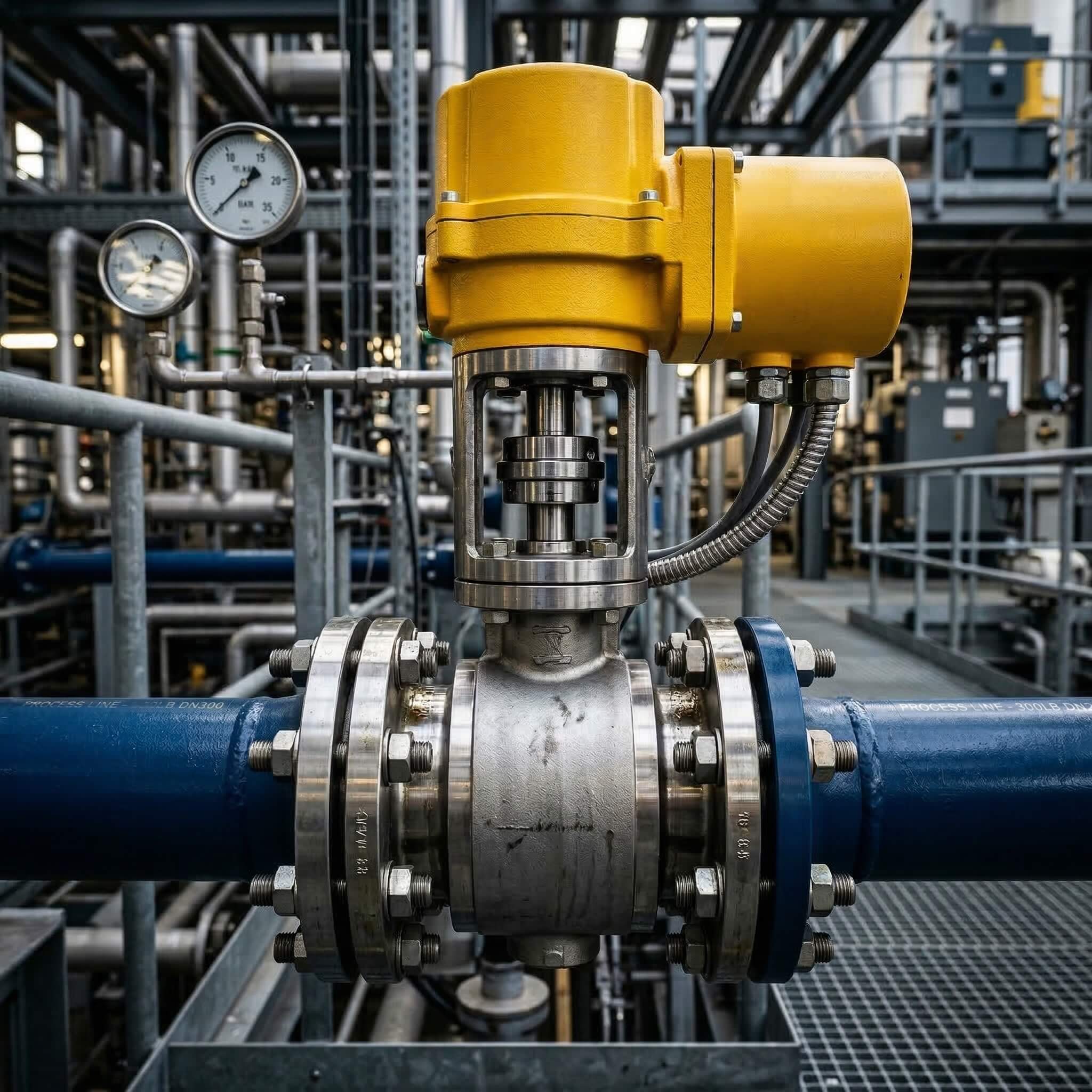
Actuated butterfly valves are quarter-turn automated devices designed to isolate or regulate fluid flow with high efficiency in industrial pipelines. Managing fluid flow manually is often slow and prone to human error. Relying on manual levers leads to inconsistent results and operational bottlenecks. These inefficiencies cause pressure drops and energy waste. The most effective solution is the implementation of a butterfly valve with actuators to ensure precision and reliability.
What Exactly Is an Actuated Butterfly Valve?
An actuated butterfly valve consists of a valve body and a mechanical device that uses power to rotate the internal disc. This setup transforms a standard butterfly valve with actuators into a dynamic component for remote flow management.
The Basic Quarter-Turn Mechanism
The disc is positioned in the center of the pipe, rotating 90 degrees to open or close. This movement allows for rapid shut-off compared to multi-turn gate valves.
- It minimizes the space required for installation.
- It provides a lightweight alternative for large-scale systems.
- It reduces the time needed for full closure.
But that is not all.
Why Is Automation Essential?
Automation eliminates the need for manual labor in dangerous or hard-to-reach locations. You can control the system from a central command center with extreme precision.
Key Takeaway: Actuated butterfly valves offer a compact, lightweight solution for automated flow control using a fast 90-degree rotation.
| Component | Function |
|---|---|
| Actuator | Provides the torque to rotate the valve stem. |
| Disc | The primary closure element that controls media flow. |
| Seat | Provides the seal between the disc and valve body. |
The synchronization of these parts ensures that your system remains leak-free even under varying pressure conditions.
How Do Internal Components Ensure Precision?
The synergy between the actuator and the internal valve parts determines the overall accuracy of your flow control. Utilizing a high-quality butterfly valve with actuators ensures that the torque provided is effectively transferred to the disc without loss.
The Role of the Valve Stem
The stem connects the power source directly to the flow-control disc. It must be robust enough to handle rotational force without shearing or bending.
- Stainless steel is often used for strength.
- Proper alignment prevents stem leakage.
- Bearings reduce friction during high-cycle use.
Think about this:
How Seats Prevent Internal Leaks
The seat is the lining inside the valve body that meets the disc. Resilient materials like EPDM or PTFE ensure a tight seal to prevent media from “passing” when closed.
Key Takeaway: Proper alignment and material compatibility between the stem and seat are vital for achieving a leak-free operation.
| Component | Material Type | Primary Benefit |
|---|---|---|
| Stem | Stainless Steel | Corrosion resistance and high strength. |
| Seat | EPDM/PTFE | Chemical compatibility and tight sealing. |
A well-maintained seat can significantly extend the service life of the entire valve assembly.
Which Valve Body Design Fits Your System?
Selecting the right body design is crucial for ensuring a secure installation and easy long-term maintenance. You must evaluate how the butterfly valve with actuators will be physically integrated into your existing pipe flanges.
Wafer vs. Lug Considerations
Wafer valves are clamped between two flanges, while lug valves have threaded inserts for direct bolting. Lug types are generally preferred if you need to perform maintenance on one side of the line.
- Wafer types are more economical and lightweight.
- Lug types allow for dead-end service.
- Both designs save significant space in tight piping runs.
Here is the kicker:
Advantages of Double-Flanged Designs
Double-flanged valves are typically used for the largest diameters where stability is paramount. They provide the most secure connection for high-pressure industrial pipelines.
Key Takeaway: Body design influences how the valve is secured and whether it can support downstream piping during maintenance cycles.
| Body Type | Installation Method | Best Use Case |
|---|---|---|
| Wafer | Between flanges | Lightweight, low-cost needs. |
| Lug | Bolted to flanges | End-of-line or isolation service. |
| Flanged | Double-ended bolts | Large-scale industrial pipelines. |
Choosing the wrong body type can lead to installation delays and increased maintenance costs over time.
Why Choose Pneumatic Actuation for Speed?
Pneumatic actuators are the workhorses of the industrial world, prized for their rapid response and high reliability. Integrating a butterfly valve with actuators driven by compressed air is ideal for systems requiring high-frequency cycling.
Double-Acting Performance
Double-acting units use compressed air to both open and close the valve. They offer consistent control but require a continuous air supply for both strokes.
- They provide high torque in both directions.
- They are generally smaller than spring-return versions.
- They require simple solenoid control for operation.
But wait, there’s more.
Fail-Safe Spring Return Options
Single-acting actuators use air to move one way and a spring to return to a safe position. This is a critical safety feature if your facility loses power or air pressure.
Key Takeaway: Pneumatic actuators provide the fastest reaction times and are ideal for high-cycle applications where air is readily available.
| Actuator Type | Power Source | Fail-Safe Capability |
|---|---|---|
| Double-Acting | Compressed Air | No (requires accessories). |
| Single-Acting | Air + Spring | Yes (Fail-Open or Fail-Closed). |
These units are particularly effective in environments where electrical sparks must be avoided for safety.
When Are Electric Actuators Most Effective?
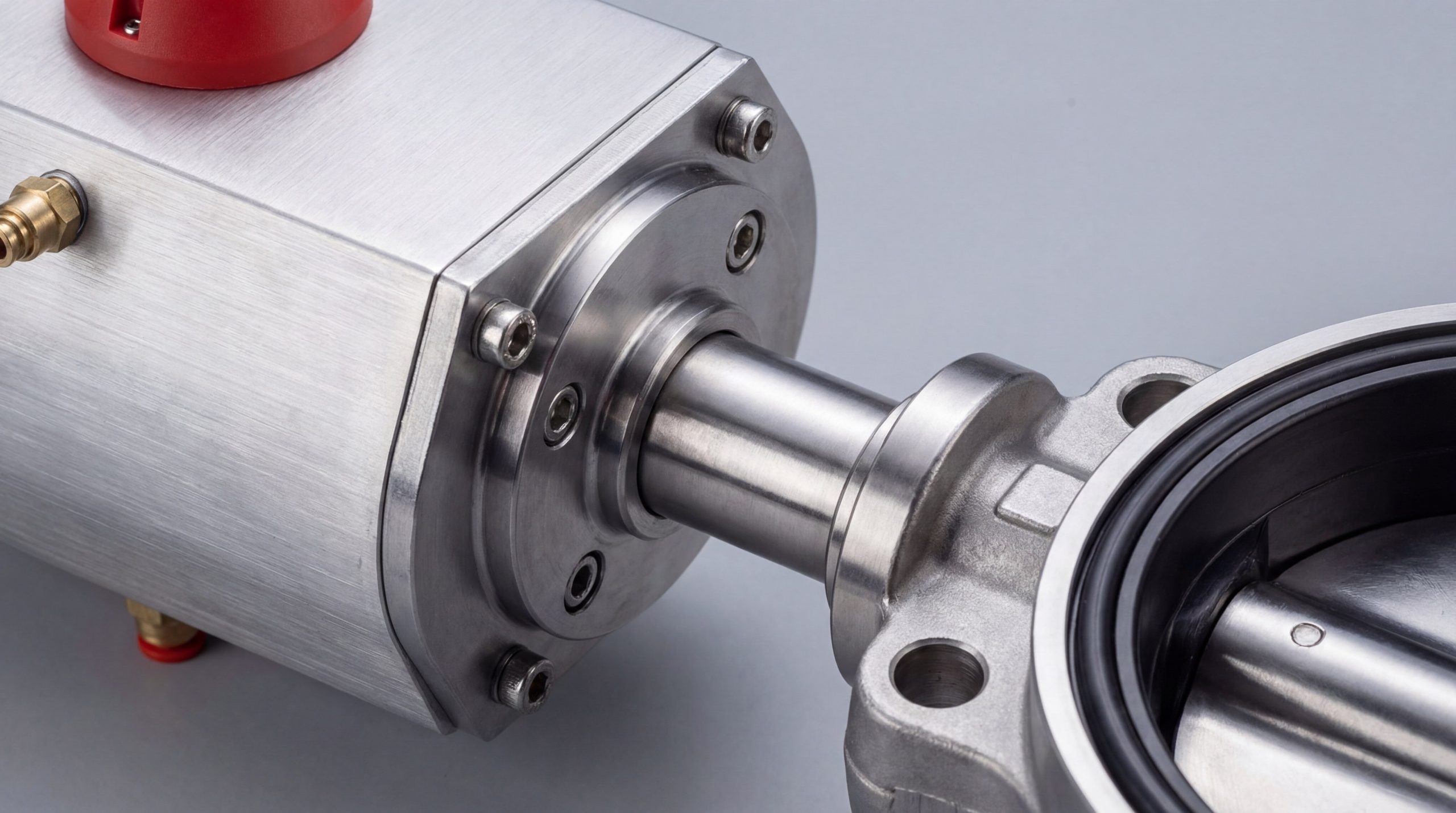
Electric actuators are the premier choice for facilities where compressed air is unavailable or where quiet operation is required. A butterfly valve with actuators powered by electricity integrates seamlessly into modern digital control systems.
Precise Modulation Capabilities
Electric units excel at positioning the disc at specific angles for fine-tuned flow regulation. They receive digital signals to move in small, accurate increments.
- They allow for 4-20mA control signals.
- They offer high-resolution feedback for monitoring.
- They consume power only during actual movement.
Here’s the deal:
Managing High Torque with Gearboxes
Electric actuators use internal gearboxes to reduce motor speed while increasing torque. This allows them to turn even the largest diameter valves with minimal energy.
Key Takeaway: Electric actuators offer superior energy efficiency and easy integration into digital PLC control systems for precise modulation.
| Feature | Electric Actuator Benefit |
|---|---|
| Energy | Consumes power only during movement. |
| Precision | High resolution for incremental throttling. |
| Integration | Direct connection to electronic control systems. |
These actuators are ideal for remote locations where running a power line is easier than installing an air compressor.
What Makes Hydraulic Units Better for Heavy Duty?
In heavy-duty environments like power plants, the forces required to move a valve can be immense. Using a butterfly valve with actuators that utilize hydraulic fluid provides the necessary torque for critical infrastructure.
Immense Torque Generation
Hydraulic actuators use non-compressible fluids to generate massive force. This allows them to operate extremely large valves that pneumatic units cannot handle.
- They provide the highest torque-to-size ratio.
- They maintain position perfectly under high pressure.
- They offer smooth, controlled movement for large discs.
But that is not all.
Reliability in Critical Systems
Their robust construction makes them ideal for main steam lines and high-pressure water transmission. They are designed to function in the most demanding industrial conditions.
Key Takeaway: Hydraulic actuation is reserved for the most demanding applications requiring maximum torque, stability, and ruggedness.
| Property | Hydraulic Actuator Detail |
|---|---|
| Torque Output | Extremely high. |
| Fluid Type | Hydraulic oil or water. |
| Maintenance | Requires specialized fluid management. |
These units are typically chosen for high-pressure safety systems where failure is not an option.
How Does Eccentricity Affect Sealing Performance?
Standard concentric valves are great for low pressure, but high-performance systems require eccentric designs. A butterfly valve with actuators featuring an offset stem provides a much longer service life for the seat.
Single and Double Offset Benefits
Eccentric designs move the stem away from the center of the disc. This allows the disc to “cam” into the seat, reducing friction and wear during operation.
- Double-offset valves are common in high-pressure water.
- Triple-offset valves allow for metal-to-metal sealing.
- Offsetting reduces the torque required to open.
Here is the kicker:
Improved Shut-Off Capabilities
By reducing the contact time between the disc and the seat, these valves achieve a bubble-tight shut-off. This makes them suitable for steam and chemical applications.
Key Takeaway: Eccentricity reduces mechanical wear on the seat, which extends the valve life and improves high-pressure sealing.
| Design Type | Seat Contact | Application |
|---|---|---|
| Concentric | Full rotation | Low pressure/Water. |
| Double-Offset | Near closure only | Chilled water/Steam. |
| Triple-Offset | At closure only | High pressure/Critical. |
Investing in an eccentric design can significantly lower your total cost of ownership by reducing maintenance frequency.
Can You Achieve Stable Throttling Control?
Butterfly valves are not just for on/off service; they are excellent for modulation when sized correctly. Using a butterfly valve with actuators allows you to maintain stable mid-range flow control.
The Optimal Throttling Range
These valves generally perform best when they are between 25% and 70% open. Operating in this range prevents turbulence and protects the valve from cavitation.
- Linear flow is achieved in the mid-range.
- Precision actuators prevent “hunting” for the setpoint.
- Correct sizing avoids oversized actuators and waste.
Think about this:
Impact of the Flow Coefficient
The Flow Coefficient (Cv) helps you determine the right valve size for your specific flow rate. Choosing a valve with the correct Cv ensures stable performance.
Key Takeaway: Proper sizing prevents mechanical vibration and ensures the actuator operates within its most efficient control window.
| Throttling Angle | Flow Characteristic | Risk Level |
|---|---|---|
| 0° – 20° | Highly Restricted | High (Cavitation). |
| 25° – 70° | Linear/Stable | Low (Optimal). |
| 80° – 90° | Full Flow | Moderate (Loss of Control). |
Sizing the valve to the actual flow rather than the pipe size is the secret to stable automation.
What Criteria Define Correct Actuator Selection?
Choosing the wrong actuator leads to premature failure or expensive system downtime. You must evaluate several technical factors when selecting a butterfly valve with actuators for your facility.
Duty Cycle and Thermal Protection
The duty cycle is the ratio of “on-time” to “off-time” for the motor. High-frequency systems require actuators with a 100% duty cycle to avoid overheating.
- Electric motors need rest periods if duty cycles are low.
- Pneumatic units can cycle continuously without heat issues.
- Thermal overloads protect your investment from electrical failure.
But wait, there’s more.
Environmental Protection Ratings
The actuator housing must be rated for the environment it will operate in. Look for IP or NEMA ratings if the unit will be exposed to dust or moisture.
Key Takeaway: Actuator selection must account for the frequency of operation, speed requirements, and local environmental conditions.
| Selection Factor | Consideration |
|---|---|
| Torque | Must exceed valve “breakaway” torque. |
| Duty Cycle | Match to the frequency of system cycles. |
| Environment | IP ratings for moisture or dust protection. |
Failure to match the actuator to the environment can lead to total system failure within months.
How Should You Maintain Automated Valve Units?
Preventative maintenance is the only way to ensure a decades-long lifespan for your automated assemblies. Regularly inspecting your butterfly valve with actuators catches small leaks before they cause a catastrophe.
Identifying Common Signs of Wear
Look for external leaks around the stem packing or unusual noises from the actuator gears. Sluggish response times often indicate a loss of air pressure or motor wear.
- Check all bolts for proper tightness quarterly.
- Inspect the valve seat for signs of erosion.
- Verify that the actuator limit switches are accurate.
Here’s the deal:
Testing Fail-Safe Redundancy
If your system relies on fail-safe mechanisms, you must test them under simulated power loss. Quarterly testing ensures the springs or batteries will work when truly needed.
Key Takeaway: A consistent maintenance schedule focusing on seals and actuator redundancy prevents unplanned outages and expensive repairs.
| Maintenance Task | Frequency | Target |
|---|---|---|
| Visual Inspection | Monthly | Leakage/Corrosion. |
| Function Test | Quarterly | Cycle time/Response. |
| Seal Replacement | As Needed | Internal/External Sealing. |
Routine care ensures your piping system remains efficient and safe for all operators.
Frequently Asked Questions
Can I convert a manual butterfly valve to an automated one?
Yes, most modern valves feature an ISO 5211 mounting pad. You can remove the manual handle and bolt on a pneumatic or electric actuator without removing the valve from the pipe.
What is the best actuator for a remote location without electricity?
If the location lacks power or air, a manual gear operator is the most reliable. However, solar-powered electric actuators with battery backups are now a popular automated solution for remote sites.
How do I know if my actuator is oversized?
If the valve moves too violently or causes frequent water hammer, the actuator may be providing too much torque. Conversely, an undersized actuator will stall or fail to fully close against line pressure.
Can I use a butterfly valve for high-pressure steam?
Standard resilient-seated valves are not suitable for high-pressure steam. You must use a triple-offset butterfly valve with metal seats to handle the extreme temperatures and pressures involved.
How do I know if the valve is open from a distance?
Actuated valves are typically equipped with limit switches or position indicators. These send a signal back to your control room and often feature a visual “beacon” on the actuator.
Conclusion
Choosing the right automated valve solution is critical for the safety and efficiency of your industrial operations. Our team is dedicated to providing high-performance equipment that meets the most rigorous engineering standards. To find the perfect flow control solution for your facility, contact us today to speak with a technical expert. Let us help you optimize your piping system with the precision of modern actuation technology.