
Choosing the right butterfly valve end connection depends on your specific pressure, maintenance, and isolation requirements. Selecting an inappropriate connection for your industrial system often leads to catastrophic leaks and unexpected downtime that disrupts your operations. You might imagine the massive cost of halting a municipal water line or a chemical process because a simple valve mismatch compromised your project’s safety. By understanding the mechanical advantages of wafer, lug, and flanged end butterfly valve designs, you can optimize your fluid control systems for reliability.
What defines a flanged end butterfly valve?
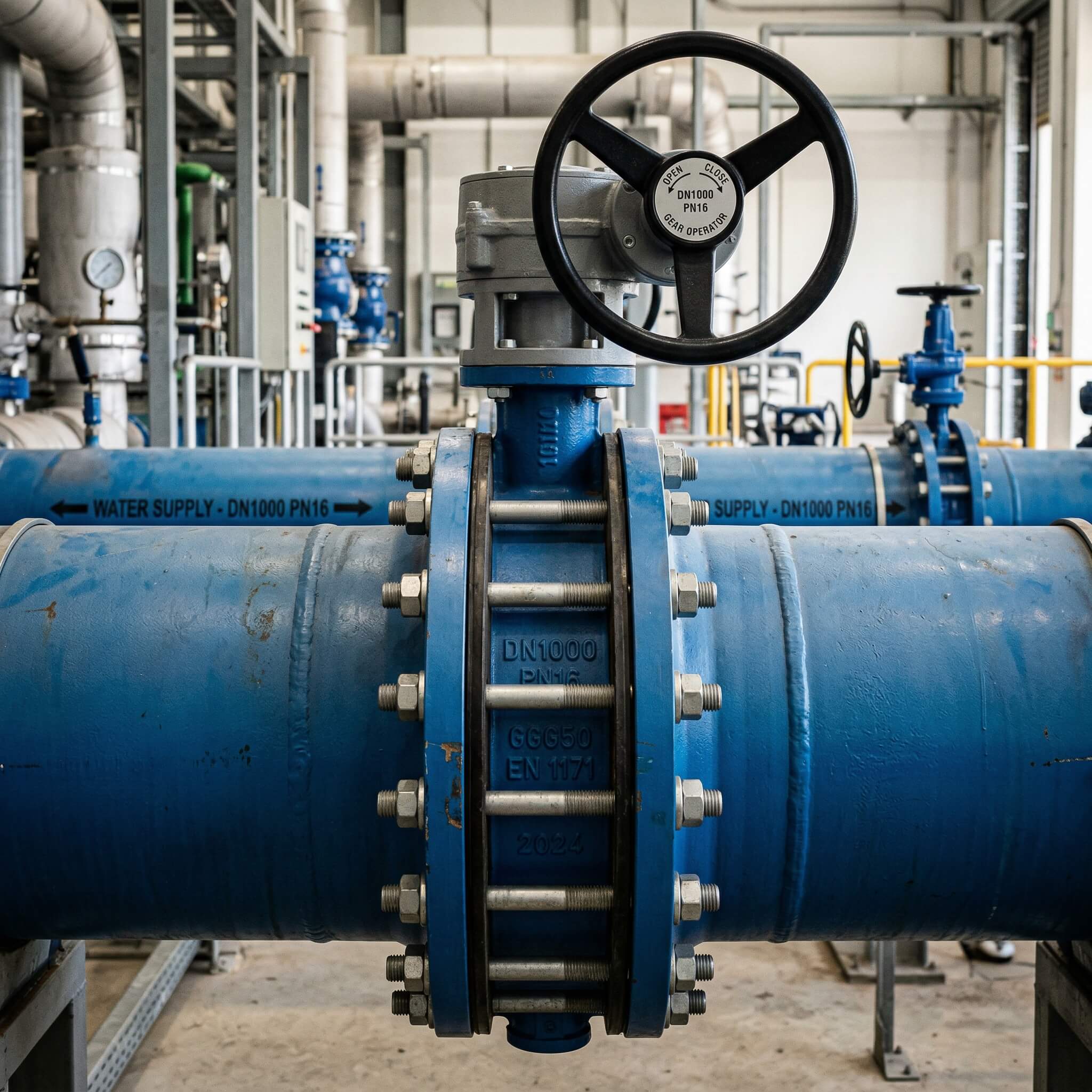
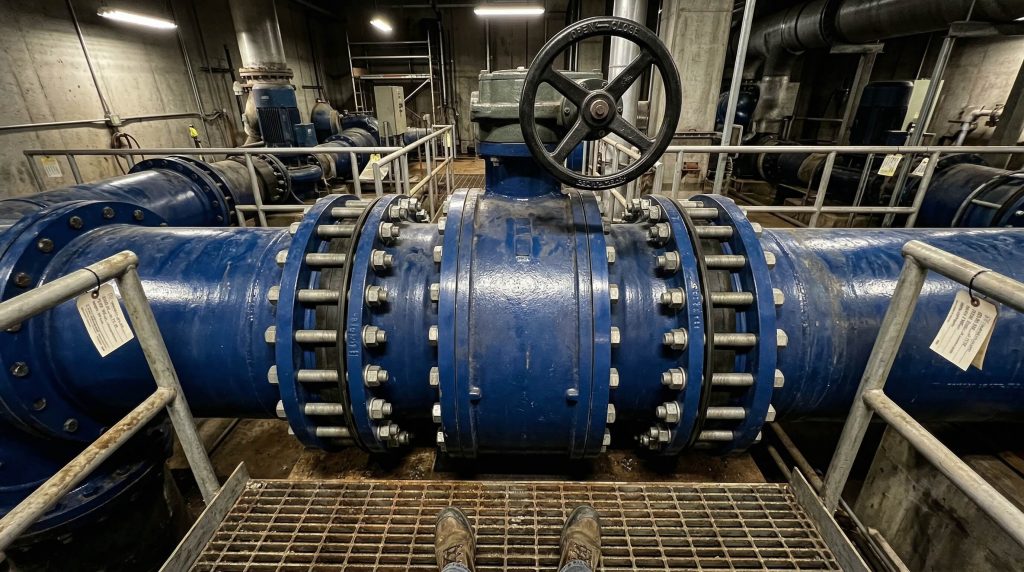
A flanged end butterfly valve features integral flanges at both ends of the body that allow you to bolt it directly to pipeline flanges. You will find that this design provides a robust sealing surface, which is essential for heavy-duty industrial infrastructure.
How does the double flange design work?
You secure this valve by using individual sets of bolts for each side of the pipeline. This ensures that the valve body remains stable even under high-velocity flow conditions in your system.
Let’s get down to brass tacks:
- Direct bolting to pipe flanges.
- Independent fastener sets for each side.
- Increased structural body strength.
What are the typical pressure ratings?
You should select your valve based on standard pressure ratings like PN10, PN16, or PN25 to match your pipeline’s demands. These standards ensure the flange thickness and bolt patterns are sufficient for your specific working pressure.
But wait, there’s more:
- Compatibility with global flange standards.
- Resistance to high mechanical stress.
- Bubble-tight sealing at rated pressures.
Key Takeaway: The double-flanged design offers the highest level of structural stability for your large-diameter or high-pressure piping projects.
| Feature | Flanged Type |
|---|---|
| Connection Method | Individual bolts per side |
| Stability | Maximum |
| Best For | Large diameters |
The independent bolting system used here prevents misalignment and protects the integrity of your internal valve components during operation.
When should you use a flanged end butterfly valve?
In large-scale industrial projects, you should use a flanged end butterfly valve when your system requires a rigid connection that can withstand significant pipe stress. This is particularly common in butterfly valve applications within the water treatment and power generation sectors.
Is it suitable for large municipal lines?
You will find these valves are highly effective for sizes ranging from DN300 to DN3000 where other types lack support. They provide the necessary rigidity to handle the massive volumes of fluid moved in municipal networks.
Here is the deal:
- Ideal for high-volume water transport.
- Supports heavy pipe loads without shifting.
- Maintains seal integrity in large apertures.
When is structural stability a priority?
You must prioritize this connection type when your piping gallery is subject to thermal expansion or mechanical vibration. The flanged design ensures the valve body doesn’t move relative to the pipes, preventing wear on your seats.
Think about this for a second:
- Reduces risk of flange leaks.
- Protects the disc from uneven torque.
- Ensures long-term alignment accuracy.
Key Takeaway: You should specify flanged connections for any large-diameter application where structural rigidity and long-term reliability are your primary goals.
| Application | Recommended Type |
|---|---|
| Power Plants | Flanged Type |
| Municipal Water | Flanged Type |
| Large Process Lines | Flanged Type |
Choosing this type for your large lines ensures that external pipe stresses do not translate into internal valve malfunctions or leaks.
Is wafer style better than a flanged end butterfly valve?
A wafer style valve is often preferred for your smaller, cost-sensitive projects because it is sandwiched between two pipe flanges. While it lacks the integrated flanges of a flanged end butterfly valve, it offers you significant advantages in terms of space and weight reduction.
How much space do you save with wafers?
You can install wafer butterfly valve units in very tight spaces because their face-to-face dimension is extremely narrow. This slim profile allows you to design more compact piping layouts for your facility.
The reality is this:
- Significant weight reduction.
- Minimal footprint in the pipe run.
- Faster installation with fewer bolts.
Are wafer valves significantly cheaper?
You will notice lower procurement costs with wafer designs because they require less raw material during the manufacturing process. For your general-purpose HVAC or water lines, this provides a highly economical fluid control solution.
But that’s not all:
- Lower shipping and handling costs.
- Reduced material waste.
- Standardized fits for many pipe classes.
Key Takeaway: Use wafer types when you need to minimize costs and space in low-to-medium pressure systems that do not require dead-end service.
| Factor | Wafer Type | Flanged Type |
|---|---|---|
| Weight | Low | High |
| Cost | Economical | Premium |
| Space | Compact | Large |
The wafer design provides an efficient solution for your standard throttling needs without the added bulk of integrated flanges.
How does a lug type differ from a flanged end butterfly valve?
A lug type butterfly valve features threaded metal inserts around the body that allow you to bolt it independently from either side. Unlike the flanged end butterfly valve, the lug type valve is more compact while still supporting advanced maintenance features.
Can you perform one-sided maintenance?
You can remove the downstream piping while the upstream side remains under pressure, provided you use a lug style valve. This capability allows you to perform maintenance on your system without a total plant shutdown.
Here is the kicker:
- Threaded lugs hold pressure from one side.
- Enables downstream equipment service.
- Eliminates the need for a full system drain.
Do threaded lugs improve vibration resistance?
You will find that the threaded connection provides a more secure mount than the wafer style, handling mechanical vibration much better. This makes the lug type a superior choice for your pump discharge lines.
Check this out:
- Threaded holes prevent bolt slippage.
- Secure mounting in high-vibration zones.
- Enhanced safety for your operators.
Key Takeaway: Lug valves are your best option when you need the maintenance flexibility of a flanged valve in a more compact, space-saving body.
| Feature | Lug Type | Wafer Type |
|---|---|---|
| Dead-End Service | Yes | No |
| Mounting | Threaded Lugs | Through-bolts |
| Maintenance | Single-sided | Full shutdown |
The ability to isolate one side of your pipeline makes the lug valve a critical asset for your 24/7 industrial operations.
Can a flanged end butterfly valve support dead-end service?
A flanged end butterfly valve is excellent for dead-end service, allowing you to install it safely at the end of a pipeline. This configuration is vital when you plan for future system expansions or need to isolate downstream equipment for safe maintenance.
Why is downstream isolation critical?
You ensure that even if the downstream pipe is completely removed, the valve remains securely attached to the upstream flange. This prevents dangerous leaks and protects your team while they work on the rest of your system.
It boils down to this:
- Safe removal of downstream pipes.
- Secure upstream anchoring.
- Protection against accidental line discharge.
Does seat design impact dead-end sealing?
You must check that the valve seat is designed to maintain a bubble-tight seal even when pressure is only applied from one side. Many flanged valves are specifically engineered to handle this one-sided load without compromising their performance.
But wait, there is more to it:
- Resilient seats for low-pressure sealing.
- Metal seats for high-temperature isolation.
- Bi-directional shutoff capabilities.
Key Takeaway: Double-flanged valves provide the most secure mechanical connection for your dead-end service requirements in critical infrastructure.
| Service Type | Flanged Valve Support |
|---|---|
| End-of-Line | Fully Supported |
| Downstream Removal | Safe |
| Pressure Holding | Bi-directional |
The structural integrity of the integrated flanges ensures that the valve body does not deform when you remove the supporting pipe on one side.
Why choose a U-type over a flanged end butterfly valve?
The U-type valve is a hybrid that offers you the slim face-to-face dimension of a wafer valve alongside the bolting security of a flanged end butterfly valve. You will find this type particularly useful in municipal water systems where easy alignment is a priority for your technicians.
What makes the U-type a hybrid?
You get a U-shaped body that fits between flanges but includes bolt holes for easier alignment during your installation process. This provides you with better stability than a standard wafer without the full weight of a double-flanged body.
Simply put:
- Lighter than double-flanged.
- Easier alignment than wafer.
- Cost-effective for large sizes.
Is it ideal for low-pressure water?
You should consider the U-type for your low-pressure water treatment lines where installation speed is critical. The design allows your team to position the valve quickly and secure it firmly with standard fasteners.
The deal is this:
- Simplified installation workflow.
- Perfect for PN10/PN16 lines.
- Reduced labor time for your crew.
Key Takeaway: U-type valves offer you a middle-ground solution that balances weight, cost, and ease of alignment for your water utility projects.
| Comparison | U-Type | Flanged Type |
|---|---|---|
| Body Shape | U-Profile | Double Circle |
| Weight | Medium | High |
| Alignment | Easy | Very Easy |
This hybrid design allows you to maintain high installation standards while keeping your project’s material costs under control.
Does pressure affect a flanged end butterfly valve choice?
Your choice of a flanged end butterfly valve must be dictated by the maximum working pressure of your system. If you ignore pressure ratings, you risk seat deformation or flange failure in your critical industrial processes.
Should you use PN16 or PN25 ratings?
You must match the valve’s rating to your pipeline’s design pressure to ensure the safety of your entire facility. A PN25 High-Performance Butterfly Valve is required for your more demanding high-pressure applications.
Here is the reality:
- PN10 for standard water lines.
- PN16 for general industrial use.
- PN25 for high-pressure processes.
Does high pressure require specific alloys?
You will find that high-pressure systems often require you to specify ductile iron or carbon steel bodies to prevent deformation. These materials provide the mechanical strength needed to hold a tight seal when your system is under load.
But that’s not all:
- Enhanced tensile strength.
- Resistance to pressure surges.
- Durability in extreme environments.
Key Takeaway: Always verify that your valve’s pressure rating and body material exceed your system’s peak operational requirements.
| Rating | Max Pressure (Bar) | Typical Use |
|---|---|---|
| PN10 | 10 Bar | Irrigation |
| PN16 | 16 Bar | HVAC / Water |
| PN25 | 25 Bar | Chemical / Power |
Correct pressure matching ensures that your valve remains operational for years without the risk of structural failure or leakage.
Is maintenance easier on a flanged end butterfly valve?
Maintenance teams often prefer a flanged end butterfly valve because it allows for the most straightforward removal and re-installation process. You can easily access the valve in a congested piping gallery without disturbing the rest of your system’s alignment.
Can you replace seals in the field?
You can often service internal components while the valve body remains between the flanges, depending on your specific model. This saves you the time and labor required to haul a heavy valve back to a repair shop.
The truth is:
- Reduced downtime for repairs.
- Simplified access to the disc.
- Lower long-term maintenance costs.
Does bolting prevent pipe misalignment?
You will find that the independent bolting for each side ensures the valve stays centered, which reduces wear on your internal seats. This prevents the “shifting” that often occurs with wafer valves during high-pressure cycles in your facility.
Let’s look at it this way:
- Maintains center-line accuracy.
- Prevents uneven seat compression.
- Extends the life of your seals.
Key Takeaway: Double-flanged valves provide the best long-term maintenance profile for your most critical and hard-to-reach pipeline locations.
| Maintenance Task | Flanged Type Ease |
|---|---|
| Removal | High |
| Seal Replacement | High |
| Alignment | Permanent |
By choosing a flanged connection, you empower your maintenance team to perform their duties safely and with minimal disruption to your operations.
How to size a flanged end butterfly valve for your system?
Proper sizing involves matching your valve’s nominal diameter (DN) and pressure rating to your existing pipe specifications. You must size a flanged end butterfly valve precisely to avoid flow turbulence or excessive pressure drops in your triple offset butterfly valve installations.
How do you match DN1200 specifications?
You must ensure that the valve’s DN rating perfectly matches your pipe’s bore to prevent flow restrictions. For your large municipal water projects, a DN1200 flanged valve is the standard for maintaining high flow efficiency.
Here is the deal:
- Matches standard pipe diameters.
- Ensures smooth fluid transition.
- Prevents cavitation at high speeds.
What flow coefficients should you use?
You should consult Cv or Kv values to ensure the valve provides the necessary flow rate for your specific process requirements. Correct sizing prevents you from over-specifying a valve, which saves you money and optimizes system performance.
But wait, there’s more:
- Optimized energy consumption.
- Reduced wear on pump systems.
- Balanced pressure across the line.
Key Takeaway: Precise sizing based on DN and Cv values is the only way to guarantee your valve will perform efficiently within your system’s design.
| Pipe Size | Valve Size (DN) | Flow Efficiency |
|---|---|---|
| 4 Inch | DN100 | High |
| 12 Inch | DN300 | High |
| 48 Inch | DN1200 | Maximum |
Using the correct sizing metrics allows you to maintain optimal flow control while minimizing the physical footprint of your hardware.
Where can you buy a quality flanged end butterfly valve?
For high-reliability applications, you must source from a certified manufacturer that provides traceable material reports for every flanged end butterfly valve. You need to ensure your supplier follows international standards to guarantee the safety of your industrial project.
Does manufacturing expertise matter?
You should partner with a factory that has over 15 years of industry experience to ensure your valves are precision-engineered. Expert manufacturers provide the custom drawings and technical support you need for your complex EPC projects.
Here is the bottom line:
- Access to custom engineering.
- Traceable material certificates.
- Reliable delivery schedules.
Should you check for ISO certifications?
You must verify that your supplier holds ISO 9001, CE, and DNV certifications to ensure their quality management is up to par. These benchmarks prove that every valve you buy has undergone rigorous pressure and seat testing.
Look at it this way:
- Guaranteed manufacturing quality.
- Compliance with global safety.
- Peace of mind for your engineers.
Key Takeaway: Sourcing from a certified partner ensures you receive high-performance valves that meet every technical requirement of your project.
| Certification | What it Means |
|---|---|
| ISO 9001 | Quality Management |
| CE / PED | European Safety |
| DNV / ABS | Marine Grade |
Investing in certified quality from the start prevents expensive failures and ensures your project’s long-term success.
Conclusion
Choosing the right end connection—whether it is a wafer, lug, or a flanged end butterfly valve—is critical for the long-term success of your fluid control system. Each type offers you distinct advantages in terms of cost, weight, and maintenance capabilities. For precision-engineered solutions that meet ISO, CE, and DNV standards, you need a partner with deep industry expertise.
Ready to optimize your pipeline?
Contact us today for a free technical consultation and a custom quote on our full range of industrial valves.
Brand Vision: RUITO aims to be the global benchmark for high-reliability fluid control, empowering engineers with the precision and documentation needed for the world’s most critical industrial infrastructure.
Frequently Asked Questions (FAQ)
How do I know if I need a flanged valve instead of a wafer?
You need a flanged valve if your project involves large diameters (DN600+) or high-pressure systems where structural stability is your primary concern. Flanged types provide independent bolting that wafer types cannot match for stability.
Can I use a wafer valve for dead-end service?
No, you should never use a wafer valve for dead-end service because it relies on pressure from both mating flanges to stay in place. Removing one side would cause the valve to fall out of the line.
Is a flanged end butterfly valve heavier than other types?
Yes, the flanged end butterfly valve is significantly heavier than wafer or lug types because of the extra material used in the integral flanges. You must account for this weight in your pipe support calculations.
How do I choose between lug and wafer styles?
Choose wafer for your cost-sensitive, general-purpose installations where space is limited. Choose lug if you require the ability to perform downstream maintenance without shutting down the entire system.
Does a U-type valve support PN25 applications?
Most U-type valves are designed for PN10 or PN16; however, for PN25, you should generally move to a heavy-duty double-flanged or high-performance model. Always check the specific manufacturer’s pressure rating before installation.