
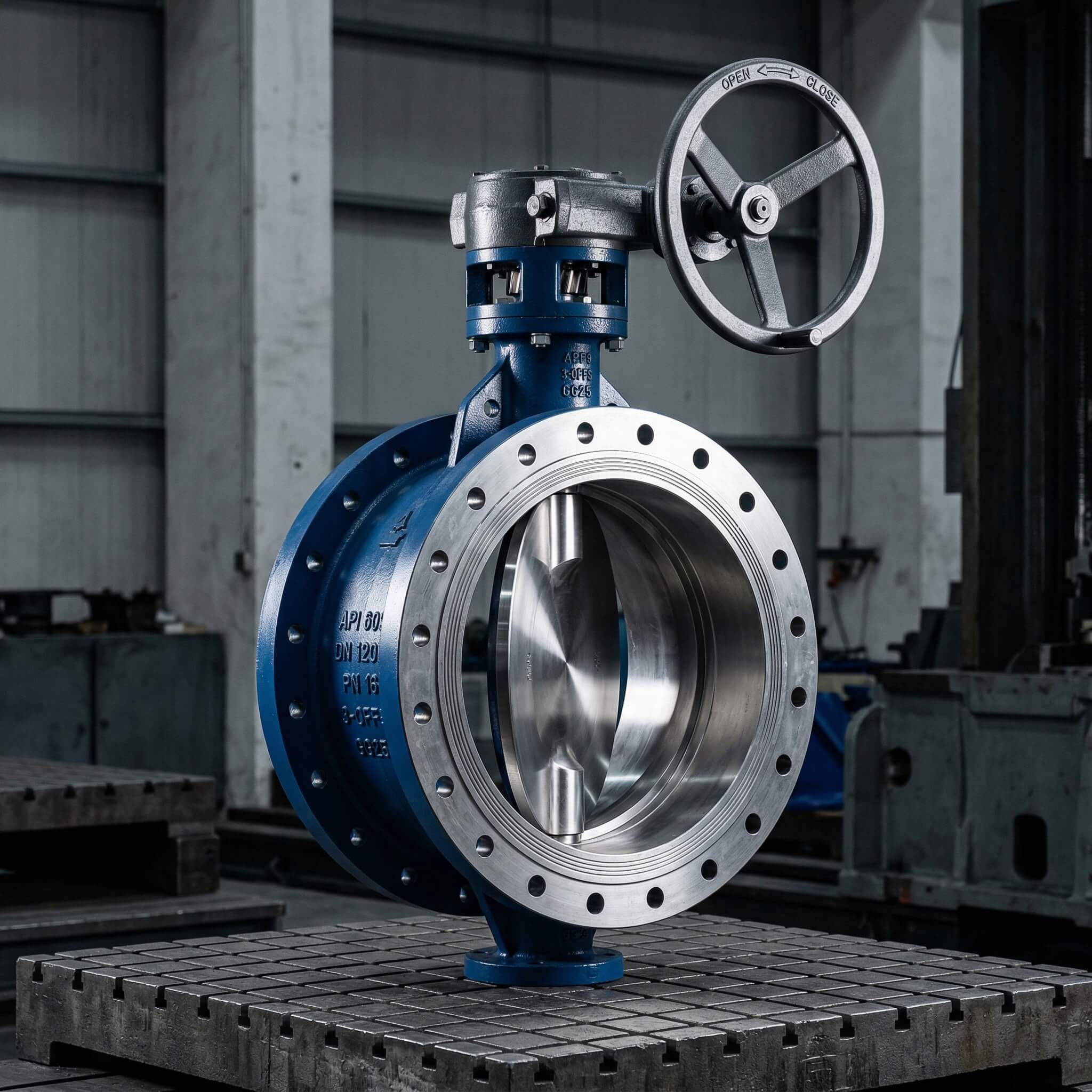
An API 609 butterfly valve is a specialized flow control device manufactured according to the American Petroleum Institute’s rigorous design and testing standards. In high-stakes industrial environments, using non-standardized components often leads to catastrophic leaks and expensive system downtime. This creates a massive liability for your engineering team and risks the safety of your entire facility. Fortunately, choosing a certified api butterfly valve ensures your hardware meets global benchmarks for pressure integrity and long-term durability.
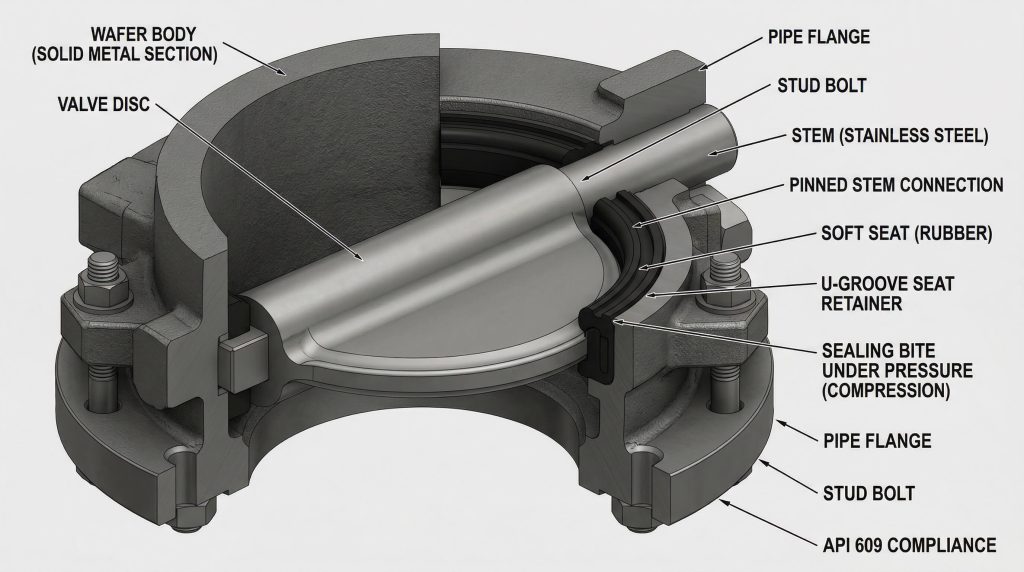
What defines the API butterfly valve standard?
The API butterfly valve standard is defined by strict criteria for dimensions, pressure ratings, and performance testing established by the American Petroleum Institute. This specification ensures that an api butterfly valve used in a refinery or power plant is interchangeable and safe for operators.
What is the API 609 specification?
You will find that this code covers everything from wall thickness to stem diameter requirements for heavy-duty service. This standard acts as the industry benchmark for petroleum and industrial applications globally.
Wait, there’s more:
- Material traceability protocols
- Pressure testing requirements
- Standardized mounting for actuators
Think about it: why risk a failure when you can follow a proven global blueprint?
How does API 609 ensure reliability?
By mandating standardized face-to-face dimensions, the code allows you to replace worn units without modifying your existing piping. This consistency is vital for maintaining uptime in continuous process industries.
But here is the catch:
- Interoperability across different brands
- Consistent pressure-temperature ratings
- Verified sealing performance under load
Key Takeaway: The API 609 standard eliminates guesswork by providing a rigid framework for quality and dimensions.
| Feature | Industrial Benefit |
|---|---|
| Standardized Dimensions | Easier replacement and maintenance |
| Material Testing | Enhanced structural safety |
This standardization serves as the backbone of industrial fluid management safety.
Why select an api butterfly valve for your project?
Selecting an api butterfly valve for your project provides a unique combination of compact design, cost-efficiency, and rapid operation. When you understand how to optimize industrial systems using butterfly valve applications, you can better integrate an api butterfly valve into complex workflows.
Does it offer low flow resistance?
Because the disc is thin and streamlined, you will experience significantly lower pressure drops compared to traditional globe valves. This mechanical advantage reduces the energy required to move fluids through your system.
Think about it:
- Lower pumping energy costs
- Higher throughput efficiency
- Reduced turbulence in the line
You effectively save money while maintaining high flow rates throughout your operation.
Is quick opening and closing a benefit?
The quarter-turn design allows you to transition from fully closed to fully open in seconds with minimal effort. This makes them ideal for both manual control and automated system responses.
Wait, there’s more:
- Faster emergency shutdowns
- Simplified automation setups
- Reduced wear on actuators
Key Takeaway: The efficiency and speed of these valves make them the preferred choice for high-frequency industrial cycling.
| Advantage | Operational Impact |
|---|---|
| Streamlined Disc | Lower energy loss |
| 90-Degree Turn | Faster system response |
These mechanical benefits directly translate into lower total cost of ownership for your plant.
Which categories define an api butterfly valve?
Categories define an api butterfly valve based on its seating material and pressure capability, specifically dividing them into Category A and Category B. You must select the right category for your api butterfly valve to match the chemical and thermal profile of your media.
What is a Category A resilient valve?
Category A typically refers to concentric, resilient-seated designs that use rubber or polymer liners to achieve a tight seal. These are commonly used in water treatment and HVAC systems where pressures are moderate.
But here is the catch:
- Lower pressure limits
- Limited temperature range
- Ideal for non-corrosive liquids
You should use these when you need a bubble-tight shut-off in non-corrosive, low-pressure applications.
How does Category B differ in design?
Category B covers high-performance, offset designs capable of handling much higher pressures and extreme temperatures. These are often required in oil, gas, and steam applications.
Think about it:
- Double or triple offset geometry
- Metal-to-metal seating options
- Enhanced fire safety ratings
Key Takeaway: Choosing between Category A and B is the most critical decision for matching valve performance to system requirements.
| Category | Seat Type | Pressure Class |
|---|---|---|
| Category A | Resilient (Rubber) | Class 125/150 |
| Category B | Offset (Metal/PTFE) | Class 150 to 600 |
The design category dictates the operational boundaries of your flow control system.
How to measure an api butterfly valve face-to-face?
Measuring an api butterfly valve face-to-face involves following the strict thickness charts provided in the API 609 specification for wafer and lug types. Accurate sizing is essential, especially when you need to know how to size a butterfly valve steam valve for stable flow control to keep an api butterfly valve functioning correctly.
What are Category A wafer dimensions?
These measurements ensure your valve fits perfectly between standard pipe flanges without causing stress on the bolts. The compact nature of these valves makes them excellent for tight spaces.
Wait, there’s more:
- Standardized wafer profile
- Precise lug patterns
- Universal flange compatibility
You can swap these units out easily during routine maintenance without changing your pipe configuration.
What are the B-series flange lengths?
Category B valves come in short and long patterns to accommodate the wider seats used in high-pressure applications. This flexibility allows engineers to design systems with varying structural requirements.
Think about it:
- More space for metal seats
- Greater structural rigidity
- Precise alignment indicators
Key Takeaway: Precise face-to-face measurements are the key to a leak-free installation and structural integrity.
| Valve Type | Spacing | Standard |
|---|---|---|
| Wafer Style | Ultra-thin profile | API 609 Table 1 |
| Lug Style | Flange-threaded | API 609 Table 2 |
Consistency in physical dimensions allows for seamless integration into any API-standardized piping network.
What materials are used in an api butterfly valve?
Materials used in an api butterfly valve vary from ductile iron for general use to high-grade alloys for extreme corrosion resistance. The body material of your api butterfly valve determines how well it resists environmental degradation and internal wear.
Is ductile iron the best choice?
You will find ductile iron is an excellent, cost-effective option for water and non-acidic industrial fluids. It provides the structural strength of steel with the price point of cast iron.
But here is the catch:
- High tensile strength
- Moderate corrosion resistance
- Best for non-corrosive media
Think about it: it is the standard choice for general-purpose industrial systems.
When should you use stainless steel?
You should opt for stainless steel when your system handles corrosive chemicals or high-purity food products. This material ensures that no contaminants enter the fluid stream.
Wait, there’s more:
- Superior oxidation resistance
- Sanitary application suitability
- Exceptional longevity in salt air
Key Takeaway: Material selection must be balanced between the chemical nature of the fluid and your project budget.
| Material | Best Application | Temperature |
|---|---|---|
| Ductile Iron | Water and HVAC | Moderate |
| Stainless Steel | Chemicals and Food | High |
Selecting the right metallurgy is the first line of defense against premature valve failure.
How to inspect an api butterfly valve for safety?
Inspecting an api butterfly valve for safety requires verifying its pressure integrity through hydro-testing and checking its dimensional tolerances. Before you decide how to choose the best high-performance butterfly valve manufacturers for industrial projects, you must confirm they test every api butterfly valve properly.
Does it meet API 598 sealing tests?
Every valve must pass a high-pressure closure test to ensure the seat does not leak when the disc is closed. This testing is the primary way to guarantee performance in the field.
Think about it:
- Shell pressure testing
- Seat leakage verification
- Zero-leakage performance
You gain peace of mind knowing your valve won’t fail during a critical shut-off event.
What dimensional checks are required?
Inspectors will measure the stem diameter and wall thickness to ensure they meet the minimum requirements for the pressure class. This prevents structural failure under high-pressure conditions.
Wait, there’s more:
- Flange finish inspection
- Bolt hole alignment
- Disc clearance verification
Key Takeaway: Rigorous testing and inspection are what separate a certified API valve from a generic alternative.
| Test Type | Main Objective | Passing Result |
|---|---|---|
| Shell Test | Body Integrity | No visible leaks |
| Seat Test | Seal Quality | Specified bubble count |
Comprehensive testing ensures the valve operates safely even at the upper limits of its pressure rating.
Where is an api butterfly valve typically installed?
An api butterfly valve is typically installed in large-scale infrastructure projects ranging from water treatment plants to oil refineries. Due to the versatility of the api butterfly valve, you can find it in both onshore and offshore environments.
Are they suitable for gas and liquid?
You can use these valves for a wide variety of media, including air, natural gas, steam, and viscous industrial liquids. Their adaptable design allows for broad application across different utility lines.
But here is the catch:
- Seal compatibility is vital
- Gas requires tighter seals
- Liquid handles higher pressure
Think about it: having one valve type that handles multiple states of matter simplifies your spare parts inventory.
Can they handle large flow capacities?
Because they can be built in massive sizes, they are the go-to choice for main cooling water lines in power plants. They provide high flow rates without the massive footprint of other valve types.
Wait, there’s more:
- High flow coefficient (Cv)
- Low physical footprint
- Efficient for high-volume bypass
Key Takeaway: Their ability to scale from small diameter pipes to massive industrial conduits makes them incredibly versatile.
| Application | Requirement | Valve Style |
|---|---|---|
| Water Treatment | Large volume flow | Resilient Seat |
| Petrochemical | Gas-tight sealing | High Performance |
The widespread adoption of these valves across industries proves their reliability and functional adaptability.
How to choose an api butterfly valve manufacturer?
Choosing an api butterfly valve manufacturer involves auditing their production capabilities and verifying their adherence to international quality management systems. You should research what defines a reliable butterfly valve manufacturing process in industry before sourcing your next api butterfly valve.
How to identify high-performance makers?
You should look for manufacturers that offer full material traceability and documented testing for every batch produced. This transparency is the hallmark of a world-class supplier.
Think about it:
- ISO 9001 certifications
- Proven project track record
- Technical engineering depth
You need a partner who understands the engineering nuances of your specific industry.
What defines a reliable production line?
A top-tier factory uses CNC machining and automated testing rigs to ensure every valve is identical to the last. Automation removes human error from the manufacturing equation.
Wait, there’s more:
- In-house foundry control
- Precision disc grinding
- Rigorous coating standards
Key Takeaway: A manufacturer’s commitment to process control is the only guarantee of long-term valve performance.
| Selection Criteria | Indicator | Importance |
|---|---|---|
| Traceability | Mill Test Reports | Critical |
| Precision | CNC Machining | High |
Your project’s success depends on the manufacturing integrity of the vendor you select.
When to upgrade to an offset api butterfly valve?
Upgrading to an offset api butterfly valve is necessary when your application involves high pressure, extreme heat, or abrasive media. The eccentric geometry of an offset api butterfly valve reduces seat wear and extends the service life of the component.
What is a double eccentric design?
In this configuration, the stem is offset in two directions, which allows the disc to lift away from the seat instantly upon opening. This reduces the friction that typically destroys resilient seats over time.
But here is the catch:
- Dramatically reduced friction
- Longer seat service life
- Lower operating torque
You will see a significant reduction in maintenance costs when using this design for frequent cycling.
Why use triple offset technology?
The third offset creates a cam-like action that allows for a metal-to-metal seat without any rubbing during closure. This is the gold standard for high-temperature and high-pressure steam.
Think about it:
- Zero-leakage sealing
- Extreme temperature range
- Fire-safe performance
Key Takeaway: Offset designs are the evolution of the butterfly valve, enabling use in environments once reserved for gate valves.
| Offset Type | Primary Benefit | Main Application |
|---|---|---|
| Double Offset | Reduced friction | High cycle water/oil |
| Triple Offset | Torque seating | Steam/High-temp gas |
Upgrading to offset technology is a strategic investment in system longevity and operational safety.
How to maintain an api butterfly valve over time?
Maintaining an api butterfly valve over time requires regular lubrication of the stem and periodic inspection of the seating surfaces for wear. Proactive care for your api butterfly valve prevents unplanned outages and ensures consistent flow control across your facility.
Which operation methods are available?
You can operate these valves using manual levers, worm gearboxes, or fully automated pneumatic and electric actuators. Selecting the right method depends on the torque required for your specific pressure class.
Wait, there’s more:
- Manual override options
- Remote control integration
- Precise throttling control
Think about it: the right actuation method can prevent water hammer and reduce stress on your piping.
How does it compare to other valves?
While butterfly valves are excellent for space-saving, you might occasionally need a ball or plug valve for specific high-torque tasks. However, for most large-bore applications, the butterfly valve is the most economical choice.
But here is the catch:
- Butterfly is much lighter
- Ball handles higher pressure
- Plug offers better throttling
Key Takeaway: Regular maintenance and choosing the right operational method will significantly extend your valve’s functional life.
| Component | Maintenance Task | Frequency |
|---|---|---|
| Valve Seat | Visual Inspection | Annual |
| Valve Stem | Proper Lubrication | Bi-annual |
A well-maintained valve is a safe valve, ensuring your production remains profitable and predictable.
FAQ: Reader-Centric Questions
- Can I use an API 609 valve for steam applications?
Yes, but you must select a Category B high-performance model with metal or reinforced seats to handle the heat. - What’s the best way to prevent leakage in a butterfly valve?
Ensure the valve is centered perfectly between flanges and that the seat material is chemically compatible with your media. - How do I know if my valve is truly API 609 compliant?
Check the nameplate for the API 609 mark and request the Mill Test Report (MTR) to verify dimensions. - Can I automate an existing API 609 manual valve?
Absolutely, as most of these valves feature standard ISO 5211 mounting pads for easy pneumatic or electric actuator installation. - What’s the best material for sea water applications?
Aluminum Bronze is the best choice due to its superior resistance to chloride corrosion and biofouling in marine environments.
Conclusion
The API 609 standard remains the definitive guide for ensuring that butterfly valves meet the grueling demands of modern industrial infrastructure. By standardizing design and testing, it provides engineers with the confidence that their flow control systems will operate safely and efficiently under pressure. As industries move toward more automated and high-precision environments, adhering to these established standards is more important than ever. For precision-engineered flow solutions that exceed industry expectations, contact us today. At Ruitoflow, our vision is to empower global industries with reliable, high-performance valve technology that drives safety and operational excellence into the next decade.