
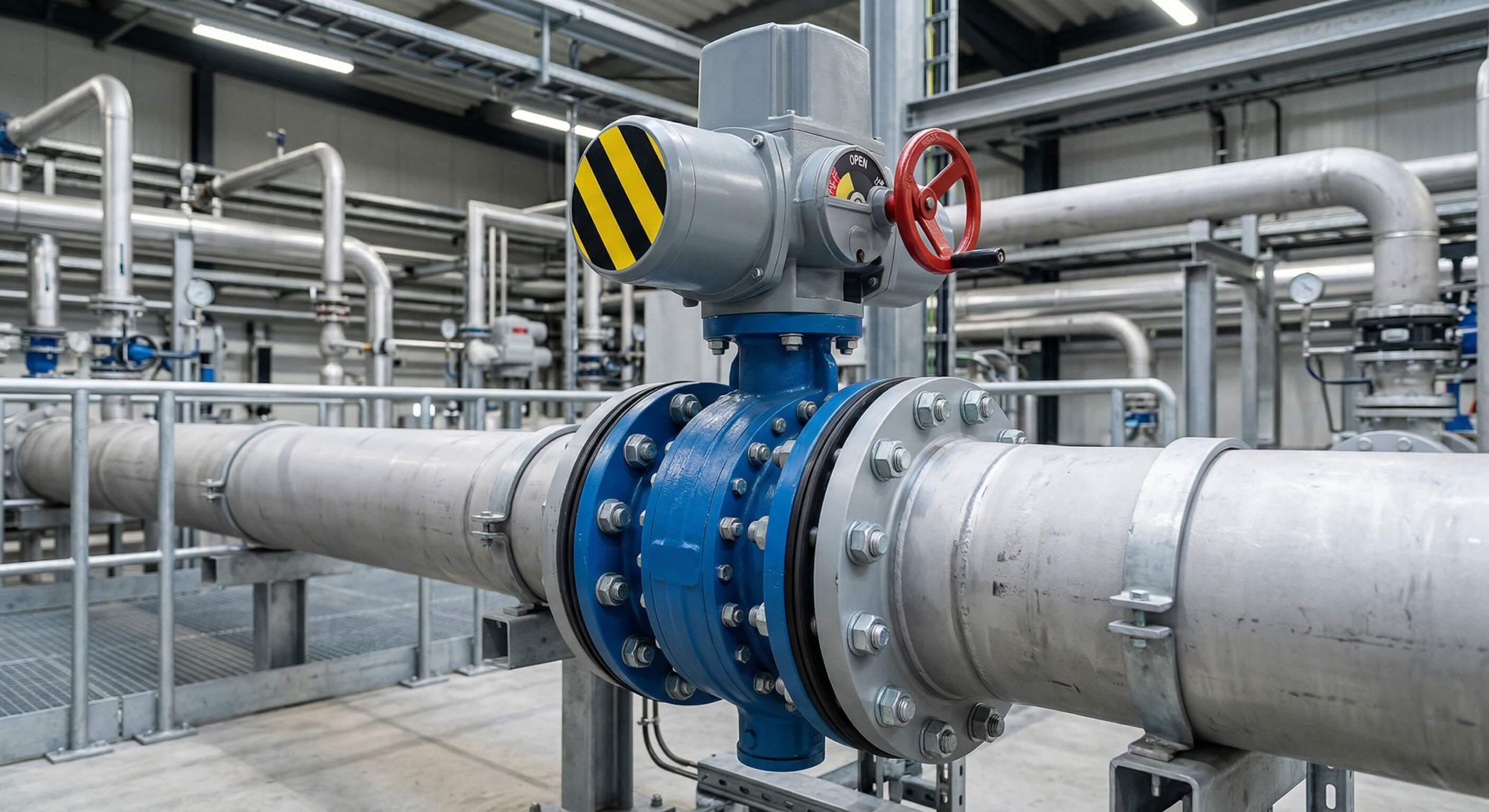
Choosing the right inch size for your system involves matching the valve’s nominal diameter with your pipeline’s inner diameter while calculating the specific flow coefficient requirements. Many engineers frequently struggle with selecting precise dimensions, which leads to a severe mismatch between mechanical specifications and actual hydraulic needs. This failure in butterfly valve sizing does more than cause a minor leak; it agitates the entire system by triggering catastrophic cavitation and accelerated seat wear that results in expensive emergency downtime. This technical guide provides the definitive solution for determining the optimal size to ensure your industrial application operates at peak hydraulic efficiency.
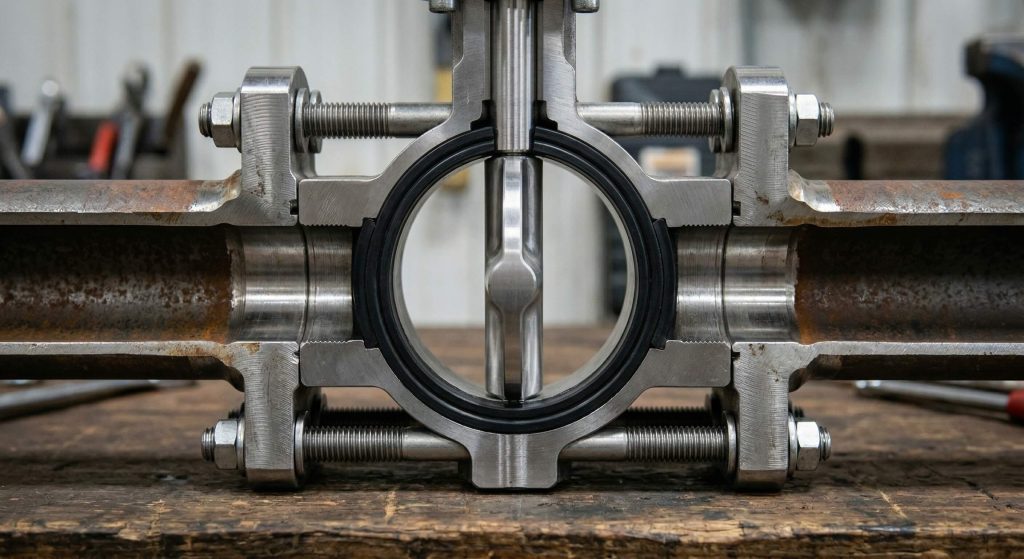
Why is accurate butterfly valve sizing critical?
Accurate sizing is essential because it prevents mechanical fatigue and ensures the valve can handle the designated flow velocity without inducing turbulence. If you utilize an incorrect approach to butterfly valve sizing, you risk compromising the structural integrity of your seals and the efficiency of your pumps.
What are the mechanical risks of improper sizing?
Misaligned dimensions lead to restricted flow and excessive energy consumption across your entire pump network. When a valve body is too small, the resulting pressure drop exceeds design limits and forces the actuator to work harder than intended.
Think about it:
- Increased risk of hydraulic shock or “water hammer.”
- Premature failure of the valve seat due to high-velocity friction.
- Inefficient throttling control in the critical mid-range opening positions.
Key Takeaway: Precise sizing serves as your primary safeguard against mechanical failure and operational inefficiency in high-velocity environments.
| Sizing Accuracy | Operational Impact | Risk Level |
|---|---|---|
| Properly Sized | Stable flow and long seat life | Low |
| Undersized | Excessive pressure drop and cavitation | Critical |
Analysis: Selecting a valve that matches the hydraulic profile rather than just the pipe diameter ensures your system maintains long-term reliability.
What measurements define butterfly valve sizing?
The nominal pipe size (NPS) and the internal diameter (ID) of the surrounding pipework are the most fundamental measurements for selection. You must also account for the pipe schedule to ensure the disc has enough clearance to swing freely without hitting the internal walls during butterfly valve sizing.
How do you verify the disc clearance?
The valve diameter must align with the NPS to maintain a consistent flow path throughout the operation. You should also check the wall thickness of your pipes because heavy schedules can restrict the movement of the valve disc.
Here’s the deal:
- NPS (Nominal Pipe Size) alignment for flange matching.
- Internal diameter clearance for the rotating disc.
- Verification of the pipe schedule to prevent mechanical interference.
Key Takeaway: You must always cross-reference the disc’s swing radius with the internal pipe geometry to prevent physical damage during a full 90-degree rotation.
| Measurement Type | Purpose | Criticality |
|---|---|---|
| Valve Diameter | Matches pipeline NPS | High |
| Disc Clearance | Ensures 360-degree movement | High |
Analysis: Mechanical compatibility extends beyond the external flange face to the internal geometry of your specific pipework configuration.
How do size ranges affect butterfly valve sizing?
Size ranges determine the application suitability, with smaller valves handling precision dosing and larger valves managing municipal volumetric flows. Understanding these categories is a vital part of butterfly valve sizing because it helps you identify the correct actuation requirements and pressure classes.
When should you use small vs. large valves?
Small valves ranging from 1/2-inch to 6-inch are designed for compact HVAC and chemical systems where space is limited. Conversely, large-scale industrial projects may require gate valves or butterfly valves exceeding 16 inches to handle massive fluid volumes.
Consider this:
- Small (1/2″ – 6″): Ideal for HVAC and chemical dosing.
- Medium (8″ – 12″): Standard for cooling water and industrial loops.
- Large (16″+): Necessary for municipal water and power plants.
Key Takeaway: Segmenting your choice by size category allows you to align your system with industry-specific pressure and flow velocity standards.
| Size Category | Common Inch Range | Primary Usage |
|---|---|---|
| Small | 0.5″ to 6″ | Precision Dosing |
| Large | 16″ to 60″ | Bulk Water Transport |
Analysis: The choice between these ranges determines the mechanical complexity and the level of automated control you will need.
When is 8-inch butterfly valve sizing standard?
The 8-inch model is considered a common standard because it offers the best balance between high flow capacity and a manageable physical footprint. Mid-sized industrial plants often rely on this specific dimension during butterfly valve sizing to keep installation costs low while maintaining throughput.
Why is the 8-inch model highly versatile?
This size serves as the backbone for wastewater treatment and industrial irrigation systems across the globe. It fits standard piping racks easily and usually requires much less torque than larger diameters.
The best part?
- Universal compatibility with standard PN10 and PN16 flanges.
- Lower weight helps reduce the structural load on your pipes.
- High availability in wafer, lug, and ball valves styles.
Key Takeaway: The 8-inch valve provides you with an optimal solution for systems that require moderate flow management without taking up excessive space.
| Specification | 8-Inch Standard | Technical Benefit |
|---|---|---|
| Flow Capacity | Moderate-High | Versatile for fluids |
| Mounting | Wafer or Lug | Flexible installation |
Analysis: Choosing the 8-inch size is favored for its ease of maintenance and its broad availability in multiple material grades.
Why use 12-inch or 16-inch butterfly valve sizing?
You should utilize 12-inch or 16-inch sizes for heavy-duty applications that involve high-velocity slurries or large-scale cooling. High-performance butterfly valve sizing for these larger bores often necessitates reinforced disc designs to prevent deformation under massive hydraulic pressure.
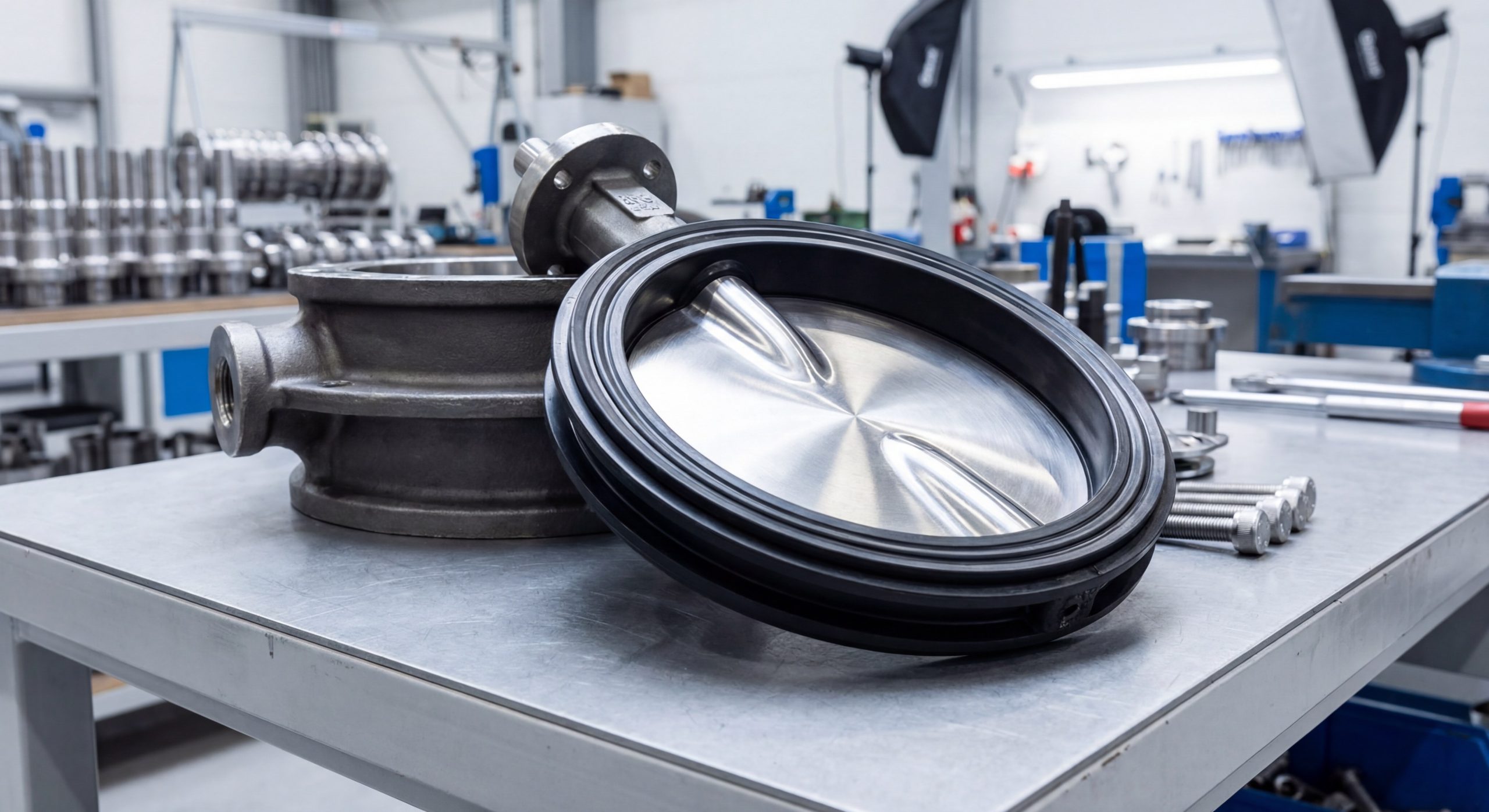
How do large sizes manage extreme flow?
Mining operations and oil refineries demand these larger sizes to move high volumes of fluid without creating excessive backpressure. You may also need to install specialized check valves downstream to protect these large units during pump shutdowns.
Now, you might wonder:
- High-pressure ratings up to ANSI Class 300.
- Extended shaft lengths available for thermal insulation.
- Compatibility with high-torque pneumatic or electric actuators.
Key Takeaway: Large-bore valves are specifically engineered for extreme durability and must be paired with automated systems to manage operational forces.
| Valve Size | Volumetric Flow | Industry Focus |
|---|---|---|
| 12-Inch | High | Mining Slurry |
| 16-Inch | Very High | Power Generation |
Analysis: Scaling your system up to 16 inches requires careful evaluation of the dynamic torque generated by moving fluid.
Does face-to-face distance impact butterfly valve sizing?
Face-to-face distance is a critical dimension that ensures a valve can be swapped into an existing pipeline without costly modifications. When you perform butterfly valve sizing, you must refer to ASME B16.10 standards to guarantee the valve fits within the space between your pipe flanges.
Which standards define valve width?
The narrow profile of butterfly valves makes them much more space-efficient than traditional globe or gate options. Maintaining standard widths allows you to perform rapid maintenance and interchange parts between different manufacturers.
Look at it this way:
- ASME B16.10 compliance for standardized replacement.
- Wafer body designs offer the slimmest possible profile.
- Lug body designs provide additional support for dead-end service.
Key Takeaway: You should always verify the face-to-face measurement against your original drawings to ensure the new valve fits your existing flange gap perfectly.
| Valve Style | Profile Width | Spatial Advantage |
|---|---|---|
| Wafer Type | Ultra-Slim | Minimal pipe weight |
| Lugged Type | Narrow | Allows downstream piping removal |
Analysis: Standardized dimensions significantly reduce your labor costs and procurement time during scheduled plant maintenance.
How does flow coefficient affect butterfly valve sizing?
The flow coefficient (Cv) represents the volume of water that will flow through the valve with a 1 psi pressure drop. Calculating the required Cv is the most accurate method for butterfly valve sizing because it focuses on your actual process requirements rather than just pipe diameter.
How do you calculate the correct Cv?
You must determine the Cv at various opening degrees to ensure precise control when the valve is used for throttling. Selecting a valve based on this value prevents you from operating in a state of permanent hydraulic inefficiency.
Here is the kicker:
- Direct relationship between Cv and system pressure drop.
- Mitigation of “choked flow” in gaseous applications.
- Optimal control resolution in the 20% to 80% opening range.
Key Takeaway: Choosing a valve based on mathematical Cv ratings rather than just line size ensures your system operates with maximum accuracy.
| Flow Condition | Recommended Strategy | Expected Result |
|---|---|---|
| High Cv Needed | Increase Valve Diameter | Low pressure loss |
| Precise Throttling | Size for 60-degree opening | Stable control |
Analysis: Mathematical validation of the Cv is the only way to guarantee your valve meets the specific hydraulic demands of your process.
Does pressure rating change butterfly valve sizing?
Pressure ratings significantly influence the material thickness and disc design required for your specific application. As you increase the size during butterfly valve sizing, the surface area of the disc grows, which creates a much larger force against the internal stem and seat.
Are size and pressure classes related?
High-pressure systems often require triple-offset designs to manage these increased loads without suffering from seat deformation. You must select a pressure class that matches the highest possible stress the valve will encounter during operation.
Simply put:
- ANSI Class 150/300/600 compatibility.
- Triple-offset designs for bubble-tight high-pressure seals.
- Material selection based on temperature-pressure curves.
Key Takeaway: Higher pressure classes usually require more advanced mechanical geometries to maintain a bubble-tight seal in larger valve diameters.
| Pressure Class | Max Ambient Pressure | Best Use Case |
|---|---|---|
| Class 150 | 285 PSI | Water Utility |
| Class 300 | 740 PSI | Chemical Process |
Analysis: You must calculate your pressure rating at maximum operating temperature to account for potential material strength degradation.
Why check flange specs for butterfly valve sizing?
Checking flange specifications ensures that the bolt circle diameter (BCD) of the valve matches the existing pipe flange. If you ignore this step during butterfly valve sizing, you may find it impossible to physically secure the valve into your pipeline.
How do bolt circles affect installation?
Flange standards such as ANSI, DIN, and JIS have different bolt patterns and hole counts that you must match perfectly. Even if the inch size is correct, a mismatch in the standard will lead to alignment issues and potential leaks.
The result?
- ANSI Class 150 vs. PN16 metric bolt patterns.
- Correct bolt hole count for secure sealing.
- Proper alignment pins for wafer style installations.
Key Takeaway: You should always verify international flange standards during procurement to avoid expensive shipping delays and on-site modifications.
| Standard | Region | Pattern Metric |
|---|---|---|
| ANSI/ASME | North America | Inch-based holes |
| DIN/EN | Europe | Metric-based holes |
Analysis: Flange compatibility is the final gatekeeper for successful mechanical integration of the valve into your infrastructure.
How do experts optimize butterfly valve sizing?
Experts optimize selection by conducting computational fluid dynamics (CFD) analysis to verify that the chosen dimensions meet complex flow requirements. Technical collaboration with specialists is the final step in butterfly valve sizing that ensures your project remains within safety and budget constraints.
Why consult manufacturers for custom sizes?
For systems involving corrosive fluids or extreme heat, a standard sizing chart might not be enough to ensure safety. Professionals can help you select exotic materials and calculate specific actuator torques for your unique environment.
Your next step?
- Custom material selection like Duplex or Alloy 20.
- Verified actuator sizing for guaranteed shutoff torque.
- Full compliance with API 609 and fire-safe standards.
Key Takeaway: Collaborating with an engineering specialist reduces your risk of operational failure and significantly extends the life of your valve assets.
| Professional Service | Engineering Benefit | Business Value |
|---|---|---|
| CFD Modeling | Verified performance | Reduced liability |
| Actuator Sizing | Reliable shutoff | Safety assurance |
Analysis: Professional consultation transforms a simple procurement task into a strategic engineering asset for your company.
Frequently Asked Questions
- Can I use an oversized butterfly valve for my system?
No, because an oversized valve significantly impairs your control resolution and can lead to seat damage if you operate it too close to the closed position. - What’s the best way to measure the bolt circle?
The best way is to measure from the center of one bolt hole to the center of the hole directly opposite to get the accurate BCD. - Can I replace a gate valve with a butterfly valve?
Yes, but you must verify that the butterfly valve’s Cv and pressure ratings meet the original system requirements, as flow profiles differ. - What’s the best material for seawater applications?
For seawater, you should typically use a duplex stainless steel or nickel-aluminum bronze disc paired with a resilient seat for corrosion resistance. - Can I install a 16-inch butterfly valve vertically?
Yes, though experts recommend installing the shaft horizontally to prevent sediment from settling in the lower bearing, especially in larger sizes.
Conclusion
Mastering butterfly valve sizing is the key to achieving industrial efficiency, preventing mechanical failure, and optimizing your operational costs. By focusing on NPS, Cv values, and standardized dimensions, you ensure that your flow control system remains safe and reliable for years to come. Our mission is to provide you with high-precision engineering solutions that resolve your most complex fluid management challenges. Whether you are upgrading an existing line or building a new facility, our vision is to lead the industry through technical excellence and superior durability.
Ready to optimize your flow control infrastructure? Contact us today for a professional consultation and custom quote.