
The butterfly valve advantages and disadvantages center on their exceptionally lightweight, space-saving design and rapid operation, contrasted by their limitations in high-pressure throttling and potential for flow obstruction. Selecting the wrong flow control component can lead to unexpected system failure, frequent maintenance downtime, and spiraling operational costs that eat into your bottom line. You might find that standard models struggle with high-temperature steam or abrasive media, resulting in seat erosion that compromises your entire pipeline integrity. By evaluating high-performance butterfly valve options, you can secure a reliable, cost-effective solution that balances efficiency with long-term durability.
1. What are butterfly valve advantages and disadvantages?
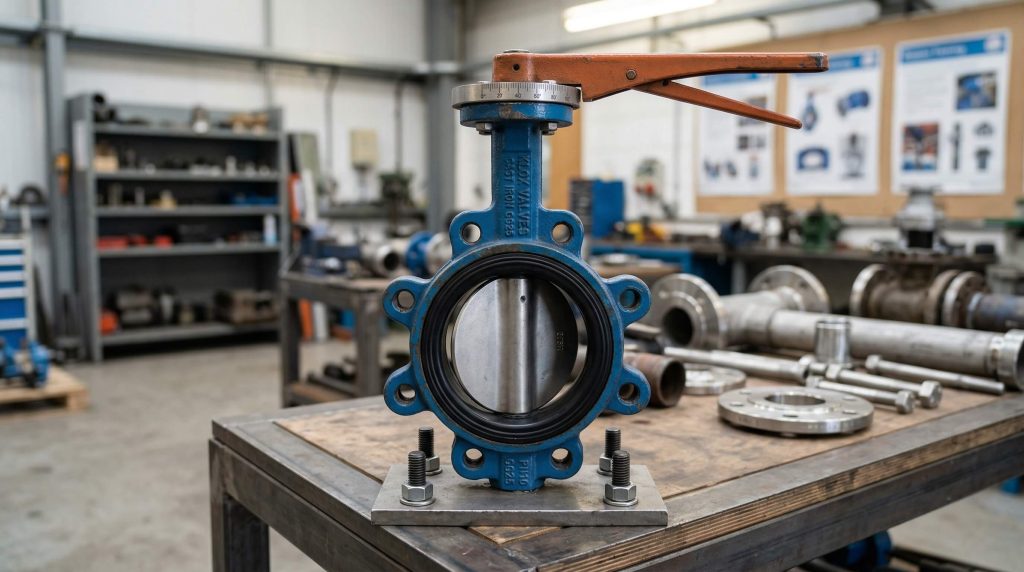
The primary butterfly valve advantages and disadvantages involve a superior power-to-weight ratio and quick quarter-turn actuation, though they may face challenges with cavitation and high-pressure drops. You will notice that these valves are significantly lighter than gate or globe valves, which simplifies the installation process and reduces structural support requirements. However, the presence of the disc in the flow path remains a permanent consideration for your hydraulic calculations.
Is the compact design a major benefit?
Yes, the narrow “face-to-face” dimension allows you to install these components in tight piping configurations where larger valves simply would not fit. This compactness does not just save space; it also reduces the total amount of raw material used in construction.
Look:
- Reduced installation footprint for high-density manifolds.
- Lower shipping and handling costs due to decreased weight.
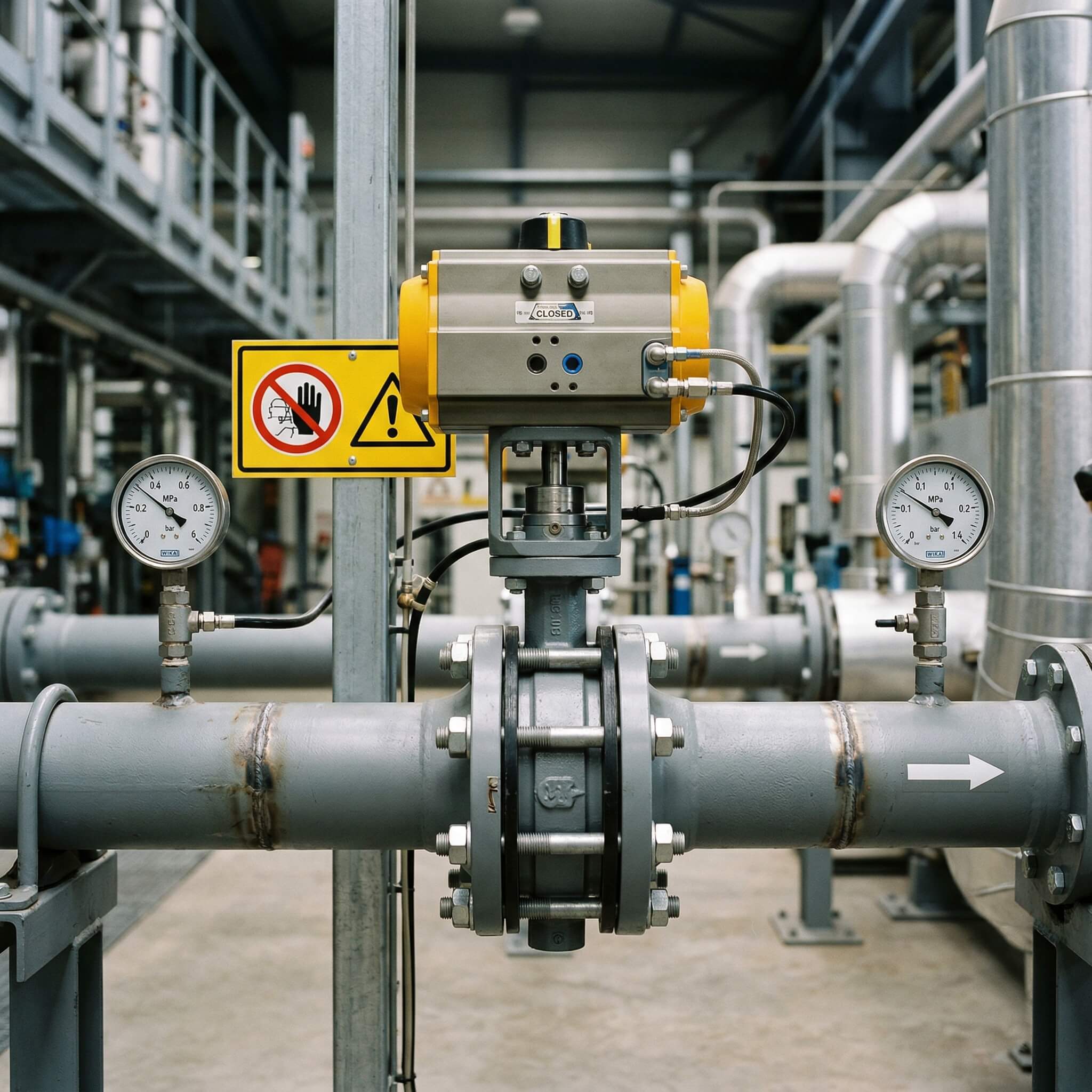
- Simplified mounting for automated pneumatic or electric actuators.
But here is the kicker:
Because the disc is always in the flow stream, you must account for a slightly higher pressure drop compared to full-bore ball valves.
Key Takeaway:
Compactness and speed make these valves ideal for large-scale water or air systems where space is at a premium and quick isolation is required.
| Feature | Impact on System |
|---|---|
| Lightweight Body | Lower structural stress |
| Quarter-turn Action | Rapid emergency shutoff |
| Disc in Flow Path | Constant pressure drop |
The result of this design is a highly efficient valve that offers rapid response times while requiring minimal physical space within your facility.
2. How do butterfly valve advantages and disadvantages impact cost?
The financial butterfly valve advantages and disadvantages are largely positive, as these units generally offer the lowest cost-per-inch of diameter for any industrial valve type. You will find that procurement costs are significantly lower because the simple design requires fewer materials and less complex manufacturing processes. While the initial savings are impressive, you must weigh them against the potential for seat replacement costs in high-cycle applications.
Are maintenance requirements simplified?
The simple construction with fewer moving parts generally translates to a longer mean time between failures and faster onsite repairs. You can often replace the resilient seat without needing specialized tools or extensive training for your maintenance crew.
The result?
- Minimal downtime during scheduled plant turnarounds.
- Lower inventory costs for spare parts and seals.
- Reduced labor hours for installation and routine checks.
Think about it:
If you are managing a large-scale project, saving 20% to 40% on valve procurement can free up significant capital for other critical infrastructure needs.
Key Takeaway:
Low initial investment and reduced labor costs make these valves the most economical choice for large-diameter pipelines.
| Cost Factor | Butterfly Valve Position |
|---|---|
| Initial Purchase | Low / Economical |
| Installation Labor | Minimal |
| Spare Parts | Affordable and standardized |
Economic efficiency is a hallmark of this technology, provided you select the appropriate material grades for your specific media.
3. Which butterfly valve advantages and disadvantages affect flow?
Significant butterfly valve advantages and disadvantages regarding flow include high flow coefficients and excellent pressure recovery, though they are not the first choice for precise low-flow throttling. You can achieve high flow rates with minimal turbulence when the valve is fully open, making them perfect for high-volume transfer. However, if you attempt to use them for precise control at less than 30 degrees open, you may experience erratic flow patterns.
Can you use them for throttling?
While they are capable of moderate throttling, they are most effective when operated between the 30-degree and 80-degree positions. Operating outside this range can lead to accelerated wear on the disc and seat due to high-velocity fluid impingement.
Look:
- High Cv (Flow Coefficient) values in large sizes.
- Rapid pressure recovery after the fluid passes the disc.
- Linear flow characteristics in the middle of the travel range.
The result?
You get a valve that moves large volumes of fluid efficiently but requires careful sizing if you need it to perform a control function.
Key Takeaway:
These valves excel at high-volume flow and pressure recovery but require specific sizing for applications requiring fine-tuned modulation.
| Flow Parameter | Performance Level |
|---|---|
| Open Flow Capacity | Very High |
| Pressure Recovery | Excellent |
| Fine Throttling | Limited / Moderate |
Understanding the flow dynamics of the disc ensures you don’t face unexpected pressure issues or premature component fatigue.
4. Are butterfly valve advantages and disadvantages vital for heat?
Thermal butterfly valve advantages and disadvantages depend heavily on whether you choose a resilient or metal-seated design. You must be cautious with standard concentric models, as the rubber seats can degrade or melt when exposed to steam or high-process temperatures. Fortunately, high-performance eccentric designs utilize metal-to-metal sealing to overcome these traditional heat limitations.
Does heat affect the sealing integrity?
In soft-seated versions, high temperatures cause the elastomer to lose its elasticity, which can lead to leaks or a “sticky” valve that is difficult to actuate. If your process involves thermal cycling, the expansion and contraction of the disc must be perfectly managed by the seat design.
But here is the kicker:
Metal-seated triple offset valves can handle temperatures exceeding 1,000 degrees Fahrenheit while maintaining a bubble-tight seal.
- Metal seats prevent melting in steam service.
- Graphite seals offer fire-safe protection for volatile fluids.
- Special alloys prevent disc warping under thermal stress.
Key Takeaway:
Standard models are limited by seat temperature, but high-performance metal-seated versions are robust enough for the most extreme thermal environments.
| Temperature Range | Recommended Seat |
|---|---|
| Below 150°C | EPDM or BUNA-N |
| 150°C to 230°C | PTFE / Teflon |
| Above 230°C | Metal-to-Metal / Graphite |
Choosing the correct seat material is the difference between a valve that lasts years and one that fails in weeks.
5. What butterfly valve advantages and disadvantages apply to slurry?
When dealing with slurries, butterfly valve advantages and disadvantages include the risk of the disc “scouring” the seat and the potential for debris to collect around the stem. You will find that while they are cheaper than ball valves for slurry, the abrasive particles can quickly wear down a standard disc. To mitigate this, you should specify specialized coatings or hardened materials for the internal components.
Is clogging a serious concern?
Yes, because the disc sits in the middle of the flow, fibrous materials or large solids can potentially snag on the disc or become trapped in the seat pocket. This can prevent the valve from closing fully, leading to “bypass” leakage that erodes the sealing surface.
Look:
- Erosion-resistant coatings (like Chrome or Stellite).
- Streamlined disc profiles to minimize debris buildup.
- Polished internals to reduce material adhesion.
The result?
By selecting a high-performance model with an erosion-resistant disc, you can utilize the cost benefits of this design even in difficult media.
Key Takeaway:
Slurry applications require hardened disc materials and specialized seats to prevent abrasive wear and ensure complete shutoff.
| Media Condition | Risk Level |
|---|---|
| Fine Abrasives | Moderate (Requires coating) |
| Large Solids | High (Risk of snagging) |
| Fibrous Slurry | Moderate (Self-cleaning discs help) |
Proper material selection transforms a vulnerable component into a durable asset for your most demanding slurry lines.
6. Do butterfly valve advantages and disadvantages cause cavitation?
Cavitation butterfly valve advantages and disadvantages are a critical consideration because the pressure drop across the disc can trigger the formation and collapse of vapor bubbles. You might notice excessive noise and vibration if the valve is operated at high differential pressures, which signals that cavitation is damaging the pipe wall and the disc itself. Correct orientation and sizing are your best defenses against these destructive forces.
How do you identify cavitation damage?
You will typically see “pitting” or small craters on the downstream side of the disc and the internal body wall, which can eventually lead to structural failure. This usually happens when you use a butterfly valve for high-pressure let-down service without proper engineering.
Think about it:
The noise of cavitation sounds like gravel moving through the pipe, and the resulting vibration can loosen bolts and damage nearby instrumentation.
- Increased noise and structural vibration.
- Accelerated erosion of the disc trailing edge.
- Loss of flow control accuracy.
Key Takeaway:
Cavitation is a significant risk in high-pressure drop applications, requiring careful hydraulic analysis and specific installation orientations.
| Pressure Condition | Cavitation Risk |
|---|---|
| Low Differential | Low / Safe |
| High Differential | High / Destructive |
| High Velocity | Moderate to High |
Managing the pressure gradient across the valve is essential for maintaining the mechanical integrity of your piping system.
7. How do butterfly valve advantages and disadvantages change by type?
Comparing butterfly valve advantages and disadvantages across concentric, double offset, and triple offset designs reveals a clear trade-off between cost and performance. You will find that concentric valves are the most affordable but limited in pressure, while triple offset valves provide high-pressure, zero-leakage performance at a premium price. Selecting the right type ensures you don’t overspend on technology you don’t need or underspecify for critical service.
Which offset design is best for you?
Double offset valves move the stem slightly away from the seat, reducing friction and extending the life of the seal during high-cycle operation. Triple offset valves take this further by creating a cam-like action that eliminates seat rubbing entirely until the final point of closure.
But here is the kicker:
While concentric valves are great for water, only triple offset designs can provide the “bubble-tight” seal required for hazardous chemicals or high-pressure gas.
- Concentric: Best for low-pressure water and air.
- Double Offset: Ideal for chemicals and moderately high pressures.
- Triple Offset: The gold standard for critical isolation and extreme heat.
Key Takeaway:
The complexity of the offset design directly correlates to the valve’s ability to handle high pressures and provide long-term sealing reliability.
| Valve Type | Primary Benefit | Main Limitation |
|---|---|---|
| Concentric | Lowest price | Low pressure/temp |
| Double Offset | Lower seat wear | Higher cost than concentric |
| Triple Offset | Zero leakage / High-spec | Highest initial investment |
Matching the valve architecture to your specific pressure class is the most effective way to optimize your equipment spend.
8. Are butterfly valve advantages and disadvantages key for HVAC?
In commercial heating and cooling, butterfly valve advantages and disadvantages make them the industry standard for chilled water and condenser water systems. You will benefit from their low torque requirements, which allow for smaller, less expensive actuators to be used throughout the building’s automation system. Because HVAC systems often involve large pipe diameters, the weight savings provided by these valves significantly reduce the load on your building’s structural supports.
Is automation easier with these valves?
The quarter-turn movement and low breakout torque mean that electric or pneumatic actuators can be compact and energy-efficient. You can easily integrate these into a central management system to modulate flow based on real-time temperature demands.
The result?
- Lower energy consumption for the building’s pumping systems.
- Faster installation for contractors on tight deadlines.
- Reliable performance in seasonal cycling environments.
Look:
For a 12-inch line, a butterfly valve might weigh 50 pounds, whereas a gate valve could exceed 300 pounds—a massive difference for your installation crew.
Key Takeaway:
The combination of low weight, low torque, and easy automation makes these valves the preferred choice for modern HVAC infrastructure.
| HVAC Need | Valve Capability |
|---|---|
| Large Pipe Size | Excellent fit (Wafer/Lug) |
| Low Torque | Small, cheap actuators |
| Cost Control | Very competitive pricing |
By leveraging these benefits, you can design a more efficient and cost-effective climate control system for any large-scale facility.
9. Which butterfly valve advantages and disadvantages impact sealing?
Evaluating butterfly valve advantages and disadvantages in sealing performance requires understanding the difference between bidirectional and unidirectional designs. You will find that standard resilient-seated valves seal equally well in both directions, which simplifies installation and prevents errors. However, high-performance offset valves often have a “preferred” flow direction to achieve the tightest possible seal under high pressure.
Is a “bubble-tight” seal possible?
Yes, with modern resilient seats or triple offset metal seats, you can achieve ANSI Class VI shutoff, which means zero visible leakage. You must ensure that the seat material is compatible with your media to prevent swelling or chemical degradation that would ruin the seal.
But here is the kicker:
Over-tightening the valve to stop a leak can actually damage the seat and shorten the valve’s lifespan.
- Bidirectional seals simplify pipeline layout.
- Soft seats provide excellent low-pressure shutoff.
- Metal seats require higher torque but survive harsh conditions.
Key Takeaway:
While bidirectional sealing is a major advantage for simple systems, critical high-pressure applications may require unidirectional offset designs for maximum safety.
| Seal Type | Directionality | Shutoff Class |
|---|---|---|
| Rubber (Concentric) | Bidirectional | Class VI (Bubble-tight) |
| Metal (Offset) | Often Unidirectional | Class IV or VI |
| PTFE (High-Perf) | Bidirectional | Class VI |
Ensuring your installation matches the valve’s sealing characteristics prevents costly leaks and downstream contamination.
10. Why review butterfly valve advantages and disadvantages today?
The current landscape of butterfly valve advantages and disadvantages is evolving with new materials and manufacturing techniques that push the boundaries of performance. You should re-evaluate these components to take advantage of improved disc designs that reduce turbulence and high-performance alloys that resist corrosion better than ever before. Future-proofing your system starts with selecting valves that offer the best balance of longevity, efficiency, and maintenance ease.
Are you missing out on new innovations?
Modern computational fluid dynamics (CFD) has allowed for “thin-profile” discs that maximize flow while maintaining structural strength. You can now specify valves that offer the performance of a globe valve with the weight and cost benefits of a butterfly design.
The result?
- Enhanced system efficiency through reduced pump head loss.
- Longer intervals between scheduled maintenance.
- Better compatibility with modern smart-actuation technology.
Think about it:
An hour spent auditing your valve specifications today could save your company thousands of dollars in energy and repair costs over the next decade.
Key Takeaway:
Ongoing technological improvements mean that these valves are now suitable for applications that were previously reserved for much more expensive valve types.
| Strategic Goal | Action Item |
|---|---|
| Reduce Maintenance | Upgrade to high-cycle seats |
| Improve Efficiency | Select low-profile disc designs |
| Lower Risk | Match offset type to pressure |
By staying informed on these traits, you ensure your fluid handling systems remain competitive, reliable, and cost-effective.
Conclusion
Mastering the butterfly valve advantages and disadvantages allows you to design industrial systems that are both high-performing and economically sound. Our vision is to provide the engineering community with robust, reliable flow control solutions that bridge the gap between affordability and uncompromising quality. Whether you are managing an HVAC project, a chemical plant, or a water treatment facility, the right valve selection is the foundation of your success.
To find the optimal configuration for your specific application or to request a detailed technical consultation, please contact us today and let our team of experts guide your selection.
Frequently Asked Questions
Can I use a butterfly valve for precise flow modulation?
Only in a limited capacity, as these valves are most accurate for throttling between 30 and 80 degrees of the opening angle. If you require extremely precise control at very low flow rates, a globe valve or a specialized V-port ball valve may be a better investment.
What’s the best way to prevent seat wear in high-cycle systems?
Selecting a double or triple offset design is the most effective way to reduce friction between the disc and the seat. These designs use a cam-like motion to lift the disc away from the seat during the opening stroke, significantly extending the life of the sealing materials.
How do I know if my butterfly valve is cavitating?
Listen for a distinct “rushing” or “crackling” sound that resembles gravel or marbles passing through the pipeline. You should also check for unexplained vibrations in the pipe supports and look for pitting on the disc surface during your next maintenance inspection.
Can I install a butterfly valve in any orientation?
Generally yes, but for media containing solids or slurries, you should install the valve with the stem in a horizontal position. This prevents debris from settling in the bottom stem bearing, which can lead to sticking or premature seal failure.
What’s the best seat material for abrasive slurries?
A reinforced elastomer like polyurethane or a specially hardened metal seat is usually the best choice for resisting abrasive wear. You should also consider specifying a disc with a wear-resistant coating like tungsten carbide to ensure the leading edge remains sharp and effective.