
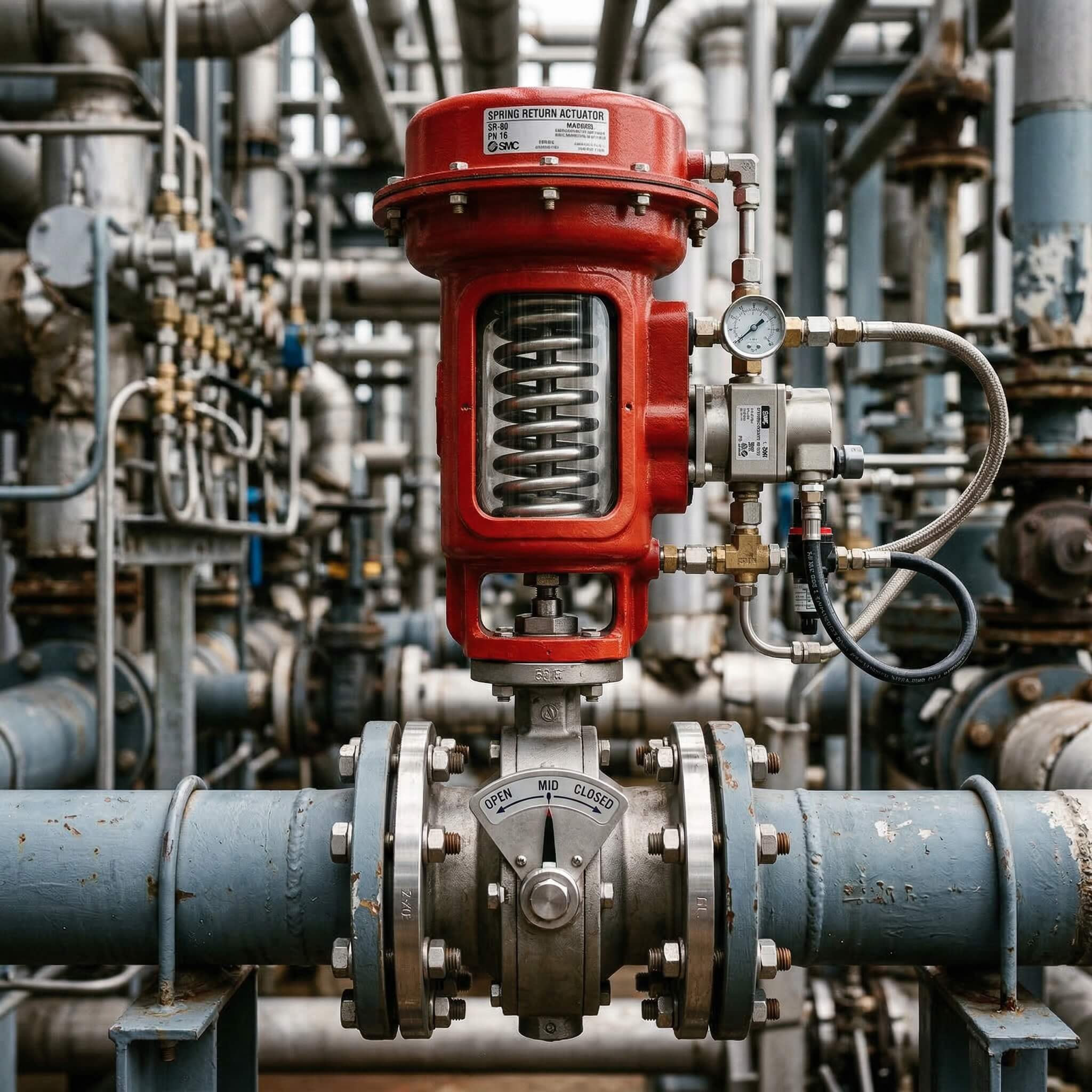
Actuated butterfly valves are automated flow control devices that use a rotating disc to regulate or isolate the movement of fluids within a piping system. Imagine a high-pressure processing line where a sudden power failure occurs, leaving manual valves frozen in an open position. This leads to massive product loss, potential equipment damage, and hours of expensive cleanup that erodes your quarterly margins. By integrating a spring loaded butterfly valve, you provide your system with a reliable fail-safe mechanism that triggers automatically during emergencies.
What is a spring loaded butterfly valve used for?
A spring loaded butterfly valve is used primarily for automated flow control and fail-safe isolation in heavy-duty industrial pipelines. This configuration relies on a pneumatic actuator where a mechanical spring forces the valve to a specific position if the air supply fails. You will find these valves in sectors ranging from water treatment to chemical processing where reliability is non-negotiable.
Does it support remote operation?
Think about it:
- Actuators allow for control from a central PLC.
- Positioners provide real-time feedback to operators.
- Manual overrides are still available for emergencies.
Here is the kicker: automation reduces human error.
Key Takeaway
Using an actuated system allows you to manage complex flow rates without needing technicians at every valve station. This scalability is essential for modern industrial growth and efficiency.
| Feature | Manual Valve | Actuated Valve |
|---|---|---|
| Response Speed | Slow | Fast |
| Precision | Low | High |
| Fail-Safe | No | Yes (Spring-Return) |
Modern systems prioritize automated response over manual intervention to protect expensive downstream assets.
How does a spring loaded butterfly valve ensure safety?
A spring loaded butterfly valve ensures safety by providing a mechanical “default” position that the valve reverts to during a system failure. In hazardous environments, you cannot rely solely on electricity, which is why the stored energy in a spring is so vital. This fail-safe logic prevents toxic leaks or over-pressurization during unexpected shutdowns.
What is fail-closed logic?
But there is a catch:
- The spring must be sized for the line pressure.
- It automatically seals the pipe when air is lost.
- This prevents downstream contamination or spills.
Think about it: safety is about predictable failure states.
Key Takeaway
The mechanical spring acts as a silent guardian for your facility, ensuring that even a total power loss doesn’t result in a catastrophic environmental event.
| Safety State | Logic Name | Application |
|---|---|---|
| Default Closed | Fail-Closed | Chemical/Toxic Media |
| Default Open | Fail-Open | Cooling Systems |
| Locked | Fail-Last | Process Stabilization |
Choosing the right safety logic depends entirely on the specific risks associated with your working media.
Where do you install a spring loaded butterfly valve?
You install a spring loaded butterfly valve in locations where both space efficiency and rapid shut-off are required, such as between pipe flanges. Because these valves are much thinner than gate or globe valves, they fit into tight manifolds without compromising flow capacity. You should place them in lines that require frequent cycling or critical safety shut-offs.
Is orientation important?
Here is the kicker:
- Horizontal installation is generally preferred.
- It prevents sediment from settling in the bottom seal.
- Shaft alignment must be checked during the bolting process.
But there is a catch: improper alignment leads to seat wear.
Key Takeaway
Strategic placement in your piping layout minimizes the footprint of your control system while maximizing the speed of your automated response.
| Mounting Style | Space Usage | Maintenance Ease |
|---|---|---|
| Wafer | Minimal | Moderate |
| Lug | Low | High |
| Flanged | Moderate | Very High |
Wafer styles are the most common choice for weight-sensitive applications where flange space is at a premium.
Why is a spring loaded butterfly valve good for HVAC?
A spring loaded butterfly valve is excellent for HVAC systems because it provides precise throttling for chilled water and heating loops while maintaining a lightweight profile. You need components that can handle high cycles without requiring constant maintenance. These valves offer the low torque required for energy-efficient electric or pneumatic actuators.
Can it control temperature?
Think about it:
- Modulating actuators adjust the disc angle precisely.
- This regulates the volume of hot or cold water.
- Better flow control leads to more stable building climates.
Here is the kicker: precision saves on energy costs.
Key Takeaway
Integrating these valves into your HVAC infrastructure ensures long-term reliability and significant energy savings through improved flow regulation.
| HVAC Media | Valve Benefit | Expected Life |
|---|---|---|
| Chilled Water | Corrosion Resistance | 10+ Years |
| Glycol Mix | Leak-proof Sealing | 8+ Years |
| Condensate | High Flow Capacity | 12+ Years |
The ability to provide both isolation and modulation makes this valve the workhorse of large-scale climate control.
How do you maintain a spring loaded butterfly valve?
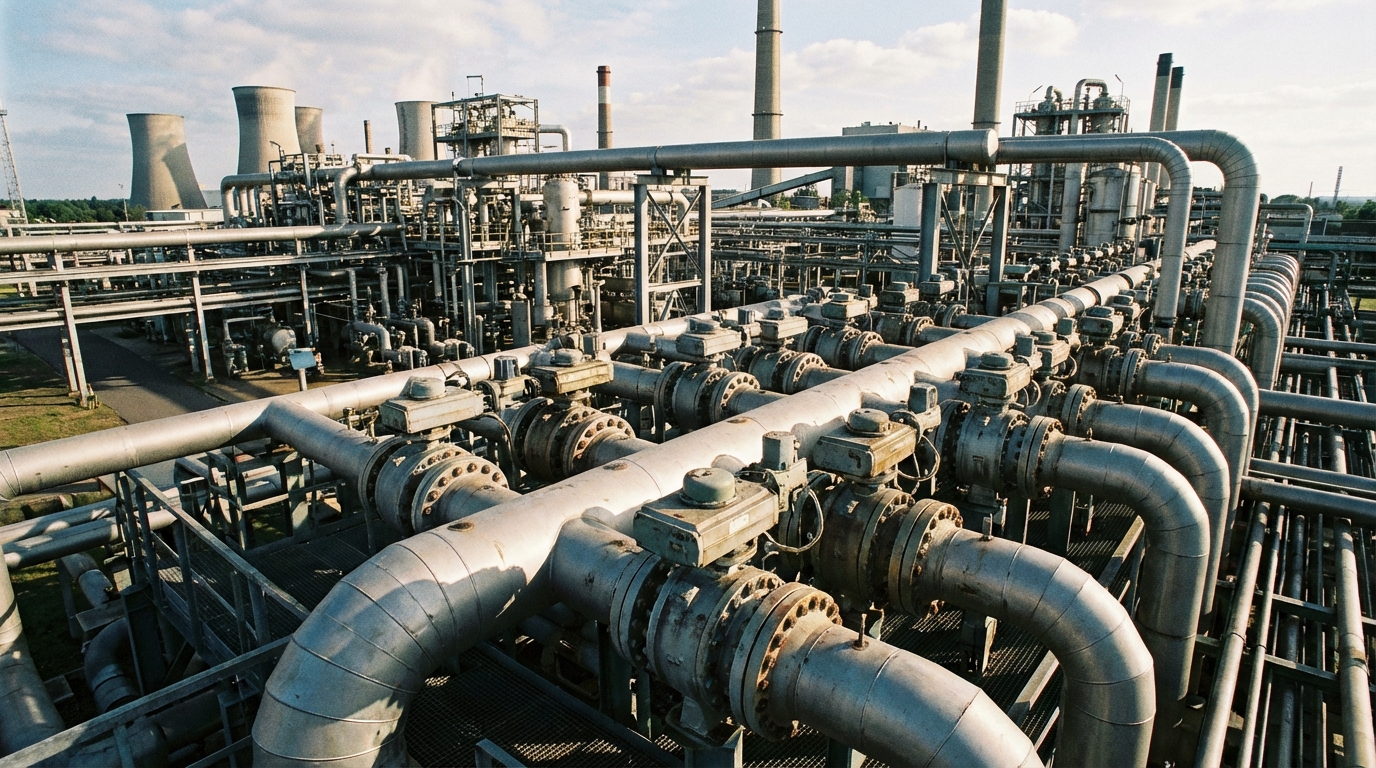
You maintain a spring loaded butterfly valve by performing regular visual inspections of the actuator seals and checking the torque levels of the mounting bolts. Since the spring is under high tension, you must never attempt to disassemble the actuator without proper safety tools. You should also cycle the valve periodically to ensure the disc doesn’t stick to the elastomer seat.
When should you lubricate?
But there is a catch:
- Many modern actuators are permanently lubricated.
- External stem seals may still require periodic grease.
- Check the manufacturer guidelines to avoid seal degradation.
Think about it: preventive care stops unplanned downtime.
Key Takeaway
A consistent maintenance schedule extends the life of your seals and ensures the spring mechanism remains ready for an emergency event.
| Maintenance Task | Frequency | Skill Level |
|---|---|---|
| Visual Leak Check | Monthly | Basic |
| Cycle Testing | Quarterly | Intermediate |
| Seat Inspection | Annual | Advanced |
Regular cycling is the most effective way to prevent “stiction” in elastomer-seated valves used in stagnant lines.
What is the benefit of a spring loaded butterfly valve?
The primary benefit of a spring loaded butterfly valve is the combination of high flow coefficients (Cv) and a mechanical fail-safe in a compact design. You gain the ability to move large volumes of fluid with very little pressure drop across the valve. Furthermore, the quarter-turn operation is much faster than multi-turn gate valves, allowing for near-instantaneous shut-off.
Is it cost-effective?
Here is the kicker:
- It costs less than a ball valve of the same size.
- Maintenance is simpler due to fewer moving parts.
- The lightweight design reduces piping support costs.
But there is a catch: high-pressure limits exist.
Key Takeaway
You achieve a superior balance of performance and budget by selecting butterfly designs over bulkier, more expensive valve alternatives.
| Advantage | Impact on System | Financial ROI |
|---|---|---|
| Low Weight | Easier Installation | Lower Labor Costs |
| High Cv | Reduced Pump Load | Lower Energy Bills |
| Fast Action | Better Protection | Reduced Risk Loss |
The return on investment is realized through both lower initial purchase prices and reduced operational expenses over the valve’s lifespan.
Can a spring loaded butterfly valve handle high steam?
A spring loaded butterfly valve can handle high steam applications provided it is designed with a high-performance metal seat rather than standard rubber. You must ensure the materials are rated for the thermal expansion and pressure fluctuations typical of steam service. Triple-offset designs are particularly effective here, as they provide a bubble-tight seal without the friction that destroys soft seats.
What about thermal shock?
Think about it:
- Metal seals resist high temperatures effectively.
- Offset shafts reduce wear during expansion.
- Actuators must be shielded from the heat.
Here is the kicker: metal seats are extremely durable.
Key Takeaway
When correctly specified, these valves provide the high-speed isolation necessary for steam headers and turbine bypass systems.
| Component | Standard Valve | Steam Rated Valve |
|---|---|---|
| Seat Material | EPDM / NBR | Stainless Steel / Stellite |
| Disc Type | Concentric | Triple-Offset |
| Actuator | Standard | High-Temp Rated |
Using the wrong seat material in steam service will result in immediate failure and dangerous line leaks.
How is a spring loaded butterfly valve sized for flow?
A spring loaded butterfly valve is sized for flow by calculating the required Flow Coefficient (Cv) based on your system’s maximum pressure drop and flow rate. You must ensure the valve is not oversized, as this can lead to “hunting” or poor control during throttling. Most engineers select a valve where the normal operating flow occurs between 30 and 70 degrees of the disc opening.
Why avoid oversizing?
But there is a catch:
- Oversized valves have poor resolution at low flow.
- This causes rapid wear on the actuator.
- It can lead to unstable system pressure.
Think about it: bigger is not always better in control.
Key Takeaway
Correct sizing ensures that your automation system can maintain steady-state flow without overworking the mechanical components of the actuator.
| Sizing Step | Tool Needed | Objective |
|---|---|---|
| Calculate Cv | Sizing Software | Define flow capacity |
| Check Velocity | Piping Tables | Prevent cavitation |
| Verify Torque | Torque Charts | Match actuator size |
Proper sizing is the foundation of a stable control loop and prevents premature valve failure from cavitation.
Who manufactures the best spring loaded butterfly valve?
The best spring loaded butterfly valve manufacturers are those that adhere to international quality standards like ISO 9001, CE, and API 609. You should look for a partner that provides full traceability, material test reports (MTRs), and a 100% pressure testing guarantee. A manufacturer with deep engineering expertise can help you customize the seal and actuator to your specific media.
What about technical support?
Here is the kicker:
- Global manufacturers offer faster response times.
- Technical documentation should be readily available.
- Look for a history of success in your specific industry.
Think about it: the product is only as good as the support.
Key Takeaway
Partnering with a proven manufacturer ensures you receive a product that meets global compliance standards and performs reliably under pressure.
| Selection Criteria | Importance | Value to User |
|---|---|---|
| Certifications | Mandatory | Safety Compliance |
| Test Reports | High | Quality Assurance |
| Customization | Moderate | Application Fit |
Verified manufacturers reduce your procurement risk by providing documented proof of performance for every unit shipped.
When should you replace a spring loaded butterfly valve?
You should replace a spring loaded butterfly valve when you notice external leakage through the stem or when the valve fails to achieve a bubble-tight shut-off. If the spring within the actuator shows signs of corrosion or loss of tension, immediate replacement is necessary to maintain your fail-safe. You should also monitor the duty cycle to ensure the actuator hasn’t exceeded its rated lifespan.
Are there early warning signs?
Think about it:
- Increased operating torque suggests seat damage.
- Slower opening times may indicate actuator failure.
- Audible air leaks are a sign of seal wear.
Here is the kicker: early replacement prevents emergencies.
Key Takeaway
Proactive replacement based on performance data is far cheaper than reactive repairs following a major system failure.
| Failure Symptom | Probable Cause | Action |
|---|---|---|
| Internal Leak | Seat Erosion | Replace Valve Body |
| External Leak | Stem Seal Wear | Replace Packing |
| No Movement | Actuator Failure | Replace Actuator |
Tracking valve performance over time allows your team to schedule replacements during planned shutdowns rather than emergency stops.
Conclusion
Selecting the right actuated valve is more than a technical choice; it is a strategic investment in the safety and efficiency of your facility. By understanding the mechanics of the spring-return system and the specific needs of your working media, you eliminate the risks associated with manual intervention. We solved the problem of downtime and safety risks by highlighting how automated, fail-safe components protect your assets. Our brand mission is to provide precision-engineered solutions that empower engineers to build more resilient systems. If you need help selecting the perfect configuration for your pipeline, reach out to our experts at Ruitoflow today.
FAQ
Can I use a butterfly valve for high-viscosity slurries?
Yes, but you must select an eccentric design with a hardened disc. Standard concentric valves may experience jamming as the slurry accumulates around the stem, whereas eccentric models move the disc away from the seat immediately upon opening.
What’s the best way to prevent cavitation in butterfly valves?
The best way is to ensure the valve is properly sized so it never operates below a 20-degree opening angle. When a valve is too large for the flow, the high-velocity jet across the narrow opening creates low-pressure zones that cause damaging vapor bubbles to collapse.
How do I know if my spring-return actuator is failing?
You will notice the valve moving slower than usual or failing to reach the fully closed position when air is removed. This usually indicates that either the internal spring has lost its tension or there is excessive friction within the valve body itself.
Can I change the fail-safe direction in the field?
Yes, most modern pneumatic actuators allow you to flip the internal spring or rotate the actuator 90 degrees to change from fail-closed to fail-open. However, this should only be done by trained technicians to avoid injury from the compressed spring.
What’s the best seat material for chemical resistance?
PTFE (Teflon) is generally considered the best choice for aggressive chemicals due to its near-universal chemical inertness. For less aggressive water-based systems, EPDM offers excellent durability and cost-effectiveness.