

The primary butterfly valve testing standard is API 598, which establishes the baseline for pressure integrity, seat leakage, and inspection protocols across the industrial valve sector.
You are responsible for the safety of a high-pressure industrial piping system, yet you are unsure if the valves you just ordered will actually hold up under real-world stress. Buying equipment without a clear understanding of quality benchmarks is a massive gamble that no engineer should take. A single seal failure or a cracked body doesn’t just mean downtime; it can lead to catastrophic leaks, environmental hazards, and significant financial loss. To eliminate this risk, you must rely on a rigorous butterfly valve testing standard that validates performance before installation. By adhering to globally recognized protocols, you ensure that every component in your flow control system is verified for reliability and zero-leakage performance.
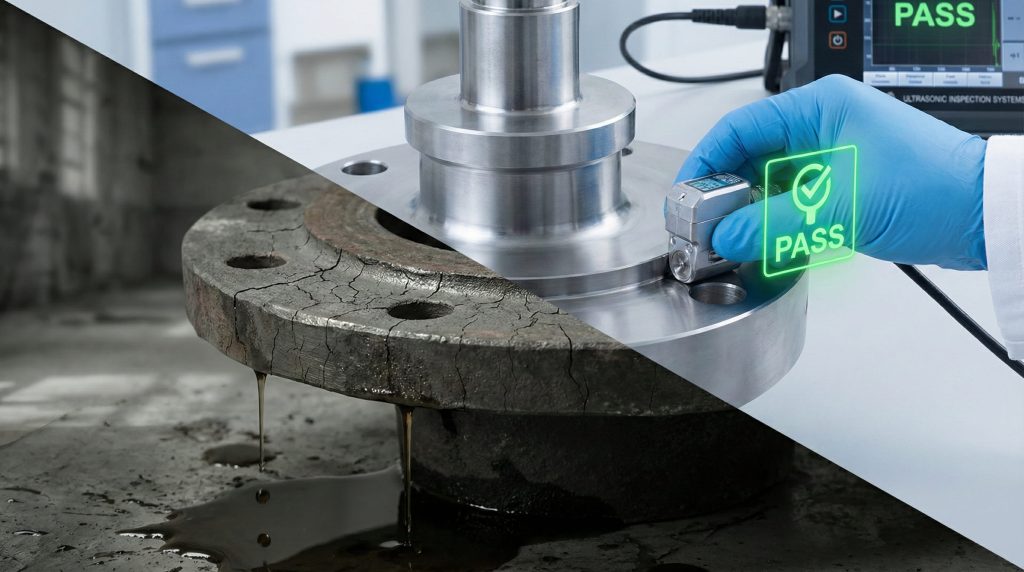
Why is a butterfly valve testing standard essential for safety?
A standardized testing process identifies structural weaknesses in the valve body or disc before they can fail in a live environment. This proactive approach acts as your first line of defense against system blowouts and accidents. Following a recognized butterfly valve testing standard ensures that you aren’t just hoping for quality, but verifying it through empirical data.
Think about it:
If a valve fails in a chemical plant, the cost of the hardware is the least of your concerns.
Preventing catastrophic system failures
In high-pressure environments, a valve is the only thing standing between controlled flow and a total system blowout. You need to know that the casting is sound and free of porosity or “pinholes” that could lead to external leaks.
- Structural integrity checks
- Material defect identification
- Pressure boundary verification
Ensuring zero-leakage performance
For industries handling hazardous chemicals or potable water, even a minor leak is unacceptable. You must rely on standards that define exactly what “zero leakage” means for your specific application. This ensures that the seat and disc interface can maintain a bubble-tight seal under varying pressures.
Key Takeaway: Establishing a testing baseline is the only way to guarantee that your valves will protect your personnel and the environment from unforeseen failures.
| Safety Factor | Testing Impact | Result |
|---|---|---|
| Structural Integrity | 1.5x Pressure Shell Test | Zero body deformation |
| Sealing Security | 1.1x Pressure Seat Test | Prevent media loss |
| Operational Ease | Torque Verification | Smooth automation |
Verify that your supplier performs 100% batch testing to ensure every unit meets these critical safety benchmarks.
Is API 598 the primary butterfly valve testing standard?
Yes, API 598 is the most widely used global baseline for pressure testing and seat leakage for almost all industrial valves. When you specify a butterfly valve testing standard, you are typically referring to these hydrostatic and pneumatic protocols that confirm the valve’s ability to hold pressure.
Here is why:
This standard provides a universal language for engineers and manufacturers to communicate quality requirements.
Understanding the shell test protocol
API 598 requires a hydrostatic shell test performed at 1.5 times the maximum working pressure rating. You can use this test to ensure the body of the valve is structurally sound and can withstand surges without fracturing. This provides you with peace of mind regarding the long-term durability of the metal.
Defining seat leakage acceptance criteria
The seat test focuses on the internal seal rather than the external body. You will find that API 598 provides specific allowable leakage rates based on the valve size and seat material. For resilient-seated valves, you should expect a result of zero visible leakage.
Key Takeaway: API 598 provides the essential “pass/fail” criteria for pressure and sealing, making it the most important document in your quality control package.
| API 598 Requirement | Test Media | Duration (Typical) |
|---|---|---|
| Shell Test | Water/Liquid | 15–120 seconds |
| Seat Test | Air or Water | 15–120 seconds |
| Visual Check | N/A | Full exterior surface |
Always request the official test report to confirm that the API 598 parameters were met during the factory acceptance test.
How does API 609 affect your butterfly valve testing standard?
While API 598 covers the testing methods, API 609 defines the design-specific requirements that influence the testing process. This butterfly valve testing standard ensures that wafer, lug, and double-flanged designs are evaluated correctly based on their specific configuration. It bridges the gap between general valve testing and the unique mechanical characteristics of the butterfly design.
The best part?
It helps you differentiate between standard concentric valves and high-performance offset designs.
Verification of disc alignment and rotation
API 609 ensures that the disc centers perfectly within the seat during the opening and closing cycles. You must verify that the disc does not rub excessively, which would cause premature wear. Testing under this standard ensures your valve operates smoothly throughout its service life.
- Centering accuracy
- Minimum clearance checks
- Seating torque limits
Pressure response in petrochemical service
For heavy-duty applications, this standard confirms that the valve can handle rapid pressure changes common in oil and gas pipelines. You need this verification to ensure the seal doesn’t “burp” or fail when the system fluctuates. It provides a level of design validation that a simple pressure test cannot.
Key Takeaway: Combining API 609 design checks with API 598 pressure tests creates a comprehensive quality profile for any high-performance application.
| API 609 Feature | Focus Area | Industry Benefit |
|---|---|---|
| Category A/B Specs | Design limits | Proper valve selection |
| Alignment Check | Disc/Seat interface | Extended service life |
| Pressure Rating | Flange compatibility | System safety |
Ensure your engineering specifications list both API 609 and API 598 to cover both design integrity and pressure performance.
When should you use the ISO 5208 butterfly valve testing standard?
ISO 5208 is the international benchmark for pressure testing and is frequently used on global projects outside of North America. This butterfly valve testing standard is particularly useful because it categorizes leakage into a letter-based system, allowing you to choose the exact level of sealing required for your project.
But there is a catch:
You must specify the “Rate” (such as Rate A) to ensure you get the performance you expect.
Categorizing leakage rates from Rate A to F
ISO 5208 allows you to select a specific leakage class based on your process media. “Rate A” represents zero visible leakage, which you would typically require for critical safety or chemical applications. This granular control helps you optimize costs while maintaining safety.
Hydrostatic vs. pneumatic testing methods
You can choose between water (hydrostatic) and air (pneumatic) testing depending on your process needs. Pneumatic testing is more sensitive and is ideal if you are worried about moisture contamination. You should consult with your engineering team to determine which media is best for your system.
Key Takeaway: ISO 5208 is the ideal standard for international procurement, offering a clear and flexible framework for defining leakage tolerance.
| ISO 5208 Category | Leakage Allowed | Ideal Application |
|---|---|---|
| Rate A | No visible leakage | Chemical / High Safety |
| Rate B | Very low | General Industrial |
| Rate D | Controlled seepage | Steam / Non-critical |
Match the ISO 5208 leakage rate to your specific industry requirements to avoid over-engineering or under-performing.
Is EN 12266-1 the right butterfly valve testing standard in Europe?
In the European market, EN 12266-1 is the primary standard used for evaluating metallic valves and obtaining CE certification. This butterfly valve testing standard shares many similarities with ISO 5208 but includes specific documentation and terminology mandatory for European compliance. If you are operating a site within the EU, this is often the required legal framework.
Here is the deal:
Compliance with EN 12266-1 is often a prerequisite for insurance and regulatory approval in European projects.
Supplementary tests for process industries
EN 12266-1 often includes optional “P11” and “P12” tests that go beyond the basic shell and seat checks. You can use these tests to verify functional reliability and flow characteristics. This ensures that the valve performs exactly as expected under specific operational scenarios.
- Functional operation tests
- Flow characteristic verification
- Flow coefficient (Cv) validation
Acceptance criteria for metallic valves
This standard provides clear roadmaps for testing metal-to-metal seats where soft elastomers cannot be used. You will find that it sets realistic expectations for high-temperature service. This helps you avoid the frustration of rejecting valves that are performing correctly for their material class.
Key Takeaway: EN 12266-1 is the definitive standard for European projects, focusing on both safety and functional performance for CE-marked hardware.
| EN 12266-1 Test | Focus | Media |
|---|---|---|
| P10 (Shell) | Strength/Tightness | Water |
| P11 (Seat) | Internal Seal | Water/Air |
| P12 (Functional) | Operation | Manual/Actuated |
Check your regional regulations to confirm whether EN 12266-1 is required for your facility’s safety compliance.
Does a fire-safe butterfly valve testing standard matter?
If your system carries flammable media, a standard pressure test is not enough to guarantee safety during an emergency. A fire-safe butterfly valve testing standard like API 607 or ISO 10497 evaluates how a valve behaves when exposed to temperatures between 700°C and 1000°C. You need this certification to prevent a minor fire from turning into a massive industrial disaster.
Think about it:
When the rubber seats melt in a fire, what is left to stop the fuel from reaching the flames?
Testing seat integrity during fire exposure
During a fire-safe test, the valve is engulfed in flames for 30 minutes while under pressure. You will see that the soft seats are destroyed, and the “secondary” metal seat must take over. This standard measures how much leakage occurs during this critical window to ensure the fire can be contained.
Secondary seal performance post-burn
After the fire is extinguished and the valve is cooled, it must still pass a final leakage test. You need to know that you can still manually shut off the line if the automated systems have been burned. This ensures your operators can safely isolate the area after the emergency has passed.
Key Takeaway: Fire-safe standards like API 607 are non-negotiable for oil, gas, and chemical industries where fire risks are present.
| Fire-Safe Standard | Test Duration | Post-Burn Requirement |
|---|---|---|
| API 607 | 30 Minutes | Limited leakage |
| ISO 10497 | 30 Minutes | External tightness |
Verify that your fire-safe valves come with a certified test report from an independent third-party lab.
What is the butterfly valve testing standard for water systems?
For municipal water treatment and distribution, the AWWA C504 standard is the recognized benchmark for quality. This butterfly valve testing standard focuses on the long-term reliability of rubber seats and the corrosion resistance of the valve body. Because water systems are designed to last for decades, these tests prioritize cycle life and durability in buried service.
But wait, there’s more:
It also ensures that the materials used won’t contaminate the drinking water supply.
Bubble-tight shutoff in wastewater apps
AWWA testing ensures that the valve can achieve a “bubble-tight” seal even when handling fluids with suspended solids. You need this reliability to prevent backflow and contamination in wastewater treatment plants. The standard simulates the harsh conditions of municipal service to ensure long-term performance.
- Suspended solid tolerance
- Backflow prevention
- Seat compression tests
Cycle life testing for long-term service
Municipal valves may not be cycled daily, but they must work perfectly when you finally need them. This standard includes proof-of-design tests where a valve is cycled thousands of times to ensure components don’t fatigue. You can trust that an AWWA-certified valve is built for the long haul.
Key Takeaway: AWWA standards are essential for the water industry, prioritizing long-term seat integrity and material safety for public infrastructure.
| AWWA Standard | Focus | Environment |
|---|---|---|
| C504 | Rubber-Seated | Potable Water |
| C516 | Large Diameter | Main Transmission |
Specify AWWA C504 for any project involving potable water or municipal wastewater to ensure regulatory compliance.
How to perform a shell test under the butterfly valve testing standard?
A shell test is performed by pressurizing the valve body to 1.5 times its rated pressure while the disc is partially open. Under a proper butterfly valve testing standard, this test is conducted using water to check for any structural flaws or “sweating” in the metal. It is the most critical step in verifying that the valve’s pressure-containing parts are safe for your technicians to work around.
Here is why:
It reveals hidden manufacturing defects that could lead to a sudden and dangerous rupture in the field.
Monitoring for structural deformation
During the shell test, you or the inspector must visually monitor the valve for any signs of distortion. A high-quality valve will show no permanent deformation or leakage through the body or stem packing. This ensures that the valve can handle the stresses of thermal expansion and system surges.
Duration and fluid media specifications
The pressure must be held for a set duration, which increases as the valve size gets larger. You should check that the test duration matches the standard—usually ranging from 15 seconds to several minutes. This provides enough time for any tiny leaks to become visible to the naked eye.
Key Takeaway: The shell test at 1.5x pressure is your ultimate insurance policy against catastrophic structural failure of the valve body.
| Valve Size (DN) | Test Pressure | Duration (Sec) |
|---|---|---|
| 50 – 150 | 1.5x Rated | 15 |
| 200 – 500 | 1.5x Rated | 60 |
| 600+ | 1.5x Rated | 120 |
Never skip the shell test, as it is the only way to confirm the integrity of the raw casting or forged body.
Can torque verification be part of a butterfly valve testing standard?
Yes, measuring the operating torque is an essential part of a comprehensive testing protocol to ensure your actuators function correctly. A butterfly valve testing standard ensures that the force required to open and close the valve stays within the manufacturer’s specified limits. If the torque is too high, you risk burning out your motors or snapping the valve stem during an emergency.
Here is the deal:
Torque values often increase when the valve is under full pressure, so testing at zero pressure isn’t enough.
Impact of seat material on operating torque
The type of seat you choose significantly affects the torque required to operate the valve. You will find that PTFE seats generally require more force than EPDM, especially after being closed for a long period. Testing helps you size your actuators accurately to avoid operational failures.
- Seat-to-disc friction
- Breakaway torque
- Dynamic flow torque
Consistency across repeated cycles
You should demand a test that cycles the valve multiple times to ensure the torque remains consistent. If the torque increases with each cycle, it may indicate a misalignment issue or excessive friction. This data helps you predict the maintenance intervals for your automation equipment.
Key Takeaway: Torque verification is the bridge between a manual valve and a reliable automated system, ensuring your actuators are never overloaded.
| Torque Metric | Importance | Component Impact |
|---|---|---|
| Breakaway Torque | Initial opening force | Actuator Sizing |
| Seating Torque | Closing force | Sealing Integrity |
| Running Torque | Mid-stroke force | Gearbox Wear |
Request a torque report alongside your pressure test results if you plan to automate your butterfly valves.
How to use a butterfly valve testing standard to prevent failure?
Using a testing standard as a procurement tool allows you to audit manufacturers and ensure they are following strict quality control. By requiring a butterfly valve testing standard in your purchase orders, you create a legal and technical barrier against substandard products. This process shifts the responsibility of quality back to the supplier, ensuring you receive a “birth certificate” for every valve in your plant.
Think about it:
Documentation is just as important as the steel itself when it comes to long-term liability.
Auditing manufacturers for compliance
You should not just take a vendor’s word for it; you should review their testing facilities and calibration logs. Ensure they use automated test benches that eliminate human error during the pressure-holding period. This level of scrutiny ensures that the test results you receive are accurate and honest.
Implementing fugitive emission testing protocols
For systems handling hazardous gases, you may need to go beyond standard pressure tests and include fugitive emission testing. Standards like ISO 15848 or API 641 help you detect micro-leaks through the stem packing that could harm the environment. This is a crucial step for meeting modern ESG (Environmental, Social, and Governance) goals.
Key Takeaway: A testing standard is more than a technical document; it is a management tool that prevents system failure and ensures environmental compliance.
| Failure Prevention | Method | Standard |
|---|---|---|
| Misalignment | Dimensional Check | API 609 |
| Environmental Leak | Helium Sniffing | ISO 15848 |
| Operational Failure | Cycle Testing | EN 12266-2 |
Integrate these testing requirements into your standard operating procedures (SOPs) to maintain a consistently high level of safety across your facility.
Frequently Asked Questions
Can I use a water test if my system handles gas?
Yes, hydrostatic shell tests are the industry standard for verifying the structural strength of the metal. However, for the internal seat test, you should consider a pneumatic (air) test because gas molecules are smaller and can detect leaks that water might bridge.
What is the best standard for high-temperature butterfly valves?
ISO 5208 or EN 12266-1 are the best choices because they offer specific leakage classes for metal-to-metal seats. Since metal seats rarely achieve “bubble-tight” seals at high temperatures, these standards give you a clear range of acceptable seepage.
How do I know if my valve is fire-safe?
Check the nameplate for the API 607 or ISO 10497 designation. You should also demand the original fire-test certificate, which proves the valve design passed a controlled burn test in a certified laboratory.
Can I perform butterfly valve testing myself onsite?
While you can perform basic pressure tests, factory testing is always superior due to the use of calibrated equipment and controlled environments. Onsite testing is generally used only to verify that no damage occurred during shipping or installation.
How often should a butterfly valve be re-tested?
In critical service, you should pull and re-test valves every 3 to 5 years during a major plant shutdown. For non-critical water lines, the initial installation test is often sufficient for the life of the valve unless performance issues arise.
Conclusion
Navigating the complexities of a butterfly valve testing standard is the most effective way to guarantee the safety, efficiency, and longevity of your industrial operations. Whether you are following the foundational requirements of API 598, the specific design checks of API 609, or the global leakage categories of ISO 5208, the ultimate goal remains the same: total system reliability. By demanding comprehensive test reports and auditing your suppliers for compliance, you move from hoping your valves work to knowing they will.
Ready to secure your flow control system with certified, high-performance valves? Our engineering team provides 100% batch testing and full documentation to meet any global project requirement. Contact us today for a technical consultation or a competitive quote on our standards-compliant valve solutions.