
Selecting the right ball valve ptfe seat is a critical decision for piping system engineers managing aggressive chemical media, municipal water distribution, or high-cycle industrial utility networks. In a typical fluid control system, valves must maintain positive isolation under varying pressure and thermal profiles to protect downstream equipment and prevent fluid loss. However, soft polymer seats frequently suffer from dimensional instability or mechanical degradation when subjected to combined physical and load stresses, resulting in premature bypass and expensive maintenance shutdowns. Utilizing precision-machined ball valves equipped with application-specific fluoropolymer seat variations allows system designers to balance cost, chemical inertness, and structural longevity.
Mechanical Creep and Cold Flow Under Static Pressure
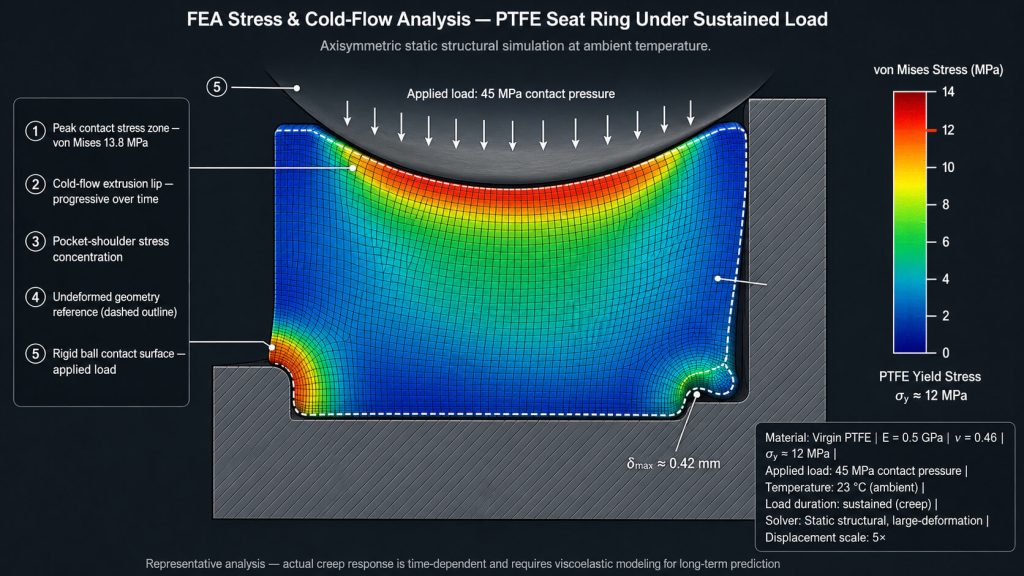
Mechanical creep represents the primary physical limitation of soft seating components under continuous operating loads. When exposed to sustained mechanical stress, thermoplastic polymers naturally deform over time, a phenomenon that occurs even without the presence of elevated temperatures. In a standard ball valve assembly, this continuous material displacement can compromise the precise contact profile needed to maintain a secure seal.
If the seating material undergoes excessive deformation, the internal geometry of the valve cavity changes. This structural shift can lead to torque fluctuations during actuation and increase the likelihood of media bypassing the sealing interface. Managing the mechanical behavior of a ball valve ptfe seat under constant pressure requires a comprehensive understanding of polymer viscoelasticity and structural containment.
Physical Mechanisms of Cold Flow
At the molecular level, raw fluoropolymers consist of long, unbranched chains that slide past one another when exposed to continuous compressive forces. This sliding is heavily influenced by the pressure-to-seat-area ratio, meaning higher localized stresses accelerate structural shifts within the polymer matrix. Over extended periods, the material slowly migrates into flow passages or body cavities where mechanical support is minimal.
System designers must evaluate how long-term static positioning affects seat recovery. When a valve remains closed or open for months, the material’s mechanical memory may degrade, preventing it from springing back to its original dimensions when actuated. This loss of elasticity directly correlates with a reduction in seating stress and subsequent low-pressure joint leakage.
Mitigating Cold Flow in a Ball Valve PTFE Seat
Mitigating this deformation requires adjusting either the physical seat pocket geometry or utilizing modified polymer compounds. By enclosing the seat on three sides within a metallic pocket, the physical space available for the polymer to creep is restricted. This mechanical containment helps maintain consistent sealing pressure across the contact face, even during pressure surges.
Another approach involves using reinforcing fillers that physically block the movement of the polymer chains under load. Understanding these structural dynamics is essential when configuring valves for critical isolation duties. Selecting the correct compound prevents premature extrusion and preserves nominal operating torque throughout the service life.
Key Takeaway: To manage cold flow in critical isolation applications, opt for fully-enclosed seat pockets or compound-reinforced seating materials to limit physical material displacement over extended service intervals.
Temperature and Pressure Limits in Process Lines
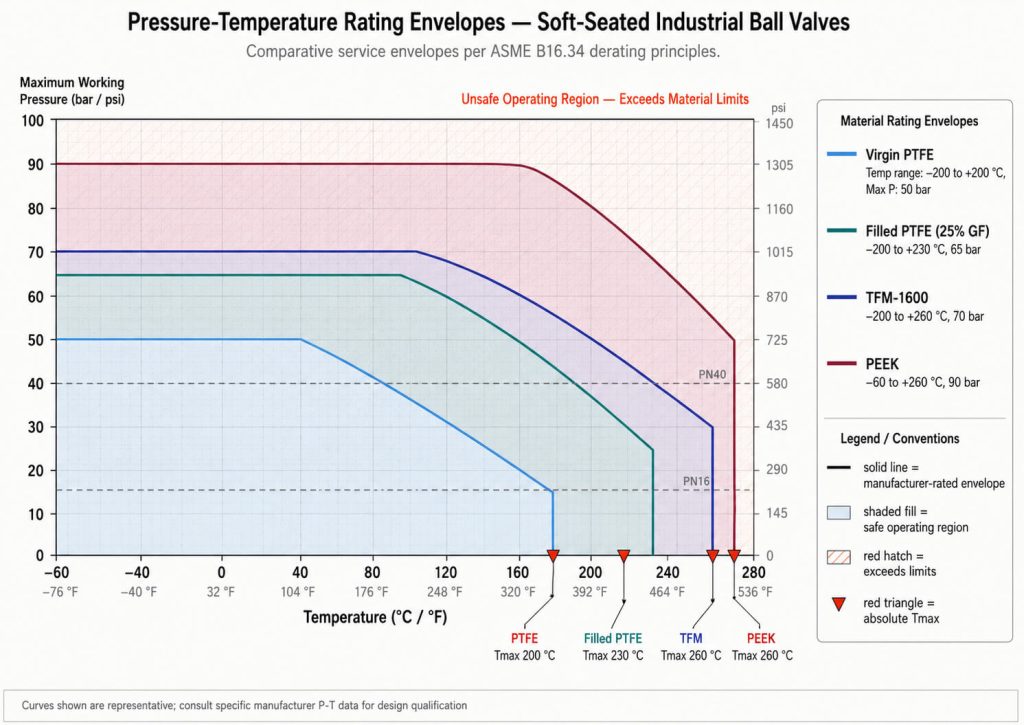
Standard fluoropolymer seats display a strict dependency on pressure-temperature ratios to maintain their mechanical integrity in chemical processing lines. Although raw fluoropolymers offer a remarkably broad functional temperature spectrum, their mechanical load capacity drops significantly as system temperatures rise. High operating pressures combined with elevated temperatures cause rapid softening, drastically reducing the maximum allowable pressure class of the valve.
For example, a valve rated for high pressure at room temperature may only handle a fraction of that pressure when operating near its thermal limit. Engineers must refer to specific pressure-temperature curves rather than treating maximum ratings as concurrent parameters. Failure to respect these concurrent boundaries often leads to sudden material failure and seal blowout.
Thermal Softening Behavior
As temperatures rise, the intermolecular forces holding the polymer chains together weaken, causing a sharp drop in tensile strength and hardness. This physical softening makes the material highly vulnerable to extrusion through the clearance gaps between the ball and body. Under high temperature-pressure combinations, the soft polymer can turn highly plastic, losing its ability to resist the mechanical forces exerted by the ball.
In steam or hot water systems, this thermal softening can result in rapid seal destruction. Designers working within these envelopes must select reinforced materials or transition to alternative seat configurations. Proper material selection ensures the valve maintains its sealing profile without shedding polymer particles into the process stream.
Pressure Envelope Considerations
Operating near pressure limits increases the localized stress at the sealing lip, accelerating mechanical wear and deformation. Standard designs typically perform reliably under pressure ratings up to PN25 or equivalent classes, depending on the specific fluid properties and body configurations. Exceeding these pressure boundaries without structural support can lead to sudden seal blowout or severe seat deformation.
Proper alignment of system pressure with seat material characteristics is a prerequisite for operational safety. When specifying valves for high-pressure utilities, evaluating the seat’s compressive strength is just as important as chemical compatibility. This balanced approach protects the system from catastrophic seal displacement.
Thermal Expansion and Rapid Cycling Challenges
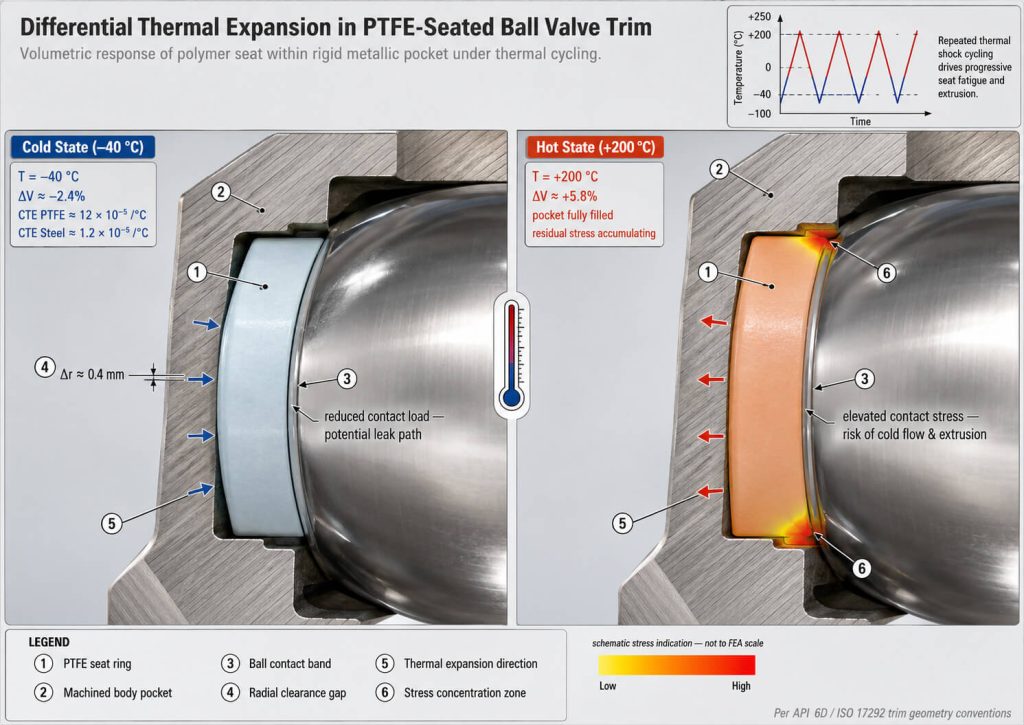
Rapid temperature fluctuations in high-cycle systems can cause severe dimensional instability in soft seats due to their high coefficient of thermal expansion. Polymers expand at a rate significantly higher than the surrounding stainless steel or carbon steel valve bodies. This differential expansion can lead to excessive seating stress at elevated temperatures, resulting in increased operating torque or seat binding.
Conversely, rapid cooling can cause the seat to shrink faster than the metal enclosure, creating localized micro-gaps. These gaps serve as potential leak paths, allowing high-pressure process media to bypass the sealing interface. Managing this thermal movement is a key consideration for automated systems operating under varying thermal profiles.
High Coefficient of Thermal Expansion
The thermal expansion coefficient of raw fluoropolymers is roughly ten times greater than that of common industrial alloys. This thermal mismatch requires careful dimensional engineering of the valve body seat pockets to allow for volumetric expansion without overloading the ball. If the expansion is not accommodated, the resulting thermal stress can deform the seat or damage the polished surface of the ball.
In applications with wide thermal swings, such as batch chemical processing or outdoor installations, this phenomenon can lead to intermittent leakage or valve lockup. Managing these thermal dynamics is critical for maintaining consistent operational torque. Engineers can mitigate this by utilizing modified polymers with lower thermal expansion rates.
Impact of Rapid Cycling on Seat Integrity
Frequent cycling under thermal stress accelerates fatigue and localized wear along the seal’s contact surface. The constant rubbing of the metallic ball against a thermally expanded polymer seat can shave off fine particles, slowly degrading the seat geometry. This degradation is particularly pronounced in automated on-off systems.
Ensuring the seat material can withstand repetitive mechanical and thermal cycles is vital for extending the overall service life of the assembly. When selecting valves for high-cycle applications, specifying reinforced composites helps control wear and maintain consistent torque. This proactive engineering choice reduces the risk of unplanned maintenance.
Elastomer and Wear Failures in Severe Service
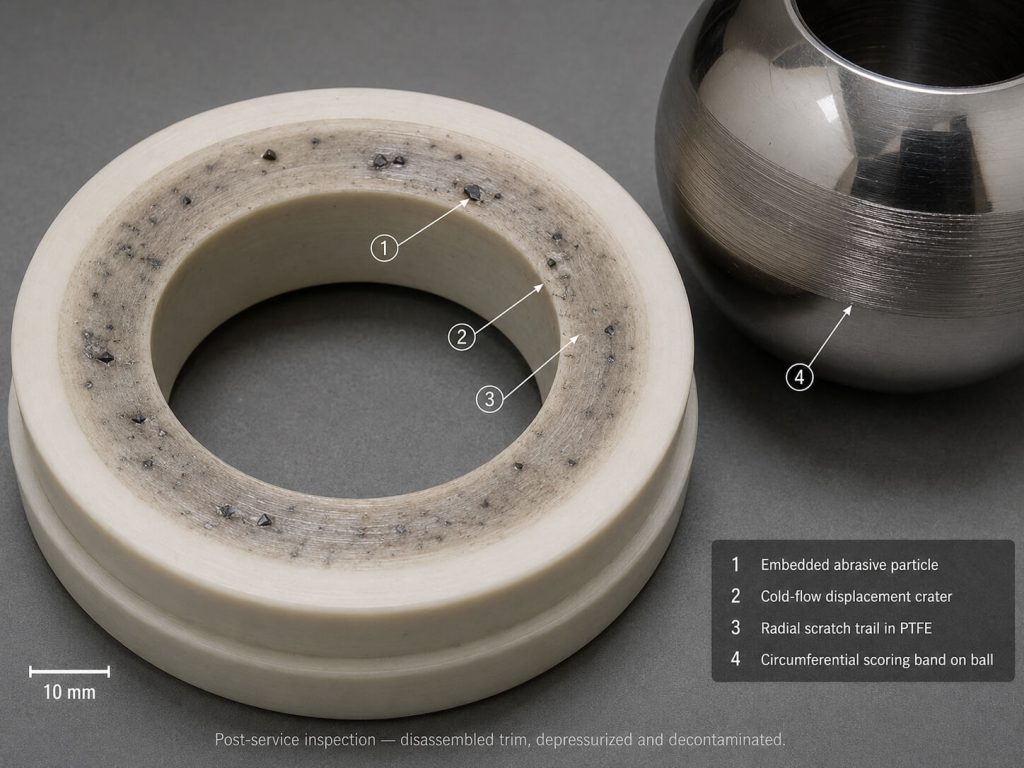
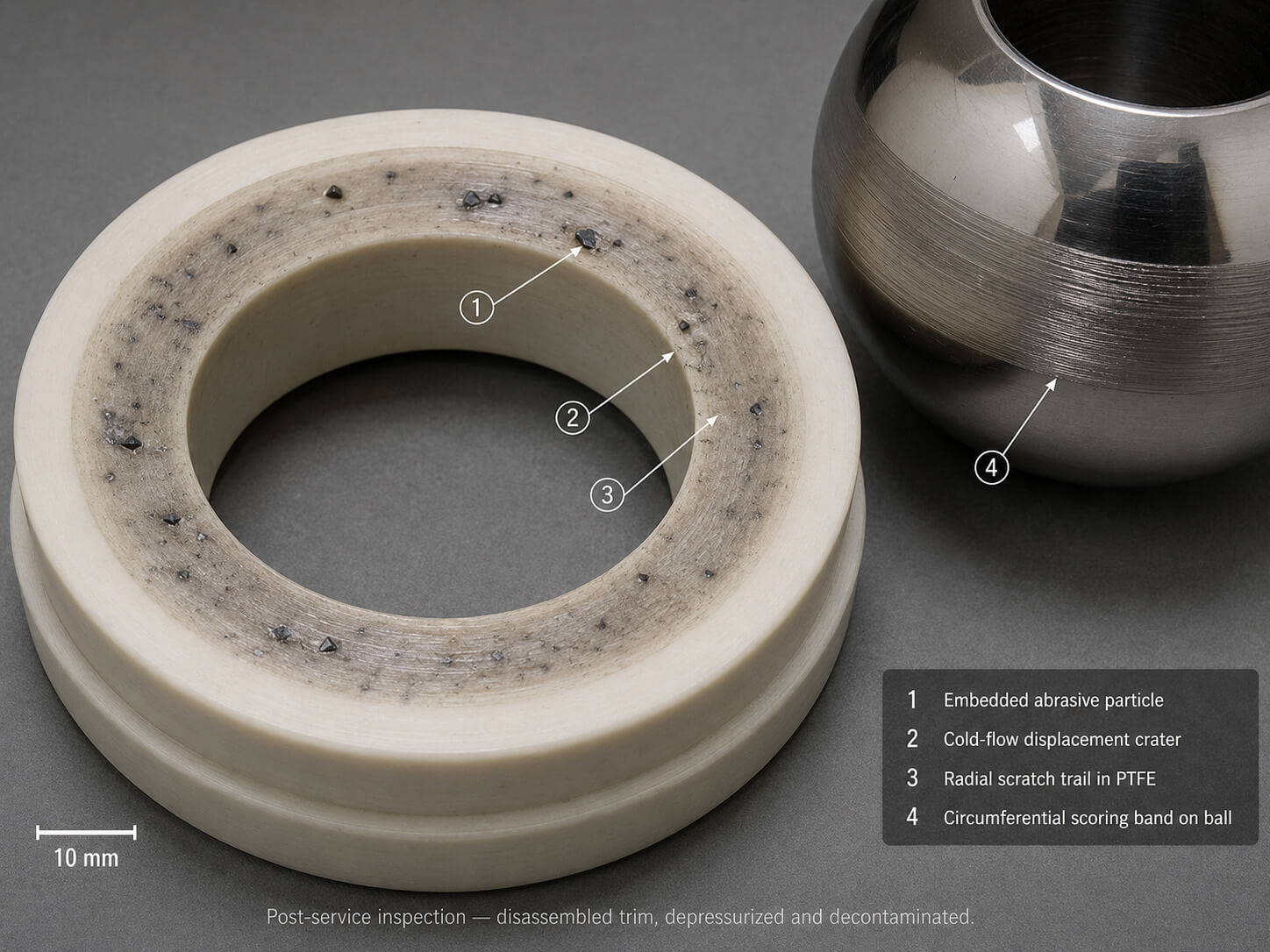
Soft seats exhibit poor resistance to abrasive wear when exposed to slurries or process fluids containing suspended solids. In systems transporting particulate matter, such as mining slurries or untreated wastewater treatment solutions, solid particles can easily embed themselves into the soft polymer seating face. Once embedded, these abrasive particles act like sandpaper against the polished surface of the rotating ball during actuation.
This action scores the ball and cuts deep grooves into the seat, leading to rapid degradation of the sealing interface and eventual system bypass. When evaluating a ball valve ptfe seat for abrasive slurries, alternative seating strategies or reinforced polymers are typically necessary. This minimizes the risk of particle-induced seal erosion.
Particle Embedding Mechanisms
Because raw fluoropolymers are relatively soft, they lack the surface hardness needed to repel sharp crystalline solids. When the ball rotates, suspended particles are pressed directly into the polymer matrix, permanently altering the surface texture. This embedding not only ruins the seat surface but also damages the spherical profile of the ball.
Over time, the rough interface increases friction, requiring larger actuators to operate the valve. In systems with high solids content, this wear cycle can cause rapid failure of both the seat and the ball. Specifying harder polymer composites or transitioning to metal seats is often necessary to resist this type of mechanical wear.
Explosive Decompression and Radiation Risks
Beyond physical abrasives, high-pressure gas systems present the risk of explosive decompression, where gas permeates the soft polymer structure and expands rapidly during system depressurization. This internal expansion can cause micro-tearing, fracturing, or complete structural destruction of the seat. The resulting damage is often internal, making it difficult to detect without complete valve disassembly.
Additionally, exposure to radiation in nuclear power or specific chemical processes degrades the polymer chain, causing severe embrittlement and loss of elasticity. Under such specialized conditions, alternative seat materials must be selected to prevent premature failure. Understanding these environmental hazards ensures the specified valve remains safe and reliable.
Mitigating Seal Deflection with Filled Composites
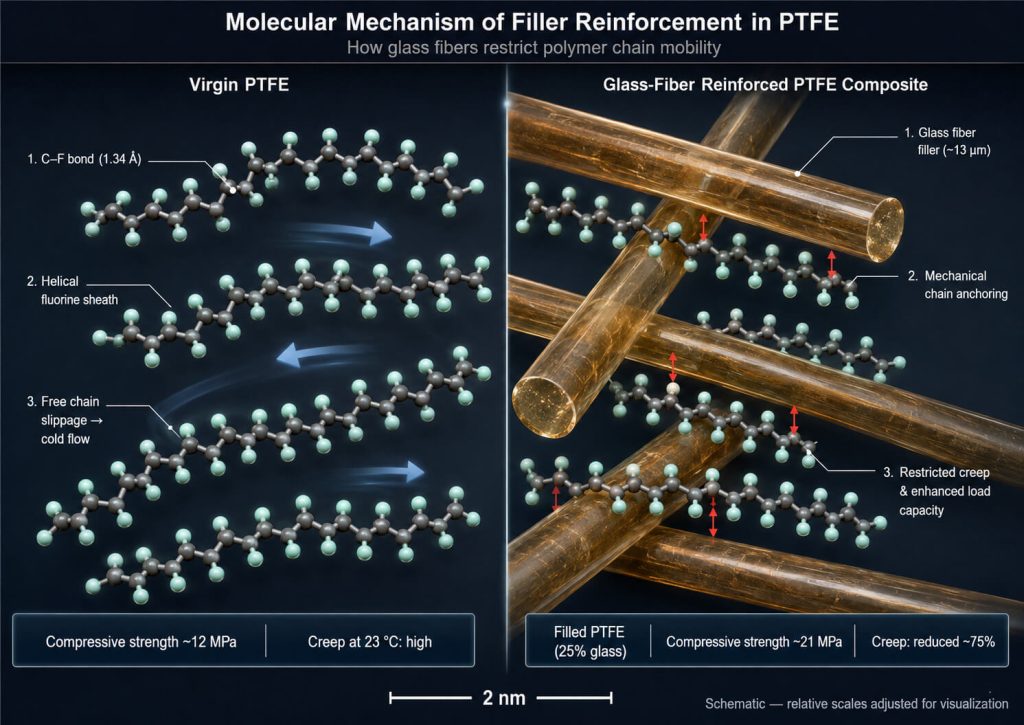
Incorporating inorganic reinforcing fillers into the polymer matrix significantly improves resistance to creep, wear, and thermal expansion. To overcome the inherent physical limitations of virgin material, manufacturers utilize various compound mixtures to enhance mechanical properties. By blending materials like glass fiber, carbon, graphite, or bronze into the virgin polymer, the overall load-bearing capacity is substantially increased.
These reinforcing agents physically disrupt the sliding of polymer chains, greatly reducing cold flow under high pressures. These composite seats are designed to extend the operating limits of soft-seated valves in demanding industrial process environments. This engineering solution bridges the gap between raw polymers and metal seats.
Selection of Reinforcing Fillers
Glass fiber filler increases compressive strength and wear resistance, making it suitable for moderate thermal and mechanical loads. However, carbon and graphite fillers are preferred in high-cycle or steam applications due to their self-lubricating properties and low coefficient of friction. These fillers help maintain a low operating torque while providing excellent resistance to thermal softening.
Bronze-filled variants provide excellent thermal conductivity and deformation resistance, though they are limited by chemical compatibility constraints. Choosing the right filler involves carefully balancing mechanical enhancements against the chemical nature of the process fluid. This ensures the seat remains chemically inert while providing superior structural support.
Trade-offs in Performance and Friction
While fillers improve mechanical resilience, they can slightly reduce the absolute chemical resistance of the seal and increase the operating torque of the valve. The addition of abrasive fibers can also wear down softer ball coatings over extended cycling periods. Engineers must evaluate these trade-offs to ensure the valve actuator is properly sized for the higher friction levels.
A thorough review of system parameters helps prevent unexpected operational failures due to torque mismatches. By working closely with the valve manufacturer, system designers can optimize the filler content to match specific application demands. This collaborative approach maximizes both performance and service life.
Key Takeaway: When specifying filled seating composites, balance mechanical load requirements against chemical compatibility. Glass or carbon fillers offer superior creep resistance but may increase valve operating torque compared to virgin seating options.
Material Comparison for Engineering Procurement
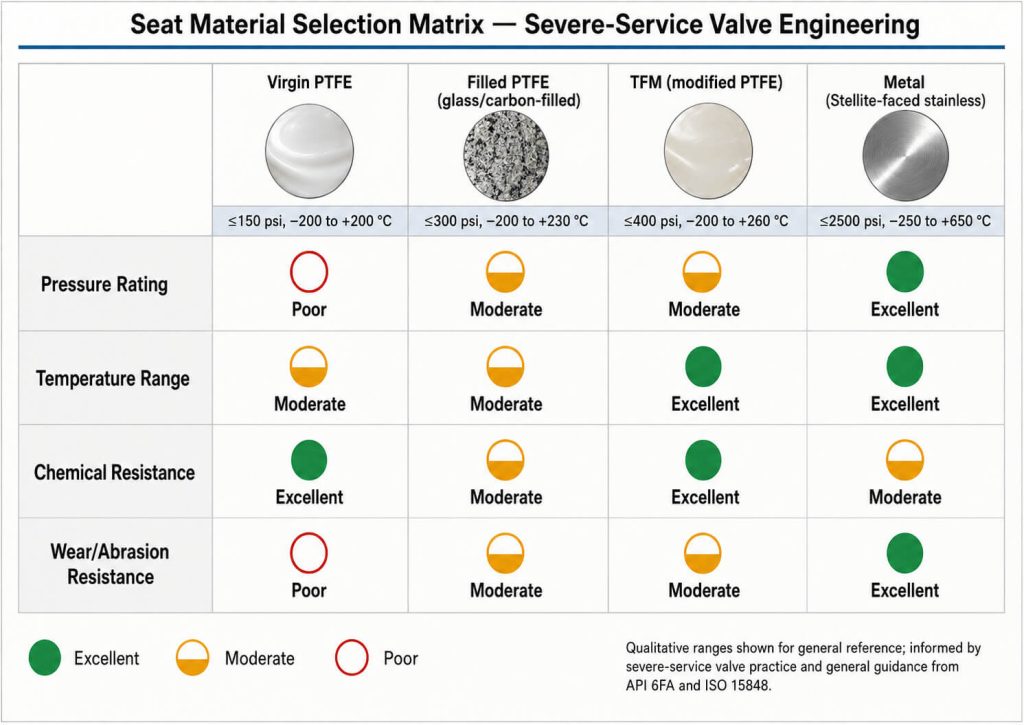
Selecting the optimal seating material requires a systematic comparison of mechanical, thermal, and chemical performance parameters. For procurement managers and system engineers, comparing the distinct properties of polymer variants is crucial for optimizing system uptime and managing lifecycle costs. Virgin options offer exceptional chemical inertness but lack structural strength, whereas filled compounds and modified formulations offer a bridge between soft seats and metal-seated designs.
The following table provides a comprehensive overview of common seat materials utilized in modern industrial valve design. These parameters should be evaluated alongside specific system pressure-temperature curves. This structured comparison helps engineers make informed decisions during the procurement phase.
| Material Variant | Key Reinforcing Filler | Max Temperature Range (Est.) | Creep Resistance | Wear & Abrasion Resistance | Recommended Application Environment |
|---|---|---|---|---|---|
| Virgin PTFE | None (Raw Polymer) | Up to 180°C under light load | Low (Prone to creep) | Low | Clean fluids, highly corrosive acids, low-pressure lines |
| Glass-filled PTFE | 15% to 25% Glass Fiber | Up to 200°C under moderate load | Moderate to High | Moderate | Utility water, steam, moderate-pressure industrial lines |
| Carbon-filled PTFE | 15% to 25% Carbon/Graphite | Up to 200°C under moderate load | High | High (Self-lubricating) | High-cycle steam, chemical processing, thermal oils |
| TFM (Modified PTFE) | None (Modified Polymer) | Up to 200°C under moderate load | Moderate (Better than Virgin) | Moderate | High-purity processes, semiconductor, vacuum service |
Transitioning to Metal-Seated Options
When process conditions exceed the limits of even reinforced polymers—such as extreme temperatures above 200 °C or highly abrasive slurry handling—transitioning to metal-seated ball valves becomes necessary. These valves feature metal-to-metal contact, utilizing specialized coatings to minimize wear and maintain seal integrity. This design is highly effective at resisting abrasive erosion and thermal shock.
Metal seats provide the structural ruggedness needed for severe service, though they demand higher torque and precise manufacturing tolerances. For many intermediate chemical and water systems, however, advanced polymer composites remain the most practical solution. They offer reliable performance at a fraction of the cost of metal-seated alternatives.
Frequently Asked Questions
What is the maximum practical temperature range for a ball valve ptfe seat?
The maximum temperature limit is typically 200 °C, but this is highly dependent on concurrent pressure loads. As system pressure increases, the allowable operating temperature decreases to prevent cold flow and extrusion. Engineers should always refer to the specific pressure-temperature curves provided by the manufacturer to ensure the seat operates within safe limits.
How does carbon-filled PTFE compare to glass-filled PTFE?
Carbon-filled variants offer lower friction and superior steam performance, while glass-filled options provide better structural strength under mechanical load. Carbon and graphite fillers are self-lubricating, making them ideal for high-cycle applications where minimizing torque is critical. Glass fillers are highly abrasive, which can increase wear on the ball if not matched with appropriate coatings.
Can a ball valve ptfe seat be used in high-cycle vacuum service?
Yes, but special pre-loading and high-density polymer selections are required to prevent leakage. Standard soft seats can deform under deep vacuum, leading to seal bypass. Utilizing modified polymers like TFM provides better dimensional stability under vacuum conditions while maintaining excellent chemical inertness.
What are the signs of seat failure due to cold creep?
The most common indicators are a gradual increase in operating torque and minor downstream bypass when the valve is fully closed. As the seat material cold flows into the flow passage, it deforms the sealing lip and increases contact friction against the ball. Over time, this deformation prevents the seat from maintaining a tight seal, resulting in localized leakage.
When should I transition from soft seating to a metal seat design?
Transitioning is necessary when operating temperatures exceed 200 °C or when the process media contains abrasive slurries that score polymer surfaces. Metal seats utilize hard coatings like tungsten carbide to resist erosive wear and thermal degradation. While soft seats are preferred for bubble-tight isolation, metal seats provide the physical durability required for severe-service applications.
Conclusion
Selecting the appropriate material configuration is essential for maximizing the service life of industrial fluid control systems. While raw polymers offer exceptional chemical resistance, their physical limitations—such as cold flow, thermal expansion, and vulnerability to abrasive wear—require careful engineering consideration. By utilizing filled composites or transitioning to metal-seated designs when necessary, system designers can successfully mitigate these limitations and prevent costly seal failures.
For projects requiring dependable performance and traceable quality, exploring the Ruito Flow precision fluid control portfolio provides engineers with access to a wide range of industrial valves designed to meet rigorous standards. Aligning system requirements with advanced material science ensures long-term operational reliability across municipal, chemical, and utility networks worldwide.