
Eliminate Leakage and Corrosion Risks in Your Chemical Flow Systems
RUITO provides engineered valve solutions for the most demanding chemical environments
- High Maintenance Costs due to Corrosive Media
- Production Downtime from Valve Seat Failure
- Environmental Risks from External Leakage
- Strict Compliance and Documentation Requirements
Ensure System Safety with Precision-Engineered Valves
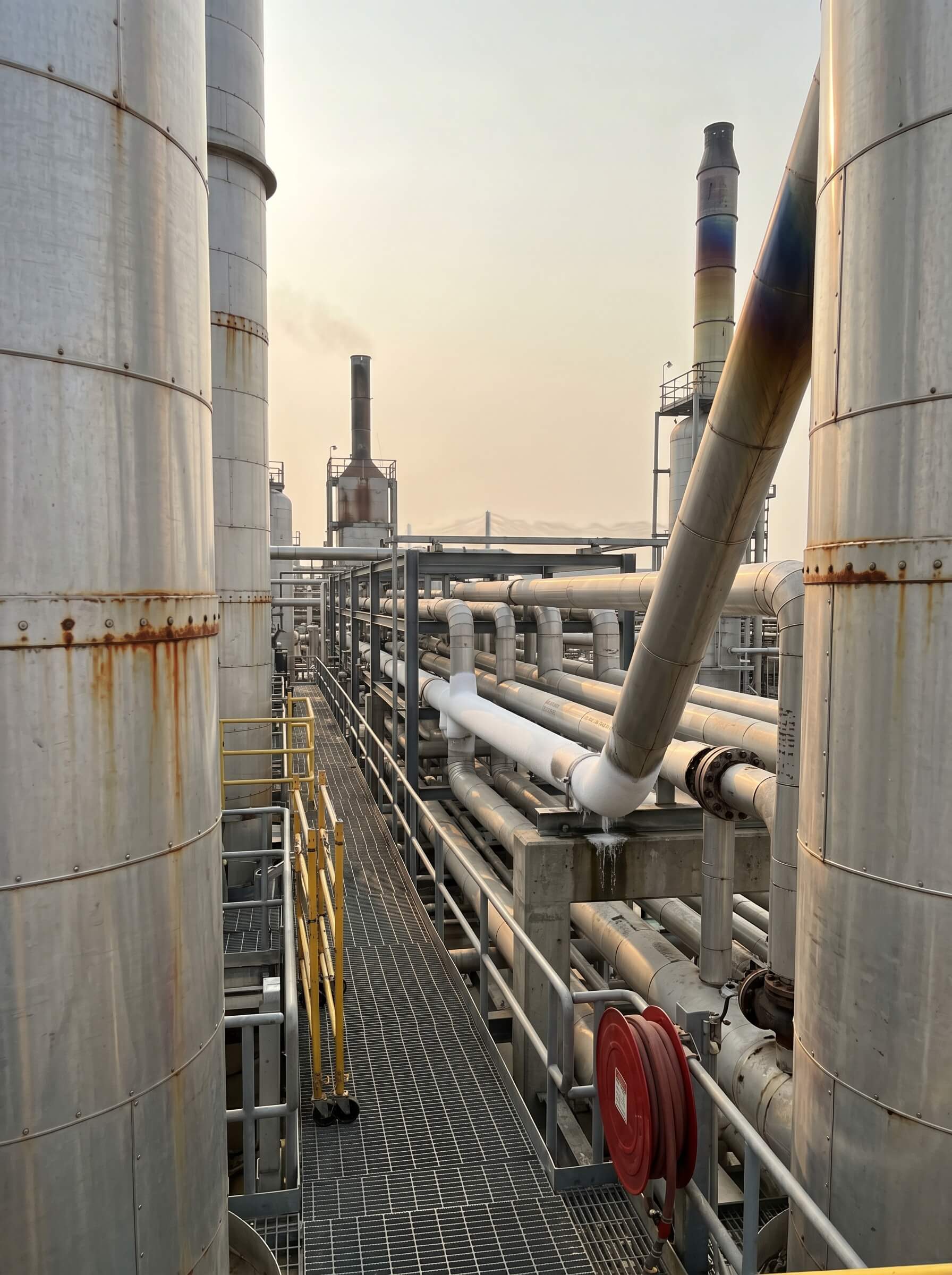
Optimizing Performance Across the Chemical Production Lifecycle
See how our valves manage critical safety and control nodes from storage to waste treatment.
Isolation
Reliable shut-off capabilities to segment systems for maintenance and emergency containment.
Control
Precise modulation of flow rates and pressure levels to optimize chemical reactions.
Backflow Prevention
Unidirectional flow control to prevent media contamination and protect upstream components.
Equipment Protection
Pressure relief and safety mechanisms to safeguard critical infrastructure from overpressure events.
Engineered Solutions for Specific Chemical Processing Environments
Expert-matched valve configurations for diverse industrial applications.
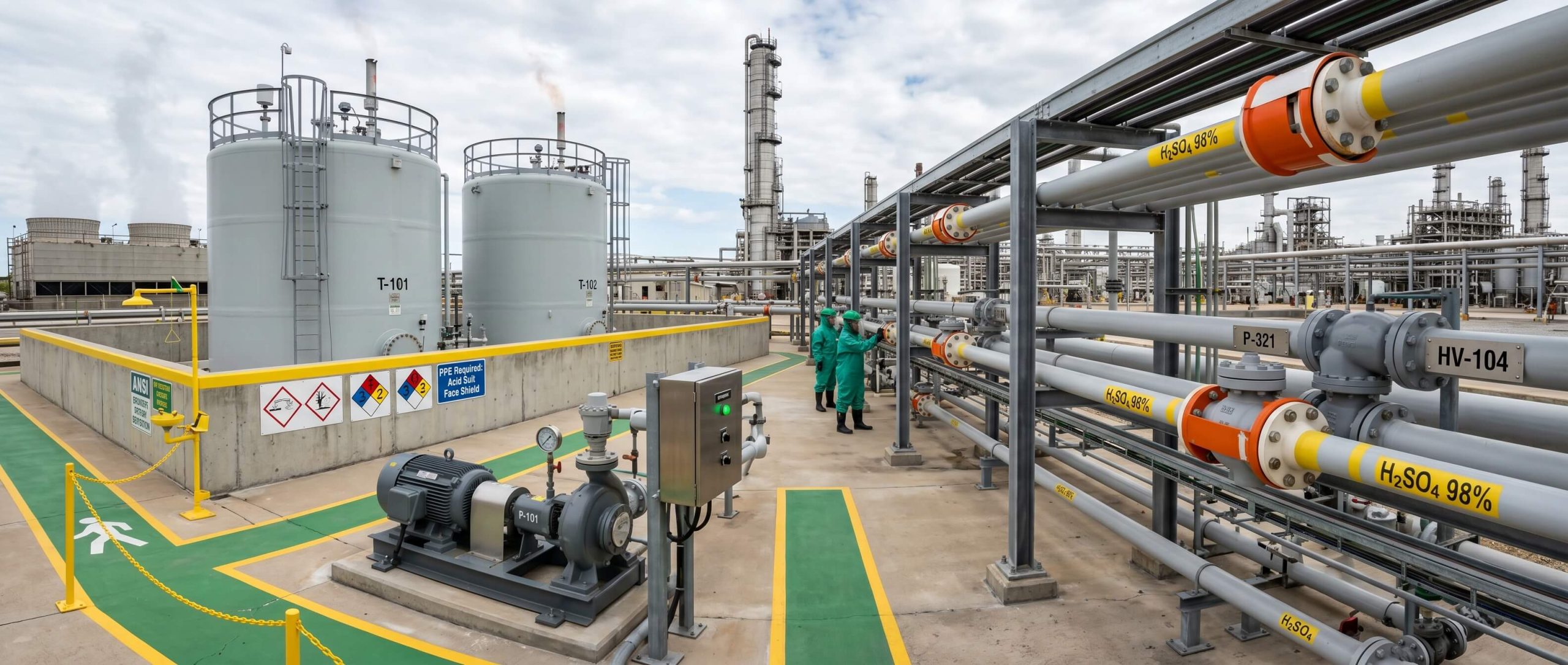
Acid/Alkali Transport
Robust isolation valves designed with PTFE/PFA linings to withstand highly corrosive transport lines. For liquid duties requiring a complete PTFE body-and-disc barrier, review our PTFE-lined butterfly valves and confirm the chemical concentration and operating envelope.
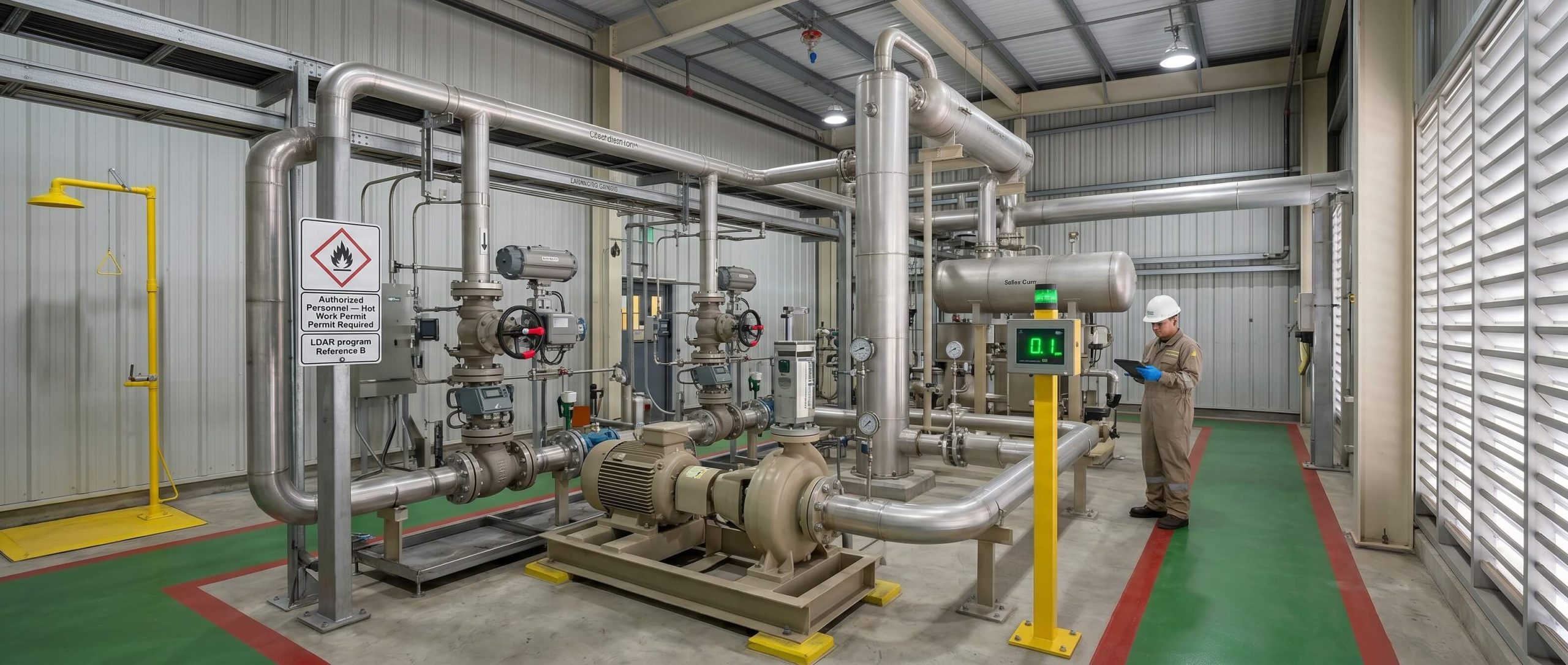
Solvent Circulation
High-performance control valves ensuring leak-free operation in volatile organic compound handling.
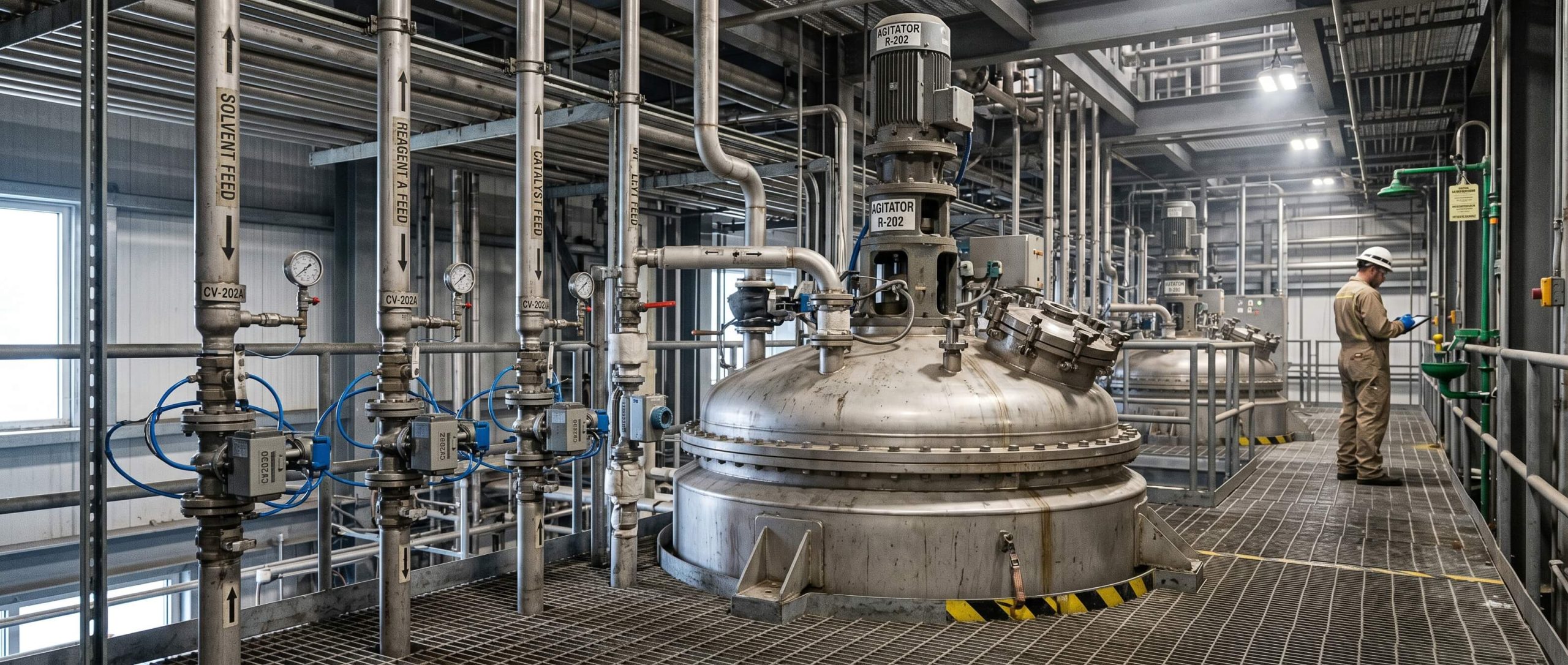
Reactor Feed Lines
Precision modulating valves for accurate dosing and stable flow control into reaction vessels.
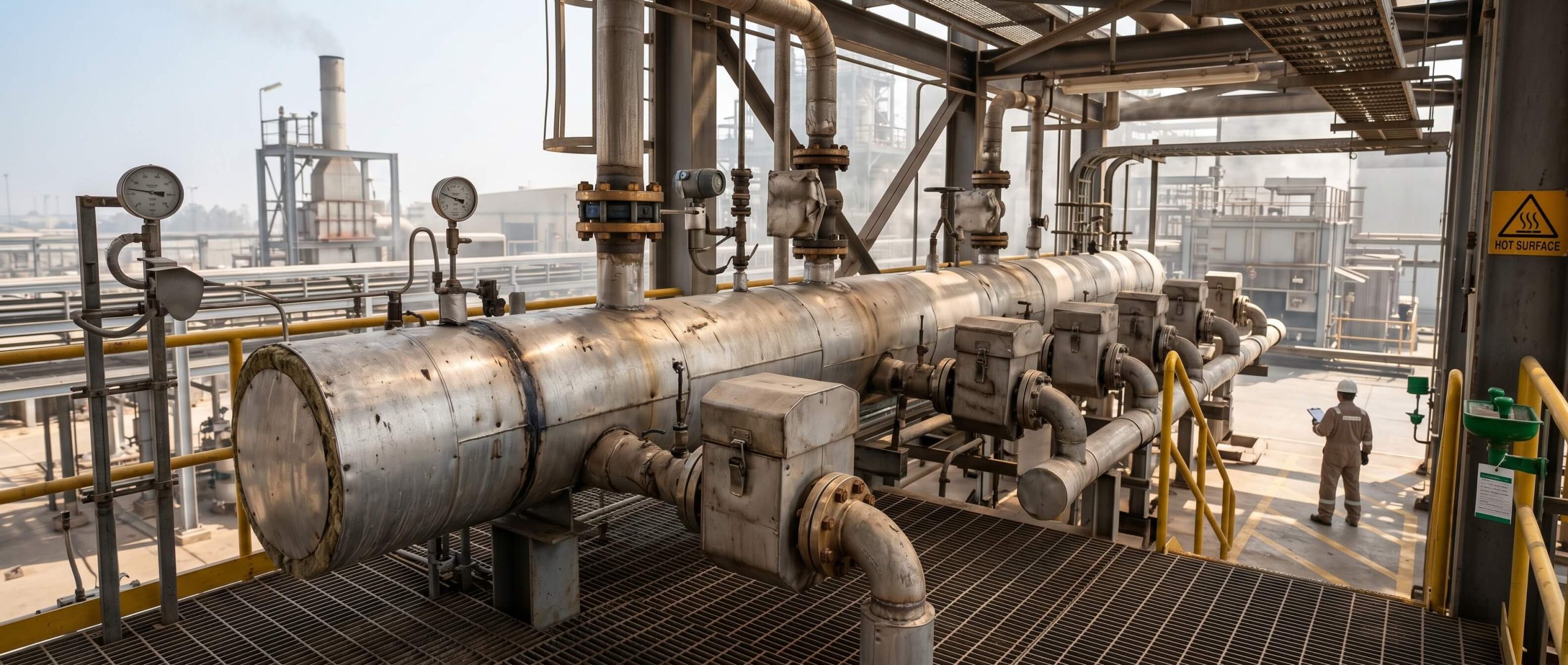
High-Temperature Fluids
Metal-seated valves engineered to maintain tight shut-off and structural integrity at extreme thermal levels.
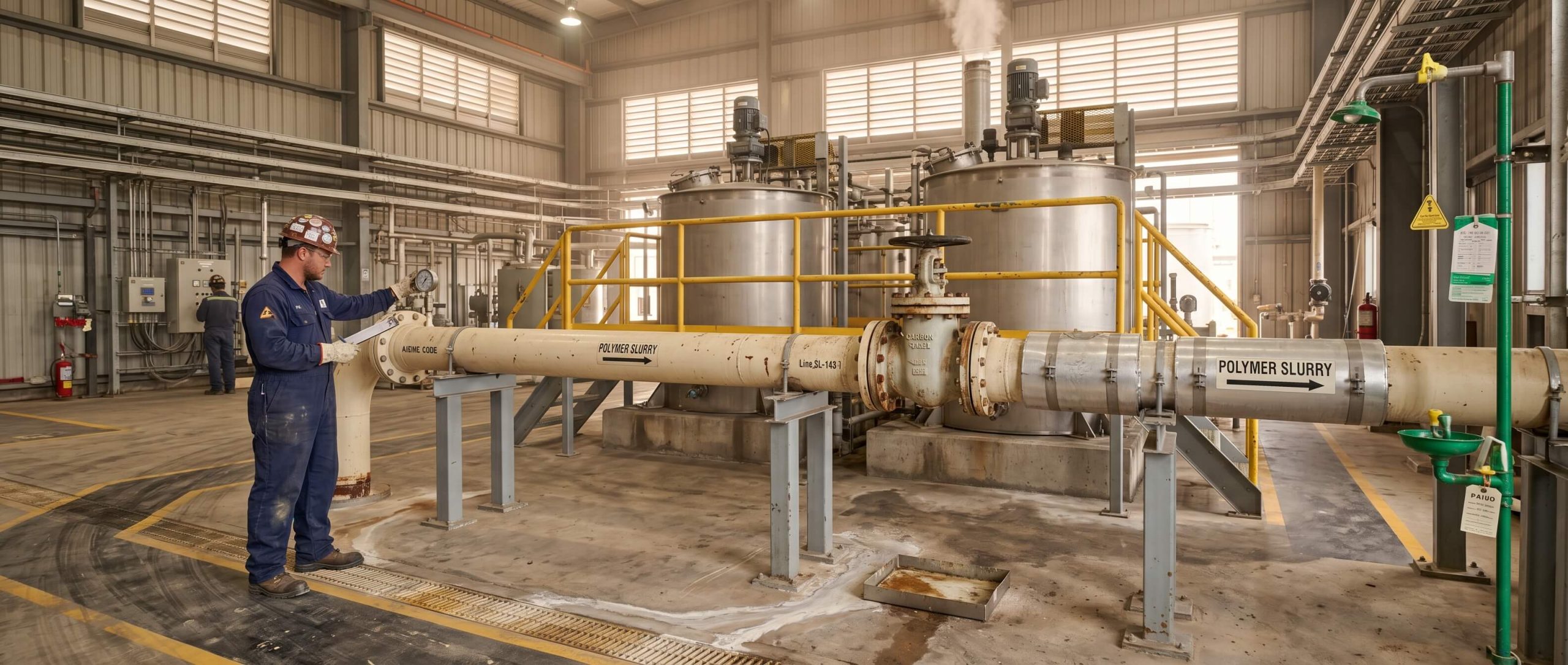
Slurry & Viscous Media
Specialized port designs and hardened trims to handle abrasive particulates without clogging or wear.
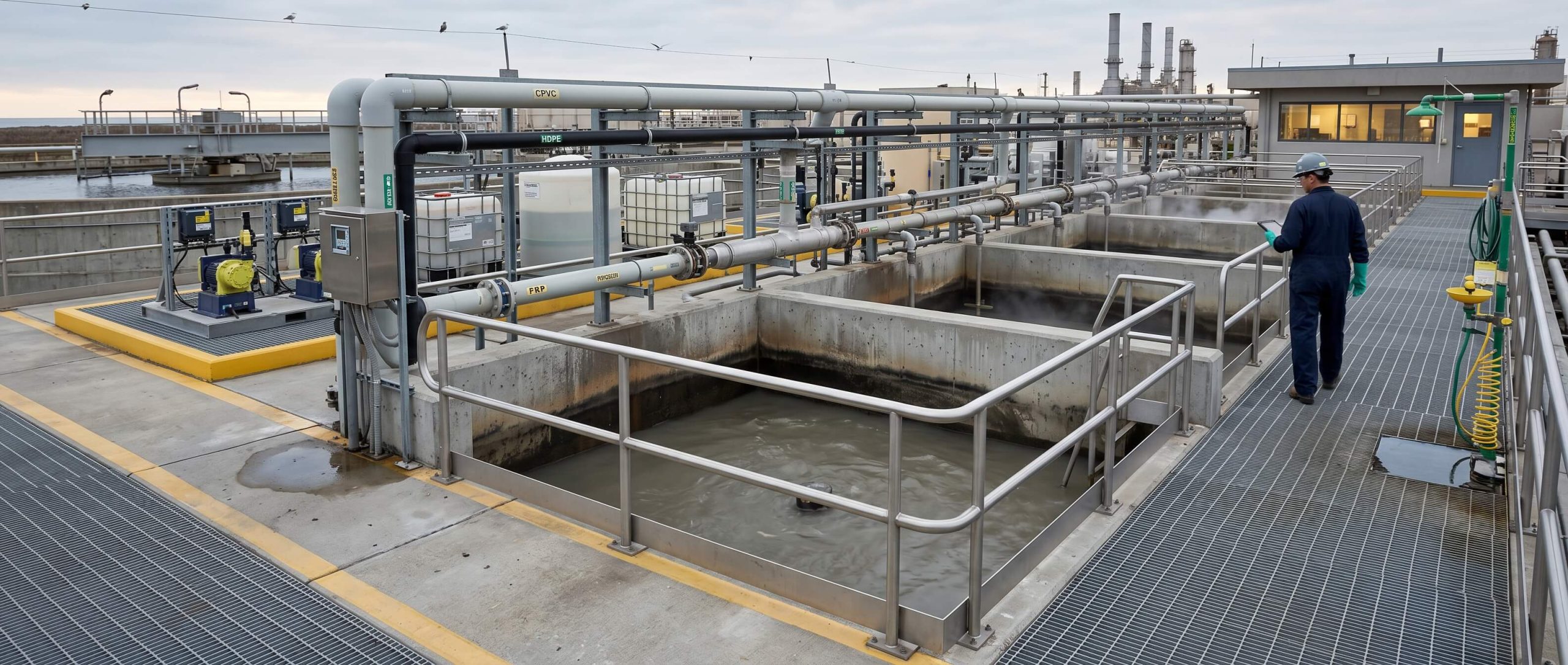
Waste Treatment Effluent
Durable and cost-effective valving solutions for managing diverse pH levels in chemical effluent processing.
Find Your Specific Application Solution
Why Do Conventional Valve Solutions Frequently Fail in Corrosive Chemical Environments?
Identifying the critical failure points that compromise system integrity and production uptime.
External Leakage
Cause: Packing degradation from harsh chemicals.
Impact: Environmental hazards and immediate system shutdown protocols.
Internal Seat Leakage
Cause: Seal erosion due to particulate matter or high-velocity flow.
Impact: Cross-contamination and loss of batch integrity.
Stem Seizing
Cause: Galling or chemical buildup in the stem area.
Impact: Inability to actuate, leading to process bottlenecks.
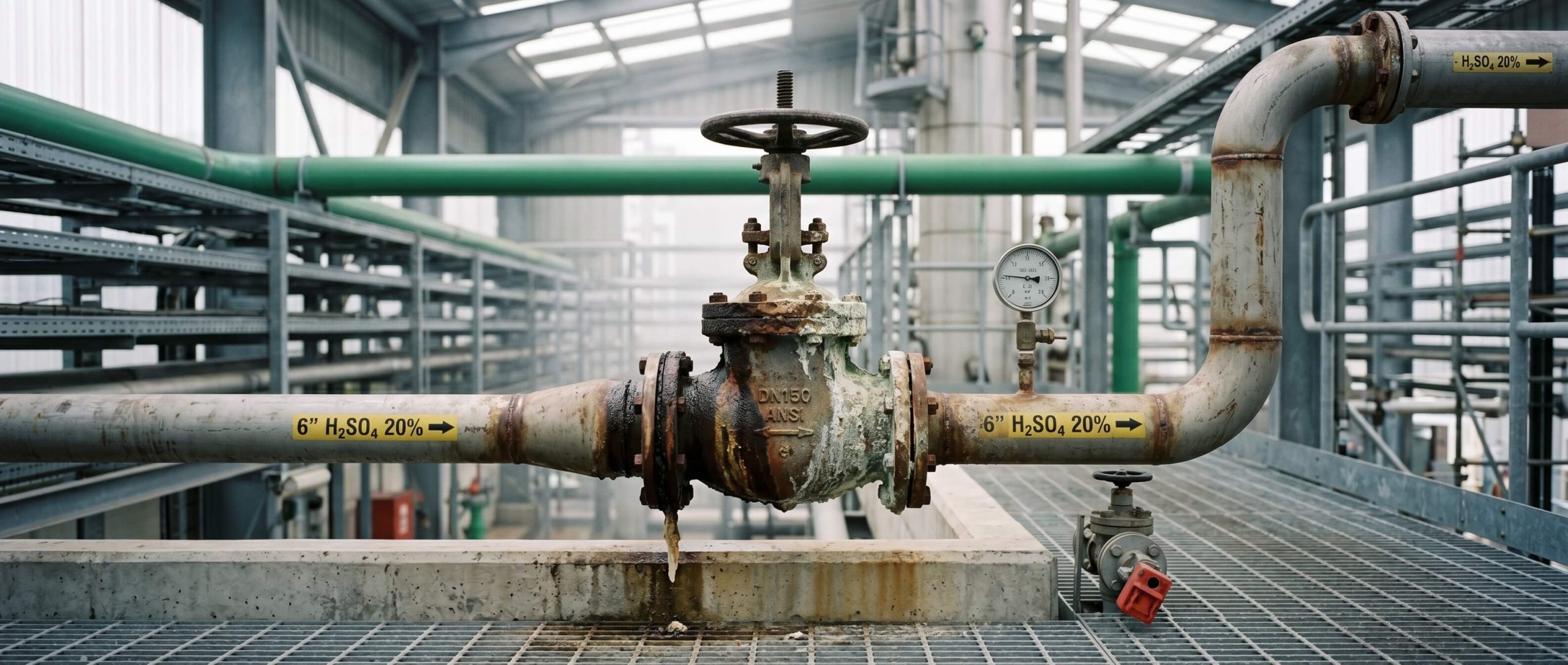
Body Corrosion
Cause: Incorrect metallurgy for specific acid/base concentrations.
Impact: Catastrophic structural failure and safety risks.
High Operating Torque
Cause: Thermal expansion or media polymerization within the valve.
Impact: Actuator overload and premature component wear.
Compounded Risks
- Unplanned Operational Halts
- Escalating Replacement Budgets
- Regulatory Compliance Violations
Mitigate Your Operational Risks Today
Is Your Valve Selection Logic Addressing the Symptoms or the Root Cause?
Transitioning from reactive maintenance to proactive system engineering.
Conventional Misconceptions
- Selecting based purely on pipe diameter rather than flow characteristics.
- Assuming "standard stainless steel" covers all corrosive environments.
- Prioritizing initial purchase cost over total lifecycle maintenance.
- Ignoring dynamic pressure drops across the valve body.
Engineering Reality
- Sizing calculations must account for fluid velocity and cavitation risks.
- Alloy selection requires precise mapping to media pH and temperature.
- Lifecycle costing reveals specialized valves offer rapid ROI through uptime.
- Pressure-temperature ratings dictate structural integrity boundaries.
Material Mismatch
Inadequate alloy selection for specific chemical properties.
Seal Incompatibility
Elastomers or polymers degrading upon chemical contact.
Pressure-Temp Fluctuations
Exceeding design limits during process anomalies.
Excessive Cycle Frequency
Actuating beyond the mechanical endurance of components.
Build a Reliable Foundation
Systemic Engineering Methodology for Optimized Chemical Process Safety
How RUITO eliminates operational uncertainty through precise technical mapping.
1. Medium Compatibility Assessment
Rigorous analysis of fluid chemical composition, concentration, and temperature profiles to mandate optimal body and trim metallurgy. Where the approved specification calls for a continuous PFA wetted barrier, review our PFA-lined butterfly valves against the actual fluid, concentration, temperature, and pressure.
2. Dynamic Sealing Optimization
Implementation of live-loaded packing systems and specialized seat materials engineered to withstand continuous dynamic cycling without integrity loss.
3. Multi-Stage Quality Verification
Every unit undergoes stringent hydrostatic and pneumatic testing, documented via comprehensive material test reports (MTRs) before deployment.
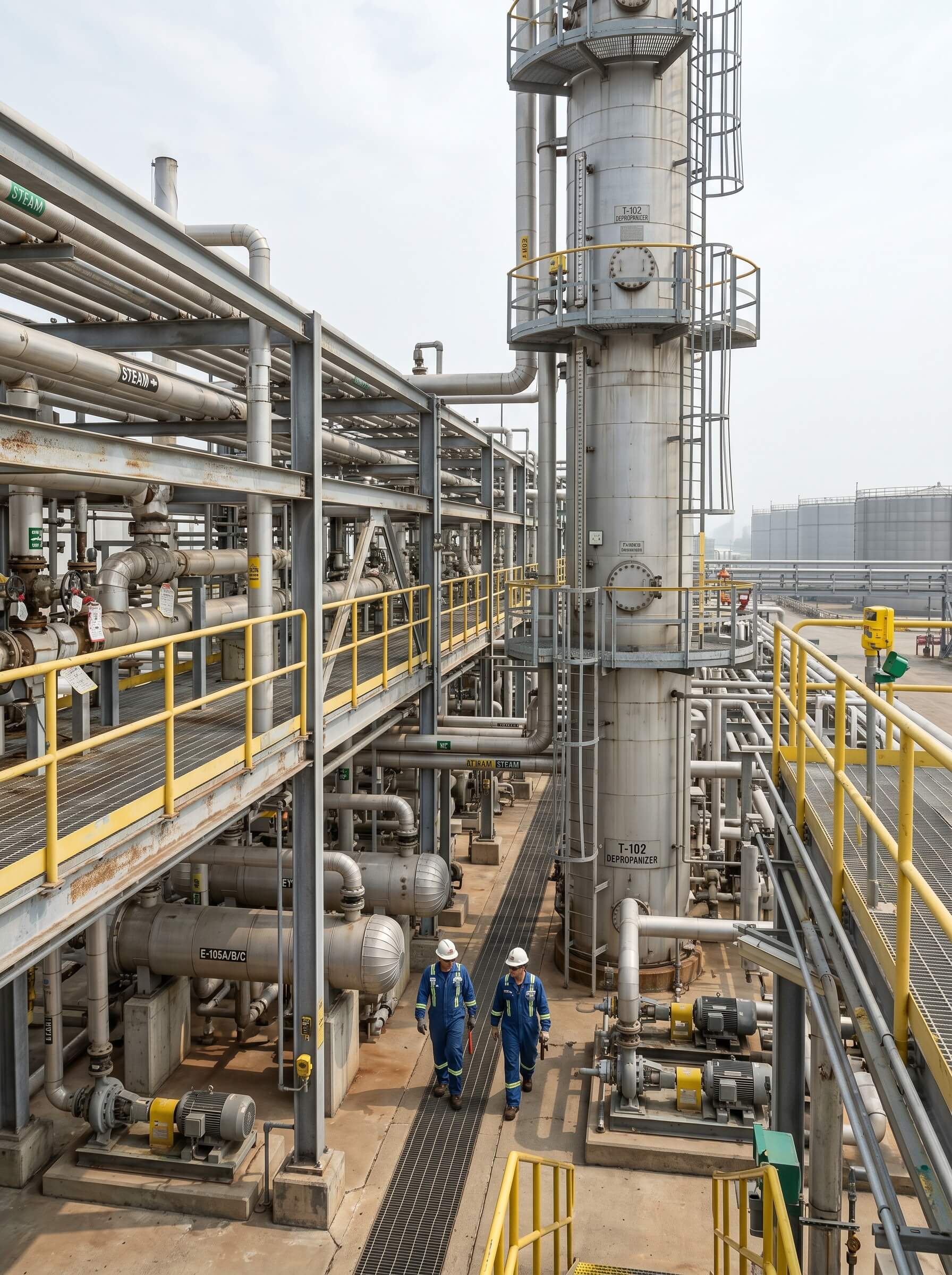
Secure Your Chemical Flow Systems
Engineered Solutions for Specific Chemical Environments
Addressing critical process challenges with highly specified valve configurations designed for maximum uptime and safety in severe service conditions.
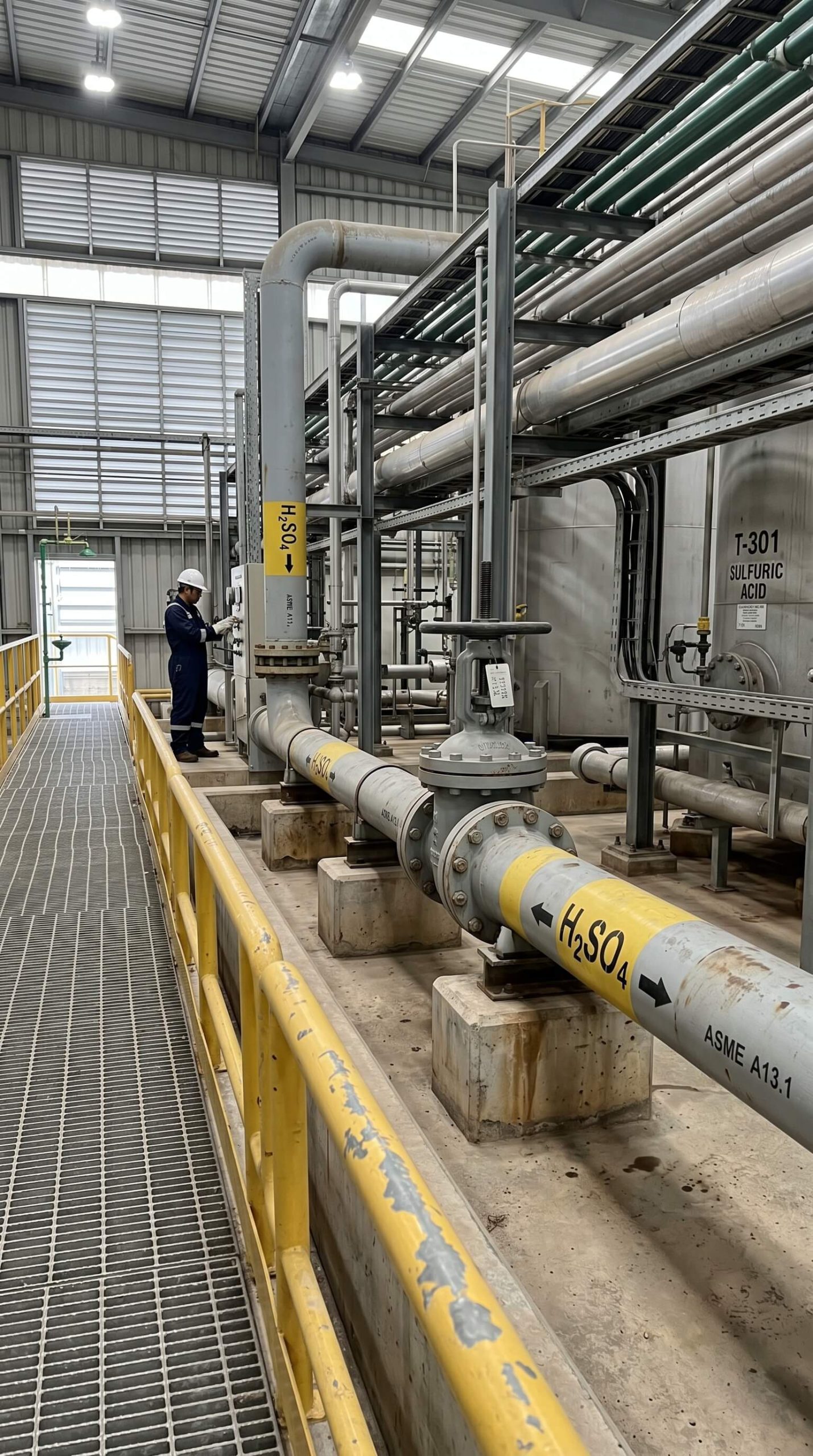
Corrosive Acid Transport
Handling high-concentration H2SO4 causes rapid pitting and failure in standard alloys, leading to leaks and process downtime.
- 3mm Virgin PTFE lining prevents acid contact with metal parts.
- Energized seating mechanism ensures bubble-tight shutoff.
- Spark tested at 20kV to guarantee lining integrity.
| Media | Sulfuric Acid (H2SO4) up to 98% |
|---|---|
| Body Material | A216 WCB / A351 CF8M + PTFE |
| Pressure Class | ASME Class 150 / PN16 |
| Temp Range | -20°C to +180°C |
Result: Extended maintenance intervals from 6 months to 3+ years, significantly reducing lifecycle costs.
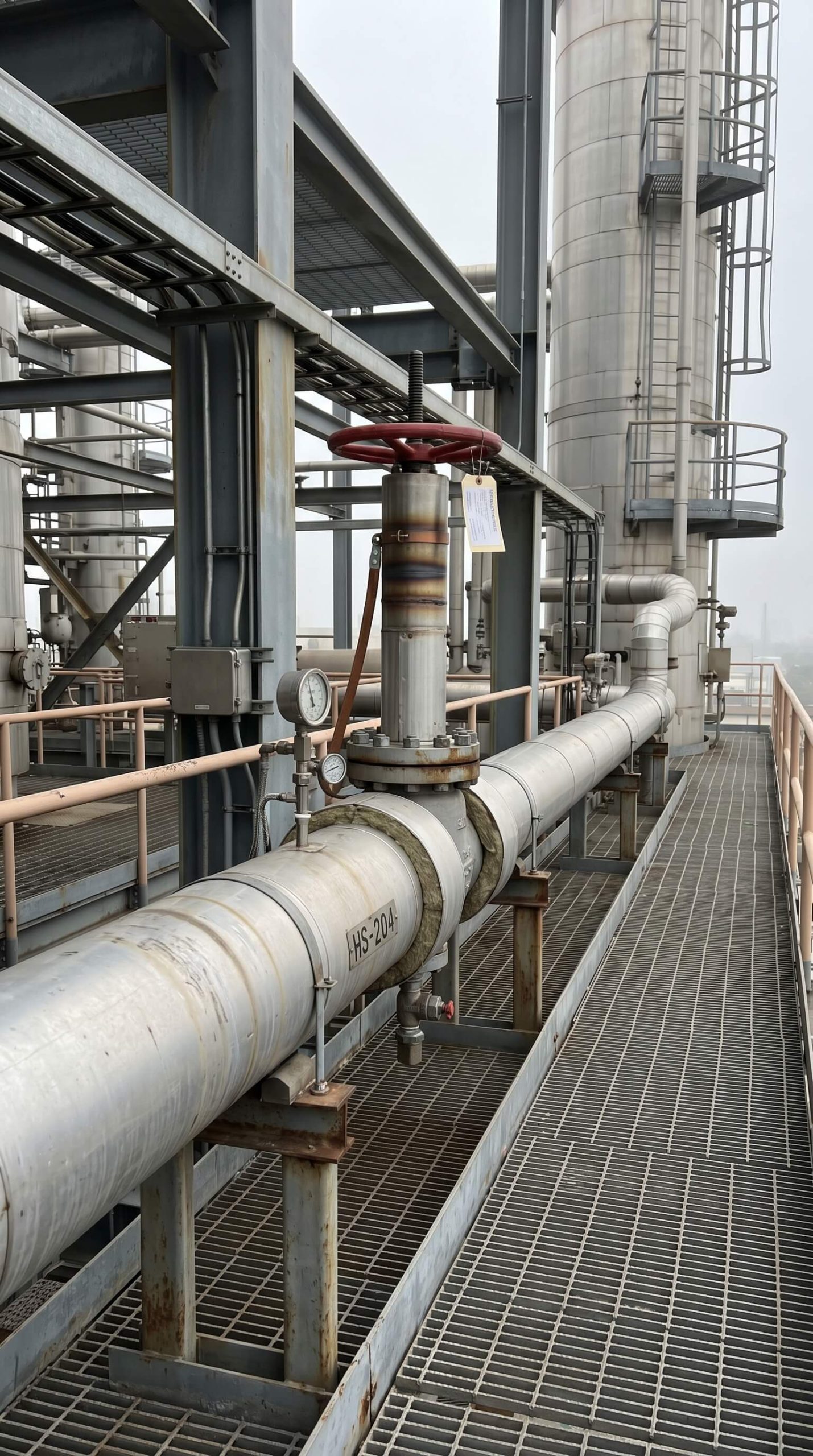
High-Temp Solvent Pumping
Organic solvents at elevated temperatures cause standard elastomers to swell and fail, compromising flow control.
- Stellite faced metal-to-metal seating for extreme durability.
- Fugitive emission compliant graphite packing sets.
- Extended bonnets to protect actuators from radiant heat.
| Media | High-Temp Organic Solvents (Toluene, Xylene) |
|---|---|
| Body Material | A351 CF8M / Alloy 20 |
| Pressure Class | ASME Class 300 / PN40 |
| Temp Range | Up to +450°C |
Result: Zero leakage performance maintained during continuous thermal cycling, ensuring plant safety.
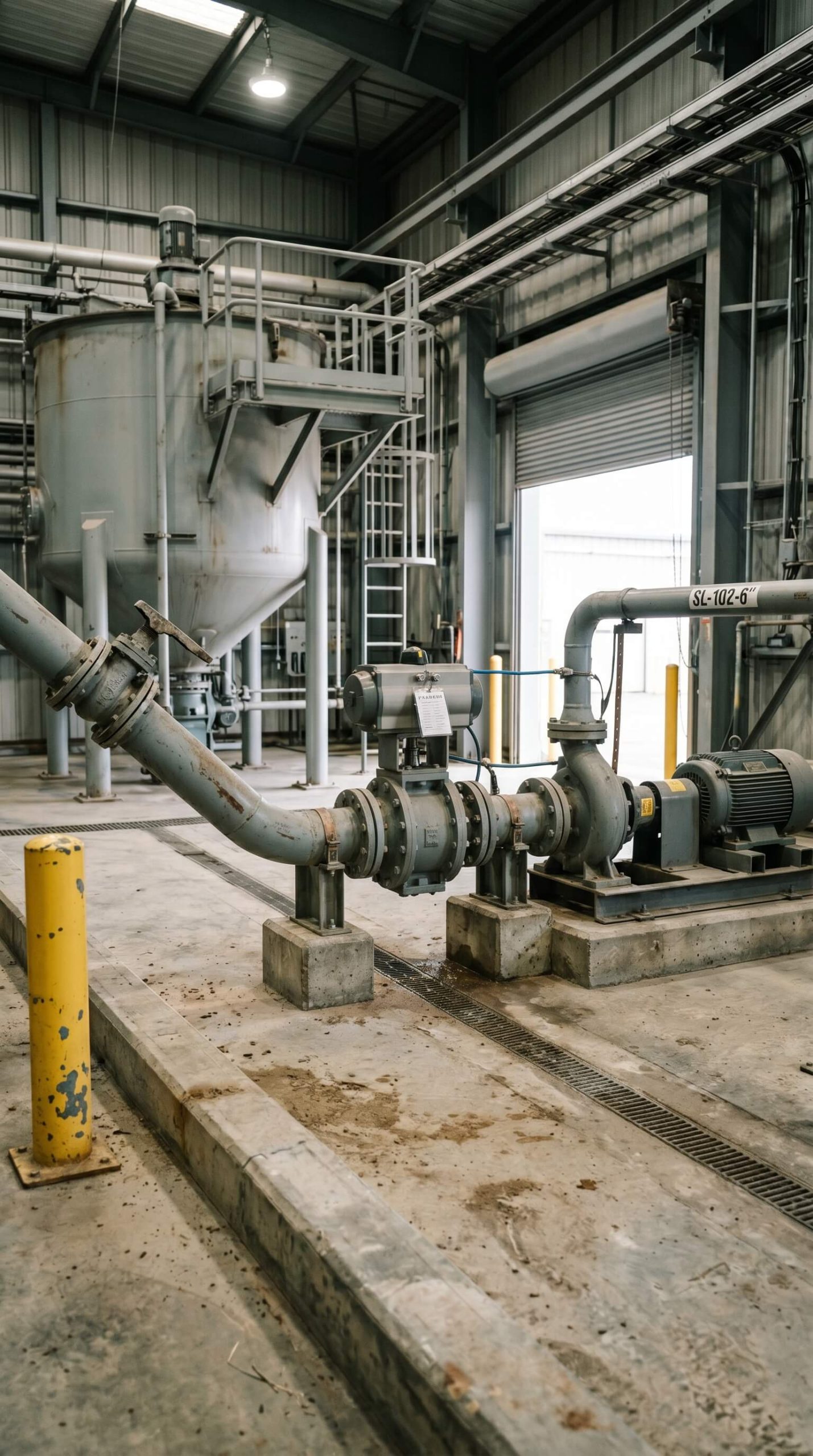
Abrasive Slurry Handling
Polymer slurries with high solid content cause rapid wear on standard trims, requiring frequent and costly replacements.
- Tungsten Carbide coated trims resist severe abrasion.
- Eccentric rotary design minimizes flow restriction and wear.
- Self-cleaning action prevents particle buildup and jamming.
| Media | Polymer Slurries (up to 30% solids) |
|---|---|
| Body Material | A216 WCB with hardened internals |
| Pressure Class | ASME Class 150 / Class 300 |
| Temp Range | -29°C to +250°C |
Result: Reliable flow control established, minimizing downtime for trim replacements and stabilizing the process.
Need a tailored solution for a specific medium or demanding condition?
Why Do Global EPCs and Operators Trust RUITO?
We provide more than just valves; we deliver certified reliability, comprehensive engineering support, and complete lifecycle documentation.
Quality Stability
Manufactured under strict ISO 9001 protocols. Every valve undergoes 100% pressure and functional testing before dispatch.
Technical Support
Expert valve sizing, material selection advice, and provision of detailed CAD/3D models for seamless plant integration.
Custom Solutions
Flexible manufacturing capabilities supporting OEM/ODM requirements and non-standard dimensional specifications.
Documentation
Complete traceability packages including Material Test Certificates (MTC EN 10204 3.1), Pressure Test Reports, and CE declarations.
Partner with a manufacturer dedicated to your project's success.
Ensuring System Integrity Through Rigorous Quality Control
Our systematic approach to quality assurance mitigates risk at every stage of production, ensuring every valve meets stringent international standards before deployment.
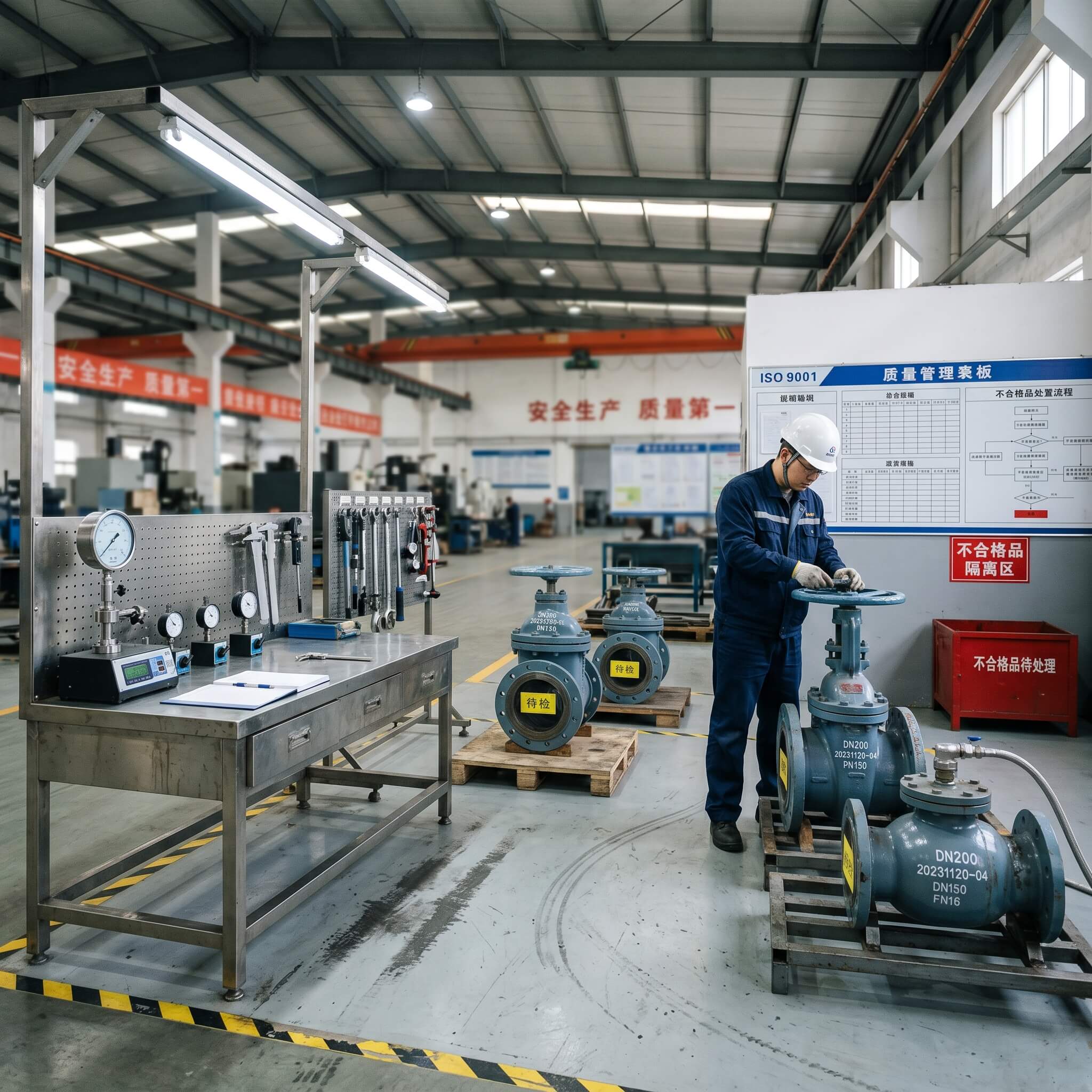
ISO 9001 Certified Manufacturing Facility - Final Inspection Area
Material Verification
Strict incoming inspection including PMI (Positive Material Identification) and chemical analysis to verify exact alloy compositions.
Precision Machining
Utilizing advanced CNC centers for tight dimensional control, ensuring perfect alignment and minimizing tolerances.
Performance Testing
Hydrostatic shell testing at 1.5x design pressure and strict seat leakage tests to guarantee bubble-tight seals (API 598/EN 12266).
Batch Traceability
Comprehensive digital logs linking every valve serial number to its specific heat number, operator, and test results via MTRs.
Review our comprehensive testing protocols and certifications.
Secure Your Chemical Flow Systems with RUITO Engineering
Our technical team is ready to review your specific medium, pressure, and temperature requirements to ensure a zero-leakage, corrosion-resistant solution for your facility.