
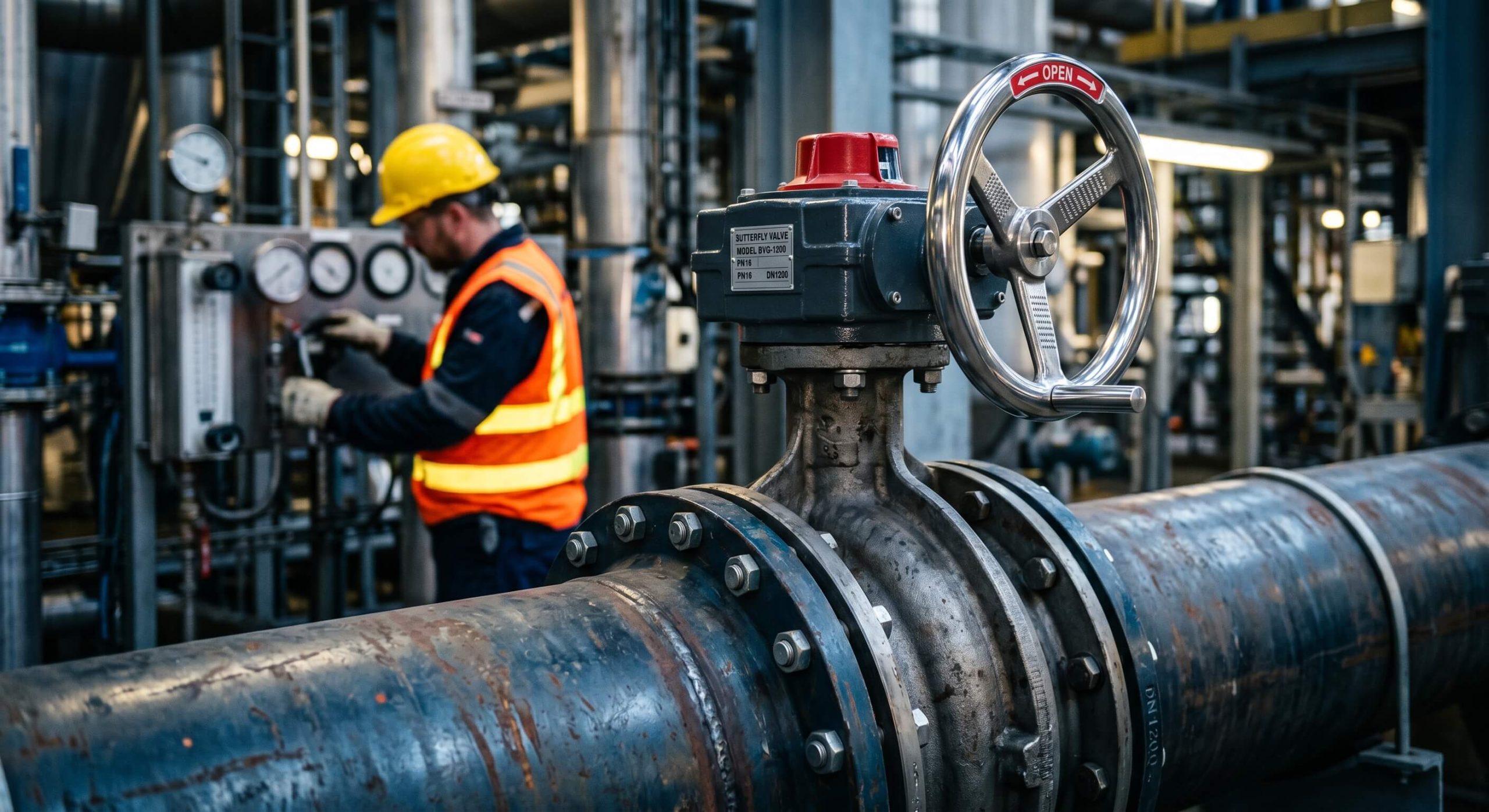
These specialized devices act as mechanical flow regulators equipped with gear reduction systems. Technicians managing massive industrial pipelines frequently face high fluid pressures daily. Turning standard levers manually becomes incredibly exhausting under such intense force. You risk operator injury fighting those strong liquid currents. Here is the deal: upgrading your pipeline equipment eliminates that strain completely. Installing a gearbox operated butterfly valve gives workers maximum mechanical advantage. Operators spin a handwheel easily, mitigating any physical struggle. This component keeps operations safe, efficient, and exceptionally reliable.
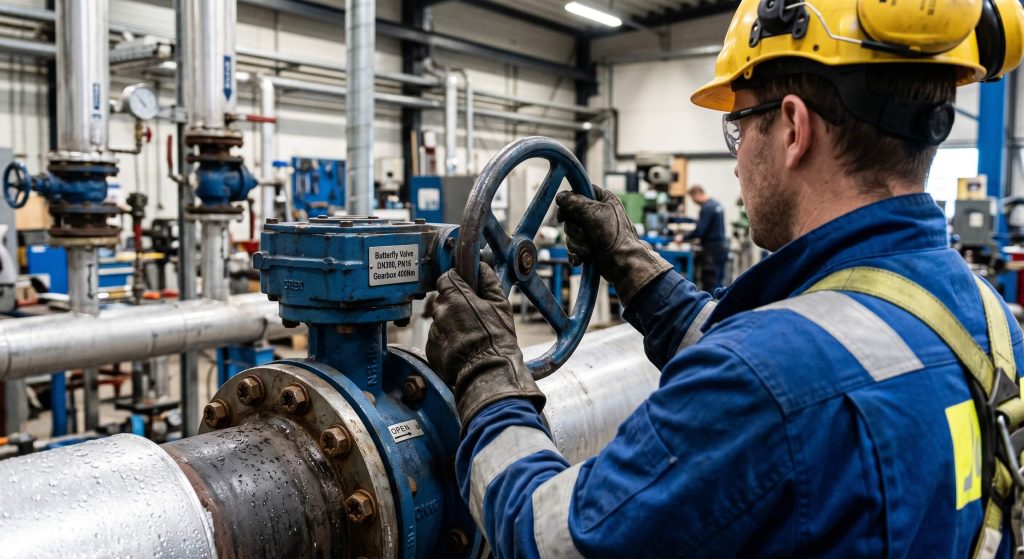
What Is A Gearbox Operated Butterfly Valve Exactly?
A gearbox operated butterfly valve functions as a quarter-turn rotary motion mechanism. That integrated reduction unit transforms multiple handwheel turns into a 90-degree disc rotation. You use this robust equipment for regulating large volumes of liquid efficiently. The enclosed gears multiply your physical input force significantly.
How Does The Mechanism Work?
Inside that metal housing, a worm gear interacts with a central stem. Turning the outer wheel engages internal teeth for smooth rotation.
- You gain immense mechanical advantage.
- Operators avoid sudden pressure spikes.
- Workers handle large diameters easily.Ready for the good part? This setup prevents fluid hammer effects naturally. Slow closing speeds protect surrounding pipes from shock damage.
What Materials Make Up These Valves?
Manufacturers cast these bodies from durable ductile iron or stainless steel. Strong discs endure harsh chemical environments without failing prematurely. Seat materials like EPDM rubber provide bubble-tight sealing capabilities.
| Component | Material Type | Primary Function |
| Body | Ductile Iron | Structural support |
| Disc | Stainless Steel | Flow regulation |
| Seat | EPDM Rubber | Leak prevention |
These selected materials guarantee long-term operational stability under extreme conditions.
Key Takeaway: Understanding component construction helps you select appropriate industrial piping hardware confidently.
How Does A Gearbox Operated Butterfly Valve Function?
A gearbox operated butterfly valve works by converting rotational motion into direct torque. The handwheel connects directly via a central shaft towards internal worm gears. Turning that external wheel slowly rotates the central disc ninety degrees. This mechanical action allows fluid passage or blocks flow entirely.
What Role Does Torque Play?
Torque represents that twisting force required for moving internal components against pressure.
- Handwheels require minimal physical effort.
- Internal gears multiply applied force.
- Stems transfer energy directly downwards.What’s the real story? Gear reduction lowers required input energy drastically. You get maximum output power from minimal manual turning.
Can You Automate This Process?
Operators frequently attach electric actuators replacing manual handwheels for remote control. Motorized units receive electronic signals from central control rooms easily. This upgrade provides precise automated regulation across complex piping networks.
| Control Method | Operator Effort | Remote Capability |
| Manual Gear | Low | No |
| Electric Actuator | None | Yes |
| Pneumatic System | None | Yes |
Actuated systems offer faster response times across large industrial facilities.
Key Takeaway: Grasping mechanical functions empowers you towards better operational efficiency decisions.
Why Choose A Gearbox Operated Butterfly Valve Over Levers?
Selecting a gearbox operated butterfly valve over standard levers prevents operator fatigue. High-pressure pipelines create immense resistance against standard flat handle mechanisms. Levers require significant brute strength during opening or closing procedures. You risk serious workplace injuries using plain handles on large pipes.
Are Levers Safe For Large Pipes?
Using direct levers on lines exceeding six inches poses serious safety risks. The fluid velocity can jerk handles violently out from your hands.
- Gears lock securely into position.
- Operators avoid sudden handle kickbacks.
- Precision adjustments become entirely possible.This is where it gets interesting… Worm gears feature self-locking characteristics naturally. The disc cannot rotate backward from internal fluid pressure alone.
How Does Precision Compare?
Gears allow micro-adjustments for throttling specific liquid volumes through your system. Levers only offer rudimentary locking notches lacking fine-tuning capabilities. You gain exact control utilizing wheel-driven reduction mechanisms.
| Feature | Gear Actuation | Lever Handle |
| Precision | Very High | Low |
| Safety | Excellent | Poor |
| Effort | Minimal | High |
Gear-driven solutions outperform simple handles regarding safety and precise flow management.
Key Takeaway: Prioritizing gear mechanisms safeguards your workforce while improving process accuracy.
What Are The Main Components Of A Gearbox Operated Butterfly Valve?
The anatomy of a gearbox operated butterfly valve includes several critical parts. A rugged outer casing protects delicate internal mechanisms from environmental damage. You will find a sturdy central stem connecting that gear housing downwards. This shaft attaches directly onto a circular metal disc inside.
What Is Inside The Gear Housing?
Opening that top enclosure reveals precision-machined mechanical power transfer elements.
- A threaded worm shaft sits horizontally.
- The segmented worm wheel engages vertically.
- Lubricating grease fills surrounding cavities.You might be wondering… How do these parts stay lubricated? Manufacturers pack these housings permanently using heavy-duty industrial grease.
Why Does The Seat Matter?
An elastomeric seat lines that inner pipe circumference for tight sealing. When closed tightly, the disc edge compresses against this rubber lining. This compression stops all liquid movement past that specific pipeline point.
| Component | Primary Element | Typical Material |
| Handwheel | User interface | Cast Iron |
| Worm Gear | Force reduction | Bronze |
| Stem Shaft | Torque transfer | Stainless Steel |
Quality internal elements dictate overall equipment lifespan and daily performance reliability.
Key takeaway: Identifying individual parts helps you troubleshoot potential mechanical failures faster.
Which Industries Rely On A Gearbox Operated Butterfly Valve?
Many sectors implement a gearbox operated butterfly valve for heavy-duty fluid management. Municipal water treatment facilities depend heavily on these robust units daily. Power generation plants use them for regulating cooling tower water circuits. You see these mechanisms dominating chemical processing factory pipelines everywhere.
Do Oil Refineries Use Them?
Petrochemical plants require spark-free environments handling highly flammable liquid products constantly.
- Metal seats handle extreme temperatures.
- Fire-safe designs prevent catastrophic leaks.
- Enclosed gears resist corrosive atmospheres.Here is the kicker… Specific high-performance variants handle highly abrasive slurries effortlessly. Heavy mining operations utilize specially coated discs resisting constant material friction.
Are They Used In HVAC Systems?
Commercial climate control networks utilize large chiller pipes needing reliable flow regulation. Maintenance crews adjust building temperatures utilizing these accessible mechanical wheels. You save substantial space installing these compact units inside cramped basements.
| Industry Focus | Typical Application | Key Requirement |
| Water Treatment | Main distribution lines | Zero leakage |
| Petrochemical | Fuel transport pipes | Fire safety |
| HVAC Systems | Chilled water loops | Compact size |
Diverse industrial sectors appreciate this hardware for its unmatched versatile performance.
Key Takeaway: Recognizing broad industrial applications highlights this component’s universal engineering value.
How Do You Install A Gearbox Operated Butterfly Valve Correctly?
Installing a gearbox operated butterfly valve requires careful flange alignment procedures. You must clean adjacent pipe faces thoroughly before attempting any mounting. Workers center that disc perfectly between opposing steel pipe flanges carefully. Tightening bolts in a star pattern prevents uneven rubber seat compression.
Should The Valve Be Open Or Closed?
Never install this hardware while fully closed or fully open.
- Keep discs slightly ajar always.
- Prevent rubber seat pinching damage.
- Allow minor adjustments during tightening.Now listen closely… A fully closed disc might jam tightly against surrounding pipe edges. This mistake ruins sealing capabilities before operations even begin.
Does Valve Orientation Matter?
Engineers recommend mounting horizontal stems whenever handling fluids containing suspended solids. Vertical stems allow heavy debris accumulation near bottom bearings causing eventual failure. You protect internal shafts from premature wear following correct orientation guidelines.
| Orientation Angle | Fluid Type | Recommended Protocol |
| Horizontal Stem | Slurries or Dirty water | Yes |
| Vertical Stem | Clean water or Air | Yes |
| Upside Down Mount | Any liquid | No |
Proper mounting angles extend operational longevity while preventing unexpected maintenance shutdowns.
Key Takeaway: Following strict installation protocols guarantees immediate functionality and long-term reliability.
What Maintenance Does A Gearbox Operated Butterfly Valve Require?
Routine care keeps a gearbox operated butterfly valve functioning perfectly for years. Technicians inspect outer housings visually for unexpected external fluid leaks weekly. You must operate unused units occasionally, preventing internal moving parts from freezing. Applying fresh grease onto exposed stem threads stops destructive rust formation.
How Often Should You Lubricate?
Most top enclosures arrive sealed permanently from the manufacturing facility.
- Extreme environments demand annual inspections.
- Replace degraded grease immediately.
- Check indicator flags for accuracy.But wait, there is more… You should listen for grinding noises during manual wheel rotation. Unusual sounds indicate internal metal wear requiring immediate mechanical attention.
When Should You Replace Seats?
Rubber linings degrade naturally over time following constant chemical exposure. A failing seal allows minor liquid drips past the closed disc. You must schedule full replacements upon detecting any downstream pressure bypass.
| Maintenance Task | Service Frequency | Corrective Action |
| Visual Inspection | Monthly Check | Look for leaks |
| Cycle Testing | Semi-Annually | Prevent gear seizing |
| Seal Replacement | Five to Ten Years | Restore tight shutoff |
Proactive servicing prevents catastrophic system failures saving immense emergency repair costs.
Key Takeaway: Implementing consistent preventative maintenance schedules drastically increases your equipment lifespan.
How To Select The Right Gearbox Operated Butterfly Valve?
Choosing the correct gearbox operated butterfly valve involves evaluating system pressure requirements. You must determine maximum pipeline temperatures before selecting seat rubber materials. Fluid chemical composition dictates whether stainless steel or cast iron works best. Engineers calculate exact flow rates confirming proper internal pipe diameter sizing.
Does Size Impact Gear Ratio?
Larger pipeline diameters demand greater internal torque for moving heavier discs.
- Massive pipes need larger handwheels.
- High gear ratios reduce effort.
- Closing times increase with size.Consider this fact… A 24-inch pipe requires significantly more wheel turns than smaller lines. You trade operational speed for necessary mechanical leverage on huge systems.
What About Wafer Vs. Lug Styles?
Wafer designs slip cleanly between two flanges utilizing long surrounding bolts. Lug versions feature threaded inserts allowing direct bolting onto single pipes. You select lug types for dead-end service requiring single-side removal capabilities.
| Valve Style | Installation Method | Dead-End Compatibility |
| Wafer Design | Sandwiched between flanges | Not recommended |
| Lug Version | Bolted directly onto pipe | Yes perfectly |
| Flanged Type | Bolted opposing faces | Yes perfectly |
Accurate specification matching guarantees seamless integration into your specific piping architecture.
Key Takeaway: Analyzing fluid dynamics and installation requirements guarantees successful hardware procurement.
What Are Common Issues With A Gearbox Operated Butterfly Valve?
Troubleshooting a gearbox operated butterfly valve typically involves addressing minor leakage problems. Debris trapped between the disc edge and rubber seat causes incomplete closures. You might experience a stuck handwheel caused by dried internal housing grease. Excessive pipeline vibrations sometimes loosen mounting bolts creating sudden external drips.
Why Is The Wheel Hard To Turn?
Stiff operation usually indicates severe internal corrosion or bearing failure.
- Shafts bend under extreme pressure.
- Hardened grease blocks gear movement.
- Overtightened packing glands restrict stems.Here is a pro tip… Never use long metal pipes for extra handwheel leverage. This dangerous practice shatters internal worm gears permanently.
How Do You Fix Leaks?
External stem leaks require tightening the upper packing gland nuts slightly. Seat leaks necessitate flushing lines completely, removing trapped solid abrasive particles. You must replace torn rubber liners if flushing fails restoring tight seals.
| Identified Problem | Probable Root Cause | Suggested Corrective Action |
| Stem Liquid Leak | Loose packing material | Tighten upper gland nuts |
| Hard Wheel Turning | Lack of lubrication | Grease gearbox housing |
| Seat Fluid Bypass | Trapped hard debris | Flush pipeline completely |
Identifying failure root causes helps maintenance teams restore normal operations swiftly.
Key Takeaway: Promptly addressing minor mechanical symptoms prevents expensive full-scale system breakdowns.
How Does A Gearbox Operated Butterfly Valve Improve Safety?
A gearbox operated butterfly valve fundamentally protects workers managing dangerous high-pressure systems. Slow, deliberate rotational speeds completely eliminate destructive water hammer shockwaves naturally. You avoid sudden pipe bursts causing catastrophic industrial facility flooding events. Internal self-locking mechanics prevent unexpected valve opening during extreme pressure surges.
Can You Lock Them Out?
Industrial safety protocols require strict lockout-tagout procedures during routine maintenance work.
- Padlocks secure handwheels physically.
- Chains wrap around outer casings.
- Tampering becomes virtually impossible.The bottom line is… Unauthorized personnel cannot accidentally restore flow into active repair zones. This physical security feature saves lives across busy manufacturing environments daily.
Do They Provide Visual Indication?
Top-mounted indicator arrows show internal disc positions clearly from far distances. Operators verify system status instantly without touching any mechanical components directly. You gain absolute confidence regarding pipeline conditions utilizing these prominent markers.
| Safety Feature Element | Primary Benefit Provided | Risk Factor Mitigated |
| Gear Reduction Setup | Slow deliberate operation | Water hammer shockwaves |
| Self-Locking Action | Holds mechanical position | Sudden pressure surges |
| Visual Status Indicator | Clear operational status | Human operator error |
Integrating these reliable mechanical components creates inherently safer industrial working environments.
Key Takeaway: Maximizing mechanical safety features protects your personnel and valuable infrastructure simultaneously.
Conclusion
We solved your physical strain problems utilizing advanced mechanical reduction technology. Reliable flow control protects infrastructure while eliminating daily operator physical fatigue. We design heavy-duty components tailored exactly for your challenging industrial environments. Please contact us today regarding custom piping solutions. Precision engineering remains our core commitment toward your continuous operational success.
FAQ
Q1: How do I know if a gearbox operated butterfly valve fits my system?
Yes, it fits most large-scale applications perfectly. These robust units handle high-pressure environments better than standard lever handles.
Q2: Can I install electric actuators onto existing manual gearboxes?
No, you typically replace the manual box entirely. Electric actuators attach directly onto the bare stem for automated control.
Q3: What’s the best way for stopping external stem leaks?
Tightening the packing gland nuts resolves this quickly. Minor adjustments compress internal seals, stopping fluid escapes without system shutdowns.
Q4: How do I know if internal gears need fresh grease?
Stiff turning resistance indicates dry internal components clearly. Smooth operation requires adequate lubrication inside that top-mounted mechanical housing.
Q5: Can I use these valves for throttling fluid flow?
Yes, they excel at precise flow regulation. The mechanical reduction allows exact disc positioning without pressure back-driving the wheel.