
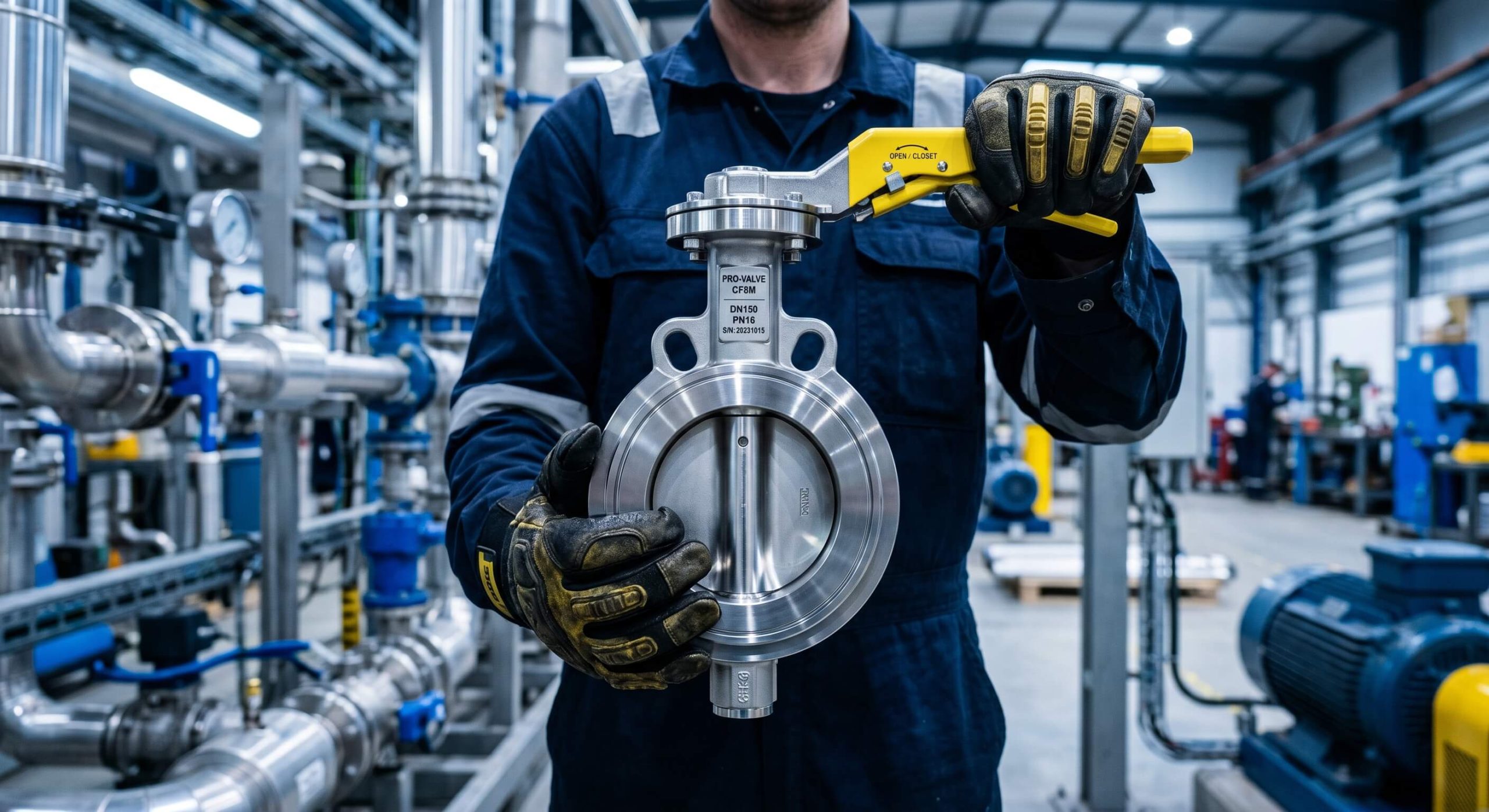
The different variations include wafer, lug, flanged, and high-performance designs tailored for specific flow control needs. Handling unpredictable fluid pressure often causes frequent pipeline leaks. A small drip ruins expensive equipment quickly. Installing a reliable type of butterfly valve stops fluid instantly. Upgrading specific models guarantees robust performance across your entire facility.
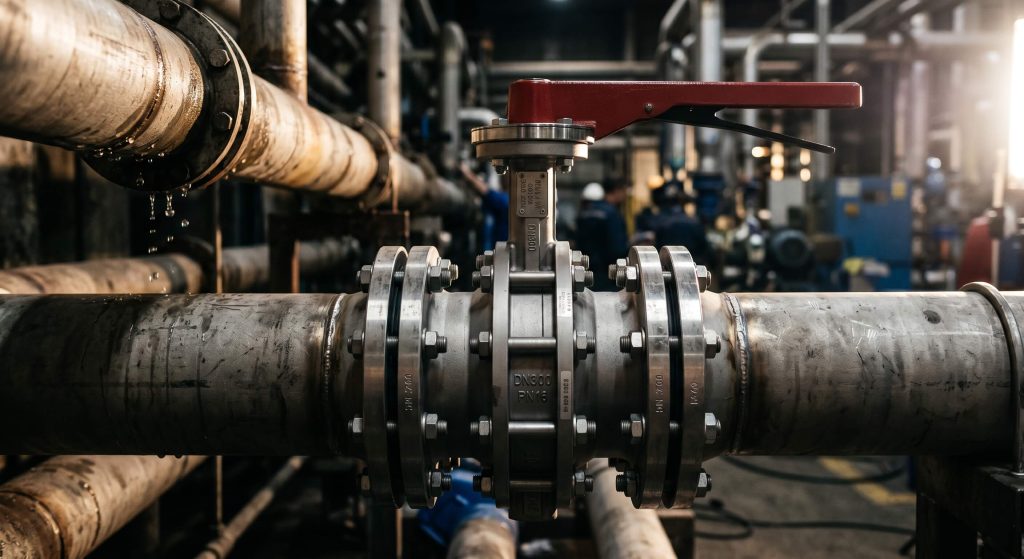
What Is a Wafer Type of Butterfly Valve?
A wafer type of butterfly valve is a slim flow control device mounting directly between two pipe flanges using long bolts. This compact design saves massive installation space. Squeezing this mechanism between flanges seals against pressure tightly. You will appreciate how lightweight construction reduces structural strain.
What Makes It Fit in Tight Spaces?
Here is the kicker, these units lack protruding lugs entirely, and removing excess metal allows insertion into incredibly narrow pipeline gaps.
- Slim profiles reduce total pipeline weight noticeably.
- Flange squeezing provides uniform sealing pressure automatically.
- Installation requires minimal heavy lifting gear.
Why Are They Cost-Effective?
Manufacturing requires fewer raw materials than bulky flanged alternatives. Buying smaller components lowers your total project expenditure drastically. You save cash without sacrificing operational safety. Key Takeaway: Selecting slim valves slashes upfront costs while maintaining tight shut-off capabilities.
| Feature | Attribute | Benefit |
|---|---|---|
| Profile | Ultra-thin | Saves pipeline space |
| Cost | Very low | Protects project budgets |
| Weight | Extremely light | Prevents structural strain |
Analyzing these parameters proves wafer designs deliver massive economic value.
How Does a Lug Type of Butterfly Valve Work?
This specific type of butterfly valve works by utilizing threaded perimeter inserts allowing independent bolting from both sides. Workers can remove one pipeline side without disrupting upstream pressure. Solid tapped lugs create highly secure flange connections. You gain immense flexibility during complex mechanical troubleshooting routines.
Can It Handle Dead-End Service?
What is the real story? These units excel at isolating specific pipeline segments safely, and securing bolts from one direction leaves opposite sides completely stable.
- Independent bolting prevents sudden blowouts during repairs.
- Threaded metal inserts grip hardware tightly.
- Upstream fluids remain contained perfectly.
What Are the Maintenance Needs?
Servicing requires minimal downtime due to accessible threaded connections. Mechanics swap damaged sections quickly without draining entire fluid networks. Routine inspections prevent unexpected mechanical failures easily. Key Takeaway: Independent bolting allows safe downstream pipe removal without system shutdowns.
| Component | Characteristic | Advantage |
|---|---|---|
| Lugs | Fully threaded | Independent bolting |
| Body | Solid casting | High pressure rating |
| Setup | Bi-directional | Versatile installation |
Evaluating this hardware confirms distinct advantages for isolated maintenance tasks.
What Is a Double Flange Type of Butterfly Valve?
A double flange type of butterfly valve is a heavy-duty mechanism featuring two distinct mating faces cast into the body. This massive construction handles enormous water flow volumes reliably. Technicians bolt each side independently toward mating pipe faces. Such thick metal prevents body distortion under heavy physical loads.
Where Are They Commonly Installed?
You might be wondering, vast waterworks facilities rely heavily on these massive units, and underground distribution lines need parts capable of surviving decades unattended.
- Heavy foundations support massive iron bodies.
- Buried pipelines utilize direct burial operators.
- Municipal grids distribute drinking water safely.
Do They Provide Leak-Free Operations?
Rubber liners inside solid casings compress tightly against rotating metal discs. Replacing internal seats requires simple hand tools during scheduled outages. Massive bolted faces eliminate shifting vibrations entirely. Key Takeaway: Flanged faces guarantee zero pipeline shifting during extreme pressure surges.
| Application | Feature | Result |
|---|---|---|
| Waterworks | Heavy iron body | Prevents physical distortion |
| Underground | Direct burial coating | Resists soil corrosion |
| Municipal | Replaceable liners | Extends operational lifespan |
Reviewing these traits highlights massive stability suitable for civic water systems.
When to Use a High-Performance Type of Butterfly Valve?
You use a high-performance type of butterfly valve when extreme temperatures demand specialized equipment built from highly resilient materials. Soft polymer seats melt easily under intense steam applications. Upgraded metal seats handle abrasive slurries without degrading rapidly. Deploying superior metallurgy protects against aggressive chemical reactions.
Can They Survive High Pressures?
Ready for the good part? Offset disc designs reduce friction during opening cycles drastically, and less friction means seals last much longer under immense stress.
- Thicker metal bodies resist structural bending.
- Reinforced shafts handle massive torque easily.
- Specialized packing prevents dangerous stem leaks.
What Materials Make Them Durable?
Engineers utilize stainless steel or exotic alloys for internal components. Hardened metals resist scratching from microscopic debris floating inside pipes. Your facility avoids catastrophic shutdowns by deploying superior metallurgy. Key Takeaway: Advanced alloys combined with offset geometry conquer extreme operational environments.
| Factor | Standard Material | High-Performance Material |
|---|---|---|
| Disc | Cast iron | Stainless steel |
| Seat | Basic rubber | Hardened metal |
| Shaft | Carbon steel | Exotic alloy |
Comparing these grades reveals why intense environments require upgraded metallurgy.
Why Choose a Double Eccentric Type of Butterfly Valve?
You choose a double eccentric type of butterfly valve because shifting central stems away from disc centers creates unique camming actions. That mechanical advantage minimizes physical wear on seating surfaces. That disc lifts off rubber liners almost instantly upon opening. This geometric trick extends component lifespan considerably.
How Does the Offset Design Work?
This is where things get interesting, moving pivot points reduces dragging forces dramatically, and less rubbing means synthetic seals survive millions of rotation cycles.
- Initial offset pushes shafts behind discs.
- Another offset moves shafts off centerlines.
- Camming motion breaks seal contact instantly.
Are They Ideal for Waterworks?
Municipal authorities prefer this design for massive drinking water networks. Reducing friction lowers necessary torque required for turning massive wheels. Smaller electric motors can operate these large units easily. Key Takeaway: Dual offsets prevent excessive seat rubbing while lowering required actuation torque.
| Offset | Location | Primary Benefit |
|---|---|---|
| Initial | Behind disc | Uninterrupted sealing edge |
| Another | Off centerline | Instant seat separation |
| Result | Camming action | Massively extended lifespan |
Studying this geometry explains remarkable longevity within eccentric designs.
What Is a Triple Offset Type of Butterfly Valve?
A triple offset type of butterfly valve is a sophisticated quarter-turn device utilizing three geometric variations creating a conical sealing profile. That metal disc wedges perfectly into matching body seats. Friction vanishes entirely until that very last degree of closure. This design achieves absolutely zero leakage mechanically.
Can They Handle Extreme Heat?
Believe it or not, these units manage superheated steam without breaking a sweat, and laminated metal seats expand uniformly when exposed to thermal shocks.
- Graphite layers absorb tiny surface imperfections.
- Solid steel layers provide rigid structural backing.
- Conical shapes prevent mechanical binding entirely.
Do They Provide Zero Leakage?
Metal wedges against metal forming a perfectly tight mechanical barricade. Torque seating guarantees absolute shut-off regardless of fluctuating fluid temperatures. Dangerous gasses remain contained safely inside heavy piping systems. Key Takeaway: Conical wedge designs provide perfect containment for highly volatile industrial fluids.
| Characteristic | Design Element | Operational Outcome |
|---|---|---|
| Seal type | Metal lamination | Survives extreme heat |
| Action | Torque seating | Guarantees zero leakage |
| Friction | Virtually none | Prevents galling |
Evaluating this conical mechanism proves its dominance in severe refinery applications.
What Is a Pneumatic Type of Butterfly Valve?
A pneumatic type of butterfly valve is an automated component where pressurized air drives mechanical pistons rotating internal shafts rapidly. This mechanism responds to remote control signals instantly. Spring systems can force discs closed during sudden power losses. Facilities achieve rapid automation by installing air-driven control components.
How Fast Is the Actuation?
Here is the catch, air pressure moves internal gears much faster than human hands, and opening large pipes takes merely seconds instead of tedious minutes.
- Rack and pinion gears translate linear force smoothly.
- Solenoids direct air flow into specific chambers.
- Exhaust ports release compressed gasses quickly.
Is Air Supply Critical?
Clean compressed air guarantees internal pistons glide without sticking continuously. Moisture traps prevent rusting inside sensitive aluminum actuator housings. Maintaining dedicated compressor lines guarantees reliable daily factory operations. Key Takeaway: Compressed air actuation delivers incredibly fast response times for automated facilities.
| Actuator Part | Function | System Impact |
|---|---|---|
| Piston | Converts air pressure | Rotates valve shaft |
| Springs | Stores physical energy | Provides fail-safe closure |
| Solenoid | Directs air traffic | Enables remote control |
Observing these dynamics highlights pristine factory air supply necessity.
How Does an Electric Type of Butterfly Valve Operate?
An electric type of butterfly valve operates by engaging electric motors spinning internal gears rotating stems with extreme precision. Programmers set specific opening angles for exact flow volume regulation. Wiring these units directly allows integration with complex digital dashboards. These components require stable voltage rather than compressed air lines.
Can You Automate Your System?
Truth be told, wiring these motors into central computers revolutionizes fluid management, and smart controllers report exact disc positions back toward human operators.
- Internal limit switches prevent mechanical motor burnout.
- Hand wheels allow manual overrides during blackouts.
- Digital feedback loops guarantee perfectly accurate positioning.
What Are the Power Requirements?
Industrial facilities wire these units directly into main power grids. Low voltage options exist for remote solar-powered agricultural irrigation systems. Matching motor voltages creates smooth long-term mechanical reliability. Key Takeaway: Motorized gears provide incredibly precise positioning for sophisticated digital control systems.
| Power Source | Common Usage | Primary Advantage |
|---|---|---|
| High Voltage | Heavy industrial plants | Massive torque generation |
| Low Voltage | Remote farming fields | Solar battery compatibility |
| Manual Override | Emergency situations | Prevents system paralysis |
Analyzing power demands drives proper selection for specific geographical operational locations.
What Makes a Sanitary Type of Butterfly Valve Unique?
A sanitary type of butterfly valve remains unique because polished stainless steel prevents microscopic bacteria from hiding inside small crevices. This specific device serves food processing sectors exclusively. Tri-clamp connections allow rapid disassembly during daily cleaning regimens. Engineers eliminate tiny gaps where organic matter might decay unnoticed.
Are They Used in Food Processing?
Look at it this way, brewing beer requires absolutely sterile fluid pathways constantly, and dairy farms utilize these specialized fittings for moving raw milk.
- Mirror-polished surfaces repel sticky syrup residues.
- FDA-approved silicone rubber creates perfectly safe seals.
- Tri-clamp fittings connect pipes without threaded grooves.
How Simple Is the Cleaning Process?
Workers break down entire pipeline sections rapidly without specialized wrenches. Boiling water flushes through open passages during routine sterilization cycles. These components withstand harsh caustic washing chemicals without degrading. Key Takeaway: Mirror-polished surfaces combined with tri-clamps create perfectly hygienic food processing lines.
| Feature | Design Element | Hygiene Benefit |
|---|---|---|
| Surface | Highly polished | Eliminates bacterial traps |
| Connection | Tri-clamp ends | Allows rapid disassembly |
| Seal | Food-grade rubber | Prevents chemical leaching |
Inspecting these hygienic features confirms their absolute necessity in food production.
How to Select the Best Type of Butterfly Valve?
You select that correct type of butterfly valve by analyzing your specific fluid temperature dictating required sealing materials. Equipment choice depends entirely on expected daily operating conditions. Matching metal grades prevents rapid corrosion from acidic chemical compounds. Proper sizing helps liquids flow smoothly without generating excessive turbulence.
What Are Your Pressure Needs?
Here is the deal, thin bodies burst easily when subjected to massive forces, and understanding system spikes prevents catastrophic mechanical ruptures during daily use.
- Low pressure tolerates standard rubber-lined wafer bodies.
- Medium pressure demands robust double eccentric structures.
- High pressure requires rugged triple offset metal configurations.
Does the Fluid Influence the Choice?
Abrasive sand mixtures destroy soft rubber liners incredibly fast. Highly acidic chemicals dissolve standard iron bodies within mere weeks. Selecting exotic alloys guarantees your equipment survives hostile operating environments. Key Takeaway: Matching construction materials strictly toward fluid properties prevents premature mechanical failures.
| Fluid Condition | Hardware Recommendation | Expected Result |
|---|---|---|
| Clean Water | Rubber lined iron | Economical long-term service |
| Abrasive Slurry | Hardened metal seats | Resists severe physical scratching |
| Corrosive Acid | Exotic stainless alloys | Prevents rapid chemical dissolving |
Reviewing operational data drives precise hardware selection for long-lasting factory success.
Conclusion
Selecting proper quarter-turn flow components stops destructive pipeline leaks permanently. Providing highly reliable industrial equipment remains our absolute highest priority. Contact us today regarding upgrading your deteriorating plant infrastructure. Precision engineering creates sustainable pathways toward global fluid management excellence.
FAQ
Q1: Can I use a wafer unit for isolated dead-end service?
No, you cannot. Removing downstream piping causes upstream pressure forcing this entire component outward.
Q2: What represents a superior seating material for highly corrosive fluids?
Teflon represents a superior option. This polymer resists aggressive chemical attacks much better than standard rubber compounds.
Q3: How do I know if I need a triple offset design?
Extreme temperatures demand this specific design. Standard rubber melts under superheated steam, whereas laminated metal handles intense heat safely.
Q4: Can I automate a manual unit later?
Yes, you absolutely can. Mechanics remove hand levers attaching electric actuators directly onto bare mounting pads.
Q5: What represents a superior maintenance schedule?
Quarterly inspections remain highly recommended. Checking for minor external leaks early prevents catastrophic fluid ruptures damaging expensive factory equipment.