
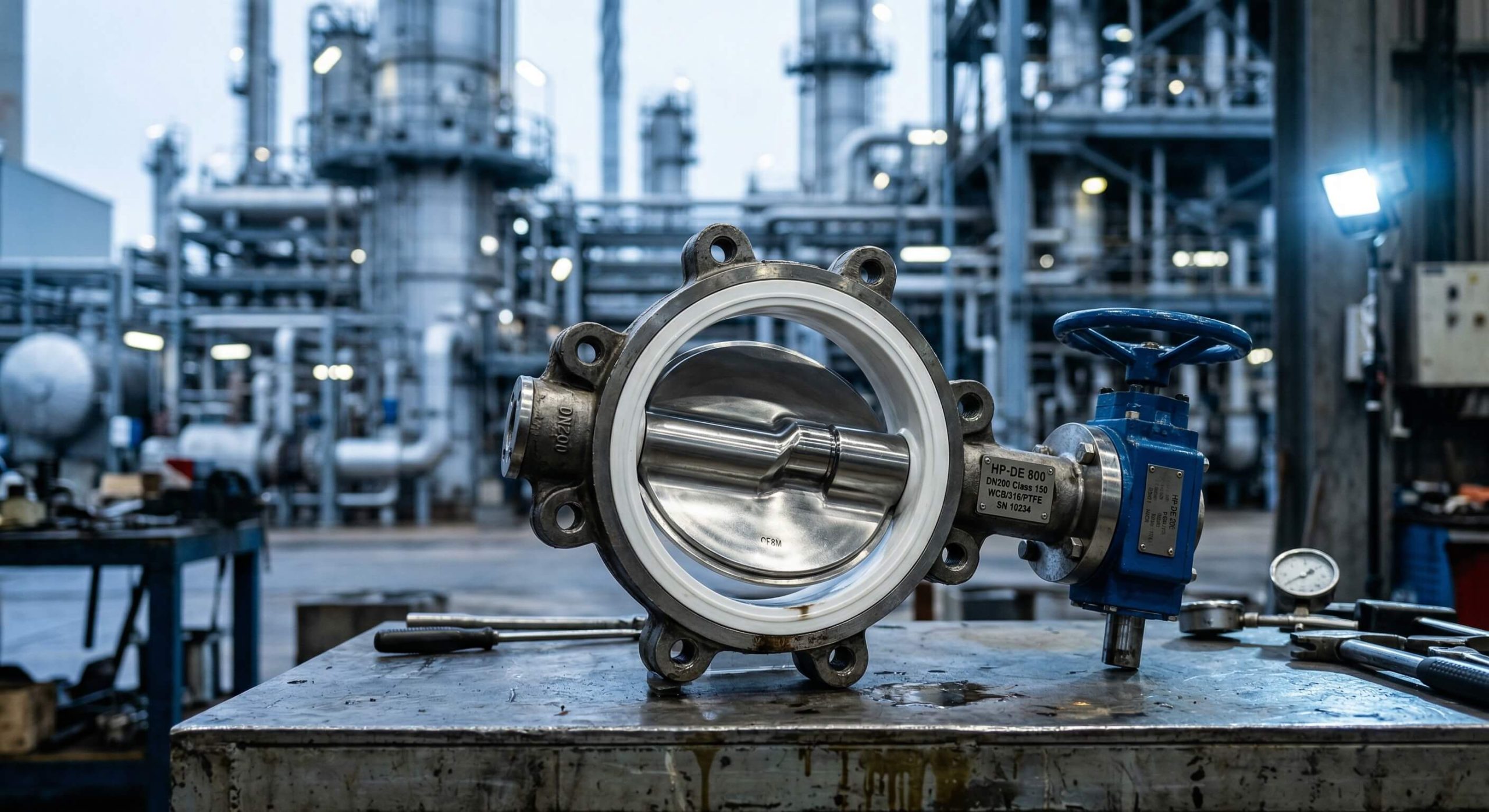
A butterfly valve double offset functions as a bespoke quarter-turn flow control device featuring two distinct mechanical eccentricities. Facility managers often struggle with constant dangerous leakage from standard factory piping systems ruining expensive equipment. This uncontrolled toxic fluid loss causes dangerous workplace hazards constantly. Fortunately upgrading your factory infrastructure solves those persistent mechanical sealing failures easily delivering bubble-tight shutoffs.
What is a butterfly valve double offset?
This butterfly valve double offset represents a bespoke mechanism designed specifically for strict fluid regulation tasks. It features a unique stem placement situated purposely away from its central axis. Such deliberate design choices reduce mechanical wear during intense daily operations massively. Professional engineers rely heavily upon these formidable components when handling difficult petrochemical applications daily.
How does structural geometry work?
Here’s the deal: The clever cam-like action lifts a sturdy metallic disc away from its elastomeric seat immediately upon opening. This rapid physical separation minimizes destructive friction across delicate internal sealing surfaces. Experiencing less structural rubbing translates directly into much better longevity for your whole industrial setup. You gain splendid mechanical reliability compared against outdated standard zero-eccentric piping options.
What are key structural benefits?
You can experience several hefty operational advantages immediately after proper installation:
- Extended physical lifespan due mainly toward dramatically reduced internal mechanical friction.
- Tighter sealing capabilities functioning flawlessly under substantial system pressure ratings.
- Lower overall maintenance demands across harsh unforgiving industrial manufacturing environments.
Key Takeaway: Upgrading brings unmatched physical durability alongside remarkably tighter flow control.
| Feature | Benefit |
|---|---|
| Eccentric Stem | Drops seal rubbing |
| Specialized Seat | Stops fluid leakage |
| Cam Action | Promotes quick release |
This nifty configuration guarantees excellent fluid management within highly demanding piping architectures.
How does a butterfly valve double offset operate?
A butterfly valve double offset operates by utilizing a specialized cam action during mechanical rotation. The stem sits completely behind a main disc while shifting slightly off-center. When rotating open this disc pulls away from a polymeric sealing ring almost instantly. Such brilliant movement eliminates constant dragging across fragile internal components.
Can you explain closing phases?
What’s the real story? Closing involves a heavy metallic disc approaching its polymeric seat closely before making physical contact. Only during those final tight degrees will full compressive engagement actually occur. This delayed physical interaction preserves your expensive elastic seals beautifully. Operators appreciate such exceptionally smooth mechanical transitions.
What makes this motion efficient?
Several formidable factors contribute toward this high operational efficiency:
- Minimized contact angles prevent premature material degradation over time.
- Actuators require far less torque during opening or closing cycles.
- Quick separation prevents annoying sticking inside viscous media environments.
Key Takeaway: Smooth mechanical movement directly lowers your overall facility operating costs.
| Phase | Action |
|---|---|
| Opening | Instant seat release |
| Mid-Stroke | Zero contact friction |
| Closing | Final degree compression |
Such precise movements guarantee minimal structural wear across long service periods.
Why choose a butterfly valve double offset over zero offset?
Choosing a butterfly valve double offset over zero-eccentric designs grants superior pressure handling capabilities. Zero-eccentric models suffer from continuous rubber rubbing along their entire mechanical stroke. That constant friction destroys standard rubber seals very rapidly under immense industrial stress. Upgrading provides a highly durable alternative fitting for tougher piping jobs.
Are standard models still useful?
You might be wondering: Basic models remain adequate when managing low-pressure municipal water systems. However modern industrial plants demand much greater physical resilience. High-performance eccentric versions conquer abrasive fluid media effortlessly. They simply outlast basic cheap counterparts by several busy years.
What are comparative structural differences?
Evaluating both distinct options reveals stark operational contrasts:
- Eccentric designs survive elevated temperatures easily without failing.
- Basic units fail quickly when handling corrosive chemical batches.
- Advanced geometry allows bubble-tight closures even after thousands of busy cycles.
Key Takeaway: Investing in advanced geometry prevents catastrophic facility shutdowns entirely.
| Metric | Zero-Eccentric | High-Performance Eccentric |
|---|---|---|
| Friction | High | Very Low |
| Pressure Limit | Low | Moderate |
| Lifespan | Short | Extended |
Selecting advanced engineering provides remarkable peace of mind during daily operations.
What materials compose a butterfly valve double offset?
A butterfly valve double offset incorporates rugged metals alongside highly specialized synthetic seals. Manufacturers frequently utilize heavy carbon steel for building robust outer bodies. Polished stainless steel discs provide excellent ongoing corrosion resistance. Skilled engineers select specific bespoke alloys depending upon individual project requirements.
Which seating compounds work best?
Let’s look at the facts: PTFE seats dominate many harsh chemical processing applications globally. This resilient compound resists aggressive bubbling acids remarkably well. For extreme heat scenarios metal-reinforced options become absolutely mandatory. Your specific factory environment dictates which tough polymer suits your needs.
How do body materials differ?
Various tough construction metals offer distinct mechanical advantages:
- Ductile iron remains cost-effective managing general municipal water transport.
- Hastelloy prevents rapid degradation inside highly acidic fluid streams.
- Aluminum bronze combats relentless offshore saltwater corrosion perfectly.
Key Takeaway: Proper material selection guarantees maximum worker safety alongside immense equipment longevity.
| Component | Common Material |
|---|---|
| Body | Carbon Steel |
| Disc | Stainless Steel |
| Seat | PTFE / RTFE |
Matching correct tough metals against aggressive fluids prevents sudden structural failures.
Where can you install a butterfly valve double offset?
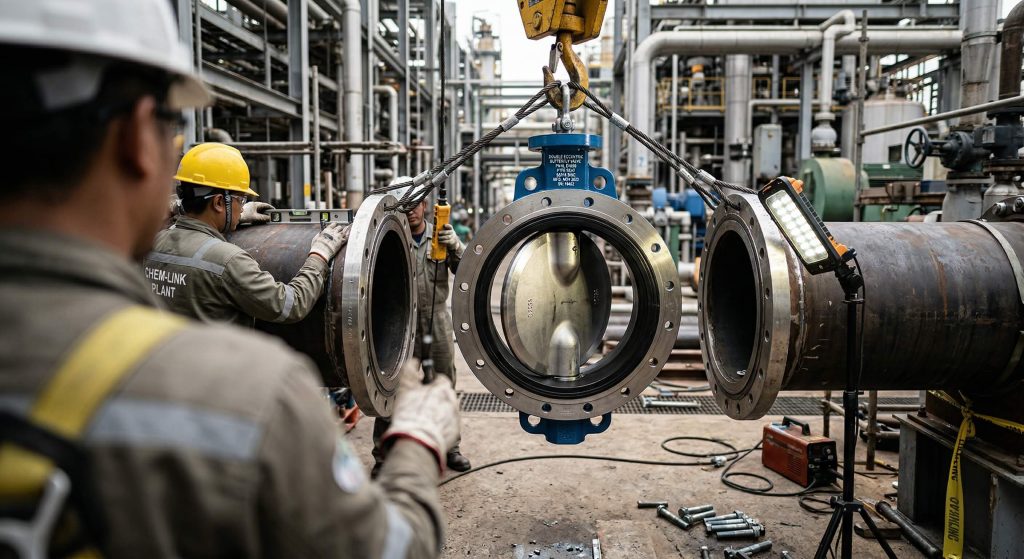
You can install a butterfly valve double offset inside massive chemical plants or busy municipal waterworks. These nifty devices fit seamlessly within existing flanged factory piping networks. Their wonderfully compact footprint requires very little spatial clearance overhead. Technicians appreciate how easily they slide right between heavy pipe sections.
Can they handle end-of-line service?
This is where it gets interesting… Lug-style variants allow secure physical attachment right at pipe endings. Maintenance workers bolt them directly onto a single pipe flange securely. This clever configuration permits downstream maintenance without draining an entire facility system. Cheaper wafer styles lack this specific dead-end blocking capability.
What spatial considerations matter most?
Keep these handy installation facts firmly in mind:
- Wafer designs save maximum physical space between tight metal flanges.
- Lug designs offer better structural stability during heavy mechanical vibrations.
- Proper physical alignment prevents dangerous toxic leaks at vulnerable connection points.
Key Takeaway: Understanding your spatial constraints simplifies complex mechanical installation procedures greatly.
| Style | Best Use Case |
|---|---|
| Wafer | Tight pipe spaces |
| Lug | End-of-line stops |
| Flanged | Heavy pressures |
Proper physical placement guarantees flawless fluid management across any busy facility.
What industries rely on a butterfly valve double offset?
Numerous sectors depend heavily upon a butterfly valve double offset for daily manufacturing operations. Massive petrochemical refineries utilize them managing volatile dangerous hydrocarbons safely. Busy power generation facilities need reliable tight shutoffs regarding hot steam transport. Even clean food processing plants employ specialized sanitary versions regularly.
Are they used within water treatment?
Truth be told: Municipal authorities trust these sturdy mechanisms handling potable city water distribution. Large-scale coastal desalination plants require highly durable components facing corrosive salty brine. Their robust structural nature handles thick abrasive sludge without clogging easily. Clean drinking water initiatives rely strongly upon such dependable engineering technology.
Why do marine sectors prefer them?
Professional shipbuilders favor these eccentric designs due toward several solid reasons:
- Compact mechanical sizes save valuable deck space aboard crowded naval vessels.
- Heavy bronze bodies resist relentless deep seawater corrosion beautifully.
- Quick quarter-turn operation aids rapid mechanical emergency responses onboard.
Key Takeaway: Versatile global applications prove how indispensable this engineered component truly remains.
| Industry | Primary Application |
|---|---|
| Petrochemical | Hydrocarbon isolation |
| Marine | Seawater handling |
| Power | Steam regulation |
Such widespread global adoption confirms exceptional mechanical reliability across diverse engineering fields.
How do you select the right butterfly valve double offset?
Selecting a correct butterfly valve double offset involves carefully evaluating pressure ratings alongside chemical fluid compatibility. You must analyze maximum expected thermal temperatures within your entire system. Different harsh media require entirely different specialized polymeric sealing compounds. Consulting standardized engineering charts prevents dangerous mismatched factory installations.
Does actuation type matter?
Let’s break it down: Manual hand levers work perfectly controlling smaller diameter pipe networks. However massive industrial lines demand powerful pneumatic or heavy electric actuators. Automated smart controls integrate smoothly right into modern smart-facility digital networks. Your final choice dictates how efficiently plant operators manage liquid flow rates.
What sizing guidelines exist?
Following proper mathematical sizing protocols prevents major facility issues:
- Calculate flow coefficients accurately before purchasing any new heavy equipment.
- Verify ANSI class ratings against your maximum safe operational pressure.
- Check flange dimensions matching your existing factory infrastructure perfectly.
Key Takeaway: Careful upfront engineering analysis saves massive headaches during final system assembly.
| Parameter | Consideration |
|---|---|
| Media Type | Chemical compatibility |
| Pressure | ANSI class rating |
| Actuation | Manual vs Automated |
Meticulous planning guarantees seamless factory integration alongside long-lasting operational success.
What maintenance does a butterfly valve double offset require?
Maintaining a butterfly valve double offset requires periodic visual inspections regarding internal seal integrity. Skilled technicians should check closely for invisible fugitive emissions routinely. Heavy actuator mechanical linkages need light oily lubrication occasionally. Replacing worn polymeric seats extends overall factory equipment life dramatically.
How can you fix minor leaks?
But here’s the kicker… Sometimes tweaking an actuator mechanism stops minor liquid seepage instantly. Realigning a metallic disk fixes improper physical closure angles easily. If structural damage appears severe replacing polymeric seats becomes absolutely mandatory. Swift mechanical repairs prevent catastrophic pipeline failures entirely.
What preventive steps work best?
Implementing strict factory maintenance schedules offers great financial rewards:
- Monitor pressure drops indicating hidden internal component wear.
- Cycle automated robotic units regularly preventing sticky mechanical bindings.
- Clean exterior metallic surfaces preventing rust accumulation around moving stems.
Key Takeaway: Proactive professional care stops expensive emergency factory shutdowns before they happen.
| Task | Frequency |
|---|---|
| Visual Inspection | Monthly |
| Actuator Check | Bi-annually |
| Seat Replacement | As needed |
Consistent structural monitoring preserves your hefty investment while maintaining strict safety standards.
Can a butterfly valve double offset handle extreme heat?
A butterfly valve double offset handles moderate factory heat quite effectively depending upon chosen construction materials. Standard Teflon polymeric seals survive boiling hot water without degrading. However molten hot metals or superheated steam require specialized mechanical modifications. Heavy metal-seated variations exist specifically surviving those blistering environments.
What happens during thermal expansion?
Ready for the good part? Brilliant engineers design these metal bodies accommodating slight metallic thermal swelling. Eccentric physical geometry prevents tight binding when internal components expand. This structural flexibility ensures consistent smooth operation regardless of wild thermal shifts. Your factory piping network remains incredibly secure during sudden heat spikes.
Are cryogenic applications possible?
Extreme freezing cold scenarios present unique tough engineering challenges:
- Specialized extended metallic stems keep solid ice away from delicate actuators.
- Unique polymeric chemical blends prevent brittle physical cracking below freezing.
- High-performance custom alloys maintain structural strength during deep winter chills.
Key Takeaway: Matching proper heavy alloys against extreme thermal challenges guarantees uninterrupted fluid control.
| Condition | Material Solution |
|---|---|
| High Heat | Metal seating |
| Moderate | RTFE seals |
| Cryogenic | Extended stems |
Addressing thermal challenges correctly guarantees flawless mechanical performance under harsh climates.
How does a butterfly valve double offset compare to triple?
Comparing a butterfly valve double offset against triple-eccentric models reveals distinct operational mechanical thresholds. Triple versions feature a unique conical seating angle completely eliminating internal friction. They unfortunately cost significantly more money than their dual-eccentric metallic counterparts. Dual versions provide excellent financial value for less extreme factory duties.
When should you upgrade further?
It all boils down to this: Consider expensive triple-eccentrics if handling highly abrasive rocky slurries constantly. Zero-leakage factory requirements regarding toxic deadly gases also mandate triple designs. Otherwise standard dual-eccentric models handle most normal industrial tasks beautifully. Over-engineering wastes valuable factory budget capital unnecessarily.
What are key selection factors?
Reviewing your exact facility needs prevents unnecessary financial expenditures:
- Assess total factory budget constraints before specifying ultra-premium heavy equipment.
- Determine exact fluid leakage tolerance acceptable within your specific facility.
- Evaluate liquid media abrasiveness dictating necessary internal seating technology.
Key Takeaway: Balancing mechanical performance needs against strict budgetary reality creates smart engineering decisions.
| Feature | Dual Eccentric | Triple Eccentric |
|---|---|---|
| Friction | Minimal | Zero |
| Cost | Moderate | High |
| Best For | General Industry | Extreme Duties |
Understanding these specific mechanical nuances empowers you making cost-effective smart procurement choices.
Conclusion
This guide demonstrated how advanced flow controllers solve persistent pipeline leakage effectively. Upgrading your infrastructure guarantees safer operations alongside reduced maintenance headaches. We provide premium fluid management solutions tailored perfectly for your specific industrial challenges. Please contact us today discussing your upcoming engineering projects. Our commitment delivers uncompromising quality driving global industrial progress forward.
FAQ
Q1: Can I use this equipment for regulating gas flows?
Absolutely. Their tight mechanical sealing capabilities prevent invisible gaseous leaks remarkably well. High-performance models manage volatile chemical vapors securely without allowing dangerous atmospheric emissions.
Q2: What is the best way identifying internal seal damage?
Look closely at downstream pressure gauges. Sudden pressure drops or unexpected liquid flow fluctuations indicate damaged internal seating rings. Routine scheduled inspections catch these mechanical anomalies early.
Q3: How do I know if my system needs an upgrade?
Frequent mechanical maintenance interventions signal failing basic equipment clearly. If standard zero-eccentric devices wear out constantly switching toward eccentric designs saves significant money eventually.
Q4: Can I install these units vertically?
Yes you certainly can. Vertical pipe installations work perfectly provided skilled technicians support heavy pipes properly. Just ensure actuator control mechanisms remain easily accessible for factory workers.
Q5: What is the best method for cleaning pipeline components?
Flushing factory lines using approved chemical solvents works best. Abrasive hard scrubbing damages delicate polymeric internal seals permanently. Always consult standardized manufacturer guidelines before applying harsh chemical cleaners.