
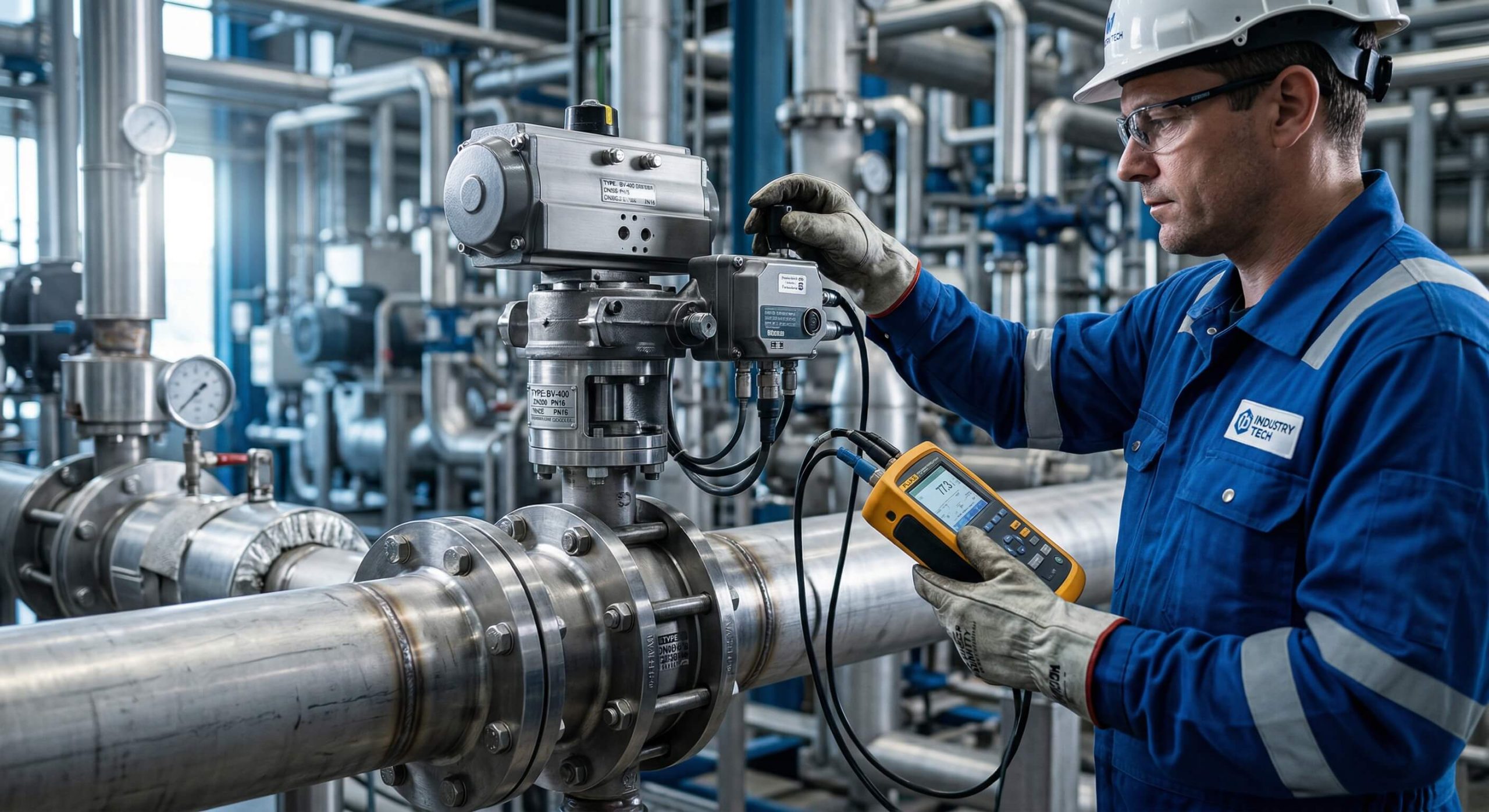
A butterfly valve is a quarter-turn rotational motion mechanism used for stopping, regulating, or starting fluid flow inside pipelines. Imagine an industrial plant struggling with massive pipe leaks and inefficient fluid regulation. Heavy, slow-acting control equipment drains budgets and stalls your daily operations. Upgrading toward a modern quarter-turn solution instantly restores flow control and protects your entire system. Grasping the purpose of butterfly valve remains fundamental for securing smooth and leak-free operations.
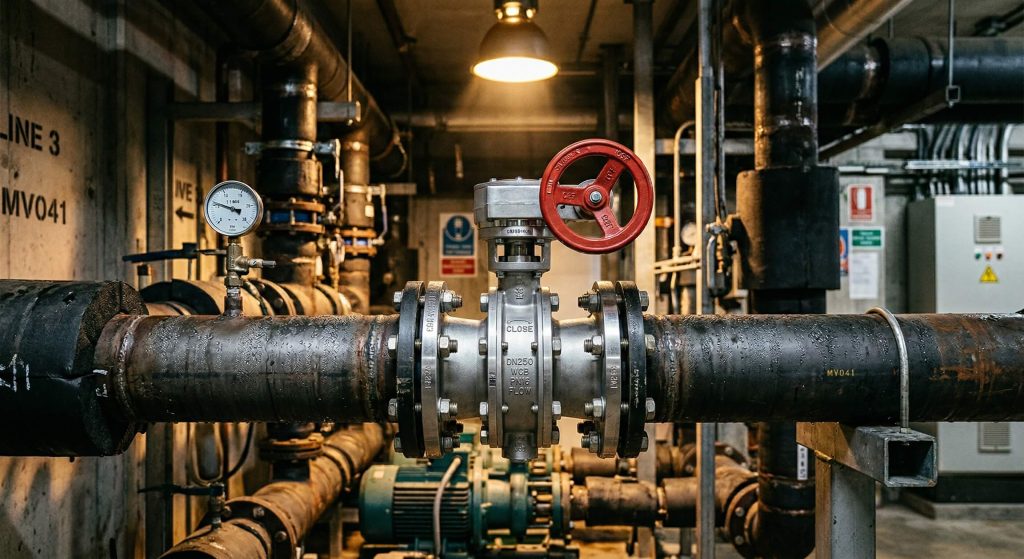
1. What Exactly Is the Purpose of Butterfly Valve?
The primary purpose of butterfly valve is providing a compact, lightweight solution for stopping, regulating, or starting fluid flow across large-diameter systems. A central disc rotates perpendicular against incoming fluids, creating an immediate barrier that stops movement entirely.
These components function by turning a metal circle parallel alongside your fluid path, allowing unrestricted passage. You can easily manage high-volume applications without sacrificing valuable facility space.
What Are the Core Functions?
Here’s the deal: understanding its core function helps you avoid costly pipeline failures. You need a mechanism that acts quickly during emergencies while maintaining a tight seal.
- Immediate shut-off capabilities block fluid instantly.
- Modulating features allow for fine-tuned volume regulation.
- Compact designs fit seamlessly into cramped mechanical rooms.
How Do They Regulate Fluid?
What’s the real story? The internal disc pivots exactly 90 degrees, shifting from fully open into a completely closed state. This simple motion reduces mechanical wear over time.
| Function | Description |
|---|---|
| Isolation | Completely stops fluid movement |
| Regulation | Adjusts volume passing through |
| Startup | Initiates pipeline operations securely |
This data clearly outlines the primary operational modes of your equipment.
Key Takeaway: The fundamental design focuses on rapid action and space-saving efficiency, giving you reliable control over massive fluid volumes.
2. How Does the Purpose of Butterfly Valve Relate to Operation?
The purpose of butterfly valve operation relies entirely on its straightforward quarter-turn actuation to provide immediate flow response. A simple 90-degree rotation shifts your internal disc, instantly reacting to system demands.
This rapid action minimizes the time required for isolating sections of your pipeline. You benefit from faster emergency shut-offs and precise volume adjustments.
Is the Quarter-Turn Mechanism Fast?
Ready for the good part? You get almost instant control with minimal physical effort or actuator power. The simplified rotation reduces friction against your internal seals.
- Faster response times protect downstream equipment.
- Reduced friction extends the lifespan of internal rubber.
- Lower torque requirements save on daily energy costs.
How Does the Disc Position Matter?
Think about it: the angle of your disc directly dictates the volume of fluid passing through the pipe. Slight adjustments provide granular control over your system’s output.
| Disc Angle | Flow Status |
|---|---|
| 0 Degrees | Fully Open |
| 45 Degrees | Throttled / Regulated |
| 90 Degrees | Fully Closed |
This information breaks down how specific angles correlate with fluid management.
Key Takeaway: Mastering the quarter-turn operation gives you unparalleled speed and precision in regulating pipeline activity.
3. Why Does the Purpose of Butterfly Valve Beat a Ball Valve?
The purpose of butterfly valve outshines ball models by delivering comparable shut-off power while significantly reducing weight and saving space. A disc-based design requires far less metal than a bulky solid ball mechanism.
You save valuable installation space and reduce structural stress on your piping framework. This makes them the go-to choice for massive water or HVAC networks.
Are They Lighter and Smaller?
This is where it gets interesting… You can easily install them in cramped mechanical rooms where physical area remains highly limited. The narrow profile fits between standard pipe flanges seamlessly.
- Thinner profiles reduce the physical footprint by half.
- Lighter construction lowers shipping and handling costs.
- Compact frames require fewer structural pipe supports.
What About Cost Efficiency?
You might be wondering: do these physical savings translate into your budget? Using less raw material directly lowers manufacturing costs, passing massive financial savings onto you.
| Valve Type | Weight Profile | Cost Impact |
|---|---|---|
| Butterfly | Very Light | Highly Economical |
| Ball | Very Heavy | Expensive at Scale |
This comparison illustrates the direct financial benefits of choosing a lighter mechanism.
Key Takeaway: Opting for a disc-based design drastically reduces your structural footprint and lowers procurement costs for large pipes.
4. When Does the Purpose of Butterfly Valve Outperform Globe Valves?
The purpose of butterfly valve outperforms globe designs when you need a nearly straight-through fluid path that prevents severe pressure drops. Globe designs cause significant pressure losses due to their complex internal routing.
In contrast, a quarter-turn disc allows massive amounts of water or gas to pass freely. You maintain high delivery rates without forcing your pumps to work harder.
Can They Handle Large Volumes?
Here is the secret: the streamlined interior creates minimal resistance against incoming liquids. You easily maintain high flow rates across expansive commercial systems.
- Straight flow paths prevent fluid bottlenecks.
- Lower resistance decreases the strain on system pumps.
- High-capacity handling suits municipal water lines perfectly.
Do They Reduce Pressure Loss?
But here’s the kicker… avoiding pressure drops saves you a massive amount of energy over the long run. Your system runs smoother without losing force at every control point.
| Valve Type | Pressure Drop | Pumping Energy |
|---|---|---|
| Butterfly | Minimal | Low |
| Globe | Severe | High |
This chart highlights how internal design impacts long-term energy consumption.
Key Takeaway: Replacing restrictive models with quarter-turn alternatives maintains your system’s pressure and cuts down on pumping expenses.
5. What Components Drive the Purpose of Butterfly Valve?
The purpose of butterfly valve is driven by a central shaft, a rotating disc, and a resilient seat working together. The simplicity of its construction remains its greatest strength.
You only need to maintain a handful of parts to keep operations running smoothly. A well-maintained interior guarantees a leak-proof system and reliable regulation.
What Role Does the Disc Play?
Consider this fact: the disc acts as the primary gatekeeper for your pipeline. Its specific shape and material dictate how well it can throttle or stop liquids.
- Stainless steel discs resist aggressive chemical corrosion.
- Streamlined edges cut through fluid, reducing turbulence.
- Rigid construction prevents bending under high pressure.
How Does the Seat Create a Seal?
What’s the real story? The resilient seat provides a soft surface for the rigid metal to press against, forming a completely watertight barrier. This prevents any hazardous leaks from escaping downstream.
| Component | Primary Function | Material Example |
|---|---|---|
| Disc | Controls Flow | Stainless Steel |
| Seat | Creates Seal | EPDM / PTFE |
| Shaft | Transfers Torque | Carbon Steel |
This breakdown clarifies the specific job each internal part performs.
Key Takeaway: A properly maintained disc and seat combination guarantees a leak-proof system and highly reliable fluid regulation.
6. Which Industries Rely on the Purpose of Butterfly Valve?
HVAC, water treatment, and chemical processing plants heavily rely on the purpose of butterfly valve to manage massive fluid loops securely. From commercial cooling to chemical manufacturing, their versatility remains unmatched.
You will find them actively managing everything from clean drinking water to aggressive industrial slurries. Their adaptable nature makes them a universal standard across heavy industries.
Are They Used in HVAC Systems?
Ready for the good part? Commercial heating and cooling networks depend on them to manage massive chilled water loops. They fit perfectly into the tight ceiling spaces of modern buildings.
- Chilled water regulation keeps commercial spaces comfortable.
- Compact designs fit neatly into crowded boiler rooms.
- Reliable shut-offs isolate zones for rapid maintenance.
Can They Handle Water Treatment?
This is where it gets interesting… municipal plants process millions of gallons daily, requiring equipment that will not easily clog. The straight-through design easily passes suspended solids without jamming.
| Industry | Primary Application |
|---|---|
| HVAC | Chilled Water Distribution |
| Water Treatment | Slurry and Waste Management |
| Chemical | Corrosive Fluid Isolation |
This table maps out the most common uses across major industrial sectors.
Key Takeaway: Their ability to handle diverse fluids and fit into tight spaces makes them a favorite across multiple heavy industries.
7. How Do Types Serve the Purpose of Butterfly Valve?
Concentric, double-offset, and triple-offset designs serve the purpose of butterfly valve by adapting the internal geometry to handle different pressure extremes. Not every pipeline operates under the same physical conditions.
You can choose a specific variation to combat friction and mechanical wear effectively. Matching the exact design to your system’s stress levels prevents catastrophic blowouts.
What Is a Concentric Valve?
Here’s the deal: the stem is centered directly inside the disc, making it perfect for low-pressure water systems. The rubber seat provides a tight seal without complex mechanics.
- Centered stems work perfectly for standard water lines.
- Soft rubber seats block low-pressure fluids completely.
- Simple construction keeps initial purchase costs low.
When to Use an Offset Valve?
Think about it: high-heat environments will melt standard rubber seats instantly. Moving the stem behind the disc reduces friction, allowing for durable metal-to-metal sealing.
| Valve Design | Best Application | Pressure Rating |
|---|---|---|
| Concentric | Standard Water / HVAC | Low |
| Double Offset | Industrial Steam | Medium |
| Triple Offset | Severe Chemicals | High |
This data illustrates how structural changes expand the operational limits of your equipment.
Key Takeaway: Matching the specific offset design to your system’s stress levels prevents catastrophic blowouts and leaks.
8. How Do Actuators Improve the Purpose of Butterfly Valve?
Actuators improve the purpose of butterfly valve by automating the disc rotation, allowing for instant, remote flow adjustments without manual labor. Manual levers become highly impractical when managing hundreds of pipes simultaneously.
Attaching a mechanical actuator allows you to open or close the barrier from a remote control room. This capability drastically improves response times during sudden pressure spikes.
Can You Automate the Flow?
You might be wondering: how hard is it to integrate these into a smart building? Modern electric actuators connect directly to your central computer, allowing precise, hands-free adjustments.
- Remote operation eliminates manual labor on dangerous catwalks.
- Smart sensors trigger instant closures during pipeline ruptures.
- Continuous monitoring tracks performance metrics in real-time.
What Are the Actuation Options?
What’s the real story? You are not limited to just one single power source. Depending on your facility, you can utilize electricity, compressed air, or hydraulic fluid.
| Actuator Type | Power Source | Speed |
|---|---|---|
| Electric | Motor / Wiring | Moderate |
| Pneumatic | Compressed Air | Very Fast |
| Hydraulic | Pressurized Fluid | Slow but Strong |
This comparison helps you align the power source with your required reaction speed.
Key Takeaway: Adding an actuator transforms a simple manual mechanism into an intelligent, highly responsive piece of infrastructure.
9. What Maintenance Protects the Purpose of Butterfly Valve?
Strict bi-annual visual and acoustic inspections protect the purpose of butterfly valve by catching degrading seals before they trigger leaks. Even the most durable metals degrade when exposed to harsh chemicals.
By implementing a strict inspection schedule, you catch minor wear before it escalates into a massive facility shutdown. Proactive care directly extends the lifespan of your entire network.
How Often Should You Inspect Them?
Consider this fact: checking your equipment twice a year catches most degrading seals before they completely fail. You must look for visible corrosion and listen for unusual vibrations.
- Bi-annual visual checks spot exterior rust immediately.
- Routine acoustic tests identify internal cavitation issues.
- Scheduled torque measurements verify actuator strength.
What Are Common Wear Signs?
Here is the secret: the soft seat usually degrades long before the metal disc. If you notice pooling water or hear a hissing sound, the internal barrier has likely worn thin.
| Wear Indicator | Probable Cause | Action Required |
|---|---|---|
| External Drips | Worn Stem Packing | Tighten or Replace |
| Internal Leaks | Degraded Rubber Seat | Swap Seat Material |
| Slow Actuation | Motor / Air Supply Issue | Check Power Source |
This breakdown guides your troubleshooting process when performance suddenly drops.
Key Takeaway: Catching worn seats and failing seals early saves you from facing disastrous facility shutdowns and expensive cleanups.
10. How to Select Based on the Purpose of Butterfly Valve?
You select based on the purpose of butterfly valve by strictly matching the internal materials and offset design to your system’s specific fluid type. Buying the wrong material leads to immediate equipment failure.
You must carefully evaluate the fluid type, temperature range, and maximum pressure of your pipeline. Matching these variables to the correct hardware guarantees a safe and productive environment.
How Does Pressure Affect Choice?
But here’s the kicker… installing a low-pressure concentric model inside a high-pressure steam line causes an immediate blowout. You must match the flange rating to the maximum expected spikes.
- Standard ratings cover normal municipal water distribution.
- High-pressure environments demand reinforced triple-offset models.
- Surge expectations dictate the strength of the required stem.
What Material Works Best for You?
Ready for the good part? Selecting the right alloy prevents the fluid from eating through your metal. Stainless steel handles corrosive acids, while standard cast iron works perfectly for clean water.
| Fluid Type | Recommended Body | Recommended Seat |
|---|---|---|
| Clean Water | Cast Iron | EPDM |
| Corrosive Acid | Stainless Steel | PTFE |
| High-Heat Steam | Carbon Steel | Metal-to-Metal |
This data highlights how fluid characteristics dictate your material selection process.
Key Takeaway: Rigorously matching the hardware materials to your specific fluid and pressure conditions secures your system against premature failure.
Your Next Steps in Fluid Management
We have covered everything from basic operational mechanics to advanced material selection, giving you the exact knowledge needed to prevent leaks and optimize pipeline performance. You now know how replacing bulky, outdated equipment with streamlined quarter-turn technology saves space, cuts energy costs, and protects your infrastructure. When you are ready to upgrade your facility, we can provide custom-engineered flow control systems tailored strictly to your pressure and temperature requirements. Delivering precision engineering for a leak-free future remains our primary commitment to your success. Reach out and contact us today to find the perfect configuration for your specific industrial application.
Frequently Asked Questions
Q1: Can I use a butterfly valve for throttling purposes?
Yes, you absolutely can. Setting the internal disc at intermediate angles allows you to strictly regulate the volume of fluid passing through the pipeline without causing severe turbulence.
Q2: What’s the best way to stop them from leaking?
The most effective method is performing routine seat inspections. The soft internal barrier wears down over time due to friction, and proactively replacing it prevents fluid from escaping downstream.
Q3: How do I know if I need a double-offset model?
You need it if your system generates high temperatures or moderate pressure spikes. The offset design shifts the stem away from the disc, reducing friction and preventing the seal from melting.
Q4: Can I install these in really tight mechanical rooms?
Yes, they are highly recommended for cramped spaces. Their narrow face-to-face dimension requires a fraction of the installation area compared to massive ball or globe alternatives.
Q5: What’s the best actuator to use for instant shut-offs?
Pneumatic actuators are the fastest option available. They use compressed air to snap the disc shut in milliseconds, which provides critical protection during sudden pipeline emergencies.