
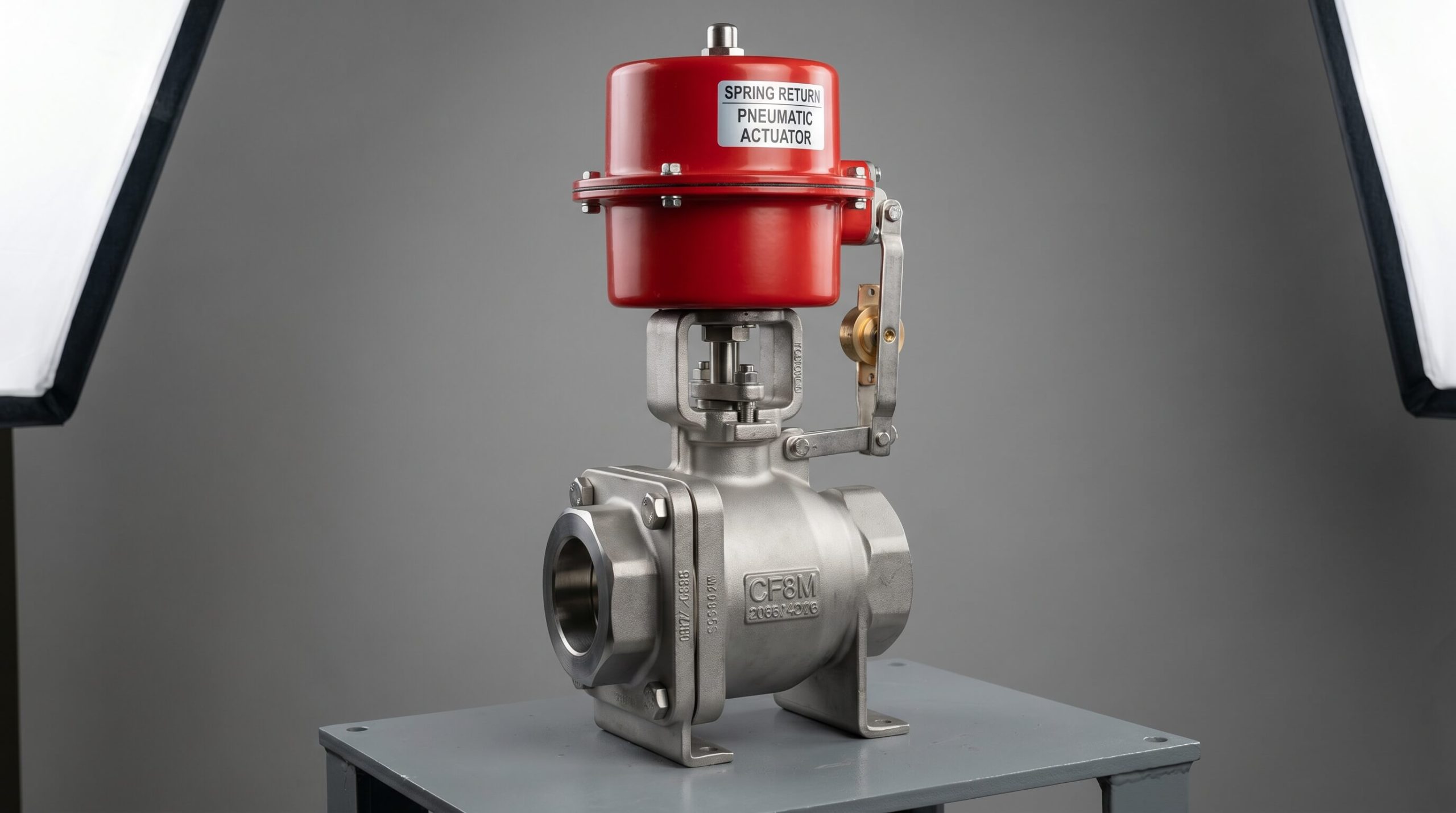
A fusible link ball valve serves as an indispensable mechanical safety device that automatically isolates hazardous fluid lines during high-temperature thermal events. Imagine an industrial chemical processing facility transferring highly volatile hydrocarbons under pressure through complex pipe racks. If a localized fire breaks out, power lines melt, control signals fail, and manual isolation valves become physically unreachable due to extreme heat and toxic fumes, creating a runaway disaster. Under these critical conditions, high-performance precision-engineered industrial ball valves configured with thermal shutoff mechanisms act as the final, fail-safe barrier by self-actuating mechanically without requiring any external power source.
How a Thermal Emergency Shutoff Valve Operates in a Fire
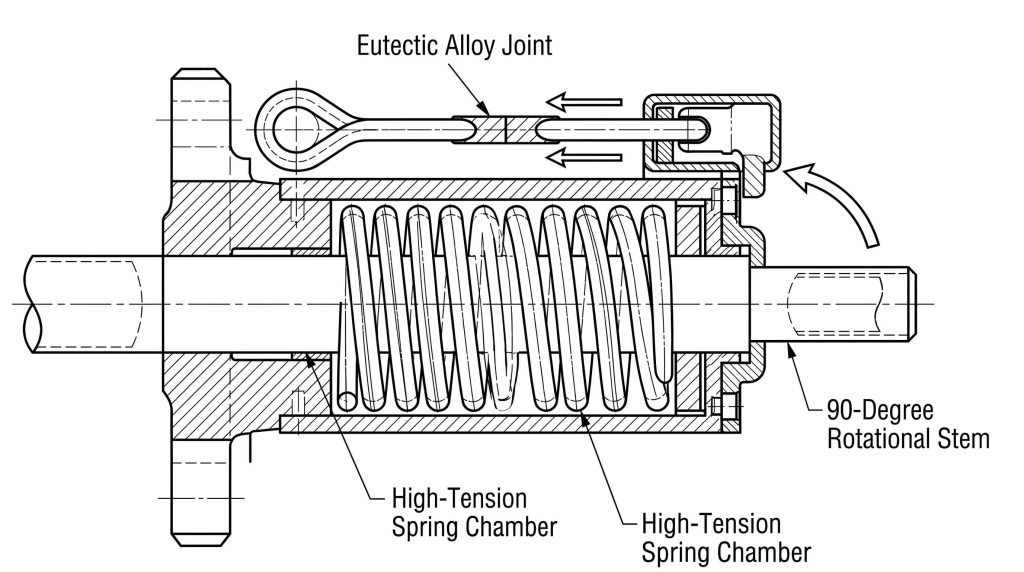
A thermal emergency shutoff valve isolates high-risk process lines by using stored mechanical spring energy released when an external heat-sensitive trigger melts.
The Mechanics of the Fusible Alloy Link
Under standard operating pressures, a highly tensioned mechanical link keeps the spring-return actuator in the open position. This critical link is fabricated using a specialized eutectic alloy engineered to change from solid to liquid at a precise temperature. Once local ambient heat exceeds this target threshold, the alloy melts instantly, causing the link to part.
This parting action instantly releases the compressed spring, allowing the valve to shut without any pilot air or electrical assistance. By relying purely on mechanical thermal triggers, the process system remains protected even during complete plant power blackouts.
Spring-Return Actuator Release Mechanisms
Achieving a tight, rapid seal requires a precise quarter-turn rotation driven by high torque. Heavy-duty spring-return actuators house pre-compressed carbon steel springs coated with specialized corrosion-resistant finishes. When the eutectic link releases, the stored spring force drives the stem through a swift 90-degree arc.
Compared to alternative systems like fire-safe butterfly valves, ball designs provide lower flow restriction while maintaining high torque reliability. This high mechanical force ensures the ball fully rotates into the closed position despite any line resistance.
Critical Components of Fire-Safe Thermal Shutoff Valves
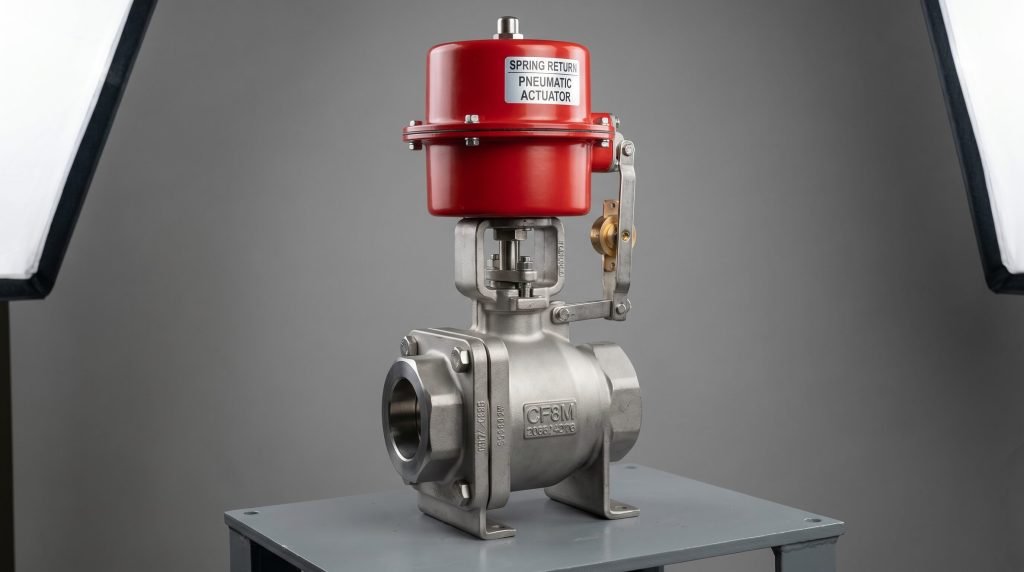
The overall durability of a thermal shutoff valve depends entirely on the metallurgical and thermal resilience of its individual components.
Core Metallurgy and Spring Housing
The pressure-containing valve body is typically manufactured from cast carbon steel or premium stainless steel. These heavy-duty alloys are selected to resist external high-temperature exposure while maintaining structural integrity. The actuator housing is completely sealed to protect the internal carbon steel springs from corrosive atmospheric conditions.
This protective design prevents stress-corrosion cracking over decades of static standby service in the field. Every component is engineered to perform without fail under rapid thermal expansion during a fire.
Primary and Secondary Sealing Systems
Reliable fluid containment is achieved through a specialized dual-seat configuration. During normal operations, a primary soft seat made of reinforced PTFE ensures bubble-tight isolation with zero downstream leakage. In a fire event, the intense heat will eventually vaporize this soft sealing material.
As the soft seat degrades, line pressure shifts the ball slightly downstream to mate directly against a machined secondary metal seat. This metal-to-metal contact prevents hazardous media from escaping downstream, satisfying strict fire containment criteria.
Technical Specifications and Compliance Standards
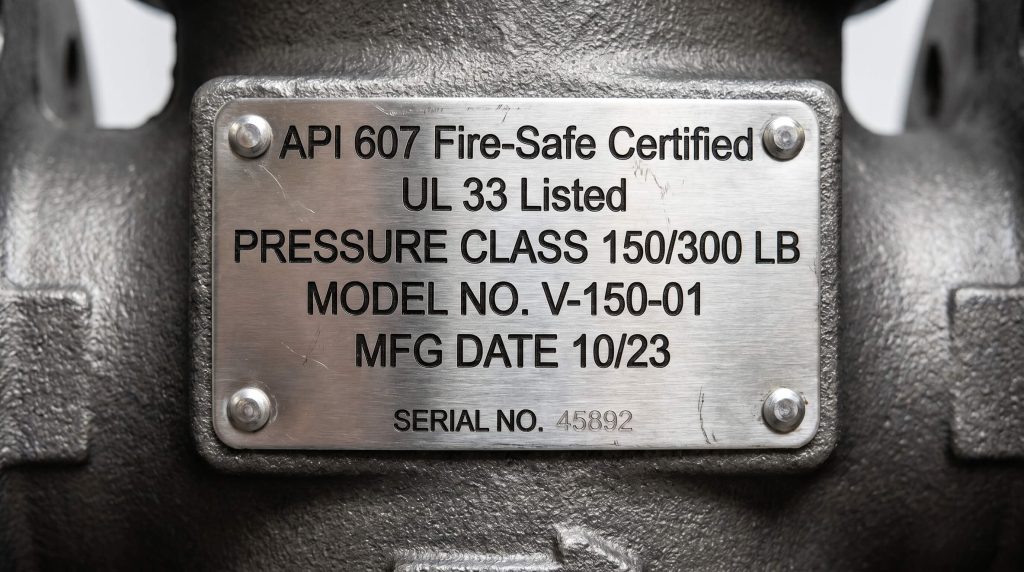
Strict adherence to international testing standards ensures that emergency shutdown valves operate predictably under extreme heat profiles.
Fire-Safe Testing and Global Regulations
To verify performance, assemblies are subjected to rigorous thermal testing under standards such as API 607 and ISO 10497. These protocols require the valve to be enveloped in a hydrocarbon fire at temperatures up to 1000°C for 30 minutes. During this period, external and through-seat leakages are measured and must remain within strict, minimal limits.
Additionally, the heat-activated links must comply with UL33 and FM Global Class 7440 standards. These listings certify that the thermal trigger will separate reliably within a narrow, calibrated temperature window.
| Engineering Parameter | Carbon Steel Construction (ASTM A216 WCB) | Stainless Steel Construction (ASTM A351 CF8M) |
|---|---|---|
| Size Range | DN15 to DN150 (1/2″ to 6″) | DN15 to DN300 (1/2″ to 12″) |
| Pressure Class | ASME Class 150 / 300 | ASME Class 150 / 300 / 600 |
| Primary Seat Material | Reinforced PTFE / RTFE | Carbon-Filled PEEK / Metal-to-Metal |
| Secondary Seat Design | Machined 316 SS Beveled Edge | Stellite-Faced Stainless Steel |
| End Connections | Raised Face Flange (ASME B16.5) / NPT | Flanged / Socket Weld / Butt Weld |
| Thermal Ratings | 165°F (74°C) to 286°F (141°C) | Custom configurations up to 500°F (260°C) |
| Compliance Certifications | API 607, UL33, FM 7440, API 598 | API 607, UL33, FM 7440, CE/PED |
Typical Applications Across Hazardous Environments
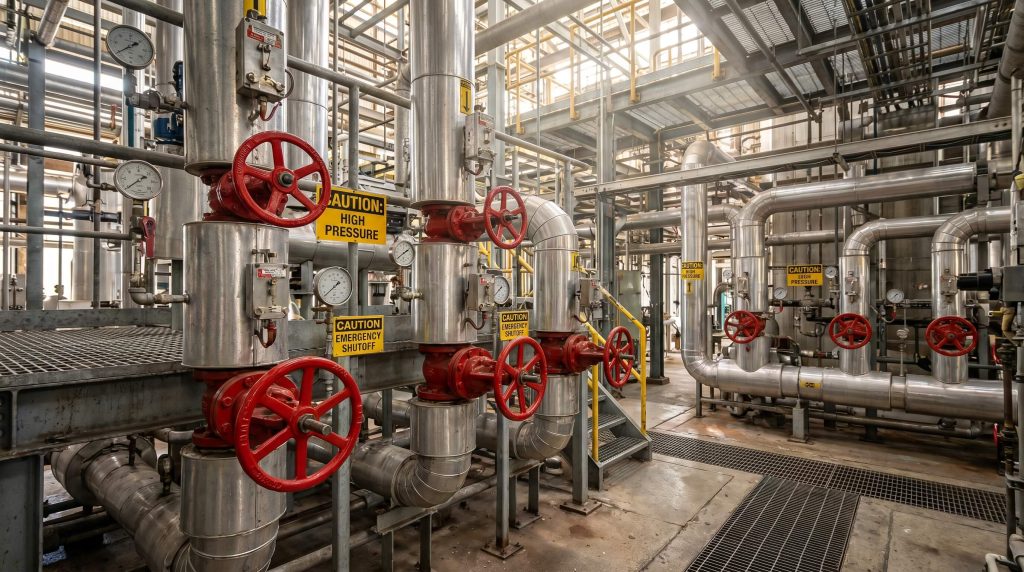
Automated thermal shutoff systems are critical components in process networks carrying highly volatile or toxic fluids.
Bulk Fuel Storage and Terminal Manifolds
In modern oil and gas terminal operations, large storage tanks present constant risks of localized flame propagation. Installing a heavy-duty fusible link ball valve at critical manifold junctions prevents catastrophic flashovers from spreading to nearby assets. If a fire starts near a tank farm, these thermal valves close instantly to contain volatile fluids.
This rapid isolation stops gravity-fed fuel from escaping and feeding the fire further. Placing these valves on bulk withdrawal lines helps keep thousands of gallons of flammable fuel isolated within fire-safe tanks.
Chemical Processing and Corrosive Media
Inside chemical processing facilities, pipelines carry highly toxic solvents, alcohols, and acids. Because these media can rapidly degrade standard sealing elastomers, safety valves are configured with specialized corrosion-resistant bodies. The automatic thermal trigger ensures that any localized heat build-up will quickly isolate delivery loops.
This minimizes the release of toxic vapors into the atmosphere and protects on-site response crews. Specialized metallurgy prevents chemical attack on the valve components during years of idle service.
Key Selection Criteria for Your fusible link ball valve
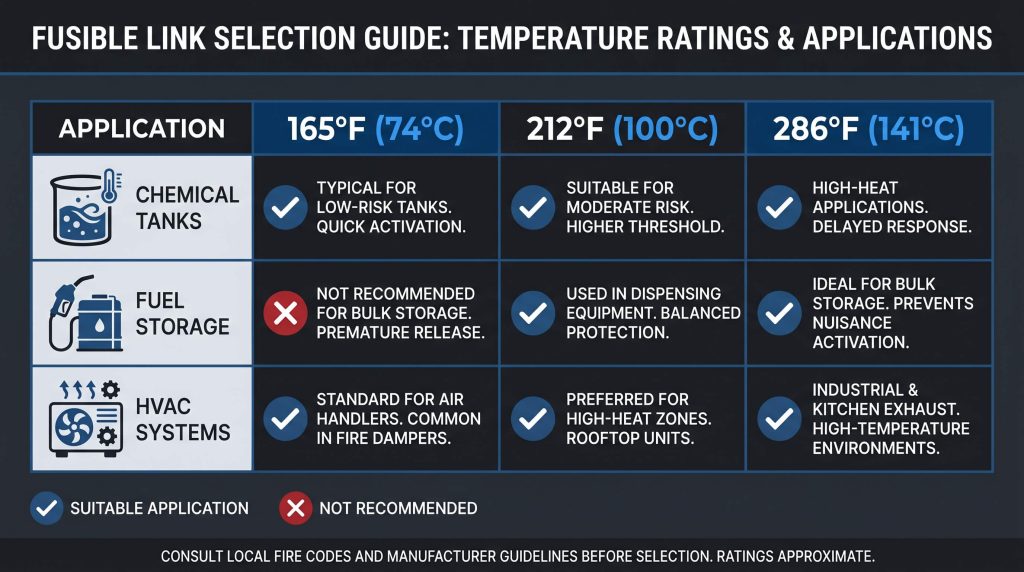
Selecting the correct thermal safety assembly requires analyzing process fluid characteristics, maximum ambient temperatures, and piping layout constraints.
Trigger Temperature Selection and Ambient Margins
The trigger temperature of the fusible element must be selected safely above the maximum potential ambient temperature of the installation area. As an engineering standard, the link’s rated activation temperature is typically specified at least 30°C higher than the highest expected environmental or process-induced temperature. This margin prevents accidental trips caused by high summer temperatures or heat radiated from adjacent machinery.
Selecting an overly low rating can cause premature closure and costly process downtime. Conversely, an excessively high rating delays activation, compromising safety during a fast-spreading thermal event.
Flow Coefficients and Piping System Sizing
For critical drainage systems and high-viscosity fuel lines, minimizing flow resistance is essential to maintain process efficiency. A full-bore design provides an unobstructed flow path that matches the inner diameter of the pipeline. This maximizes the flow coefficient and reduces pressure drop to near-zero during standard operations.
When planning layouts, engineers can also evaluate other high-flow options like precision globe valves for critical flow control or gate valves. However, ball configurations remain the standard for swift emergency isolation due to their robust sealing and rapid quarter-turn action.
Maintenance and Reinstallation Guidelines After an Event
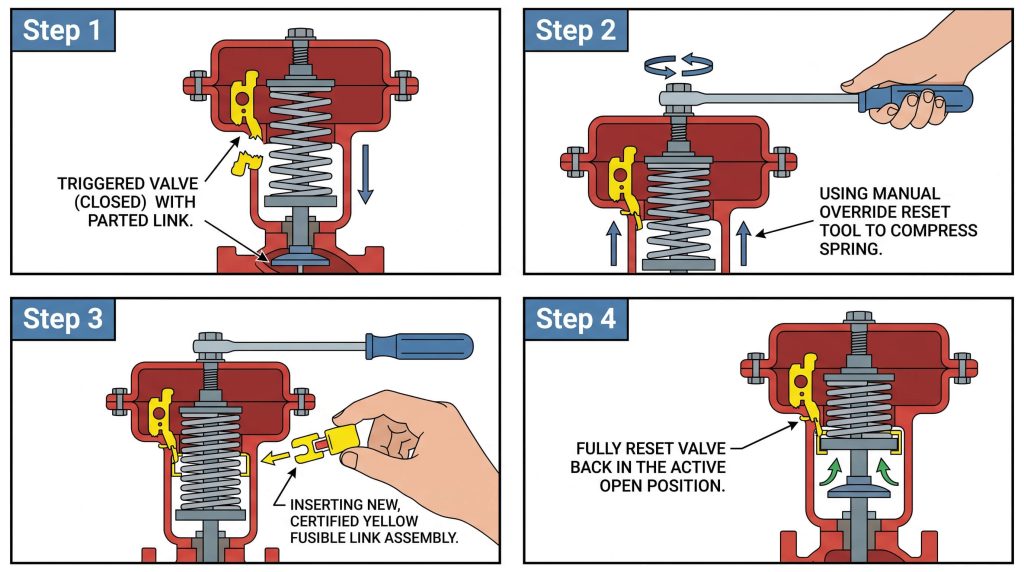
Performing systematic inspections and using authorized replacement parts allows engineers to safely restore thermal shutoff valves to active service after an event.
Systematic Inspection and Spring Resetting
Following any thermal activation or periodic safety test, the pipeline must be fully depressurized and purged before inspecting the valve body. Maintenance teams should inspect the valve for structural warping, stem misalignment, or charring of the primary soft seats. If the assembly was exposed to a severe fire, replacing the internal seals is standard practice to maintain reliable containment.
A manual override reset tool or integrated gearbox is then used to compress the high-tension spring back into its armed position. This mechanical compression must be completed slowly to ensure even loading across the actuator stem.
Installing and Arming the New Link
Once the spring is fully compressed, a new, certified link is slid onto the external tension pins. It is essential to double-check that the temperature rating stamped on the replacement link matches the original design specifications. The manual override is then released, transferring the heavy spring load directly onto the new fusible element.
For systems subjected to high vibration, checking the alignment of other isolation components like gate valves or check valves in the line is recommended. Routine test closures can be performed using the manual override without breaking the active link.
Frequently Asked Questions About Thermal Shutoff Valves
Q1: Are fusible links interchangeable between different manufacturers?
No, they are generally not interchangeable because the physical tension limits, load capacities, and mounting dimensions of the fusible link must precisely match the spring-return actuator design to prevent mechanical creep or premature activation.
Q2: Can these thermal shutoff valves be tested on-site without destroying the fusible link?
Yes, they can be tested periodically by utilizing the integrated manual override lever or handwheel mechanism, which allows operators to simulate valve closure and verify spring function without exposing the eutectic alloy link to high temperatures.
Q3: Does a fusible link ball valve require an external power source or pneumatic pilot line to shut off?
No, the valve operates purely mechanically using localized potential energy stored within a high-tension compressed spring that is released the moment the heat-sensitive alloy trigger separates.
Q4: What is the recommended service life of a fusible link in a standard processing environment?
Typically, the recommended replacement interval is 3 to 5 years to account for atmospheric corrosion, dirt accumulation, and material fatigue, even if the plant has not experienced a thermal event.
Conclusion
Protecting industrial facilities from thermal disasters requires dependable, automated equipment. The fusible safety valve provides simple, reliable protection by eliminating reliance on external power grids or signal lines. This ensures the valve performs its safety function even in severe facility emergencies. When designing robust safety infrastructures, partnering with an expert manufacturer like Ruitoflow ensures you receive custom-tailored process valves engineered to your exact pressure, media, and temperature specifications.