
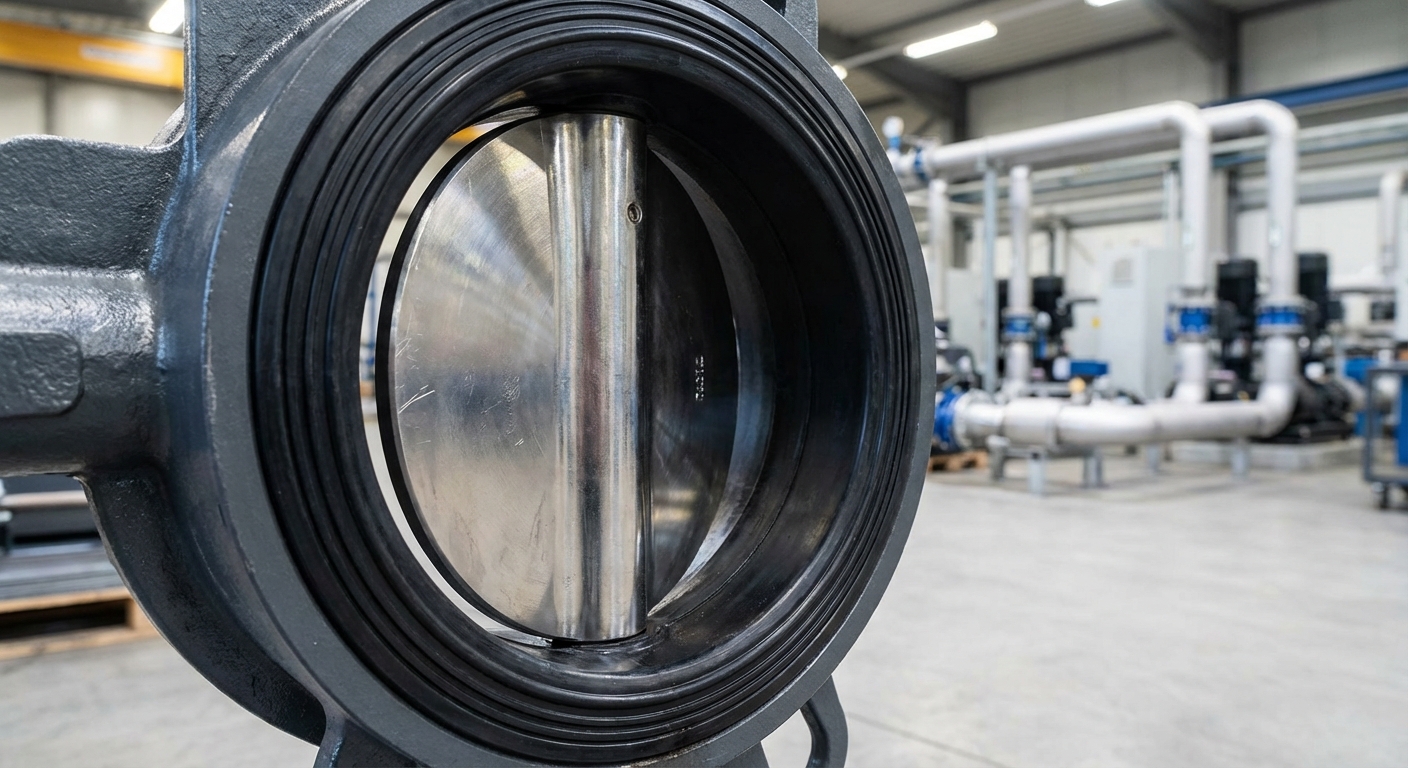
A 6-inch (DN150) butterfly valve is a high-capacity flow control device designed for efficient regulation and isolation in medium-diameter industrial and municipal pipelines. Large-scale fluid systems often require bulky hardware that is difficult to install and maintain in confined areas. Without a compact solution, your infrastructure faces increased pressure drops and rising operational costs due to inefficient flow dynamics. The butterfly valve dn150 solves these challenges by providing a streamlined, lightweight design that ensures reliable performance without sacrificing valuable installation space.
Why is the butterfly valve dn150 a top choice for flow?
It is preferred because it offers a large 6-inch bore with minimal face-to-face dimensions for efficient fluid regulation. The butterfly valve dn150 is essential for systems requiring quick quarter-turn operation and high flow coefficients. This size strikes the perfect balance between high volume capacity and manageable physical weight for standard piping networks.
Benefits of the 6-inch bore?
Here is the kicker:
- 90-degree fast operation.
- Significant weight reduction compared to gate valves.
- High Cv values for low pressure drop.
Using this specific size ensures that your pumps operate at peak efficiency by reducing resistance. It allows for a more compact system layout while maintaining industrial-grade durability.
Key Takeaway
The 6-inch bore provides the optimal surface area for high-velocity flow while keeping the mechanical footprint small.
| Feature | Specification |
|---|---|
| Diameter | 150mm (6 Inch) |
| Operation | Quarter-turn |
| Flow Efficiency | High Cv |
Compare your existing pipeline pressure drops against these high-flow specs to determine potential energy savings.
How does the wafer butterfly valve dn150 save installation space?
The wafer design uses a slim body that fits between two pipe flanges to minimize the footprint and reduce material costs. Using a butterfly valve dn150 in the wafer configuration is the most common method for general industrial piping. This design relies on the surrounding pipe flanges and long bolts to secure the valve in the center of the flow path.
Is wafer style right for you?
But there is more.
- Universal centering lugs for easy alignment.
- Lightweight construction for easy handling.
- Compatibility with multiple flange standards like ANSI and DIN.
Wafer models are significantly cheaper than other body types because they use less metal in the housing. They are ideal for applications where the valve does not need to be removed under pressure.
Key Takeaway
Wafer-style bodies offer the most compact installation method for 6-inch pipelines where space and budget are primary concerns.
| Body Type | Mounting Method | Advantage |
|---|---|---|
| Wafer | Between Flanges | Lowest Cost/Space |
Evaluate your installation clearance to see if the wafer design can replace bulkier flanged alternatives.
When should you install a lug butterfly valve dn150?
This type is used when you need the ability to remove one side of the pipeline for maintenance while keeping the valve in place to provide a seal. Selecting a butterfly valve dn150 with threaded lugs provides superior isolation capabilities compared to simple wafer designs. The lugs allow for independent bolting from either side of the valve housing.
Advantages of threaded holes?
Think about it:
- Safe for end-of-line service.
- Simplifies downstream maintenance.
- Increased structural integrity under pressure.
Lug valves are particularly useful in pump stations and treatment plants where sections of the pipe are frequently disconnected. They provide a secure mechanical connection that does not rely on the tension of long through-bolts.
Key Takeaway
Lug bodies allow for dead-end service and easier maintenance without depressurizing the entire system.
| Body Type | Bolt Style | Ideal Use |
|---|---|---|
| Lug | Threaded Lugs | Maintenance/Isolation |
Determine if your maintenance schedule requires frequent segment isolation to justify the lug-style upgrade.
Is a flanged butterfly valve dn150 best for heavy vibration?
Yes, the double-flanged design provides the highest structural stability and sealing integrity in high-stress or buried environments. A butterfly valve dn150 with integral flanges is common in municipal water treatment and heavy infrastructure projects. This design features two separate flange faces that match the piping exactly for a robust connection.
Why use double flanges?
Believe it or not:
- Maximum rigidity in high-vibration systems.
- Standardized connection for heavy-duty applications.
- Superior alignment during installation.
Flanged valves are often preferred for larger diameters, but in the 6-inch size, they provide an extra layer of safety. They are highly resistant to pipe stress and mechanical shifting.
Key Takeaway
Double-flanged valves offer the most stable connection for pipelines subjected to external mechanical stress or vibration.
| Body Type | Connection | Stability |
|---|---|---|
| Flanged | Bolt Holes/Flanges | Highest |
Assess the vibration levels in your facility to decide if a flanged connection is necessary for long-term safety.
Which materials are best for a butterfly valve dn150?
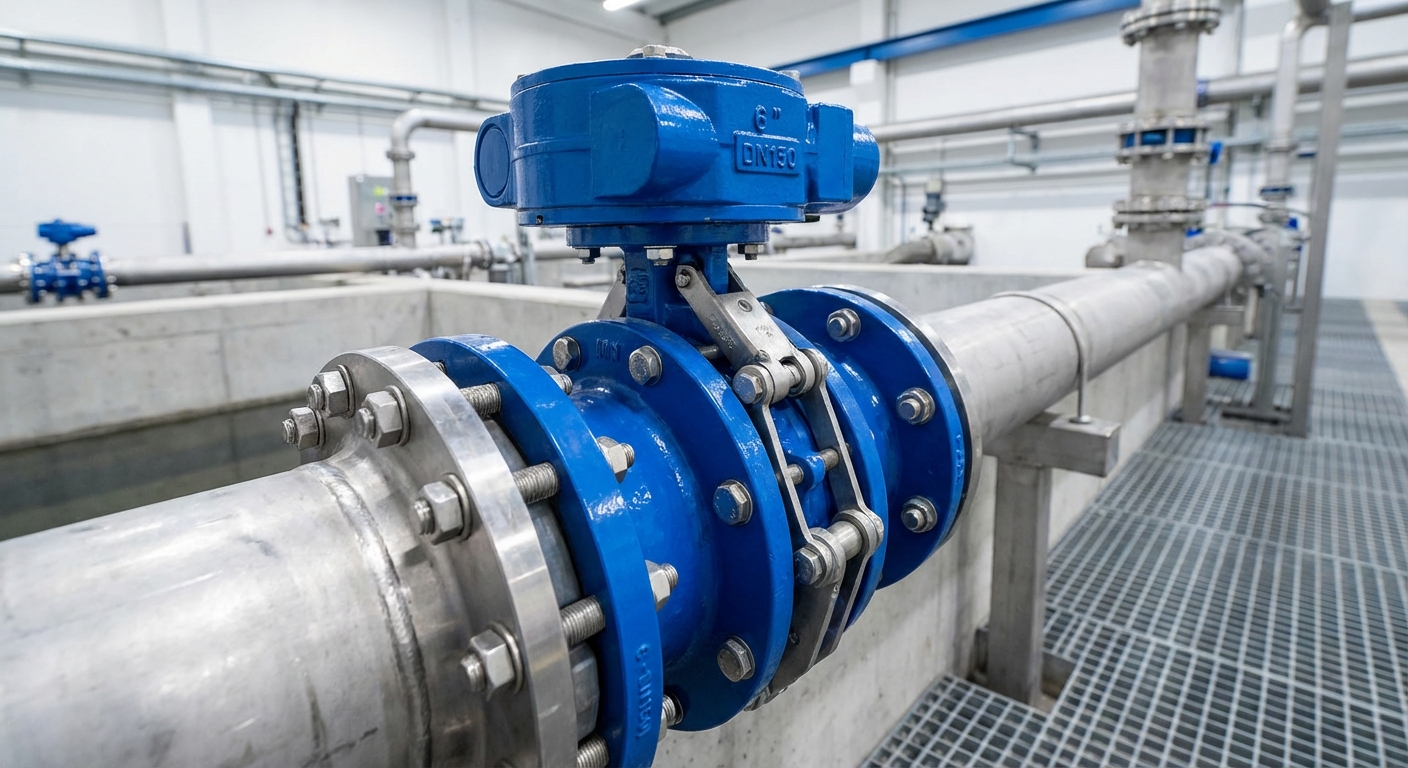
Common materials include ductile iron for general water service and stainless steel for corrosive chemical fluids or high-temperature environments. The longevity of your butterfly valve dn150 depends entirely on choosing housing and disc alloys that are compatible with the media being transported. Selecting the right combination prevents premature corrosion and mechanical failure.
Selecting the disc material?
You might be wondering:
- Ductile iron with nickel plating for cost-effective durability.
- CF8M (316 Stainless) for harsh chemical processing.
- Aluminum Bronze for sea water and marine applications.
Each material has a specific chemical resistance profile and pressure rating. Stainless steel discs are the gold standard for hygiene and corrosion resistance in food and pharmaceutical lines.
Key Takeaway
Material selection must match the chemical properties of the fluid to ensure a lifespan of decades rather than months.
| Material | Application | Durability |
|---|---|---|
| Ductile Iron | Potable Water | High |
| Stainless Steel | Chemicals/Food | Excellent |
Review your fluid’s chemical compatibility chart before finalizing the valve body and disc materials.
How does seating affect butterfly valve dn150 performance?
The seat material determines the operating temperature range and the level of leak-tightness the valve can achieve during closure. Most applications for a butterfly valve dn150 use resilient seats like EPDM or NBR for absolute bubble-tight sealing. These soft seats compress against the disc to form a perfect barrier.
Soft vs. metal seating?
Here is the secret:
- EPDM for hot/cold water and air.
- PTFE for aggressive chemical resistance.
- Metal-to-metal for high heat and high pressure.
Resilient seats are excellent for general use but have temperature limits. If your process exceeds 150°C, you must consider high-performance double or triple eccentric designs with metal seats.
Key Takeaway
The seat is the primary wear component; choosing the right polymer or alloy is critical for sealing integrity.
| Seat Material | Temp Range | Media Suitability |
|---|---|---|
| EPDM | -20 to 120°C | Water/Steam |
| PTFE | -30 to 200°C | Strong Acids |
Check your system’s maximum temperature peaks to ensure the seat material will not degrade or melt.
What are the torque needs for a butterfly valve dn150?
Torque requirements vary based on the differential pressure, the media viscosity, and the friction coefficient of the chosen seat material. Correctly sizing the butterfly valve dn150 requires calculating the break-away torque needed to open the valve after long periods of closure. High-pressure systems require significantly more power to operate the disc.
Why torque matters?
It gets better:
- Ensures the actuator has enough power to seal.
- Prevents damage to the valve stem.
- Determines the size and cost of the automation hardware.
Using a safety factor of 1.2 to 1.5 is standard practice when selecting an actuator. This ensures the valve operates even if there is slight build-up or scale on the seating surface.
Key Takeaway
Accurate torque calculations are the foundation of a reliable automated flow control system.
| Pressure | Seat Type | Estimated Torque |
|---|---|---|
| 10 Bar | EPDM | ~150 Nm |
| 16 Bar | PTFE | ~220 Nm |
Consult with your actuator supplier to match the torque output to the valve’s specific operating environment.
Can you automate a butterfly valve dn150 for remote control?
Yes, these valves can be equipped with pneumatic, electric, or hydraulic actuators for integrated control within a PLC or SCADA network. Automating a butterfly valve dn150 allows you to manage flow precision in complex industrial networks without manual intervention. This increases safety and reduces the risk of human error in critical processes.
Pneumatic vs electric?
Let that sink in:
- Pneumatic for rapid cycle times and fail-safe operation.
- Electric for precise positioning and low infrastructure costs.
- Manual gears for infrequent operation and budget constraints.
Modern actuators offer digital feedback, allowing you to monitor the valve’s position in real-time. This is essential for modern “smart” factories and treatment plants.
Key Takeaway
Automation transforms a manual valve into a dynamic component of an intelligent industrial system.
| Actuation | Response Time | Feedback |
|---|---|---|
| Pneumatic | < 2 Seconds | Limit Switches |
| Electric | 10-30 Seconds | 4-20mA Signal |
Determine if your system requires fail-safe (auto-close) functionality before choosing between electric and pneumatic power.
Where is the butterfly valve dn150 used most effectively?
These valves are ubiquitous in HVAC, fire protection, and municipal water distribution systems due to their 6-inch size compatibility. The versatility of the butterfly valve dn150 makes it the standard choice for medium-bore pipeline management across various sectors. They handle everything from chilled water to semi-viscous oils and slurries.
Common industrial sectors?
You see:
- HVAC cooling towers and boilers.
- Fire sprinkler systems (UL/FM approved).
- Irrigation and agricultural water networks.
Because they are compact, they are the preferred choice for shipbuilders and offshore platforms where every kilogram of weight matters. Their simple design also makes them easy to maintain in remote locations.
Key Takeaway
The 6-inch butterfly valve is the “workhorse” of industrial piping, suitable for a vast array of fluid types.
| Industry | Primary Use | Approval Needed |
|---|---|---|
| HVAC | Chilled Water | Standard |
| Fire Safety | Main Feed Lines | UL/FM |
Identify the specific regulatory approvals required for your industry to ensure the valve meets local safety standards.
How do you maintain a butterfly valve dn150 correctly?
Regular maintenance involves inspecting the seat for wear, checking the stem for leaks, and ensuring the actuator is properly lubricated. Extending the life of a butterfly valve dn150 requires a proactive approach to sealing integrity and mechanical alignment. Simple routine checks can prevent catastrophic failures and unplanned downtime.
Inspection routines?
The bottom line:
- Visual checks for seat deformation or cracking.
- Torque testing to ensure smooth operation.
- Stem seal verification to prevent external leaks.
Most 6-inch valves are designed for easy field repair. If the seat becomes worn, it can often be replaced without discarding the entire valve body, saving significant capital costs.
FAQs
Can I use a butterfly valve dn150 for throttling applications?
Yes, but only for certain angles. High-velocity flow at small opening angles can cause cavitation and seat erosion, so it is best used for coarse flow regulation between 30 and 70 degrees.
What’s the best way to prevent leaks in a wafer butterfly valve dn150?
Ensure proper flange alignment. Most leaks occur because the pipe flanges are not parallel or the bolts were tightened unevenly, causing the seat to distort.
Is there a difference between DN150 and 6-inch sizing?
No, they are identical. DN150 is the metric designation (Diameter Nominal) used globally, while 6-inch is the Imperial standard used primarily in the United States and UK.
Why should I choose EPDM over NBR for a water system?
Choose EPDM for better heat and weather resistance. EPDM handles higher temperatures and UV exposure much better than NBR, though NBR is superior if there are oils in the water.
How often should I test the torque on an automated butterfly valve dn150?
Every six months is ideal. Checking torque periodically ensures the actuator is not straining and that the seat hasn’t hardened or collected debris that could cause a jam.
Strategic Decision Support
Choosing the correct 6-inch valve ensures long-term operational efficiency and reduced leak risks. Our mission is to provide precision-engineered flow solutions that empower industrial infrastructure through reliability and innovation. If you require technical assistance or a custom quote, please contact us to speak with our engineering team today. We are committed to a vision of sustainable fluid management where every valve contributes to system-wide energy efficiency and safety.