
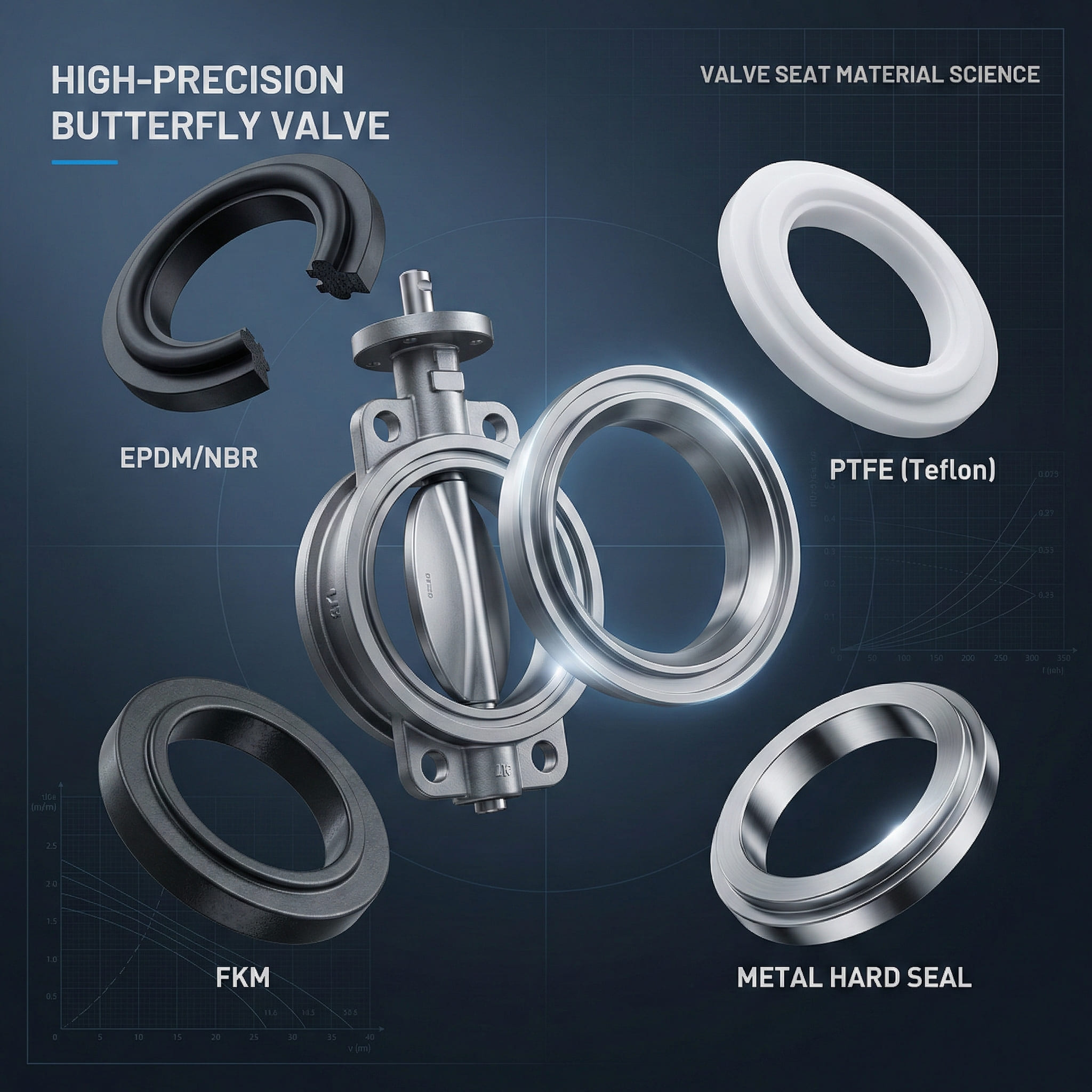
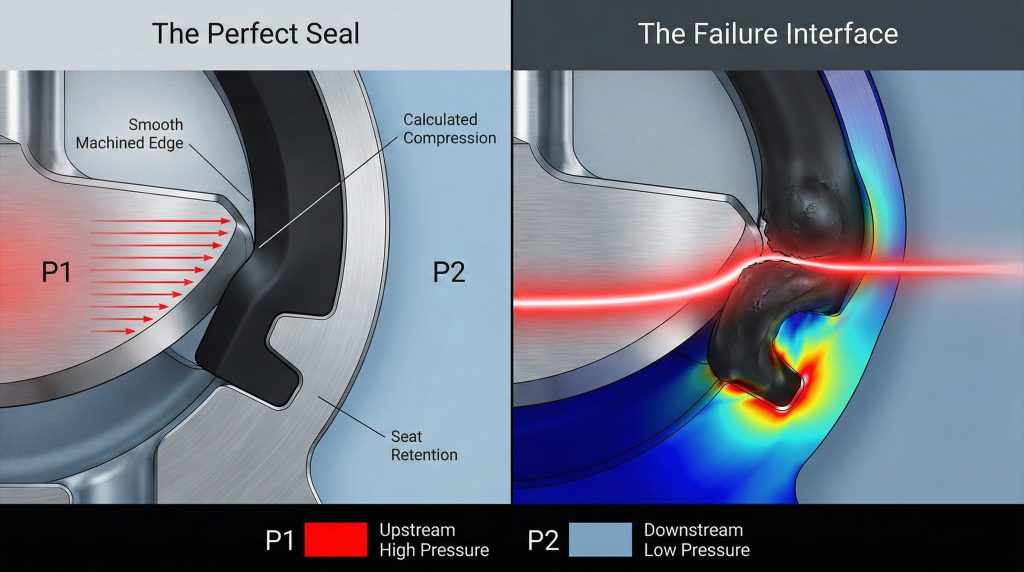
Selecting the correct seat material for a butterfly valve involves matching the elastomer or metal properties to the specific temperature, pressure, and chemical characteristics of your pipeline media. Imagine a high-pressure system where a minor seal failure leads to an immediate emergency shutdown. This leakage isn’t just a technical glitch; it results in massive repair costs and critical production downtime that can cripple your facility’s operational efficiency. By utilizing a comprehensive butterfly valve seat material selection guide, you can identify the precise material required to ensure zero-leakage performance and long-term reliability.
What is the butterfly valve seat material selection guide?
A butterfly valve seat material selection guide is a technical framework used to evaluate the chemical compatibility, thermal limits, and mechanical durability of sealing components. This resource assists engineers in navigating the complexities of elastomer and thermoplastic choices to ensure a bubble-tight seal.
By understanding the distinct properties of various materials, you can prevent premature valve failure. This guide serves as the foundation for optimizing flow control in diverse industrial environments.
Defining the Valve Seat
The valve seat is the ring-shaped component inside the valve body where the disc rests to create a secure seal. In your application, the integrity of this interface determines whether the valve can successfully isolate the flow.
Think about it:
- It must resist friction during every cycle.
- It compensates for thermal expansion in the system.
- It prevents internal leakage under varying pressures.
The Role of Sealing Integrity
Sealing integrity is the most critical factor for safety in hazardous fluid transport. If your seat material fails to maintain its shape, you risk catastrophic environmental exposure or system contamination.
Key Takeaway: The selection guide helps you define the physical and chemical boundaries of your sealing components to ensure they match your process demands.
| Component | Function | Primary Requirement |
|---|---|---|
| Valve Seat | Provides primary sealing surface | Elasticity and chemical resistance |
| Disc Edge | Contacts the seat to stop flow | Smooth finish and corrosion resistance |
| Seal Interface | Prevents media bypass | Proper compression and alignment |
Review the physical properties of the seat to ensure it can withstand the mechanical stress of your specific valve geometry.
Why use our butterfly valve seat material selection guide?
Using our butterfly valve seat material selection guide is essential because it prevents premature seal failure and ensures the safety of your high-pressure operations. Choosing the wrong material leads to accelerated wear and dangerous leaks that jeopardize your facility.
The right selection maximizes the lifespan of your infrastructure. It allows you to plan maintenance cycles accurately rather than reacting to sudden equipment breakdowns.
Enhancing System Safety
Safety in industrial plants starts with reliable isolation valves that do not leak under stress. When you choose a seat material verified for your specific media, you eliminate the risk of chemical reactions that could degrade the seal.
But wait, there’s more:
- Verified materials reduce the risk of fire in volatile environments.
- High-quality seats maintain performance during sudden pressure surges.
- Correct selection prevents the release of toxic gases.
Maximizing Valve Longevity
Valve longevity is directly tied to how well the seat resists the abrasive or corrosive nature of the fluid. You can significantly extend the time between overhauls by selecting a material with the proper Shore hardness and chemical inertness.
Key Takeaway: Utilizing a technical guide ensures that your valve components are not the weak link in your industrial piping system.
| Benefit | Impact on Operations | Success Metric |
|---|---|---|
| Leak Prevention | Reduced environmental risk | Zero fugitive emissions |
| Wear Resistance | Fewer replacement parts | Extended Mean Time Between Failures |
| Compliance | Adherence to safety standards | Successful regulatory audits |
Compare the operational costs of premium seat materials against the potential losses from a single hour of unplanned downtime.
Does EPDM fit the butterfly valve seat material selection guide?
EPDM is a primary inclusion in the butterfly valve seat material selection guide because it offers exceptional resistance to water, steam, and a wide range of diluted acids. This versatile elastomer is the standard choice for most general-purpose industrial applications.
It provides a cost-effective solution for systems operating within moderate temperature ranges. You will find it most effective in HVAC and water treatment facilities.
Resistance to Water and Acids
EPDM stands for Ethylene Propylene Diene Monomer and is highly regarded for its stability in aqueous environments. You can rely on it to maintain its sealing properties when exposed to phosphate esters and many alkaline solutions.
Consider the advantages:
- Excellent resistance to heat and aging.
- Maintains flexibility at lower temperatures.
- Highly resistant to ozone and weathering.
HVAC System Compatibility
In HVAC systems, you need a seat that can handle the constant cycling of chilled and hot water. EPDM is ideal here because it does not swell or degrade when exposed to common glycol-based coolants.
Key Takeaway: EPDM is the go-to elastomer for water-based systems, but you must avoid using it with petroleum-based oils.
| Property | Value/Range | Best Use Case |
|---|---|---|
| Temperature Range | -30°F to 250°F | Water and steam systems |
| Chemical Resistance | Acids, Alkalis, Ketones | Chemical processing (diluted) |
| Incompatibility | Petroleum and Oils | Avoid in fuel lines |
Verify that your process media does not contain trace amounts of oil before specifying EPDM for your valve seats.
How is NBR used in butterfly valve seat material selection guide?
NBR, or Nitrile, is used in the butterfly valve seat material selection guide as the primary material for petroleum-based fluids and hydraulic oils. It is specifically engineered to resist swelling and degradation when in contact with hydrocarbons.
This material is indispensable for the oil and gas industry. You should choose NBR when your application involves fuels or lubricants that would destroy other elastomers.
Petroleum and Oil Resistance
Nitrile rubber is a copolymer of butadiene and acrylonitrile, which gives it its unique resistance to non-polar solvents. If you are handling crude oil or diesel, this seat material provides the necessary chemical barrier.
Think about it:
- Higher acrylonitrile content increases oil resistance.
- It offers excellent compression set characteristics.
- The material is highly resistant to abrasion.
Compression Set Advantages
NBR is known for its ability to return to its original shape after being compressed by the valve disc. This “memory” ensures that you maintain a tight seal over thousands of operating cycles.
Key Takeaway: NBR is the industry standard for oil-related applications where elastic recovery and hydrocarbon resistance are paramount.
| Feature | Performance Level | Industry Application |
|---|---|---|
| Oil Resistance | Superior | Petrochemical and Fuel |
| Abrasion Resistance | High | Slurry handling |
| Temperature Limit | Up to 180°F | Low-temp oil transport |
Assess the acrylonitrile level in the NBR compound to balance the required oil resistance with low-temperature flexibility.
Why pick PTFE for a butterfly valve seat material selection guide?
You should pick PTFE for a butterfly valve seat material selection guide when your process involves aggressive chemicals or high temperatures that elastomers cannot handle. PTFE, often known as Teflon, is nearly inert to most industrial chemicals.
Its low friction coefficient makes it an excellent choice for reducing the torque required to operate the valve. This protects your actuators and ensures smooth modulation.
Chemical and Heat Resistance
PTFE can operate in temperatures ranging from cryogenic levels up to 400°F. You can use it safely with concentrated acids, strong bases, and organic solvents without worrying about seat degradation.
Wait, there’s more:
- It is naturally fire-resistant and non-flammable.
- The material does not absorb moisture or contaminants.
- It provides a high degree of electrical insulation.
Low Friction Sealing Benefits
Because PTFE is so slippery, the valve disc slides against the seat with minimal resistance. This is particularly beneficial for you if you are using automated systems where consistent torque is required.
Key Takeaway: PTFE is the ultimate solution for aggressive chemical environments, provided the system pressure remains within moderate limits.
| Characteristic | PTFE Performance | Comparison to Rubbers |
|---|---|---|
| Chemical Inertness | Absolute | Much higher than NBR/EPDM |
| Friction | Extremely Low | Reduces actuator sizing |
| Cold Flow | Moderate risk | Requires reinforced designs |
Evaluate the need for glass-filled or reinforced PTFE if your system experiences high mechanical loads or frequent pressure spikes.
Is FKM part of your butterfly valve seat material selection guide?
FKM is an integral part of your butterfly valve seat material selection guide because it bridges the gap between standard elastomers and PTFE for high-heat applications. It is frequently used when you need to handle concentrated mineral acids at elevated temperatures.
This fluorocarbon elastomer offers a high density and chemical stability. It is often the preferred choice for vacuum services and specialized chemical lines.
Handling Concentrated Acids
FKM provides superior resistance to many chemicals that would cause EPDM or NBR to fail rapidly. You should specify FKM when dealing with sulfuric acid, hydrochloric acid, or aromatic hydrocarbons.
Think about it:
- It maintains its seal at temperatures up to 400°F.
- It resists degradation from UV light and ozone.
- FKM has very low gas permeability.
High Temperature Performance
Unlike many other rubbers that become brittle when exposed to heat, FKM retains its elastic properties. This ensures you have a dependable seal even after prolonged exposure to high-temperature process fluids.
Key Takeaway: FKM is a premium material choice for high-temperature, high-concentration chemical applications where standard elastomers fail.
| Attribute | Specification | Operational Benefit |
|---|---|---|
| Max Temperature | 400°F (204°C) | High-heat chemical processing |
| Chemical Group | Fluorocarbons | Resists mineral acids |
| Density | High | Better vacuum performance |
Determine if the added cost of FKM is justified by the increased service life in your most aggressive chemical loops.
Can metal work for a butterfly valve seat material selection guide?
Metal seats must be included in a butterfly valve seat material selection guide for severe service conditions where elastomers would simply melt or erode. These seats are typically made from stainless steel or specialized alloys like Stellite.
They are essential for high-pressure steam and abrasive slurries. You can also find them in plug valves and other heavy-duty equipment designed for extreme environments.
Severe Service Conditions
When your process reaches temperatures above 500°F or pressures exceeding several hundred PSI, soft seats are no longer viable. Metal-to-metal sealing provides the mechanical strength needed to hold back high-velocity flows.
Consider these factors:
- Ideal for high-pressure steam and hot gas.
- Resistant to erosion from suspended solids.
- Necessary for fire-safe certification.
Fire-Safe Design Requirements
Metal seats ensure that even if a fire destroys the secondary soft seals, the primary metal contact will prevent a massive leak. This is a critical safety feature for you in the oil, gas, and petrochemical sectors.
Key Takeaway: Metal seats are the only choice for extreme thermal and mechanical loads where soft materials would suffer immediate failure.
| Material | Hardness/Coating | Typical Application |
|---|---|---|
| 316 Stainless | Standard | High-temp water and steam |
| Stellite 6 | Hard-faced | Abrasive slurries and ash |
| Inconel | Alloy | Cryogenic and high-temp |
Select a metal seat with a hard-faced coating if your media contains abrasive particles that could scratch standard stainless steel.
Does pressure impact butterfly valve seat material selection guide?
Pressure is a fundamental variable in the butterfly valve seat material selection guide because it dictates whether a soft seat can maintain its shape. High-pressure systems often require specialized seat geometries and offsets to prevent the seat from being blown out of the valve body.
You must choose a material that can withstand the deformation forces applied by the disc. In many cases, high pressure necessitates the use of ball valves or high-performance globe valves if the butterfly valve design is not sufficiently robust.
Zero Leakage Requirements
Achieving zero leakage at high pressure is a significant engineering challenge. You need a seat that can compress enough to seal but remains rigid enough to not migrate under the load.
Wait, there’s more:
- High-pressure seats often use reinforced backings.
- Double and triple offsets reduce seat wear at high pressure.
- Seat fatigue is accelerated by frequent pressure spikes.
Seat Fatigue Under Impact Stress
Every time you close the valve against high pressure, the seat absorbs a significant amount of kinetic energy. Over time, this can lead to cracks or permanent deformation in softer elastomers.
Key Takeaway: Pressure ratings must be matched with seat thickness and reinforcement to prevent mechanical failure of the seal.
| Pressure Class | Recommended Seat | Design Consideration |
|---|---|---|
| ANSI 150 | Resilient EPDM/NBR | Standard concentric design |
| ANSI 300 | PTFE / Reinforced | Double offset structure |
| ANSI 600+ | Metal / Stellite | Triple offset structure |
Analyze the maximum surge pressure of your system to ensure the seat material and valve structure are rated for the worst-case scenario.
Is media type in the butterfly valve seat material selection guide?
Media type is the most influential factor in the butterfly valve seat material selection guide because it determines the chemical compatibility requirements. Different fluids react differently with elastomers, potentially causing them to swell, shrink, or dissolve entirely.
Choosing the wrong material for your media can lead to contamination or profitable industrial uses being lost due to system failure. You must analyze the fluid’s acidity, concentration, and abrasive content.
Chemical Compatibility Factors
A seat that works perfectly for water will likely fail instantly when exposed to concentrated sulfuric acid. You must consult a compatibility chart to ensure that your chosen material won’t react with the process fluid.
Think about it:
- Media pH determines the choice between EPDM and FKM.
- Suspended solids require high-abrasion resistant NBR.
- Food-grade media requires FDA-compliant materials.
Slurry and Abrasive Media
If you are transporting sand, ash, or mining slurries, your seat will be subjected to constant sandblasting. In these cases, you need a high-durometer material or a hard-faced metal seat to resist the erosion.
Key Takeaway: The chemical and physical nature of the media is the primary filter for narrowing down your seat material options.
| Media Category | Recommended Material | Critical Property |
|---|---|---|
| Potable Water | EPDM (FDA) | Purity and non-toxicity |
| Crude Oil | NBR / Nitrile | Hydrocarbon resistance |
| Strong Alkalines | PTFE | Chemical inertness |
Check the concentration and temperature of the media simultaneously, as chemical reactivity often increases with heat.
How to apply this butterfly valve seat material selection guide?
To apply this butterfly valve seat material selection guide, you must follow a systematic process of identifying your operational limits and matching them to material specifications. Start by documenting your maximum temperature, peak pressure, and exact chemical composition.
Consulting with an experienced industrial valve manufacturer can provide you with the necessary technical data to make an informed decision. This final verification step ensures that your contact us today results in a high-performing valve.
Soft vs. Hard Sealing Choice
Your first major decision is whether you need a soft-seated (resilient) valve or a hard-seated (metal) valve. Soft seats offer superior zero-leakage performance for gases and liquids at lower temperatures.
Wait, there’s more:
- Hard seats are mandatory for temperatures over 500°F.
- Soft seats are more forgiving of small particulates.
- Hybrid designs offer the benefits of both in some cases.
Final Material Verification Steps
Before you finalize your order, double-check the material certificates and pressure-temperature curves provided by the manufacturer. You should also consider the environmental conditions outside the pipe, such as UV exposure or salt spray.
Key Takeaway: A methodical application of selection criteria prevents costly errors and ensures long-term system integrity.
| Selection Step | Action Item | Required Data |
|---|---|---|
| Define Media | Check compatibility charts | Fluid name and concentration |
| Set Thermal Limits | Match material T-rating | Max and min temperature |
| Verify Pressure | Check ANSI/DIN ratings | Max system and surge pressure |
Use this guide as a checklist for every new valve specification to maintain consistency across your facility’s infrastructure.
Summary of Selection Insights
Selecting the proper seat material is the most critical decision in butterfly valve specification. Throughout this guide, we have explored how EPDM, NBR, PTFE, FKM, and Metal seats each serve specific roles in industrial systems. By addressing the challenges of high-pressure leakage and chemical degradation, we have provided a roadmap for enhancing safety and reducing operational downtime.
Our vision is to provide industrial professionals with the precision-engineered components they need to build safer and more efficient systems. Whether you are dealing with abrasive slurries or high-temperature steam, choosing the right material is the first step toward excellence. For expert assistance with your next project or to receive a custom quote, contact us today.
Frequently Asked Questions
Can I use EPDM for petroleum-based fluids?
No, EPDM is not compatible with petroleum-based oils or hydrocarbon solvents as it will swell and degrade quickly.
What’s the best seat material for high temperatures?
Metal seats or FKM elastomers are typically the best choice for environments where temperatures exceed 300°F.
How do I know if my seat material is failing?
You should look for signs like increased operating torque, visible downstream leakage, or loss of seal elasticity during inspection.
Can I replace a soft seat with a metal one?
No, this usually requires a different valve body design, as metal seats require specialized offsets found in high-performance valves.
What’s the best seat for zero leakage systems?
Resilient soft seats like EPDM or PTFE offer the most reliable bubble-tight performance in low to medium pressure applications.