
Choose a butterfly valve manufacturer by checking the exact valve configuration, production records and acceptance evidence against your operating conditions. A low quotation can become an expensive purchase when the delivered valve misses a flange dimension or uses the wrong seat. Build the enquiry around a defined duty, then approve a sample before releasing repeat orders.
1. Which butterfly valve manufacturer fits your project?
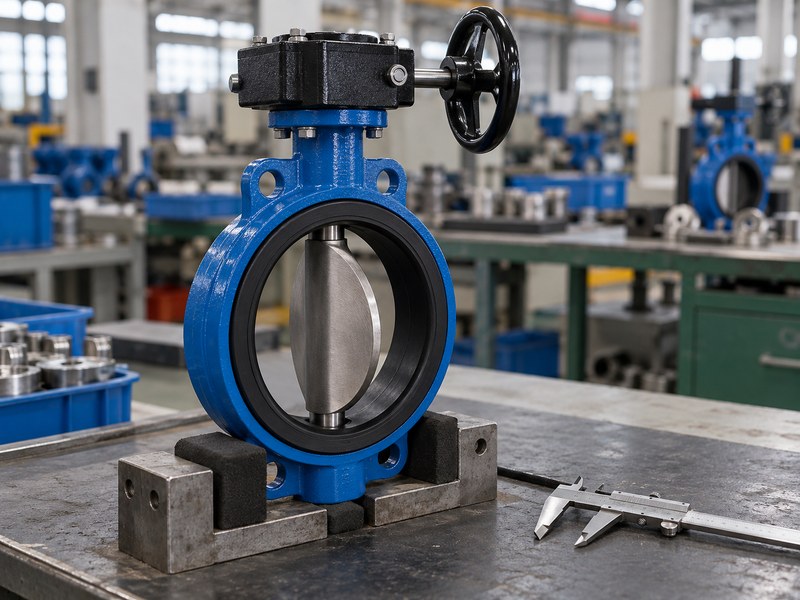
A suitable butterfly valve manufacturer can document the valve you need, including its materials, interfaces and operating limits. Start with the fluid composition, normal and maximum temperature, working pressure, maximum closing differential and installation arrangement. A supplier that offers a water valve for a chemical service without reviewing those inputs has left the main engineering task unfinished.
RUITO supplies several butterfly valve constructions, including wafer, lug, flanged, U-type, grooved-end and fluoropolymer-lined designs. Their size and service limits differ. For example, an approved drinking-water configuration has a narrower application window than a general water-service valve. Ask which exact construction the quotation covers before comparing prices or delivery promises.
What should your shortlist contain?
- A stated valve construction and the proposed wetted materials.
- An application window that includes your combined operating conditions.
- A named contact responsible for technical exceptions and approvals.
| Enquiry input | Supplier response |
|---|---|
| Fluid and temperature | Material and seal proposal |
| Closing differential | Direction and drive confirmation |
| Pipe interface | Approved installation drawing |
Keep suppliers on the shortlist only when these responses describe the same proposed assembly.
2. How can you verify the production route?
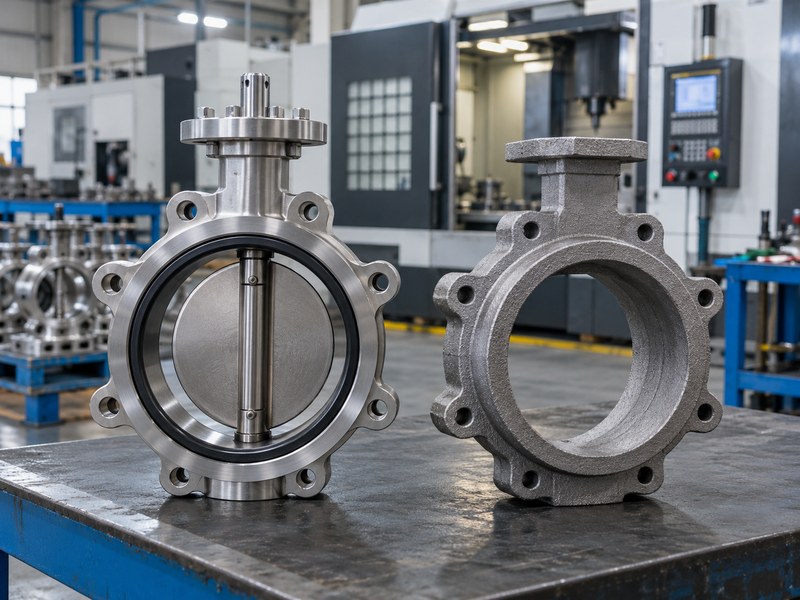
Verify a butterfly valve manufacturer by following one product through its actual manufacturing and inspection records. A factory tour gives useful context, but a row of machines does not prove that your valve will pass through those machines. Request a traceable example linking a casting, machining operation, assembly record and final inspection to one product identifier.
Some operations may belong to qualified subcontractors. Ask who approves those sources, which incoming checks apply and how a material or process change reaches the customer. A factory that buys castings can still control the finished valve well. The question is whether its records identify responsibilities and show how it handles a rejected component before assembly.
Which evidence can you request?
- A recent work order for a comparable valve construction.
- A first-piece inspection record tied to the approved drawing.
- A sample material receipt with its incoming inspection decision.
| Production stage | Useful evidence |
|---|---|
| Casting receipt | Batch identity and acceptance record |
| Machining | Drawing revision and measured features |
| Assembly | Approved parts and operator record |
Use one connected example for the review; unrelated photographs leave gaps between operations.
3. Which drawings should a supplier submit?
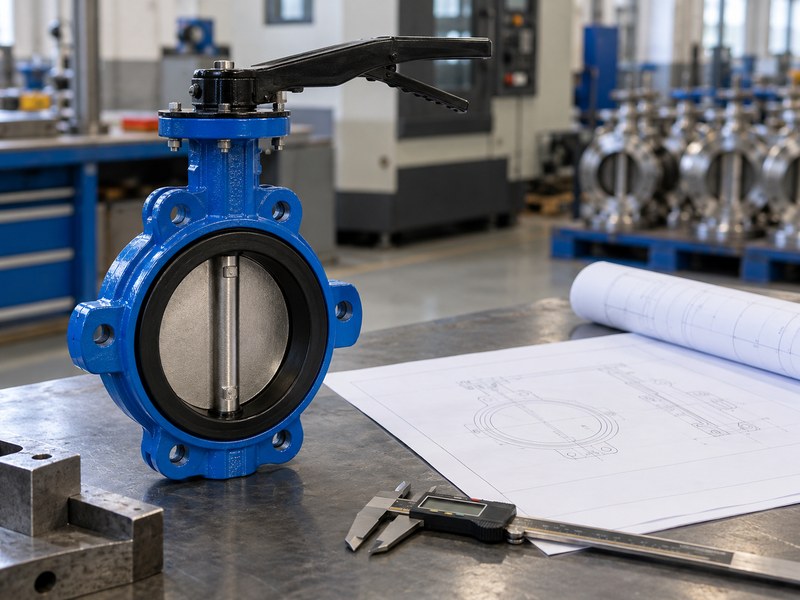
Your butterfly valve manufacturer should submit a drawing that resolves the installation before production starts. Check the face-to-face length, flange drilling, mating bore, disc sweep, operator envelope and maintenance access. A nominal diameter or connection name cannot settle those details. Two valves can share a pipe size while requiring different installation lengths or operator clearances.
For a wafer valve, compare the opening disc envelope with the actual pipe and flange bores. For a lug valve, include the threaded bosses and bolt engagement. A double-flanged or U-type construction needs its own approved dimensions. RUITO can provide installation drawings and, where authorised, supporting CAD files so your engineering team can check the proposed arrangement.
What should engineering sign off?
- The flange standard, drilling and sealing-face arrangement.
- The full disc movement against the actual mating bore.
- The installed operator position and removal access.
| Drawing item | Problem it can prevent |
|---|---|
| Face-to-face length | Pipework rework |
| Disc opening envelope | Contact with pipe or flange |
| Operator envelope | Inaccessible controls or maintenance |
Close installation exceptions while the drawing can still change without delaying an assembled batch.
4. How do you compare wetted materials?
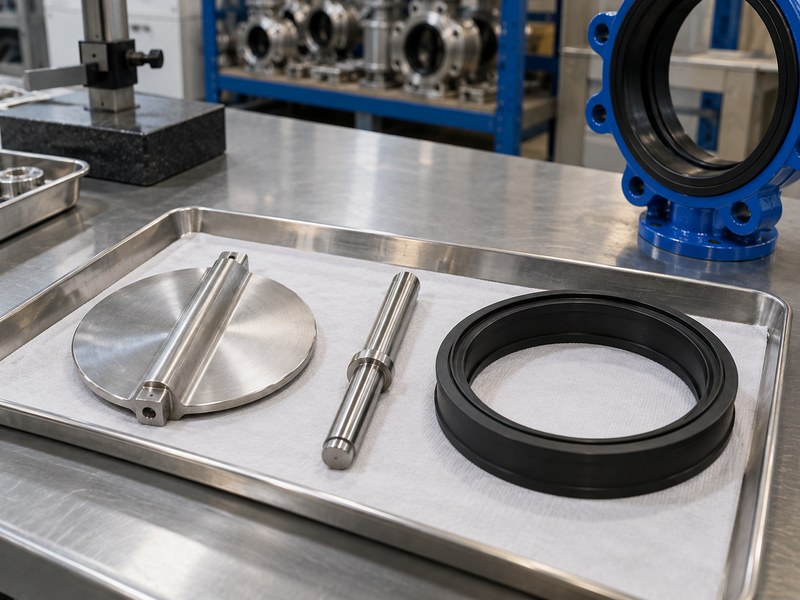
Compare each butterfly valve manufacturer on the complete wetted assembly, including the body lining, disc, shaft, seat and shaft seals. A quotation that names only the body material leaves several fluid-contact components undefined. Add cleaning chemicals, concentration, additives and possible contamination to the fluid description. The nominal process fluid may not describe the harshest exposure during cleaning or shutdown.
RUITO uses separate approved configurations for EPDM water service, NBR-compatible mineral oil service and PTFE or PFA-lined chemical duties. A white component does not identify its resin or prove a continuous chemical barrier. Ask for a material list that distinguishes the liner, disc covering, backing and shaft seal, with a controlled source for each specified compound.
Which material details belong in the order?
- The exact fluid mixture and the proposed seal compound.
- Every wetted metal, lining and auxiliary sealing material.
- A written approval process for any proposed substitution.
| Component | Detail to request |
|---|---|
| Elastomer seat | Compound and fluid compatibility |
| Lined flow path | Resin, continuity and backing |
| Disc and shaft | Actual wetted material specification |
Approve materials as one assembly rather than combining the most attractive limits from separate product descriptions.
5. Which pressure ratings apply together?
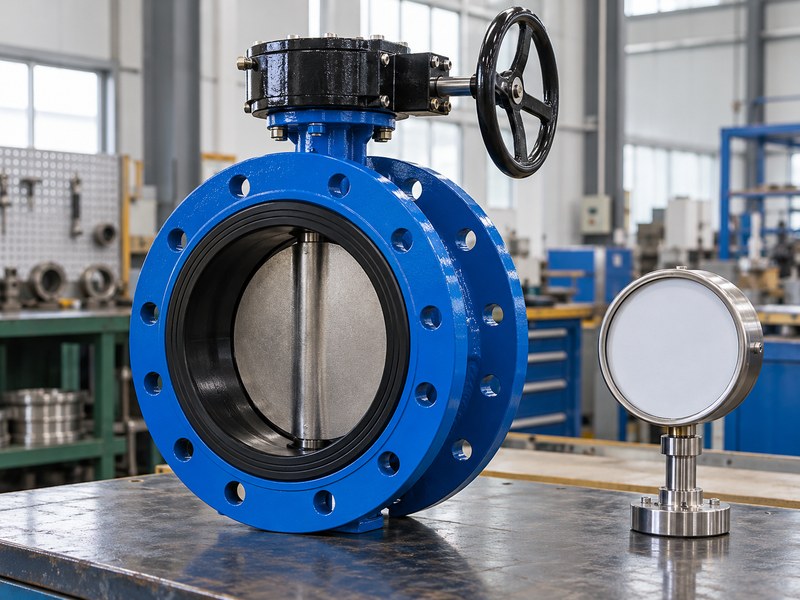
A butterfly valve manufacturer must confirm the allowable pressure at your operating temperature and the permitted closing differential. PN, a flange drilling pattern and a factory test pressure describe different things. A valve with PN16 connections does not automatically permit every service at 16 bar. The body, seat, lining, connection and operating direction can impose separate limits on the complete assembly.
Ask the supplier to mark normal operation, maximum operation and shutdown conditions on the proposed pressure-temperature relationship. Keep surge and reverse pressure in the review. Large double-offset water valves may have different forward and reverse closing ratings. An actuator selected against a lower differential also needs another review if your system can close the valve against a higher load.
Which limits should remain visible?
- Allowable working pressure at the actual service temperature.
- Maximum closing differential in each permitted flow direction.
- The pressure and temperature limits of mating components.
| Term | What it describes |
|---|---|
| Working pressure | Permitted operating condition |
| Closing differential | Load across the closed disc |
| Test pressure | A defined inspection condition |
Keep the test report beside the rating statement, but check each against its own acceptance criteria.
6. What should a factory acceptance test prove?
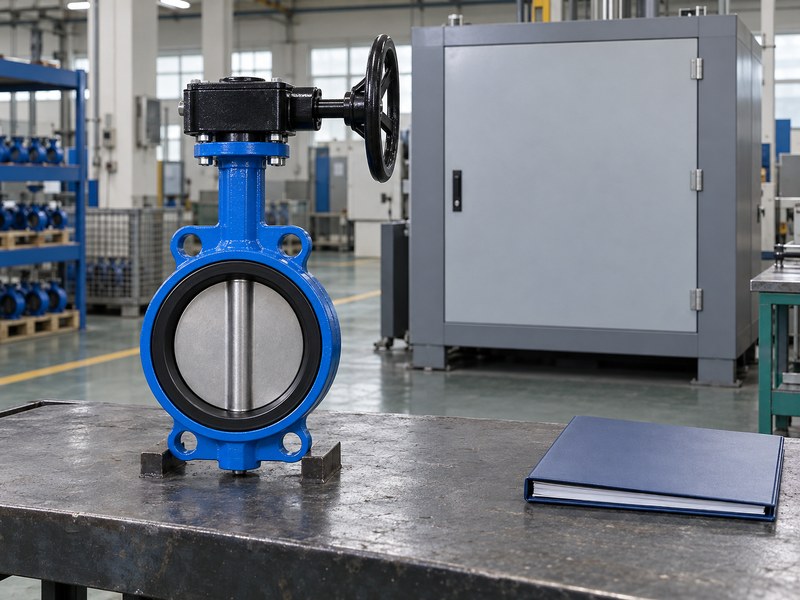
The butterfly valve manufacturer should prove the agreed shell integrity, closure performance and operating function using the selected inspection procedure. Confirm the test standard, pressure, medium, duration, direction and allowable leakage before the inspection date. A report that says only “tested” cannot tell your team which conditions were applied or whether the specified acceptance limit was met.
RUITO's normal PN16 soft-seat inspection inputs include 24 bar shell pressure and 17.6 bar closure pressure where the selected valve and seat differential rating permit them. Those are test conditions, not a promise of operating capability. Clean-air or nitrogen service needs the applicable gas-tightness checks in addition to hydraulic inspection. Lined constructions need their separate lining integrity and thickness checks.
What should the inspector record?
- Product identity, approved procedure and calibrated instrument identity.
- Test medium, pressure, holding time and closure direction.
- Actual observations, acceptance decision and any corrective work.
| Inspection | Main question |
|---|---|
| Shell test | Does the pressure boundary pass? |
| Closure test | Does the specified seat criterion pass? |
| Functional check | Does the complete drive operate correctly? |
Agree witness and hold points before production so the inspection can follow the planned release sequence.
7. How can you trace a replacement part?
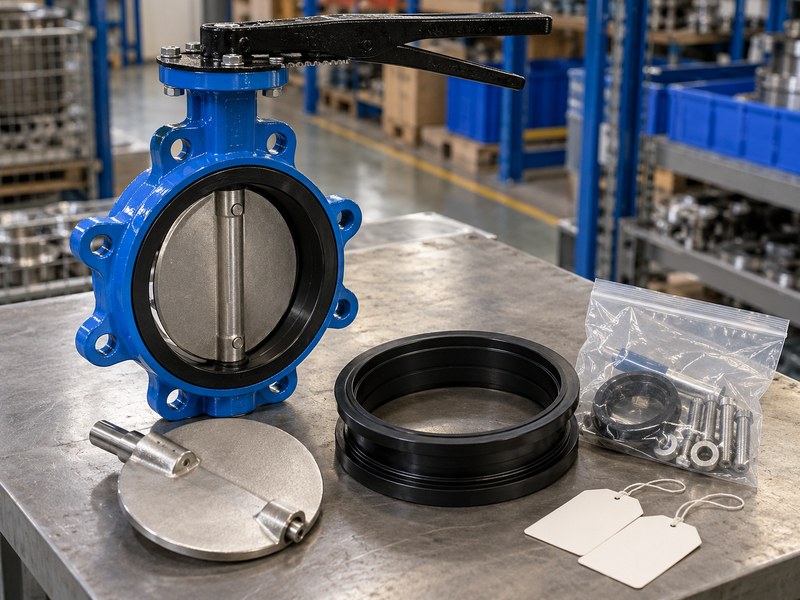
A butterfly valve manufacturer should identify replacement parts from the approved assembly revision and product record. A seat described only as “DN100 rubber” can have the wrong profile, compound or interference for your valve. The same nominal size can cover several constructions. Ask how the supplier connects the original product identifier with the replacement seat, shaft seal and operating instructions.
For repeat orders, freeze the bill of materials and define which changes require your approval. A new elastomer source or modified disc edge can alter operating torque and closure behaviour. RUITO links material batches, assembly revisions, inspections and packing records so an investigation can focus on the relevant configuration and production batch instead of treating all stock as interchangeable.
Which records help maintenance?
- A revision-controlled spare-parts list for the supplied assembly.
- The permitted replacement procedure and inspection after repair.
- A change notice identifying affected orders or production batches.
| Maintenance item | Matching reference |
|---|---|
| Replacement seat | Profile and compound revision |
| Shaft seal kit | Assembly drawing and materials |
| Operator replacement | Interface and torque requirement |
Order spares from those references while the original supply records are readily available.
8. What does a credible delivery plan include?
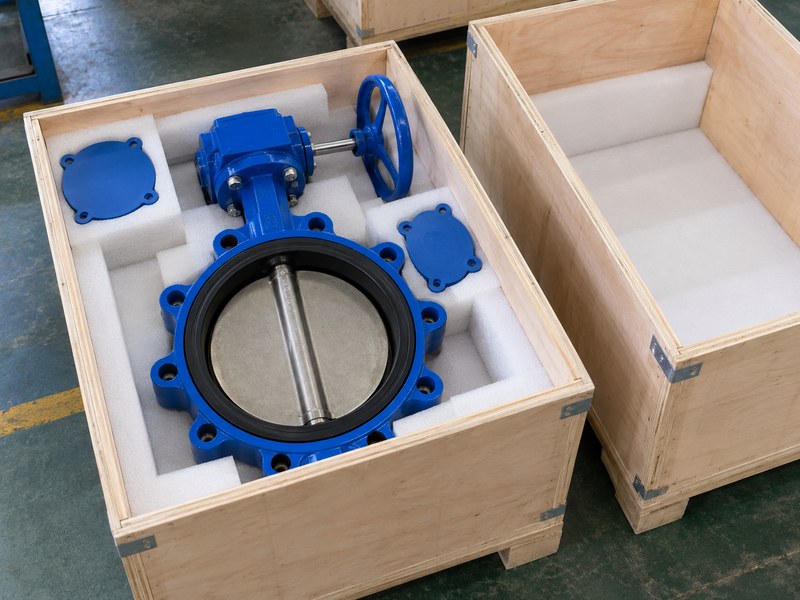
A credible butterfly valve manufacturer separates technical approval, manufacturing, inspection and factory release from international transport. An attractive lead time means little if the drawing remains open or the required witness visit has no date. Ask which conditions start the production clock, which materials are already available and which unresolved decisions could move the promised release date.
RUITO's stated release windows depend on the configuration. Accurate stocked items normally need 3–7 days for reinspection after technical, commercial and inspection conditions are complete. Mature ordinary batches generally require 30–50 days, while lug, flanged, U-type and grooved butterfly orders generally require 35–60 days. Lined and large-diameter projects have separate schedules; transport and customs come afterwards.
Which milestones should you track?
- Drawing and material approval, with a named decision owner.
- Material readiness, assembly completion and inspection availability.
- Packing completion, document release and carrier handover.
| Schedule item | Date to clarify |
|---|---|
| Technical freeze | Start of approved production scope |
| Witness inspection | Inspector and equipment availability |
| Factory release | Goods and documents ready together |
Use a separate arrival estimate for the destination; factory release alone does not establish a delivery-to-site date.
9. How should you compare quotations?
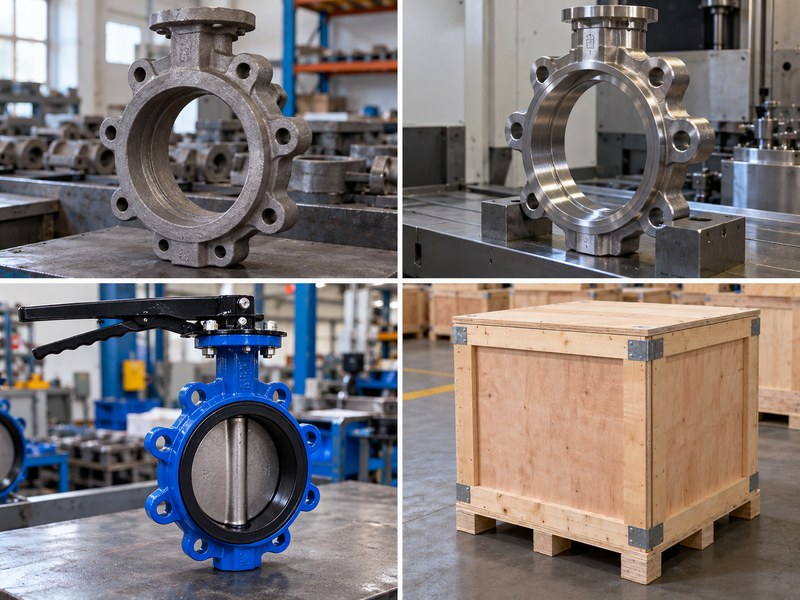
Compare butterfly valve manufacturer quotations after aligning the technical scope, inspection requirements and supply boundary. A cheaper valve may exclude the actuator, protective packing, specified reports or inspection attendance. Build a comparison that makes those differences visible. Otherwise, the apparent saving can disappear when your project adds the missing items after the purchase order has already been approved.
The comparison image separates production stages; it does not rank suppliers or assign performance scores. Use the same approach with written offers. Put material exceptions, testing, spares and release dates in separate rows. Ask each supplier to confirm whether its price covers the frozen configuration. Keep a space for unresolved items rather than treating an unanswered requirement as accepted.
What should a fair comparison include?
- The same approved valve, drive and accessory configuration.
- Identical test, witness, documentation and packaging requirements.
- Clearly stated freight terms, spare parts and after-sales scope.
| Quotation line | Compare on the same basis |
|---|---|
| Valve assembly | Materials, limits and interfaces |
| Verification | Reports, witnesses and acceptance |
| Delivery scope | Packing, documents and transport terms |
Resolve exclusions before awarding the order, while suppliers can still price the complete requirement.
10. When should you approve a sample order?
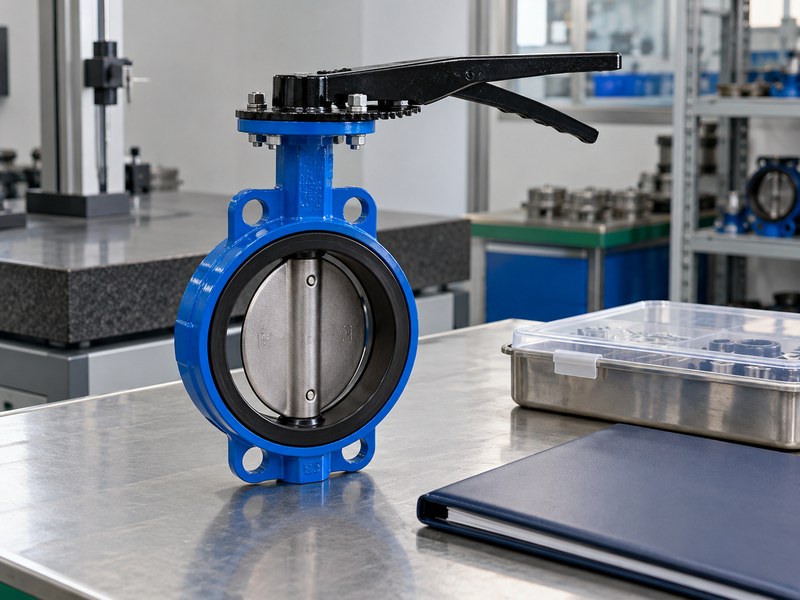
Approve a butterfly valve manufacturer sample after the drawings, materials and acceptance criteria describe a configuration your team can evaluate. The sample should answer the questions that block a production decision: fit, movement, drive function, closure and document consistency. An attractive display sample without traceable materials or a frozen revision gives little control over the batch that follows.
For an equipment order, run the sample through your actual installation and operating checks within its approved limits. Record the accepted revision and close any deviations before releasing a larger quantity. Send RUITO your fluid data, installation drawing, operating points and inspection requirements so the engineering team can review a matching supply proposal. You can contact us with the same package for a repeat-order assessment.
Questions before you place an order
Q1: Can I approve a supplier from a factory video?
Use the video for initial screening. Complete approval needs product-linked drawings, material records and inspections for the construction you intend to buy.
Q2: What is the best way to compare two offers?
Use one frozen specification. Compare materials, operating limits, testing, accessories, documentation and delivery scope before comparing the quoted total.
Q3: How do I know if a certificate covers my valve?
Match its holder, product scope, materials and applicable sizes with the offered assembly. Request clarification when a document covers only a component.
Q4: Can I replace a seat with any ring of the same size?
Use the approved spare reference. Profile, compound and assembly interference can differ between valves with the same nominal diameter.
Q5: Can a stock valve ship immediately?
Confirm the exact stock configuration and release conditions. Reinspection, documents, packing and transport booking still need their own completion dates.