
Approve a double acting butterfly valve factory through a defined inspection route that connects materials, machining, assembly, pressure tests, and operating checks to the delivered product. A video of a valve cycling does not establish its pressure integrity or seat acceptance. Before production starts, agree what each test must demonstrate, which records you will receive, and which conditions require your approval. That makes a factory visit useful even when you cannot witness every manufacturing operation.
1. What should a double acting butterfly valve factory inspect?
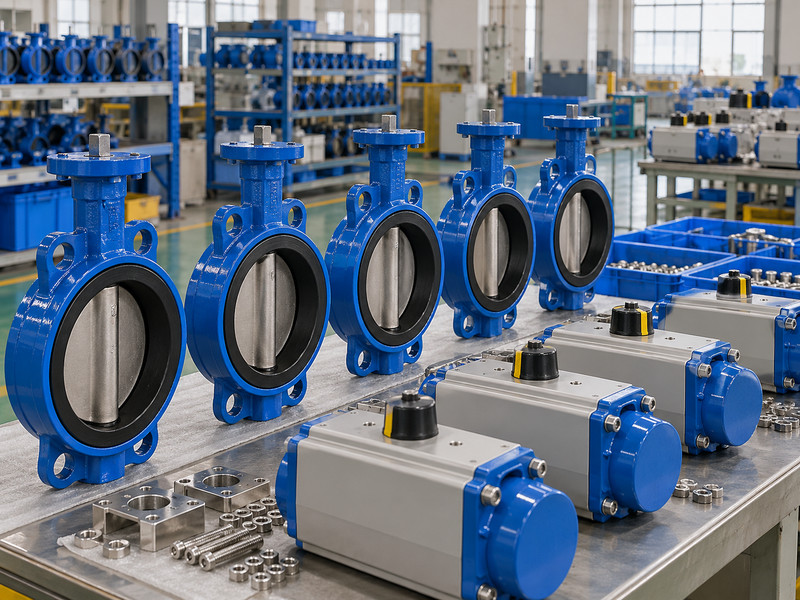
The inspection plan should cover the manufacturing and verification steps that control your order’s requirements. A double acting butterfly valve factory should identify its own activities, subcontracted work, acceptance methods, and document responsibilities. Inspection scope should follow the quoted configuration rather than a generic checklist for every valve the company sells.
How do you make the plan usable?
Identify the approved drawings, material requirements, critical dimensions, assembly checks, pressure tests, and functional tests. State any witness or hold points and the notice needed before they occur. Clarify who may accept a deviation and what happens when a result fails. A checklist with ticks but no acceptance basis gives an inspector little help when the product differs from the drawing or a test cannot reproduce the required condition.
- Connect inspection stages to specific purchase requirements.
- State acceptance criteria, records, and approval responsibilities.
- Agree witness and shipment hold points before manufacture.
| Inspection stage | Acceptance basis | Required output |
|---|---|---|
| Incoming material | Approved material specification | Identifiable inspection and material records |
| Manufacture and assembly | Drawings and procedures | Dimensional and assembly results |
| Final verification | Agreed test methods | Product-linked test and release records |
Key takeaway: An inspection plan should tell the factory and buyer what decision each completed check permits.
2. What should incoming material inspection establish?
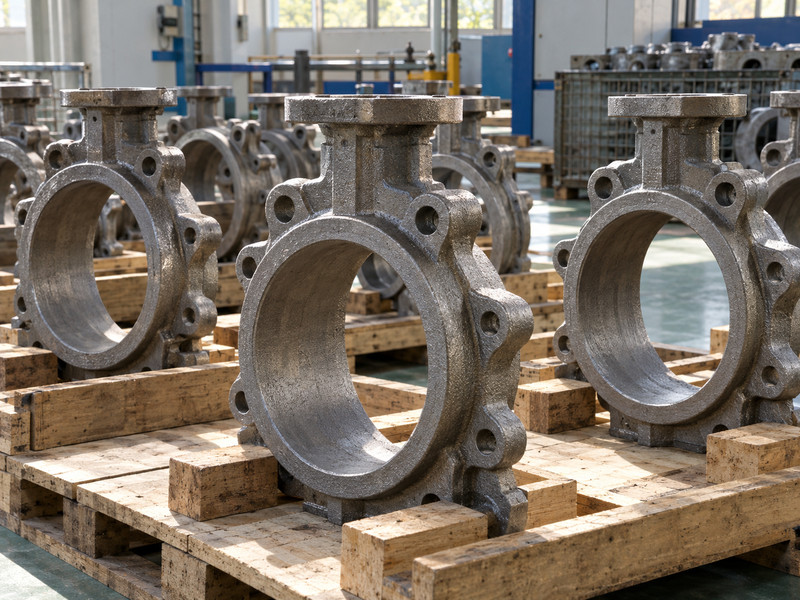
Incoming inspection should establish that the received materials and components match the approved specification and identification system. A double acting butterfly valve factory needs to control body castings, discs, shafts, seats, seals, and purchased drives as applicable. One body material certificate cannot represent all those parts.
Which details should stay connected to the order?
Confirm material grade, relevant batch identification, component dimensions, and the available inspection evidence for each controlled item. For elastomer seats, the specified compound matters; “black rubber” is not a material designation. Check how the factory separates similar-looking components intended for different fluids or temperatures. Where purchased actuators or accessories form part of the order, include their exact specifications and receiving checks.
- Identify the body, disc, shaft, and seal materials separately.
- Check segregation of visually similar seat compounds.
- Include purchased actuators and accessories in receiving control.
- An approved source does not remove the need to confirm that the correct component arrived.
| Incoming item | Identity to confirm | Reason |
|---|---|---|
| Metal components | Grade and relevant batch | Material and traceability review |
| Seats and seals | Actual compound and configuration | Service compatibility |
| Purchased controls | Model, function, supply requirements | Correct assembly behaviour |
Key takeaway: Material control begins when components enter the factory rather than when the final certificate is assembled.
3. Which machining checks protect installation fit?
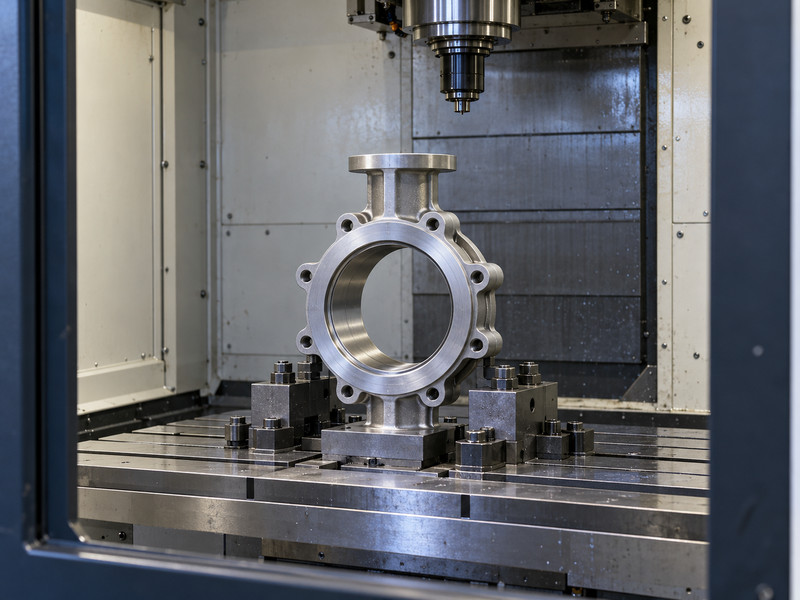
Check the machined dimensions that determine sealing, drive alignment, and pipe fit. A double acting butterfly valve factory should inspect against the approved drawing revision, with the relevant measuring method identified. A record for another body style or size cannot establish your valve’s installation dimensions.
Where should an inspector focus?
Review flange or wafer dimensions, face-to-face length, shaft and bearing locations, mounting-pad geometry, and coupling interfaces. Include disc clearance against the intended mating bores. For a lug butterfly valve, check the specified thread and usable engagement arrangement. Record any rework and its acceptance before assembly hides the surface or dimension.
- Verify the drawing and inspection record revisions.
- Check critical dimensions before they become inaccessible.
- Retain approved rework and deviation information.
- A clean final appearance does not show whether the original dimensional deviation was corrected or merely passed to the next station.
| Dimension group | Installation consequence | Inspection record |
|---|---|---|
| Pipe connection | Fit and disc clearance | Connection dimensions |
| Shaft and bearings | Alignment and movement | Machining inspection |
| Mounting interface | Drive engagement and support | Assembly-interface dimensions |
Key takeaway: Select dimensional checkpoints that protect both the process connection and the torque path.
4. What should you verify during seat and disc assembly?
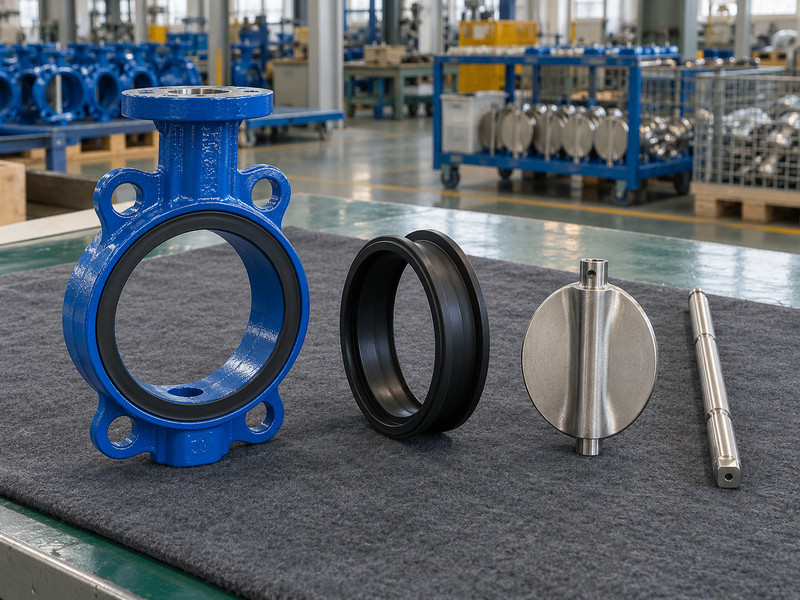
Verify correct components, cleanliness, sealing-surface condition, assembly orientation, and the approved fitting procedure. A double acting butterfly valve factory should not use actuator force to overcome an unexplained assembly problem. Confirm mechanical assembly before accepting a powered cycle.
Which records help distinguish an assembly fault?
Check the seat compound, disc and shaft identity, retention features, and any specified assembly materials. Follow the applicable procedure for lubricants or fitting aids rather than applying a general practice to every seal. Inspect sealing surfaces for damage and verify permitted movement using the appropriate method. If movement is abnormal, investigate the cause before pressure or functional testing.
- Match the installed seat and seals to the approved build.
- Inspect surfaces and retention features before closure.
- Document component changes made during corrective work.
- A later successful test can be difficult to interpret if undocumented component changes occurred between assembly attempts.
| Assembly feature | Check | Record value |
|---|---|---|
| Seat and seals | Correct compound and condition | Confirms the tested configuration |
| Disc and shaft | Correct fit and retention | Supports movement and strength review |
| Assembly procedure | Applicable materials and method | Makes repeat production reproducible |
Key takeaway: Keep the tested assembly identifiable so its result can be applied to the delivered configuration.
5. How should the actuator be fitted and checked?
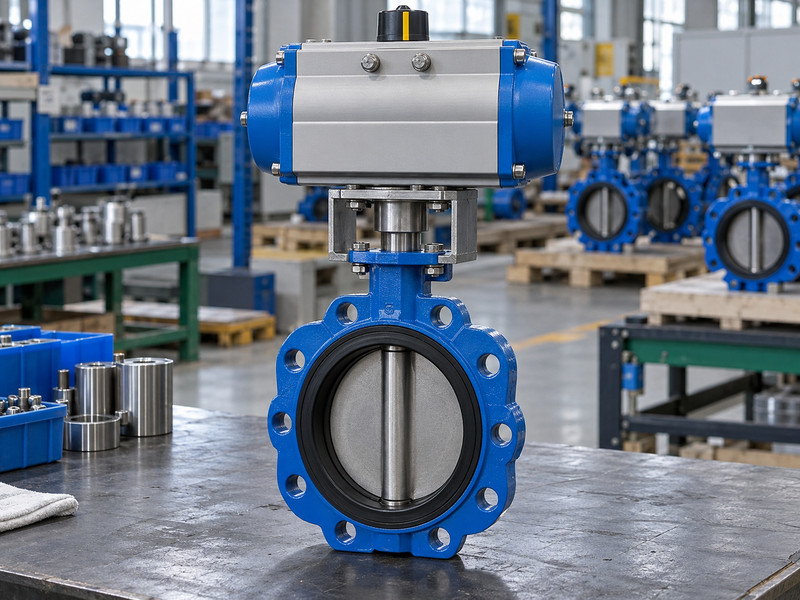
Fit the actuator through the approved coupling and support, then check alignment, travel, indication, and accessories. A double acting butterfly valve factory should use the selected actuator and sizing record rather than any drive that happens to fit. The final assembly must match the approved mechanical and control interfaces.
What should a pretest review include?
Confirm shaft engagement, bracket alignment, fastener specification, and operating clearance. Review actuator output at the specified air conditions and compare maximum output with component limits. Confirm solenoid function, voltage, tubing, and feedback requirements. If the package includes a positioner or manual override, include its instructions and acceptance checks.
- Verify the actual drive and control component identities.
- Inspect coupling, bracket, and fasteners.
- Match indication and feedback to actual valve travel.
- Keep the actuator’s pointer and electrical signals separate from actual disc position until their mechanical relationship has been verified.
| Pretest item | Required match | Consequence of a mismatch |
|---|---|---|
| Actuator | Approved sizing and supply conditions | Stalling or excess output |
| Drive connection | Approved drawing and engagement | Binding, slip, or overload |
| Controls | Required command and feedback function | Incorrect operating sequence |
Key takeaway: Final assembly inspection should establish what the later functional test is testing.
6. What do shell and closure tests establish?
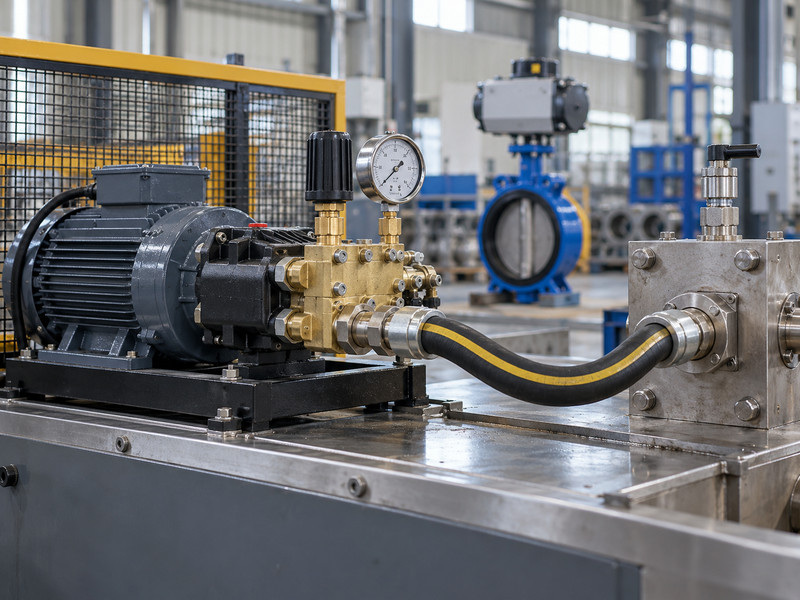
Shell and closure tests address different requirements: pressure-boundary integrity and the specified shutoff acceptance. A double acting butterfly valve factory should state the applicable procedure, medium, pressure, duration, direction, and limit for each. Test pressure must not be presented as allowable operating pressure.
How should you review pressure values?
RUITO’s documented common PN16 soft-seat water configuration lists room-temperature shell and closure test pressures of 24 bar and 17.6 bar, subject to the applicable procedure and declared seat differential-pressure rating. Those values are inspection conditions, not a universal operating envelope or a rating for every butterfly valve. Reverse closure limits, lined designs, gas-service checks, and other special requirements need their own applicable procedures. Confirm the contract-selected method, such as ISO 5208 where applicable, before using a pressure value as an acceptance criterion.
- Keep shell and closure requirements separately identified.
- Review test direction and the declared seat rating.
- Identify the tested valve and the measuring equipment used.
| Test information | Required detail | Avoid assuming |
|---|---|---|
| Pressure | Applicable configuration and procedure | That it is an operating rating |
| Closure direction | Forward, reverse, or both as specified | Equal ratings in both directions |
| Acceptance | Defined leakage or integrity limit | That every test requires the same result |
Key takeaway: A pressure figure is interpretable only with the valve configuration and test conditions that accompany it.
7. What should an assembly functional test verify?
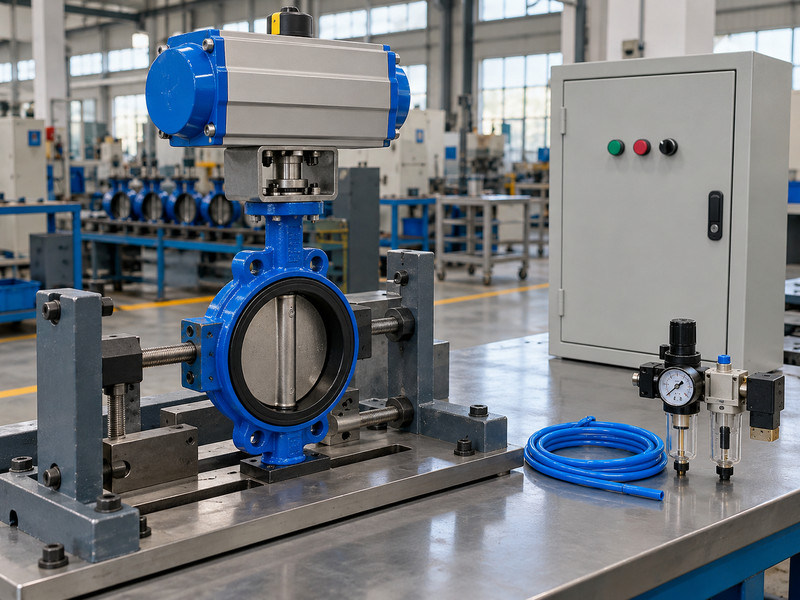
A functional test should verify the specified movement, controls, indication, feedback, and failure response under stated conditions. A double acting butterfly valve factory must identify whether the test is unloaded or represents a defined process load. One free cycle cannot demonstrate every operating case in the sizing calculation.
What should a witness record contain?
Check opening and closing, actual end positions, signal behaviour, and agreed movement times. Record the air supply condition used during the test. If power-loss, air-loss, or restart behaviour is required, verify each agreed event separately. A standard double-acting actuator should not be credited with an inherent spring-return action.
- Verify both movement directions and end-position signals.
- Record the air condition and loading represented.
- Separate different failure events and restoration tests.
- Where the workshop cannot reproduce the required load or site controls, document the limitation and assign the remaining verification before release to process operation.
| Functional check | Demonstrates | Additional question |
|---|---|---|
| Unloaded travel | Defined movement and indication | Is loaded operation also required? |
| Signal test | Correct accessory response | Does the site receiving input also need checking? |
| Failure sequence | The tested event’s response | Which other events remain untested? |
Key takeaway: Keep the scope of a successful functional test as precise as the scope of a pressure test.
8. Which final inspection records matter at shipment?
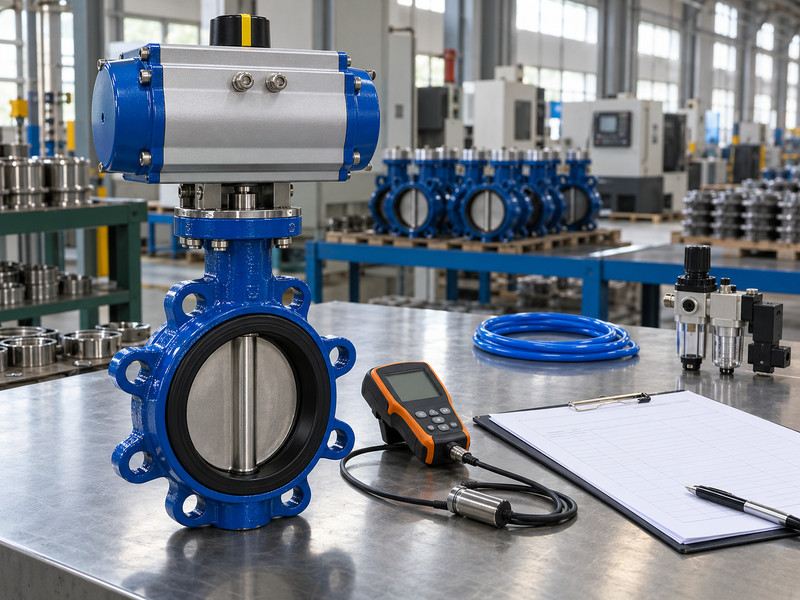
Final records should identify the delivered configuration, completed inspections, accepted deviations, and applicable instructions. A double acting butterfly valve factory should connect the document package with the product and packing identification. A collection of generic reports does not establish the build inside a particular crate.
How do you check the final document package?
Check drawing revisions, materials, actuator and control details, inspection results, and any project-specific documents required by the order. Review identification and quantities against the packing list. Confirm that coating or lining records refer to the relevant specification where those checks apply. Keep approved deviations visible rather than removing them from the final package.
- Reconcile product identification across tests and packing records.
- Check the final drawing and component revisions.
- Retain deviations, instructions, and spare-part information.
- For maintenance, request the actual replacement-part information and instructions needed to retain the accepted configuration after service work.
| Final document | Connection to verify | Use after delivery |
|---|---|---|
| Assembly drawing | Delivered component configuration | Installation and replacement |
| Inspection and test reports | Identified valve or accepted lot scope | Acceptance and investigation |
| Instructions and parts | Actual supplied assembly | Maintenance planning |
Key takeaway: Reconcile the final documents with the shipment rather than accepting them as an unrelated certificate bundle.
9. How do you release a production lot for shipment?
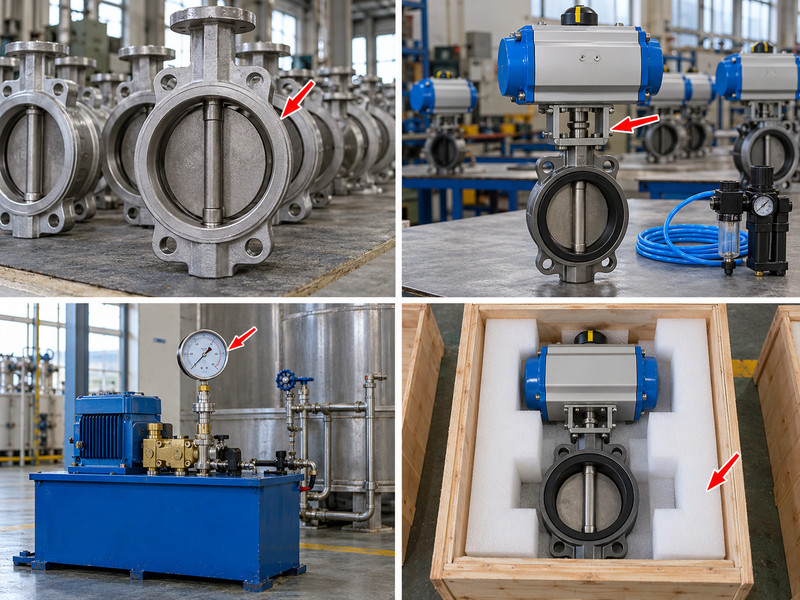
Release the lot when the agreed inspections are accepted, deviations are closed or approved, documents are complete, and packing protects the assembly. A double acting butterfly valve factory should not treat completion of one final test as automatic permission to ship. Review the complete purchase and inspection requirements.
What should the shipment hold point confirm?
Confirm that required witness points occurred or were formally waived, failed results received an accepted disposition, and the final quantity matches the order. Review protection for flange faces, exposed drives, air fittings, and accessories. Packing should support the valve and actuator without transferring transport loads through small fittings or vulnerable components. Keep the release decision and its supporting records with the shipment file so later delivery questions can be traced to a defined acceptance state.
- Close inspection actions and approved deviations.
- Reconcile quantities, identification, and documents.
- Inspect protection and support before crates are closed.
| Release area | Accept when | Hold when |
|---|---|---|
| Inspection | Required results and dispositions are accepted | Governing checks remain unresolved |
| Documents | Agreed records match the shipment | Identification or revisions conflict |
| Packing | Product and accessories are protected | Loads rely on vulnerable components |
Key takeaway: Send RUITO the inspection plan and document requirements when you contact us. We can review the requested acceptance scope with the proposed valve configuration.
10. What should inspectors ask before accepting the lot?
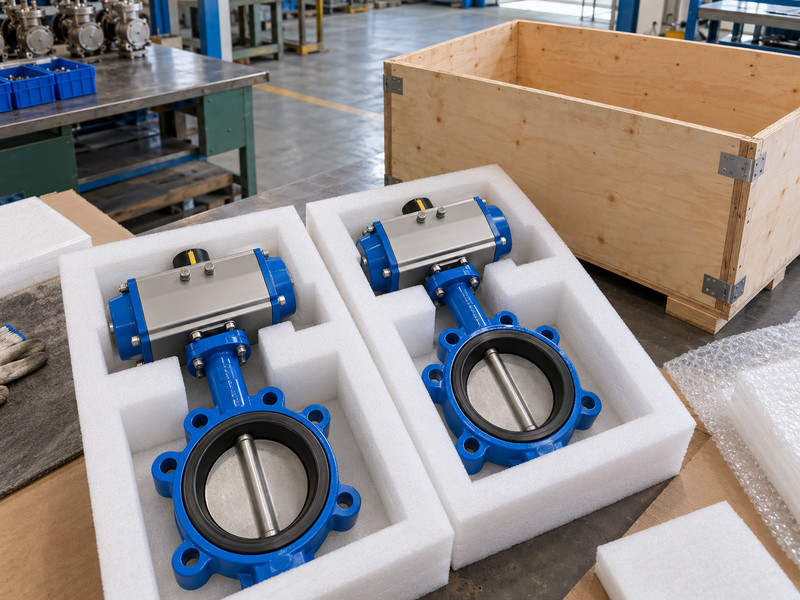
Use these questions when reviewing a double acting butterfly valve factory or planning a witness visit.
- Q1: Can a test video replace the pressure report? No. A useful report identifies the valve, procedure, conditions, acceptance limit, result, and relevant equipment. A video may supplement that record but does not establish those details alone.
- Q2: What’s the best pressure-test standard? Use the method required by the contract and applicable product specification. Confirm its scope, configuration, medium, duration, direction, and acceptance criteria before testing.
- Q3: Can I accept the actuator from an unloaded cycle? Only for the requirements that the test demonstrates. Review any required loaded movement, minimum-air performance, failure response, and site control checks separately.
- Q4: How do I know a repaired valve passed? Review the documented defect disposition, repair or rework scope, component identity, and required repeat inspections. Connect the accepted results to the final delivered build.
- Q5: Can shipment proceed with missing records? Follow the purchase and release conditions. Identify the missing requirement and its authorized disposition rather than assuming a promised later document satisfies an existing hold point.