
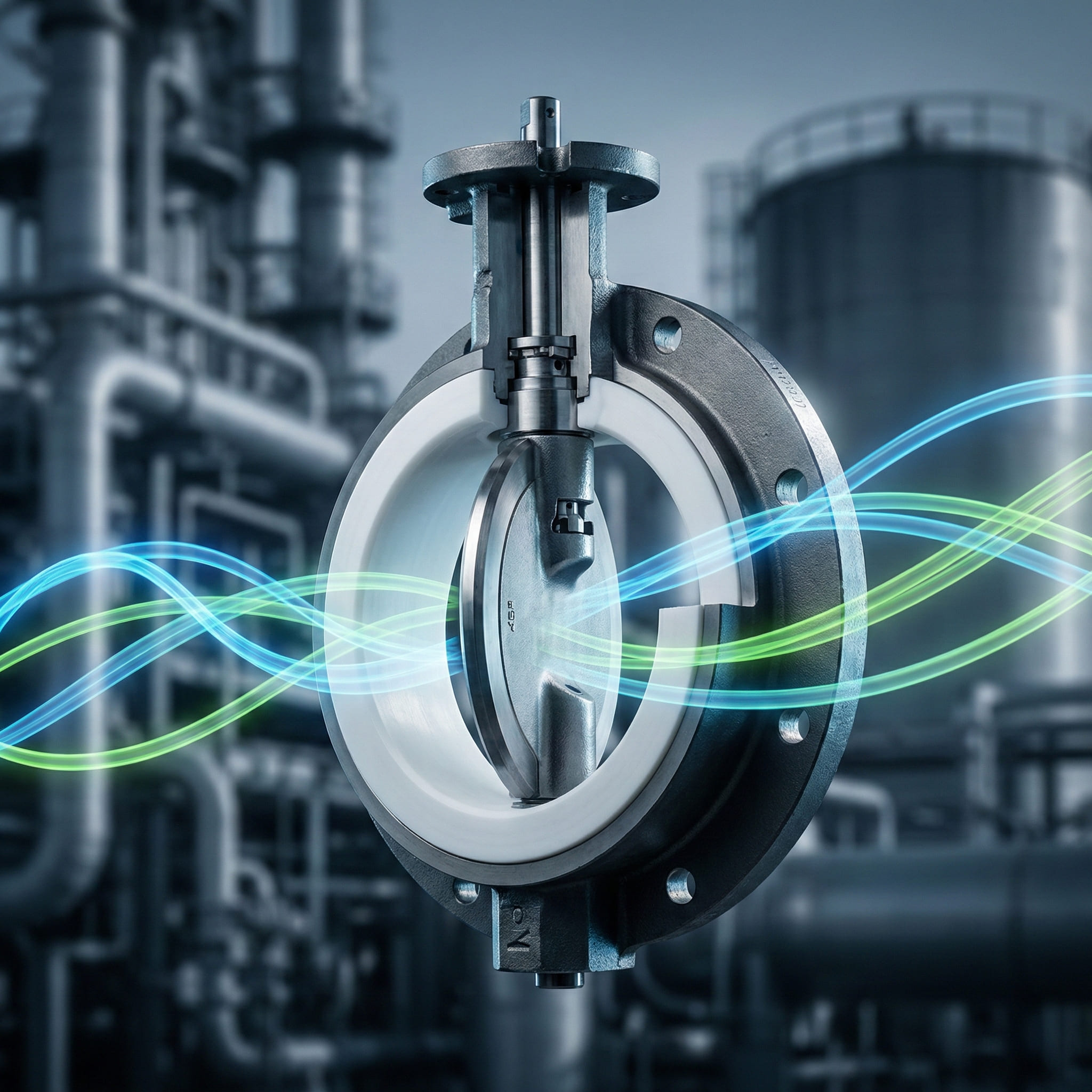
Butterfly valves are quarter-turn rotational motion valves used to stop, regulate, and start fluid flow by rotating a disc-shaped element. Industrial piping systems often face space constraints, high costs, and slow actuation times when you rely on traditional gate or globe valves. Choosing the wrong component leads to catastrophic leaks and increased maintenance downtime in critical environments like water treatment or chemical processing. Fortunately, understanding the specialized design of butterfly valve components allows you to optimize performance and ensure long-term system reliability.
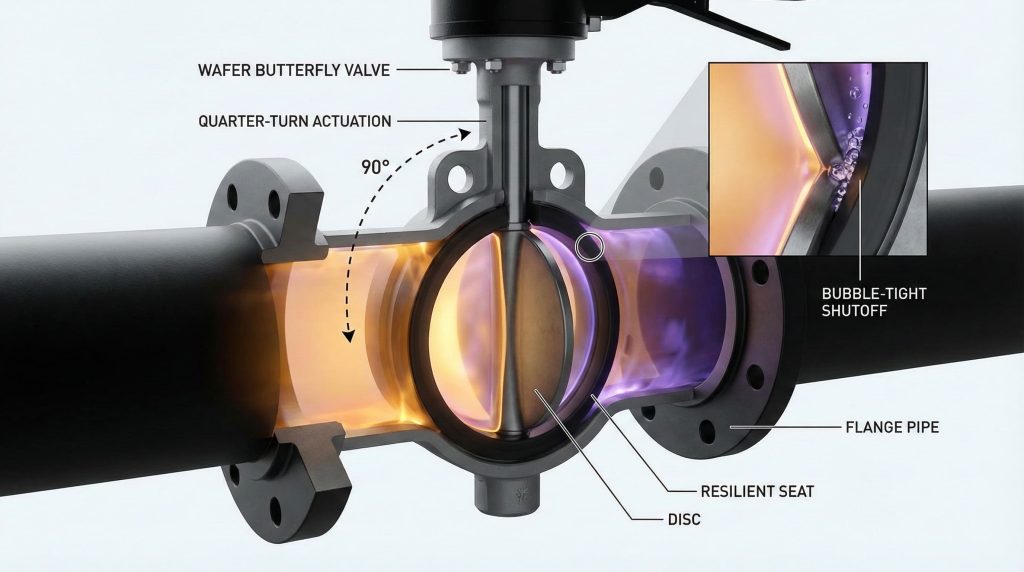
Why choose the resilient seated design of butterfly valve?
You should choose the resilient seated design when you need a cost-effective, bubble-tight shutoff for low-pressure systems. This specific design of butterfly valve features a concentric arrangement where the stem passes through the center of the disc and the seat. It is widely used because it provides reliable sealing in non-corrosive environments. You can easily integrate these into existing systems to manage water or air flow efficiently.
Is the concentric disc arrangement efficient?
This arrangement is highly efficient for general-purpose flow control because of its simple mechanical structure. But that’s not all; the simplicity also means lower manufacturing costs and easier installation for your team. You will find that these valves require less torque to operate compared to other designs.
- Lower initial procurement costs.
- Simplified maintenance procedures.
- Reduced weight for easier handling.
- Fast 90-degree actuation.
Which elastomeric materials provide the best seal?
The choice of seat material depends entirely on the temperature and chemistry of your media. You typically select between EPDM, Buna-N, or Viton to ensure the valve remains leak-proof over its lifespan. These materials provide the necessary flexibility to create a tight seal against the disc edge.
Where are resilient seats most effective?
These valves perform best in water treatment, HVAC systems, and low-pressure utility lines. You should avoid them in high-temperature steam applications where the elastomer might degrade. Properly matching the seat material to your fluid prevents premature failure and reduces operational risk. Key Takeaway: Resilient seats offer the most economical solution for general utility services where bubble-tight shutoff is a priority.
| Component | Material Type | Primary Function |
|---|---|---|
| Disc | Ductile Iron/SS | Flow blockage |
| Seat | EPDM/Buna-N | Sealing interface |
| Stem | Stainless Steel | Torque transmission |
This table highlights the balance between cost and performance found in concentric configurations.
What defines the polymer-lined design of butterfly valve?
The polymer-lined design is defined by an internal protective layer, such as PTFE or PFA, that shields all wetted parts from corrosive media. This design of butterfly valve is essential when you are handling aggressive chemicals or ultrapure fluids. The lining prevents the metal body from coming into contact with the process fluid, extending the service life of the valve. You will find these indispensable in pharmaceutical and chemical processing plants.
How does lining protect against corrosion?
The lining acts as a comprehensive barrier between the corrosive media and the structural metal components. You might be wondering how this affects the overall disc design. The polymer is typically molded over the disc and within the body cavity to ensure no metal is exposed.
- Resists a wide range of acids.
- Eliminates the need for expensive alloys.
- Provides a smooth surface to prevent buildup.
- Maintains purity in sensitive processes.
Are PFA-lined valves better for chemicals?
PFA-lined valves are often preferred for their superior thermal stability and chemical resistance compared to standard PTFE. Think about this: PFA can handle higher temperatures while maintaining its integrity under vacuum conditions. You should choose PFA when your process involves fluctuating temperatures or high concentrations of volatile chemicals. Key Takeaway: Polymer linings allow you to use standard metal bodies in highly corrosive environments safely.
| Feature | Advantage | Ideal Application |
|---|---|---|
| PTFE Lining | High purity | Pharmaceuticals |
| PFA Lining | Thermal stability | Chemical processing |
| Molded Disc | Total protection | Acid transport |
Polymer linings transform standard valves into specialized tools for the most demanding chemical environments.
How does the high performance design of butterfly valve work?
The high performance design utilizes a double offset (eccentric) geometry that lifts the disc off the seat during the initial opening. This specific design of butterfly valve reduces friction and wear, which significantly extends the life of the sealing surface. By moving the stem center behind the disc and slightly to one side, the disc only contacts the seat in the final degrees of closure. You will benefit from this in high-cycle or high-pressure applications where standard valves fail.
Why is the double offset structure beneficial?
The double offset structure is beneficial because it minimizes the torque required for operation and reduces seat deformation. Believe it or not, this mechanical advantage allows the valve to handle much higher pressures than concentric versions. You can expect a longer service life and better reliability in steam and oil services.
- Reduced seat friction.
- Lower operating torque.
- Extended cycle life.
- Bi-directional sealing capability.
Does this design allow for zero-leakage?
Yes, many high performance models are engineered to provide zero-leakage shutoff in both directions. You should look for designs that incorporate flexible seat energizers to maintain contact even as temperatures fluctuate. This makes them ideal for critical isolation points in your piping network. Key Takeaway: High performance valves bridge the gap between low-pressure resilient valves and extreme-service triple offset designs.
| Feature | Impact | System Benefit |
|---|---|---|
| Double Offset | Less Friction | Longer seat life |
| Pressure Rating | Higher Limits | Process versatility |
| Seating | Energized | Zero-leakage reliability |
The double offset geometry is a critical innovation for improving the durability of modern industrial flow systems.
Is the triple offset design of butterfly valve most secure?
The triple offset design is considered the most secure because it uses three distinct offsets to create a cam-like action for friction-free operation. In this design of butterfly valve, the third offset is the geometry of the sealing surface itself, which creates an elliptical shape. This allows for a zero-leakage metal-to-metal seat that is intrinsically fire-safe. You should specify this design for extreme temperatures and pressures where other valves would melt or leak.
How does the third offset prevent seat wear?
The third offset ensures that the disc only contacts the seat at the final point of closure, effectively eliminating sliding friction. The best part? This means the valve does not suffer from the “seat rubbing” that destroys standard seals. You can maintain a tight shutoff even after thousands of cycles in abrasive media.
- Eliminates mechanical wear.
- Enables metal-to-metal sealing.
- Supports high-pressure steam.
- Reduces maintenance frequency.
Is metal-to-metal seating required for fire safety?
Metal-to-metal seating is often a requirement for fire-safe certification in oil and gas refineries. You need a valve that remains sealed even if the primary soft seals are destroyed by intense heat. Triple offset valves are engineered to meet these rigorous safety standards consistently. Key Takeaway: Triple offset valves offer the highest level of security for hazardous, high-temperature, and high-pressure industrial processes.
| Offset Type | Mechanical Action | Primary Benefit |
|---|---|---|
| First Offset | Stem behind disc | Seat protection |
| Second Offset | Stem off-center | Friction reduction |
| Third Offset | Conical sealing | No-rubbing closure |
Triple offset technology represents the pinnacle of valve engineering for critical safety applications.
Which end connection fits the design of butterfly valve?
The end connection you choose must fit the specific installation requirements and pressure ratings of your design of butterfly valve project. Common styles include wafer, lug, and flanged connections, each offering different levels of stability and ease of maintenance. You must consider whether the valve needs to be removed while the system is under pressure. Selecting the right connection ensures you avoid leaks and structural failures at the pipe joints.
What is the difference between Wafer and Lug?
A wafer valve is sandwiched between pipe flanges, while a lug valve has threaded inserts that allow it to be bolted to a single flange. Here is the kicker: lug valves are required if you need dead-end service or to remove downstream piping while the system is live. You will find wafer valves are generally lighter and more affordable for standard through-flow applications.
- Wafer: Lightweight and compact.
- Lug: Allows for dead-end service.
- Wafer: Lower installation cost.
- Lug: Better for system isolation.
When is a double flanged connection necessary?
Double flanged connections are typically necessary for large-diameter valves or high-pressure systems where extra stability is required. You should use them in heavy-duty water works or power plant cooling systems to ensure rigid alignment. This connection type provides the most robust interface between the valve and the pipeline. Key Takeaway: End connections must be selected based on maintenance needs and the requirement for downstream piping removal.
| Connection | Best For | Mounting Method |
|---|---|---|
| Wafer | Space saving | Between two flanges |
| Lug | Isolation | Bolted to one side |
| Flanged | Large diameters | Bolted on both sides |
Matching the end connection to your specific operational needs is vital for long-term system integrity and safety.
How to automate the modern design of butterfly valve?
Automating the modern design of butterfly valve involves mounting an actuator to the valve stem to allow for remote or programmed control. You can choose between pneumatic, electric, or hydraulic control depending on your power source and speed requirements. Automation increases precision in flow regulation and enhances safety by allowing rapid shutdown in emergencies. You will find that most modern valves are designed with ISO 5211 mounting pads for easy actuator integration.
When to use rack and pinion actuators?
Rack and pinion actuators are the most common choice for pneumatic operation in industrial plants. Wait, there is more; they provide a compact footprint and high torque output for their size. You should use these when you have a reliable compressed air source and need fast open/close speeds.
- Reliable for high-cycle duty.
- Compact and lightweight.
- Available in fail-safe configurations.
- Easy to maintain and repair.
How do electric actuators improve precision?
Electric actuators offer the best precision for modulating service where you need to control the exact degree of disc opening. You can integrate them easily into digital control systems without the need for complex air lines. They are ideal for remote locations where electricity is more accessible than compressed air. Key Takeaway: Automation turns a simple mechanical valve into a sophisticated component of an integrated industrial control system.
| Actuator Type | Power Source | Best Use Case |
|---|---|---|
| Pneumatic | Compressed Air | Rapid on/off cycles |
| Electric | Electricity | Precision modulation |
| Manual | Human Force | Small, infrequent use |
Proper automation selection depends on the required speed, torque, and available power infrastructure at your site.
What is the standard for the design of butterfly valve?
The standard for the design of butterfly valve manufacturing includes international benchmarks like API 609, ASME B16.34, and ISO 5208. These standards dictate everything from wall thickness and pressure-temperature ratings to the specific methods for testing seat leakage. Following these standards ensures that the valve you purchase will be compatible with your existing flanges and safe for your operating conditions. You can trust that a standard-compliant valve has undergone rigorous quality checks.
Why is API 609 critical for manufacturing?
API 609 is the primary standard for butterfly valve dimensions and pressure ratings in the oil and gas industry. You might be wondering why this matters; it ensures that valves from different manufacturers are interchangeable within your system. It also defines the testing requirements for high-performance and triple offset designs.
- Standardizes face-to-face dimensions.
- Defines pressure-temperature limits.
- Ensures material traceability.
- Sets minimum wall thicknesses.
Does ASME B16.34 define pressure ratings?
ASME B16.34 provides the universal criteria for pressure and temperature ratings for all flanged and threaded valves. You must check these ratings to ensure the valve body can withstand the maximum possible pressure in your pipeline. Ignoring these standards could lead to catastrophic body failure under stress. Key Takeaway: Compliance with global standards like API and ASME is the only way to guarantee the safety and compatibility of industrial valves.
| Standard | Focus Area | Industry Relevance |
|---|---|---|
| API 609 | Dimensions/Design | Oil & Gas / General |
| ASME B16.34 | Pressure/Temp | Power / Petrochem |
| ISO 5208 | Leakage Testing | Global Quality |
Adherence to strict engineering standards is what separates professional industrial valves from low-quality components.
What are the best uses for the design of butterfly valve?
The best uses for the design of butterfly valve are found in industries that require large-scale fluid handling with minimal space requirements. You will see these valves extensively in water treatment plants, HVAC systems, and the power generation sector. Their lightweight nature makes them perfect for installations where application factors like weight and cost are critical constraints. They are also increasingly used in chemical processing for regulating the flow of corrosive fluids.
Is this valve ideal for water treatment?
Butterfly valves are the industry standard for water treatment because they handle large volumes of water efficiently at a low cost. It gets even better; their ability to provide tight shutoff in large diameters makes them superior to gate valves for isolation. You can use them for everything from intake water to chemical dosing.
- Low pressure drop across the valve.
- Resistant to bio-fouling with proper coatings.
- Scalable to very large pipe sizes.
- Easy to automate for plant-wide control.
Why is it preferred in HVAC cooling systems?
In HVAC, space is often at a premium, and the compact wafer design of these valves fits into tight mechanical rooms easily. You should choose them for chilled water and condenser water lines where reliable throttling is needed. Their quick actuation also helps in managing the dynamic loads of large building systems. Key Takeaway: The versatility of butterfly valves makes them the go-to choice for massive utility and infrastructure projects globally.
| Industry | Typical Application | Key Advantage |
|---|---|---|
| Water Works | Bulk isolation | Cost/Scale |
| HVAC | Chilled water loops | Space efficiency |
| Power | Cooling water | Fast actuation |
The unique combination of compact size and high flow capacity drives the adoption of these valves across diverse sectors.
How to maintain the safety design of butterfly valve?
To maintain the safety design of butterfly valve systems, you must implement a rigorous schedule of seat inspection and stem lubrication. Regular maintenance prevents the build-up of debris that could cause leaks or increase the torque required for operation. You should pay close attention to the stem seals, as these are common points of failure in high-cycle environments. Replacing worn components before they fail ensures the safety of your personnel and the environment.
How often should the seat be inspected?
Seat inspection frequency depends on the abrasiveness of your media and the number of cycles the valve performs. Make no mistake; waiting for a visible leak to occur is a recipe for system downtime. You should perform a visual check or a pressure test during every scheduled plant shutdown.
- Prevents unplanned shutdowns.
- Identifies erosion before it spreads.
- Ensures bubble-tight shutoff remains intact.
- Extends the life of the disc.
What causes stem seal failure in high-pressure?
High pressure can force media into the stem packing area, causing friction and eventual degradation of the sealing material. You should use live-loaded packing designs if your system experiences frequent pressure spikes. This keeps the seal energized and prevents hazardous atmospheric leaks. Key Takeaway: Proactive maintenance and the use of high-quality sealing materials are the best defenses against valve failure.
| Task | Frequency | Benefit |
|---|---|---|
| Lubrication | Every 6 months | Smoother operation |
| Seat Check | During shutdown | Leak prevention |
| Actuator Test | Monthly | Safety readiness |
A disciplined approach to maintenance ensures that your valves remain a safe and reliable part of your infrastructure.
What factors improve the robust design of butterfly valve?
Factors that improve the robust design of butterfly valve include the selection of high-grade materials and the application of protective coatings to the disc. You should choose flanged-end bodies made of stainless steel or duplex alloys for harsh marine or industrial environments. These materials offer superior resistance to pitting and stress corrosion cracking. Additionally, weight-reduction techniques in the valve body can lower your overall system costs without compromising structural integrity.
Which body materials offer the highest durability?
Stainless steel and carbon steel offer the highest durability for high-pressure and high-temperature services. Listen to this; while ductile iron is great for water, it lacks the strength needed for critical chemical processes. You must match the material’s mechanical properties to the stresses of your specific pipeline.
- Stainless Steel: Best for corrosion.
- Carbon Steel: High strength and temperature.
- Ductile Iron: Cost-effective for utility.
- Aluminum Bronze: Excellent for seawater.
How does weight reduction influence system cost?
Reducing the weight of the valve body lowers the cost of the pipe supports and simplifies the installation process for your crew. You can save significantly on logistics and labor when dealing with large-diameter valves. Robust engineering allows for thinner, stronger walls that meet all safety standards while being easier to handle. Key Takeaway: A truly robust design balances material strength, corrosion resistance, and weight to provide the best value over the valve’s life.
| Factor | Impact on Quality | Result |
|---|---|---|
| High-Grade Alloys | Corrosion resistance | Longer service life |
| Precision Machining | Tight tolerances | Better sealing |
| Disc Coatings | Erosion resistance | Reduced wear |
Combining the right materials with advanced engineering leads to a valve that can withstand the toughest industrial conditions.
Conclusion
Mastering the specialized design of butterfly valve components is the key to building an efficient and safe industrial piping system. By selecting the appropriate offset geometry, seating materials, and automation, you solve the chronic problems of high maintenance costs and system leaks. Ruitoflow is dedicated to providing precision-engineered valve solutions that meet the highest international standards, ensuring your operations remain productive and safe. For expert guidance on optimizing your flow control or to explore our full range of industrial products, please contact us today.
FAQ
Can I use a butterfly valve for throttling?
Yes, butterfly valves are excellent for throttling, especially those with high-performance or triple-offset designs that resist seat wear. You should avoid using concentric resilient-seated valves for precise throttling near the closed position to prevent seat erosion.
What’s the best way to prevent valve leaks?
The best way is to match the seat material to your specific chemical media and perform regular preventative maintenance. You should also ensure that the valve is installed with proper flange alignment to avoid uneven stress on the seals.
How do I know if I need a triple offset valve?
You know you need a triple offset valve if your application involves temperatures above 400°F or pressures exceeding Class 300 ratings. They are also the correct choice when you require a fire-safe, metal-to-metal, zero-leakage shutoff.
Can I replace the seat in a butterfly valve?
Yes, most resilient-seated and some high-performance butterfly valves feature replaceable seats. This allows you to refurbish the valve without replacing the entire body, significantly lowering your long-term maintenance costs.
What’s the best material for corrosive acids?
The best material is typically a polymer-lined body and disc using PTFE or PFA. These materials provide nearly universal chemical resistance and prevent the corrosive media from reaching the structural metal components of the valve.