
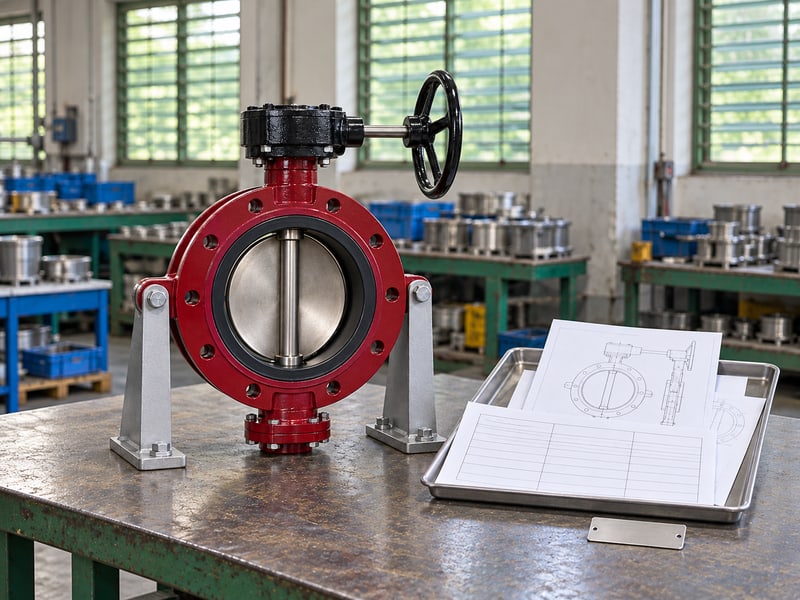
Spot medium pressure turbine butterfly valve selection mistakes by replacing the catalog label with confirmed pressure limits, a complete operator description and the actual system duty. You may receive two quotations carrying that phrase while their seals, drives and application assumptions differ. Comparing prices before resolving those differences can leave your order without an accepted operating specification. Ask each supplier to define the offered configuration, then review its drawings and performance evidence against your project requirements before approving the purchase.
1. What is a medium pressure turbine butterfly valve?
The term medium pressure turbine butterfly valve describes an offer that still needs a confirmed rating, operator and application. It combines a pressure description, an ambiguous turbine label and a valve type. Read those parts separately rather than treating the phrase as a complete engineering designation or proof that two suppliers offer equivalent assemblies.
Which parts of the catalog description need confirmation?
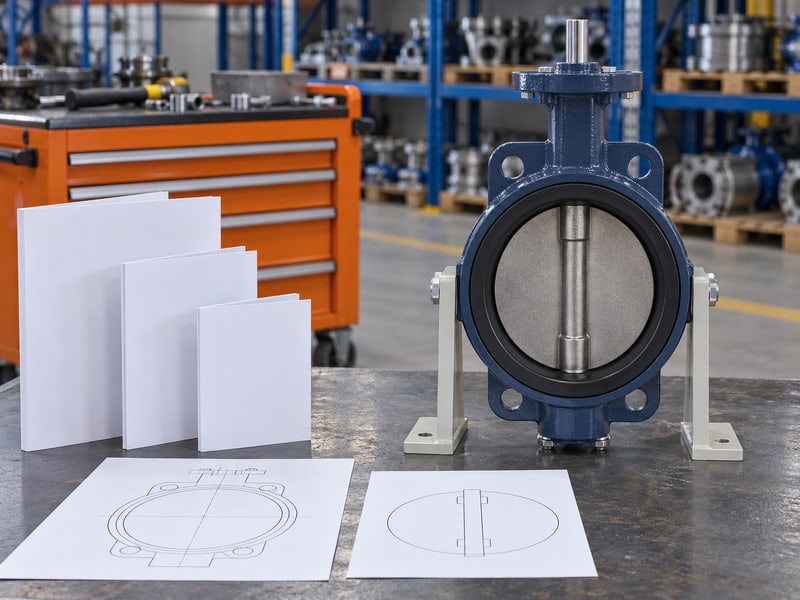
Ask for the expanded description. A conventional two-port butterfly valve opens or closes its passage by rotating a disc about a shaft running across the flow passage. The body, disc, shaft, seat and operator each have configuration details that affect the proposed duty. Ask the supplier to identify those details in its data sheet, including what it means by turbine and which rated conditions support its pressure description.
- Obtain the full valve structure and connection style behind the catalog name.
- Ask whether turbine describes the operator or the intended process application.
- Request the exact size, seal arrangement and applicable operating limits.
| Catalog wording | Information to obtain |
|---|---|
| Medium pressure | Actual configuration rating and conditions |
| Turbine | Full operator or application description |
Key takeaway: You can use the phrase to locate offers, then compare the defined assemblies. Resolve each term before treating a quotation as technically equivalent.
2. Does medium pressure turbine butterfly valve define a rating?
A medium pressure turbine butterfly valve label does not establish one pressure class that applies across suppliers. You need the offered valve's pressure–temperature limits for its size, materials and seal. Keep PN, Class or cold working pressure in the appropriate rating field, and verify the complete valve rather than inferring its capability from the flange drilling.
Which pressure conditions belong on the data sheet?
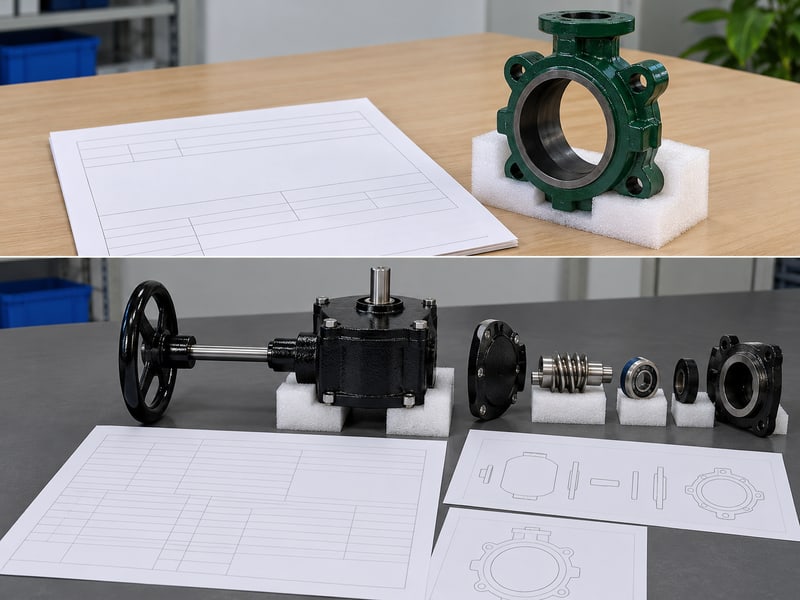
State the pressure cases. Give the supplier normal and maximum operating pressure, temperature and the maximum differential across the closed valve. Include credible transient conditions established by the project engineer, since a steady operating value cannot describe every shutdown event. Record allowable service conditions separately from shell and seat test conditions so the acceptance report cannot be mistaken for permission to operate continuously at its test pressure.
- Specify pressure units and distinguish gauge pressure from absolute pressure.
- Identify the operating temperature associated with each pressure requirement.
- Ask the supplier to declare any rating restriction caused by size or seal.
| Pressure information | Purpose |
|---|---|
| Service limits | Define permitted operating conditions |
| Inspection conditions | Define contractual tests and acceptance |
Key takeaway: A usable rating includes its configuration and temperature conditions. Return a quotation for clarification when medium pressure is its only pressure description.
3. Which medium pressure turbine butterfly valve drive fits?
The drive for a medium pressure turbine butterfly valve must match your operating requirements and the supplier's identified mechanism. Some catalog wording uses turbine for a manual worm-gear valve, but that wording does not define every product carrying the term. Confirm the actual operator before assuming manual operation, a particular gearbox or a powered actuator.
How should the supplier identify the operator?
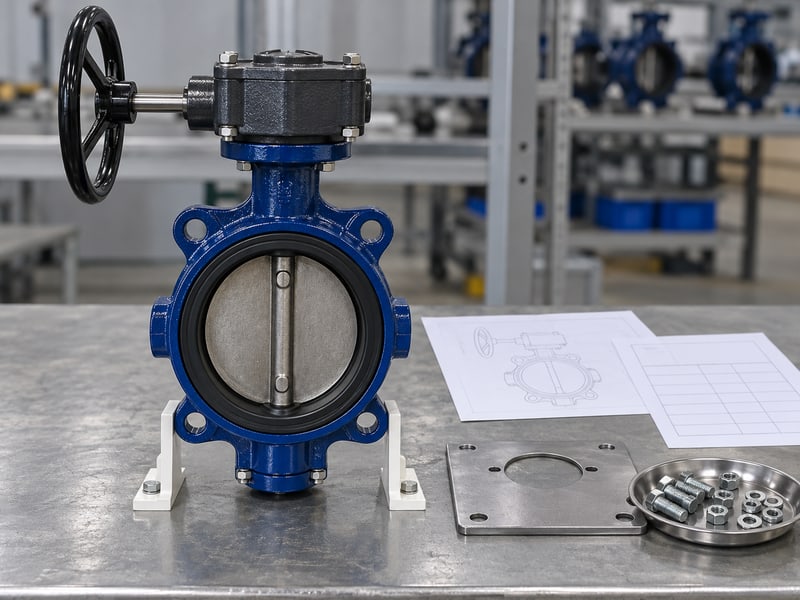
Request the operator assembly drawing. Ask for its full type, product identification, valve coupling and available operating space. For a manual gearbox, review the specified input effort, output capability and operating travel; for a powered drive, review the supply and control requirements. A photograph of a handwheel or a short catalog name cannot replace the data needed to check that the offered assembly can operate your selected valve.
- State whether the project needs local manual operation or powered operation.
- Request the applicable gearbox or actuator data for the offered assembly.
- Identify access, mounting orientation and any required remote or emergency operation.
| Operator option | Detail to confirm |
|---|---|
| Manual gearbox | Input effort, output and operating space |
| Powered actuator | Supply, output and required operation |
Key takeaway: Specify the operator in full before comparing drive packages. Keep its identity and assembly drawing with the approved valve configuration.
4. Is medium pressure turbine butterfly valve a turbine valve?
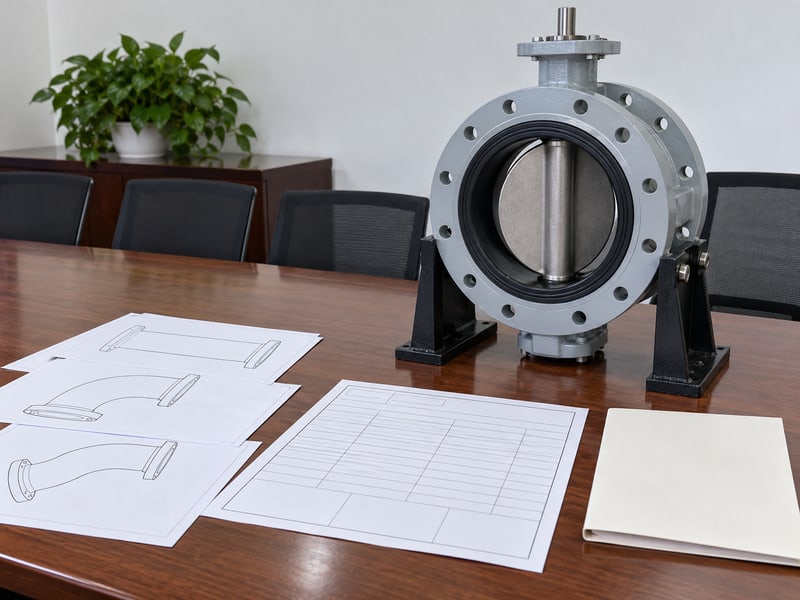
Treat a medium pressure turbine butterfly valve as a turbine application only when the system specification confirms that role. Purpose-designed butterfly valves serve hydroturbine inlets, and the proposed unit must be accepted for that application. The search phrase alone cannot identify the fluid, shutdown function or application acceptance needed for your installation.
What changes if the valve serves a turbine inlet?
Define the system function. A turbine inlet or safety shutdown duty can require an application-engineered valve and drive, with hydraulic or weight-operated arrangements specified for the particular project. Have the responsible system engineer establish the shutdown sequence, loss-of-supply behavior and dynamic conditions, including water hammer where applicable. Ask the valve manufacturer to demonstrate the proposed assembly's accepted role; RUITO's general water-service configurations do not establish approval for a hydroturbine safety function.
- State whether the valve isolates, performs an emergency function or regulates flow.
- Identify water, steam or another actual medium with its operating conditions.
- Require specific application evidence for the proposed duty and control sequence.
| Meaning of turbine | Review required |
|---|---|
| Operator wording | Confirm the physical drive mechanism |
| Process application | Confirm valve, drive and system-function acceptance |
Key takeaway: Establish the turbine role before choosing the valve package. Keep unresolved system dynamics with the responsible engineer until the supplier's scope is accepted.
5. Which medium pressure turbine butterfly valve seals fit?
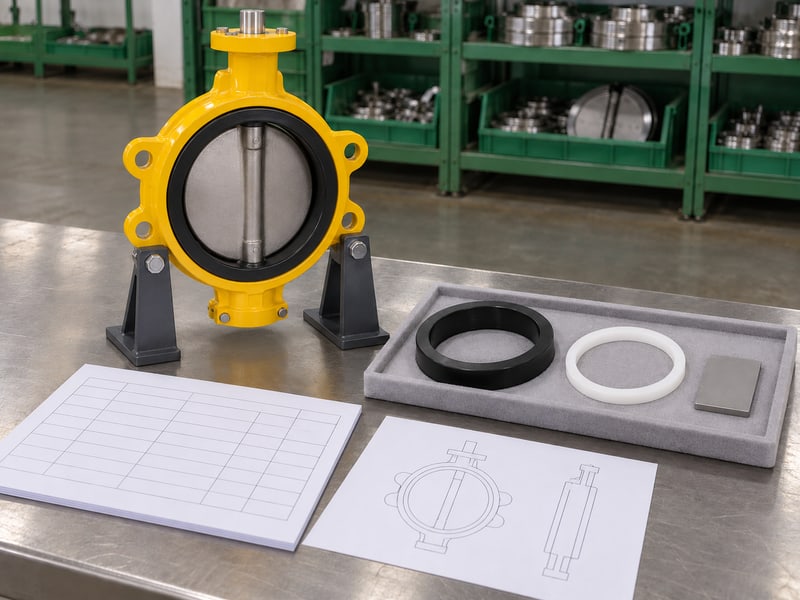
Select seals for a medium pressure turbine butterfly valve from the actual fluid and configuration requirements. The label supplies no chemical compatibility, temperature limit or solids-handling allowance. A water-service resilient seat, oil-service elastomer and lined chemical-service arrangement need their own material and operating-condition review rather than one shared catalog promise.
How do you verify the complete wetted configuration?
Match the fluid with the material list. Provide composition, concentration, temperature, cleaning conditions and any particles or fibers that could affect operation. Ask for the body, disc, shaft, seat or lining, backing and shaft-seal materials, including which components contact the medium. If steam is the actual duty, require documented manufacturer acceptance of its pressure–temperature state and sealing configuration; a water-service butterfly-valve data sheet cannot establish that acceptance.
- Record EPDM, NBR, PTFE or PFA against the relevant component and configuration.
- Confirm lining, disc covering and backing separately for a lined assembly.
- Review changed fluid composition or cleaning conditions before accepting a repeat order.
| Material review | Required description |
|---|---|
| Wetted components | Component-by-component materials and seal arrangement |
| Fluid duty | Composition, temperature and relevant operating boundaries |
Key takeaway: The complete material configuration determines the review. Ask for clarification whenever the proposed wetted boundary is incomplete.
6. How is medium pressure turbine butterfly valve sized?
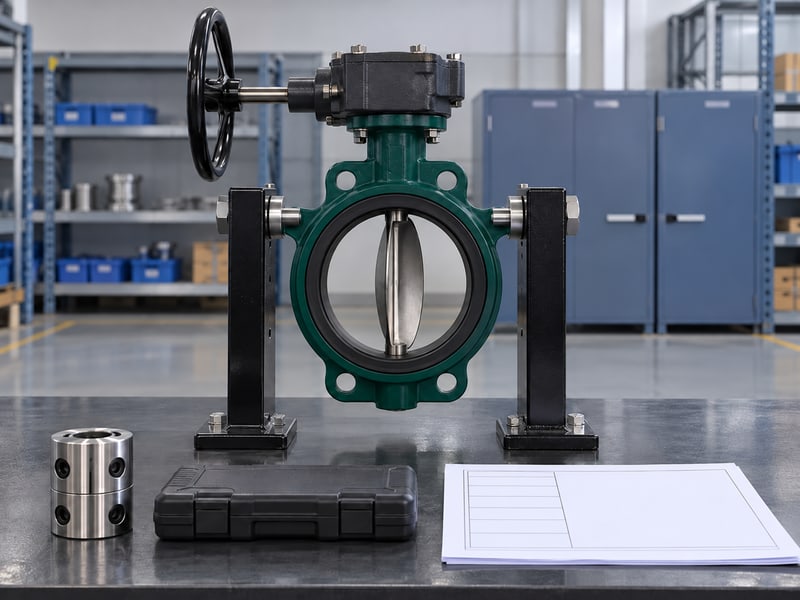
Size a medium pressure turbine butterfly valve using the operating flow range, allowable pressure loss, fluid properties and required closed differential. Nominal pipe size alone cannot establish the selected valve's performance at each operating position. Obtain configuration-specific flow data and confirm whether the proposed valve is intended for isolation, throttling or another explicitly accepted function.
What flow and torque inputs should you supply?
Check flow and drive together. Request the applicable flow coefficient or loss curve for the offered size, medium and opening range. Obtain breakaway, running and seating torque, including the applicable pressure and dynamic loads, then compare them with operator output through travel. For powered equipment, use the minimum specified supply and required failure action, while the supplier's sizing method and project margin govern acceptance alongside shaft and mounting-interface limits.
- State minimum, normal and maximum flow with the associated operating conditions.
- Ask for the accepted control range and any restrictions on partial opening.
- Retain the valve performance data and operator selection for the same configuration.
| Sizing check | Evidence needed |
|---|---|
| Flow performance | Applicable coefficient or loss curve |
| Drive capability | Required torque and output through travel |
Key takeaway: A catalog description cannot guarantee low loss or adequate operating torque. Approve the valve and drive against the same documented duty.
7. Can medium pressure turbine butterfly valve duty reverse?
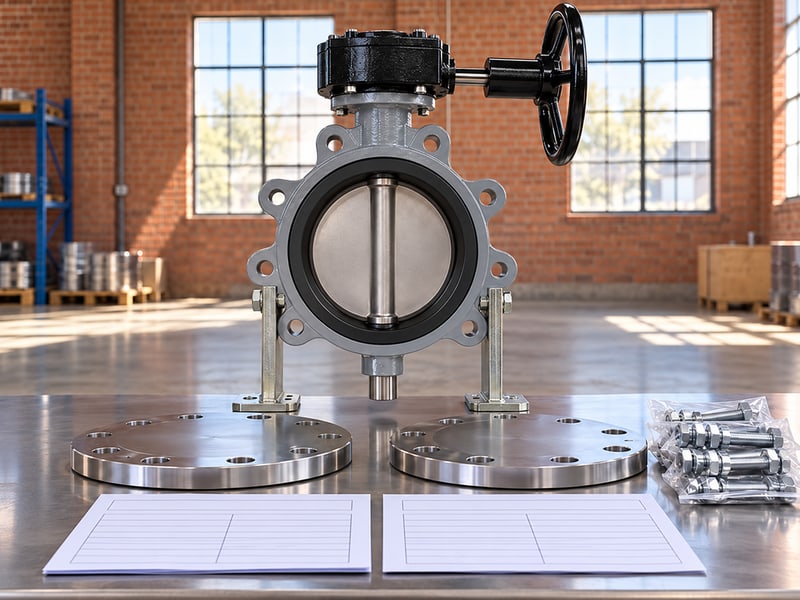
Reverse duty is acceptable for a medium pressure turbine butterfly valve only within its declared directional limits. Passing flow both ways when open does not prove equal shutoff capability with pressure applied from either side. Specify the closed differential and leakage requirement for each credible pressure direction before accepting a bidirectional description.
Which isolation limits need a separate declaration?
Request both shutoff limits. Ask the supplier to state forward and reverse allowable closed differentials for the actual seal, size and operating temperature. RUITO's double-flanged double-offset butterfly valves require separate forward and reverse declarations, so a single line-pressure label cannot settle their reverse duty. Check the installation manual for the approved pressure face and end conditions, including a separate dead-end approval if one connected pipe end will be removed.
- Include shutdown, standby and maintenance conditions that reverse the closed pressure face.
- Match directional test requirements with the supplied configuration and contract.
- Keep service limits separate from any higher pressure used during acceptance testing.
| Isolation condition | Declaration needed |
|---|---|
| Reverse pressure | Allowable differential and leakage criterion |
| Disconnected pipe end | Explicit approval for the end condition |
Key takeaway: Directional and end-condition limits belong in the purchase specification. Resolve them before approving the valve as an isolation device.
8. How is medium pressure turbine butterfly valve fitted?
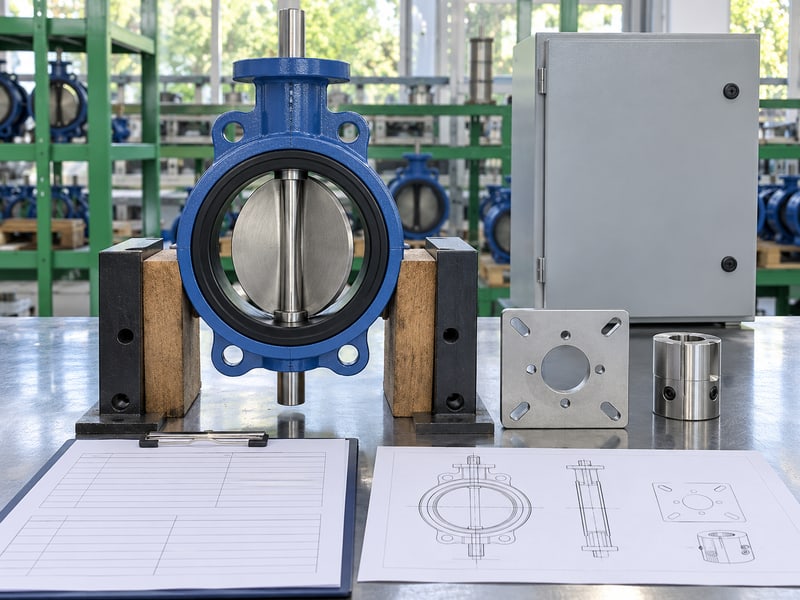
Fit a medium pressure turbine butterfly valve using its approved valve and operator drawings, with actual mating dimensions checked against your project. Wafer, lug, double-flanged, U-type and grooved connections have distinct interface requirements. The catalog phrase cannot establish face-to-face length, bolt engagement, disc clearance, operator access or control compatibility for a replacement installation.
Which dimensions and controls must match the project?
Review the complete installation envelope. Compare the body connection, pipe bore and open-disc envelope, then check the drive mounting, coupling and available maintenance space. Follow the selected model's installation, operation and maintenance manual, or IOM, for its approved assembly requirements. State position indication, remote signals, manual override and failure behavior separately where required, because a drive name cannot establish those functions or prove compatibility with the project's control system.
- Provide the mating flange standard and approved dimensional drawing revision.
- Check adjacent equipment and access throughout the valve and operator movement.
- Record the actual drive interfaces and control accessories accepted by the project.
| Installation item | Confirmation needed |
|---|---|
| Physical fit | Mating dimensions, movement and access |
| Drive and controls | Mounting, signals and required functions |
Key takeaway: A replacement needs both mechanical and functional agreement. Resolve drawing or interface differences before releasing the assembly for installation.
9. How is medium pressure turbine butterfly valve duty verified?
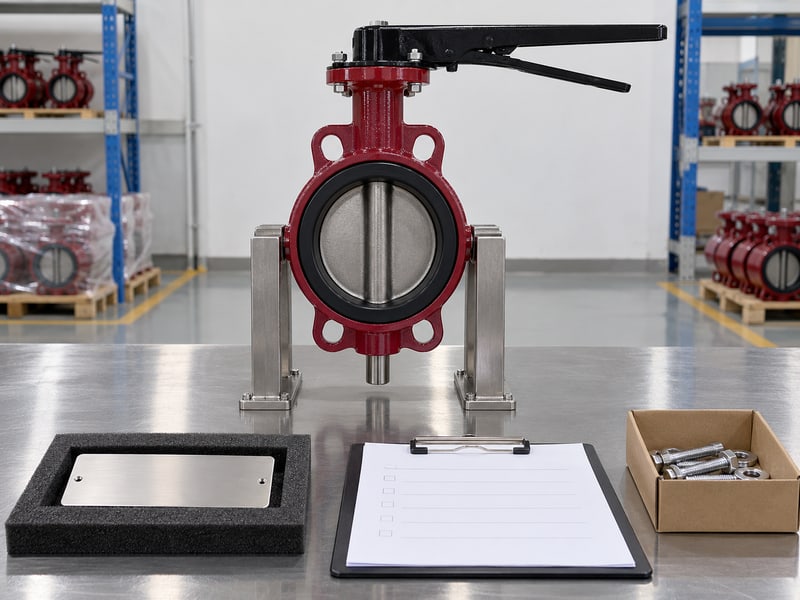
Verify the duty of a medium pressure turbine butterfly valve through accepted configuration documents and the applicable inspection and functional evidence. A matching catalog name or pressure-test reference cannot demonstrate every operating function. Link the data sheet, operator selection, materials, IOM and contractual acceptance results to the supplied product identity so you can check what was actually approved.
Which acceptance records should be tied to the unit?
Separate the evidence by function. The official scope of ISO 5208:2015 concerns pressure-boundary integrity, closure tightness and structural adequacy of the closure mechanism in metallic valves. Review the applicable test procedure and results for those acceptance requirements, with the agreed standard edition and product-specific conditions. Turbine shutdown logic, transient behavior and any special safety role need their own specified evidence; a pressure-test scope cannot establish those system functions or define a medium-pressure class.
- Match product identification, material revisions and operator records with the order.
- Check pressure direction, recorded conditions and leakage acceptance where applicable.
- Resolve missing functional or application evidence before accepting a special duty.
| Evidence category | What it supports |
|---|---|
| Pressure and closure tests | Defined pressure-boundary and sealing acceptance |
| Functional/application evidence | The separately specified operating role |
Key takeaway: Keep each acceptance claim tied to evidence for that function. Complete the configuration and duty review before shipment release or site handover.
10. How do you specify medium pressure turbine butterfly valve?
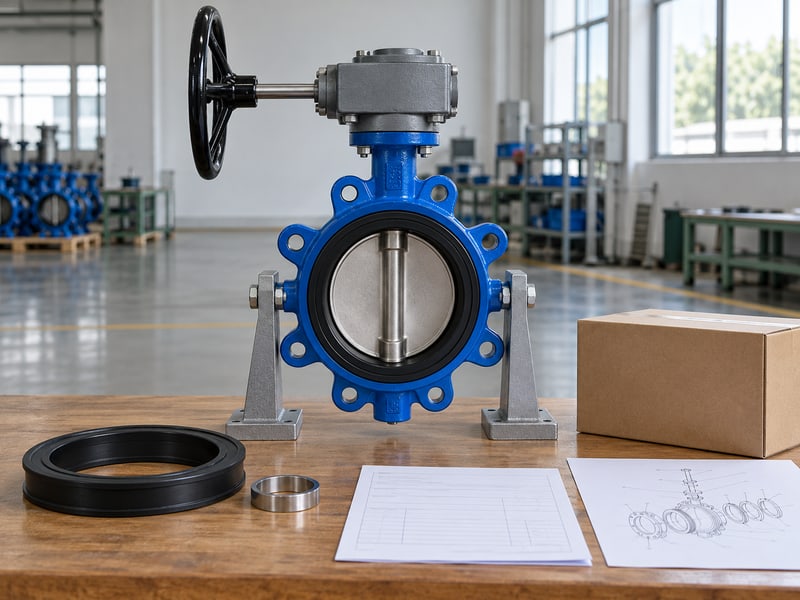
Specify a medium pressure turbine butterfly valve by translating the catalog phrase into a full valve description and a complete duty data sheet. Identify the actual operator and explain whether turbine refers to wording in the offer or the system application. Give suppliers the same requirements so their technical responses can be compared before price and delivery are accepted.
What should you send RUITO before requesting a quotation?
Send the configuration requirements together. Include fluid composition, flow range, pressure and temperature cases, forward and reverse closed differentials, leakage requirements, connection details and the installation drawing. Describe the drive, minimum supply, required controls and any special function requiring project approval. RUITO can review its available configurations and provide applicable data sheets, material lists, drawings, torque and flow data, IOM and contractual inspection records for the proposed assembly.
- Identify the project tag, valve structure and complete operator description.
- Ask the supplier to list deviations and unresolved application requirements explicitly.
- Retain the accepted configuration and document revisions for repeat procurement.
| RFQ information | Supplier response |
|---|---|
| Complete duty and interfaces | Proposed configuration and declared limits |
| Acceptance requirements | Applicable documents and stated deviations |
Key takeaway: Resolve the pressure meaning, operator and application before ordering. RUITO bases its recommendation on the available configuration and the evidence required for your stated duty. Contact us today with your data sheet and drawing for a documented configuration review.
FAQ
Q1: Can I use medium pressure as the valve's pressure rating?
No. Request the actual rating and pressure–temperature limits for the supplied size, materials and seal, plus maximum closed differentials and relevant transient conditions.
Q2: Does turbine always mean a worm gearbox?
No. Some catalogs use that wording for manual gear operation, while turbine can also describe a process application. Confirm the complete operator and assembly drawing.
Q3: Can a general water-service valve serve as a hydroturbine safety valve?
Only with specific application acceptance and supporting evidence. The shutdown role, drive, loss-of-supply behavior and system dynamics need review beyond a general water-service description.
Q4: How do I know if the valve can operate in reverse duty?
Check its declared reverse closed differential and leakage criterion. Match them with your actual conditions and the supplied seal configuration; open reverse flow alone is insufficient.
Q5: What's the best way to compare two offers using this phrase?
Compare their expanded data sheets against the same duty. Review ratings, materials, operator output, interfaces and acceptance evidence before treating their prices as equivalent offers.