
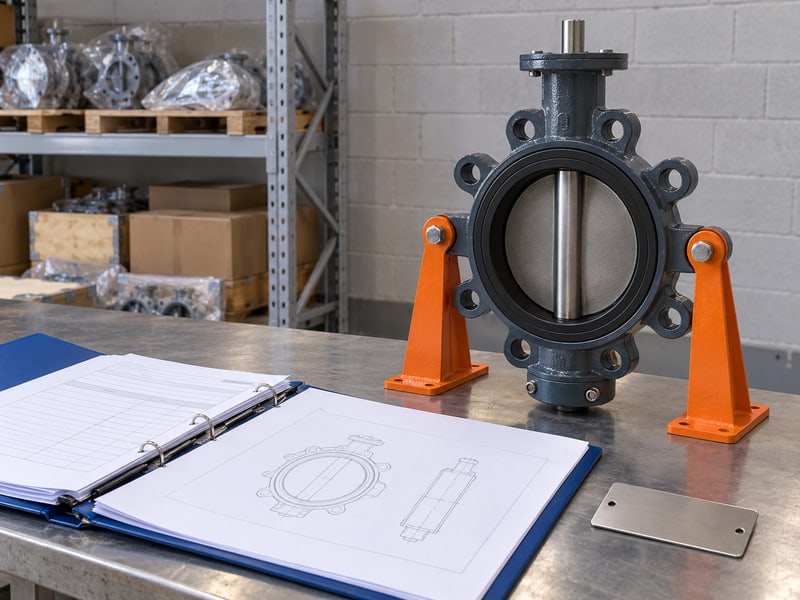
Fix butterfly valve abbreviation mistakes by expanding BFV into Butterfly Valve, checking the project legend and matching the full description across drawings, quotations and inspection records. A buyer can receive a valve schedule with short codes while the supplier's quotation follows a different convention. If those meanings stay unresolved, a seemingly minor label difference can become a wrong valve type, missing drive or incomplete purchase specification. Use the abbreviation for navigation, then confirm the configuration through complete names and controlled documents before ordering.
1. What is the usual butterfly valve abbreviation?
BFV is a common butterfly valve abbreviation, but your project's approved legend controls its meaning. You may also encounter BUV in a supplier's valve list. Both can refer to Butterfly Valve within their own conventions, so retain the full name when you introduce a code or transfer information between organizations.
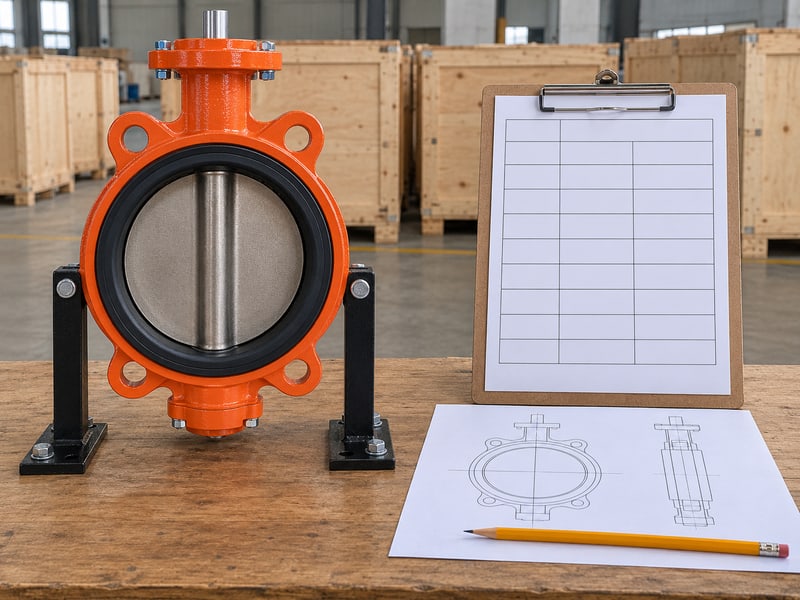
Which abbreviation should you put on a drawing?
Check the legend before copying. Use the abbreviation already approved for that drawing package and state its full meaning in the accompanying valve schedule. If you are preparing a new request for quotation, write Butterfly Valve before the short code and ask the supplier to acknowledge that interpretation. Treat an unfamiliar code as an unresolved document field until the responsible engineer confirms it.
- Expand the valve type at its initial appearance in a specification.
- Keep the approved legend available with drawings issued for quotation.
- Ask suppliers to repeat the full product name in their technical response.
| Code encountered | How to handle it |
|---|---|
| BFV | Confirm Butterfly Valve in the applicable legend |
| BUV | Check the supplier convention before mapping it |
Key takeaway: You can use BFV as practical shorthand once its meaning is agreed. Resolve any supplier-to-project translation before approving the quotation.
2. Why can butterfly valve abbreviation cause confusion?
A butterfly valve abbreviation can cause confusion when you carry a short code from one document convention into another without checking its definition. BV can mean Ball Valve in one list and Breather Valve in another. CV also appears with different meanings, including Check Valve and Control Valve, so familiar letters alone cannot settle a purchase description.
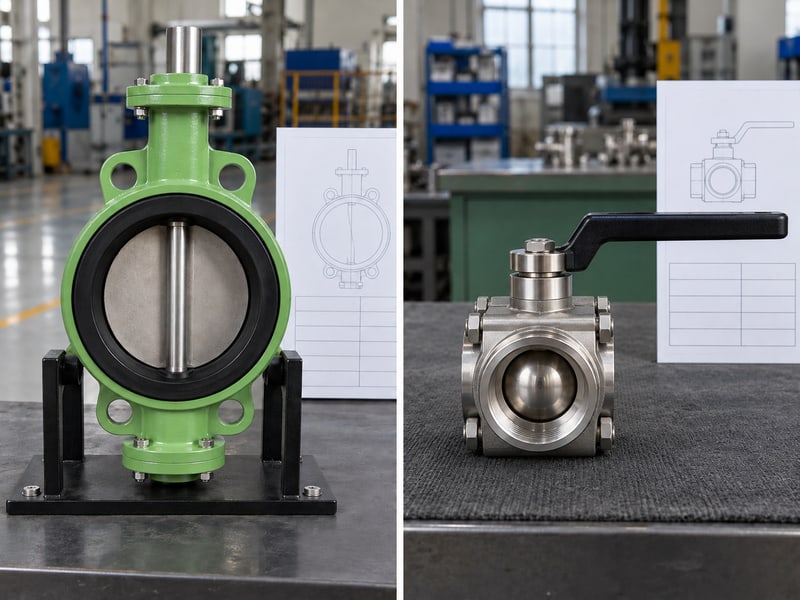
Which short codes need a legend check?
Expand the disputed term. Compare the project legend with the supplier's full product description and ask for written clarification where they disagree. A ball valve, breather valve and butterfly valve describe different products; a control function also needs its own specification. Avoid guessing from nearby letters or importing an online glossary as the project's governing document, especially when several valve types share one equipment package.
- Check the original legend rather than relying on a copied spreadsheet heading.
- Require full names wherever two parties assign different meanings to a code.
- Record the agreed translation beside the affected quotation line and valve tag.
| Short code | Possible meanings requiring confirmation |
|---|---|
| BV | Ball Valve or Breather Valve |
| CV | Check Valve or Control Valve |
Key takeaway: A code is useful only within a known convention. Stop technical approval when its full product meaning remains unresolved.
3. Does butterfly valve abbreviation identify an asset?
A butterfly valve abbreviation identifies a valve type within a convention; it does not, by itself, identify one installed asset. Your project tag distinguishes the valve location, while the supplier's product ID or serial number identifies the supplied unit. Keep these fields separate even when a project embeds a type code inside its tag format.
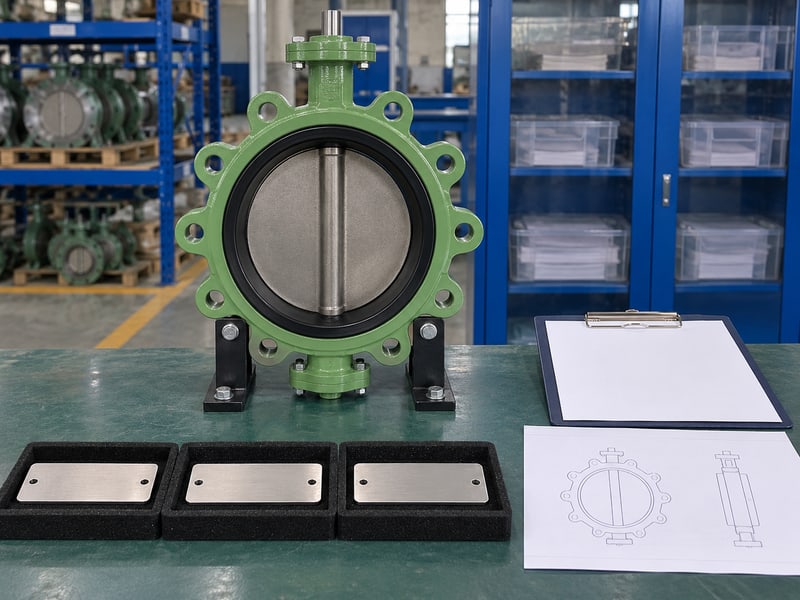
How should you separate type from tag?
Give each field a clear job. Put the full valve type, project tag and supplier identification in separate columns of the register. Match the tag with the drawing location, then connect the product ID with manufacturing and acceptance records. Two valves can share the same type description yet have different materials, drives or isolation duties, so matching the letters BFV cannot establish that either unit belongs at a particular location.
- Keep the project tag visible on schedules, order lines and packing records.
- Ask the supplier how each physical unit connects with its inspection documents.
- Check replacement-valve records against the installed location's current duty.
| Identifier | Purpose |
|---|---|
| Valve type | Describes the product category |
| Tag and product ID | Link location, supplied unit and records |
Key takeaway: Separate identifiers let you trace the right valve from purchase through maintenance. Investigate any unit whose location or inspection record cannot be matched.
4. Does butterfly valve abbreviation show size or pressure?
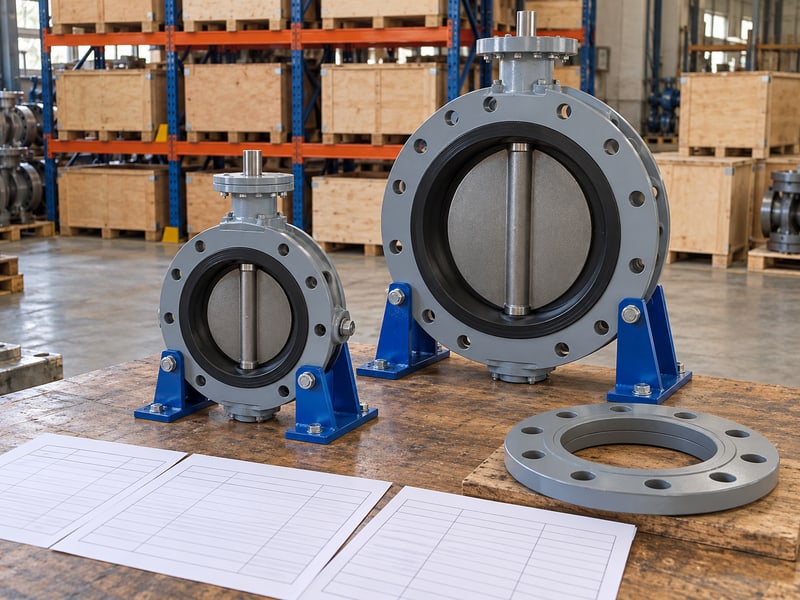
A butterfly valve abbreviation alone shows neither nominal size nor pressure capability. DN or NPS supplies a nominal size designation, while PN, Class or CWP belongs in the appropriate pressure or rating field. Record the actual connection standard and valve pressure–temperature limits separately rather than treating a flange-drilling description as the whole valve's service rating.
Which rating fields need separate entries?
Read the complete rating description. Ask for the limits that apply to the supplied size, materials and seal at your operating temperature. Maximum closed differential pressure needs its own entry, including reverse duty where required. A shell or seat test pressure describes an inspection condition and cannot replace the allowable service limit, so compare quotations using corresponding fields rather than whichever number looks largest.
- State nominal size and identify the required mating pipe and flange standard.
- Record working pressure and temperature together for the proposed configuration.
- Specify forward and reverse closed differentials independently of the line designation.
| Specification field | Confirmation required |
|---|---|
| Size and connection | Nominal designation and actual interface drawing |
| Pressure duty | Service limits, closed differential and test conditions |
Key takeaway: You need several rating fields to describe a usable valve. Hold approval if the quote supplies a pressure label without configuration-specific limits.
5. Do materials change butterfly valve abbreviation meaning?
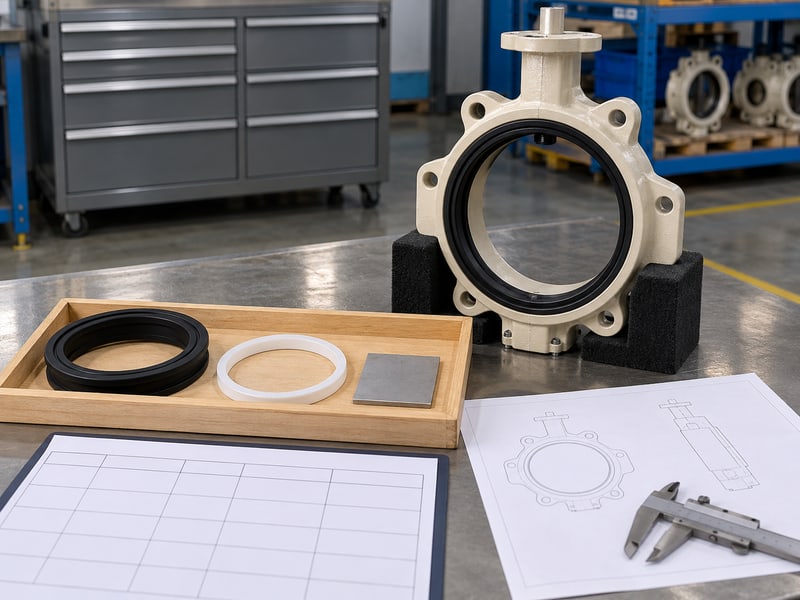
Material terms qualify the configuration; they do not replace the basic butterfly valve abbreviation definition. EPDM, NBR, PTFE and PFA describe material choices that need to be assigned to specific components. BFV alone cannot tell you whether the supplied valve has a resilient seat, a lined flow path or another sealing arrangement.
What belongs in the material description?
Name the component with its material. Ask for the body, disc, shaft, seat or lining, backing and shaft-seal materials in the approved bill of materials. A coated disc does not establish the material of the body lining or every wetted surface. Give the supplier the actual medium composition, concentration and temperature so it can review the complete configuration rather than interpret a material acronym as blanket chemical compatibility.
- Separate pressure-retaining body materials from the wetted flow-path description.
- Record the lining and disc covering independently when a lined valve is specified.
- Keep compound, coating and material changes tied to the approved configuration.
| Description | What still needs checking? |
|---|---|
| BFV with material code | Component assignment and complete material list |
| Lined Butterfly Valve | Liner, disc covering, backing and shaft seals |
Key takeaway: A material acronym becomes useful when it names a component in a controlled specification. Ask for clarification whenever the wetted material boundary is unclear.
6. Does butterfly valve abbreviation specify actuation?
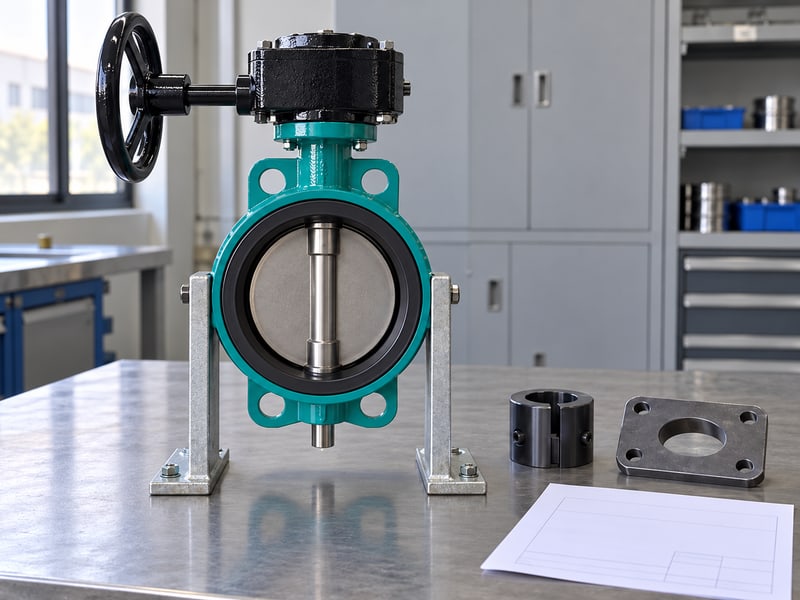
A butterfly valve abbreviation does not specify how the valve is driven or which accessories accompany it. A lever, worm gearbox, electric actuator and pneumatic actuator require separate descriptions. Pneumatic actuation describes the drive supply; it does not identify the process medium flowing through the valve or establish that the valve is suitable for gas service.
How should you describe the complete drive package?
Write the drive requirement in full. If a quotation uses an operation code, obtain its meaning from that document's legend and repeat the complete drive description in the approved data sheet. For pneumatic packages, distinguish double-acting from spring-return operation and state the required failure action. Confirm operating torque, available output through travel and minimum supply conditions, alongside the mechanical interface and required feedback signals.
- State manual or powered operation and the intended operating frequency.
- Include supply, failure action, travel requirements and applicable signal accessories.
- Require the actuator selection to match the accepted valve and closed differential.
| Package field | Detail to state |
|---|---|
| Drive | Full actuator or manual-operator description |
| Operation | Supply, failure action, output and feedback |
Key takeaway: A complete drive description prevents a type code from hiding missing package components. Compare the whole assembly before accepting a quoted alternative.
7. Does butterfly valve abbreviation prove installation fit?
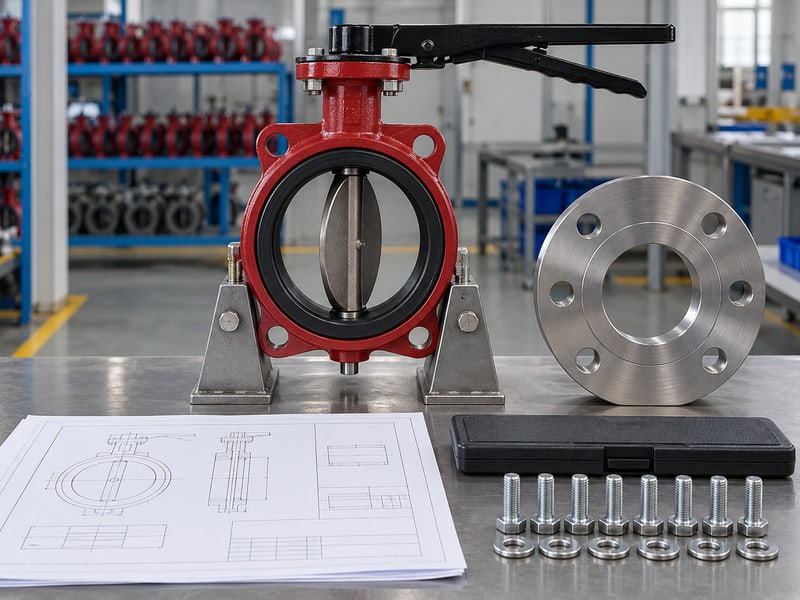
The butterfly valve abbreviation cannot prove that a valve will fit your pipework or perform the required isolation duty. Wafer, lug, double-flanged, U-type and grooved-end configurations need their own interface details. A shared product category does not establish matching face-to-face length, flange drilling, open-disc clearance or directional shutoff capability.
Which drawing details should you verify?
Compare the actual installation drawing. Check the proposed valve against mating pipe bores, flange geometry, bolt engagement and the operator's available space. Confirm the model-specific installation and shutoff direction requirements in its installation, operation and maintenance manual, or IOM. For RUITO's double-flanged double-offset valves, obtain the separately declared forward and reverse allowable closed differentials rather than assuming that BFV implies equal ratings both ways.
- Identify the complete connection style and approved dimensional drawing revision.
- Check the disc opening envelope against the pipe and adjacent equipment.
- Request explicit dead-end approval if a pipe end will be disconnected.
| Fit or duty item | Evidence needed |
|---|---|
| Mechanical interface | Approved drawing and mating dimensions |
| Isolation arrangement | Model-specific direction and end-condition limits |
Key takeaway: A matching abbreviation does not qualify a replacement valve. Resolve dimensional and isolation differences before the installation team receives the equipment.
8. How is butterfly valve abbreviation checked during QA?
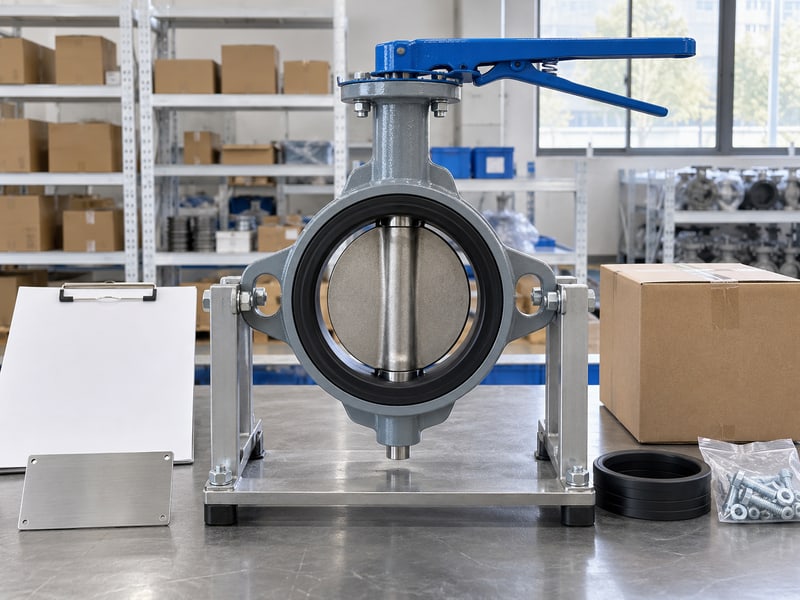
QA checks butterfly valve abbreviation by expanding the product type and matching it with the accepted configuration, identification and inspection records. The same short code on a carton and purchase order cannot demonstrate material conformity or seat performance. You need records tied to the supplied unit or batch and the contract's actual acceptance requirements.
Which evidence must match the supplied valve?
Check identity before acceptance. Compare the product ID, full description and material-list revision with the approved order, then review the applicable inspection results. The official scope of ISO 5208:2015 covers testing of metallic-valve pressure-boundary integrity, closure tightness and structural adequacy of the closure mechanism. That scope addresses test performance and should not be used as evidence that BFV has an ISO-assigned meaning.
- Confirm the contract's test standard, edition and product-specific requirements.
- Check recorded conditions and leakage acceptance against the approved procedure.
- Match nameplates, material records, test results and packing identification.
| QA question | Record to review |
|---|---|
| Is this the ordered configuration? | Identity, data sheet and material-list revision |
| Was acceptance demonstrated? | Applicable inspection procedure and results |
Key takeaway: Traceable records give QA evidence beyond a label. Clarify missing identity links or acceptance conditions before releasing the shipment.
9. Who controls butterfly valve abbreviation revisions?
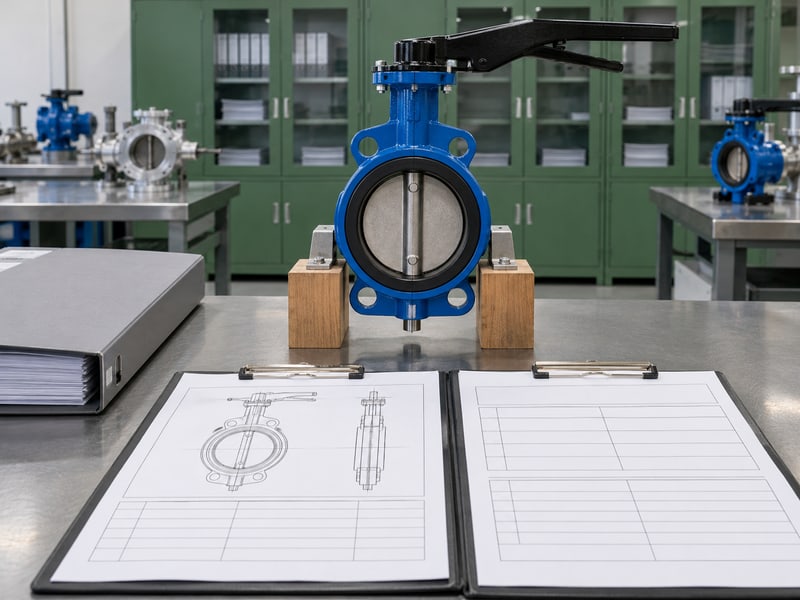
The project team responsible for the legend should control butterfly valve abbreviation definitions, while procurement and quality preserve agreed mappings in their records. A supplier can retain its own catalog convention if the project meaning is clearly acknowledged. Changing a displayed code and changing a valve's physical configuration are separate actions with different approval consequences.
How do you keep repeated orders consistent?
Carry the accepted revision forward. Store the approved legend, full product description, supplier data sheet and drawing revision with the purchasing record. If a supplier changes an acronym, confirm whether the change affects only wording or also materials, dimensions, ratings or drive components. Avoid replacing every instance of BV across a document set, because another sheet may use it for a different valve type under a separate legend.
- Preserve the full description when translating between project and supplier codes.
- Require written approval for changes affecting the supplied configuration.
- Review repeat orders against current duty and accepted document revisions.
| Proposed change | Review needed |
|---|---|
| Abbreviation wording | Confirm meaning and update the approved mapping |
| Physical configuration | Engineering review and affected acceptance evidence |
Key takeaway: Controlled mappings keep repeat purchases understandable after personnel or suppliers change. Reapprove configuration changes instead of treating them as label edits.
10. How should butterfly valve abbreviation appear in an RFQ?
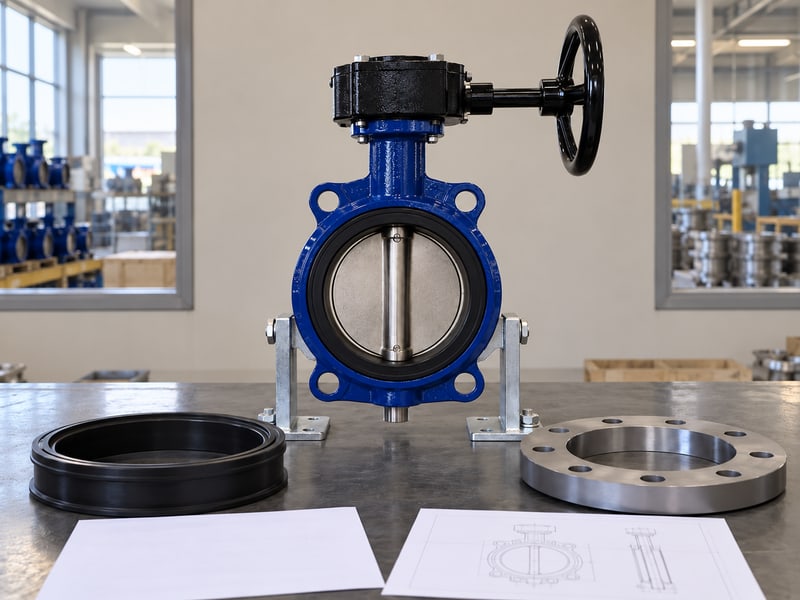
Your butterfly valve abbreviation should follow the full product name in an RFQ and refer to a supplied legend. Include the project tag and complete duty in separate fields so the supplier can quote the intended assembly. State unresolved requirements openly; a guessed expansion can make a quotation look complete while leaving the actual valve configuration undecided.
What should you send RUITO for a clear quotation?
Send a description the supplier can check. Provide Butterfly Valve, the agreed shorthand, size, connection, component materials, medium, operating temperature and pressure, and maximum closed differentials. Add the drive requirements, installation drawing, inspection obligations and document revisions. RUITO can review the proposed configuration and provide applicable data sheets, drawings, material lists, torque data, IOM and contractual inspection records, while the responsible project engineer accepts the system duty and layout.
- Attach the project legend and identify each valve by its unique tag.
- Ask for technical deviations alongside the full offered product description.
- Keep the accepted quotation, configuration and revision together on the order.
| RFQ component | Supplier response needed |
|---|---|
| Full type and duty | Proposed configuration and stated limits |
| Project requirements | Deviations, drawings and acceptance documents |
Key takeaway: Resolve the code meaning, configuration and evidence before ordering. RUITO's quotation should identify the supplied assembly and its applicable limits. Contact us today with your valve schedule, legend and duty data for a documented configuration review.
FAQ
Q1: Can I use BFV for Butterfly Valve on every project?
Only when the project's legend defines it that way. BFV is common shorthand, but another project or supplier can use a different convention, including BUV.
Q2: How do I know if BV means Butterfly Valve?
Check the applicable legend and full product description. BV can refer to Ball Valve or Breather Valve in other conventions, so ask for clarification before ordering.
Q3: Can I order a valve using only BFV and its size?
That description is incomplete. Add the connection, materials, pressure–temperature limits, closed differentials, drive, project tag and acceptance requirements needed for the proposed configuration.
Q4: Does an ISO pressure-test reference make BFV a standard code?
No. A pressure-test scope concerns defined performance checks. Confirm the abbreviation separately through the project legend and the supplier's acknowledged full product name.
Q5: What's the best way to handle a supplier's different code?
Record an agreed mapping to the complete product name. Keep that mapping with the approved quotation, data sheet and drawing revisions so repeat orders retain the same meaning.