
How to Avoid AWWA Metal Seated Butterfly Valve Mistakes
Review metal seated butterfly valves AWWA references by recovering the cited design basis and comparing it with the actual replacement proposal. If an old enquiry or asset record names C505-58, ask AWWA to confirm its status and obtain the cited edition. Then identify the existing sealing contact, operating duty, interfaces, and acceptance requirements before approving any change in construction or standard basis.
1. What do metal seated butterfly valves AWWA references mean?
They identify a requirement that must be traced to a particular document and valve construction. A metal seated butterfly valves AWWA search can lead to legacy C505-58 references as well as current waterworks products with different seating arrangements. Record the exact reference, edition, and source before assuming that the words identify a currently offered metal-to-metal design.
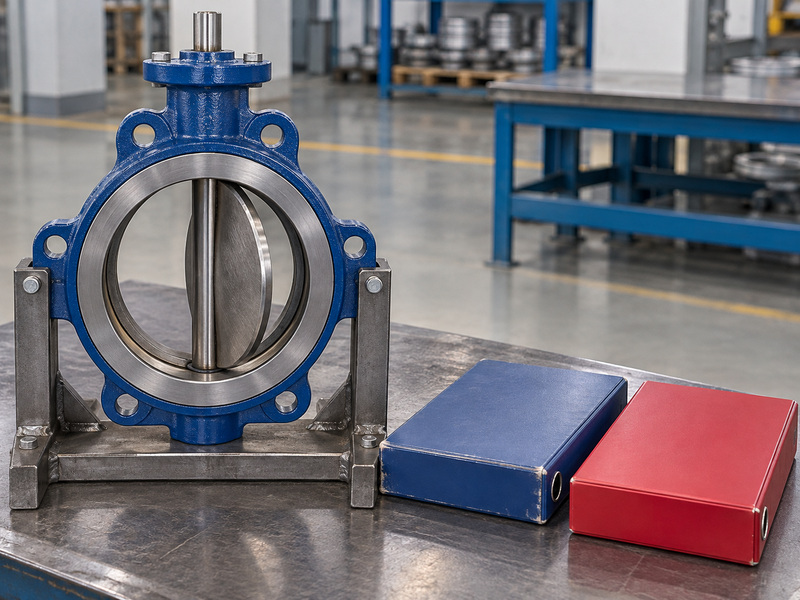
Preserve the exact reference before interpreting the requirement
When C505-58 appears in an old RFQ, nameplate photograph, drawing, or maintenance file, preserve that evidence as found. Ask the publisher to confirm the document’s current status and provide access to the cited edition. Keep the status enquiry separate from the engineering decision about an existing asset or a replacement; a catalogue reference alone does not decide that work.
RUITO’s butterfly valve range provides context for its published product families, primarily soft-seat and lined constructions in the supplied documentation. It does not identify your original valve or confirm a legacy metal-seat replacement. Request a scoped response against the recovered requirements rather than treating a product-category label as interchangeability evidence.
- Save the original wording and where it was found.
- Confirm status and access to the cited edition with AWWA.
- Keep document identification separate from replacement approval.
| Reference found | Record to preserve |
|---|---|
| RFQ or valve schedule | Exact wording, edition, and document revision |
| Nameplate or drawing | Asset identity and readable source evidence |
| Publisher enquiry | Status confirmation and cited-edition access |
2. Is the original contact metal-to-metal or rubber-to-metal?
Identify both sides of the actual closure contact from reliable construction records. For an enquiry labelled metal seated butterfly valves AWWA, a metal component named seat does not establish metal-to-metal closure. A rubber-seated valve can also contain a metallic mating surface or body-seat ring, so the contact relationship needs explicit confirmation.
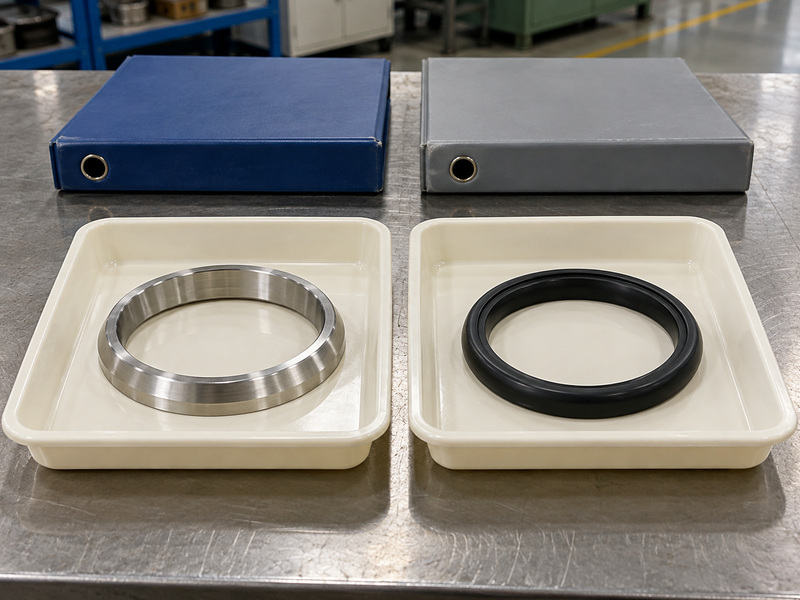
Trace the contact pair rather than relying on a component name
An official waterworks-valve material drawing lists a stainless body seat and a separate resilient seat within one construction. That example explains why a parts-list term can be misleading when read alone. Use the original sectional drawing, material list, maintenance records, and any approved inspection findings to identify the installed arrangement.
Record confidence and gaps in that identification. An external photograph or a metal disc edge can leave the mating seal hidden. If documents conflict or the asset has been modified, request a controlled engineering review and an appropriate inspection plan. Do not rewrite the old requirement as rubber-seated or all-metal merely to match a readily available replacement.
- Identify the mating closure surfaces and their materials.
- Check whether earlier maintenance changed the arrangement.
- Record unresolved construction details before selecting a substitute.
| Evidence | Question it can resolve |
|---|---|
| Sectional drawing | Which components actually meet at closure? |
| Material and maintenance records | What materials and revisions are installed? |
| External description alone | Which contact details remain unverified? |
3. Which parts of the original design basis should be retained?
Retain the original requirements and distinguish them from later assumptions or proposed changes. Keep the cited standard, order specification, approved drawing, material schedule, operating instructions, and acceptance records together in the metal seated butterfly valves AWWA enquiry file. A replacement data sheet should explain how it addresses that evidence instead of silently overwriting it.
Separate original requirements from reconstructed information
Search the owner’s archive, prior purchase records, manufacturer correspondence, and maintenance history for missing documents. Identify which source is an approved requirement and which is an unverified description. Mark superseded drawings and later modifications without discarding them, because they can explain differences between the original design and the assembly now installed. Record the origin of any reconstructed information.
If the cited edition or original test records cannot be recovered, state the gap directly. Ask the responsible engineer to define the additional evidence needed for the replacement decision. Do not reconstruct historical clauses, leakage limits, material requirements, or rating tables from a current brochure. Preserve the unresolved item until an approved disposition establishes the basis for proceeding.
- Identify approved, superseded, and unverified records.
- Retain evidence of modifications and earlier repairs.
- Assign responsibility for missing-document disposition.
| Record category | How to use it |
|---|---|
| Original approved basis | Preserve as the comparison reference |
| Later modification | Explain the installed configuration |
| Missing or reconstructed detail | Flag uncertainty and obtain disposition |
4. How should the actual operating duty be reconstructed?
Combine the original duty with available operating evidence and identify what has changed. A review of metal seated butterfly valves AWWA records should distinguish design assumptions from current pressure, differential, flow, medium, temperature, movement, and idle periods. Ask the owner’s responsible engineer to confirm the duty the replacement must now cover.
Record original, observed, and required duty separately
Include whether the valve isolates, modulates, or performs a specified operating action. Record pressure direction, relevant transients, available operating energy, and any changes to pump or pipeline operation. Treat a long period of satisfactory service as operating history with stated conditions, not proof that an unknown replacement construction will behave identically. Explain the data quality and any gaps.
Keep the old and required duties side by side. A replacement project can intentionally change performance, operating speed, or service conditions, but those changes need an approved basis. If the present system exceeds the recovered original assumptions, refer that difference for engineering assessment. The replacement review should not inherit an undocumented operating condition solely because it occurs today.
- Identify the source and confidence of operating data.
- Record changes in the system or required valve function.
- Obtain approval for the duty the replacement must cover.
| Duty basis | What to distinguish |
|---|---|
| Original design | Documented assumptions and requirements |
| Observed operation | Current evidence and its limitations |
| Replacement requirement | Confirmed future duty and approved changes |
5. Which interfaces can prevent a direct replacement?
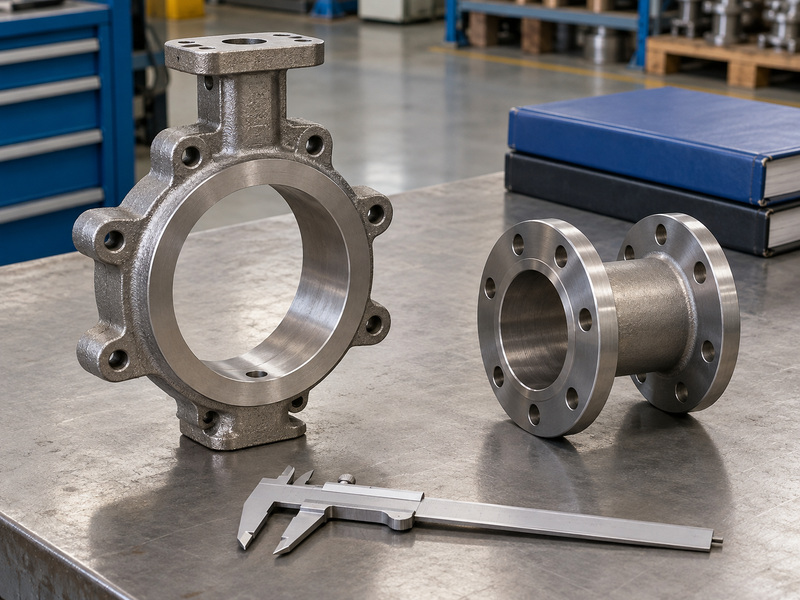
Differences in physical fit, operating connection, and maintenance access can prevent interchangeability. Your metal seated butterfly valves AWWA replacement comparison needs verified installed dimensions and the proposed valve’s controlled drawing. Nominal size and a familiar standard label cannot establish that the new assembly will fit the existing location or operating equipment.
Compare installed evidence with the offered assembly drawing
Compare connection type, face-to-face length, flange or joint details, bore and disc clearance, support arrangement, operator envelope, and access needed for removal. Identify which dimensions come from reliable drawings and which need an approved site survey. Record any required piping or support changes as part of the proposal rather than burying them in an installation assumption.
RUITO’s flanged butterfly valve and U-type butterfly valve pages offer connection context for a discussion. Their dimensions and ratings cannot be assumed to match a legacy asset. Use the proposed model’s own approved interface drawing and obtain project acceptance of any installation change before ordering.
- Identify dimensions requiring confirmation or site survey.
- Include operator, support, and maintenance-space differences.
- Record modifications and the party responsible for them.
| Interface group | Replacement comparison |
|---|---|
| Piping connection | Type, dimensions, and required modifications |
| Operator and support | Attachment, envelope, and structural arrangement |
| Maintenance access | Removal route and working space |
6. Can a current AWWA label replace the legacy basis?
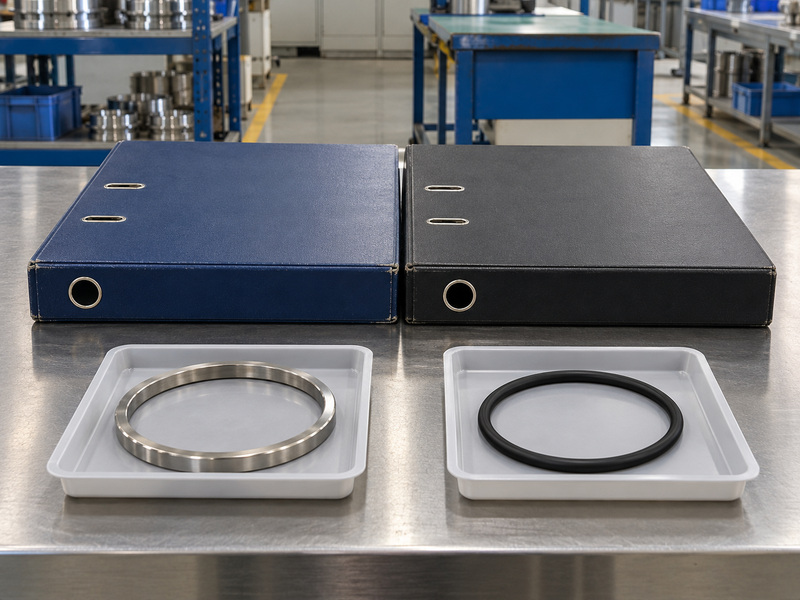
Only an approved comparison can establish an acceptable replacement basis. Treat the metal seated butterfly valves AWWA requirement as a construction and performance question, not an automatic change to whichever standard appears on a stock product. Ask the supplier to identify the proposed document and explain its applicable scope against the recovered original requirements.
Approve scope differences rather than changing the label alone
The current official AWWA standards list identifies C504 as Rubber-Seated Butterfly Valves and C519 as High-Performance Waterworks Butterfly Valves. Those titles help locate candidate documents; they do not establish that either automatically replaces C505 or preserves an old metal-to-metal construction. Obtain the applicable documents and an engineering assessment of any scope gap.
A readily available connection form also leaves that decision open. RUITO’s wafer butterfly valve and lug butterfly valve pages provide alternative interface context, not legacy equivalence or AWWA approval. Record construction, performance, interface, and evidence differences before approving a current-standard proposal.
- Identify the proposed standard and applicable edition.
- Compare its scope with the actual replacement requirement.
- Obtain written acceptance of differences and alternatives.
| Proposed change | Review needed |
|---|---|
| Different standard basis | Applicable scope and requirement comparison |
| Different seating construction | Explicit performance and material disposition |
| Different stock model | Complete configuration and interface assessment |
7. How should old and new acceptance requirements be compared?
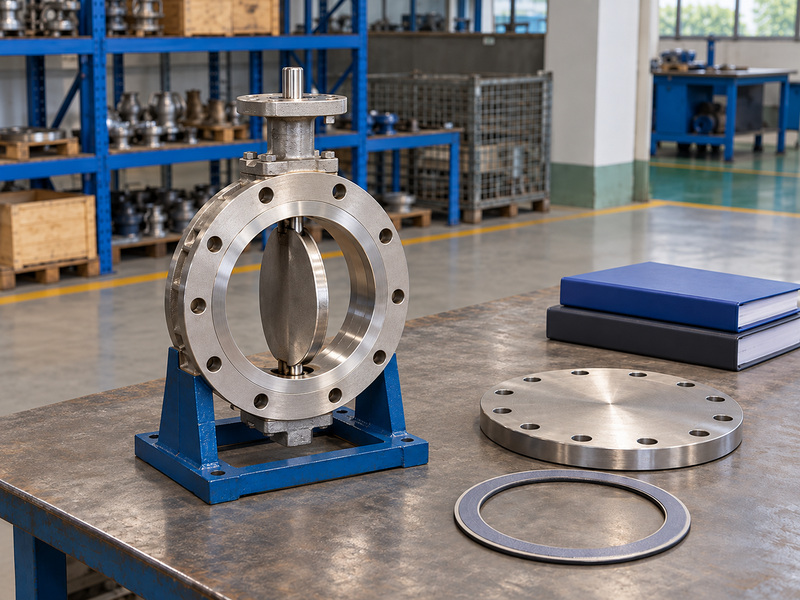
Compare the actual criteria and test conditions rather than treating similar wording as identical acceptance. The metal seated butterfly valves AWWA acceptance file should preserve the recovered original requirements and identify the proposed replacement’s test basis. State how each difference will be accepted, changed, or supplemented before manufacture or repair is authorized.
Keep each criterion attached to its conditions and disposition
For closure, identify medium, differential, direction, temperature, observation method, duration, and the acceptance criterion where available. Keep shell containment, external leakage, and operating checks separately identifiable. If the original record is incomplete, ask the responsible engineer to define an approved replacement requirement. Do not assign a modern leakage class to an undocumented historical result.
Ask the supplier for the test plan and records associated with the offered configuration. A routine production report may support one requirement while leaving another unresolved. Record any additional check needed to address the agreed operating duty or changed construction. Preserve the rationale for accepted differences so the commissioning and maintenance teams understand the basis of the replacement.
- Recover original criteria without inventing missing values.
- Identify the proposed test basis for each requirement.
- Resolve acceptance gaps before the release stage.
| Acceptance item | Comparison record |
|---|---|
| Original requirement | Recovered criterion or identified gap |
| Proposed test | Conditions, method, and acceptance basis |
| Difference | Approved change or additional evidence |
8. What belongs in the replacement-difference register?
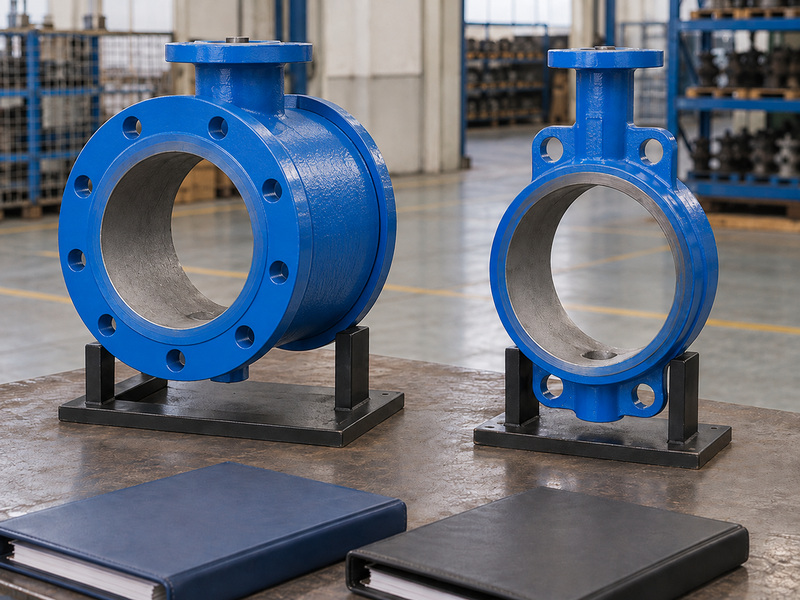
List each difference with its evidence, consequence, owner, and disposition. For metal seated butterfly valves AWWA replacement, the register should connect the original requirement with the offered construction rather than declare the entire proposal equivalent. Use it to expose decisions that remain unresolved before purchasing or installation proceeds.
Assign each unresolved difference to a responsible reviewer
Start with seating contact, materials, operating duty, interfaces, operator, and acceptance basis. Add document gaps and any modifications needed at the site. Distinguish a confirmed difference from an assumption awaiting verification. Ask the responsible reviewer to identify whether the change is accepted, needs further evidence, or requires a revised proposal, and retain the supporting approval.
Control the register through technical and commercial handover. An accepted design difference may affect scope, outage work, spare parts, or document delivery. Carry those obligations into the order instead of leaving them in email history. If a later substitution changes an accepted item, reopen the relevant entry and update the approved configuration record.
- Identify the original requirement and supporting evidence.
- State the offered change and any affected work.
- Record the owner, decision, and approval reference.
| Register field | Information to preserve |
|---|---|
| Original basis | Requirement, source, and confidence |
| Offered difference | Construction change and affected obligations |
| Disposition | Owner, decision, evidence, and approval |
9. Which records should pass to the replacement owner?
Hand over both the preserved legacy record and the accepted replacement basis. A metal seated butterfly valves AWWA handover should let the owner trace why a specific construction and set of differences were approved. Retain the original reference instead of deleting it from the asset history when the new valve enters service.
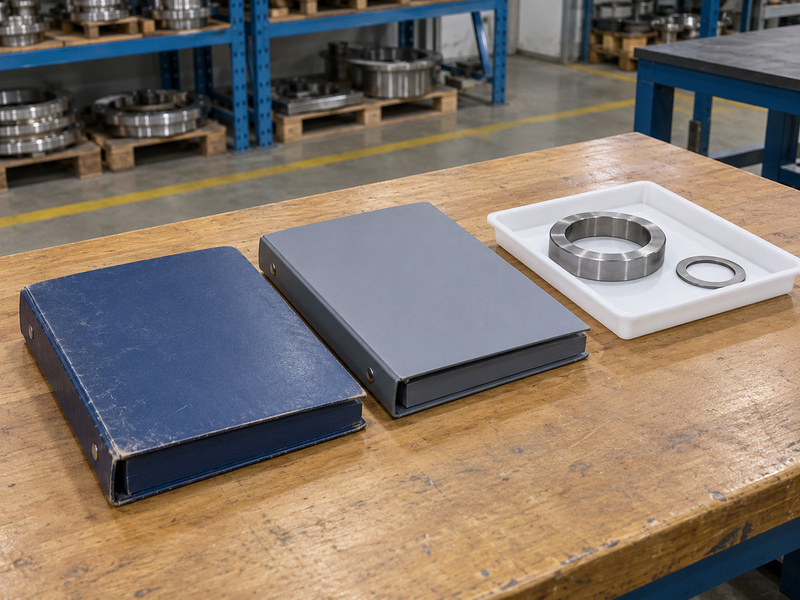
Preserve why the replacement was accepted
Include the recovered documents, status enquiry, installed-condition findings, confirmed replacement duty, approved drawings, difference register, acceptance results, operating instructions, and spare-part identification. Mark which record describes the removed asset and which describes the installed replacement. Assign custody of outstanding documents and include the final approved revisions so future repairs do not restart from an ambiguous catalogue label.
Contact us with the legacy reference, available drawings, actual seating evidence, operating duty, and replacement-difference register for a scoped RUITO response. Its supplied documentation does not establish knowledge of your original valve, legacy equivalence, or AWWA approval. Obtain written confirmation of the proposed scope and available evidence before accepting the supply.
- Keep legacy and replacement identities separately clear.
- Retain approved differences with their supporting records.
- Transfer final instructions, acceptance, and spare identification.
| Handover record | Future use |
|---|---|
| Legacy archive | Preserve the original asset and requirement history |
| Approved replacement file | Identify accepted construction and differences |
| Operating and spare records | Support later maintenance and controlled changes |
10. Which legacy-reference FAQs should buyers resolve?
Resolve the original reference, actual construction, and accepted replacement differences before ordering. A metal seated butterfly valves AWWA enquiry needs evidence that remains clear to purchasing, engineering, commissioning, and later maintenance teams.
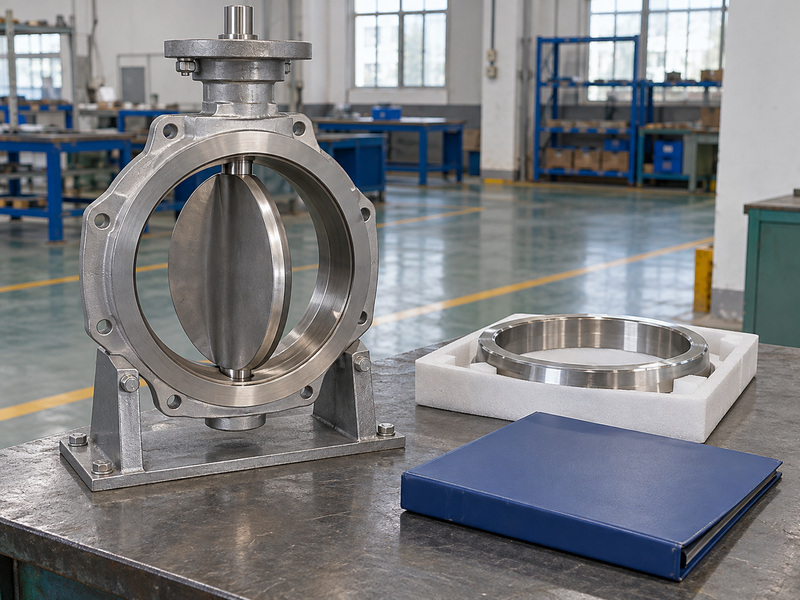
Q1. What should I do when an old RFQ cites C505-58?
Preserve the exact reference and ask AWWA to confirm its status and provide access to the cited edition. Recover the original design and acceptance basis before approving a substitute.
Q2. Does a stainless body-seat ring prove metal-to-metal closure?
No. Identify the mating component and actual contact materials. A rubber-seated construction can include a metallic body-seat or mating surface.
Q3. Does C519 automatically replace the old C505 requirement?
No automatic replacement should be assumed. Obtain an applicable scope and construction comparison, then secure the responsible engineer’s approval for the proposed basis and differences.
Q4. Can a matching nominal size establish interchangeability?
No. Compare the installed and proposed connection, length, bore clearance, operator, supports, and maintenance access using verified records and approved drawings.
Q5. Can I approve a replacement with missing legacy records?
Only after the gaps receive an approved disposition. Identify what remains unknown, obtain the additional evidence or revised requirements, and preserve the basis of the decision.