
How to Avoid Carbon Steel Butterfly Valve Mistakes
Check a carbon steel butterfly valve metal seat by reviewing the body’s material, actual exposure, and pressure-temperature suitability independently of the seating alloy. A corrosion-resistant ring cannot establish suitability of an exposed carbon-steel pressure boundary. Use the proposed assembly drawing, process chemistry, minimum-temperature requirement, protective-system details, and inspection basis to decide whether the complete construction fits the project.
1. What does carbon steel butterfly valve metal seat describe?
It describes a body-material category and a seating construction that need separate specifications. A carbon steel butterfly valve metal seat proposal should identify the exact pressure-boundary grade and the actual contact materials. Ask which components are carbon steel, which are other alloys, and which surfaces have an overlay, coating, lining, or other protective system.
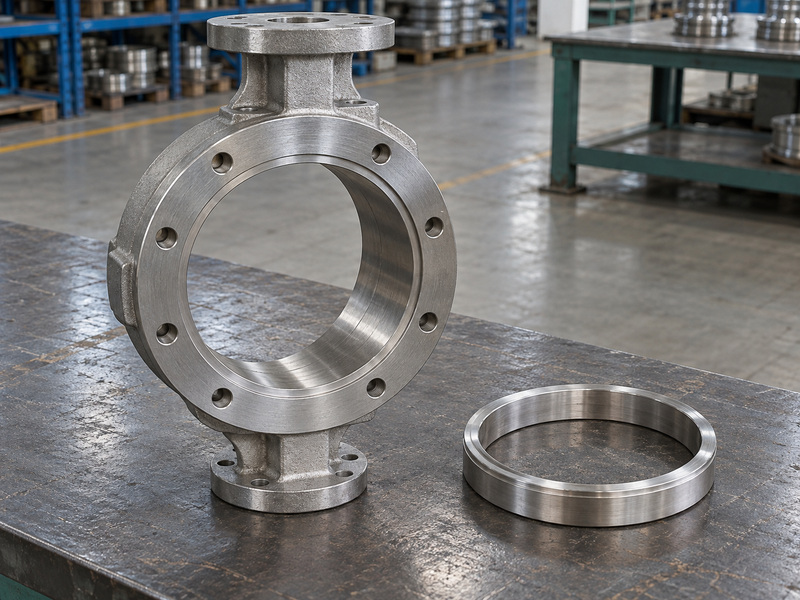
Separate the pressure boundary from the closure materials
Begin with a drawing-linked component and exposure schedule. The body contains pressure, while the seating assembly performs its defined closure function. Either can have restrictions that the other does not resolve. Keep the body, disc, shaft, contact surfaces, packing, gaskets, and any protective layers identifiable so an attractive seat-alloy description does not leave the body review incomplete.
RUITO’s butterfly valve range provides context for its published product families, primarily soft-seat and lined constructions in the supplied documentation. It does not confirm a universal carbon-steel metal-seat range. Obtain written confirmation of the proposed configuration and evidence before treating this enquiry as an accepted product capability.
- Identify the body grade and its delivery condition.
- List actual contact materials and protective layers separately.
- Resolve generic descriptions against the proposed drawing.
| Description | Separate question |
|---|---|
| Carbon-steel body | Which grade and pressure-boundary requirements apply? |
| Metal seating | Which materials form the actual contact? |
| Complete construction | Which other parts or barriers limit suitability? |
2. Which body surfaces actually contact the medium?
Use the proposed drawing to identify exposed body surfaces and any continuous barrier that changes their exposure. A carbon steel butterfly valve metal seat description cannot establish the wetted-parts map. Include the bore, seat interfaces, shaft penetrations, joints, and recesses relevant to the actual design instead of assuming the seat ring covers the entire flow path.
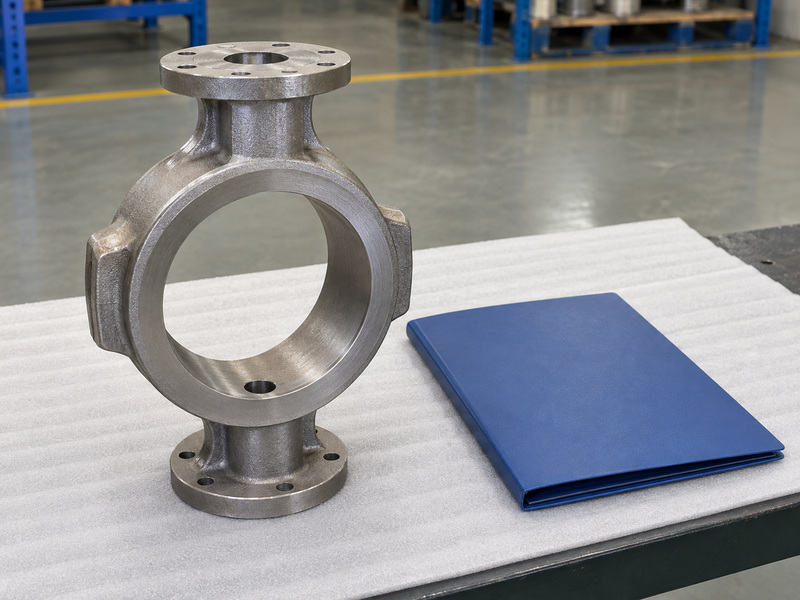
Build the material review around the actual exposure map
Submit the medium composition, concentration, impurities, cleaning chemistry, operating temperature, and periods of stagnation for the materials review. Ask the supplier to distinguish normal process contact from possible exposure during cleaning or abnormal operation. Record any surface that remains exposed despite a protective layer elsewhere. Keep uncertainty visible until the supplier and responsible materials engineer resolve it.
For a different corrosion-isolation approach, review RUITO’s PTFE-lined butterfly valve or PFA-lined butterfly valve under their own complete wetted-path and operating limits. Those alternatives need their own approved construction. A lining statement cannot be transferred to an unlined carbon-steel metal-seat valve or used to overlook its exposed body surfaces.
- Identify process-contact and externally exposed regions.
- Include cleaning and stagnant conditions where relevant.
- Document the coverage and limits of any barrier.
| Exposure region | Information to confirm |
|---|---|
| Flow path | Exposed substrate and contact materials |
| Interfaces and recesses | Actual medium access and protective coverage |
| External surfaces | Atmosphere, insulation, and preservation conditions |
3. Does an alloy seat protect the carbon-steel body?
Only the protection actually provided by the documented construction can be credited. In a carbon steel butterfly valve metal seat review, an alloy ring or local overlay cannot establish coverage of unrelated body surfaces. Evaluate every exposed pressure-boundary region for the specified medium instead of extending the contact alloy’s properties across the valve.
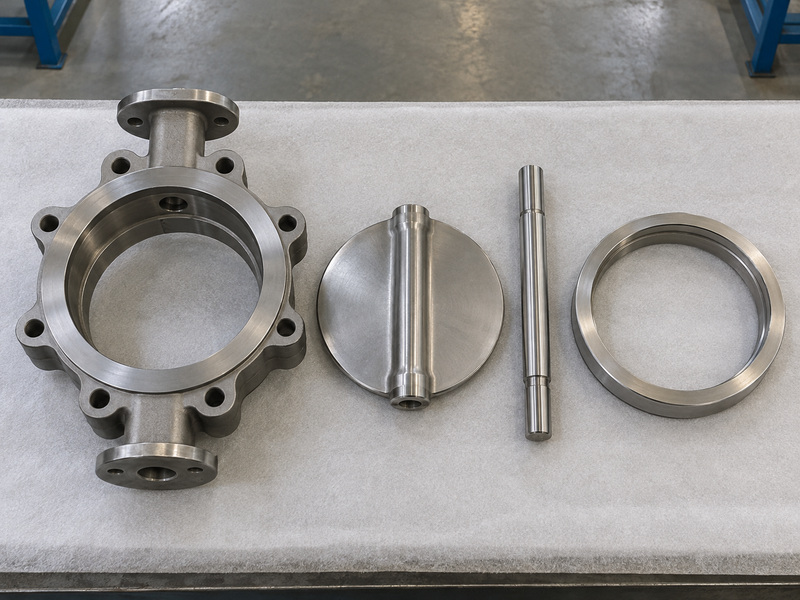
Identify substrate and protective coverage independently
Keep substrate, overlay, and separate components distinct on the material schedule. A manufacturer’s construction discussion describes a pressure-retaining base material and a separate protective material over wetted surfaces. The relevant procurement question is which surfaces the proposed protection actually covers and which remain exposed, not whether another supplier has used that concept.
Ask for the purpose, material, coverage, controlled process, and inspection requirements of each proposed overlay or surface treatment. Separate a contact treatment intended for wear behaviour from a barrier intended for corrosion control. If protection is incomplete or its service suitability is unconfirmed, request a revised construction or a documented materials decision before approving the body.
- Mark the boundaries of each overlay or protective system.
- Review exposed substrate separately from protected contact areas.
- Resolve the intended corrosion or wear function explicitly.
| Construction item | Review focus |
|---|---|
| Pressure-retaining substrate | Suitability of exposed body material |
| Seat or contact alloy | Its actual location and closure function |
| Protective layer | Coverage, purpose, process, and acceptance |
4. Which casting-grade details need confirmation?
Confirm the exact material specification, grade, contract edition, and required delivery condition for the body. A carbon steel butterfly valve metal seat order should not stop at the words carbon steel. The selected casting grade must be part of the manufacturer’s design and service review for the proposed pressure boundary.
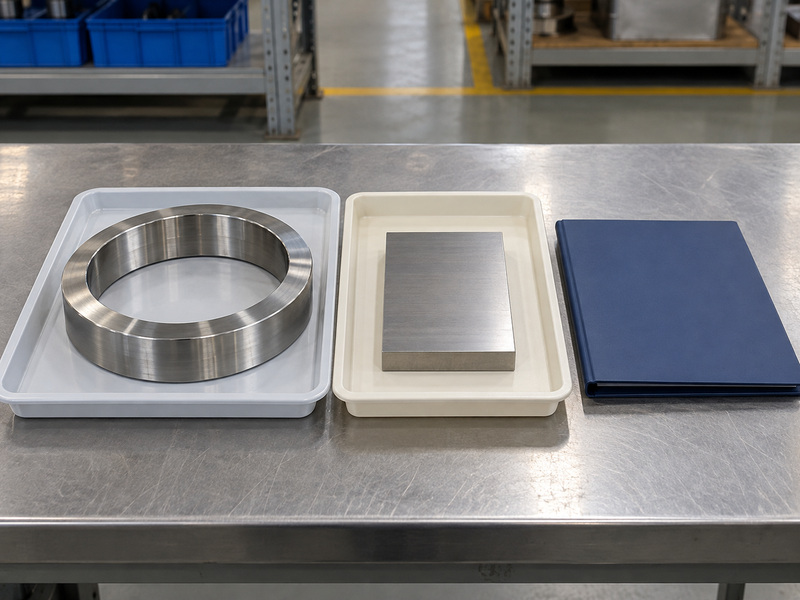
Connect the exact grade with the body design basis
ASTM A216/A216M addresses carbon-steel castings for pressure-containing components within its stated scope. Where invoked, identify the agreed grade and edition in the approved data sheet. A general reference to that material standard does not establish a complete valve rating, corrosion allowance, lower-temperature approval, or suitability for every process medium.
Ask the manufacturer how the proposed body construction addresses the project’s pressure-boundary requirements and any specified corrosion allowance or material restrictions. Keep those decisions with the applicable drawing and design documentation. If the proposed grade or condition changes, obtain the required engineering disposition. Avoid replacing a body-suitability review with a long list of unrelated material certificates.
- State the agreed specification, grade, and condition.
- Request the applicable body design and service basis.
- Control proposed grade or condition substitutions.
| Body requirement | Supporting confirmation |
|---|---|
| Material identity | Exact specification, grade, and condition |
| Pressure boundary | Applicable design and service basis |
| Proposed change | Written engineering disposition |
5. What supports the minimum-temperature requirement?
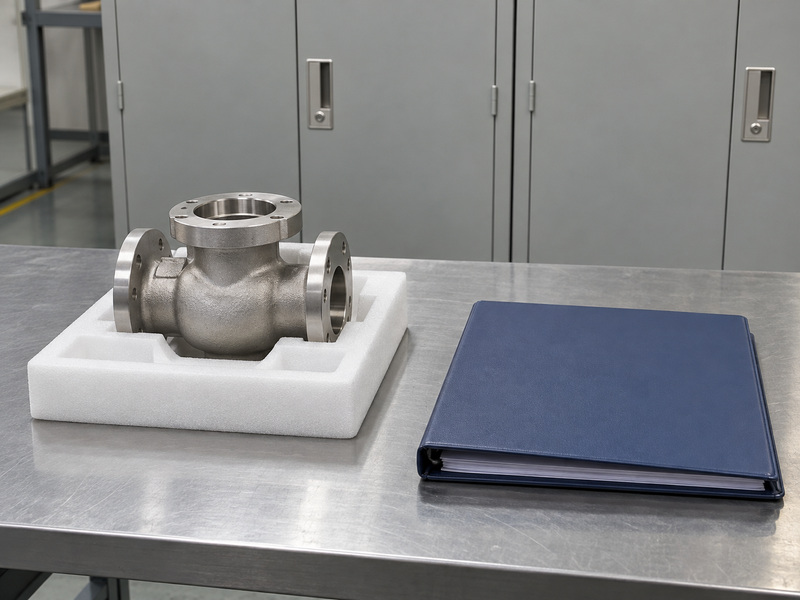
Obtain the manufacturer’s lower-temperature basis and the applicable toughness evidence or justified exemption. A carbon steel butterfly valve metal seat selection needs the project’s minimum temperature and simultaneous operating conditions. A suitable metallic seat or a successful ambient pressure test cannot establish low-temperature suitability of the carbon-steel body.
Resolve lower-temperature suitability before material approval
Where the project uses a minimum design metal temperature, or MDMT, state that requirement and ask the responsible engineer to review the proposed material, section, condition, and applicable code basis. ASTM A352/A352M addresses cast pressure-containing parts intended primarily for low-temperature service. Its material scope does not authorize arbitrary substitution or provide a universal operating temperature for every valve.
Request the relevant impact-test information where required, including the tested material identity, test conditions, results, and basis for coverage of the supplied body. If an exemption is proposed, require the applicable technical justification instead of a verbal assurance. Include credible cooling or ambient conditions in the service review and record any restrictions on the accepted assembly.
- State the project’s minimum temperature and pressure conditions.
- Review applicable toughness evidence or exemption.
- Keep the accepted restrictions with the configuration record.
| Low-temperature item | Evidence requested |
|---|---|
| Service requirement | Minimum-temperature and operating-condition basis |
| Body suitability | Material, section, condition, and applicable assessment |
| Acceptance | Relevant impact evidence or justified exemption |
6. How should pressure-temperature limits be checked?
Check the proposed body and complete assembly at each required simultaneous pressure-temperature condition. A carbon steel butterfly valve metal seat needs a configuration-specific rating basis alongside its corrosion and lower-temperature review. Keep containment capability, permitted closing differential, pressure direction, and auxiliary-component limits separately identifiable before accepting the operating envelope.
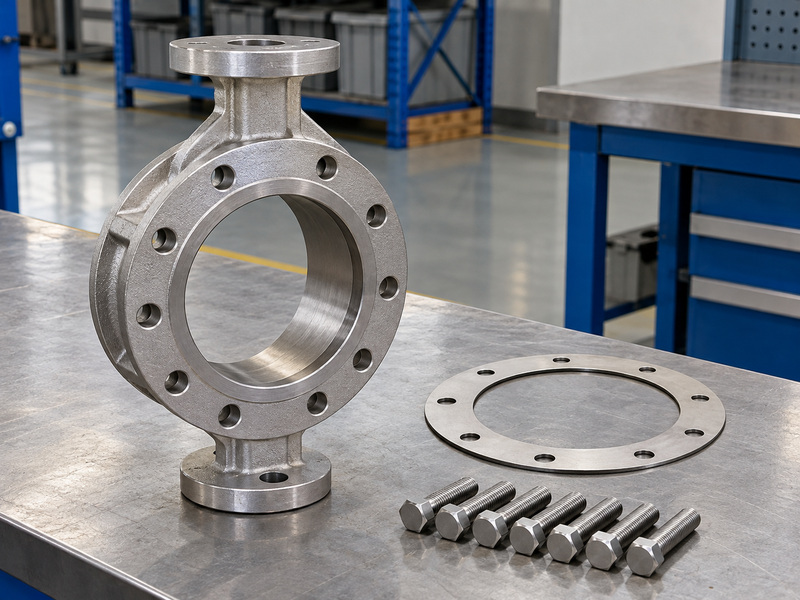
Retain the governing limit for each service condition
ASME B16.34 covers pressure-temperature ratings within its scope. When invoked, obtain the applicable manufacturer documentation for the exact body material and construction. A pressure class is not a pressure expressed in psi or bar. Do not combine a catalogue’s highest temperature with its highest pressure without the applicable rating basis.
Ask the supplier to identify any limitation from packing, gaskets, bearings, contact materials, connections, or the operating package. Record how each service condition is addressed and resolve conflicting documents before approval. Keep the normal operating envelope distinct from fabrication heat exposure, fire qualification, and closure-test conditions. None of those separate records automatically establishes the others.
- Use the exact material and configuration rating documents.
- Check containment and closure differential separately.
- Resolve auxiliary-part and connection restrictions.
| Rating item | Review question |
|---|---|
| Body containment | Which pressure is permitted at the stated temperature? |
| Closure duty | Which differential and direction are allowed? |
| Complete assembly | Which component or interface adds a restriction? |
7. How do coating and lining requirements differ?
Specify their location, purpose, coverage, and approved service rather than treating the terms as interchangeable. A carbon steel butterfly valve metal seat can have an external finish, an internal protective system, or exposed metal regions with different requirements. Ask exactly which substrate each system protects and what its inspection and repair instructions require.
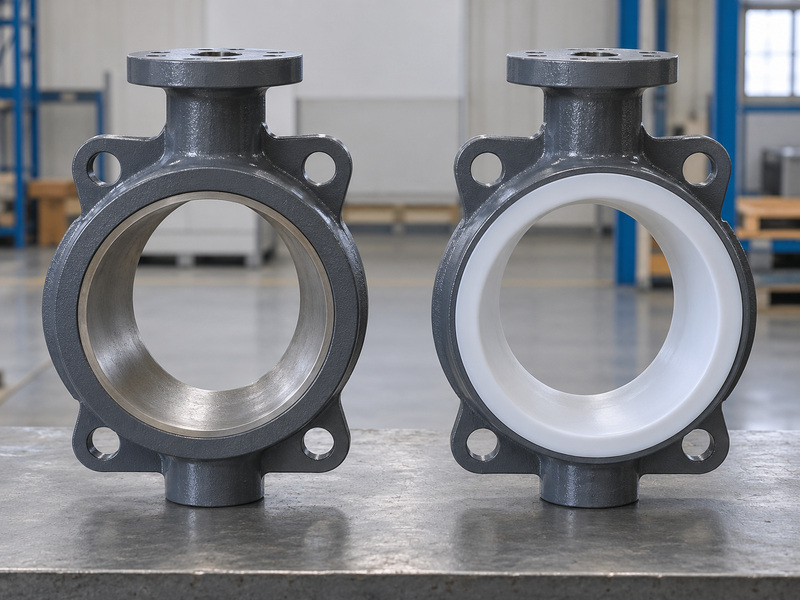
Review the protective system against its actual purpose
An external coating does not establish internal process isolation. An internal lining also needs a defined coverage map, including interfaces and penetrations, before it can be credited as a barrier. Review the proposed system against the actual medium, temperature, pressure, and mechanical exposure. Keep damage to the protection and loss of the pressure-retaining material as separately assessed conditions.
Agree on the coating or lining specification, applicable examination, acceptance criteria, and repair disposition before manufacture. Avoid assuming that a treatment selected for erosion control also provides the required corrosion protection, or vice versa. Where a barrier is proposed, ask how its condition will be checked and how damaged areas will be evaluated during service.
- Distinguish external protection from internal coverage.
- Identify exposed interfaces and the protected substrate.
- Agree on inspection, damage assessment, and approved repairs.
| Protection description | Requirement to resolve |
|---|---|
| External coating | Atmospheric exposure and specified coverage |
| Internal barrier | Medium compatibility and actual isolation coverage |
| Wear-oriented treatment | Its stated function and separate corrosion review |
8. What should preservation and body inspection cover?
Protect the supplied condition and inspect relevant internal and external regions under the approved plan. A carbon steel butterfly valve metal seat needs preservation requirements for transport, storage, installation, and any idle period. Identify the protection method, its service compatibility, and the actions required before commissioning instead of assuming the seat alloy protects the whole valve.
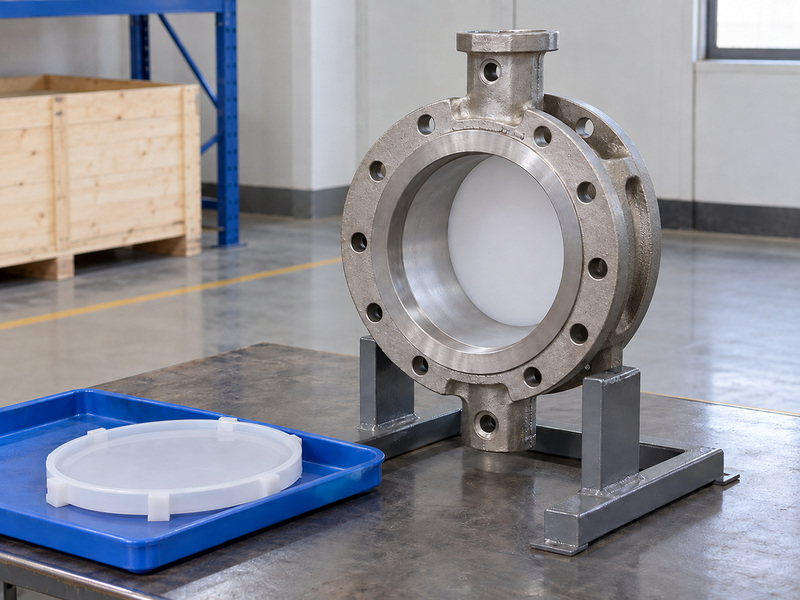
Preserve condition records through storage and operation
Record damaged coating, contamination, retained moisture, deposits, and suspected material loss with their location and operating history. Use the manufacturer’s and project’s approved inspection methods and acceptance limits. Surface appearance alone cannot establish remaining pressure capability. Refer uncertain findings for technical assessment before removing material, repairing a protective layer, or treating an unmeasured mark as harmless.
Connection examples such as RUITO’s flanged butterfly valve and wafer butterfly valve provide access context for inspection planning. Use the installed model’s own drawing and instructions to confirm what can be reached. Keep preservation changes and any approved cleaning or repair in the body-condition record so later inspections have a usable reference.
- Agree on preservation and commissioning requirements.
- Record internal and external findings separately.
- Use approved criteria for suspected protection or substrate damage.
| Condition concern | Record needed |
|---|---|
| Storage or transport exposure | Preservation, packaging, and received condition |
| Protective-system damage | Location, extent, and approved disposition |
| Suspected body material loss | Inspection evidence and engineering assessment |
9. Which records should close the body-suitability review?
Close the review with an accepted exposure map, body material basis, protective-system scope, and operating limits. A carbon steel butterfly valve metal seat offer should address corrosion and minimum-temperature requirements alongside pressure containment. Keep unresolved material or protection questions visible until the supplier and responsible project reviewers provide a written disposition.
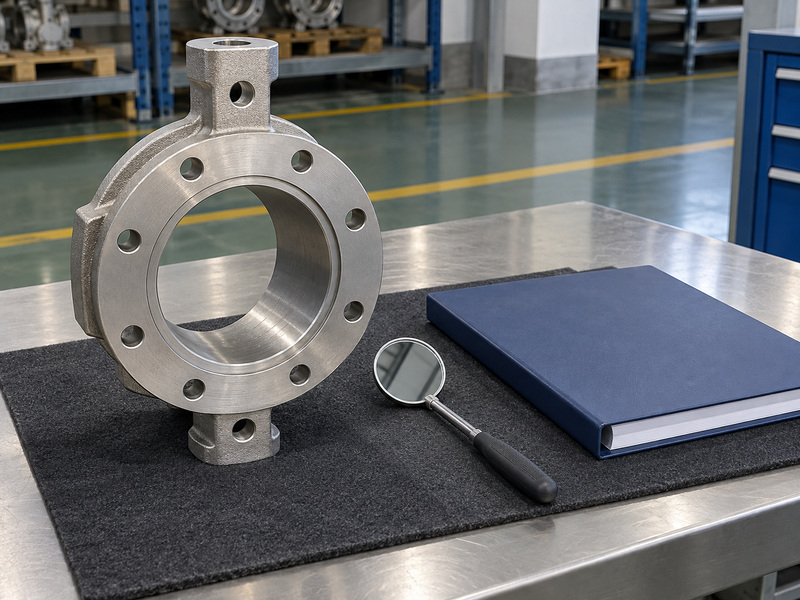
Approve the complete pressure-boundary suitability basis
Include the approved body and wetted-parts drawings, material designation, rating basis, applicable low-temperature evidence, coating or lining specification, and preservation instructions. Name the documents that control inspection and acceptable repair. Record substitutions or service changes that require reapproval. Keep closure and external-containment acceptance separate from the body’s chemistry and toughness assessment.
Contact us with the medium, actual exposure map, minimum temperature, simultaneous pressure-temperature conditions, and protection requirements for a scoped RUITO review. Its supplied documentation does not confirm a universal carbon-steel metal-seat butterfly range or corrosion guarantee. Obtain written configuration and evidence confirmation before accepting the proposed supply.
- Link the exposed body with the accepted service conditions.
- Retain material, rating, toughness, and protection decisions.
- Control changes and preserve inspection instructions.
| Approval item | Documented basis |
|---|---|
| Body exposure | Medium and environment mapped to materials |
| Pressure and temperature | Applicable rating and lower-temperature evidence |
| Protection and preservation | Coverage, inspection, and approved disposition |
10. Which carbon-steel body FAQs need clarification?
Resolve exposure and pressure-boundary questions against the actual proposed construction. A carbon steel butterfly valve metal seat description needs enough detail to separate the contact alloy’s function from body corrosion, lower-temperature suitability, and complete assembly restrictions.
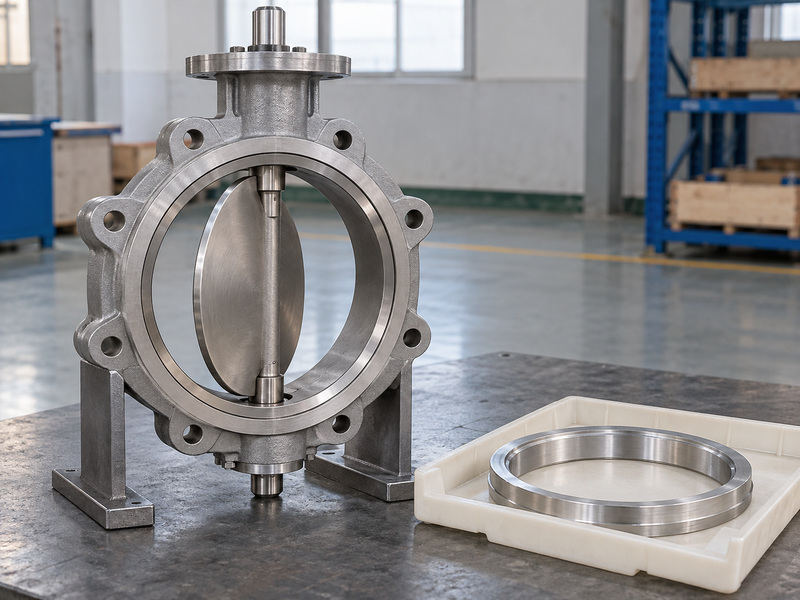
Q1. Does a stainless seat make the body corrosion resistant?
Only the protection actually provided by the design can be credited. Review every exposed body region for the medium; a local alloy ring cannot establish coverage of unrelated surfaces.
Q2. Can every carbon-steel body use the same minimum temperature?
No. Obtain the applicable basis for the exact material, section, delivery condition, and configuration, including required impact evidence or a justified exemption.
Q3. Does an external coating isolate the process fluid?
No. Confirm the internal wetted-parts map and any separately specified barrier. External atmospheric protection does not establish internal process isolation.
Q4. Does an ambient pressure test prove low-temperature suitability?
No. Pressure testing and lower-temperature material suitability address different requirements. Keep the relevant toughness evidence and approved operating limits with the body record.
Q5. What should I submit for a RUITO body-suitability review?
Send the proposed construction, medium and cleaning chemistry, minimum temperature, simultaneous pressure-temperature conditions, and protective-system requirements. Request written confirmation of the supply scope and available evidence.