
How to Choose a Reliable Triple Offset Butterfly Valve
Choose a reliable triple offset butterfly valve by checking its seating geometry, complete material assembly, directional pressure limits, and test evidence against your operating conditions. A quotation can promise metal seating while omitting reverse shutoff limits or hot operating torque. Comparing triple offset butterfly valve manufacturers against one approved duty sheet helps you expose those omissions before the purchase order fixes your options.
Your shortlist should explain how the proposed valve seals, how the actuator supplies seating torque, and which records cover the delivered configuration. A familiar product name cannot answer those questions for a different size, seal ring, or temperature.
1. Which triple offset butterfly valve manufacturers fit?
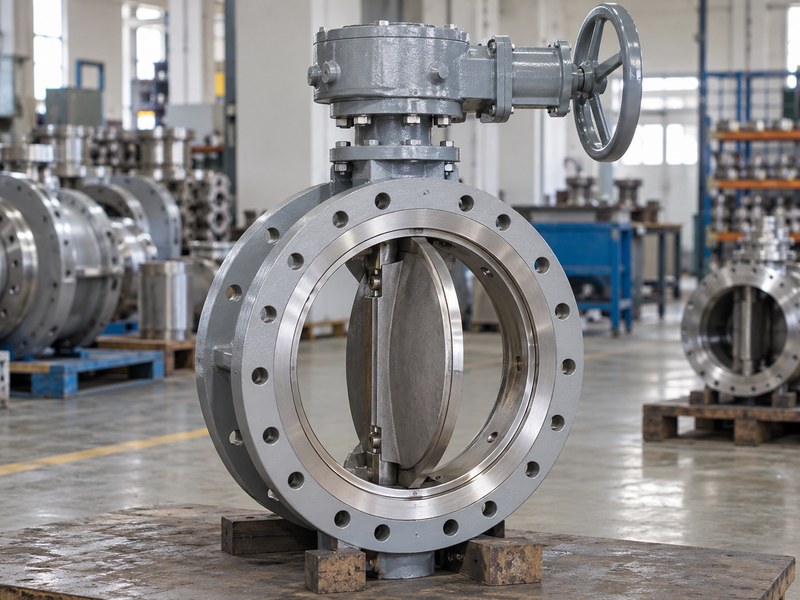
The triple offset butterfly valve manufacturers that fit your project can substantiate the exact size, materials, pressure directions, and operating cycle you require. Start with process conditions rather than a catalogue pressure class. Include normal operation, startup, shutdown, cleaning, and credible upset conditions so suppliers cannot qualify their offers against different assumptions.
What should the initial comparison contain?
Give each candidate the same data sheet and require a signed deviation list. A hot isolation valve may need evidence after thermal cycling, while a valve closing against trapped downstream pressure needs a defined reverse rating. Previous orders involving other materials or lower temperatures provide background but leave your configuration unqualified. Clarify which manufacturing and inspection activities the supplier performs and how it controls any subcontracted work relevant to your acceptance requirements.
- State fluid composition, contaminants, and solids.
- Separate line pressure from maximum closing differential pressure.
- Define allowable leakage under a named test method.
| Procurement question | Useful evidence | Unresolved response |
|---|---|---|
| Does the construction fit? | Section drawing and material list | Generic range brochure |
| Does the rating fit? | Configuration-specific pressure curve | Maximum catalogue class |
| Can you inspect it? | Proposed inspection plan | Inspection after shipment |
Keep candidates with explicit exceptions in the comparison; close those exceptions before technical approval. An honest limitation is easier to evaluate than an unexplained compliance statement.
2. What should three offsets change at the seat?
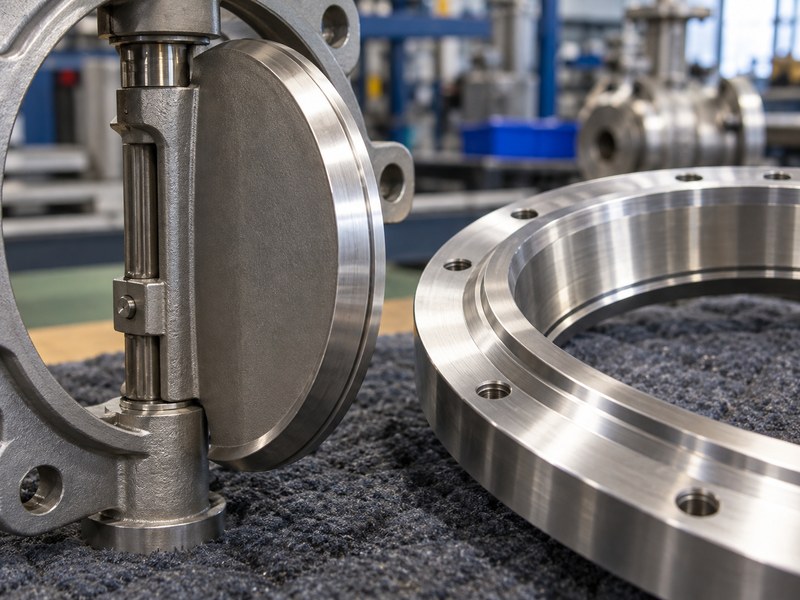
Three offsets should produce a defined disc motion that separates the sealing surfaces during rotation and establishes contact near closure; triple offset butterfly valve manufacturers should demonstrate that geometry. Two offsets position the shaft relative to the sealing plane and bore centerline. The angular offset of the sealing cone completes the geometry, although its execution varies between designs.
How can you inspect the design explanation?
Ask for a section drawing showing shaft location, sealing cone, seat, and seal ring. In torque-seated constructions, applied closing torque develops the contact load required for sealing. Position indication alone cannot prove that the assembly has reached its specified seating load, particularly after an actuator or gearbox change. Ask how the supplier checks ring alignment and contact during assembly, including the permitted adjustment procedure if leakage exceeds the agreed limit.
- Identify which component carries the replaceable seal.
- Request the intended contact pattern and assembly checks.
- Compare the approved closing position with mechanical stops.
| Design feature | Expected function | Purchase check |
|---|---|---|
| Shaft offsets | Control disc separation | Dimensioned section |
| Angular sealing cone | Establish closure geometry | Seat and ring relationship |
| Torque seating | Develop sealing contact | Approved seating torque |
Use geometry drawings to distinguish constructions sold under similar names. Avoid accepting a friction or wear claim without the matching assembly and operating conditions.
3. How do you compare metal seat constructions?
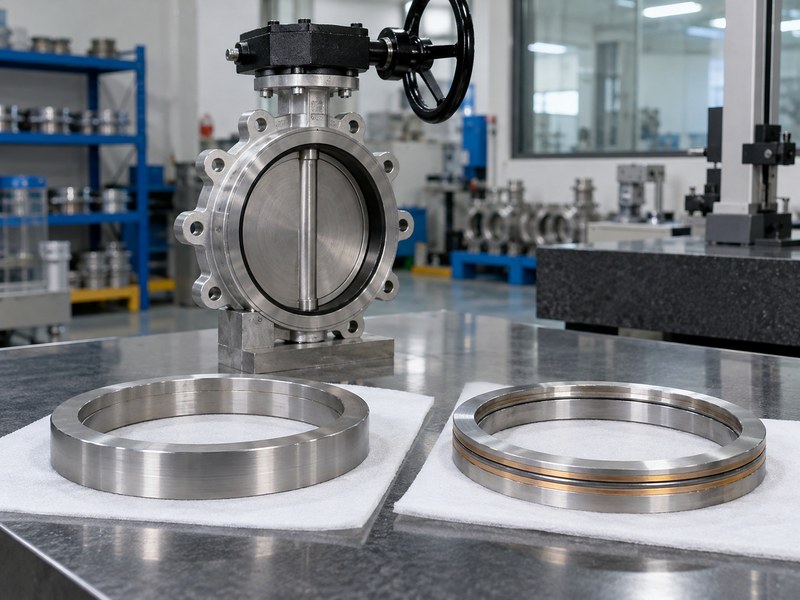
Compare complete seat assemblies, including ring layers, fasteners, retainers, and secondary seals; triple offset butterfly valve manufacturers may offer materially different constructions under the same metal-seat description. A solid metal ring and a laminated ring do not have identical material boundaries. Identify every layer that can contact the fluid or experience process temperature.
Which details belong in the material review?
A corrosion-resistant ring cannot protect an unsuitable retaining screw or exposed interlayer. Ask the supplier to explain material compatibility, thermal expansion, erosion exposure, and replacement requirements. Require separate approval when a quotation changes ring construction, even if the body alloy and nominal pressure class remain unchanged. Include surface finish, overlay inspection, and repair restrictions in the purchasing requirements wherever those features affect the approved sealing construction.
- List ring, seat, overlay, gasket, and packing grades.
- Identify graphite or other nonmetallic interlayers.
- Specify relevant material certificates and traceability.
| Construction detail | Review concern | Evidence to request |
|---|---|---|
| Solid seal ring | Elastic response and contact | Material and design limits |
| Laminated ring | Interlayer compatibility | Complete layer specification |
| Seat overlay | Adhesion and surface condition | Approved process records |
Compare leakage criteria under identical conditions before comparing price. Metal seating alone establishes neither a universal leakage rate nor an unlimited temperature rating.
4. How do triple offset butterfly valve manufacturers prove torque?
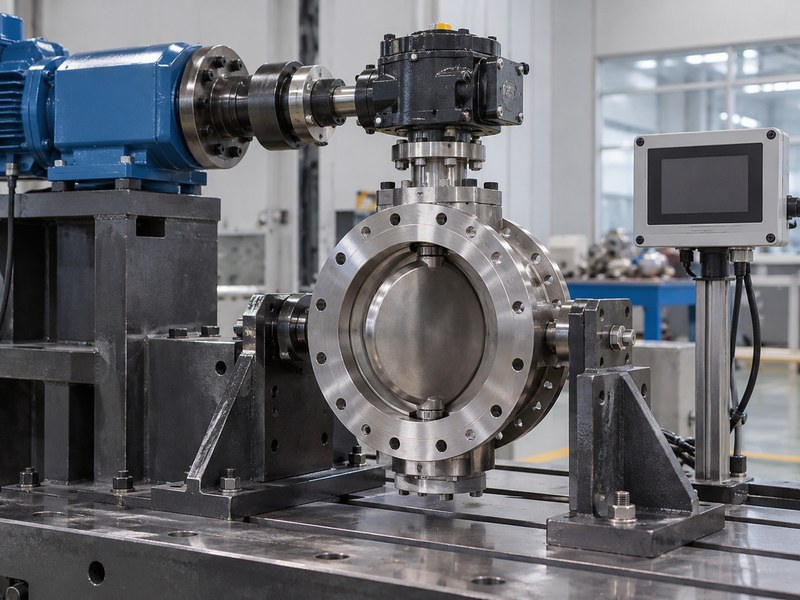
A maker should provide breakaway, running, closing, and seating torque for the specified conditions; triple offset butterfly valve manufacturers should also state permissible shaft loading. One nominal torque value cannot describe an entire quarter turn. Differential pressure, fluid forces, packing adjustment, temperature, and seating direction can change which travel position governs actuator selection.
How should you review the actuator match?
Overlay required valve torque and available actuator output throughout travel. For pneumatic packages, use minimum available supply at the actuator, including relevant losses; for spring-return packages, check both powered and spring strokes. Confirm that maximum output cannot damage the shaft, coupling, gearbox, or seat under the approved control settings. Include accessories that affect supply or movement, such as regulators and speed controls, in the final assembled-package review before approving actuator sizing.
- Require torque units, assumptions, and included factors.
- Check cold startup and hot closure separately.
- Record torque-switch settings and stop adjustments.
| Torque condition | Valve evidence | Actuator evidence |
|---|---|---|
| Breakaway | Closed dwell and temperature | Starting output |
| Running | Differential pressure and angle | Output across travel |
| Seating | Required closing contact load | Available end torque |
Agree the sizing margin with the project engineer and avoid counting a supplier's built-in factor twice. A larger actuator still needs an approved limit on transmitted torque.
5. How do temperature changes affect the assembly?
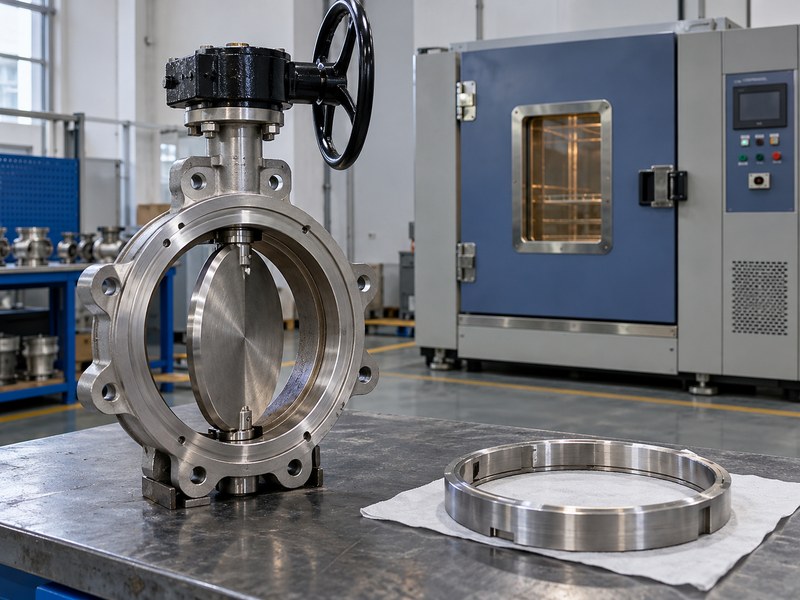
Temperature changes alter clearances, sealing contact, packing behavior, and available operating margins, so triple offset butterfly valve manufacturers should qualify the assembled valve across your temperature cycle. Body, disc, shaft, and ring may expand differently. The largest catalogue temperature and largest pressure cannot be combined unless the same construction permits that operating point.
Which thermal evidence should you request?
Define the actual heating and cooling sequence, including dwell, cycling, and whether the valve moves under differential pressure. A room-temperature pressure test does not establish hot shutoff performance. Ask how insulation, extended necks, bearings, and actuator ambient limits affect the supplied arrangement rather than reviewing the valve body alone. Distinguish a stable hot hold from rapid temperature change, and agree which sequence represents the most demanding credible operating condition.
- Identify temperature measurement locations and stabilization criteria.
- Record leakage and operating torque at agreed stages.
- Require inspection after cooling and repeated operation.
| Operating stage | Possible change | Approval evidence |
|---|---|---|
| Cold startup | Clearance and breakaway | Cold operating check |
| Hot isolation | Contact load and packing | Hot leakage and torque |
| Cooldown | Differential contraction | Repeat closure assessment |
Select test conditions that represent your duty rather than an impressive maximum temperature. Document any condition the proposed qualification does not cover.
6. What proves the permitted sealing directions?
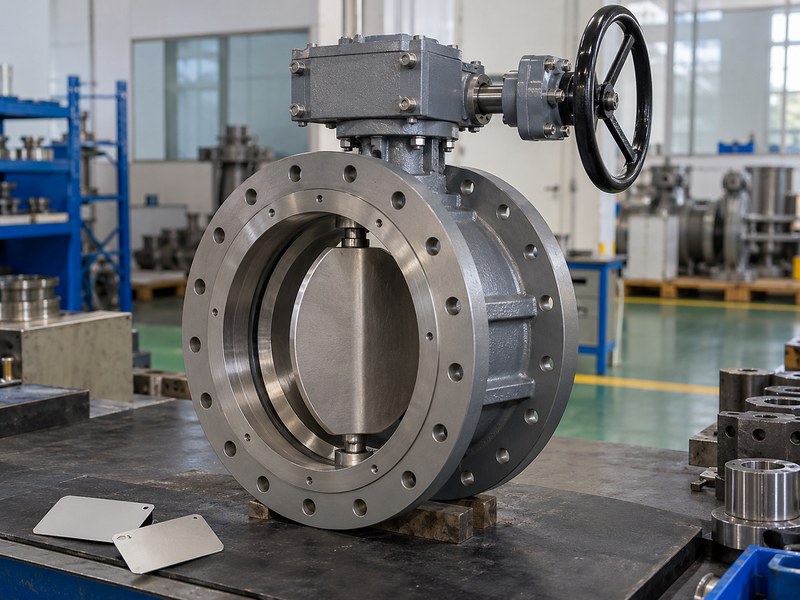
Directional rating data and corresponding shutoff reports prove the permitted sealing directions; triple offset butterfly valve manufacturers should declare each direction independently. Flow through an open valve in either direction does not establish equal shutoff capability. A preferred pressure direction, lower reverse differential, or installation restriction may apply to the proposed construction.
How should you describe reverse pressure?
Sketch where pressure can remain when the valve closes, including pump trips, trapped sections, and system backfeed. Agree how the supplier identifies each side on drawings, markings, and reports. If one flange can be removed during maintenance, evaluate that end-of-line condition separately because mechanical support and pressure loading also change. State whether the requirement concerns sustained pressure, a transient, or repeated reversals so the supplier can review the relevant loading case.
- State maximum differential pressure for each direction.
- Include the required leakage criterion for both tests.
- Confirm directional markings on the delivered valve.
| Condition | Required statement | Supporting record |
|---|---|---|
| Preferred direction | Allowed pressure and temperature | Directional shutoff test |
| Reverse pressure | Independent allowed differential | Reverse shutoff test |
| End-of-line isolation | Permitted installation arrangement | Specific approval and test |
Treat any missing reverse rating as an open technical issue. A forward shell or seat test cannot fill that gap by inference.
7. Which tests qualify triple offset butterfly valve manufacturers?
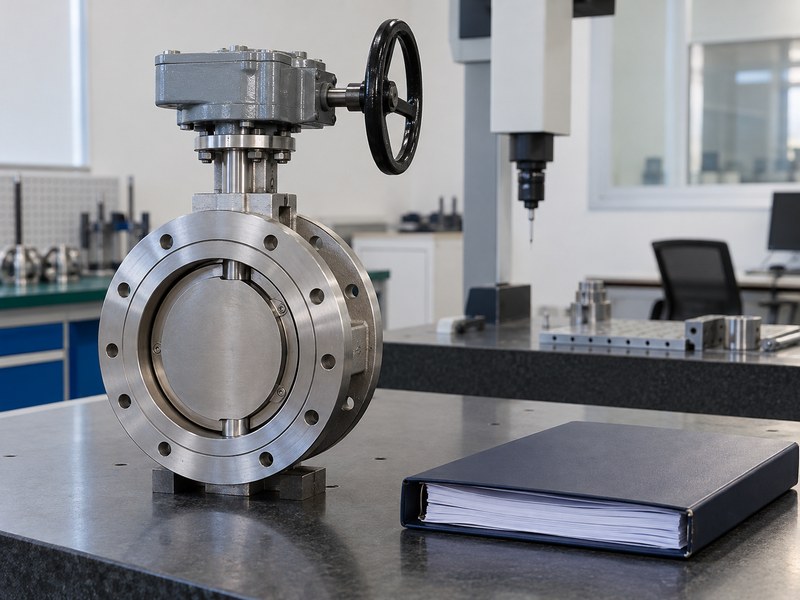
Only reports with an applicable qualification scope cover your valve; triple offset butterfly valve manufacturers should identify the tested design and the rules supporting any extension. Fire performance and fugitive emissions address different failure paths. A metal seat, graphite packing, or low room-temperature leakage result cannot substitute for the required qualification.
What should you check beyond the certificate heading?
Review the full report when the contract requires fire qualification under ISO 10497 or an applicable API 607 route. For fugitive emissions, verify the specified ISO 15848 qualification route and coverage. Compare design, packing, materials, temperature, operating cycles, and permitted extensions with the proposed bill of materials. Ask the supplier to identify the exact clause or qualification rule supporting coverage when the delivered size differs from the tested sample.
- Identify report number, laboratory, and standard edition.
- Match tested components with the offered assembly.
- Review exclusions and approved changes.
| Evidence | What it addresses | What needs separate review |
|---|---|---|
| Fire type test | Specified fire exposure behavior | Actuator fire protection |
| Emissions qualification | External leakage performance | Through-seat shutoff |
| Routine pressure test | Delivered valve acceptance | Type-test coverage |
Keep qualification gaps visible in the deviation register. Product descriptions such as fire-safe require a defined, verifiable basis before contract acceptance.
8. How do you check the installation envelope?
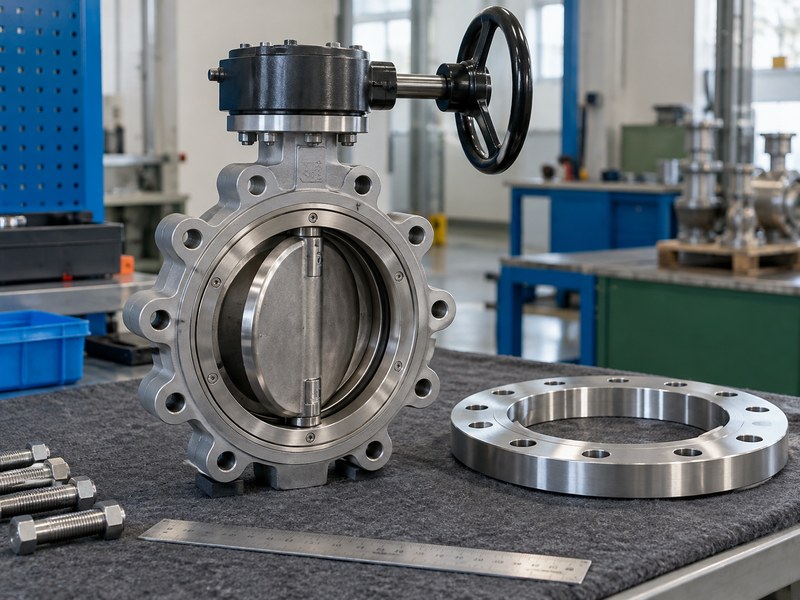
Check the complete moving and maintenance envelope against actual pipework; triple offset butterfly valve manufacturers should supply dimensions for the exact valve and operator combination. Face-to-face length alone leaves disc clearance, flange bore, shaft access, and actuator removal unresolved. Include insulation and nearby supports in the review before freezing the general arrangement.
Which interface checks prevent site rework?
Compare mating flange specification, bore, facing, gasket arrangement, and bolting with the approved drawing. A butterfly disc may extend beyond the body during opening and strike adjacent pipework or equipment. Confirm mounting orientation, lifting instructions, support loads, and whether technicians can reach packing and coupling fasteners after installation. Establish how the installer will align and support the adjoining spools without using valve bolting to force mismatched pipework into position.
- Check disc sweep through the permitted travel.
- Reserve room for gearbox and actuator removal.
- Confirm bolt access and installation sequence.
| Interface | Compare against | Typical unresolved detail |
|---|---|---|
| Pipe bore | Disc opening envelope | Internal obstruction |
| Operator | Nearby equipment and insulation | Removal clearance |
| Flanges | Approved gasket and bolt arrangement | Engagement or facing mismatch |
Resolve clashes on drawings before manufacturing release. Site measurements deserve the same revision control as supplier dimensions, particularly during replacement projects.
9. What belongs in a witnessed inspection plan?
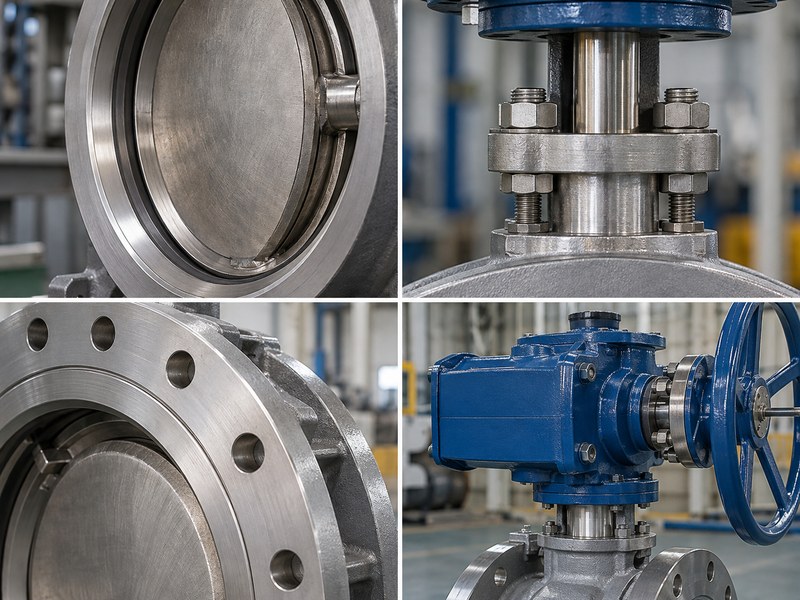
A witnessed inspection plan should connect materials, assembly, dimensional checks, testing, and release records to product identity; triple offset butterfly valve manufacturers should propose those connections before production. Define hold points and witness points clearly. Include advance notice, acceptance criteria, document revisions, and the authority responsible for releasing each stage.
Which records should follow the delivered valve?
Separate design qualification from routine production acceptance. Qualification may include thermal or fire testing of representative configurations, while delivered valves need their specified material, dimensional, pressure, leakage, and operating records. If a test fails, require a recorded disposition and the agreed repeat checks after repair or adjustment. Include final operator settings in the record package so site personnel can identify changes made after the factory acceptance test.
- Record serial number, size, material, and assembly revision.
- Capture test medium, pressure, direction, duration, and leakage.
- Link measuring instruments with valid calibration records.
| Inspection stage | Purchaser decision | Record retained |
|---|---|---|
| Material review | Accept specified grades | Traceable certificates |
| Assembly review | Confirm approved construction | Inspection and setting records |
| Final test | Accept measured performance | Signed test report |
Request the manufacturing record index before shipment. Missing evidence is easier to correct while the valve and inspection personnel remain at the factory.
10. When should you accept a supplier proposal?
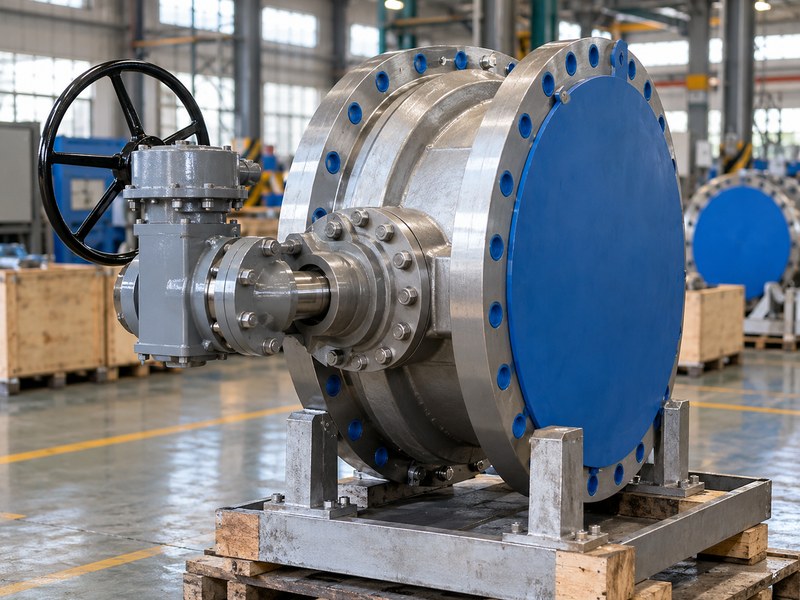
Accept a proposal when technical exceptions, qualification coverage, inspection criteria, and delivery responsibilities are closed; triple offset butterfly valve manufacturers should confirm that agreed configuration in the order acknowledgement. Unresolved assumptions about seating torque or reverse pressure should remain approval blockers. Freeze drawings, material lists, operator settings, and change-notification requirements before releasing manufacture.
- Compare only offers meeting the same operating envelope.
- Assign responsibility for installation and commissioning checks.
- Order spares against the approved seal and packing construction.
Q1: Can I replace a double-offset valve with a triple-offset valve?
Sometimes. Check face-to-face dimensions, disc clearance, pressure directions, torque, and materials before approving the replacement.
Q2: How do I know if a metal seat meets my leakage limit?
Read the agreed test criterion and report. The seat material alone does not define leakage under your operating conditions.
Q3: Can I reuse the existing actuator?
Only after recalculation. Verify torque throughout travel, mounting compatibility, shaft limits, and revised closing settings.
Q4: What's the best evidence for hot isolation duty?
A relevant thermal qualification and approved pressure curve provide the basis. Match their construction and test conditions with your application.
Q5: Can RUITO review an alternative configuration?
Yes. RUITO can review the duty against its documented product configurations and identify applicable alternatives or gaps.
Send RUITO your process data, pressure directions, leakage requirement, and installation drawing for a configuration review. If a documented double-offset or other isolation configuration suits the duty, the review can identify that option and its required evidence before you commit to procurement; contact us to request a configuration review.