
How to Fix API 609 Butterfly Valve Sourcing Mistakes
Fix API 609 butterfly valve sourcing mistakes by specifying the contract edition, design category, complete rating, and acceptance evidence before comparing quotations. An API 609 butterfly valve manufacturer may quote the correct flange drilling while leaving seat pressure limits or material requirements unanswered. That omission can survive purchasing review and appear during installation or inspection, when correcting an order takes longer.
Use one requirement matrix for every offer. Connect each compliance statement with an approved drawing, calculation, material record, or test procedure so you can distinguish a documented configuration from a catalogue description.
1. Which API 609 butterfly valve manufacturer fits?
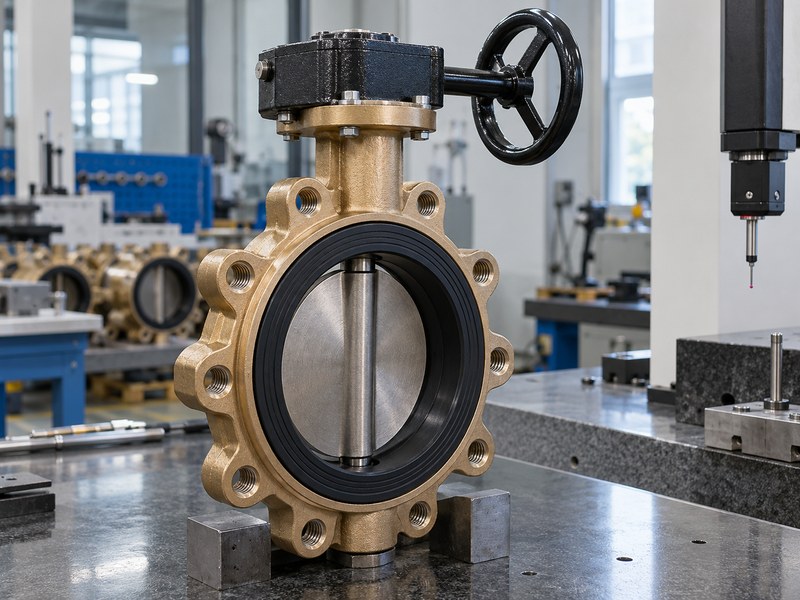
The API 609 butterfly valve manufacturer that fits your order can demonstrate compliance for the proposed construction and agreed standard edition. A general statement that a factory makes API valves leaves the actual model unresolved. Require the quotation to identify valve size, category, body style, pressure basis, seat construction, materials, and operator.
How should you compare supplier responses?
Create a line-by-line compliance sheet and ask each supplier to mark exceptions. Review compliance with the contractual edition rather than assuming that older drawings satisfy every later requirement. If the specification includes owner rules or additional service qualifications, list those separately so neither party treats API 609 as a substitute for them. State which document governs when the project specification, data sheet, drawing, or quoted standard contains conflicting requirements, and resolve conflicts before award.
- Identify the edition and any required amendments.
- Request the proposed drawing and material-list revisions.
- Record deviations with their engineering disposition.
| Supplier response | Purchasing interpretation | Next action |
|---|---|---|
| Model-specific compliance | A reviewable proposal | Check supporting records |
| General API statement | Product scope unresolved | Request exact construction |
| Documented exception | Contract departure | Obtain engineering decision |
Compare commercial terms after resolving the technical basis. Otherwise, a lower price may cover a different valve or a smaller inspection scope.
2. Which design category does the duty require?
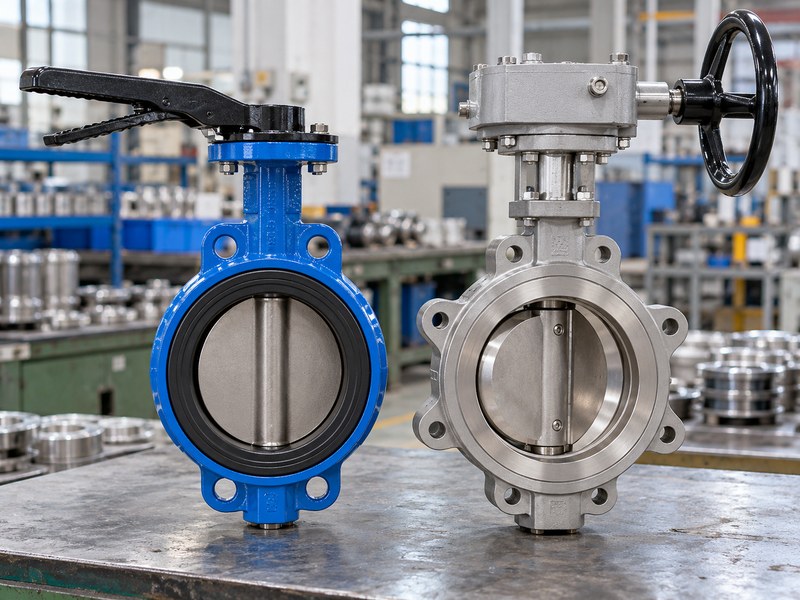
Your pressure basis, construction, and contractual scope determine the required category; an API 609 butterfly valve manufacturer should identify the category explicitly. Category A uses a manufacturer's cold working pressure basis and commonly has concentric construction. Category B uses an ASME Class and pressure-temperature basis with an offset seat; confirm precise definitions and coverage in your selected edition.
Which assumptions need correction?
Category B does not by itself establish a particular seat material, an equal bidirectional rating, or a fire qualification. A valve's seat differential-pressure limit may also restrict operation below its body rating. Ask the supplier to show how category, body rating, and sealing limits apply together at your required temperature. Require the same rating basis on the quotation, approved data sheet, nameplate proposal, and operating manual so restrictions remain visible after purchasing.
- Specify size, category, body style, and rating designation.
- State the shutoff differential for each pressure direction.
- Identify isolation, throttling, and end-of-line requirements.
| Item | What it establishes | Additional check |
|---|---|---|
| Design category | Applicable construction and rating basis | Edition coverage |
| Body rating | Pressure boundary limit | Temperature and material |
| Seat rating | Permitted closing differential | Direction and leakage criterion |
Keep those three entries separate on the purchase data sheet. Combining them into one pressure number conceals restrictions that operators will need later.
3. How do you confirm face and flange dimensions?
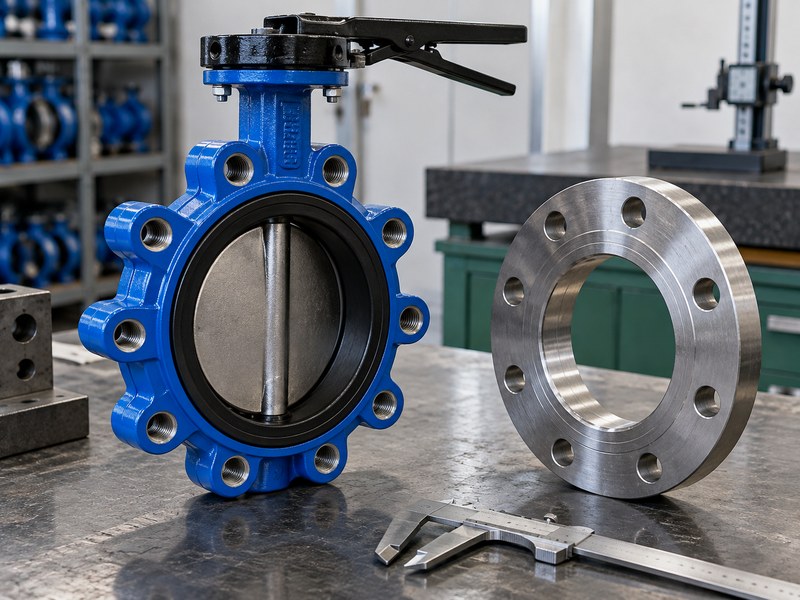
Confirm the approved face-to-face arrangement, flange specification, and mating bore with the API 609 butterfly valve manufacturer before fabrication. Matching bolt holes establishes only one part of the interface. Body dimensions, flange facing, gasket contact, bolting engagement, disc clearance, and permitted pipe loads still require review against the actual installation.
What should the installation drawing show?
Give the supplier the mating flange type and bore, particularly for replacement valves or lined piping. Check the disc through its opening sweep rather than measuring only the closed valve. For lug arrangements, confirm threads, effective bolt engagement, and whether the exact construction permits removal of downstream pipework under pressure. Ask for the valve and actuator assembly dimensions together, including fastener access, insulation clearance, and the space required for planned component removal.
- Record face-to-face dimension and drawing revision.
- Confirm flange standard, rating, facing, and gasket.
- Check bolt lengths and disc clearance at both ends.
| Dimension or interface | Reference to agree | Risk if omitted |
|---|---|---|
| Face-to-face length | Applicable table and approved drawing | Spool mismatch |
| Mating bore | Actual flange and pipe geometry | Disc contact |
| Lug fastening | Thread and engagement drawing | Incorrect bolt loading |
Review any EN-to-ASME proposal as a complete design change. Replacing flange drilling alone cannot establish a different pressure rating or full compliance route.
4. When does a C95800 material choice fit?
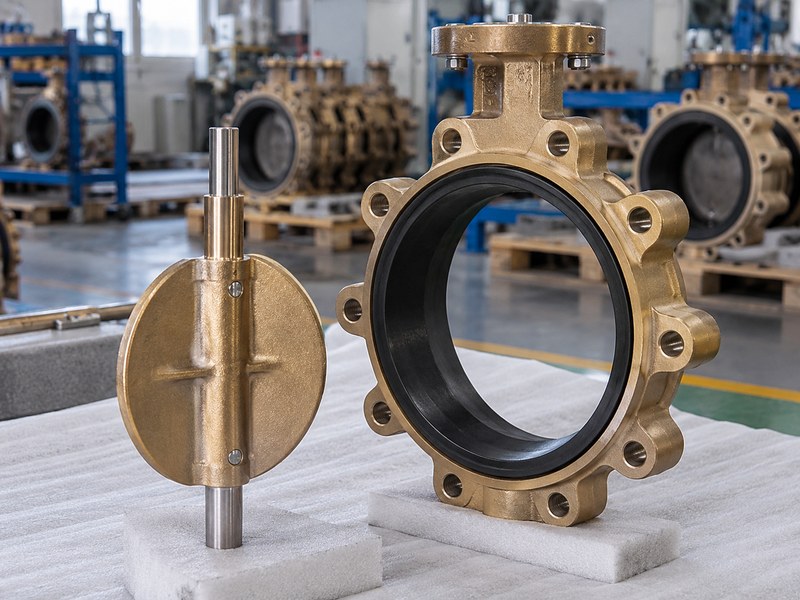
C95800 can suit a reviewed seawater configuration, but the API 609 butterfly valve manufacturer must establish where that alloy appears and how the complete assembly behaves. It is a cast nickel-aluminum bronze used in marine components. A C95800 disc does not make the body, shaft, bearings, fasteners, or seat equally resistant to the fluid.
Which service details affect acceptance?
Provide seawater temperature, velocity, chlorination, stagnation, sulfide exposure, and connected materials. Ask for the product-form specification and certificate applicable to each casting rather than accepting an alloy name without manufacturing requirements. Review galvanic couples and crevices, including places where coating damage could expose another metal. Identify the casting heat number on the component or its traceable production record, and agree how that identity survives machining and assembly.
- Identify every wetted component and its grade.
- Specify required casting quality and repair controls.
- Review elastomers and shaft seals separately.
| Proposed description | Missing detail | Evidence needed |
|---|---|---|
| C95800 disc | Other wetted materials | Complete material list |
| Bronze construction | Exact grade and product form | Applicable specification |
| Seawater suitable | Actual chemical and flow conditions | Application review |
RUITO's documented seawater butterfly configurations use an isolated flow path and approved alloy wetted parts within defined duties. That material option does not establish API 609 compliance for every supplied valve.
5. How should you read the pressure temperature curve?
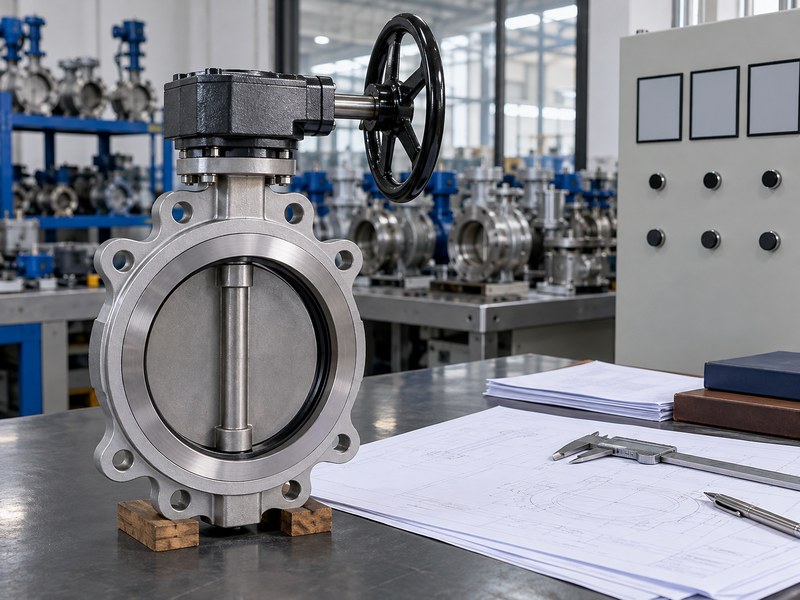
Read the curve for the complete proposed configuration at simultaneous pressure and temperature; your API 609 butterfly valve manufacturer should identify all limiting components. A body rating may exceed a seat or packing limit. Pressure class, cold working pressure, allowable shutoff differential, and routine test pressure describe different requirements and need separate entries.
Which operating points need checking?
Plot normal operation, startup, cleaning, shutdown, and credible transients against the approved limits. Include reverse differential pressure where it can occur. For liquids near boiling conditions, review absolute pressure and downstream conditions separately because a compliant pressure boundary cannot prevent flashing or cavitation caused by the system. Identify whether each published curve applies to body pressure, shutoff differential, or both, and request clarification when the plotted boundary is unclear.
- Use one material and seat configuration throughout the comparison.
- Identify temperature derating and directional limits.
- Record pressure units and whether values are gauge or absolute.
| Value on a quotation | Meaning | Acceptance question |
|---|---|---|
| Body rating | Pressure boundary capability | Valid at which temperature? |
| Seat differential | Closed-valve pressure difference | Valid in which direction? |
| Test pressure | Defined inspection condition | Under which procedure? |
Do not use a successful shell test as a new operating limit. Request written clarification whenever a quotation presents several pressure numbers without their conditions.
6. What should a pressure test report contain?
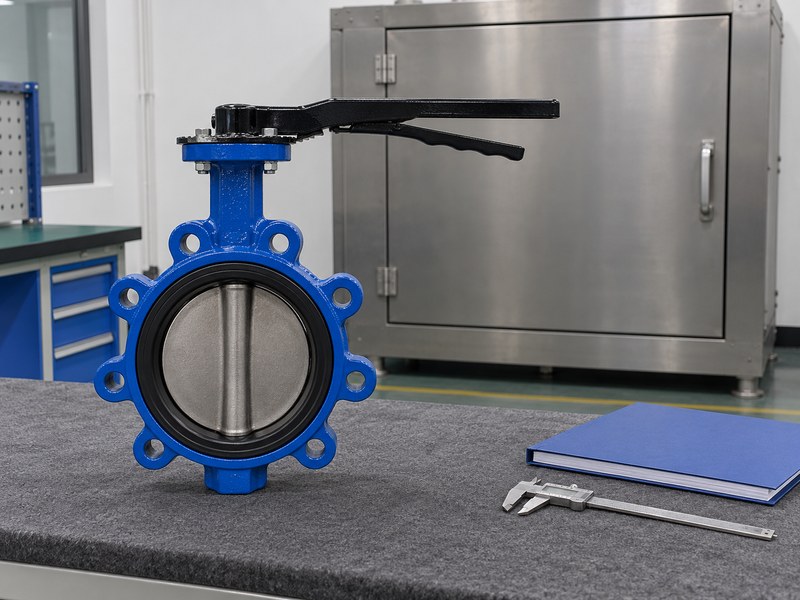
A pressure test report should identify the valve, procedure, test conditions, observations, and acceptance result; the API 609 butterfly valve manufacturer should agree that format before inspection. Use the examination and testing requirements of the contractual edition and any referenced standard. Avoid copying pressures or leakage allowances from a different rating route or seat construction.
What makes the result traceable?
Require product identity, size, construction, test date, medium, pressure, duration, direction, and measured or observed leakage. Keep shell, closure, and external leakage results distinct. When the contract calls for gas testing, special cleaning, or additional low-pressure checks, identify those procedures explicitly rather than assuming a hydrostatic record covers them. Agree how the inspector records instrument readings and leakage observations so the final certificate can be checked against the original test record.
- Reference the procedure revision and acceptance clause.
- Identify calibrated instruments and the inspector.
- Record repairs, adjustments, and subsequent retests.
| Report entry | Why you need it | Unacceptable omission |
|---|---|---|
| Product identity | Connects result with delivery | Range name only |
| Pressure and direction | Defines applied loading | Single pass checkbox |
| Leakage criterion | Defines acceptance | Undefined zero-leakage claim |
Ask the inspector to review the report against the purchase data sheet while the valve remains on the test stand. Missing conditions can then be resolved before packing.
7. How do you check actuator and shaft loading?
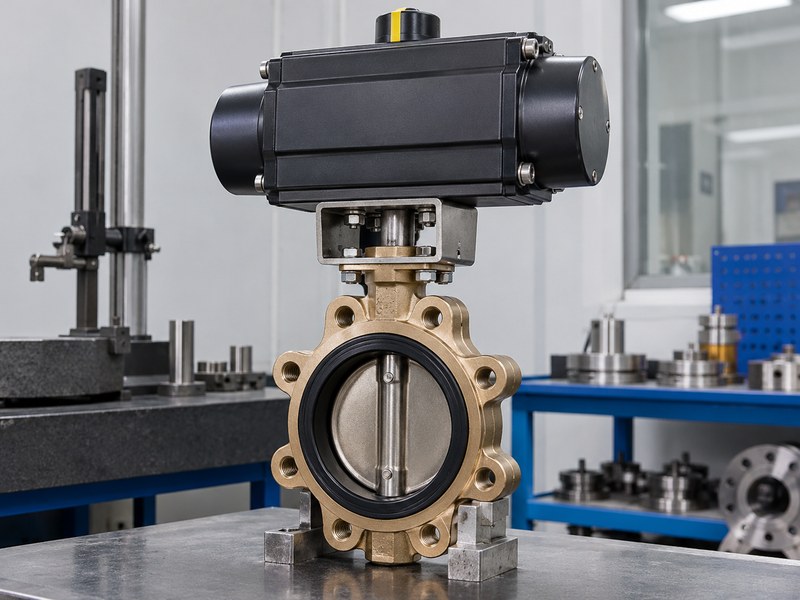
Check operating torque and allowable shaft loading together; an API 609 butterfly valve manufacturer should provide the conditions behind both values. An actuator can supply sufficient closing torque and still overload a shaft or coupling. The mounting flange designation describes an interface and cannot establish the allowable transmitted torque of the assembled package.
Which cases should the calculation cover?
Review breakaway after dwell, running torque under flow, and seating torque at maximum specified differential pressure. Compare those demands with actuator output across travel at minimum supply or voltage conditions, as applicable. Also check maximum output, mechanical stops, torque switches, coupling engagement, bracket stiffness, and the required failure position. For modulating packages, ask the actuator supplier to confirm the permitted operating frequency and load for the proposed control sequence and environment.
- Confirm whether quoted valve torque includes a sizing factor.
- Check both strokes of spring-return actuators.
- Document final stop and torque settings.
| Check | Required input | Approval record |
|---|---|---|
| Available output | Minimum supply conditions | Actuator calculation |
| Mechanical strength | Shaft and drive-train limits | Load review |
| Shutoff function | Differential and seat demand | Functional test |
Select the package as an assembly. Changing the actuator model after technical approval should trigger another review of loading, control settings, and installation space.
8. How can an API 609 butterfly valve manufacturer prove compliance?
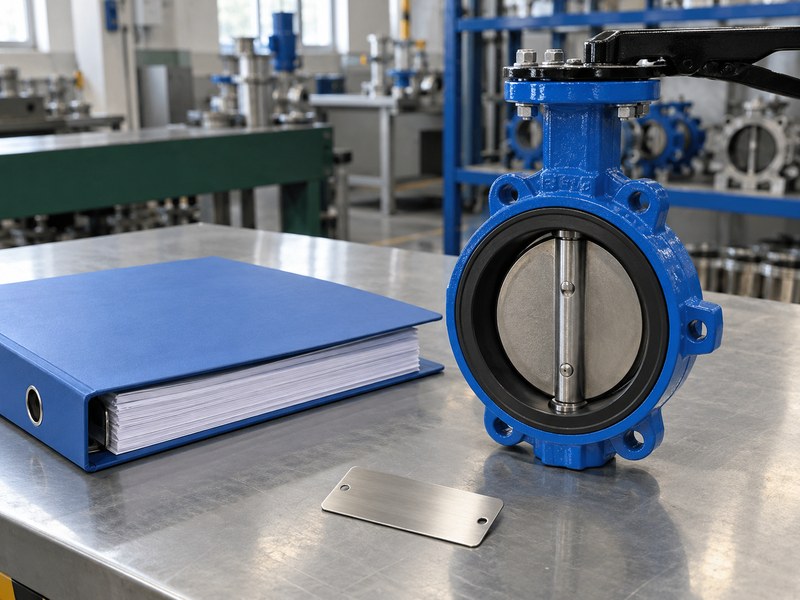
An approved compliance matrix supported by drawings, material records, calculations, and test reports supports the claim; an API 609 butterfly valve manufacturer should identify those documents by revision. A management-system certificate concerns the organization and its system. It does not establish that a particular valve satisfies every product requirement in your order.
How should you handle certification wording?
If the supplier claims an API Monogram licence, verify the legal entity, manufacturing site, current status, and applicable product scope in the official directory. A contractual statement of conformity and a licence claim need different checks. For fire, emissions, drinking-water, or destination-market requirements, request their own applicable evidence and configuration coverage. Ask who authorizes the final declaration and how the document identifies the supplied order, product configuration, applicable standards, and accepted contractual deviations.
- Match the supplier name with document ownership.
- Verify that test samples represent the offered construction.
- Keep qualification reports separate from production records.
| Document | Supports | Does not establish alone |
|---|---|---|
| Compliance matrix | Response to contract requirements | Test performance |
| Material certificate | Identified material properties | Whole-valve conformity |
| Type-test report | Qualified design scope | Every delivered unit's acceptance |
RUITO's documented EN butterfly-valve routes must be reviewed against any requested API route at model level. An EN reference or an ASME drilling option cannot replace that review.
9. What must the inspection plan hold for approval?
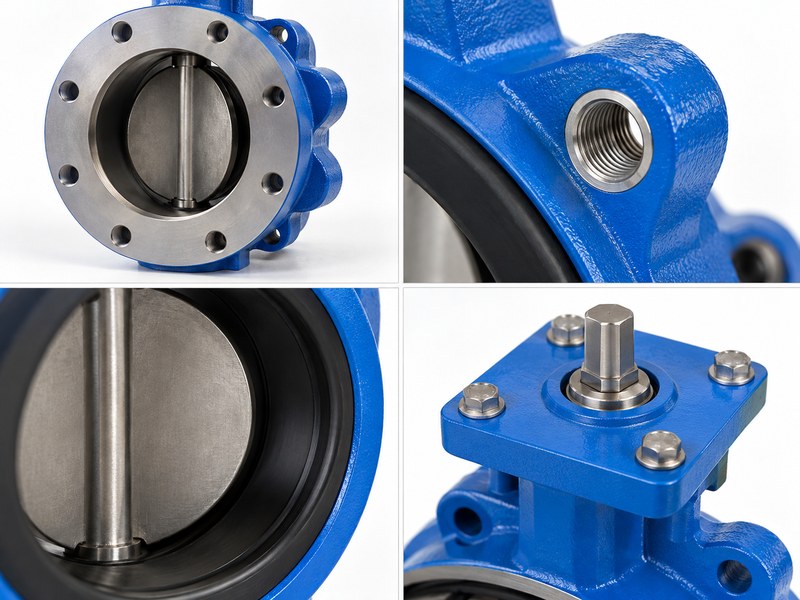
The inspection plan must hold the agreed documents and manufacturing stages for approval before work passes those points; your API 609 butterfly valve manufacturer should confirm that sequence. Late inspection cannot readily verify a concealed material or inaccessible assembly feature. Agree who reviews, who witnesses, and who authorizes continuation when the purchaser cannot attend.
Where should you place hold points?
Choose stages according to project risk and access to evidence. Material identification, special processes, critical dimensions, final testing, and record-package release may need different controls. Put notification periods and nonconformance handling in writing so a missed visit does not become an assumed approval or an unplanned shipment delay. Include preservation, end protection, marking, and packing checks where storage or transport could damage surfaces that passed inspection before the valve was packed.
- Approve drawings and procedures before their use.
- Define inspection sampling where full inspection is unnecessary.
- Require written disposition of deviations and repairs.
| Stage | Possible control | Release evidence |
|---|---|---|
| Before production | Document approval | Signed revision register |
| During manufacture | Selected witness or hold point | Inspection record |
| Before shipment | Final records and marking review | Authorized release |
Keep acceptance criteria measurable and linked with the order. A witness signature records attendance; the report must still show that the specified checks passed.
10. How should you brief an API 609 butterfly valve manufacturer?
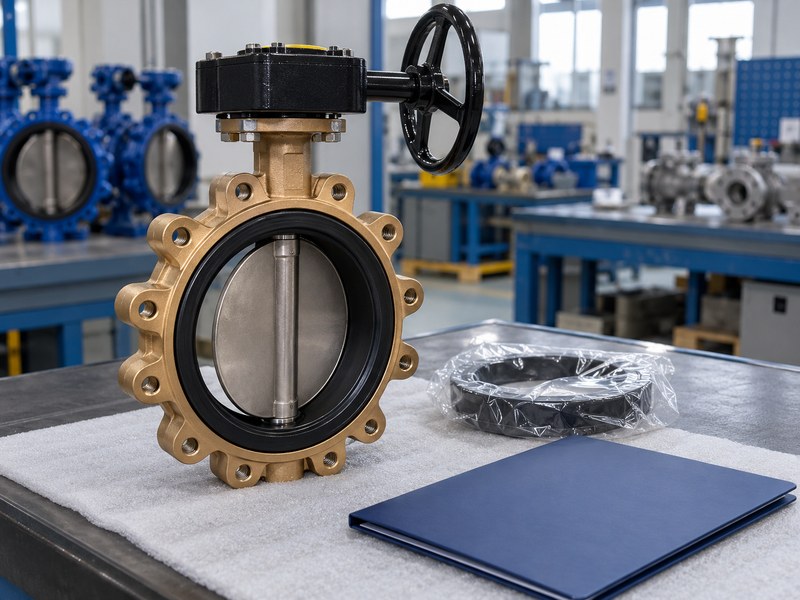
Prepare an enquiry that defines duty, interfaces, compliance, and evidence in one controlled package; an API 609 butterfly valve manufacturer can then price the same scope you intend to inspect. Include an exception form and document schedule. Assign an owner to resolve each technical question before converting the quotation into a purchase order.
- Specify size, category, edition, body style, and rating.
- Attach fluid conditions, pressure directions, and installation details.
- List operator, testing, documentation, and spare requirements.
Q1: Can I accept API 609 compliance from a brochure?
No. Obtain a model-specific compliance response and supporting evidence for the agreed edition and construction.
Q2: How do I know if flange drilling proves the rating?
It does not. Review the pressure boundary, materials, seat limits, and complete applicable design route.
Q3: Can I specify C95800 for every wetted part?
Only after engineering review. Component strength, corrosion conditions, manufacturing specifications, and compatibility still govern each material choice.
Q4: What's the best way to compare test quotations?
Use one approved test schedule. Compare medium, pressure, duration, direction, acceptance criteria, and witnessing on the same basis.
Q5: Can RUITO review an API 609 enquiry?
Yes. Submit the project requirements for a configuration and document-gap review before accepting any model-level compliance statement.
Send RUITO the required standard edition, duty sheet, mating flange details, and inspection schedule for review. The response should identify the applicable documented configuration, any proposed alternative, and the evidence needed to close the sourcing decision; contact us to request a configuration review.