
You can fix butterfly valve seat temperature mistakes by approving the exact compound and complete valve at every simultaneous pressure, temperature, and chemical exposure. A search for Viton seat temperature butterfly valves often returns a broad rubber temperature range. That range can miss hot cleaning, a cold startup, or a lower body pressure rating. Build a service schedule and check the proposed assembly against it before approving a replacement or raising the operating temperature.
1. What sets a Viton seat butterfly valve temperature limit?
The temperature limit comes from the complete valve configuration, its seal compound, fluid exposure, mechanical loading, and declared operating conditions. The limiting part may be the seat, another shaft seal, a lining, a plastic component, or the pressure boundary. Approve pressure and temperature as paired values rather than combining the highest figures from different documents. The maximum temperature printed beside an elastomer family does not define the valve’s permitted service envelope.
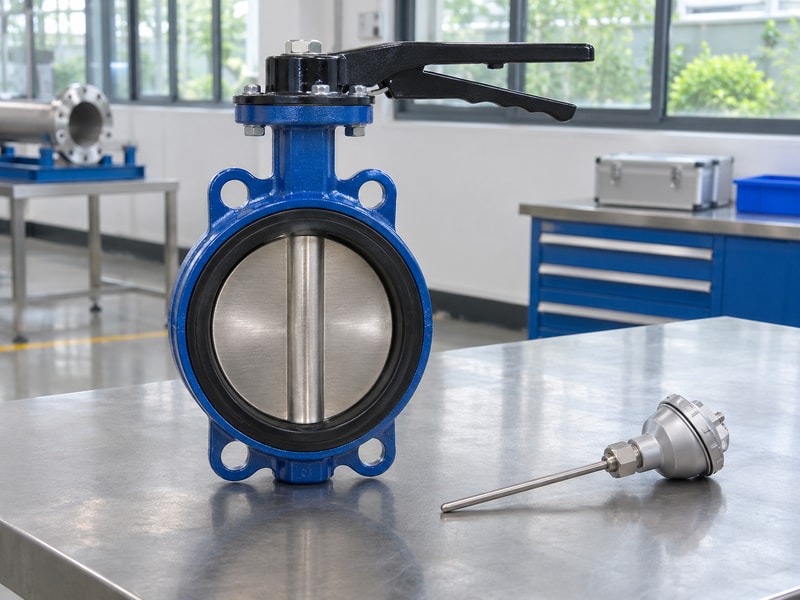
Find the component that controls each condition
Ask the supplier to identify the limiting condition for normal service, cleaning, startup, and shutdown. A short hot excursion also needs approval for duration and repetition. If the proposed valve has more than one elastomer, record each compound so a secondary seal does not disappear from the temperature review.
- Identify all seals, liners, bearings, and pressure parts.
- State continuous and intermittent temperature cases separately.
- Pair each case with pressure and fluid composition.
- Obtain written approval for the exact assembly revision.
| Rating information | What it must identify |
|---|---|
| Seat limit | Exact compound and exposure basis |
| Assembly limit | Size, construction, pressure, temperature |
| Excursion allowance | Duration, frequency, and conditions |
Keep unapproved excursions outside the operating instructions until the supplier has reviewed their effect on the complete valve.
2. Why is an FKM material limit not a valve rating?
An FKM material limit describes specified material behavior under stated conditions, while a valve rating includes geometry, load, pressure containment, and sealing performance. The same elastomer family can appear in seals with different compression, thickness, and support. Temperature can change how those seals recover after disc movement. A material data sheet also cannot establish the strength of the body, stem, fasteners, or mounting assembly.
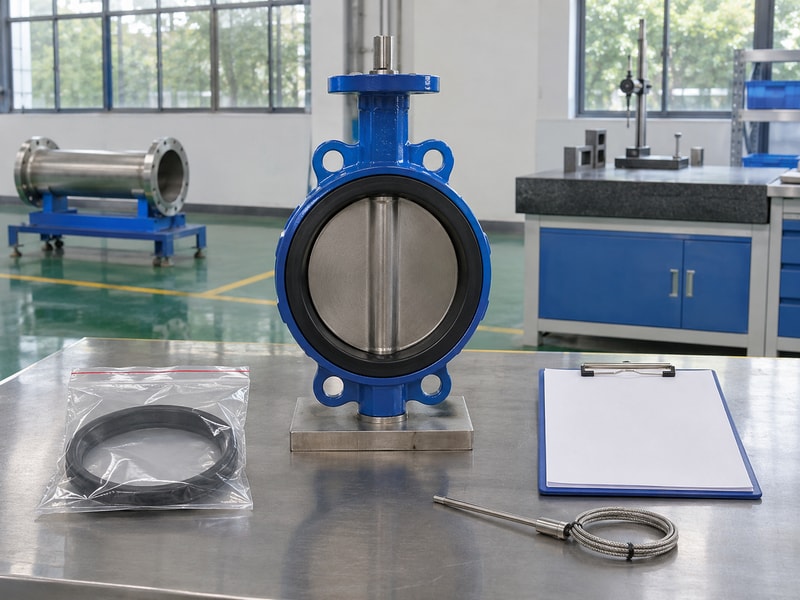
Use compound data for its intended purpose
Parker’s radial seal design guide describes FKM properties and notes special compounds with improved resistance to water and steam. That information supports a compound discussion; it does not rate a butterfly valve. Ask the valve manufacturer how the selected molded seat and supporting components perform in the proposed assembly.
- Obtain the actual compound reference and supplier declaration.
- Confirm whether quoted data concern static or moving seals.
- Check the valve’s own pressure-temperature documentation.
- Review seat retention, compression, and operating torque.
| Evidence | Scope of the conclusion |
|---|---|
| Polymer family description | Initial material screening |
| Compound test data | Performance under stated test conditions |
| Valve validation | Assembly behavior within declared limits |
Require assembly approval even when the material supplier’s published temperature range appears comfortably above the process temperature.
3. How do fluid and exposure time change the limit?
Fluid composition and exposure time can lower the usable temperature below a general heat-resistance figure. A compound that performs in one oil may behave differently in a solvent blend, hot water, or a cleaner. Temperature, concentration, additives, and impurities must be reviewed together. A brief immersion result does not establish a long service life for a compressed seat that repeatedly rubs against the disc.
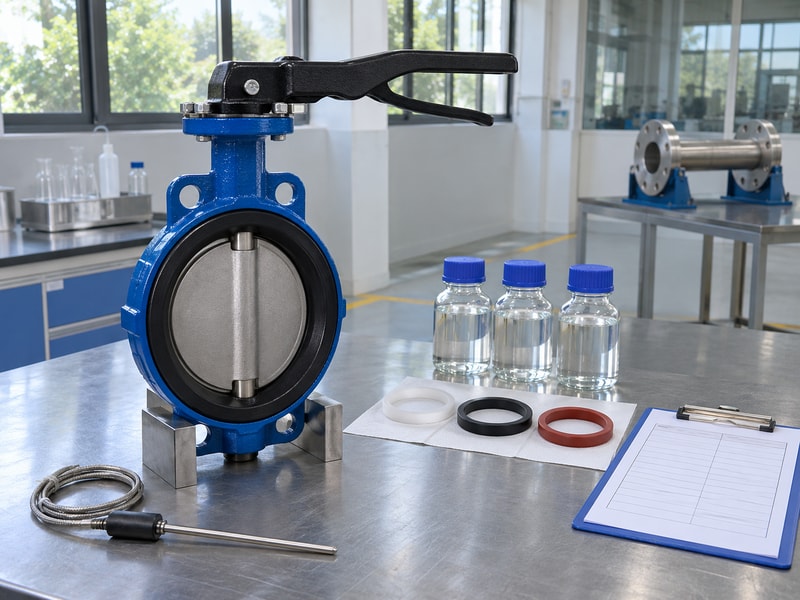
Review the whole operating sequence
Include stagnant periods when residual fluid remains against the seat and cleaning cycles that use another chemistry. Ask what the available evidence measures, such as swelling, hardness change, strength retention, or leakage after cycling. When test conditions differ from your duty, document the gap and agree how it will be resolved before purchase.
- Give full chemical identity and concentration ranges.
- Include cleaning agents, inhibitors, and likely contaminants.
- State continuous exposure and short repeated excursions.
- Identify abrasive particles, deposits, and crystallization.
| Exposure detail | Selection consequence |
|---|---|
| Higher concentration | May change compound compatibility |
| Longer hot exposure | Can change aging and retained properties |
| Alternating fluids | Requires review of the full sequence |
For chemical containment alternatives, the PTFE lined butterfly valve page describes another construction to evaluate, including the backing and shaft seals that still need review.
4. What must a pressure temperature chart cover?
A useful pressure-temperature chart must cover the exact valve construction, size, material configuration, and applicable operating assumptions. Check whether it states body working pressure, shutoff differential, or another limit; those values can differ. Identify pressure direction, connection limits, and any restrictions for chemical service or cycling. A test report at elevated pressure does not replace the declared working envelope.
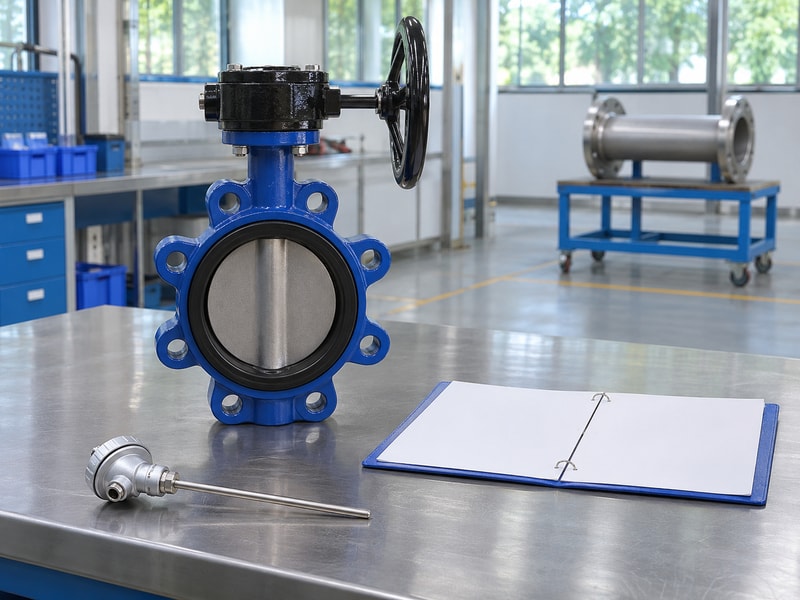
Plot paired operating conditions
Mark each normal and abnormal case on the approved chart with its fluid and duration. Include pump shutoff pressure and minimum downstream pressure where relevant. If the chart gives a cold rating and a derating curve, use the permitted pressure at the actual temperature rather than retaining the cold value throughout service.
- Verify the chart revision matches the quoted assembly.
- Identify gauge and absolute pressures explicitly.
- Check both working pressure and closed-valve differential.
- Obtain separate vacuum limits when the process requires them.
| Chart check | Question to close |
|---|---|
| Configuration | Does it cover this size and material list? |
| Operating point | Are pressure and temperature simultaneous? |
| Boundary type | Working pressure, shutoff, or test condition? |
Ask the supplier to mark approved operating cases directly when several curves or material options appear in the same catalog document.
5. What happens during hot cleaning or steam exposure?
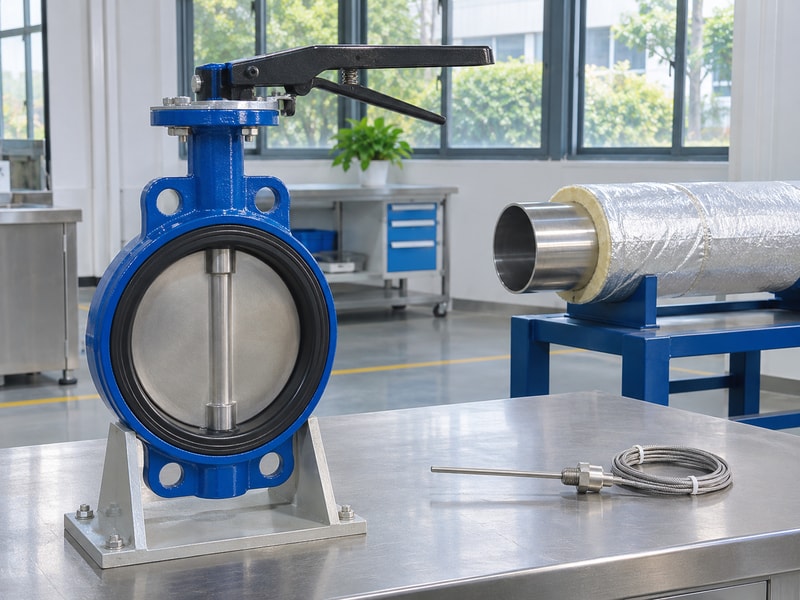
Hot cleaning and steam exposure can become the governing seat condition even when production runs at moderate temperature. Steam compatibility requires compound-specific evidence and complete valve approval. A high dry-heat rating does not establish suitability for steam, and a special steam-resistant compound cannot raise the limits of other components. Give the supplier the actual cleaning fluid, temperature, pressure, duration, and number of cycles.
Treat steam as a separate service case
Trelleborg’s CIP and SIP guidance reports differences between compounds within the same polymer family and distinguishes standard FKM from a premium compound for steam exposure. Those results support the need for precise material selection. They do not qualify an unspecified butterfly valve for a cleaning or sterilization procedure.
- State whether exposure is hot liquid, saturated steam, or another state.
- Include ramp rate, hold time, and cooling conditions.
- Define cleaning concentration and residual process chemicals.
- Request relevant compound and assembled-valve cycling evidence.
| Cleaning condition | Required evidence |
|---|---|
| Hot detergent | Compatibility at stated concentration and temperature |
| Steam exposure | Exact compound and complete assembly approval |
| Repeated cleaning | Leakage and operation after agreed cycles |
Do not write a steam cleaning temperature into site instructions until the proposed configuration has been approved for that service.
6. How should low temperature operation be checked?
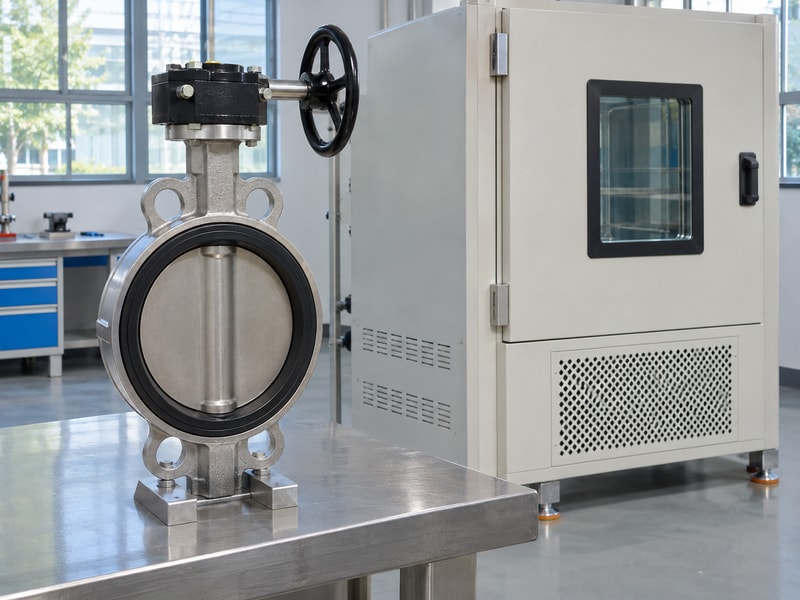
Low temperature operation needs checks of seal flexibility, leakage, operating torque, and the mechanical suitability of the whole valve. A seal that remains intact can still lose the recovery needed for sealing or movement. The process fluid may also become more viscous or approach freezing, changing both operation and loading. Define the lowest fluid and ambient temperatures separately because an idle valve can cool below its normal operating condition.
Include a cold start after a long idle period
Ask for evidence relevant to starting and closing at the minimum temperature rather than relying only on a room-temperature test. External moisture, actuator air quality, ice accumulation, and accessory limits may also affect the assembly. A cold-rated actuator does not qualify the valve body or seat, and a low-temperature seal does not qualify the actuator.
- State minimum fluid temperature and outdoor ambient exposure.
- Give fluid properties and freeze protection at that temperature.
- Request cold movement and leakage acceptance criteria.
- Check actuator, gearbox lubricant, switches, and cable limits.
| Cold-service detail | Check required |
|---|---|
| Seat compound | Recovery and sealing at minimum temperature |
| Fluid condition | Viscosity, freezing, and deposits |
| Complete assembly | Materials, torque, and accessory operation |
Specify the cold-start case in the purchase schedule so it remains visible alongside the more frequently discussed maximum temperature.
7. Which thermal cycling evidence should you request?
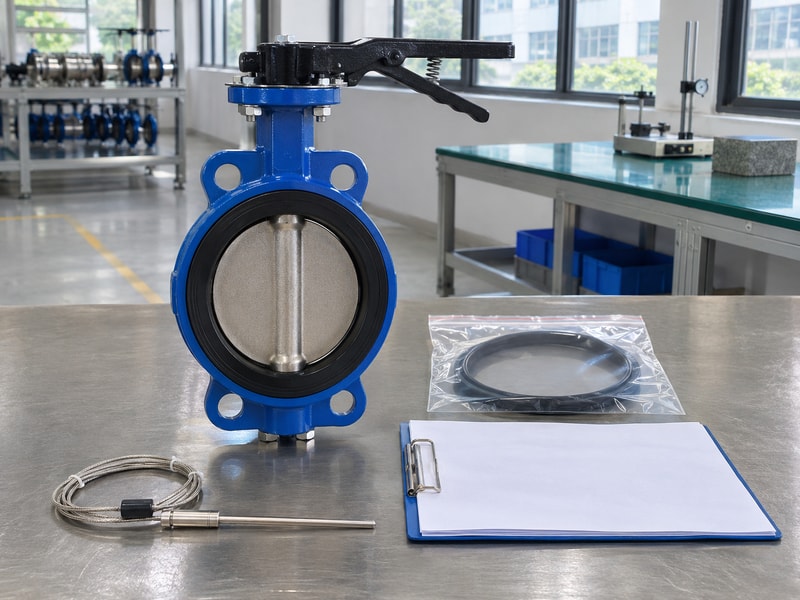
Request thermal cycling evidence that states the tested configuration, temperatures, pressures, fluid, ramp conditions, cycle count, and acceptance results. Heating and cooling can change contact pressure as materials expand and recover differently. A seat may pass one hot test yet develop leakage after repeated transitions. Match the test purpose to your concern, whether that is shutoff, external leakage, operating torque, or retention of the lining and seat.
Compare the test specimen with the offered valve
Check size, geometry, compound, disc, backing, and shaft seals before treating a report as representative. Record any differences and seek a technical explanation of their relevance. Where existing records do not cover the service, agree a qualification test and pass criteria rather than adding a broad durability claim to the quotation.
- Identify the specimen and its complete material list.
- Review heating, dwell, cooling, and movement sequence.
- Check leakage and torque before and after cycling.
- Define inspection for cracks, deformation, and seal damage.
| Report detail | Why it belongs in the review |
|---|---|
| Tested material configuration | Establishes relevance to the offer |
| Cycle conditions | Shows severity and exposure sequence |
| Acceptance measurements | Defines what the test demonstrates |
Routine pressure testing remains part of inspection, but it cannot substitute for thermal cycling evidence when repeated temperature changes drive the qualification requirement.
8. How do installation and actuation affect hot service?
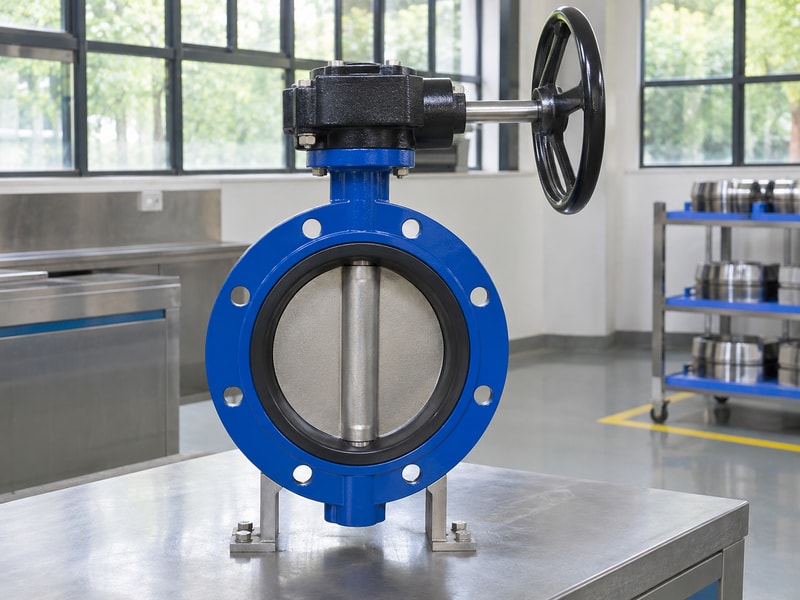
Installation and actuation affect hot service through flange loads, thermal movement, seat compression, and available operating torque. A valve can meet its temperature envelope yet suffer from pipe loads or incorrect bolting. Expansion may change alignment after warmup, particularly near heavy equipment or rigid supports. Review the installed load path and actuator capability at the same hot conditions used in the process assessment.
Review the hot assembly without guessing bolt changes
Follow the selected installation manual for fasteners, gasket arrangement, torque, and any specified inspection after temperature changes. Do not assume that every valve permits hot retightening. The wafer butterfly valve page describes interface and documentation needs; obtain the exact product instructions for the offered seat and temperature duty.
- Check piping supports and expected thermal displacement.
- Confirm flange bore and full disc clearance.
- Size actuation for hot breakaway, running, and seating torque.
- Check ambient heat limits for switches and positioners.
| Installed condition | Review focus |
|---|---|
| Heated pipework | Thermal loads and alignment |
| Flange joint | Approved compression and fastening procedure |
| Powered operation | Hot torque and accessory temperature limits |
Record abnormal torque or leakage during warmup and investigate it before changing travel stops or increasing actuator output.
9. What temperature data belongs in an enquiry?
An enquiry should include a complete temperature history with paired pressures, fluid composition, exposure durations, and operating frequency. State minimum, normal, and maximum conditions as separate cases. Add startup, shutdown, cleaning, and credible excursions rather than submitting only the production set point. Ask the supplier to identify exceptions and the evidence supporting each approved case so procurement can compare technically equivalent offers.
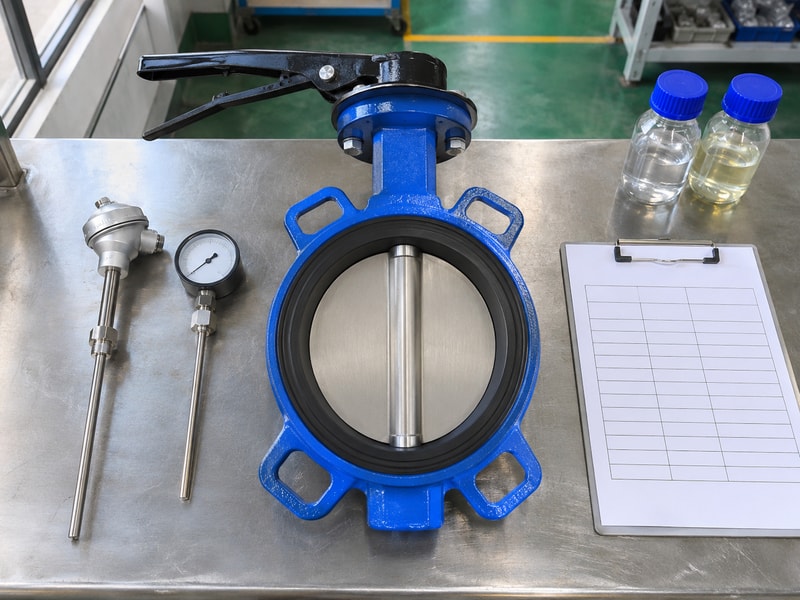
Specify the evidence with the duty
Request the exact compound, complete material list, pressure-temperature chart, installation manual, and relevant test records. RUITO’s documented lined constructions provide defined alternatives for review, while a requested FKM-seated configuration requires its own confirmation. The PFA lined butterfly valve page describes a separate lining construction whose limits also depend on the complete assembly.
- List process and cleaning chemistry with concentration ranges.
- Pair temperature with pressure, time, and cycle frequency.
- Include low ambient exposure and minimum downstream pressure.
- State actuation, leakage criteria, and required qualification evidence.
| Enquiry attachment | Decision supported |
|---|---|
| Operating-case schedule | Simultaneous thermal and pressure approval |
| Material requirements | Compound and component selection |
| Test and document list | Evidence required before release |
Freeze the approved configuration and service schedule together so a later seat substitution or cleaning change triggers a fresh technical review.
10. What do engineers ask about FKM temperature ratings?
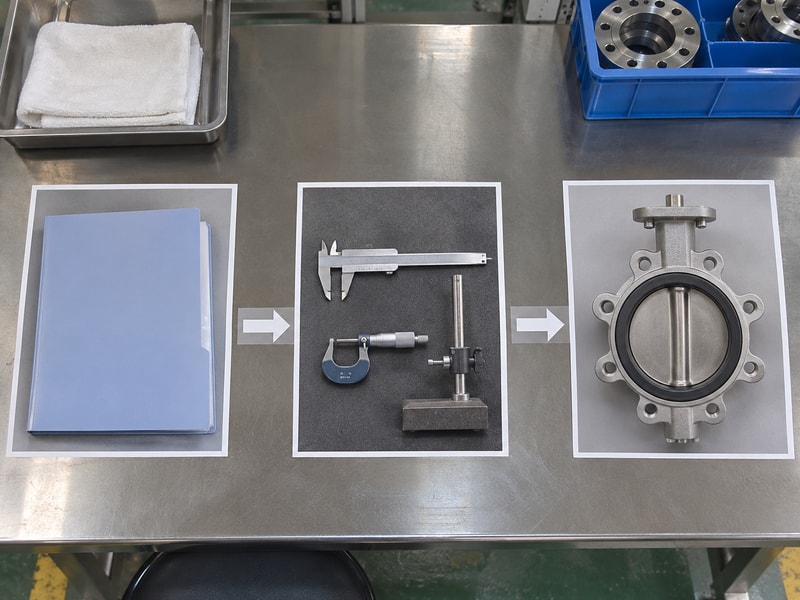
Q1: Can I use a general FKM maximum temperature as the valve limit?
No. Obtain the exact compound and complete valve rating for the simultaneous pressure, fluid, exposure duration, and operating duty.
Q2: Can I approve steam from a dry-heat rating?
No. Steam requires separate compound evidence and approval of the complete assembly. Special FKM grades need specific identification rather than a family-level claim.
Q3: What’s the best evidence for repeated hot cleaning?
Request relevant compound compatibility results and assembled-valve cycling records with stated conditions and acceptance measurements. The report should match or justify the proposed configuration.
Q4: How do I know if cold startup is covered?
Check the approved minimum temperature case, including fluid condition, seat recovery, leakage, torque, body materials, and accessories. A warm operating point does not cover overnight exposure.
Q5: What should I send before changing the service temperature?
Send the valve identity, material list, proposed temperature-pressure cases, and cleaning sequence when you contact us. Request written confirmation before changing the operating instructions.