
You can fix PP-H butterfly valve seat mistakes by checking the seal compound, every wetted component, and the complete assembly at the same operating conditions. A purchase description such as seat FPM Viton PPH butterfly valve leaves several decisions open. A chemically suitable seat can still arrive in a valve with an unsuitable disc, flange interface, or hot pressure rating. Resolve those details before approving the drawing.
1. What does seat FPM Viton PPH butterfly valve mean?
The description normally requests a polypropylene homopolymer valve construction with a fluoroelastomer seat, but it does not define a complete valve. PP-H identifies a thermoplastic material family, while FPM and FKM are designations used for fluoroelastomers. Viton is a trademark associated with particular fluoroelastomer products; a generic FKM declaration does not establish that a branded compound was used. You need a component list and a controlled compound reference before treating those words as a purchase specification.
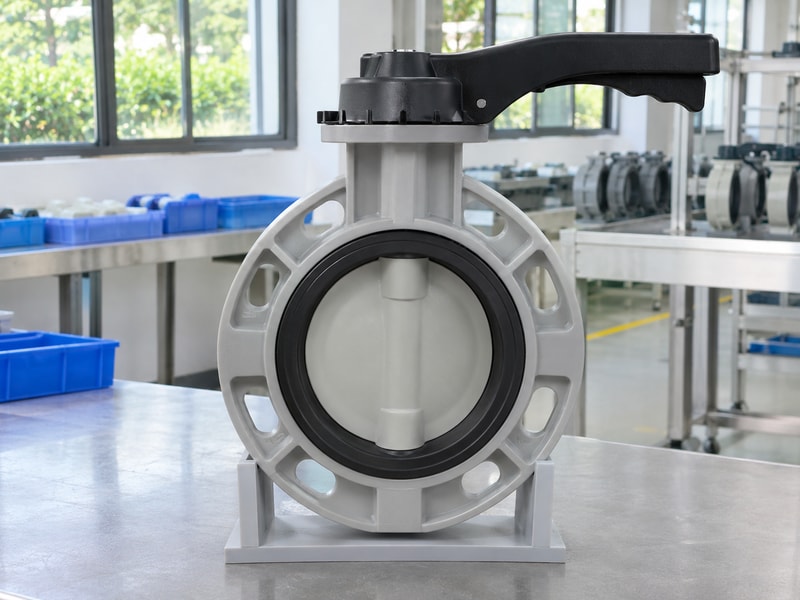
Which words need a drawing behind them?
Ask the supplier to identify the actual body, disc, seat, shaft seals, and any liner. Some designs isolate structural parts from the fluid, while other designs expose more components. The distinction changes which materials need a compatibility review and which documents receiving inspection must check.
- Identify PP-H separately from other polypropylene grades.
- State the exact seat compound and nominal hardness.
- Mark all wetted surfaces on a sectional drawing.
- Record the valve series, size, and drawing revision.
| Description | Evidence needed |
|---|---|
| PP-H construction | Component-level material list |
| FPM or FKM seat | Controlled compound specification |
| Viton requirement | Supplier declaration for the named material |
Keep an unresolved material description open on the quotation rather than accepting a sales abbreviation as final approval.
2. How do PP-H and FKM have different jobs?
PP-H provides the specified plastic structure or flow-path components, while FKM provides elastic sealing where the design calls for it. The seat must recover after disc movement and maintain contact under the approved differential pressure. Structural plastic must carry loads without excessive deformation over its declared service conditions. These functions interact, so replacing the seat cannot correct a body or disc that lacks the required mechanical rating.
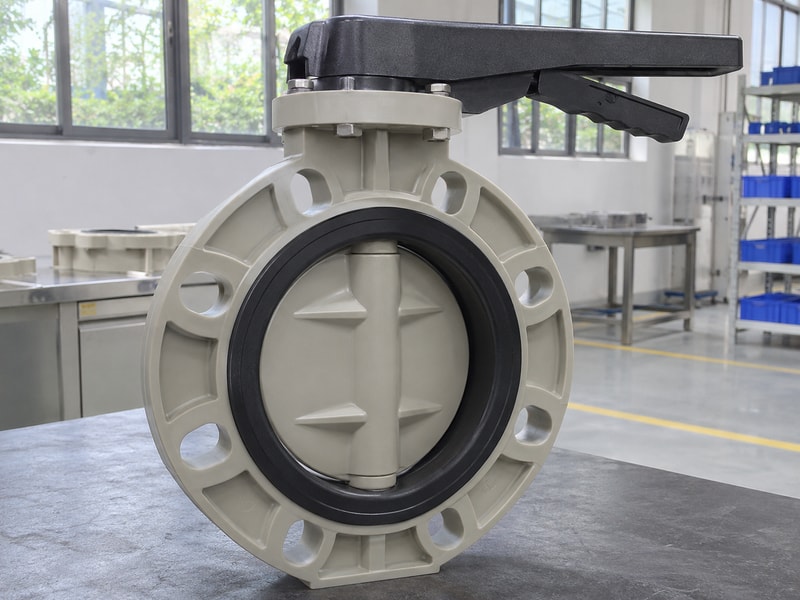
Trace the load and leakage paths
Follow the fluid from one flange face through the valve and inspect the shaft penetrations. A seal around the disc does not prove that every shaft seal uses the same compound. Likewise, a plastic external body does not tell you whether the internal disc is PP-H, another polymer, or a lined component.
- Separate structural material from fluid-contact material.
- Check seat support and retention around the full circumference.
- Identify secondary shaft seals and bearing materials.
- Confirm whether the design needs separate flange gaskets.
| Component | Question for approval |
|---|---|
| Disc | Which material contacts the liquid? |
| Seat | How is compression maintained? |
| Stem penetration | Which seal prevents external leakage? |
The PTFE lined butterfly valve page describes a different construction worth comparing when your project needs a continuous chemical barrier; its ratings do not transfer to PP-H.
3. Which chemicals must both materials tolerate?
Both PP-H and the selected FKM compound must tolerate the complete process mixture, including cleaning fluids and credible contamination. A compatibility chart entry for the main chemical alone leaves gaps when concentration, temperature, or additives change. Request the formulation or an adequate process specification, then obtain a written assessment for each exposed material. Treat mixtures as their own review rather than averaging ratings for individual ingredients.
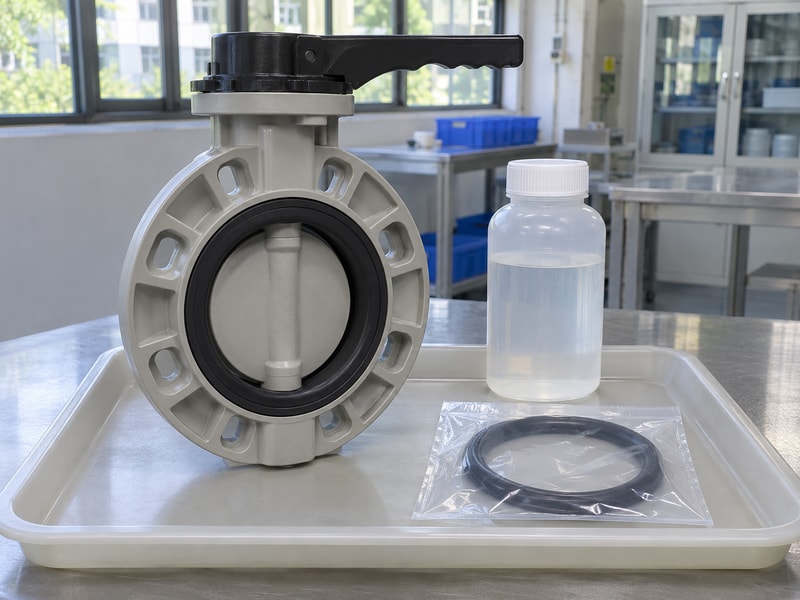
Include the fluids used between production batches
A transfer line may carry a solvent during production, a detergent during cleaning, and rinse water while idle. Those exposures can affect different parts of the assembly. Parker’s seal design guide distinguishes ordinary FKM properties from special compounds with improved water and steam resistance; the family name alone leaves that choice unresolved.
- Give chemical names, concentrations, and relevant impurities.
- Include cleaners, flushing agents, and exposure durations.
- Identify solids, crystallization, and likely deposit formation.
- Ask whether test data cover the proposed compound.
| Exposure | Review focus |
|---|---|
| Main process liquid | PP-H and all seals |
| Cleaning mixture | Hot compatibility and duration |
| Residual contamination | Interaction with the next batch |
Where published data leave uncertainty, agree on testing and acceptance criteria before ordering production quantities.
4. How does temperature change a PP-H valve rating?
Temperature changes the allowable pressure and mechanical behavior of the complete PP-H valve, so a cold pressure label cannot define hot service. Read the manufacturer’s pressure-temperature curve for the exact construction, size, and service assumptions. The permitted point must cover pressure and temperature simultaneously. A metal valve marked PN16 supplies no evidence that a plastic assembly can operate at the same pressure.
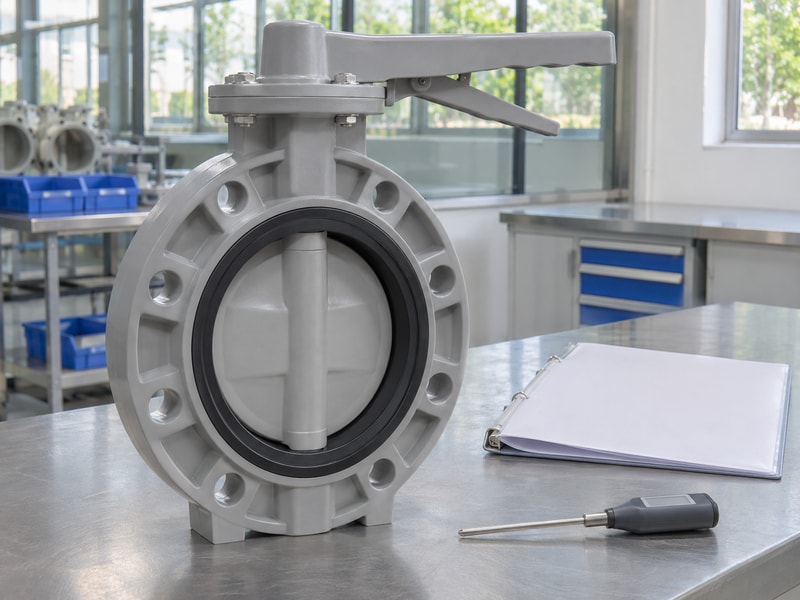
Check every operating state on the curve
List normal operation, pump shutoff, hot flushing, startup, and abnormal short exposures separately. Duration, cycling, chemical service, and external loads may impose additional restrictions. If the chart assumes a particular test fluid or service life, ask how the proposed chemical duty changes its use.
- Obtain the model-specific curve and its revision.
- Check maximum line pressure and closed-disc differential.
- State temperature peaks with their duration and frequency.
- Identify vacuum conditions separately from positive pressure.
| Condition | Required confirmation |
|---|---|
| Warm continuous duty | Allowable working pressure at temperature |
| Short hot flush | Approved duration and cycle count |
| Closed valve | Permitted differential and direction |
Use the lowest applicable limit after the body, seals, connection, and operating restrictions have each been reviewed. A favorable seat temperature range cannot raise the assembly rating.
5. Which flanges and backing rings fit the body?
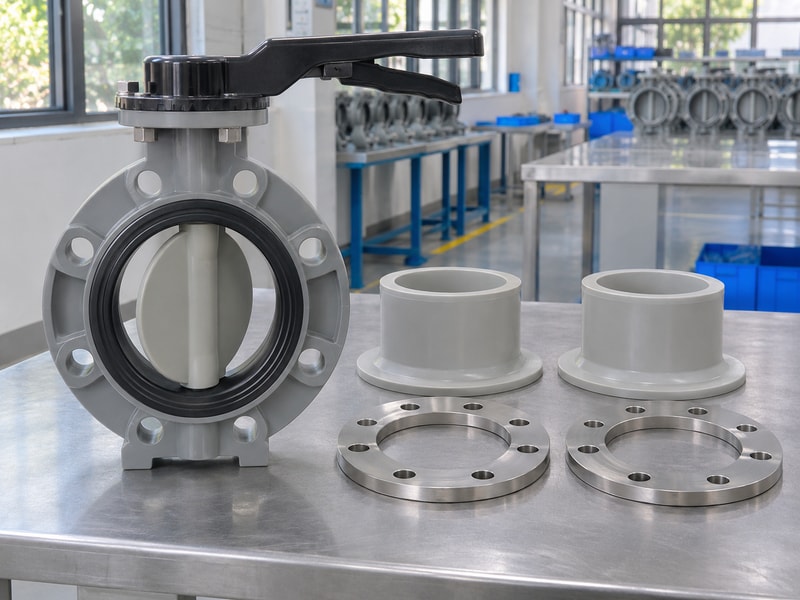
The correct flange set matches the approved drilling, contact geometry, bore clearance, and load distribution for the plastic valve. Bolt holes lining up proves only one part of the fit. Stub flanges, backing rings, gaskets, washers, and bolt lengths must follow the selected valve and piping system instructions. A backing ring selected only by nominal size can still apply the wrong contact load or obstruct assembly.
Confirm the assembled interface
Ask for a section showing both flange faces, the seat projection, and the disc’s fully open envelope. The wafer butterfly valve page provides connection context, but a metal wafer arrangement is not an installation instruction for a PP-H product. Any adapter or spacer needs approval for this assembly.
- Verify the flange standard, pressure class, and bolt circle.
- Compare actual flange bore with disc clearance requirements.
- Confirm backing-ring material and corrosion exposure.
- Follow the specified gasket arrangement and bolt torque.
| Interface detail | Consequence of a mismatch |
|---|---|
| Flange bore | Disc contact during opening |
| Contact face | Uneven compression or distortion |
| Bolt length | Incomplete engagement or obstruction |
Have the supplier confirm the complete flange stack rather than approving the valve and pipe accessories on separate drawings.
6. How do you prevent installation stress in plastic?
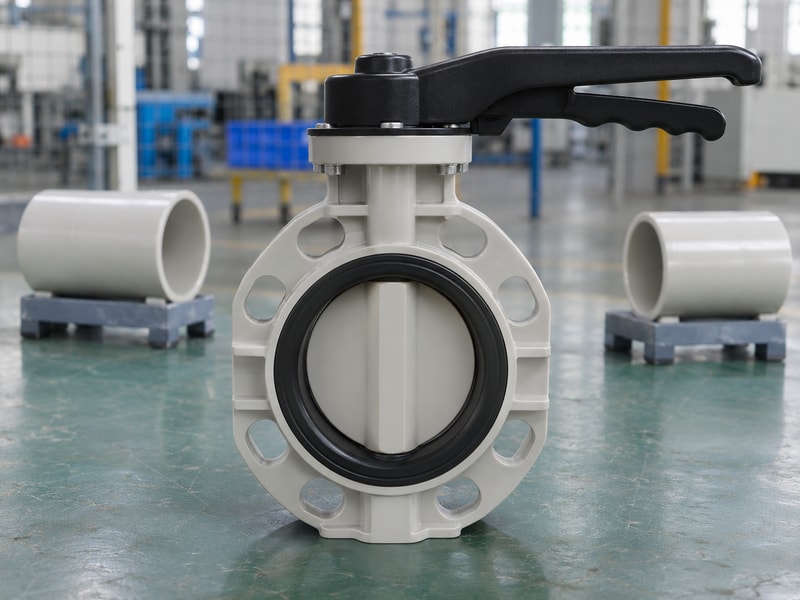
You prevent installation stress by aligning and supporting the piping before tightening the valve between the flanges. Bolts must not pull displaced pipes into position through a plastic body. Thermal expansion, heavy actuators, and nearby unsupported fittings also need a defined load path. Correct initial alignment does not remove loads that appear after the line heats or cools.
Use the actual product procedure
Asahi/America’s Type-57P user guide calls for flange alignment, checking full-open pipe interference before final tightening, and gradual diagonal tightening at specified torque. Those instructions illustrate why model-specific details matter. Its numerical limits belong to that valve and must not be copied into another manufacturer’s installation sheet.
- Inspect flange parallelism and axial alignment.
- Remove debris without scratching sealing surfaces.
- Apply torque in the stated sequence and stages.
- Provide supports that allow the intended thermal movement.
| Site check | Record before release |
|---|---|
| Pipe alignment | Within the selected product limits |
| Support layout | Loads carried outside the valve |
| Disc travel | Free throughout the approved stroke |
If torque rises during assembly, stop and find the cause. More handle force or a larger actuator can hide interference until a component fails.
7. What changes when the valve is actuated?
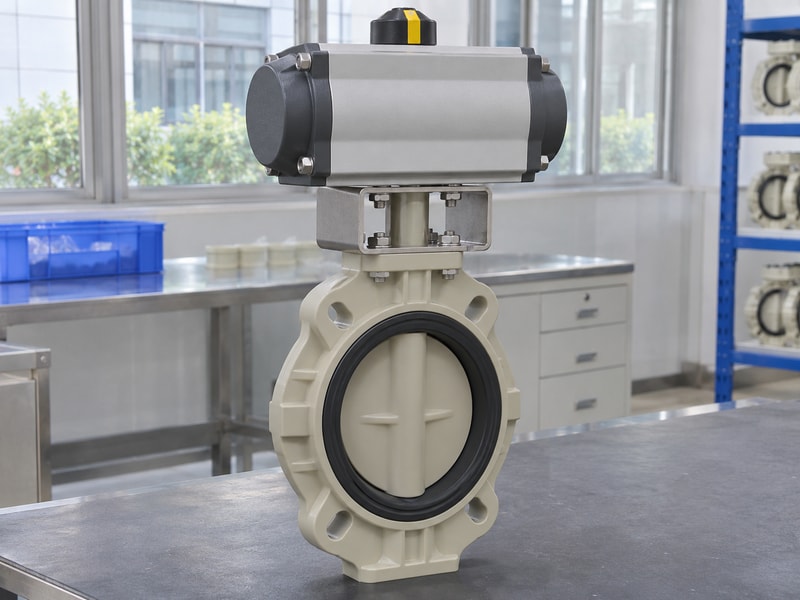
Actuation adds torque, weight, cycling, and control-interface requirements to the plastic valve review. An actuator that fits the mounting pattern may still overload the stem or mounting structure. Match available torque to breakaway, running, and seating requirements while checking the maximum allowable loads of the valve. Include the lowest pneumatic supply pressure or the actual electrical operating conditions used on site.
Review the assembly through the whole stroke
Fluid differential, temperature, seat condition, and cycling frequency can change required torque. A modulating duty also needs confirmation that the valve supports sustained partial opening; chemical compatibility does not establish that capability. Define the fail position and travel time from the process requirements before choosing accessories.
- Request valve torque data for the proposed operating cases.
- Check actuator output throughout travel and fail action.
- Confirm bracket, coupling, and stem load limits.
- Provide access for manual override and seal maintenance.
| Assembly item | Approval question |
|---|---|
| Actuator output | Adequate at minimum supply? |
| Valve stem | Protected against excessive torque? |
| Support | Can it carry actuator weight and vibration? |
Keep the approved actuator, bracket, and coupling revisions together so a later substitution receives the same mechanical review.
8. Which inspection records support the assembly?
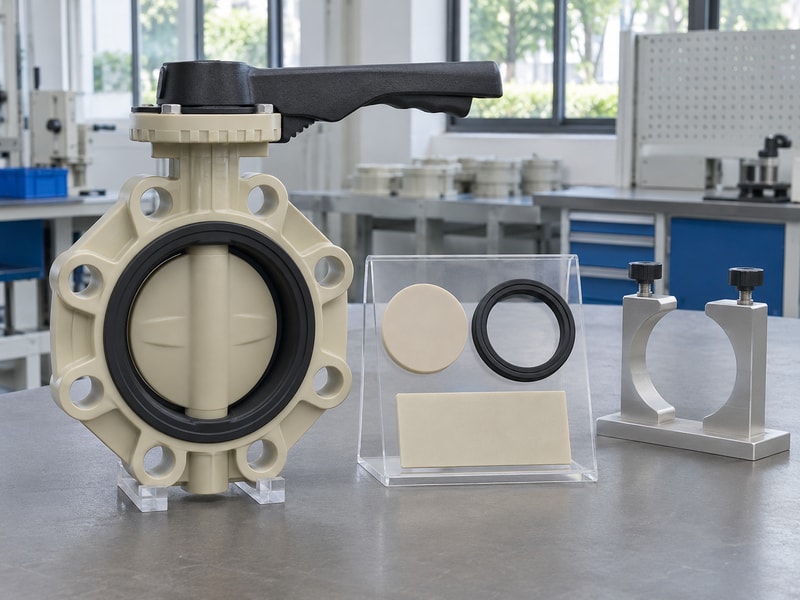
Inspection records should connect the delivered valve to its approved materials, dimensions, tests, and operating limits. A general quality certificate does not identify the seat installed in a particular batch. Specify the records you need at enquiry stage so the supplier can retain traceability through molding and assembly. Inspection must also check the completed interface, because separate conforming components can still form an unsuitable combination.
Link evidence to the delivered configuration
Request the final material list, compound declaration, inspection results, and installation manual using the same valve identification. Define pressure and leakage tests under an agreed procedure; test pressure is not the allowed working pressure. If your chemical service needs an immersion or cycling assessment, keep that evidence separate from routine factory pressure testing.
- Verify component and seal batch identification.
- Record bore, face-to-face length, and mounting dimensions.
- Review shell, shutoff, and external leakage results.
- Check full travel without rubbing or abnormal torque.
| Document | What it establishes |
|---|---|
| Approved material list | Intended component configuration |
| Batch declaration | Traceability of supplied materials |
| Test report | Results under stated test conditions |
Reject reports whose size, construction, or compound differs from the quoted assembly unless the supplier explains and supports their applicability.
9. What must a PP-H valve enquiry include?
A useful enquiry combines process conditions, the complete plastic piping interface, and the evidence required for approval. Send the fluid schedule and installation drawings together. Otherwise, the supplier may assess chemistry while overlooking a restricted flange bore or unsupported actuator. Ask for exceptions in writing, including any requested configuration the supplier has not verified or cannot supply.
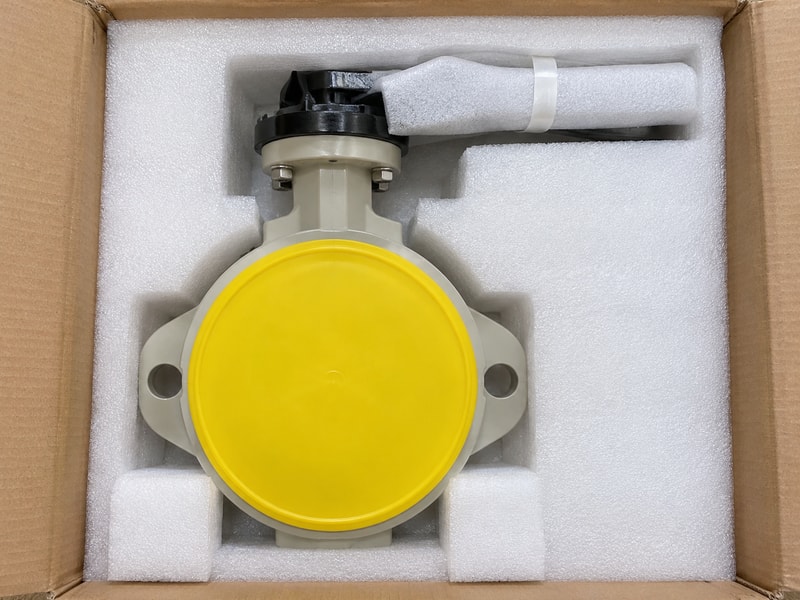
Freeze the technical basis before comparing price
State whether you need isolation, occasional adjustment, or continuous modulation, then define the relevant acceptance tests. RUITO’s documented range includes metal-body and lined butterfly constructions; PP-H construction and FKM seat availability require separate confirmation. A quotation should identify the proposed product rather than borrowing ratings from the broader range.
- Supply fluid composition, concentration, temperature, and pressure cases.
- Include flange, backing-ring, gasket, and disc-clearance drawings.
- Specify manual or actuated duty, frequency, and fail position.
- Request materials, pressure-temperature data, tests, and spare parts.
| Enquiry attachment | Decision it supports |
|---|---|
| Process schedule | Chemical and thermal suitability |
| Interface drawing | Installation fit and load review |
| Acceptance requirements | Comparable technical quotations |
Mark unresolved PP-H or FKM requirements explicitly and obtain a product-specific response before releasing an order or approving a substitute.
10. What do buyers ask about PP-H and FPM?
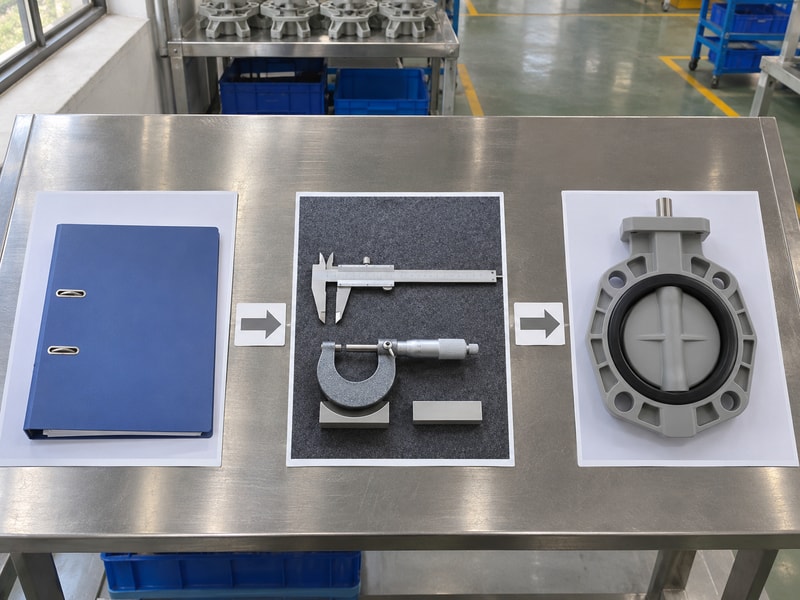
Q1: Can I treat FPM and FKM as an exact compound match?
No. They identify the elastomer family, but formulation, cure system, hardness, and supplied geometry still require confirmation. Use the approved compound reference when controlling replacements.
Q2: Can I use a metal valve’s PN16 rating for PP-H?
No. Obtain the plastic assembly’s own pressure-temperature rating and check the connection, chemicals, duty, and duration assumptions attached to it.
Q3: How do I know whether separate gaskets are needed?
Check the selected installation manual. Some seat designs provide the flange seal, while other assemblies require specified gaskets; adding a gasket without approval can change compression.
Q4: What’s the best way to approve a chemical mixture?
Submit its full composition and operating cases. Seek written assessment for every wetted material, then agree on testing where existing evidence does not cover the proposed exposure.
Q5: Can RUITO confirm a PP-H and FKM configuration?
It requires a specific technical enquiry. Send the medium, operating cases, flange stack, and actuation requirements when you contact us so the proposed construction and supply scope can be checked.