
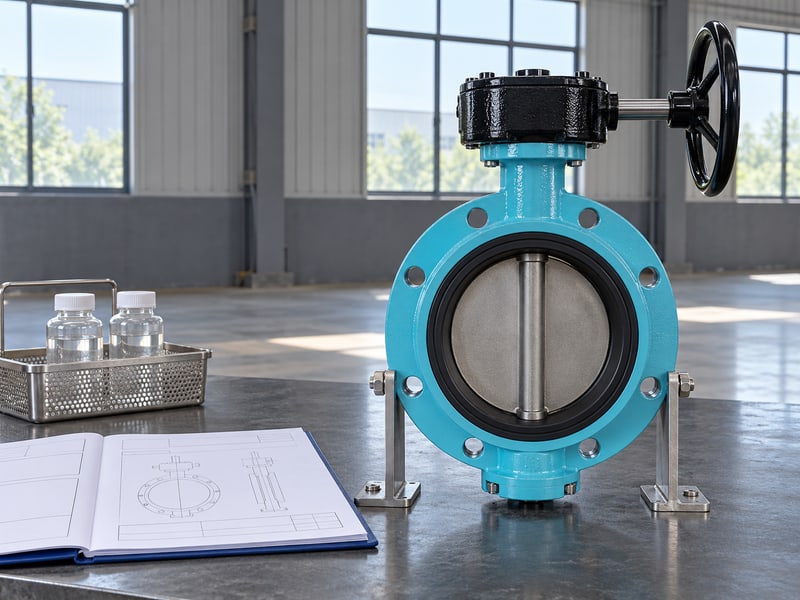
Spot water type butterfly valve selection mistakes by matching the actual water conditions, complete wetted materials and operating duty with the proposed valve's documented limits. A purchase request can say water service while omitting the cleaning chemicals, closed pressure differential or drinking-water acceptance needed for that location. A valve may fit the pipework yet remain unqualified for those conditions. Define the water duty before comparing quotations, then review the materials, connection, operator and acceptance records as one supplied configuration.
1. What is a water type butterfly valve?
A water type butterfly valve is a butterfly valve proposed for a specified water duty, with its actual configuration still needing definition. Water identifies the intended medium, while wafer describes one possible body connection. The water description alone cannot establish the valve's pressure rating, materials, operating function or drinking-water acceptance for your project.
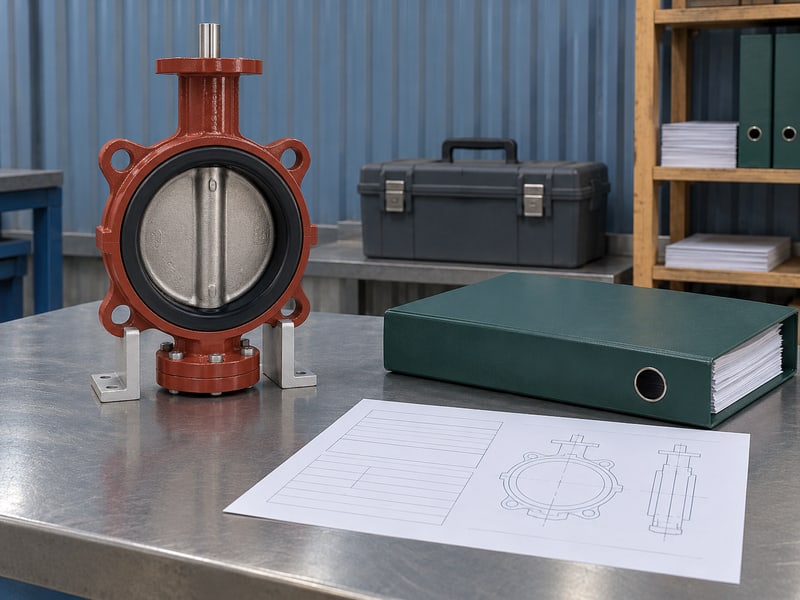
Which parts of the request still need definition?
Expand the water-duty description. A conventional two-port butterfly valve rotates its disc about a shaft across the flow passage, with the disc plane transverse to flow when closed and approximately parallel when fully open. Ask the supplier to identify the body style, disc, shaft, seat and complete operator for the offered assembly. Put the actual water conditions and required function beside those details so you can assess the proposed unit rather than a broad product label.
- State the actual water source, treatment condition and intended operating function.
- Request the complete valve configuration and applicable installation drawing.
- Keep nominal size, connection, pressure limits and acceptance scope in separate fields.
| Request wording | Detail to add |
|---|---|
| Water service | Actual composition and operating conditions |
| Butterfly valve | Structure, connection and operator configuration |
Key takeaway: Turn the water label into a defined service requirement. Return an incomplete quotation for clarification before accepting its configuration.
2. Which bodies suit a water type butterfly valve?
Wafer, lug or flanged bodies can suit a water type butterfly valve when their interfaces and permitted duty match the project. Water service does not prescribe one connection style. Check the actual mating flange arrangement, face-to-face length, pipe bore and disc clearance, together with the installation space and support requirements stated in the supplied drawing.
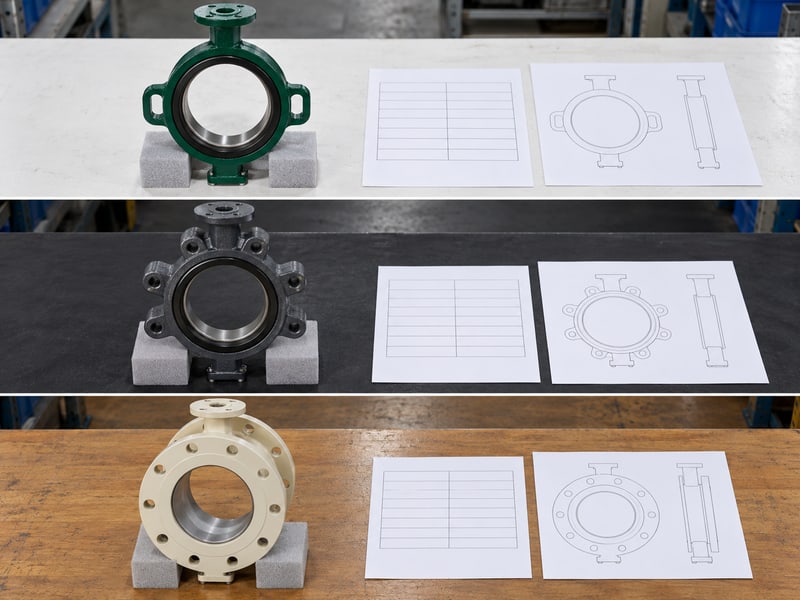
How do you choose the connection style?
Compare the actual interfaces. A wafer assembly fits between mating flanges, while lug and flanged arrangements have their own bolting and dimensional details. For a lug type water butterfly valve, confirm thread and bolt engagement from the approved drawing rather than choosing bolts from appearance. If maintenance requires removing one pipe end, request explicit approval for that end condition and pressure differential; visible lugs do not establish the valve's permitted dead-end duty.
- Provide the mating flange standard, pipe dimensions and existing installation envelope.
- Check open-disc movement against the actual bore and nearby equipment.
- Identify pipe support, maintenance access and any disconnected-end requirement.
| Connection review | Confirmation needed |
|---|---|
| Physical interface | Approved dimensions and mating-flange details |
| Maintenance arrangement | Permitted end conditions and access |
Key takeaway: Choose the body style through dimensional and duty checks. Resolve any end-condition or bolting question before releasing the installation drawing.
3. Which water suits a water type butterfly valve?
A water type butterfly valve suits the water conditions accepted for its complete materials and sealing configuration. Raw water, treated process water, drinking water, cooling mixtures and wastewater can require different reviews. Give the supplier the actual composition and operating conditions rather than assuming that every water source fits a general water-service valve.
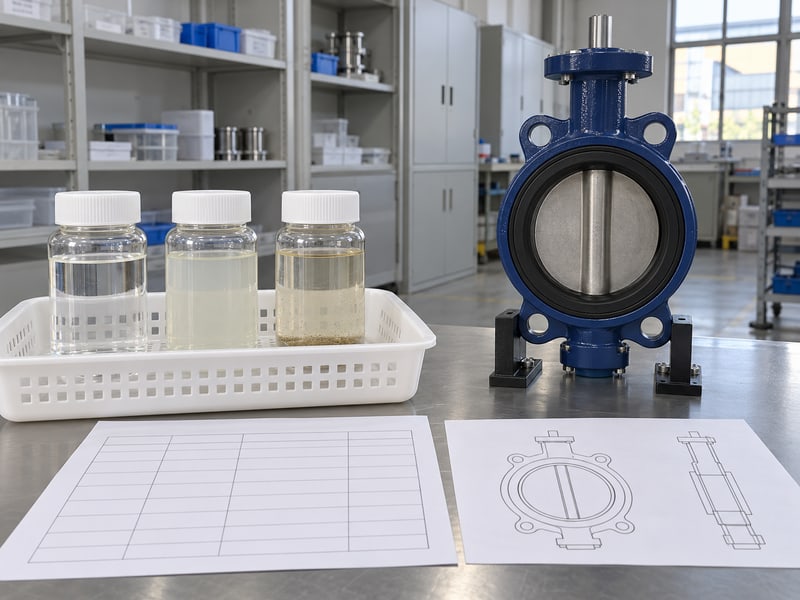
What water-quality information should the buyer supply?
Describe what reaches the valve. Include treatment additives, disinfection and cleaning exposures, temperature range and any particles or fibers that may affect the disc or seals. For a cooling loop, identify glycol content and inhibitor chemistry where present; for recycled or wastewater service, describe solids and their character. Ask the supplier to state the accepted medium boundaries, since a configuration intended for low-solids non-abrasive water cannot be extended automatically to abrasive slurry or seawater.
- Supply available water-quality data and identify changes during normal operation.
- State chemical concentration, exposure temperature and cleaning or disinfection duration.
- Describe solids, fibers and any filtration upstream of the valve.
| Water-duty input | Reason for the review |
|---|---|
| Chemistry and additives | Material and seal compatibility |
| Solids and fibers | Accepted operation and obstruction risk |
Key takeaway: Put additives, cleaning exposures and solids on the same water-duty data sheet. Recheck the configuration when treatment, additives or water source changes.
4. Which materials suit a water type butterfly valve?
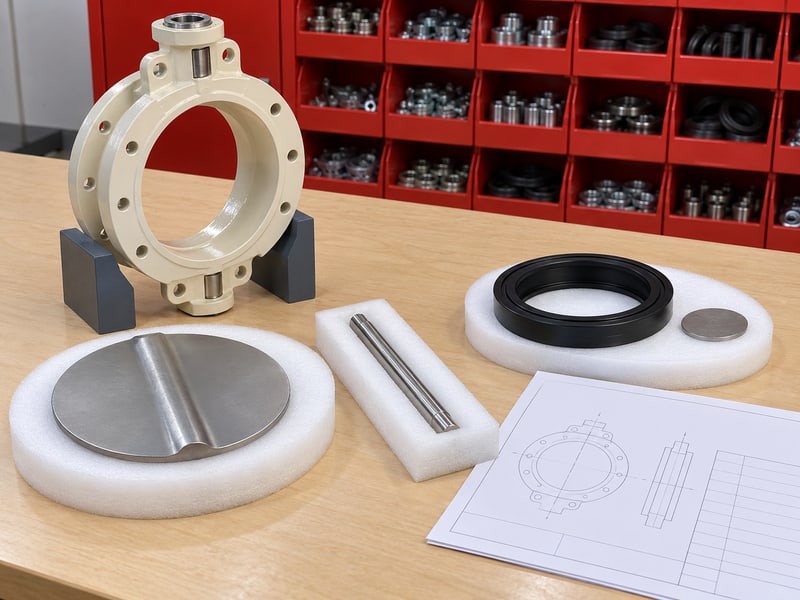
Materials for a water type butterfly valve must match the actual water chemistry, temperature and approved application scope. Review the complete assembly rather than identifying materials from paint color or a disc photograph. The pressure-retaining body and actual water-contact surfaces need separate descriptions, especially where a liner isolates parts of the metallic structure from the medium.
How do you verify the complete wetted assembly?
Map the water-contact surfaces. Request the body, disc, shaft, seat or lining, backing and shaft-seal materials, and identify which components contact the water. Check the applicable coating or corrosion review with the supplier for the specified chemistry, including chloride or treatment exposures where relevant. Keep the accepted material list and revision tied to the supplied product identity so a changed coating, alloy or seal receives review before production or replacement.
- Ask for component-by-component materials and the complete wetted-surface description.
- Include relevant coating, backing and auxiliary-seal information in the review.
- Require disclosure and approval of changes affecting the accepted configuration.
| Material record | What to confirm |
|---|---|
| Component list | Assigned materials and water-contact boundaries |
| Configuration revision | Accepted coating, seal and material changes |
Key takeaway: A complete material list makes the proposed water configuration checkable. Resolve missing wetted components before approving the valve for its service.
5. Which seals suit a water type butterfly valve?
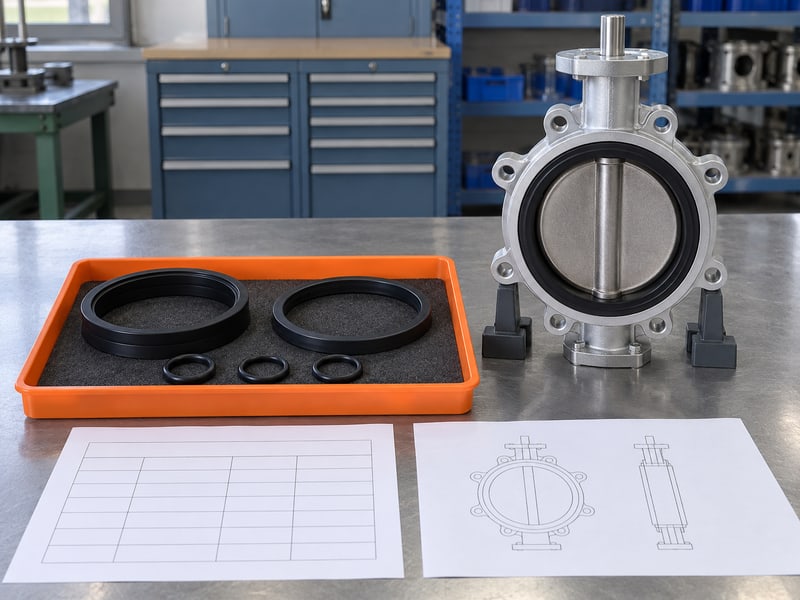
Choose seals for a water type butterfly valve through the manufacturer's accepted compound and water-duty limits. EPDM, NBR or a fluoroplastic description cannot settle compatibility without the actual formulation, component assignment and conditions. Seat performance also depends on the supplied sealing arrangement, backing and auxiliary seals, so a familiar material acronym cannot qualify every water mixture.
Which seal information belongs on the data sheet?
State the whole exposure. Include the normal water composition and any cleaning or disinfection conditions that differ in chemistry, temperature or duration. Ask the supplier to identify the exact seat compound, shaft seals and backing materials, with their accepted operating boundaries for your configuration. For replacement parts, retain the valve identity and approved part revision so a similarly shaped ring cannot be substituted without checking material, geometry and duty compatibility.
- Give the supplier additive and disinfectant details rather than a clean-water label.
- Record the seal material against its actual component and approved revision.
- Ask for the applicable spare-parts list and replacement instructions.
| Seal check | Evidence required |
|---|---|
| Water exposure | Accepted compound and operating conditions |
| Replacement part | Matching identity, material and geometry |
Key takeaway: Approve the actual seal configuration for all specified exposures. Review changed cleaning conditions or replacement compounds before accepting a substitute.
6. Which limits govern a water type butterfly valve?
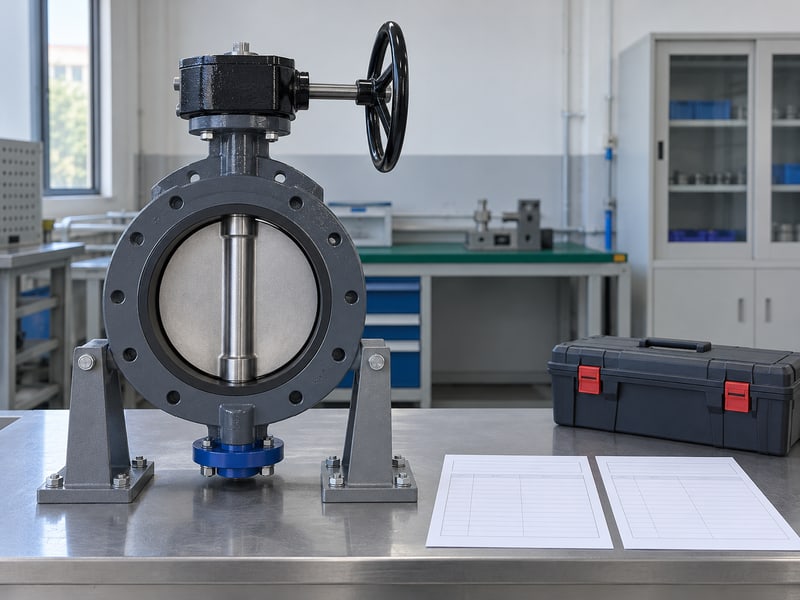
A water type butterfly valve is governed by its configuration-specific pressure–temperature limits and allowable closed differentials. The water description cannot determine PN, Class or another rating designation by itself. Record operating pressure, temperature and credible system transients, then verify which limits apply to the offered size, materials, seal and connection arrangement.
Which water-system pressure cases need review?
List the closed-valve cases. Ask the project engineer to identify pressures on both sides during operation, pump shutdown, standby and maintenance isolation. Request separate forward and reverse allowable shutoff differentials where pressure can reverse, with the required leakage criterion and approved pressure-face instruction. RUITO's double-flanged double-offset butterfly valves need separately declared directional limits; shell and seat test pressures remain inspection conditions and cannot replace the allowable service limits.
- State pressure units and distinguish working pressure from closed differential.
- Match each pressure case with its operating temperature and water condition.
- Check directional and disconnected-end limits for the intended isolation arrangement.
| Pressure information | Document needed |
|---|---|
| Service and transient cases | Accepted duty data and applicable limits |
| Directional shutoff | Declared differential and leakage requirement |
Key takeaway: Define the pressure cases before accepting a water-service rating. Clarify any proposal that uses a test pressure as its service limit.
7. How should you use a water type butterfly valve?
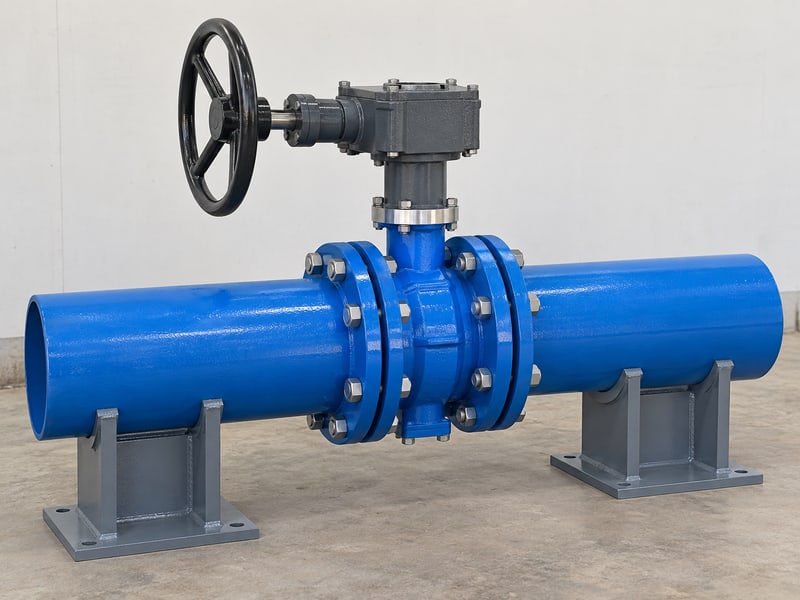
Use a water type butterfly valve for isolation or regulating duty only as accepted for the supplied model and conditions. Some butterfly-valve designs have documented control capability, while others are specified for isolation. Water service alone cannot establish an approved throttling range or a blanket prohibition on regulation across every butterfly-valve design.
What changes when the project needs flow control?
Request the accepted operating range. Give the supplier minimum, normal and maximum flow, the required pressure-loss limits and the actual fluid conditions. For regulation, obtain applicable flow coefficient or loss data, permitted opening range and any cavitation or dynamic-load restrictions for that configuration. Have the project engineer review the water-system response and closing behavior, including surge where relevant, instead of choosing a rapid closure or partial opening from a general catalog claim.
- State whether the valve will isolate fully or also regulate during normal operation.
- Ask for performance data covering the intended openings and operating conditions.
- Keep the accepted operating sequence and closure requirements with the project documents.
| Operating role | Review required |
|---|---|
| Isolation | Closed duty and accepted closing behavior |
| Regulation | Permitted range and applicable hydraulic data |
Key takeaway: Approve the actual operating role with model-specific evidence. Refer unresolved hydraulic or surge questions to the responsible project engineer before commissioning.
8. Which drive suits a water type butterfly valve?
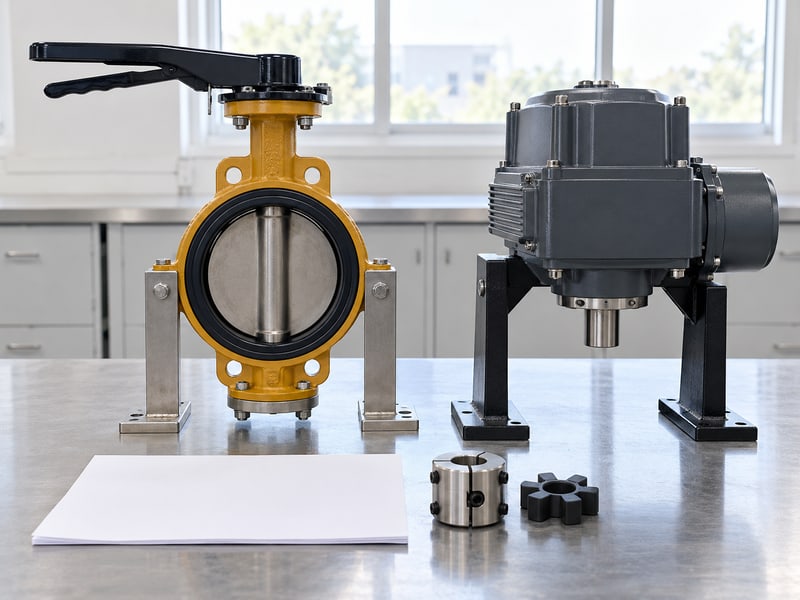
A lever, manual gearbox or powered actuator suits a water type butterfly valve when its output, interfaces and operation match the accepted duty. Nominal size alone cannot determine the required drive or human operating effort. Specify local or remote operation and the complete operator package, then check it against the valve's torque demand and mounting limits.
How do you specify the complete operator package?
Check the valve and drive together. Request breakaway, running and seating torque for the offered configuration, including the applicable pressure and dynamic conditions. Compare demand with operator output through travel and, for powered drives, the minimum supply and required failure action under the approved sizing method and project margin. Confirm coupling, mounting, movement space, indication and control accessories with the assembly drawing and installation, operation and maintenance manual, or IOM.
- Identify the full manual or powered operator and included mounting components.
- State supply conditions, operating frequency and required local or remote functions.
- Retain the accepted drive selection, interface drawing and operating settings.
| Drive requirement | Evidence to retain |
|---|---|
| Operating capability | Valve torque and operator output data |
| Assembly fit | Mounting, coupling and access drawing |
Key takeaway: Select the operator for the supplied valve and water duty. Resolve output or interface differences before approving the complete assembly.
9. How do you verify a water type butterfly valve?
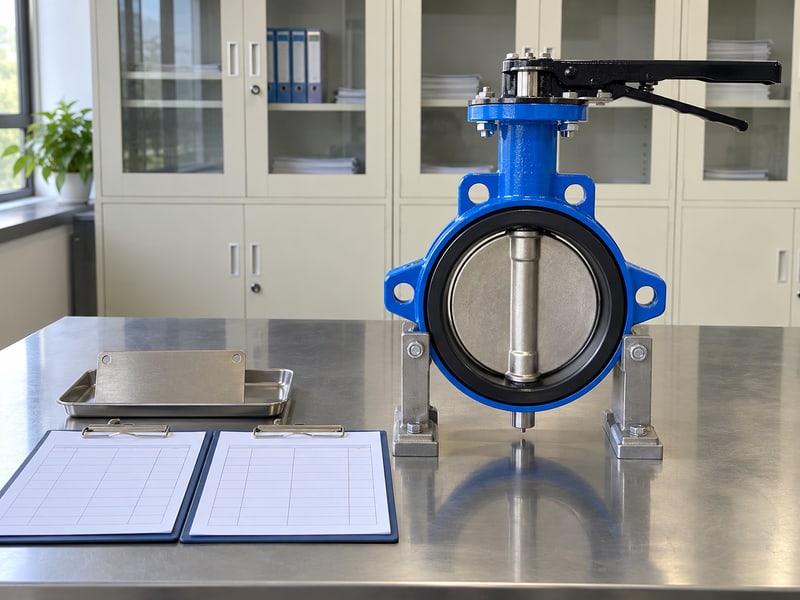
Verify a water type butterfly valve by matching its identity, accepted configuration and inspection results with the required water-duty scope. For drinking-water use, check the applicable project acceptance and all covered water-contact materials separately. An ordinary industrial-water description or a successful pressure test cannot establish drinking-water acceptance for every size, seal or coating configuration.
Which records prove the proposed water-duty scope?
Separate sealing evidence from water acceptance. The official scope of ISO 5208:2015 concerns metallic-valve pressure-boundary integrity, closure tightness and closure-mechanism structural adequacy. For drinking-water duty, verify the required approval's issuer, current status, model, size, materials and applicable site or temperature coverage against the proposed assembly. Keep identity-linked pressure and material records, approved handling and preservation instructions, and the project's water-contact acceptance together before shipment or installation release.
- Agree the applicable inspection procedure, conditions and leakage acceptance with the supplier.
- Check approval scope against the complete supplied water-contact configuration.
- Specify protection and handling requirements that preserve the accepted water-duty condition.
| Acceptance category | Record to check |
|---|---|
| Pressure and closure | Applicable procedure and identified test results |
| Drinking-water scope | Exact configuration and required approval coverage |
Key takeaway: Keep pressure-test results and drinking-water approval coverage as separate records. Hold drinking-water approval when the supplied configuration or coverage remains unconfirmed.
10. How do you specify a water type butterfly valve?
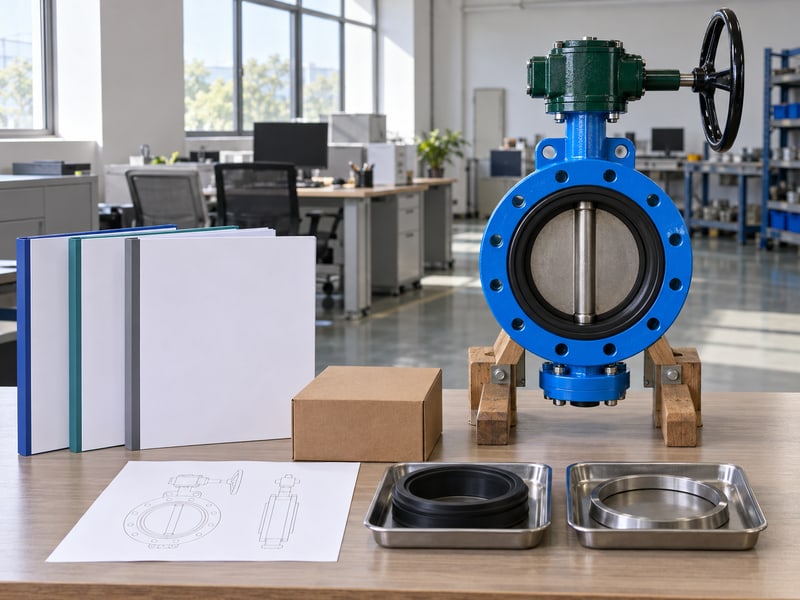
Specify a water type butterfly valve with a complete duty data sheet and the required configuration, interfaces and acceptance records. Describe the actual water and intended operating role before requesting a price. Give suppliers the same documents and require written deviations so your comparison covers the proposed valve, operator and obligations rather than a shared water-service label.
What should you send RUITO for a complete quotation?
Send the water-duty package together. Include composition, additives, solids, cleaning conditions, temperature and pressure cases, forward and reverse closed differentials, size, connection and installation drawing. Add the complete wetted-material and operator requirements, applicable water-contact acceptance, inspection plan, delivery conditions and maintenance documents. RUITO's team in Shijiazhuang, Hebei, can review its available B2B configurations and provide applicable data sheets, material lists, drawings, torque and flow data, IOM and contractual inspection records for the proposed supply.
- Identify the valve location and the actual water conditions for that duty.
- Ask for the offered configuration, included operator package and stated deviations.
- Keep accepted material, drawing and approval revisions with the order.
| RFQ component | Supplier response needed |
|---|---|
| Defined water duty | Proposed configuration and applicable limits |
| Project obligations | Interfaces, documents, inspection and deviations |
Key takeaway: Resolve water quality, materials, limits and acceptance before ordering. RUITO's proposal should identify the actual supplied configuration and its applicable evidence. Contact us today with your duty data and drawings for a documented review.
FAQ
Q1: Can I treat water type as the same term as wafer type?
No. Water describes the intended medium, while wafer describes a body connection. Specify both fields separately and retain the actual water-duty requirements.
Q2: What's the best seat material for every water application?
There is no universal choice. Ask the manufacturer to confirm the exact compound and seal configuration for your water chemistry, temperature and cleaning or disinfection exposures.
Q3: Can I use a water-service butterfly valve for throttling?
Only within the supplied model's accepted regulating duty. Request the permitted opening range and applicable hydraulic data for your actual operating conditions before approval.
Q4: How do I know if a water valve can isolate pressure both ways?
Check its separately declared directional limits. Match forward and reverse closed differentials, temperature and leakage requirements with the supplied configuration and operating sequence.
Q5: Does a pressure-test report prove drinking-water acceptance?
No. Pressure and closure tests address their stated performance scope. Verify the project's water-contact acceptance and exact material, size and configuration coverage separately.