
How to Avoid High Performance Butterfly Valve Mistakes
Choose a reliable high performance butterfly valve by matching its seat, pressure-temperature limits, control behavior, cycle duty, and actuator with your application. High performance butterfly valves manufacturers offer under similar descriptions can differ in all five areas. A valve that passes a static shutoff test may still hunt at low flow, require excessive operating torque, or need maintenance sooner than your shutdown schedule allows.
Define the required behavior before asking for a price. Then compare supplier data, qualification conditions, and maintenance requirements against that duty rather than choosing from a brand ranking or a maximum-temperature headline.
1. Which high performance butterfly valve manufacturers fit?
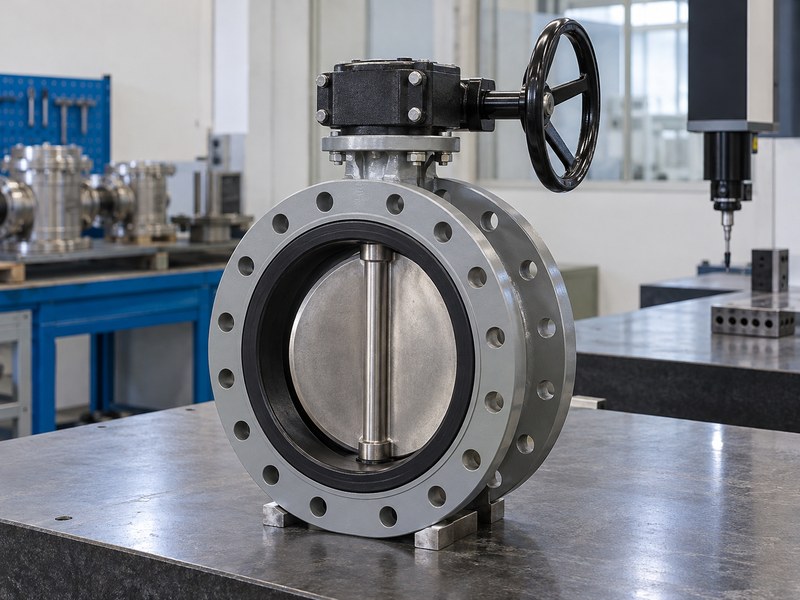
Choose manufacturers that can document the performance your installation requires and support the approved configuration throughout its service life. Compare the high performance butterfly valves manufacturers offer using the same operating envelope and acceptance schedule. A supplier's wide product range helps only when the offered construction has relevant data for your fluid, pressure, temperature, and operating frequency.
What should the shortlist prove?
Ask for configuration-specific pressure curves, material lists, torque data, flow characteristics, and installation drawings. Divide mandatory requirements from preferences before reviewing price. If a supplier proposes an alternative seat or operator, require a revised technical response so you can evaluate its effect on performance, qualification, and spare parts. Ask who supports commissioning and how the supplier handles a performance complaint requiring inspection of operating records, returned components, or related batches.
- Identify isolation, control, or combined duty.
- State planned cycles and expected closed dwell.
- Define leakage and maintenance acceptance criteria.
| Selection criterion | Relevant evidence | Purchasing use |
|---|---|---|
| Process fit | Material and rating review | Exclude unsuitable constructions |
| Operating behavior | Torque and flow data | Check system compatibility |
| Service support | Maintenance and spare plan | Plan ownership costs |
Keep supplier qualifications tied to the proposed model. Experience with an isolation valve does not establish control performance for another disc and seat assembly.
2. What does high performance mean for this duty?
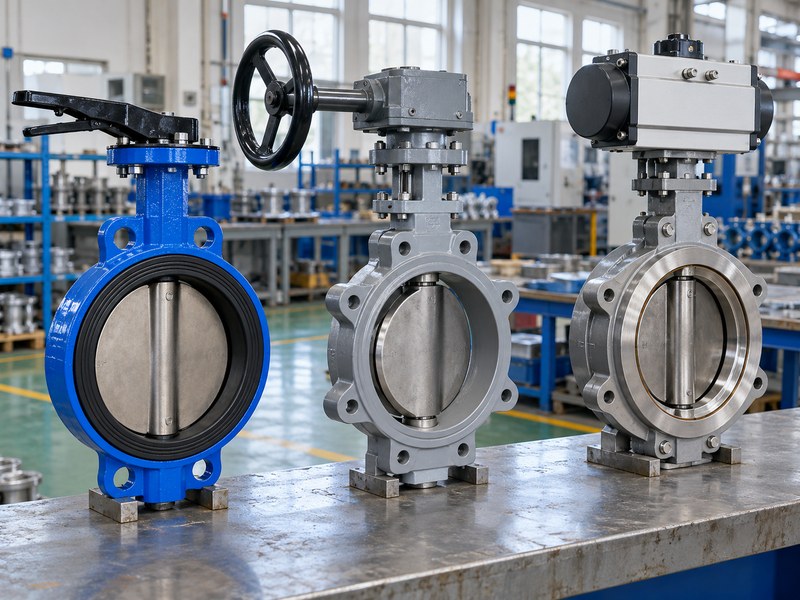
High performance means meeting defined operating targets under your actual conditions. For the high performance butterfly valves manufacturers propose, those targets may include leakage, cycle endurance, controllability, temperature capability, or maintenance access. Assign measurable criteria to each target rather than treating the description as a universal product grade with identical features.
Which targets deserve separate approval?
A clean cooling-water isolator and a frequently modulating process valve have different demands. The former may spend months stationary before closing, while the latter continually loads its drive and sealing surfaces. Identify which failures would interrupt your process and connect each risk with a supplier calculation, test, or documented limitation. Record whether each performance target is a contractual guarantee, a qualification result, or an estimate that still needs validation on the installed equipment.
- Specify maximum leakage at defined test conditions.
- Set the required operating time and failure position.
- Describe modulation frequency and shutdown intervals.
| Duty | Performance target | Evidence to review |
|---|---|---|
| Infrequent isolation | Reliable movement after dwell | Breakaway assessment |
| Frequent operation | Repeatable closure over cycles | Relevant endurance test |
| Modulating service | Stable usable control range | Sizing and characteristic data |
Use these targets to avoid paying for irrelevant features. A higher nominal pressure class cannot correct poor controllability or an unsuitable seal material.
3. Should you specify a double or triple offset?
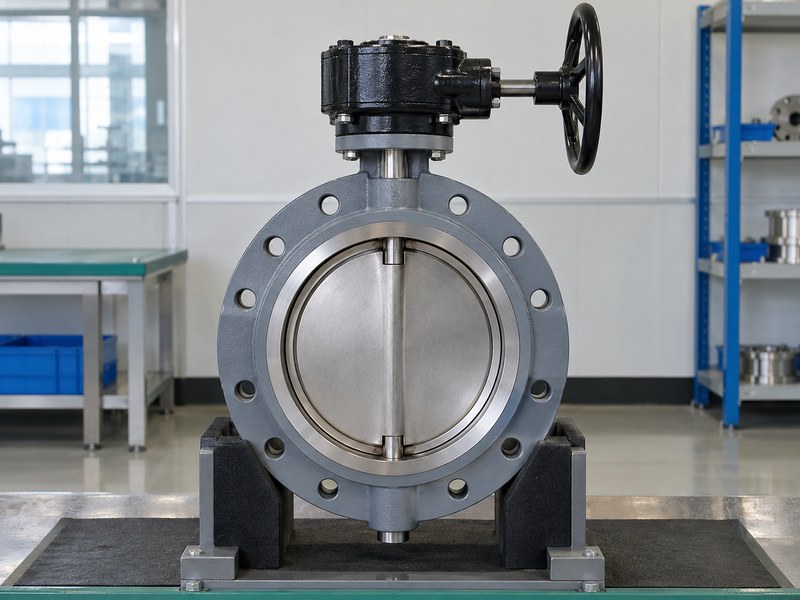
Specify the construction that meets your sealing, temperature, pressure, and operating requirements with acceptable maintenance. Ask how the high performance butterfly valves manufacturers propose achieve those requirements through their geometry and seat assembly. Double-offset and triple-offset descriptions explain aspects of motion; neither description alone establishes the complete material construction or permitted duty.
How should you compare the mechanisms?
Double-offset designs move the disc away from its seat as opening proceeds and can use different soft or metal seating arrangements. Triple-offset designs add an angular sealing geometry and commonly use torque-seated metal sealing. Compare actual seat contact, operating torque, leakage qualification, and replacement procedures rather than assuming one geometry always performs better. If both designs satisfy the approved duty, compare installed size, operator requirements, maintenance work, and total quoted scope before selecting between them.
- Request a section drawing of each proposed design.
- Confirm pressure direction and allowed shutoff differential.
- Compare available replacement seats and service tools.
| Construction | Review focus | Avoid assuming |
|---|---|---|
| Double offset | Seat design and operating limits | Every version has the same seat |
| Triple offset | Cone geometry and seating torque | Every version has equal reverse rating |
| Either construction | Tested assembly and duty | Offset count proves endurance |
RUITO's documented double-offset butterfly range uses double-flanged water-service configurations. Review that stated scope independently from process-valve designs requiring other materials or thermal qualifications.
4. How do you compare seat materials?
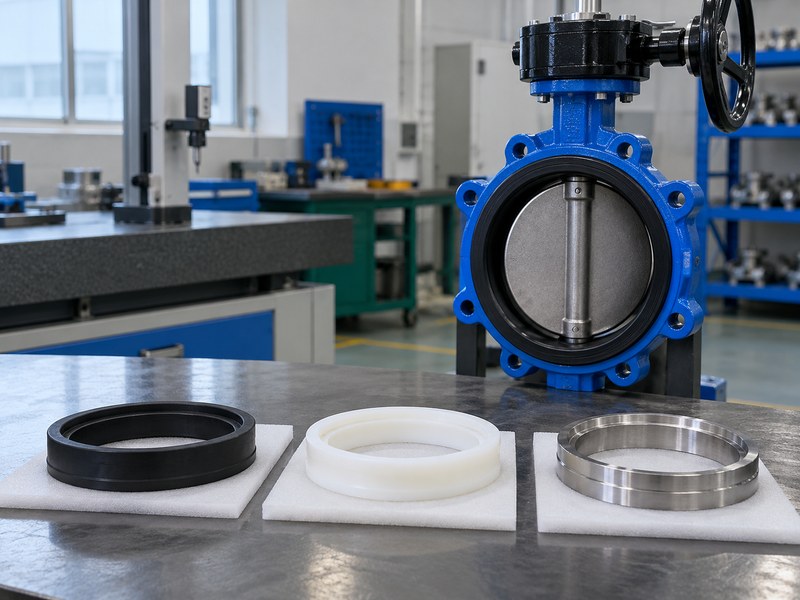
Compare the complete sealing system against fluid composition, temperature, pressure, and movement frequency. The high performance butterfly valves manufacturers quote may combine a primary seat with energizers, packing, gaskets, and bearing materials that impose different limits. Review those parts together so a chemically suitable seat does not conceal an incompatible secondary seal.
What information should the supplier identify?
Request exact compound or resin specifications where relevant, rather than broad names alone. Fillers, backing materials, seat support, and manufacturing details can change the behavior of otherwise similarly labelled materials. If the valve handles cleaning fluids, include their concentration, temperature, and exposure time in the review alongside the normal process medium. Confirm that spare kits preserve the approved material specification rather than replacing it with a visually similar seat from another service configuration.
- Check swelling, wear, creep, and thermal behavior.
- Identify all wetted and temperature-exposed components.
- Review solids and deposits that can damage sealing surfaces.
| Seat family | Review questions | Supporting evidence |
|---|---|---|
| Elastomer | Which compound suits the fluid? | Compatibility and temperature limits |
| Fluoropolymer | How is the seat supported? | Assembly limits and creep review |
| Metal | What leakage and wear are acceptable? | Material and test records |
RUITO documents separate EPDM water and NBR oil configurations, plus defined PTFE and PFA lined assemblies. Those material options require their own operating boundaries and cannot be exchanged without review.
5. Which pressure temperature points need approval?
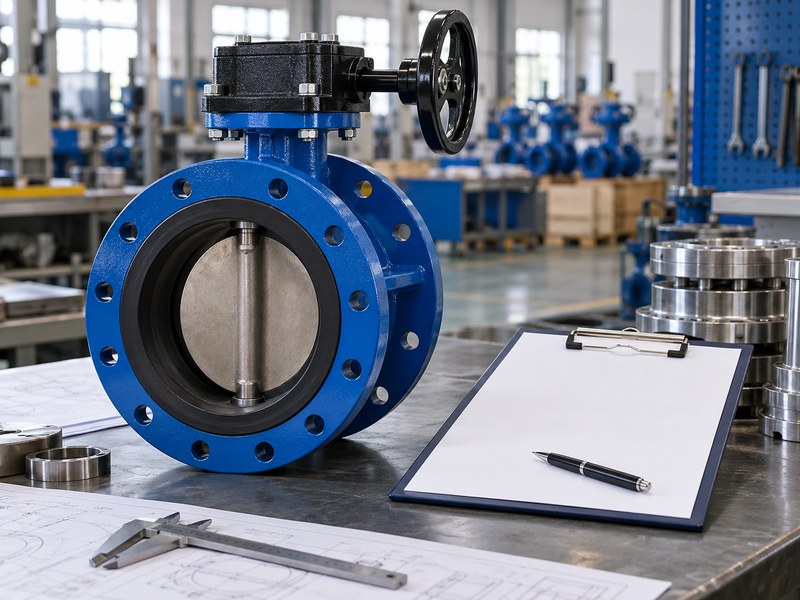
Approve every operating point that could govern body strength, seat differential, packing, or actuator performance. For high performance butterfly valves manufacturers select, normal operation alone may leave startup, cleaning, and shutdown outside the reviewed envelope. Maximum pressure and maximum temperature must be permitted simultaneously by the same approved configuration.
How should you build the operating envelope?
List pressure and temperature pairs with their duration and frequency. Add maximum closing differential and any reverse pressure, including conditions following pump shutdown. For hot liquids, check downstream absolute pressure and phase behavior separately; a suitable body rating cannot establish acceptable cavitation, flashing, or control stability in the installed system. Include the minimum absolute pressure if vacuum can occur during draining or cooldown, and obtain explicit approval for the complete assembly under that condition.
- Distinguish gauge pressure from absolute pressure.
- Separate shell limits from seat differential limits.
- Include ambient limits for the operator and accessories.
| Operating point | Check together | Possible limiting component |
|---|---|---|
| Normal flow | Pressure, temperature, fluid | Seat and wetted materials |
| Cleaning | Chemical exposure and temperature | Secondary seals |
| Shutdown | Closing differential and direction | Seat and drive train |
Ask suppliers to return a marked operating-envelope sheet for the high performance butterfly valves manufacturers propose. Any excluded point needs a process change, a different configuration, or another documented engineering decision.
6. Can the valve handle your control range?
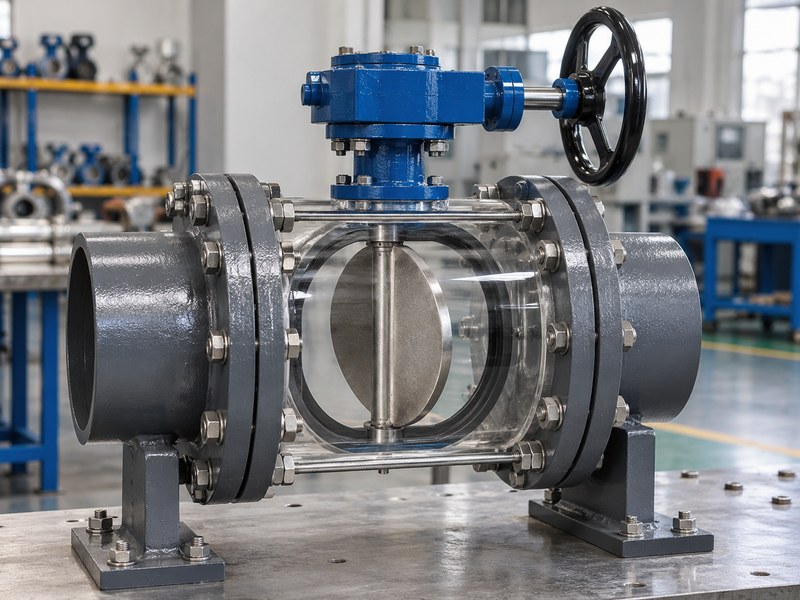
The valve can handle your control range only if sizing shows stable operation at minimum, normal, and maximum process demand. Evaluate the high performance butterfly valves manufacturers offer using installed conditions and their model-specific flow data. Full-open capacity alone cannot reveal whether normal control occurs too close to closure or leaves insufficient useful travel.
Which calculations should support the choice?
Provide fluid properties, required flow, upstream pressure, downstream pressure, and allowable pressure drop for each case. Ask for predicted operating angles and the assumptions behind the calculation. Liquid viscosity, gas compressibility, cavitation, noise, and adjacent fittings may require different treatment, so a single liquid-flow formula cannot cover every service. Where flow reverses, require a separate review of control behavior and fluid forces rather than carrying the forward-flow sizing result across unchanged.
- Check the usable angle range recommended for modulation.
- Review positioner resolution, hysteresis, and mechanical backlash.
- Compare an alternative valve type if low-flow control remains poor.
| Demand case | Sizing output | Review decision |
|---|---|---|
| Minimum flow | Required angle and stability | Is useful travel available? |
| Normal flow | Expected operating position | Is control repeatable? |
| Maximum flow | Capacity and pressure drop | Is operating margin adequate? |
Compare inherent and installed flow characteristics for the high performance butterfly valves manufacturers offer. Oversizing can concentrate routine operation in a narrow travel region and make control harder.
7. How do you verify actuator torque margins?
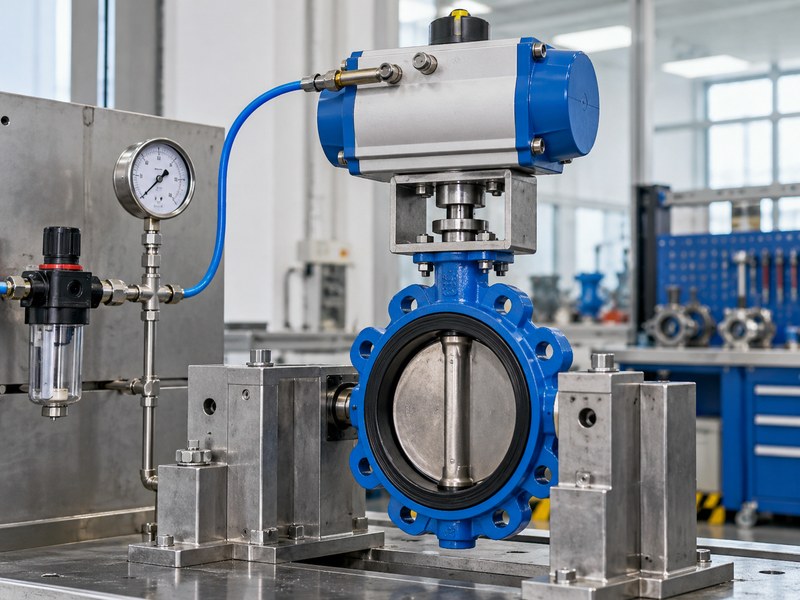
Verify torque margins by comparing required valve torque with available actuator output throughout both strokes. For the high performance butterfly valves manufacturers package, require the sizing basis and permissible drive-train loads. A nominal actuator output or mounting-interface designation cannot establish that the assembly will move, seat, and fail in the specified direction under actual supply conditions.
Which conditions can change the result?
Check breakaway after dwell, running under differential pressure, and closing at the most demanding approved condition. For pneumatic operators, use minimum supply at the actuator and review spring output separately where applicable. Confirm that high supply pressure or excessive electrical torque settings cannot overload the shaft, coupling, bracket, or seating mechanism. Verify the functional test with the specified accessories fitted, since changes to controls and travel settings can affect the final package response.
- Identify any factor already included in valve torque data.
- Review modulating duty and operating frequency ratings.
- Record closing stops and overload settings.
| Torque review | Required condition | Evidence |
|---|---|---|
| Available output | Minimum supply and ambient | Actuator output curve |
| Valve demand | Approved pressure and temperature | Torque across travel |
| Overload protection | Maximum transmitted torque | Shaft and setting review |
Agree margins with the project engineer and document them once. Replacing an actuator with a larger unit requires another loading review even when its mounting holes fit.
8. What should a cycle test demonstrate?
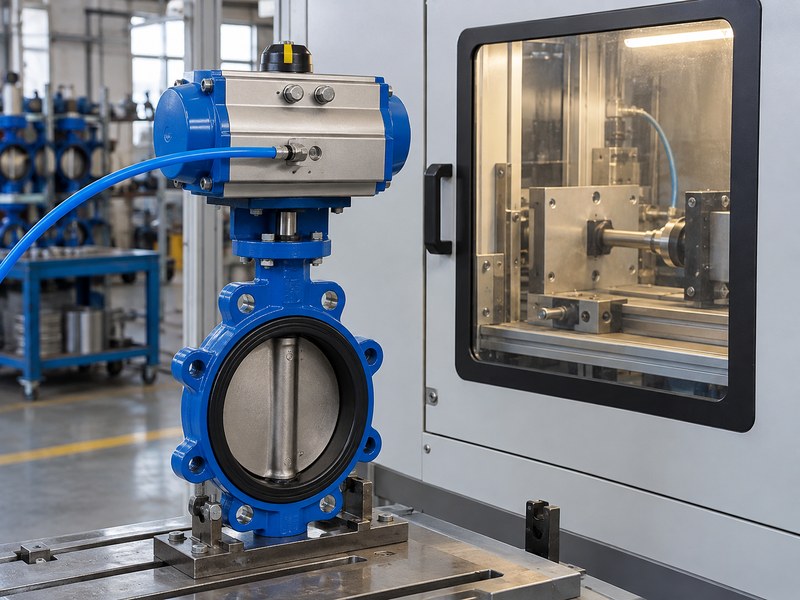
A cycle test should demonstrate the required behavior under stated loads, temperatures, travel, and maintenance conditions. Evaluate high performance butterfly valves manufacturers qualify by reading the test procedure and observations behind the cycle total. Unloaded movement at room temperature cannot establish equivalent endurance during hot closure under differential pressure or continuous modulation.
What makes an endurance result relevant?
Define whether the test uses complete open-close strokes, partial movement, closed dwell, or a modulating sequence. Require leakage, torque, and external leakage checks at agreed intervals and after completion. Record packing adjustments, lubrication, replacement parts, and failures so the reported result represents a known maintenance regime rather than an unexplained cycle count. Ask for the original trend or interval records where available so an acceptable final result does not conceal earlier deterioration or component replacement.
- Match test components with the proposed materials.
- Identify sample size and qualification scope.
- State acceptance limits before testing begins.
| Test feature | Information to request | Relevance to service |
|---|---|---|
| Applied load | Differential and direction | Closing demand |
| Movement pattern | Stroke, frequency, and dwell | Actual operating sequence |
| Interventions | Adjustment and parts changed | Maintenance expectation |
Use endurance evidence to support a defined duty, without converting laboratory cycles into a guaranteed service life. Deposits, corrosion, installation loads, and process excursions need separate review.
9. How do you compare maintenance and spares?
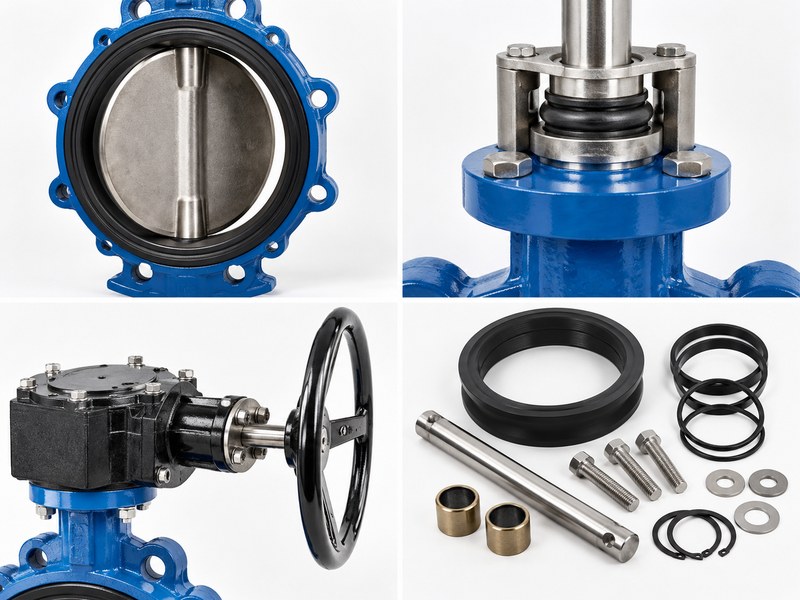
Compare the work, access, parts, and retesting needed to restore the approved valve performance. For high performance butterfly valves manufacturers support, a spare seat price covers only part of the maintenance cost. Isolation, decontamination, actuator removal, lifting, adjustment, and recommissioning can determine whether repair fits your available shutdown window.
Which commitments belong in the quotation?
Ask for the installation and maintenance manual, exploded drawing, spare list, and required tools before ordering. Confirm whether the seat can be replaced in place or requires valve removal under the prescribed safe maintenance procedure. Tie spare part numbers to the approved assembly revision and require notification when materials or dimensions change. Request the recommended inspection criteria for reusable parts so your maintenance team can distinguish acceptable wear from damage requiring a replacement component.
- Identify packing, seat, bearing, and gasket kits.
- Request storage conditions and shelf-life guidance.
- Confirm post-maintenance leakage and function checks.
| Cost or requirement | Ask the supplier | Ownership implication |
|---|---|---|
| Seat replacement | Required access and tools | Shutdown duration |
| Spare availability | Lead time and revision control | Repair readiness |
| Recommissioning | Tests and adjustment procedure | Return-to-service work |
Compare maintenance on the same scope as purchase price. A repairable design offers limited value if the approved parts or required service access are unavailable.
10. What should close the supplier review?
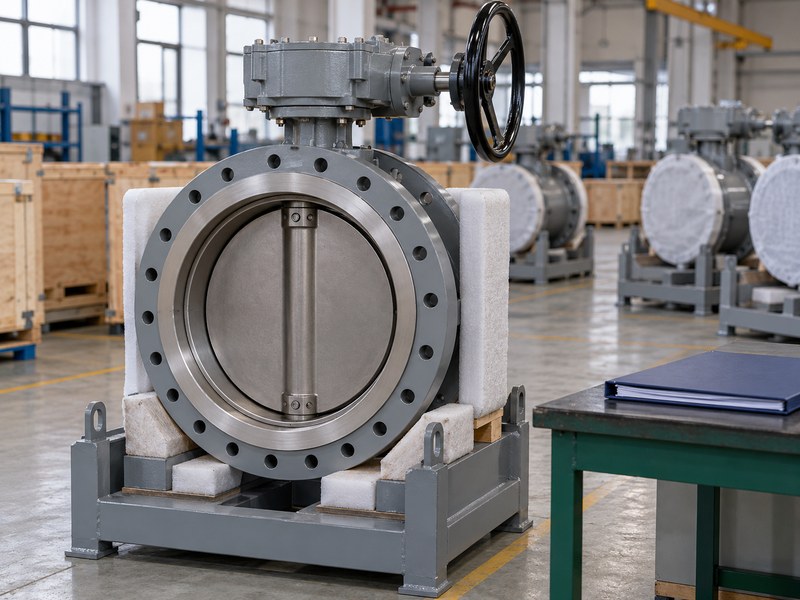
Close the review when performance targets, deviations, qualification scope, maintenance requirements, and acceptance records agree with the purchase order. Confirm the high performance butterfly valves manufacturers will deliver by freezing the construction, operator, drawings, and inspection plan. Assign responsibilities for commissioning and future changes so the approved sample does not drift into a different production configuration.
- Close material, rating, flow, and torque questions.
- Approve inspection criteria and required document revisions.
- Confirm spare kits and change-notification arrangements.
Q1: Can I choose a valve from pressure class alone?
No. Seat limits, materials, control behavior, cycle duty, and actuator loading also need approval.
Q2: What's the best seat for frequent operation?
It depends on the complete duty. Compare compatible materials and relevant endurance evidence for the proposed assembly.
Q3: How do I know if the valve is oversized?
Review predicted operating angles at minimum and normal flow. Limited usable travel can indicate a poor control match.
Q4: Can I treat cycle testing as a service-life guarantee?
No. Test conditions and maintenance interventions define what the result supports; actual process exposure may differ.
Q5: Can RUITO review a demanding butterfly-valve duty?
Yes. RUITO can compare the requirements with its documented configurations and identify applicable options, limitations, or further evidence needed.
Send RUITO your fluid data, operating envelope, control cases, cycle schedule, and maintenance constraints for a configuration review. Ask the review to identify the documented construction and verification work required before you freeze the purchase specification; contact us to request a configuration review.