
How to Avoid Costly Butterfly Valve Body Material Mistakes
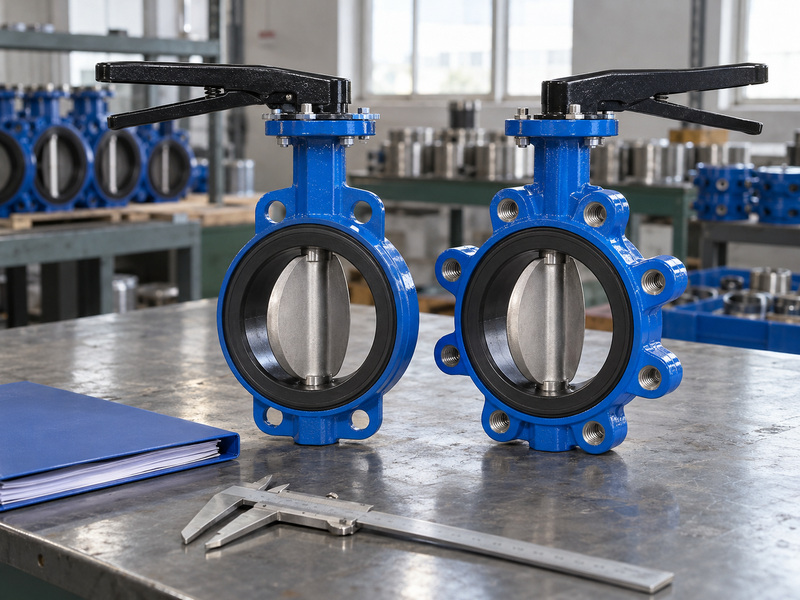
A butterfly valve cast iron body fits your service when its exact grade, corrosion protection, and assembled-valve limits match your fluid and installation. Two blue-painted valves can have different body grades, seats, and allowable duties. When reviewing a butterfly valve cast iron body, compare the full configuration before accepting a lower price. RUITO’s standard water-service configuration uses an EN-GJS-450-10 ductile iron body.
1. What Does Butterfly Valve Cast Iron Body Mean?
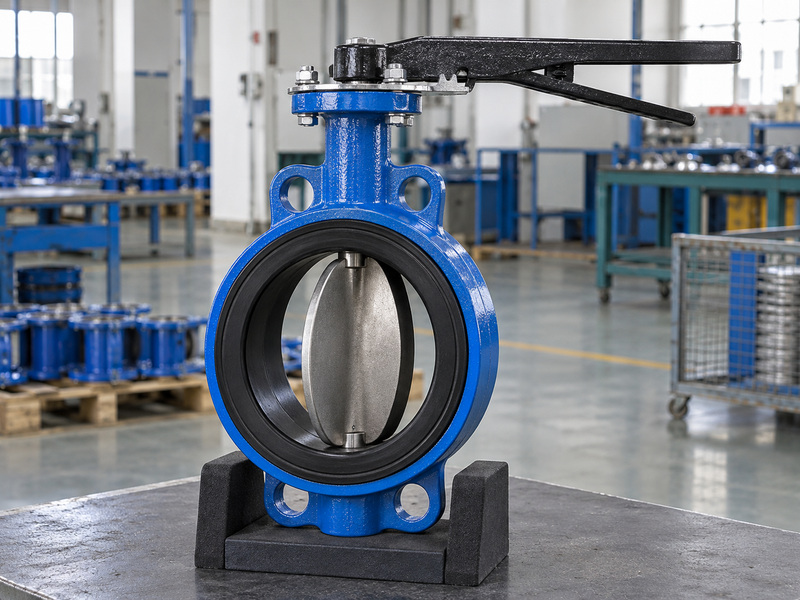
Butterfly valve cast iron body describes the valve’s iron pressure-containing housing, but the phrase alone does not identify its material grade. Some catalogues use “cast iron” specifically for gray iron while listing ductile iron separately. Ask which meaning applies to the quotation, then record the full material designation alongside the seat, disc, shaft, and connection details.
Which Parts Need Separate Material Descriptions?
Separate the body from components that contact or control the fluid. A silver disc inside a coated iron housing does not make the body stainless steel. The seat may cover part of the body’s inner surface, but shaft passages, flange interfaces, and other wetted areas depend on the design. Use an approved sectional drawing to establish which materials your fluid can reach.
- Identify the body grade and material standard.
- List disc, shaft, seat, and auxiliary seal materials.
- Distinguish external coating from the wetted barrier.
- Check the actual assembly rather than its paint colour.
| Description | What it leaves unresolved |
|---|---|
| Cast iron body | Gray or ductile iron grade |
| Stainless disc | Body, shaft, and seat materials |
| Rubber-lined valve | Liner coverage and compound |
Ask for a component material list when a product description combines several materials under one short label.
2. How Do Gray Iron and Ductile Iron Bodies Differ?
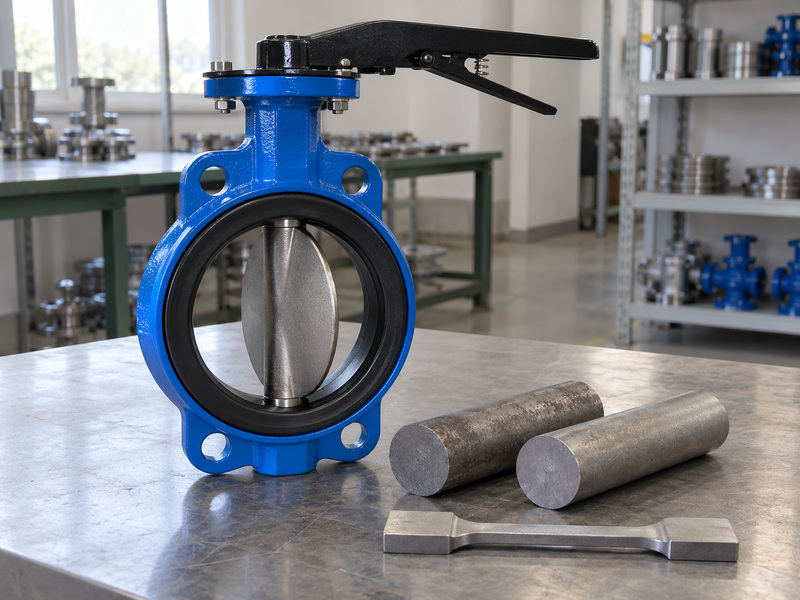
Gray iron and ductile iron differ in graphite form and mechanical behaviour, so they are separate choices for a butterfly valve cast iron body. Gray iron contains graphite flakes; ductile iron contains rounded graphite nodules and has measurable ductility. ASM’s cast iron guidance explains this structural distinction. Select an exact grade rather than treating both material names as interchangeable.
How Should That Difference Affect Your Shortlist?
Give mechanical loading, minimum temperature, and the approved valve design a place in the comparison. A ductile iron body can offer greater tolerance of deformation than a conventional gray iron body, but the actual properties depend on grade and condition. Neither material name establishes a pressure class, low-temperature approval, or permission to transfer unsupported piping loads through the valve housing.
- Compare the grades specified by the proposed manufacturers.
- Review handling, vibration, and external loading conditions.
- Verify minimum service temperature for the configuration.
- Retain the approved pressure-temperature limits for each option.
| Body option | Selection focus |
|---|---|
| Gray iron | Confirm grade and approved mechanical duty |
| Ductile iron | Confirm grade, temperature, and design limits |
| Either iron | Review corrosion protection and assembly materials |
RUITO’s standard water-service body is EN-GJS-450-10 ductile iron; request confirmation before considering any different body material.
3. When Should Stainless Steel Enter the Comparison?
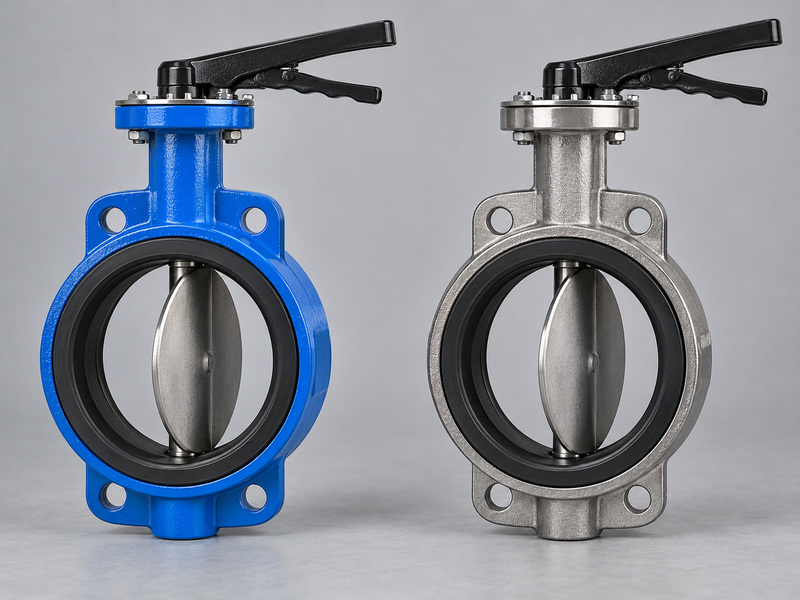
Stainless steel should enter your comparison when corrosion exposure, temperature, cleanliness requirements, or project specifications challenge the proposed butterfly valve cast iron body configuration. It remains a grade-specific engineering choice. Stainless steel is a general industry alternative, and the supplier must confirm the actual product, material designation, seat system, and permitted operating conditions before you place it on an approved schedule.
Which Corrosion Questions Need Answers?
Review chloride concentration, temperature, pH, oxidising chemicals, deposits, and stagnant conditions together. Stainless steel can suffer localised pitting and crevice corrosion in chloride-bearing service, as described in stainless steel corrosion guidance. A “316” label alone does not establish suitability for seawater, while a stainless body alone does not establish a hygienic valve design or food-contact approval.
- Request the actual cast or wrought grade designation.
- Describe internal fluid and external atmospheric exposure.
- Include cleaning and disinfection conditions in the review.
- Verify seals and design details alongside the metal choice.
| Reason for review | Information still needed |
|---|---|
| Chloride exposure | Chemistry, temperature, crevices, and flow conditions |
| Hot service | Complete-valve pressure-temperature limits |
| Hygiene requirement | Design and exact material approval evidence |
Compare stainless and iron options against the same service specification so a material upgrade does not conceal an unsuitable seat or connection.
4. Which Surfaces Actually Contact Your Fluid?
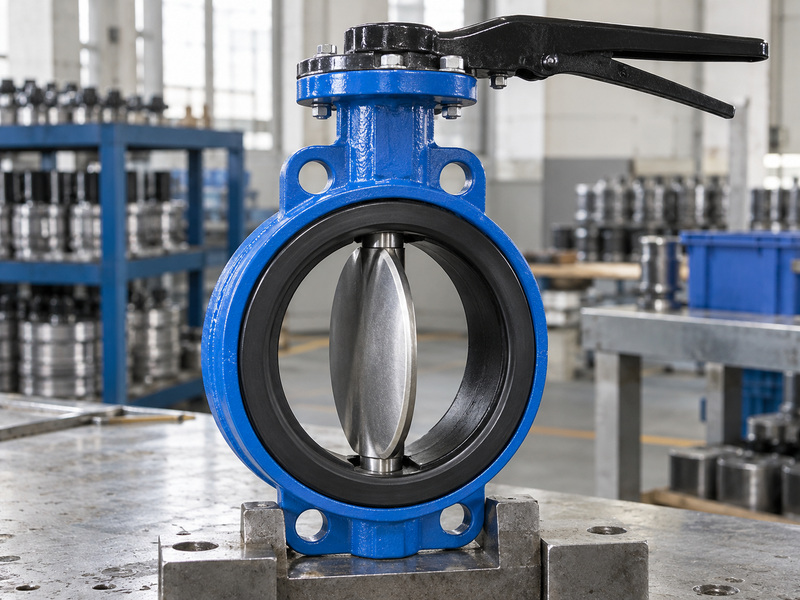
Your fluid contacts the disc, exposed shaft and seals, seat or lining, and any unprotected internal housing surfaces in a butterfly valve cast iron body assembly. The exact wetted path follows the valve design. Check coverage at shaft penetrations and flange faces as well as the main flow bore, particularly when you depend on a lining to isolate an iron housing from chemical service.
What Must You Confirm About a Lined Design?
A PTFE-lined butterfly valve needs compatible lining, disc coverage, backing, shaft seals, and installation details. If you compare a PFA-lined butterfly valve, confirm the actual PFA-covered components rather than assuming every fluoropolymer arrangement has identical coverage. RUITO’s source material treats PTFE and PFA configurations separately, with their own service boundaries and verification requirements.
- Identify every wetted component on a sectional drawing.
- Confirm liner and backing compatibility with your fluid.
- Review vacuum or minimum absolute pressure conditions.
- Include inspection and replacement access in the assessment.
| Wetted area | Question to resolve |
|---|---|
| Main bore | Is coverage continuous for this design? |
| Disc and shaft region | Which materials remain exposed? |
| Flange interface | What clamping and sealing conditions apply? |
Specify the complete wetted path when corrosion isolation drives the selection; a lining material name provides only part of that specification.
5. How Do You Check Pressure and Temperature Together?
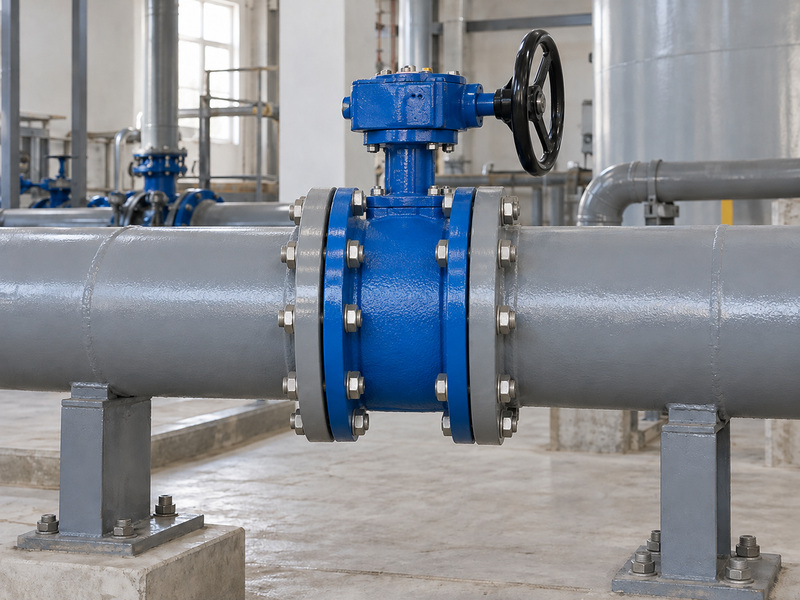
Check operating pressure and temperature against the approved limits of the exact butterfly valve cast iron body assembly, including its seat and end connection. A body material cannot supply one universal rating across sizes and configurations. For a flanged butterfly valve, also confirm whether the proposed structure is concentric or eccentric and which closure directions and differential pressures are permitted.
Which Operating Conditions Belong on the Data Sheet?
Provide normal and maximum operating conditions, minimum temperature, start-up conditions, and credible pressure transients. Keep shell test pressure separate from allowable working pressure and closure differential pressure. RUITO’s ordinary water configuration and its dedicated low-temperature, chemical-lined, or clean-gas configurations have different boundaries; you cannot combine the highest pressure from one configuration with the highest temperature from another.
- State pressure units and whether values are gauge or absolute.
- Record the maximum differential pressure during closure.
- Include frequency of operation and required control duty.
- Identify any vacuum, freezing, flashing, or hot-fluid conditions.
| Parameter | Confirm against |
|---|---|
| Working pressure and temperature | Exact assembly limits |
| Closure differential | Seat and direction rating |
| Test pressure | Selected inspection procedure |
| Transient condition | Approved system and valve assessment |
Resolve every operating point on the same configuration’s data sheet before treating the valve as suitable for the full service envelope.
6. How Can the Medium Change Body Selection?
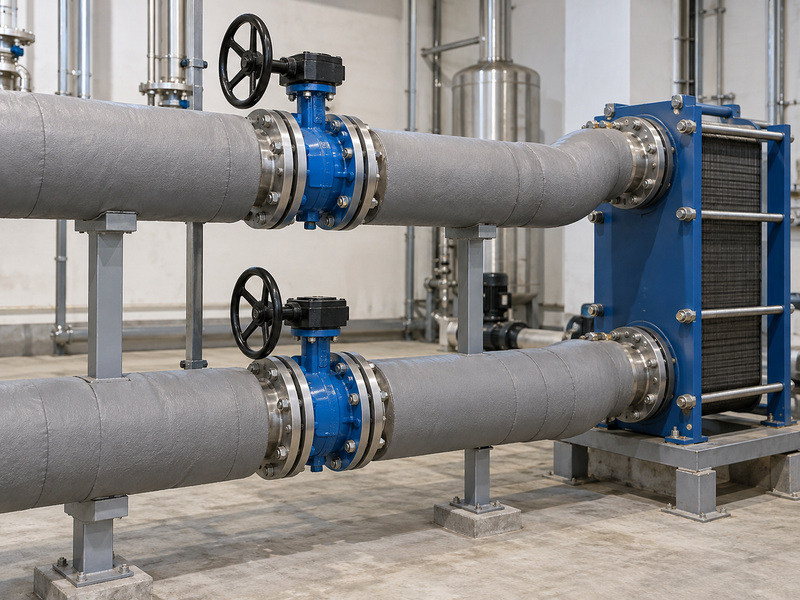
The medium can change the required body protection, wetted metals, and seal materials even when the butterfly valve cast iron body and nominal pressure remain unchanged. “Water” may mean clean water, inhibited glycol solution, chlorinated water, or water carrying abrasive particles. Describe what reaches the valve during normal service, cleaning, start-up, and shutdown so the supplier can assess the complete exposure.
Which Fluid Details Should You Send?
Send concentration, temperature, pH, contaminants, solids, and cleaning chemistry where relevant. RUITO documents EPDM for its standard water configuration and separate NBR configurations for compatible mineral oil or clean gas duties. Those choices do not approve every EPDM or NBR compound for every fluid bearing the same general name; the actual compound, additives, and operating conditions still need review.
- Specify glycol percentage and the inhibitor package.
- State chloride and oxidant exposure for affected services.
- Describe particle hardness, size, concentration, and fibres.
- Include cleaning liquids and their contact temperatures.
| Service description | Detail that can change selection |
|---|---|
| Cooling water | Inhibitors, chlorides, and treatment chemicals |
| Mineral oil | Additives and seal compatibility |
| Treated wastewater | Solids, fibres, and abrasion |
| Chemical solution | Concentration, temperature, and lining limits |
Use compatibility data as a screening aid, then obtain approval for the actual compound and assembly under your stated fluid conditions.
7. Which Installation Loads and Connections Need Review?
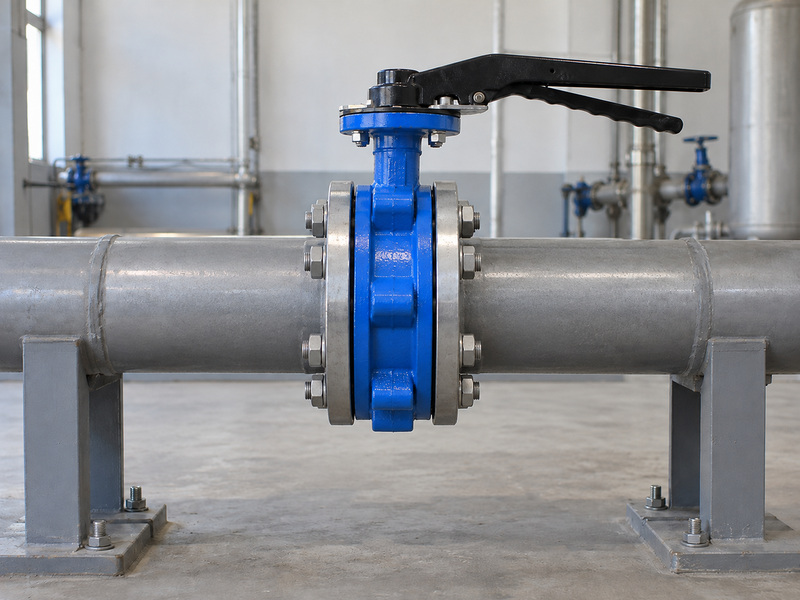
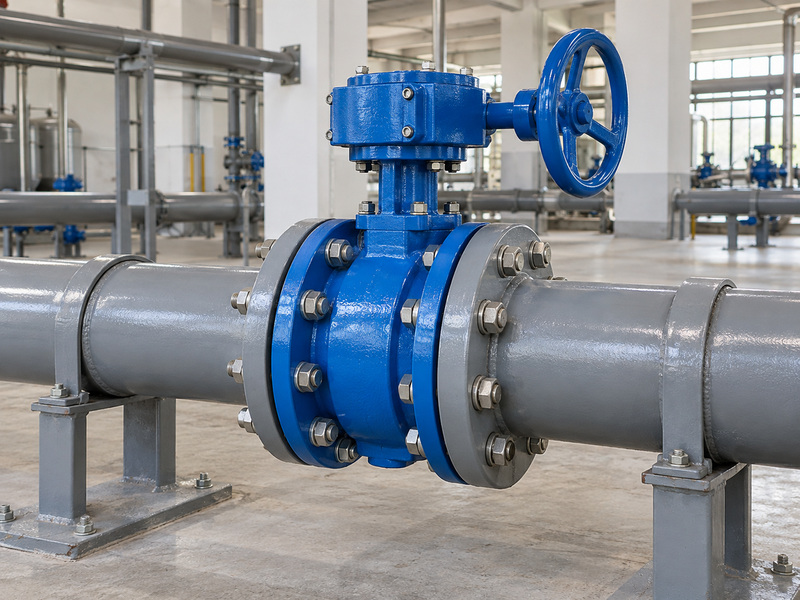
Review pipe alignment, flange compatibility, support, bolt engagement, disc clearance, and external loads before selecting a butterfly valve cast iron body for installation. A stronger body material cannot correct a misaligned pipe run. On a lug butterfly valve, confirm the fastener arrangement and approved end-of-line duty separately because threaded lugs alone do not establish a downstream-removal rating.
How Should You Treat Impact and Water Hammer?
Treat surge pressure as a system condition requiring assessment of pump behaviour, valve closing time, and suitable protective measures. Greater ductility does not make the body a surge-control device. During installation, follow the product’s handling and bolting instructions, support the adjoining pipework, and check disc travel against the companion-flange bore and any nearby fitting before final acceptance.
- Keep flanges aligned without forcing the pipework together.
- Check bolt length, thread engagement, and tightening requirements.
- Confirm operator clearance and the approved installation orientation.
- Include vibration, actuator weight, and other external loads.
| Installation condition | Required check |
|---|---|
| Unsupported pipework | Support and permissible loading |
| Limited bore clearance | Disc sweep through its operating range |
| Downstream removal | Exact end-of-line approval and fasteners |
Record system loads and installation constraints before the material comparison so each proposed valve is assessed against the same mechanical duty.
8. What Coating and Approval Evidence Do You Need?
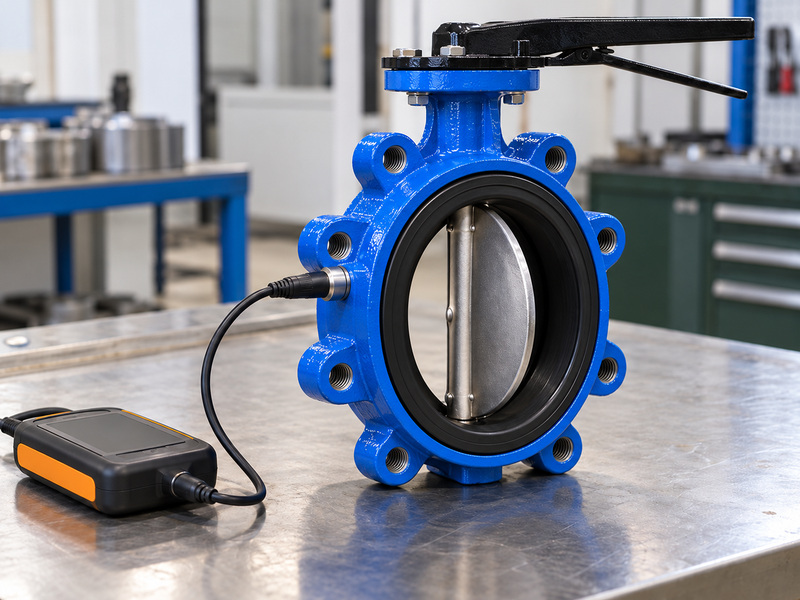
You need coating details and approval evidence that match the actual butterfly valve cast iron body configuration, exposure, and destination requirements. External epoxy protection, a wetted lining, and a drinking-water-approved assembly serve different purposes. A general statement that a valve is “coated” or “water suitable” leaves the coating system, contact materials, temperature, and approval scope unresolved.
How Do You Match Protection With Exposure?
Describe indoor humidity, outdoor weather, washdown, marine atmosphere, and any buried-service conditions rather than applying one finish to every location. For drinking-water duty, request documents covering the exact coating, elastomers, and other wetted materials in the proposed valve. RUITO’s company source limits drinking-water claims to the approved configuration and stated service conditions; ordinary water-service materials do not automatically inherit that approval.
- Identify the coating system and relevant coverage areas.
- Check restrictions attached to the requested approval.
- Include storage and installation damage repair requirements.
- Confirm that supplied materials match the approved configuration.
| Requirement | Evidence to review |
|---|---|
| Atmospheric protection | Specified coating and exposure suitability |
| Drinking-water contact | Exact configuration and approval coverage |
| Chemical isolation | Lining system and service-specific verification |
Request the approval scope before specifying a brand or material substitution, particularly where a change affects any surface contacting drinking water.
9. How Do You Make the Final Material Selection?
Make the final selection by comparing complete, approved configurations against one service specification rather than comparing a butterfly valve cast iron body with an undefined stainless alternative. Begin with technical suitability, then compare purchase price, maintenance access, replacement parts, and operating requirements. Keep gray iron, ductile iron, and stainless options distinct wherever their grades, protection systems, or permitted duties differ.
Which Differences Belong in Your Comparison Sheet?
Use one row per proposed valve configuration and require the supplier to state deviations against your requirements. A lower quotation may exclude a lining, operator, approval, or duty that another quotation includes. Compare maintenance needs using the actual valve design and available parts; do not assume a stainless body will automatically reduce lifetime cost or that every iron-bodied valve uses interchangeable seats.
- Match size, connection, face-to-face dimension, and operator.
- Record body grade and the full wetted material arrangement.
- Check operating limits, closure duty, and applicable approvals.
- Compare spare parts, access, and supplier support requirements.
| Decision stage | Acceptable basis |
|---|---|
| Technical shortlist | Full stated duty and materials |
| Commercial comparison | Same scope and documented deviations |
| Purchase approval | Identified configuration and accepted limits |
Carry the selected configuration into the order so later substitutions trigger review of the affected service limits and approval evidence.
10. What Do Buyers Ask About Iron-Bodied Butterfly Valves?
Buyers ask whether the butterfly valve cast iron body is the right grade, whether lining or stainless steel changes the duty, and which service limits apply. Confirm these points against the actual proposed valve.
Q1: Can I treat cast iron and ductile iron as the same material?
No. Ductile iron belongs to the cast iron family, but gray iron and ductile iron are separate material choices. Request the exact grade whenever a quotation uses only “cast iron.”
Q2: What’s the best body material for clean-water isolation?
An approved ductile iron configuration is a practical candidate. Verify the seat, coating, pressure-temperature limits, and any drinking-water requirements; the application name alone does not approve the valve.
Q3: Can I use a stainless steel body for any seawater duty?
No. The actual grade, chloride exposure, temperature, crevices, and complete wetted arrangement need review. A “316” label alone does not establish seawater suitability.
Q4: How do I know if a liner protects the iron body?
Check the approved sectional drawing and service specification. Confirm coverage at the bore, shaft penetrations, and flange interfaces, then verify the lining system against your fluid and operating conditions.
Q5: Can a ductile iron valve solve water hammer?
No. Review the hydraulic transient, pump behaviour, closing time, and protection measures. Material selection must follow the assessed pressure conditions and allowable loads.
Send your fluid composition, operating pressure and temperature, size, connection, closing duty, and approval requirements when you contact us. RUITO can review the proposed body, wetted materials, and operator as one valve configuration and identify any service limits or deviations before quotation.