
How to Avoid Cast Iron Butterfly Valve Body Mistakes
You specify cast iron butterfly valve body manufacture by defining the iron grade, body drawing, machining interfaces, acceptance criteria, and release records before production. An order marked only “cast iron body” leaves room for material substitutions and mismatched parts. For your next cast iron butterfly valve body manufacture enquiry, use a body specification that separates casting acceptance from completed-valve performance. RUITO’s standard water-service body material is EN-GJS-450-10 ductile iron.
1. What Does Cast Iron Butterfly Valve Body Manufacture Cover?
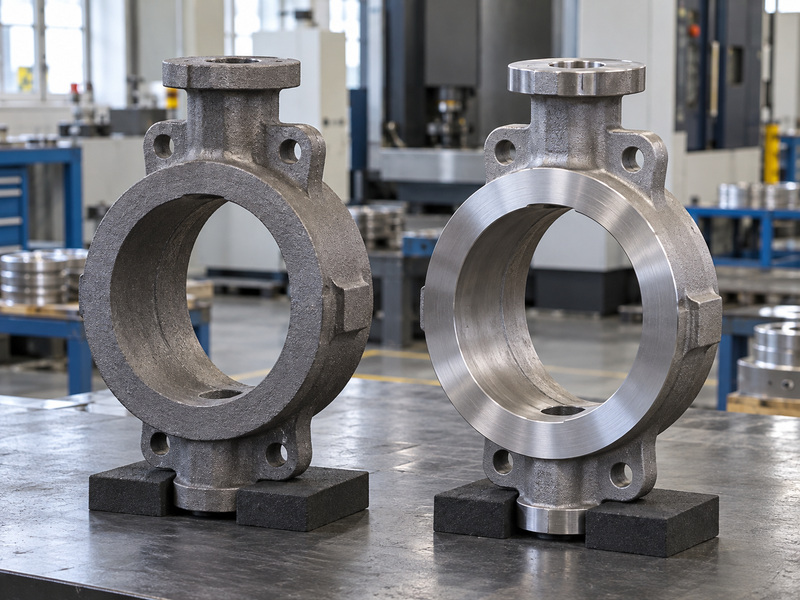
Cast iron butterfly valve body manufacture covers production and acceptance of the pressure-containing housing, including its interfaces with the seat, shaft, and piping. A bare-body order ends at an agreed component condition; a complete-valve order continues through assembly and functional testing. Your purchase order should identify which condition you expect and who accepts each manufacturing handover.
Where Should Your Supply Scope Start and End?
Separate the raw casting, machined body, coated body, and assembled valve as distinct deliverables. A machining allowance belongs on the casting drawing; a finished shaft-bore tolerance belongs on the machining drawing. For a replacement body, you also need the approved seat and shaft interfaces because nominal pipe size alone cannot establish interchangeability with an existing valve assembly.
- State whether patterns or tooling form part of the order.
- Identify machining, coating, assembly, and inspection responsibilities.
- Name the drawing revision used for acceptance.
- Require written approval before any material or process substitution.
| Delivery condition | Buyer should receive |
|---|---|
| Cleaned casting | Material identity and casting acceptance records |
| Machined body | Finished dimensional results and traceability |
| Complete valve | Assembly, pressure, and operation records |
Compare quotations at the same delivery condition so an unmachined casting price does not distort your supplier comparison.
2. Which Iron Grade Should You Specify?
Specify an exact material standard and grade because cast iron butterfly valve body manufacture can involve different graphite structures and mechanical properties. Gray iron and ductile iron both belong to the cast iron family, but they are separate materials. RUITO’s standard water-service configuration uses EN-GJS-450-10 ductile iron; specify any gray-iron alternative separately and confirm the offered grade in writing.
How Do You Confirm Material Identity?
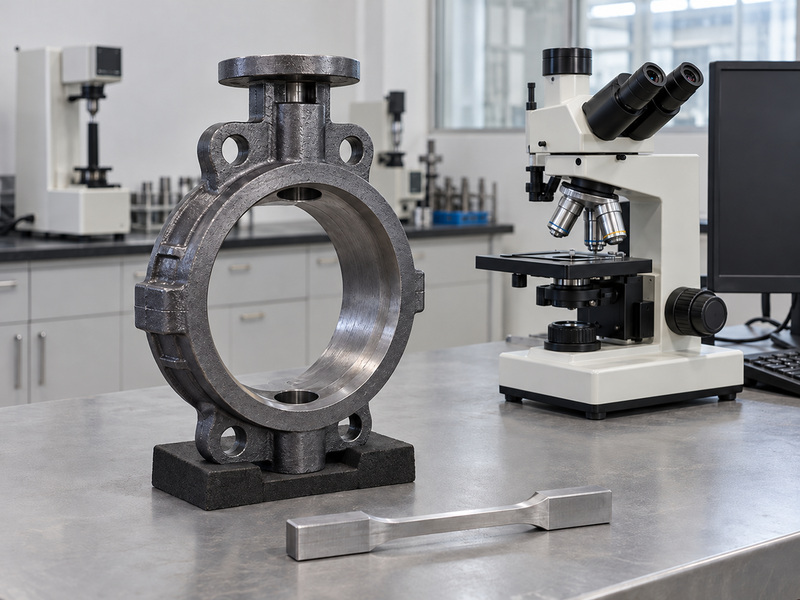
Ask the supplier to connect the body identification with the relevant material test results. Chemical composition alone does not establish every mechanical property or graphite condition required by a ductile iron specification. Agree the sampling basis, relevant section thickness, and any additional examination before production, particularly when the project requires properties from a particular location within the casting.
- Record the full grade rather than a trade abbreviation.
- Confirm the material standard edition required by your contract.
- Define the agreed test sample and inspection document.
- Review proposed equivalents against the original requirements.
| Material description | Purchasing response |
|---|---|
| “Cast iron” only | Request a standard and grade |
| EN-GJS-450-10 | Confirm the specified ductile iron test basis |
| Proposed equivalent | Obtain engineering approval before substitution |
Keep material equivalence separate from valve pressure approval; changing a grade can require a fresh design and application review.
3. Which Dimensions Must Be Frozen Before Casting?
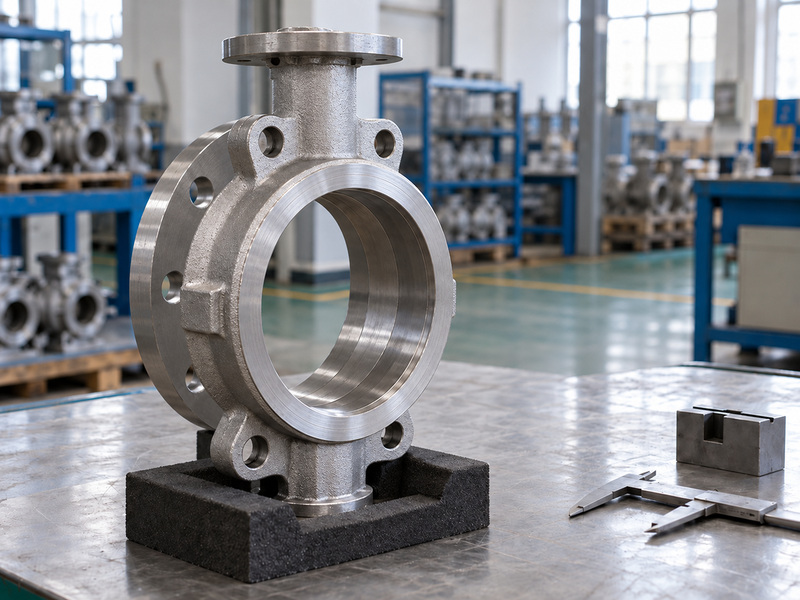
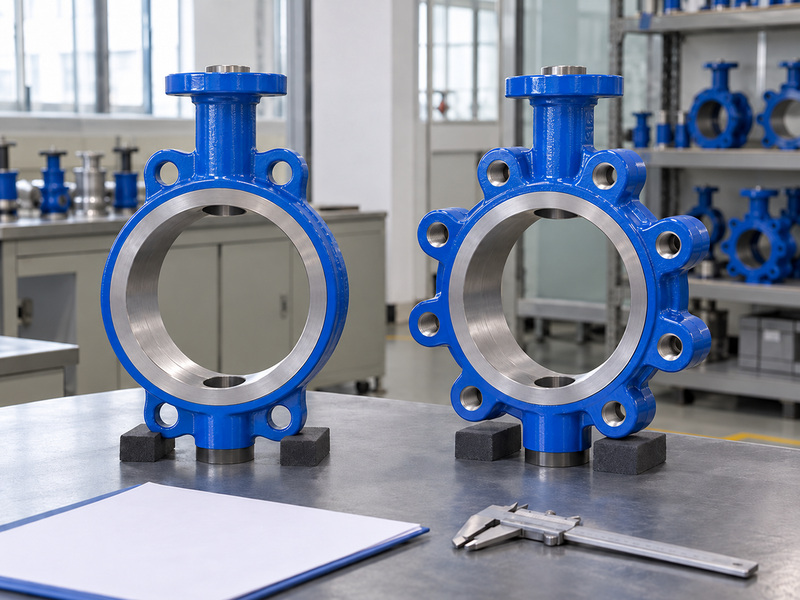
Freeze the body envelope, minimum finished wall requirements, machining allowances, and pipe and shaft interfaces before cast iron butterfly valve body manufacture begins. A casting can match its outside diameter while leaving too little stock at a bore or flange. For a wafer butterfly valve, companion-flange geometry and disc opening clearance also need confirmation against the completed valve design.
Which Drawing Details Prevent Fit Problems?
Use coordinated casting and finished-part drawings so the foundry and machine shop work from compatible datums. State the applicable face-to-face series instead of relying on a general butterfly valve standard alone. If a valve will replace an installed unit, obtain the existing spool gap, mating flange details, and approved assembly dimensions before treating the new body as a direct replacement.
- Define the flow bore, seat pocket, and shaft centreline.
- Mark finished faces and surfaces left as cast.
- Specify flange drilling or lug thread details.
- Show critical sections where remaining wall must be checked.
| Interface | Confirmation needed |
|---|---|
| Pipeline gap | Approved face-to-face dimension |
| Companion flange | Standard, drilling, and bore clearance |
| Seat and shaft | Assembly drawing and controlled tolerances |
Resolve any drawing conflict before tooling or casting approval; machining cannot restore missing metal at a critical section.
4. What Must Casting Suppliers Control Before Machining?
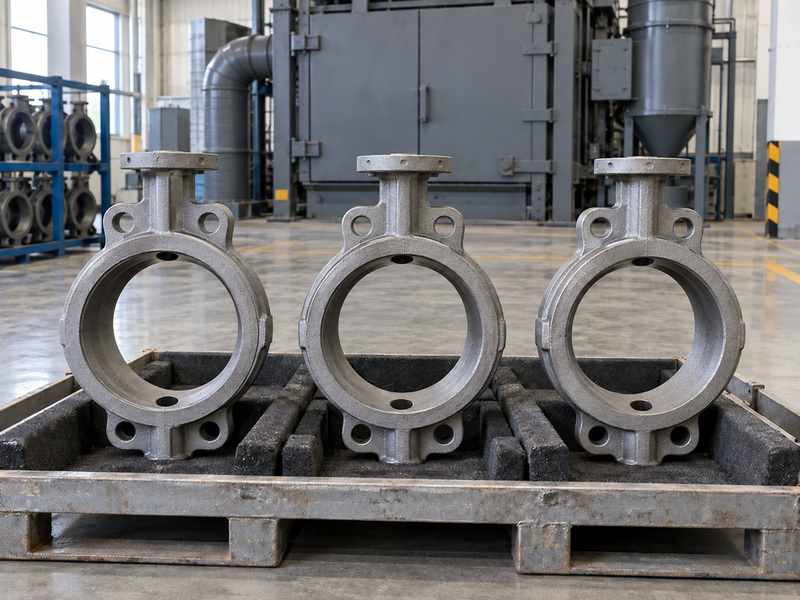
Casting suppliers must control material identity, mould and core geometry, solidification, cleaning, and casting acceptance before cast iron butterfly valve body manufacture proceeds to machining. These controls affect whether usable metal remains in the required locations. Buyers should review the supplier’s process and inspection plan without assuming that a valve manufacturer owns the foundry producing every body casting.
What Evidence Should Follow a Casting Batch?
Request traceability that survives cleaning, machining, and coating. The supplier should explain how a body remains linked with its material results after a cast mark becomes hidden or a temporary label is removed. RUITO’s company material supports controlled design, machining, assembly, inspection, and delivery in Shijiazhuang; it does not justify a claim that every casting comes from an owned melting line.
- Confirm responsibility for foundry qualification and incoming acceptance.
- Identify casting batches through the agreed traceability method.
- Set dimensional and surface acceptance before machining starts.
- Escalate process changes that affect approved properties or geometry.
| Casting concern | Evidence to request |
|---|---|
| Material mix-up | Batch-to-body identification |
| Core displacement | Agreed dimensional or section checks |
| Unapproved change | Recorded technical approval |
Use the same acceptance requirements for internal and external casting sources so subcontracting does not create a gap in responsibility.
5. Which Machining Checks Protect Valve Interfaces?
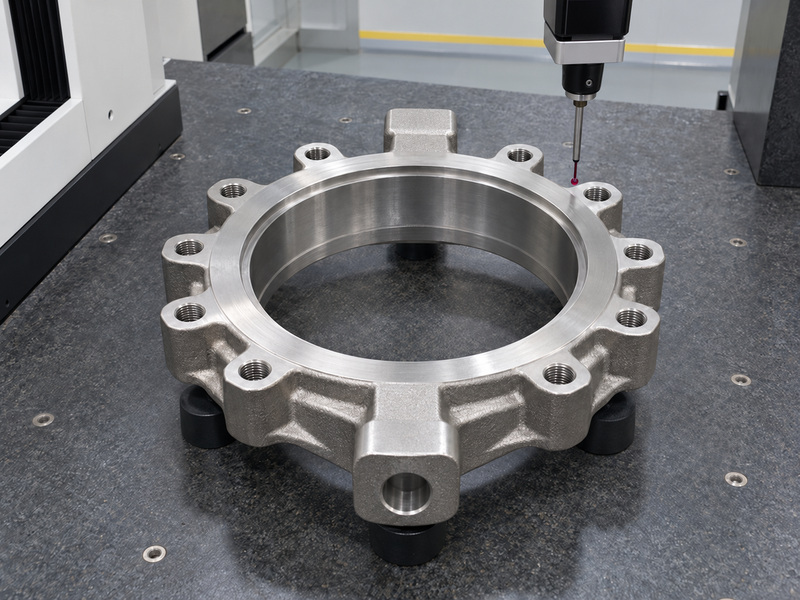
Machining checks must verify datums, shaft-bore alignment, seat geometry, flange faces, and fastener interfaces during cast iron butterfly valve body manufacture. A body may fit between pipe flanges yet cause shaft binding or uneven seat support after assembly. On a lug butterfly valve, thread form, usable engagement, and local lug geometry also require inspection against the approved drawing.
How Should You Set Up Dimensional Acceptance?
Choose measuring methods that can resolve the tolerances being accepted, and record results for the designated characteristics. A single outside-diameter measurement does not establish bore alignment or face runout. Check how the shop locates the component across machining operations, particularly where different fixtures establish the shaft bores and pipe-facing surfaces.
- Record bore size, alignment, and position from defined datums.
- Verify face-to-face dimensions and designated face geometry.
- Inspect lug threads with the specified gauges and engagement criteria.
- Check remaining wall at drawing-defined critical locations.
| Feature | Consequence of a mismatch |
|---|---|
| Shaft bores | Binding, misalignment, or seal loading |
| Seat support | Uneven seating or assembly difficulty |
| Lug threads | Inadequate engagement or bolt interference |
Request a dimensional report tied to the actual drawing revision so your receiving team can repeat the same checks.
6. How Should Casting Defects and Repairs Be Accepted?
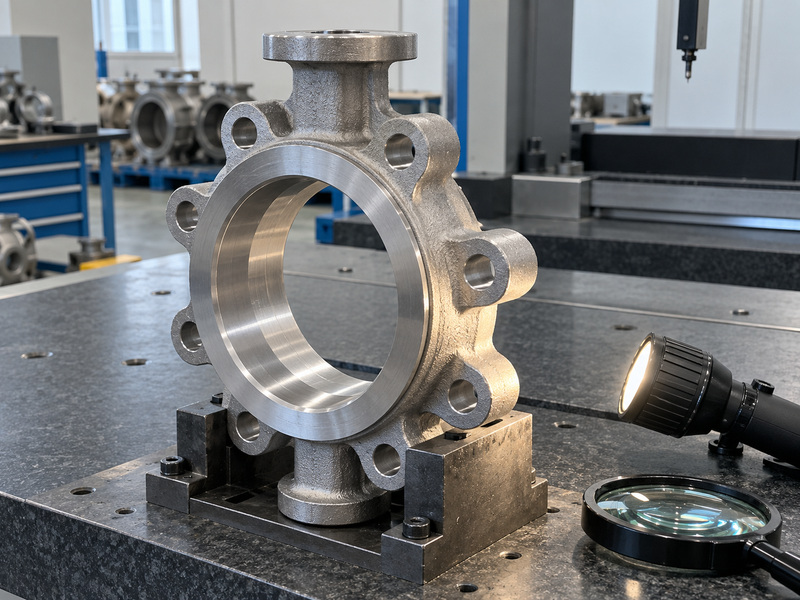
Accept casting defects and repairs only against written criteria agreed before cast iron butterfly valve body manufacture starts. Define prohibited discontinuities, areas requiring examination, and the approval route for proposed repairs. A smooth painted surface cannot establish internal soundness, while a visible surface indication needs assessment against its location, extent, and the applicable acceptance requirements.
Which Findings Need a Formal Disposition?
Require the supplier to document indications that exceed the agreed acceptance limits rather than blending them into routine finishing. Where additional examination is specified, define the method, coverage, operator qualification, and reporting requirements with a competent inspection specialist. Do not add blanket radiographic or ultrasonic promises to a quotation without confirming that the proposed method and criteria suit the casting geometry and material.
- Distinguish normal dressing from a reportable repair.
- Set buyer approval requirements before repair work begins.
- Identify any restrictions on impregnation or weld repair.
- Define the examinations and tests required after an approved repair.
| Finding | Required decision |
|---|---|
| Within stated limits | Record acceptance under the agreed procedure |
| Beyond stated limits | Hold for technical disposition |
| Proposed repair | Obtain approval and define reinspection |
Resolve casting acceptance before coating covers the surface, and retain the disposition with the body’s manufacturing records.
7. What Coating and Lining Details Belong on the Order?
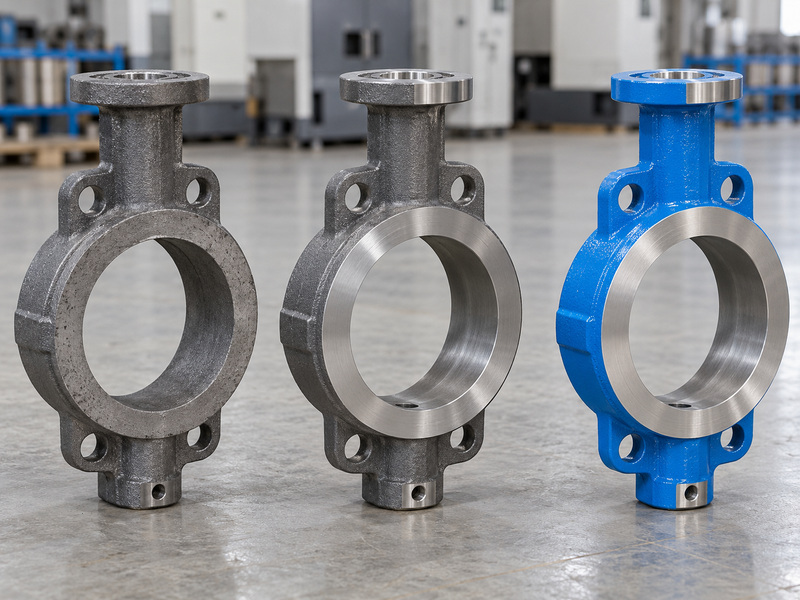
Your order should define coating preparation, system, coverage, thickness acceptance, masking, and repair requirements for cast iron butterfly valve body manufacture. Separate external corrosion protection from any lining intended to isolate process fluid. A PTFE-lined butterfly valve requires a controlled wetted barrier and matching assembly details; external paint cannot provide the same function.
How Do You Protect Fits and Wetted Surfaces?
Identify which surfaces receive coating and which retain their specified machined condition. Uncontrolled coating buildup in a bore, thread, or seat interface can change assembly fit even when the underlying machining passed inspection. For drinking-water contact, request approval evidence for the exact coating or lining configuration and intended service; a general epoxy description does not establish suitability.
- State surface preparation and application requirements.
- Define dry-film thickness measurement and acceptance locations.
- Specify masking for bores, threads, and designated contact faces.
- Agree coating repair, cure checks, and handling protection.
| Surface condition | Acceptance focus |
|---|---|
| Uncoated machined fit | Size, finish, and protection |
| Protective coating | Coverage, adhesion requirements, and thickness |
| Wetted lining | Continuity, dimensions, and configuration-specific checks |
Inspect each surface according to its function so a visually uniform finish does not conceal a blocked fit or incomplete barrier.
8. Which Tests Release the Body and Assembled Valve?
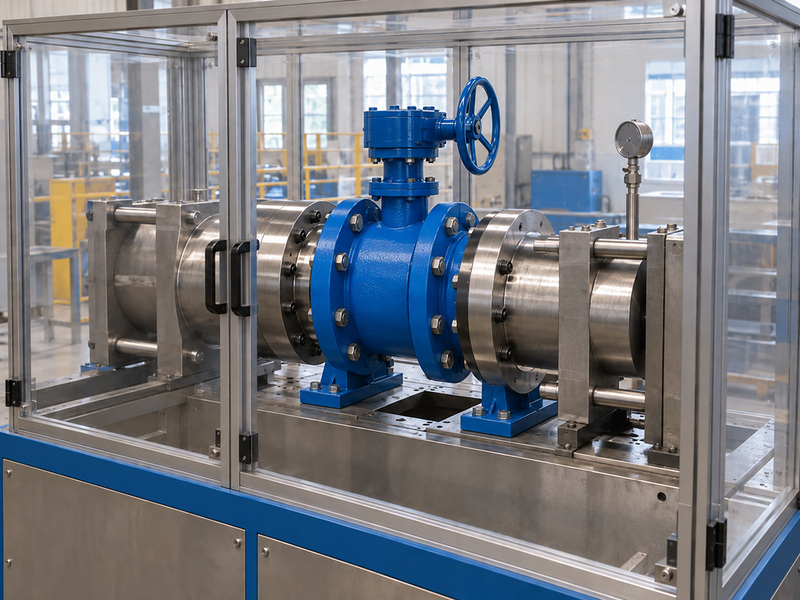
Body release requires the agreed component examinations, while completed-valve release adds the specified pressure and operating tests after cast iron butterfly valve body manufacture. A bare casting inspection cannot verify seat tightness, actuator sizing, or end-of-line isolation. For a flanged butterfly valve, the accepted body must still work with its actual disc, shaft, seat, and operating mechanism.
What Must the Test Report Distinguish?
Separate allowable working pressure, shell test pressure, and closure test differential pressure in the inspection plan. ISO 5208 covers examinations and tests addressing metallic-valve pressure-boundary integrity and closure performance alongside the applicable product requirements. A passing shell test does not establish the permitted operating pressure at every temperature, nor does it establish closure performance in an untested direction or installation condition.
- Name the selected test standard and acceptance requirements.
- Record test medium, pressure, duration, and body identification.
- Specify closure direction and allowable leakage separately.
- Require dedicated evidence for any claimed end-of-line duty.
| Acceptance stage | What it establishes |
|---|---|
| Body examination | Agreed material, geometry, and casting acceptance |
| Shell test | Pressure-boundary performance under specified test conditions |
| Closure test | Sealing performance under specified test conditions |
| Operation check | Assembly movement and the specified operating checks |
Keep pressure and temperature limits with the exact valve configuration; test pressures belong in the inspection record, separate from service limits.
9. Which Records Should Buyers Receive Before Shipment?
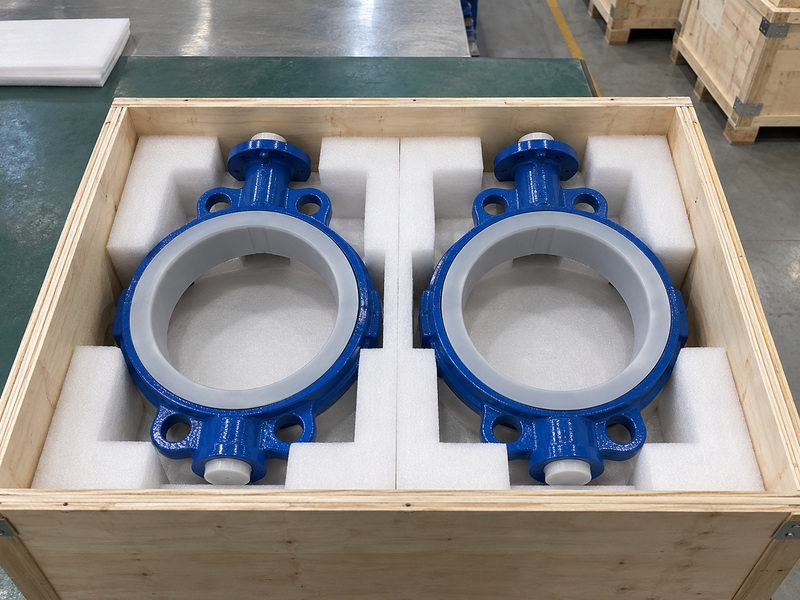
Receive a traceable release package linking approved drawings, material evidence, inspection results, and any accepted deviations before cast iron butterfly valve body manufacture is closed. The package should match the delivered condition, quantity, and identification. For a component shipment, include handling and preservation requirements so exposed machined surfaces arrive suitable for your incoming inspection and subsequent assembly.
How Do You Build a Usable Release Package?
List required documents and review points in the purchase order instead of requesting an undefined “complete certificate” near dispatch. If you require an EN 10204 inspection document, state the agreed type and scope. Include casting-source and manufacturing responsibilities where relevant, with a named supplier contact responsible for closing missing records, unresolved deviations, or discrepancies between the paperwork and packed components.
- Obtain the final drawing revision and approved deviations.
- Match material and dimensional records with delivered bodies.
- Include coating and applicable pressure-test records.
- Confirm quantity, protection, identification, and packing condition.
| Release item | Buyer check |
|---|---|
| Identification | Matches bodies, packing list, and records |
| Deviations | Approved and carried into final documents |
| Preservation | Protects bores, faces, threads, and coating |
Hold shipment release against the agreed document list so missing traceability is resolved while the supplier can still access the components.
10. What Do Buyers Ask About Cast Iron Valve Bodies?
Buyers usually ask about material identity, replacement fit, test evidence, and scope when reviewing cast iron butterfly valve body manufacture. Use these answers to close specification gaps before placing the order.
Q1: Can I order a body by nominal size alone?
No. Nominal size does not define the seat interface, shaft bores, face-to-face dimension, flange arrangement, or pressure design. Supply an approved component drawing or ask for engineering review of the complete assembly.
Q2: How do I know if a body is gray iron or ductile iron?
Check traceable material evidence. Appearance and paint colour do not confirm the grade. Ask for the specified material designation and the agreed test records linked with the delivered component.
Q3: Can I use a shell test report as a working-pressure rating?
No. A shell test records performance under defined test conditions. Use the manufacturer’s approved pressure-temperature limits for the exact body, seat, size, and connection configuration.
Q4: What’s the best way to compare casting suppliers?
Compare the same scope and acceptance requirements. Include grade, drawing revision, machining, coating, defect criteria, traceability, and required documents before comparing price or promised delivery.
Q5: Can I assume a lug body permits end-of-line isolation?
No. End-of-line duty needs approval for the actual assembled valve, fasteners, size, direction, and differential pressure. A threaded lug pattern alone does not establish that capability.
Send your drawing, medium, operating pressure and temperature, connection standard, quantity, and inspection requirements when you contact us. RUITO can review the body specification alongside the seat, shaft, and completed-valve requirements, then confirm the proposed scope and release documents for your order.