
Fix butterfly valve dn80 pn16 test mistakes by agreeing on acceptance conditions before inspection and matching every result with the supplied configuration. A passed stamp cannot explain an unspecified pressure or leakage criterion. RUITO links applicable factory inspections with product identifiers, material records, controlled drawings, and the agreed shipment documents.
A buyer can receive a pressure report that says passed while leaving the tested direction and valve identity unclear. Resolving those gaps after packing can delay shipment or leave the receiving team without usable evidence. Build the acceptance file around an approved inspection plan and close unresolved items before release.
1. What proves a butterfly valve dn80 pn16 is ready for release?
An accepted inspection plan, matching valve identity, completed checks, and closed deviations establish whether a butterfly valve dn80 pn16 order is ready for release. The file should show what was inspected and against which requirements. A general certificate or an unqualified passed statement leaves the buyer unable to verify that basis.
Where should the acceptance review begin?
Start with the ordered configuration and acceptance plan. Confirm the body style, material list, seat construction, connection, operator, and applicable drawing revision. The factory acceptance test, often called FAT, should follow the agreed scope for that assembly. A water-service valve and a lined or clean-gas configuration can require different additional checks.
Identify the records needed for product acceptance and shipment authorization before scheduling inspection. This review covers factory acceptance and release; installed-system testing belongs to the project’s separate procedure. Key takeaway: A release decision needs records that identify both the product and its acceptance conditions.
- Match the inspected assembly with the approved order.
- Define required evidence before the factory inspection begins.
| Item | Review |
|---|---|
| Acceptance basis | Approved configuration and inspection plan |
| Release basis | Completed records and closed deviations |
2. What should your inspection and test plan define?
Your inspection and test plan should define the checks, acceptance references, records, responsibilities, and intervention points for the butterfly valve dn80 pn16 order. Often abbreviated ITP, the plan gives buyer and supplier a shared inspection sequence. Settle its requirements before production reaches a stage that needs attendance or document approval.
Which requirements need agreement before scheduling?
Name the applicable procedure and its revision. Identify the selected pressure-test standard, required inspection stages, and the documents each stage produces. State which activities require a hold, witness, document review, or routine supplier record under the contract. Agree any sampling rules where they apply rather than inferring them from a batch quantity.
Hold periods, leakage criteria, and test conditions should come from the accepted procedure. Include a route for recording deviations and obtaining authorized decisions when an inspection cannot proceed as planned. Key takeaway: An agreed inspection plan prevents missing requirements from appearing after the valve is ready to ship.
- Identify stages, records, acceptance references, and responsible parties.
- Agree attendance and notification requirements before the inspection date.
| Item | Review |
|---|---|
| Technical content | Checks, procedure revisions, and acceptance criteria |
| Coordination | Intervention points, notices, and authorized decisions |

3. How do shell and closure tests answer different questions?
A shell test examines the pressure boundary, while a closure test examines leakage past the closed valve under specified conditions. A butterfly valve dn80 pn16 acceptance file should distinguish those results. Passing the shell inspection alone cannot establish seat tightness, operating torque, or acceptance for every pressure direction.
How should you interpret the stated test pressures?
Read pressure values within the accepted test procedure. For applicable RUITO PN16 soft-seat configurations, stated room-temperature inspection conditions are 24 bar for the shell and 17.6 bar for closure. Those values remain subject to the selected standard, contract, construction, and seat differential rating. They are factory inspection conditions rather than permission for operation at those pressures.
Confirm the selected EN 12266-1 or ISO 5208 framework and the procedure used for the actual valve. A Class 150 reference cannot establish a PN16 test procedure through direct substitution. Key takeaway: The report must explain which property each pressure test verified.
- Review shell and closure results as separate inspections.
- Check pressures against the approved configuration and procedure.
| Item | Review |
|---|---|
| Shell result | Pressure-boundary acceptance under stated conditions |
| Closure result | Seat-leakage acceptance under stated conditions |

4. Which pressure directions must a seat test cover?
Seat testing must cover the directions and differential ratings required by the approved construction and order. A butterfly valve dn80 pn16 report should identify the pressurized side for each required closure result. Do not assume the same rating in both directions because a catalogue describes the valve as suitable for isolation.
What should a directional acceptance record contain?
Identify the tested side against a drawing or clear marking. The record should make upstream, downstream, and reverse testing understandable to someone who did not attend. Confirm whether the specified duty requires one direction or both directions as rated. Where ratings differ, the approved procedure must respect those differences.
Lug end-of-line acceptance requires the specific validated construction and its additional agreed evidence. RUITO’s validated water-service end-of-line configuration remains limited to 5–40°C and a differential no higher than 10 bar. Removing a downstream flange during service changes the loading condition and cannot be authorized by an ordinary closed-pipeline test result alone. Key takeaway: A directional record lets you compare the inspected condition with the actual isolation requirement.
- Record each required direction and its accepted conditions.
- Request separate evidence for any specified end-of-line duty.
| Item | Review |
|---|---|
| Pipeline closure | Required directions and rated differentials |
| End-of-line duty | Specific construction and independent validation |
5. How do medium and leakage criteria affect acceptance?
The test medium and leakage criterion determine how a closure result should be judged. A butterfly valve dn80 pn16 report needs both, alongside pressure, duration, and direction. A water test, an additional gas-tightness check, and a lining integrity inspection answer different acceptance questions and cannot substitute for one another.
What does a named leakage rate establish?
Keep the leakage claim attached to its test conditions. Under the selected standard, Rate A describes no visible leakage during the specified test. It does not establish a universal zero-leakage promise for every fluid, temperature, pressure, or service life. The contract should identify the required criterion and how the result will be recorded.
Clean-gas configurations need their specified additional gas checks instead of inheriting acceptance from a hydraulic report alone. Lined constructions also require the agreed lining examinations, with procedures appropriate to their material and thickness. Key takeaway: A named leakage rate has meaning within the procedure and conditions that define it.
- Specify the test medium and applicable leakage criterion.
- Keep service-specific additional inspections in the accepted scope.
| Item | Review |
|---|---|
| Closure acceptance | Named criterion under recorded test conditions |
| Additional acceptance | Required gas, lining, or other configuration checks |
6. What should pressure-gauge and test records show?
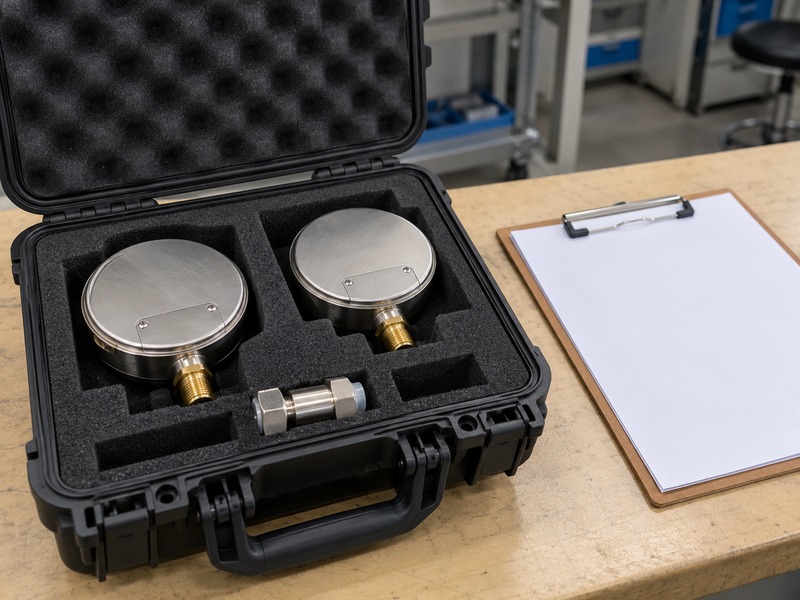
Test records should identify the valve, procedure, instruments, conditions, observations, and acceptance result for the butterfly valve dn80 pn16 inspection. Gauge information must connect the reading with suitable measuring equipment. A photograph of a dial without identification or a matching report provides an incomplete inspection record.
Which instrument details help you verify a result?
Connect the recorded pressure with the instrument used. Check the instrument identifier, appropriate range, applicable calibration status, and procedure requirements for measurement. The record should state actual test pressure, medium, hold duration, direction, date, and responsible inspector. Include temperature or other observations where the approved procedure requires them.
Compare entries with the applicable acceptance criteria rather than filling missing values from memory. Correct ambiguous or inconsistent records through the agreed document-control process before the inspection file is signed off. Key takeaway: Traceable measurements let a reviewer examine the result without reconstructing the test from photographs.
- Link instrument identity and calibration status with the result.
- Record the actual conditions required by the accepted procedure.
| Item | Review |
|---|---|
| Measurement record | Identified instruments and suitable calibration status |
| Test record | Valve identity, conditions, observations, and result |
7. Which functional and torque checks belong in FAT?
FAT should include the agreed functional checks and any specified torque verification for the complete butterfly valve dn80 pn16 assembly. Pressure acceptance alone cannot establish correct travel, indexing, feedback, or drive engagement. Define the operating checks for the ordered lever, gearbox, or actuator before the factory prepares the inspection.
How do you review the operating assembly?
Compare the indicated position with actual disc travel. Check the coupling, engagement, travel stops, and any ordered limit switches or position feedback. Where torque measurement forms part of acceptance, record its conditions and the approved comparison basis. Review breakaway, running, and seating requirements as applicable to the agreed scope.
For pneumatic operation, the selected output must suit the stated minimum air supply and required failure action. Investigate binding or an unexpected torque result before changing stops or fitting a larger actuator that could exceed shaft limits. Key takeaway: Functional evidence confirms that the delivered operator and valve act as the approved assembly.
- Verify actual travel, drive engagement, and ordered accessories.
- Record torque conditions wherever measurement is contractually required.
| Item | Review |
|---|---|
| Functional inspection | Travel, indication, engagement, and accessories |
| Torque verification | Agreed conditions and accepted comparison basis |

8. Which butterfly valve dn80 pn16 records should you retain?
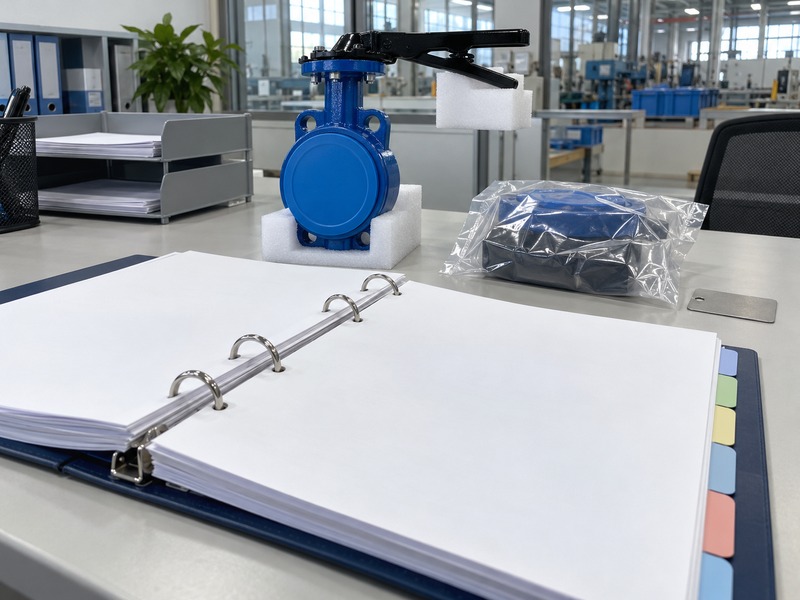
Retain a manufacturing record package that connects the butterfly valve dn80 pn16 product identity with its construction, material batches, inspections, and release. Often called the MDR, its index should reflect the contract. Batch certificates and individual valve results serve different traceability purposes and need clear links within the file.
How do batch and individual records fit together?
Trace one supplied valve through the document index. Connect its identifier with the approved drawing, material list, body material records, seat compound, and applicable coating batch. RUITO’s applicable pressure and functional inspections are recorded for individual valves. A material certificate covering a batch cannot replace those unit-specific results.
Add operator information, accepted deviations, installation instructions, and spare-parts details where required. Check that record revisions and product identifiers agree with the packing list so the receiving team can locate the relevant file without guessing. Key takeaway: An indexed record package helps receiving and maintenance teams find evidence for the actual supplied valve.
- Separate material-batch evidence from individual acceptance results.
- Match the document index and packing identifiers before shipment.
| Item | Review |
|---|---|
| Batch traceability | Applicable body, seat, and coating records |
| Unit traceability | Product identity and individual inspection results |
9. How should witness points and deviations be closed?
Close witness points and deviations through the contract’s agreed authorization and documentation route before releasing the butterfly valve dn80 pn16 order. Attendance alone does not resolve a failed result or an incomplete file. The final record should show who accepted the evidence, any repair or retest, and remaining conditions.
What happens when an inspection requirement changes?
Obtain an authorized decision for the specific issue. Follow the agreed notice and response process if a witness cannot attend or a planned activity changes. Record any permitted waiver with its scope and approving party. A deviation affecting material, construction, rating, or acceptance criteria needs the required technical review.
Document the disposition and complete any specified repair, repeat inspection, or retest before closing the item. Update the inspection index so an absent witness signature or superseded report does not appear as an unexplained gap in the release file. Key takeaway: Written closure prevents an inspection exception from becoming an undocumented change to the order.
- Record authorized waivers and accepted technical dispositions.
- Retain superseding records and required repeat-inspection results.
| Item | Review |
|---|---|
| Witness closure | Recorded attendance or authorized disposition |
| Deviation closure | Accepted decision and completed required actions |

10. When can you release a butterfly valve dn80 pn16 shipment?
Release a butterfly valve dn80 pn16 shipment when required inspections, documents, approvals, and packing checks satisfy the agreed release conditions. The accepted file should correspond to the valves in the shipment. Confirm any authorized outstanding items explicitly instead of treating a general FAT signature as permission to overlook them.
What belongs in the final release review?
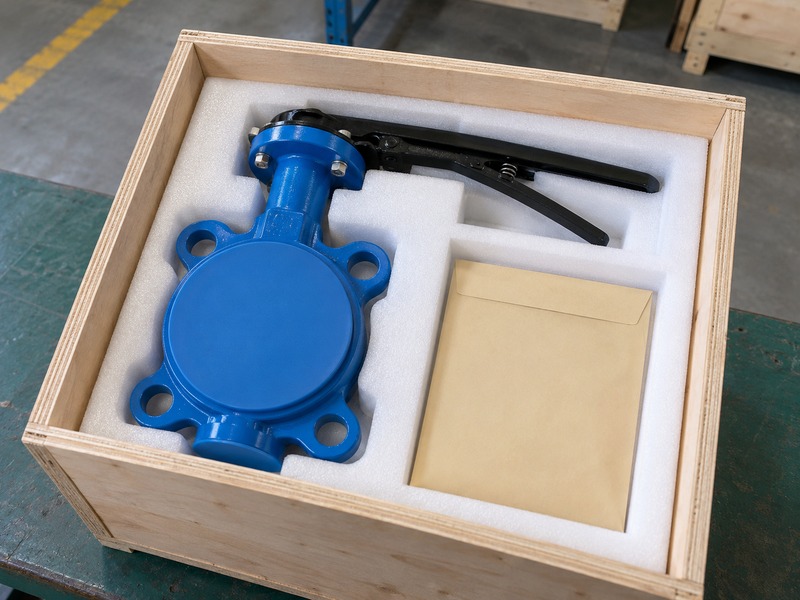
Match the accepted file with the packed equipment. Check product identifiers, quantities, operator details, and document revisions against the shipment list. Confirm that required reports are accepted and deviations have the agreed disposition. Inspect protection for seat faces, disc edges, exposed interfaces, and any lining.
Operators and valve bodies need suitable support during transport. Provide the installation and maintenance information with the delivery documents so the receiving team can verify identity and condition before handing the valves over for installation. Key takeaway: Release a traceable assembly with the evidence and installation documents that the receiving team needs.
- Confirm shipment identity and accepted document completeness.
- Protect sealing surfaces and support the assembled operator.
| Item | Review |
|---|---|
| Release file | Accepted evidence and authorized dispositions |
| Packed shipment | Matching identities, quantities, and protective support |
Send RUITO the ordered configuration, applicable standard, inspection plan, witness requirements, and required document index. We can review the factory acceptance scope and records before inspection is scheduled. Share your existing data sheet when you contact us so the acceptance file matches the valves you intend to receive.
FAQ
Q1: Can I accept a report that only says pressure test passed?
Request the missing conditions. The report should identify the valve, procedure, pressure, medium, duration, direction, instruments, and acceptance result needed by the agreed plan.
Q2: Can I treat 24 bar as the working pressure of a PN16 valve?
No. The stated shell-test pressure is an inspection condition for applicable configurations. Service pressure remains subject to the accepted model-specific operating limits.
Q3: How do I know if both pressure directions were accepted?
Check the directional results against the approved rating and procedure. Each required direction should be identifiable; a single unexplained result cannot establish coverage of both.
Q4: Can a batch material certificate replace individual valve reports?
No. Material-batch evidence establishes a different traceability link. RUITO’s applicable individual pressure and functional records must connect with the supplied valve identifiers.
Q5: What’s the best way to avoid a shipment-document delay?
Agree the document index and witness requirements before inspection. Review the completed file and close deviations against the shipment list before authorizing release.