
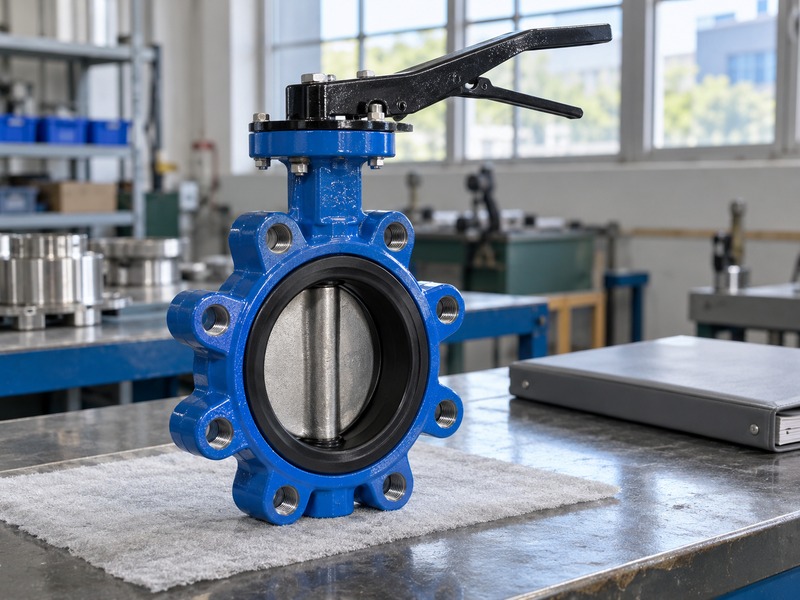
Fix dn80 gas butterfly valve selection mistakes by identifying the gas and qualifying the complete assembly for its duty. If you mean natural gas, require a model specifically qualified for that application. RUITO’s stated butterfly valve gas scope covers clean air or nitrogen; its current natural gas product scope uses dedicated ball valve configurations.
A replacement valve may fit the pipe and carry a familiar pressure designation while its documents cover only water service. Discovering that gap during equipment acceptance can delay installation and require a different assembly. Send the gas composition, operating envelope, required function, and acceptance criteria together so the supplier can confirm an appropriate configuration before you order.
1. What gas may a DN80 gas butterfly valve handle?
A dn80 gas butterfly valve may handle only the gases and conditions covered by its identified configuration. RUITO’s stated clean-gas butterfly scope is clean air or nitrogen, DN50–200, PN10/16, at 5–40°C and no more than 6 barg, subject to the approved model and duty.
How should you separate clean gas from natural gas?
Settle the gas identity before the valve style. A clean-air or nitrogen configuration does not establish suitability for natural gas, oxygen, hydrogen, sour gas, or a mixed process stream, even if the nominal size and pressure designation match. For natural gas, ask for the exact qualified model, material configuration, intended function, operating limits, and destination acceptance evidence before reviewing a purchase offer. RUITO’s ordinary butterfly valves should not be presented as natural gas products or converted by changing their labels or seats; its stated natural gas scope belongs to dedicated ball valves with their own documentation and restrictions.
Key takeaway: Gas identity determines which product evidence you need before selection.
- Name the gas and required valve function explicitly.
- Match the enquiry to a documented product configuration.
| Item | Review |
|---|---|
| Clean air or nitrogen | Review the dedicated clean-gas configuration |
| Natural gas or other gases | Require separate model qualification |
2. Which gas composition details must you provide?
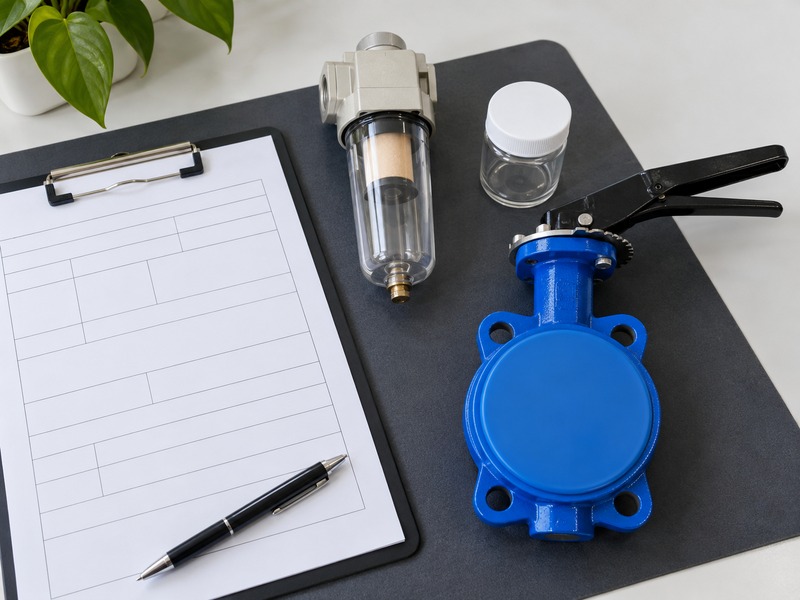
Provide the complete composition and contamination limits for a dn80 gas butterfly valve enquiry. The principal gas name leaves out moisture, oil carryover, particles, and other constituents that can affect seals, corrosion, cleanliness, and the acceptability of the proposed assembly.
What belongs on the gas service data sheet?
Describe what reaches the valve. For a compressed-air line, identify whether the air is lubricated, its expected oil carryover and moisture condition, and any treatment that changes between normal operation and maintenance. For nitrogen, state the required purity and relevant contaminants without assuming that every nitrogen source has the same cleanliness or temperature conditions. Give the supplier the known composition range, dew-point requirement where relevant, solids, condensate risk, and cleaning exposure, then request confirmation against the actual materials and seals instead of accepting a statement that the valve is suitable for an entire industry or every inert gas.
Key takeaway: A complete gas description gives the material review a usable basis.
- List moisture, oil, particles, and known minor constituents.
- Include startup, maintenance, and cleaning conditions.
| Item | Review |
|---|---|
| Composition | Main gas and relevant contaminants |
| Condition | Moisture, cleanliness, and exposure changes |
3. How should you state pressure and temperature?
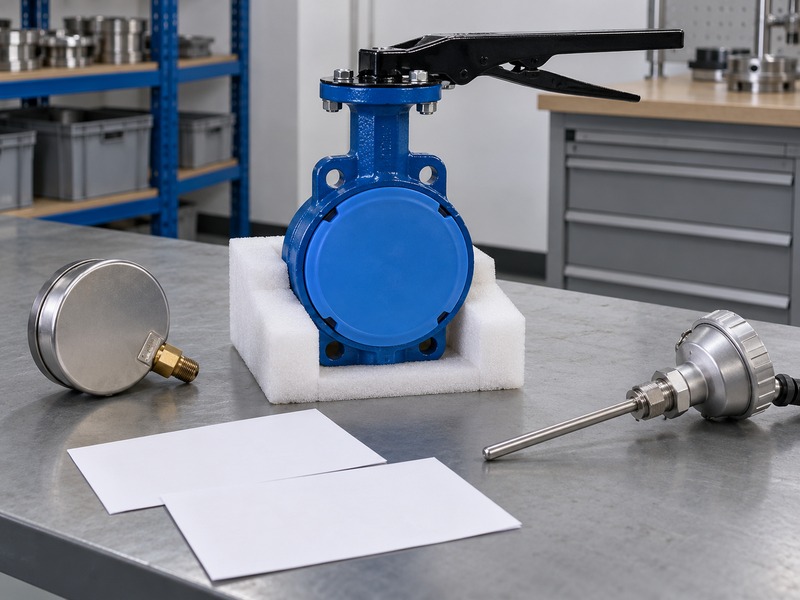
State normal, maximum, minimum, and transient conditions for the dn80 gas butterfly valve, with pressure units identified as gauge or absolute. Review the allowable operating envelope for the whole assembly; a PN10 or PN16 designation alone does not authorize a clean-gas duty at that pressure.
Which operating limits need separate confirmation?
Keep each pressure on its own line. Give upstream and downstream conditions, the largest closing differential, possible reverse pressure, fluid temperature, and ambient exposure so the supplier can review sealing and actuator loads together. Confirm the model’s pressure–temperature limits and any restrictions on direction or cycling instead of using a shell test pressure as a working rating. If temperatures or pressures move outside RUITO’s stated clean-air and nitrogen scope, return the duty for a separate engineering decision; do not combine a water-service maximum, a seat-material temperature limit, and a gas test result to create a new product rating.
Key takeaway: The accepted operating envelope controls the complete assembly’s permitted duty.
- Distinguish line pressure, closing differential, and test conditions.
- Record fluid and ambient temperatures separately.
| Item | Review |
|---|---|
| Operating envelope | Pressure and temperature together |
| Closing duty | Differential, direction, and supply conditions |
4. Which seat and shaft seals need approval?
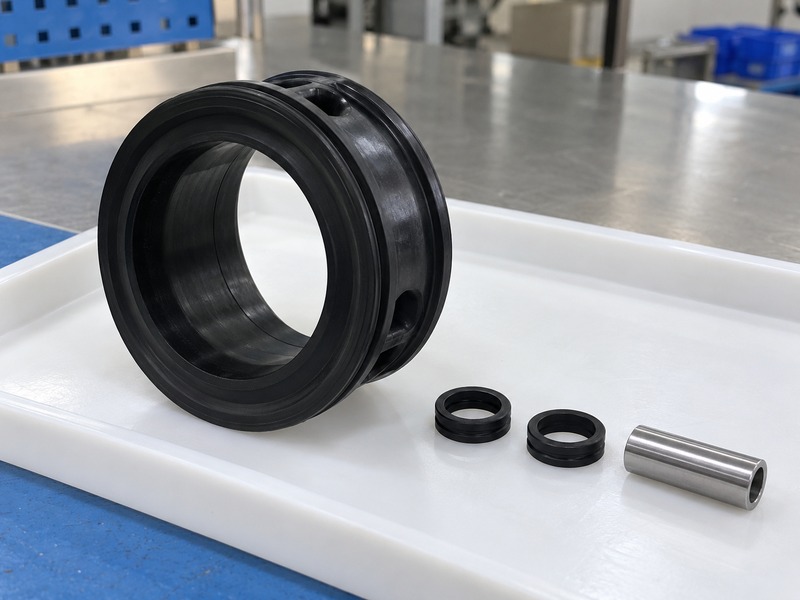
The seat, shaft seals, backing materials, and other exposed components all need approval for a dn80 gas butterfly valve. A familiar elastomer name cannot establish the complete sealing system’s suitability, and a valve selected for water should not inherit gas suitability from its appearance.
How do you assess the complete sealing construction?
Review the seals as a matched assembly. Request the seat compound, auxiliary seal materials, shaft-contact construction, and permitted lubricant, then compare them with the stated gas composition, moisture, oil carryover, temperature, and operating frequency. RUITO identifies a separate NBR clean-gas material configuration, but the selected compound and finished assembly still need confirmation against the enquiry rather than approval by the word NBR alone. EPDM water-service seals are not a general mineral-oil solution, and changing to PTFE does not establish a continuously lined valve, oxygen compatibility, fuel-gas qualification, or acceptable leakage from the assembled shaft and seat interfaces.
Key takeaway: Gas compatibility depends on the complete sealing construction and its conditions.
- Identify every exposed seal and its controlled material.
- Require approval before changing compounds or lubricants.
| Item | Review |
|---|---|
| Seat | Compound and supported construction |
| Auxiliary seals | Shaft interfaces and permitted lubricant |
5. What proves gas tightness beyond a water test?
Gas-tightness evidence for a dn80 gas butterfly valve requires the agreed gas-service checks and acceptance records for that configuration. A passed water pressure test alone does not document gas leakage performance at the seat, shaft seals, or external pressure boundary.
Which reports should you request from the supplier?
Separate strength evidence from leakage evidence. Ask for the inspection plan, applicable standard, specified test medium, relevant directions, acceptance criterion, and product identifiers so the delivered reports can be traced to the selected assembly. RUITO’s clean-air and nitrogen configurations require gas leakage and shaft-retention checks in addition to hydraulic inspection, using the approved factory procedures for the actual model. Have the supplier distinguish external leakage from leakage across the closed seat, identify the accepted results and limitations, and resolve any missing evidence before shipment; field testing and commissioning belong under the project’s authorized procedures and responsible personnel.
Key takeaway: A traceable gas-service report answers questions a water report leaves open.
- Request separate external and closure leakage acceptance records.
- Match reports to the supplied configuration and product identifiers.
| Item | Review |
|---|---|
| Hydraulic inspection | Specified pressure-boundary and closure checks |
| Gas-service evidence | Approved leakage and retention checks |
6. How should you size flow and pressure drop?
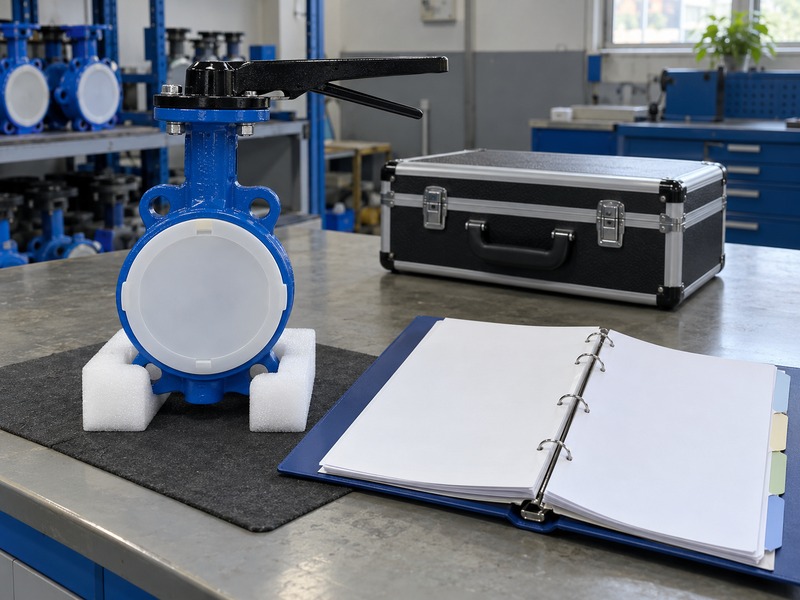
Size a dn80 gas butterfly valve using a compressible-flow method and the actual gas conditions, then review pressure drop, velocity, noise, and intended opening range. DN80 names a nominal size; it does not guarantee an 80 mm flow bore or establish that the valve has enough capacity.
Which flow inputs should accompany the enquiry?
Define the flow reference conditions. Give minimum, normal, and maximum flow, specifying whether volume is actual or referenced to stated standard conditions, together with inlet and outlet absolute pressures, inlet temperature, gas properties, and allowable pressure loss. Ask the supplier to use coefficients for the proposed valve and opening range and to assess whether choking, aerodynamic noise, or unstable operation constrains the duty. A water-flow calculation or an air result copied to another gas cannot establish that assessment, and a valve intended for occasional isolation needs a separate suitability review before you specify continuous throttling or frequent modulation.
Key takeaway: Gas sizing connects the nominal valve size with the required process duty.
- State flow units and their pressure–temperature reference.
- Request model-specific capacity and operating-range confirmation.
| Item | Review |
|---|---|
| Flow basis | Gas properties and stated reference conditions |
| Sizing review | Capacity, pressure loss, noise, and opening range |
7. Which connection details affect a gas installation?
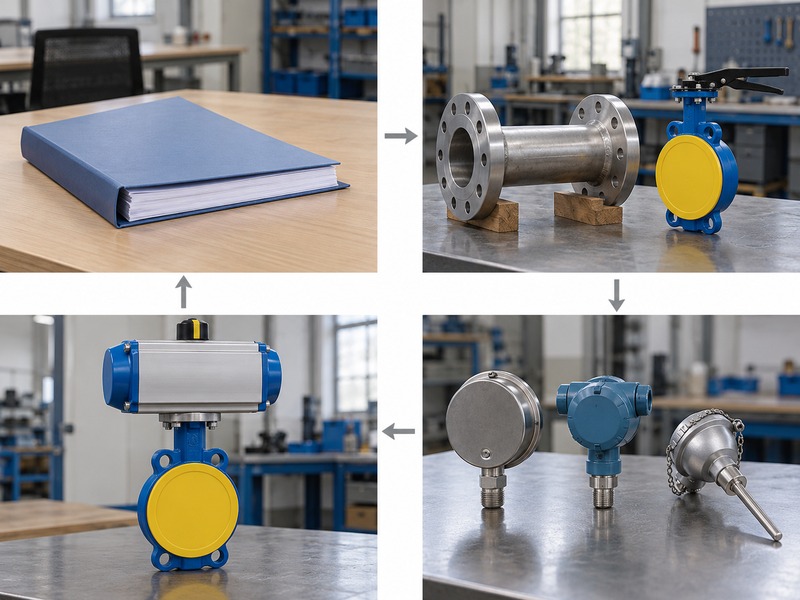
Connection details for a dn80 gas butterfly valve include the actual flange standard, face-to-face dimension, disc clearance, bolting, and installation loads. Confirm these against the approved assembly drawing; a DN80 marking and an apparently matching hole pattern do not establish an acceptable installed connection.
What should you confirm for wafer and lug bodies?
Use the installation drawing for the specified duty. Check the mating pipe and flange dimensions, bolt arrangement, thread engagement where applicable, permissible gasket arrangement, operator clearance, and any need for pipe support or access to fasteners. PN and ASME Class designations follow different rating routes and should not be treated as interchangeable because selected dimensions appear similar. A lug body’s threaded connection also does not establish gas-service end-of-line capability; RUITO’s stated special end-of-line lug configuration is water-specific, so gas isolation, disconnection, and maintenance arrangements require their own approved design and project review before the connection is accepted.
Key takeaway: Connection acceptance covers the installed arrangement and its actual loads.
- Approve the drawing and installation hardware together.
- Require explicit evidence for the proposed end conditions.
| Item | Review |
|---|---|
| Installed fit | Mating dimensions, disc clearance, and bolting |
| End conditions | Approved duty and connection loads |
8. How do you specify the actuator and fail action?
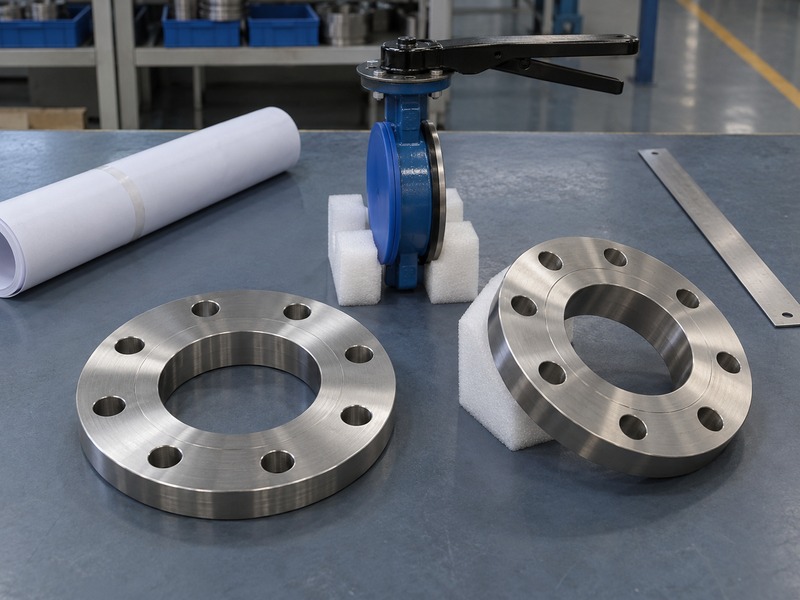
Specify the actuator for a dn80 gas butterfly valve using the approved valve torque, maximum closing differential, minimum available supply, required stroke time, and intended failure response. A spring-return actuator provides a defined mechanical action; its presence alone does not qualify the assembly as a safety shutoff valve.
Which operating functions need documented confirmation?
Define the required response to each loss of supply. State the desired position following loss of electrical power, control signal, or instrument air, including any conditions that require the valve to remain in position instead of travelling. Identify the solenoid, switches, positioner where required, mounting bracket, coupling, mechanical stops, and local override, then ask for a complete mounted-assembly functional check. For a fuel-gas safety function, the responsible system designer must specify the required qualified valve and protective function; actuator torque, closure speed, position feedback, and a general test report cannot independently establish that the complete safety duty has been met.
Key takeaway: The required function determines the evidence needed for the automated assembly.
- Specify minimum supply conditions and each required fail response.
- Check accessories and mounting as part of the complete package.
| Item | Review |
|---|---|
| Actuator duty | Torque, supply, travel, and cycling |
| Failure response | Defined action and required functional evidence |
9. What approval evidence does the project need?
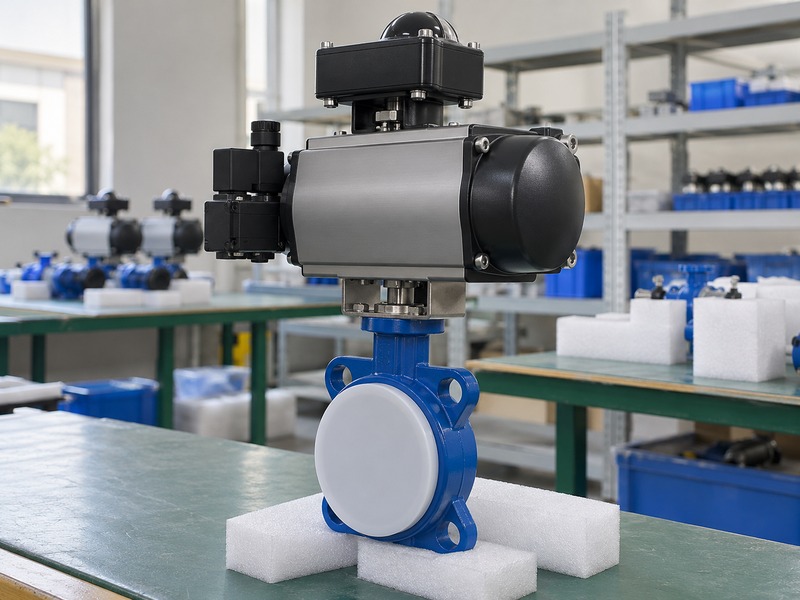
A dn80 gas butterfly valve needs the product and assembly evidence specified for its application, destination, and installation area. Confirm the required scope with the responsible project engineer; a certificate for one component cannot automatically establish every approval needed for the mounted assembly.
How do you check the scope of a certificate?
Match the document to the exact equipment. Where the project calls for DVGW, ATEX, or another approval, check the identified model, size range, materials, accessories, intended use, limitations, and applicable conformity documents rather than accepting a familiar logo. Hazardous-area requirements depend on the specified area and equipment, and they need review separately from the valve’s internal gas compatibility and pressure rating. RUITO’s dedicated natural gas ball valve scope uses its own configurations and restrictions; neither that scope nor an actuator’s hazardous-area document provides approval for an ordinary butterfly valve to handle natural gas or perform automatic fuel-gas safety shutoff.
Key takeaway: Approval depends on documented coverage of the actual equipment and application.
- Verify certificate coverage for the proposed model and accessories.
- Resolve application, destination, and area requirements before ordering.
| Item | Review |
|---|---|
| Service qualification | Exact gas, function, and operating limits |
| Project acceptance | Applicable product and assembly evidence |

10. What belongs in a complete gas-valve RFQ?
A complete dn80 gas butterfly valve request includes gas composition, operating cases, flow basis, required function, materials, connection details, actuator data, acceptance criteria, and destination requirements. Ask suppliers to return an identified configuration and a deviation list so you can resolve gaps before comparing price and delivery.
How do you keep the supplied valve aligned with approval?
Freeze one accepted configuration. Attach the approved service data sheet, drawing, material list, actuator description, inspection plan, and required documents to the purchase order, with the accepted revision of every file recorded. Require written approval before changes to seals, shaft parts, operators, accessories, or manufacturing versions, and keep the finished valve identifiers connected to its inspection and release records. RUITO can review a clean-air or nitrogen enquiry within its stated butterfly valve scope; identify any natural gas requirement separately so the team can address its dedicated product scope without presenting an unqualified DN80 butterfly assembly as a fuel-gas solution.
Key takeaway: An accepted configuration makes the purchase and later maintenance records traceable.
- Return accepted drawings, materials, and closed technical deviations.
- Keep replacement parts tied to the approved configuration.
| Item | Review |
|---|---|
| Enquiry | Gas, duty, function, interface, and evidence |
| Order release | Accepted configuration and controlled revisions |
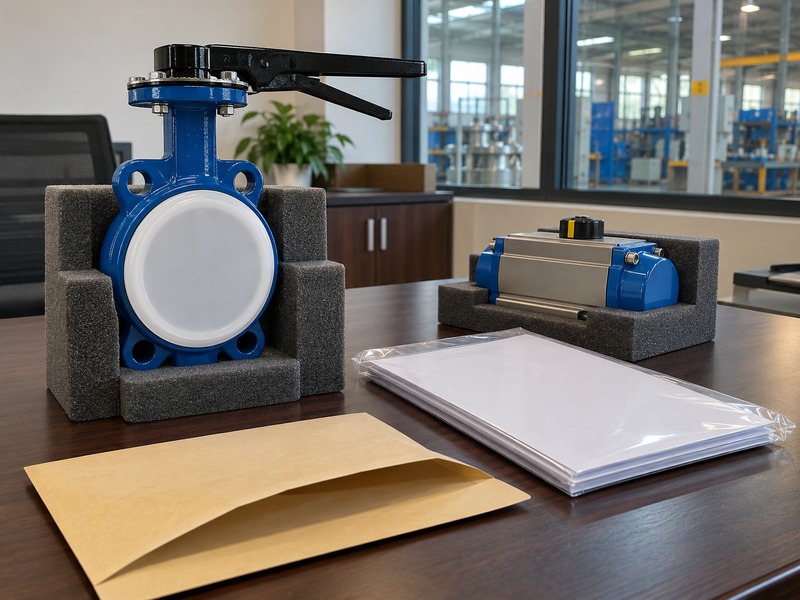
Send RUITO your clean-air or nitrogen composition, operating cases, connection drawing, actuator requirements, and acceptance plan. We can review the proposed duty against the stated butterfly valve scope. Contact us with your specification and required project documents.
FAQ
Q1: Can I use a water-service DN80 butterfly valve for natural gas?
Do not infer suitability from water service. Require an exact natural gas-qualified model and application evidence; RUITO’s ordinary butterfly valve scope does not cover natural gas.
Q2: How do I know if my valve has gas leakage evidence?
Check the traceable inspection records. They should identify the configuration, agreed gas-service checks, acceptance criteria, and results, alongside the required hydraulic inspection records.
Q3: Can I use RUITO’s clean-gas butterfly valve for oxygen?
No. The stated scope covers clean air or nitrogen; oxygen requires a separately qualified design, compatible materials, cleanliness controls, and specialist application review.
Q4: What is the best way to specify gas flow?
State the reference conditions. Identify actual or standard volume, its pressure and temperature basis, operating cases, gas properties, and allowable pressure loss for compressible-flow sizing.
Q5: Does an ATEX actuator make the valve a fuel-gas safety valve?
No. Hazardous-area equipment evidence and fuel-gas safety qualification address different requirements; the exact mounted assembly and required protective function need their own applicable evidence.