
Fix flange selection mistakes for a butterfly valve dn80 by checking the connection standard, approved dimensions, pressure-temperature rating, and complete installed assembly together. DN80 identifies a nominal size corresponding to NPS 3; it does not promise an 80 mm clear bore. A valve drawing and matching pipe-flange details give you a usable basis for checking fit.
A maintenance team removes a leaking valve during shutdown, then finds that the replacement flange holes or body length differ. Pulling the pipework into place can load the joint and leave the disc rubbing inside a flange. Compare the proposed assembly with the installation before the old valve comes out.
1. What defines butterfly valve dn80 flange compatibility?
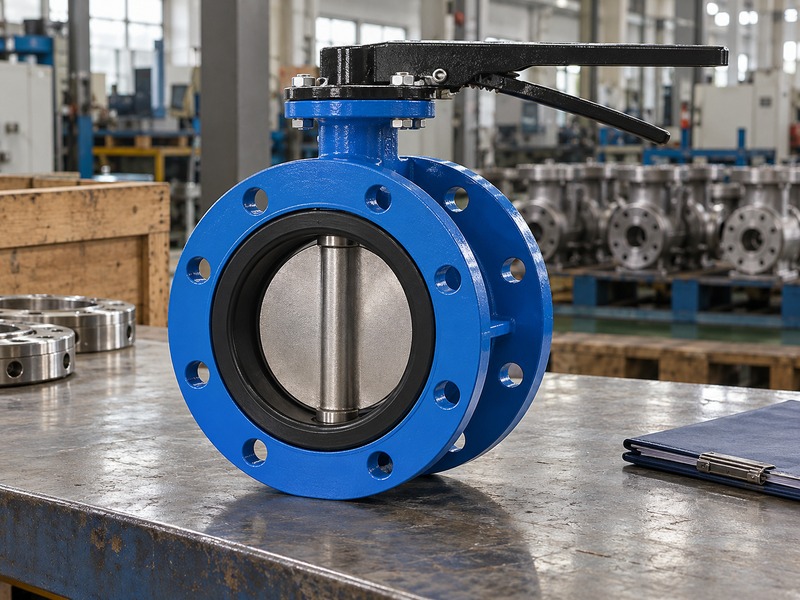
Flange compatibility for a butterfly valve dn80 requires matching the standard, drilling, facing, sealing arrangement, and disc clearance. Nominal size provides only one part of that match. On a double-flanged body, inspect both end connections because the valve must fit the pipework on each side without forcing either joint.
Which drawing details should you compare?
Start with both mating faces and compare the pipe-flange standard, material, pressure designation, bore, bolt-circle diameter, hole count, and hole diameter with the valve drawing. Include the flange facing and any lining that changes the opening or sealing surface. If an old nameplate has become unreadable, record accessible dimensions and pipe details while the system is safely isolated. Mark uncertain features for confirmation before manufacture, including any required adapter or changed spool.
Key takeaway: A matching DN label leaves several flange features still needing verification.
- Compare both pipe flanges with the approved valve drawing.
- Record facing, bore, drilling, and connection material separately.
| Item | Review |
|---|---|
| Nominal size | DN80 / NPS 3 designation |
| Connection fit | Standard, facing, drilling, and clear opening |
2. Can PN16 and Class 150 flanges replace each other?
PN16 and ASME Class 150 flanges are not automatically interchangeable on a butterfly valve dn80. Their dimensions and rating rules follow their respective standards. Class 150 is a rating designation, not a 150 psi working limit, and drilling a different hole pattern cannot establish a new valve pressure rating.
How should you check a proposed standard change?
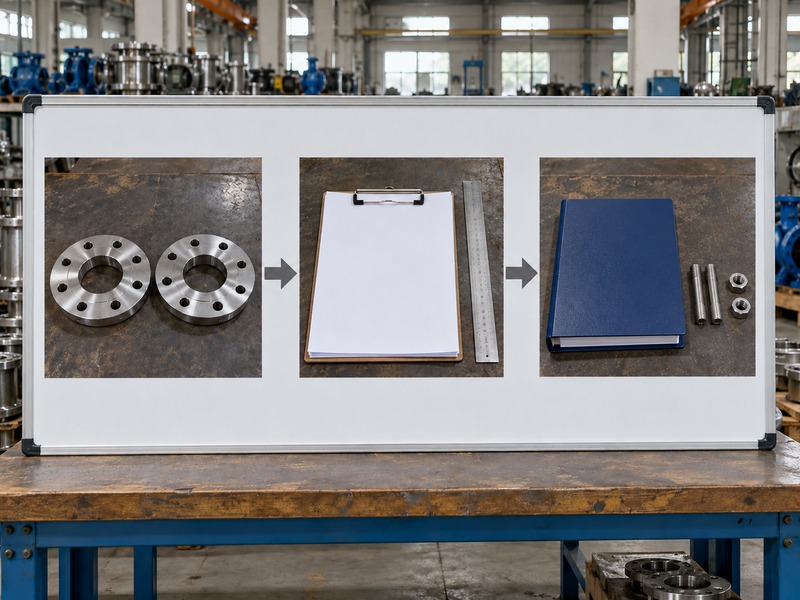
Check dimensions and pressure as separate tasks using the actual EN or ASME connection route and its material-dependent pressure-temperature limits. ASME B16.5 covers flange dimensions, materials, pressure-temperature ratings, bolting, and gaskets; it does not make a PN connection interchangeable with a Class connection. A supplier offering alternative drilling must identify the approved body, flange construction, and complete valve rating for that arrangement. Have the piping engineer review any adapter and its effects on support, installed length, and joint loading.
Key takeaway: Treat a PN-to-Class change as an engineered connection change.
- Name the connection standard and pressure designation explicitly.
- Request approved dimensional and rating evidence for any change.
| Item | Review |
|---|---|
| Dimensional review | Drilling, facing, bore, and thickness |
| Rating review | Material, temperature, valve, and joint limits |
3. Does a double flange mean a double-offset disc?
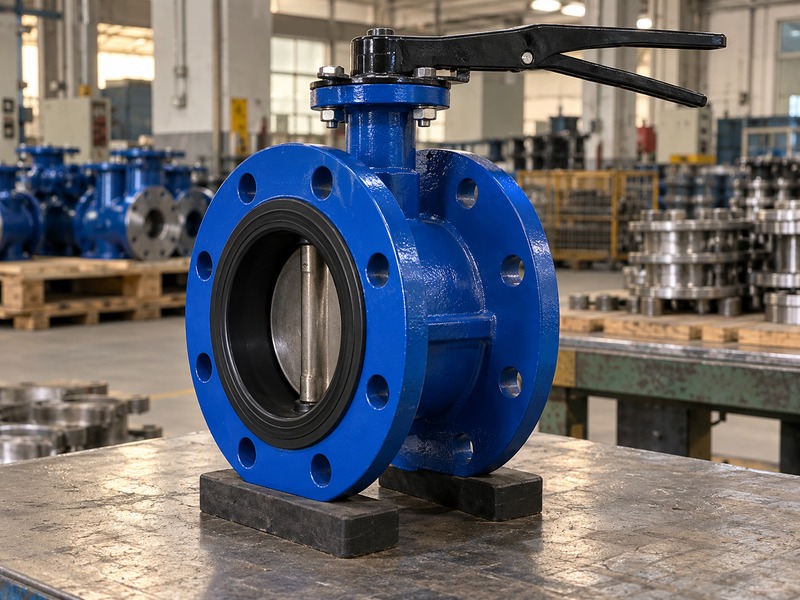
A double-flanged body does not establish the disc offset of a butterfly valve dn80. Connection style and sealing geometry describe different features. RUITO’s centerline soft-seated double-flanged range includes DN80, while its double-offset double-flanged range begins at DN350; those ranges must remain separate in a specification.
How do you identify the offered construction?
Read the section beside the connection drawing to identify the offered valve’s shaft arrangement, seat location, disc contact, and retention method. Ask for its permitted closing differential, direction rating, and operating torque rather than transferring data from another offset design. A catalog photograph may show an external flange without revealing its internal geometry. If a quotation replaces a centerline valve with an offset design, review the seat behavior, face-to-face length, operator requirements, and installation instructions as a new configuration.
Key takeaway: External flanges cannot identify the internal sealing design or its duty.
- Specify centerline or offset geometry separately from connection style.
- Keep the drawing, torque data, and rating on one configuration.
| Item | Review |
|---|---|
| Double-flanged | Two body end flanges |
| Centerline or offset | Shaft and sealing geometry |
4. Does CF8M establish the whole valve rating?
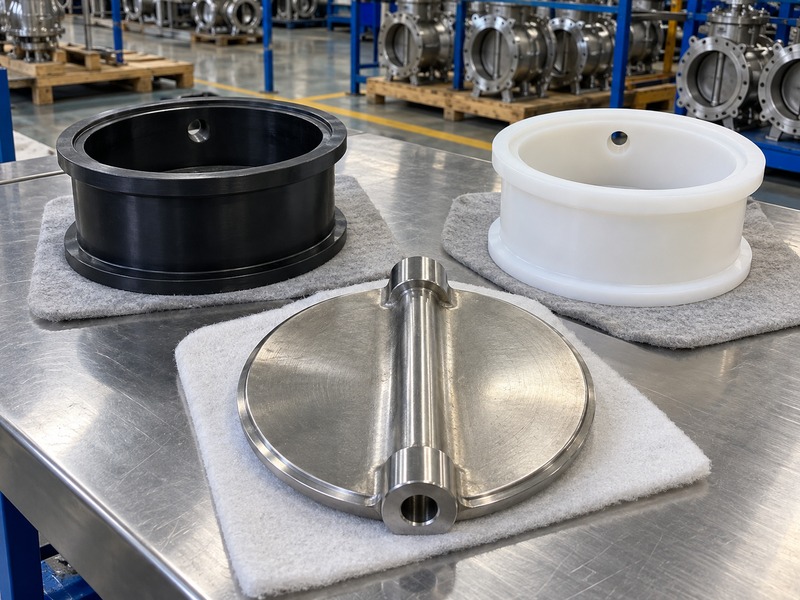
CF8M identifies a cast stainless steel grade for a specified component; it does not establish the whole butterfly valve dn80 rating. Confirm whether the designation applies to the body, disc, or another part. RUITO’s standard water configuration can combine a ductile-iron body, CF8M disc, stainless shaft, and EPDM seat.
Which materials remain outside the headline grade?
Trace every wetted component, including the shaft, seat, shaft seals, body exposure, and fasteners beyond a CF8M disc description. Review corrosion against the actual fluid, concentration, temperature, chlorides, cleaning chemicals, and crevice conditions; a stainless grade cannot promise resistance to every medium. For a rubber-lined flow path, check how the seat isolates the body and where fluid can still reach metal. Obtain the material list and selected valve’s pressure-temperature data before accepting a material substitution.
Key takeaway: A stainless component does not establish corrosion compatibility or assembly pressure limits.
- Identify the grade and location of each wetted part.
- Review seat and seal compatibility with operating and cleaning fluids.
| Item | Review |
|---|---|
| Material statement | Component-specific grade and exposure |
| Whole valve rating | Approved assembly at the service temperature |
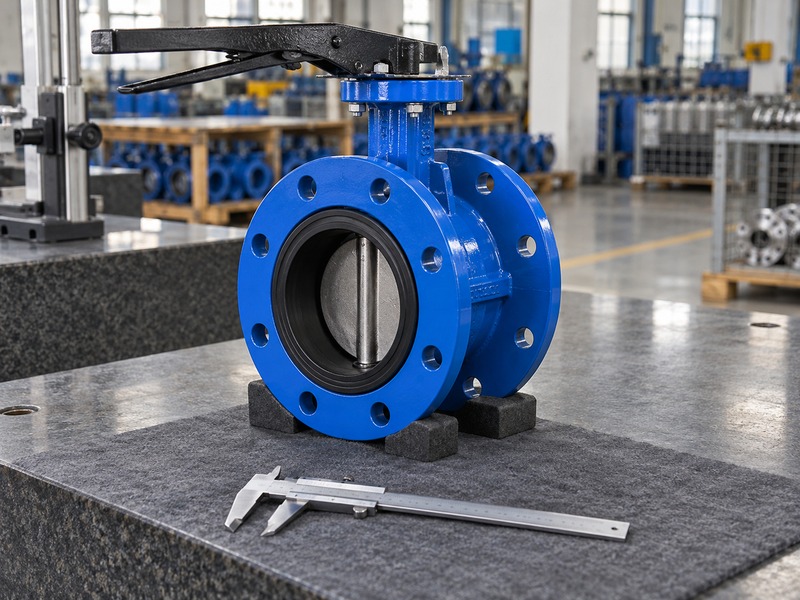
5. Which face-to-face length will fit the pipe gap?
The approved face-to-face dimension for the selected construction determines whether a butterfly valve dn80 fits the pipe gap. Measure between the intended connection faces and account for the specified sealing arrangement. A double-flanged valve, a wafer valve, and a PTFE-lined butterfly valve can require different installed dimensions despite sharing a nominal size.
What should you measure before removing the old valve?
Separate body length from installed stack length when recording the existing connection faces, flange alignment, gasket arrangement, dismantling adjustment, and fixed supports. Compare the proposed body dimension with its approved drawing and applicable dimensional series; RUITO does not apply the wafer EN 558 series 20 length to every flanged construction. Include gasket thickness where separate gaskets form part of the specified joint. If the assembly needs extra space, agree the spool or dismantling arrangement before delivery rather than using flange bolts to pull the pipeline into position.
Key takeaway: A body-length check must agree with the joint’s complete installed dimensions.
- Measure the actual connection gap and flange parallelism.
- Include required gaskets and any approved adjustment allowance.
| Item | Review |
|---|---|
| Valve dimension | Approved construction-specific face-to-face length |
| Installed stack | Valve, specified seals, and connection arrangement |
6. How do you choose the bolts and flange seals?
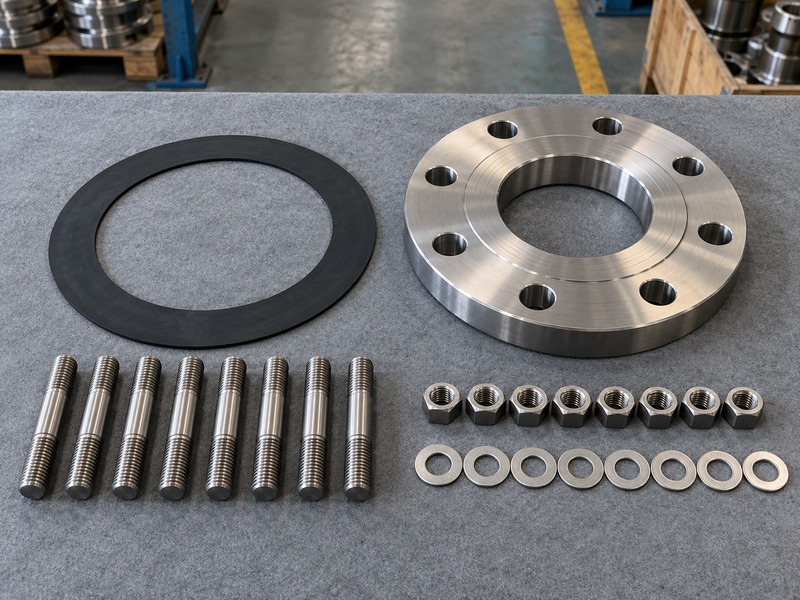
Choose bolts and flange seals for a butterfly valve dn80 from its approved joint design and installation instructions. The connection needs the specified fastener material, diameter, length, engagement, and tightening procedure. Some resilient seats provide the flange seal themselves, while other constructions require separate gaskets; adding a gasket without approval can change seat compression.
What belongs on the joint assembly sheet?
Confirm how this valve seals at the flange and record the facing, required gasket dimensions, permissible surface condition, and manufacturer’s tightening requirements. Check bolt length against the actual flange stack, including washers and nuts where specified, and verify access for the tightening tool. Avoid borrowing bolt lengths or torque values from a same-size valve with a different body or flange thickness. Inspect lined or elastomer-covered faces for damage and keep the gasket opening clear of the moving disc.
Key takeaway: Bolt load and flange sealing must suit the exact seat and body construction.
- Confirm whether separate gaskets are required, permitted, or excluded.
- Check fastener engagement and follow the specified tightening sequence.
| Item | Review |
|---|---|
| Fasteners | Approved material, size, length, and engagement |
| Sealing faces | Correct gasket or integral seat-sealing arrangement |
7. How much disc clearance does the joint need?
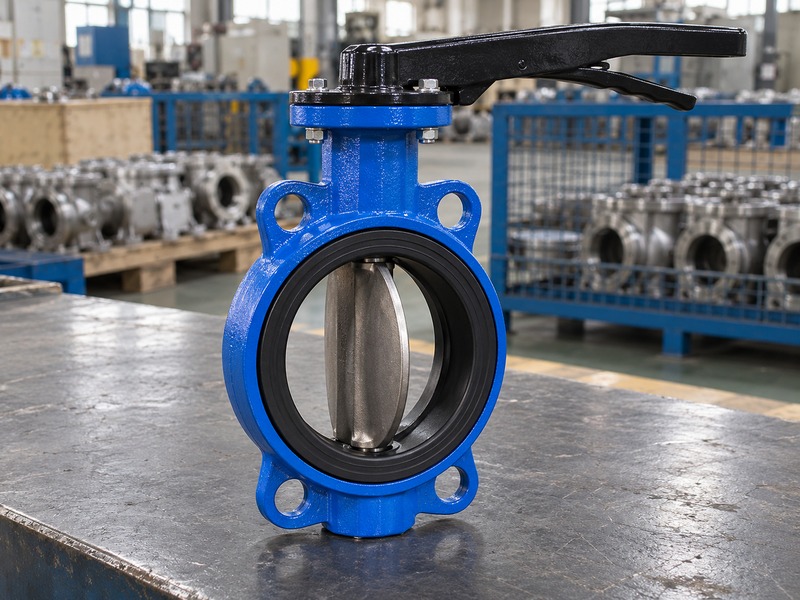
The joint needs enough clearance for the butterfly valve dn80 disc throughout its approved travel. Check the full disc envelope against the flange bore, pipe bore, lining, weld projection, and gasket opening. A replacement for a wafer butterfly valve still needs this check when the new body has two end flanges.
Where can a nominally correct connection bind?
Inspect beyond the bolt circle for thick-wall pipe, lining, nearby reducers, or off-center gaskets that occupy the disc’s opening space. Use the manufacturer’s clearance dimensions and examine both sides of the assembly rather than assuming that a matching flange designation guarantees free travel. During an isolated, depressurized fit check, move the disc according to the installation procedure and investigate resistance before applying more force. Keep fingers and tools outside the disc path and verify operation again after final tightening.
Key takeaway: An unobstructed disc path prevents a dimensional mismatch from becoming a damaged seat.
- Compare the disc envelope with every nearby internal projection.
- Investigate rubbing before changing operator stops or adding force.
| Item | Review |
|---|---|
| Internal clearance | Flanges, pipe, lining, welds, and gasket opening |
| Travel check | Free movement after the joint is correctly tightened |
8. Will the lever clear nearby pipes and insulation?
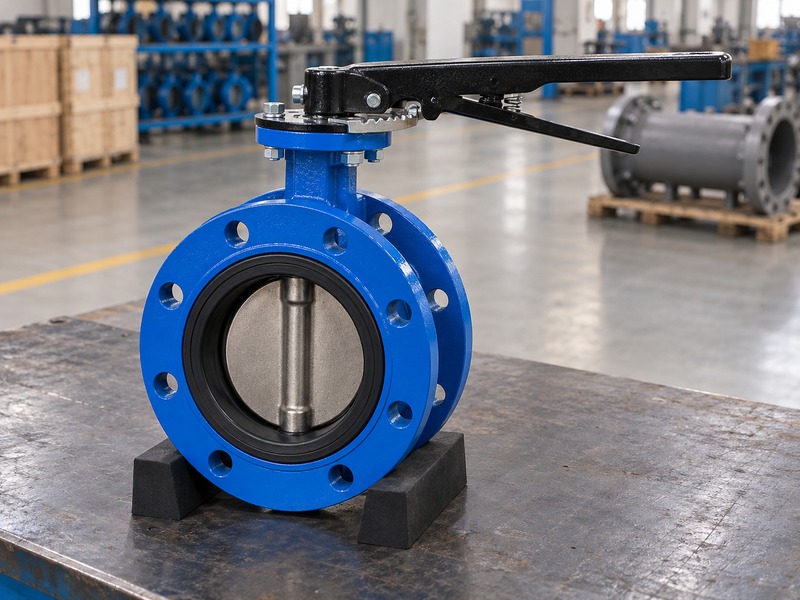
A lever will clear the installation only when the butterfly valve dn80 operating envelope fits the available space. Check its full sweep, locking plate, hand access, and distance from insulation or nearby equipment. A nominally small valve may still need a gearbox when operating torque, access, or position control makes a lever unsuitable.
How should you approve the operator orientation?
Check the handle with the disc position shown on an installation drawing locating the shaft, lever positions, mounting height, and hand space. Confirm permitted installation orientation with the valve instructions and actual service rather than accepting a universal any-position claim. If you rotate or replace the operator, verify coupling engagement, position indication, and travel stops using the approved procedure. Select its torque capacity against the maximum closing differential and accepted valve torque data for the specified service conditions.
Key takeaway: Clear bolt holes do not guarantee room to operate or maintain the valve.
- Check lever sweep and hand access after allowing for insulation.
- Verify that position indication agrees with actual disc travel.
| Item | Review |
|---|---|
| Space | Full operator envelope and maintenance access |
| Operation | Accepted torque, indication, and stop settings |
9. Can the valve hold pressure with one pipe removed?
A butterfly valve dn80 can serve at a pipe end only when its exact configuration has an approved end-of-line rating and installation arrangement. Two body flanges alone do not establish that permission. A lug butterfly valve also needs a configuration-specific rating, defined fasteners, and acceptance evidence for that duty.
Which unsupported-end conditions need confirmation?
Ask for the rated end condition in writing, including pressure, temperature, direction, seat retention, shaft retention, required bolting, and any downstream flange or restraint. RUITO’s stated lug end-of-line capability applies to a dedicated water configuration and must not be transferred to its DN80 double-flanged offering. The project engineer must also review pipe loads, supports, and the maintenance isolation method before any downstream removal. An ordinary closed-line seat test does not establish acceptance of a different unsupported-end arrangement or authorize a change in personnel isolation practice.
Key takeaway: End-of-line permission belongs to the validated assembly and stated service conditions.
- Obtain an explicit rating for the proposed end condition.
- Review support and isolation requirements before downstream pipe removal.
| Item | Review |
|---|---|
| End condition | Exact retained flange, bolting, and support arrangement |
| Acceptance | Applicable rating and configuration-specific validation |
10. Which inspection records confirm the final flange fit?
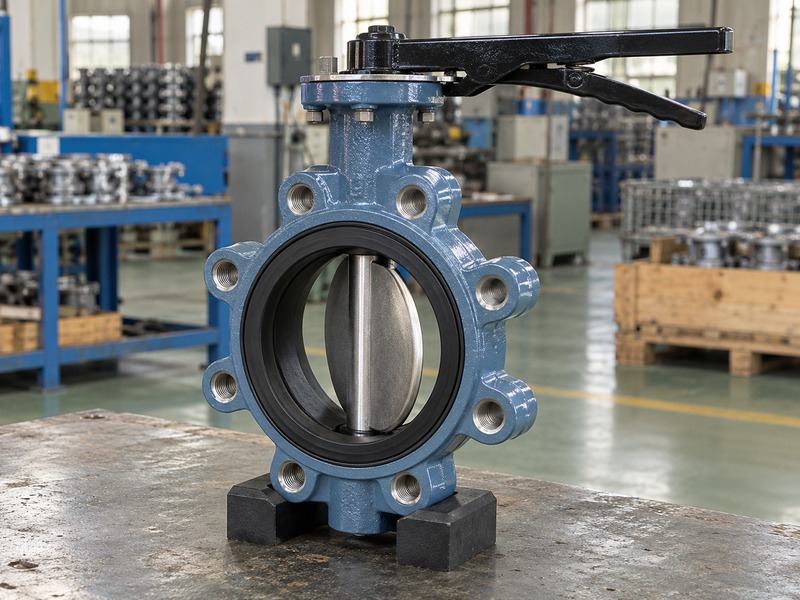
Dimensional inspection, functional checks, and the agreed pressure-test records confirm different aspects of a butterfly valve dn80 assembly. Link them with the same valve identifier and approved drawing revision. A passed shell test checks the pressure boundary under stated conditions; it cannot prove flange alignment, free disc travel, or suitability at every operating temperature.
What should you accept before installation release?
Match the report to the hardware through its face-to-face length, drilling, sealing faces, material identity, disc clearance, operator travel, and agreed witness points. Pressure reports should identify the test standard, medium, pressure, duration, direction, leakage criterion, and result for the applicable configuration. RUITO’s stated PN16 room-temperature shell and soft-seat closure test pressures are 24 and 17.6 bar where applicable; these inspection values do not raise the operating rating. Retain installation instructions and service pressure-temperature limits with the accepted drawing for the site team.
Key takeaway: Keep fit verification, test acceptance, and operating limits traceable to one valve.
- Connect dimensional and test records with the delivered valve identifier.
- Resolve drawing changes and open deviations before installation release.
| Item | Review |
|---|---|
| Fit and function | Accepted dimensions, clearance, and operator travel |
| Pressure evidence | Defined test conditions and separate service limits |
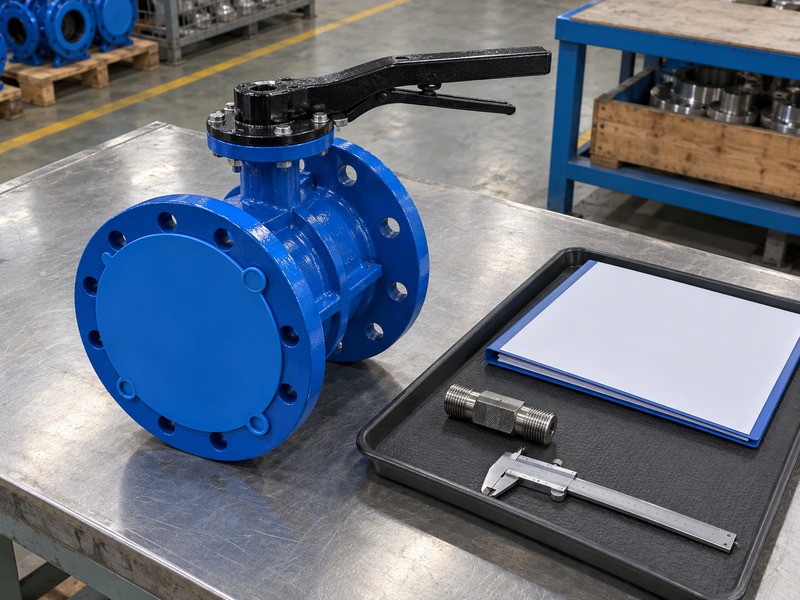
Send RUITO your pipe-flange standard, connection sketch, available gap, fluid, service temperature, pressure, and maximum closing differential. We can review a DN80 centerline double-flanged configuration and its proposed drawings against those inputs. Contact us with the existing installation details so the technical review covers the joints, disc travel, and operator space before you approve the assembly.
FAQ
Q1: Can I fit a DN80 valve into any 3-inch pipe connection?
No. DN80 and NPS 3 are corresponding nominal designations. Confirm the connection standard, drilling, facing, pipe bore, and disc clearance against the actual installation.
Q2: Can I replace PN16 with Class 150 if the holes line up?
Only after an engineered review accepts the exact arrangement. Matching holes do not establish compatible facing, joint construction, material-dependent rating, or whole-valve pressure-temperature limits.
Q3: How do I know if my valve needs separate gaskets?
Read the model-specific installation instructions. Some resilient seats provide the flange seal; other constructions need specified separate gaskets. An extra gasket can alter seat compression or reduce disc clearance.
Q4: Can I specify a RUITO DN80 double-offset flanged valve?
The stated RUITO DN80 double-flanged option is centerline soft-seated. Its double-offset double-flanged range starts at DN350, so do not transfer that construction’s data to DN80.
Q5: What’s the best way to check a replacement before shutdown?
Approve an installation sketch using measured connection details, the proposed valve drawing, and its operating envelope. Resolve length, sealing, fastener, and clearance differences before scheduling removal.