
Choose a chilled water butterfly valve by checking fluid compatibility, pressure, shut-off differential, flange fit and operating torque together. A leaking isolation valve can turn a short chiller service into a draining job. Selecting a butterfly valve for chilled water system duty from a documented configuration helps you avoid that disruption. Start with your actual operating conditions, then compare drawings and test requirements.
1. Why use a butterfly valve for chilled water system isolation?
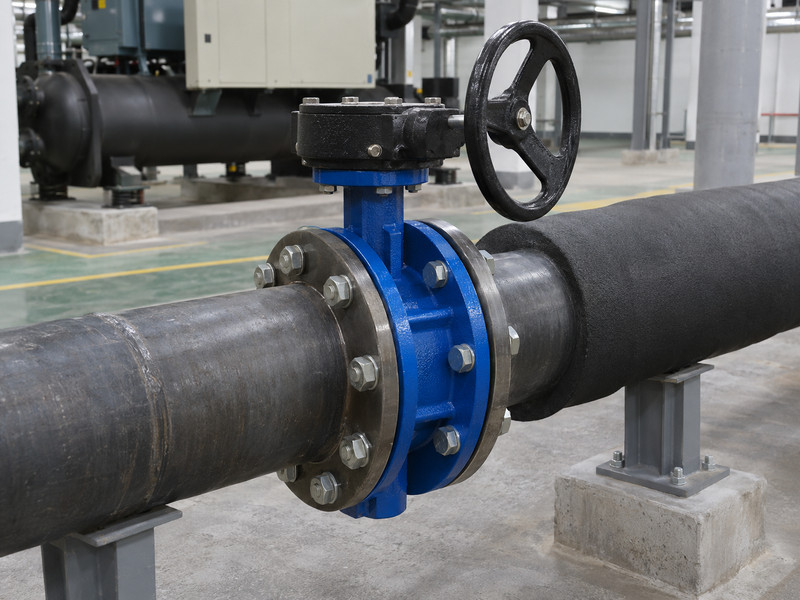
A butterfly valve for chilled water system isolation provides compact quarter-turn shut-off on equipment connections and distribution mains. Its short body can reduce installation space, although you still need room for the handwheel, actuator and maintenance access. Choose it where those features suit your pipe layout and isolation plan.
Where does the valve belong?
Start with the maintenance boundary. Locate valves so you can isolate a chiller, pump assembly or selected branch without draining unrelated pipework. Keep chilled water and cooling-tower condenser water schedules separate because their exposure and treatment can differ.
- Mark supply and return isolation points on your piping drawing.
- Check whether trapped liquid needs a separate relief arrangement.
- Keep handles reachable after adjacent equipment and insulation are fitted.
Which duty should you specify?
For HVAC and district energy projects, confirm whether each valve only isolates or also regulates flow. A basic isolation valve does not measure branch flow or maintain a constant differential pressure.
| Location | Selection question |
|---|---|
| Chiller connection | Can both sides be isolated and drained safely? |
| Distribution branch | Can the branch be serviced independently? |
| Pump assembly | Does the approved layout preserve access? |
Use those boundaries to prepare separate valve duties on your equipment schedule. Key Takeaway: Define the equipment you need to service before choosing the connection or operator.
2. Which pressure and temperature limits govern selection?
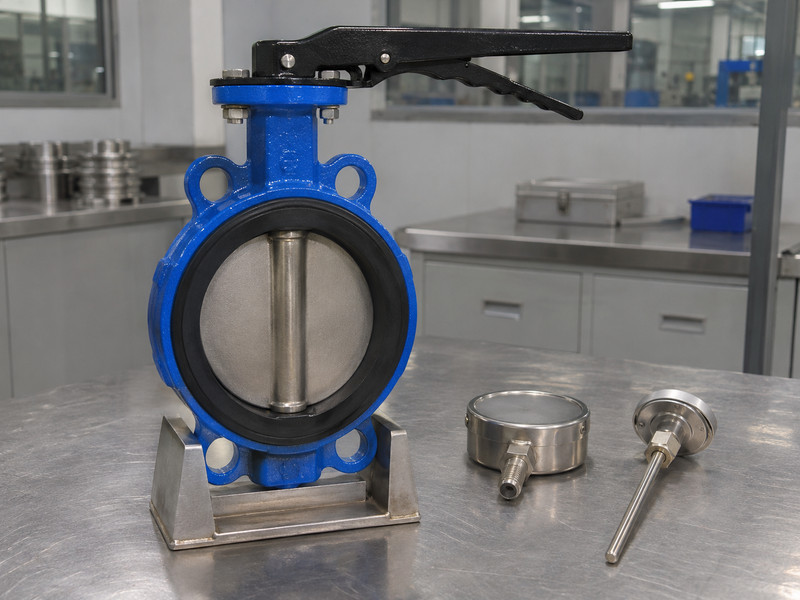
A butterfly valve for chilled water system service must meet the approved pressure and temperature envelope, including its permitted closing differential. Body pressure rating, seat differential rating and actuator capability describe different limits. Check all three against operating, shut-off and transient conditions.
What should you put on the data sheet?
Write down the worst operating combination. Building height, pump shut-off head and pressure surges can affect selection. A PN16 marking alone does not establish that every seat, flange, actuator and temperature combination can handle your proposed duty.
- State minimum and maximum fluid temperatures.
- Give maximum working pressure and maximum closing differential separately.
- Identify the applicable flange standard and the project test procedure.
Which limit needs separate approval?
RUITO’s documented standard circulation-water configurations cover 5–60°C and working pressure up to 10 barg, subject to the selected assembly. Subzero duty requires a separately validated low-temperature configuration. Do not transfer a room-temperature hydrotest value into the working-pressure field.
| Parameter | Evidence to request |
|---|---|
| Working pressure | Approved pressure–temperature data |
| Closing differential | Seat rating for the required direction |
| Site pressure test | Written procedure and valve position |
Resolve any mismatch before the valve reaches a pressure-test boundary. Key Takeaway: Ask for a configuration-specific pressure–temperature limit and a separate shut-off differential rating.
3. Which seat and metal materials suit your water chemistry?
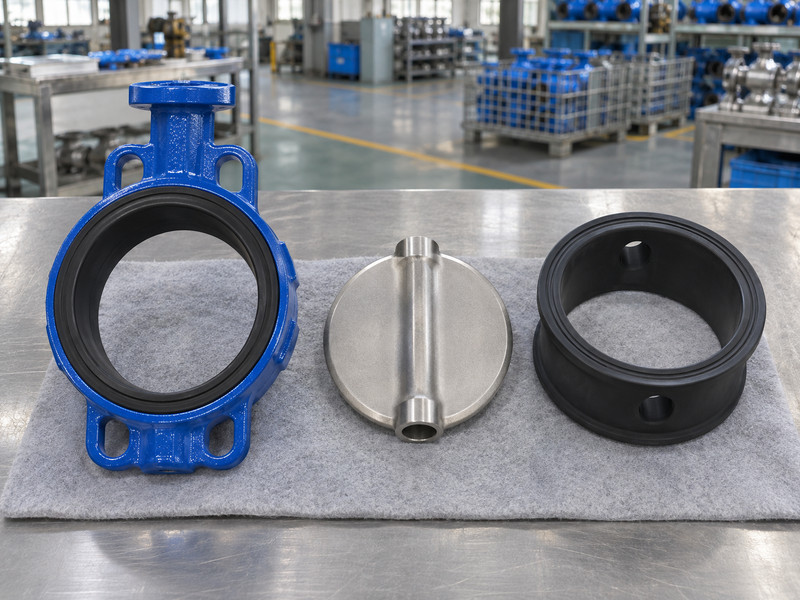
A butterfly valve for chilled water system duty needs a seat, disc, shaft and coating compatible with the complete fluid formulation. EPDM is a common starting point for water service, but the exact compound and treatment chemicals still need approval. Include cleaning fluids and commissioning additives in that review.
Can you specify EPDM and stop there?
Send the fluid recipe. RUITO’s documented circulation-liquid configurations include clean water and inhibited ethylene glycol solutions containing 0–40% glycol by volume, within their stated operating limits. Propylene glycol, unusual inhibitors or another concentration require a specific compatibility review.
- Name the glycol type, concentration and inhibitor package.
- Provide water-treatment and cleaning-chemical information.
- Ask for the wetted-material list and controlled seal specification.
Which parts need material approval?
A stainless disc does not protect every wetted component from corrosion. Shaft material, crevices, coating damage and deposits can still affect service life. A photograph or generic material description cannot establish compatibility with an unknown chemical mixture.
| Component | Check |
|---|---|
| Resilient seat | Compound compatibility and temperature |
| Disc and shaft | Actual wetted materials |
| Coating | Water chemistry and handling damage |
Keep the approved material list with your purchase specification for repeat orders. Key Takeaway: Approve the complete wetted assembly against the real fluid, including temporary cleaning exposure.
4. Should you choose wafer, lug, flanged or grooved ends?
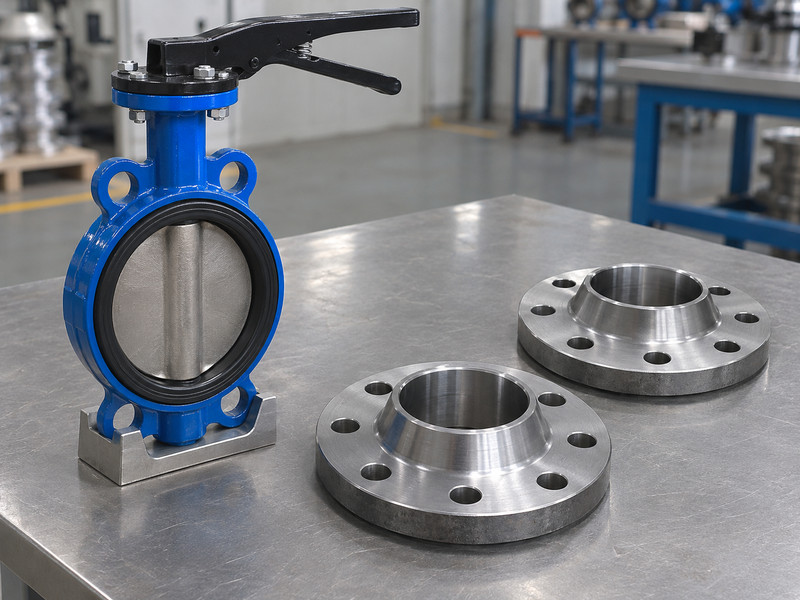
A butterfly valve for chilled water system installation should use the connection specified by your pipework and maintenance plan. Wafer, lug, double-flanged and grooved designs have different fitting requirements. Compare their approved dimensions and access needs before treating them as interchangeable alternatives.
What changes when you choose a lug body?
Check the removal condition. A wafer butterfly valve normally sits between mating flanges with through-bolts. A lug body has threaded attachment points, but threaded lugs alone do not establish an approved dead-end isolation rating.
- Check flange drilling, face type, inside diameter and face-to-face length.
- Confirm lug thread engagement and bolt length from the drawing.
- Specify any downstream pipe-removal condition before ordering.
When is end-of-line service approved?
RUITO’s documented lug end-of-line water configuration is limited to approved DN50–200 assemblies at 5–40°C and differential pressure up to 10 bar. Other sizes and assemblies need their own approval. Grooved connections also require compatible pipe dimensions, groove geometry, couplings and seals.
| Connection | Detail to verify |
|---|---|
| Wafer | Disc clearance and through-bolt arrangement |
| Lug | Thread depth and approved end condition |
| Flanged or grooved | Matching interface and assembly rating |
Approve the connection against the mating pipe components and the installation drawing. Key Takeaway: Ask the supplier to approve your exact connection and maintenance condition together.
5. How do flow and pressure loss affect valve size?
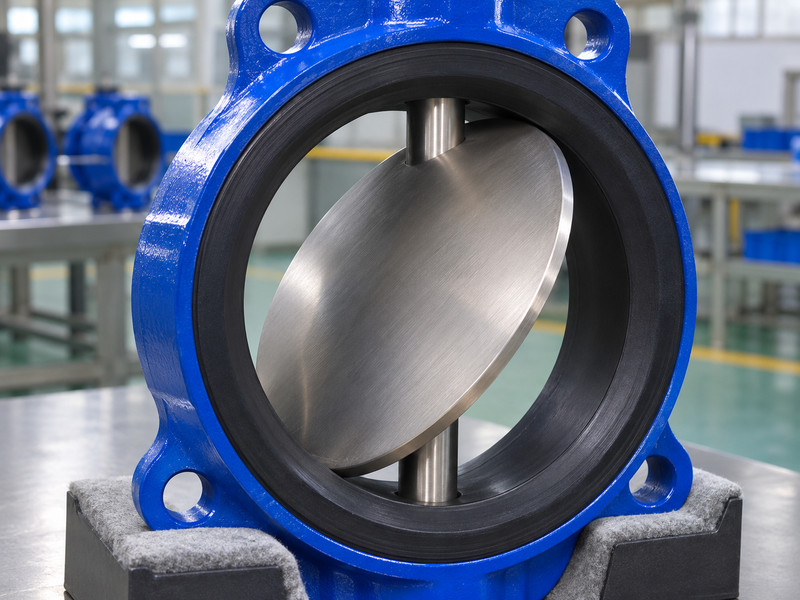
A butterfly valve for chilled water system flow duty should meet the required flow within your pressure-loss allowance. Nominal pipe size helps establish the interface, while a model-specific flow coefficient helps assess hydraulic performance. For glycol mixtures, use the actual fluid properties and the supplier’s calculation method.
How can you make a preliminary Kv check?
Calculate the pressure-loss budget. For water in a suitable liquid-flow calculation, Kv = Q / √Δp, with Q in m³/h and Δp in bar. At 100 m³/h and an allowed valve loss of 0.10 bar, the required Kv is approximately 316.
- Obtain the coefficient for the proposed size and opening.
- Check whether the published curve applies to water or your mixture.
- Confirm the usable throttling range and control requirements.
Does the flow calculation select the valve?
That calculation is a screening example, not a valve-size recommendation. An isolation butterfly valve may throttle within an approved range, but a separate balancing or control valve may better suit repeatable measurement or stable regulation.
| Example input | Value |
|---|---|
| Water flow | 100 m³/h |
| Allowed valve loss | 0.10 bar |
| Calculated minimum Kv | About 316 |
Compare the calculated requirement with the offered valve’s curve and stated operating limits. Key Takeaway: Compare a documented flow curve with your duty before accepting a pipe-size match.
6. How should you fit the valve between pipe flanges?
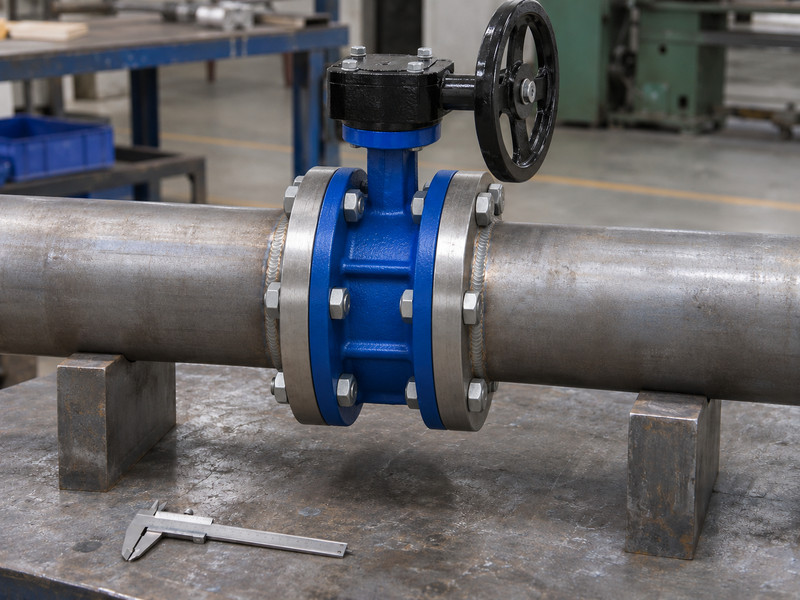
A butterfly valve for chilled water system installation needs aligned flanges, adequate disc clearance and the specified seat compression. Follow the selected valve’s installation instructions for disc position, fasteners and gasket requirements. Keep pipe loads on suitable supports rather than forcing the body into a misaligned gap.
Which checks prevent a damaged seat?
Check the bore before tightening. The disc can project beyond the short valve body when opening. An undersized flange bore, projecting pipe end or misplaced gasket can obstruct movement even when the bolt holes appear to line up.
- Verify the full disc travel envelope against mating components.
- Use only the gasket arrangement approved for that seat design.
- Tighten fasteners in the specified sequence and to the stated torque.
Which installation rules apply?
Consult the approved installation drawing for shaft orientation and distances from pumps, elbows or instruments. A universal straight-pipe rule cannot replace the requirements of your valve and measuring equipment. Complete welding and remove debris before fitting a heat-sensitive resilient-seated valve.
| Installation check | Acceptable basis |
|---|---|
| Disc clearance | Mating bore and approved travel envelope |
| Seat compression | Model-specific instructions |
| Bolt loading | Approved sequence, length and torque |
Cycle the isolated assembly as instructed and investigate any binding before commissioning. Key Takeaway: Prove clearance and alignment before applying final bolt load.
7. How do you select and set up the actuator?
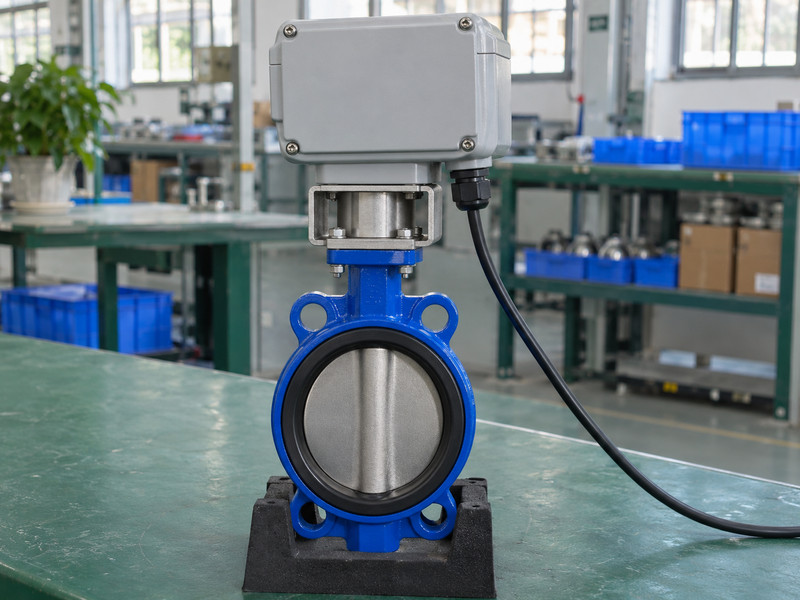
A butterfly valve for chilled water system automation needs an actuator sized for the valve’s required torque throughout its travel. Check breakaway, running and seating loads at the maximum closing differential. Also confirm the output available at the lowest permitted electrical supply or pneumatic pressure.
What must your controls team confirm?
Agree on the failure response. A standard electric actuator does not automatically fail closed when power disappears. Specify the required fail position, stored-energy arrangement where applicable, stroke time, feedback and control interface before purchasing.
- Confirm supply voltage, signal type and enclosure requirements.
- Check coupling, bracket and mounting-interface compatibility.
- Set travel limits using the valve and actuator instructions.
What does the mounting standard establish?
An interface standard describes mounting features; it does not prove a suitable torque match. Use the actual valve torque data and the actuator supplier’s sizing margin. Review closing time with the system designer because rapid closure can create pressure transients.
| Requirement | Confirmation |
|---|---|
| Torque | Whole travel at worst differential |
| Power failure | Specified position and mechanism |
| Controls | Signal, feedback and interlocks |
Record the settings so a replacement actuator can reproduce the approved operation. Key Takeaway: Buy a documented valve–actuator combination with a defined control sequence.
8. How do you prevent condensation around the valve?
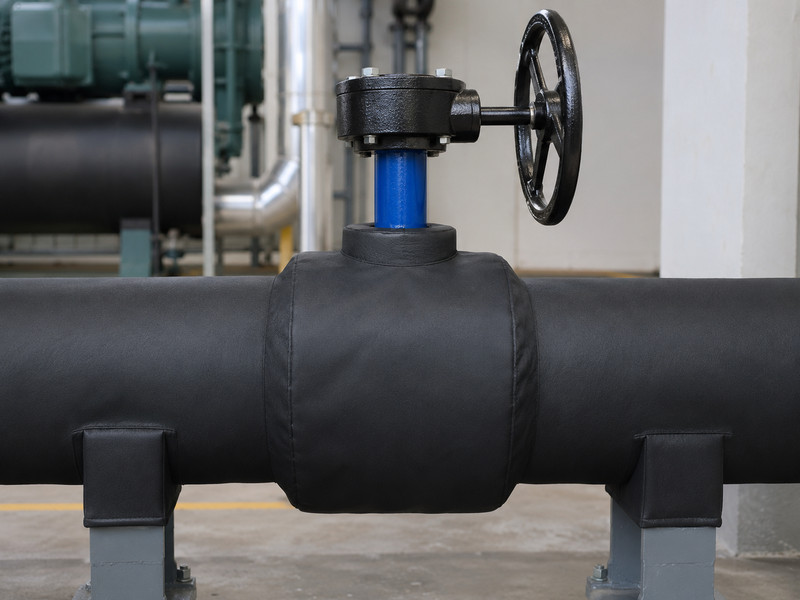
A butterfly valve for chilled water system duty needs insulation and vapour control wherever cold surfaces can fall below the surrounding dew point. Select an arrangement that protects the pipe and valve while leaving the operator accessible. Humid plant rooms can expose gaps that remain unnoticed during a dry workshop inspection.
What happens around the stem and operator?
Inspect the insulation transitions. A cold stem neck, interrupted jacket or poorly sealed joint can become a condensation path. Confirm any required stem extension and removable insulation details with the valve supplier and insulation contractor.
- Seal vapour-barrier joints using the specified insulation system.
- Preserve access to the gearbox, actuator and service fasteners.
- Keep actuator vents, drains and electrical entries in their approved arrangement.
Does an enclosure rating prevent condensation?
An enclosure rating does not eliminate condensation inside an actuator. Review ambient conditions, installation orientation and any manufacturer-specified anti-condensation provision. Avoid covering equipment in a way that traps moisture or prevents its intended operation.
| Area | Inspection point |
|---|---|
| Valve jacket | Removable, sealed and correctly fitted |
| Stem transition | Compatible extension and vapour seal |
| Operator | Accessible with approved moisture protection |
Inspect those joints again under operating conditions when cold surfaces and humid air meet. Key Takeaway: Coordinate the valve, stem extension and insulation before ordering the assembly.
9. What should you verify during commissioning?
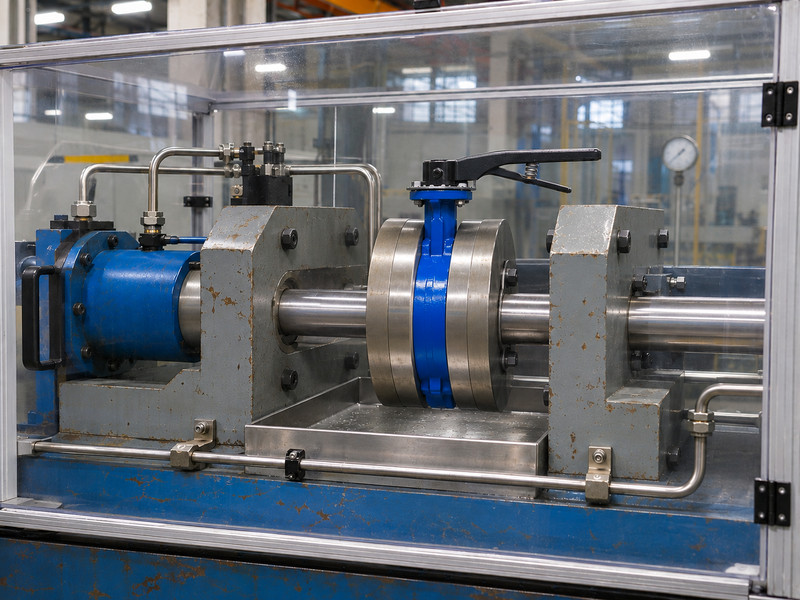
A butterfly valve for chilled water system commissioning should pass the agreed pressure, leakage, travel and controls checks for its exact configuration. Factory inspection and site system testing have different boundaries. Use a written procedure that identifies pressure, medium, duration, direction and acceptance criteria.
Which records should you retain?
Match the record to the valve. RUITO’s documented inspection programme uses EN 12266-1 or contract-selected ISO 5208 as the main pressure-test method. The applicable model, size, seat differential rating and agreed leakage requirement determine the specific test arrangement.
- Record product identification and material configuration.
- Verify operation after installation and controlled flushing.
- Check actual position feedback against mechanical travel.
Does a closed signal confirm isolation?
A factory shell test does not prove seat tightness in every operating direction. A control signal indicating “closed” does not independently confirm leak-tight isolation. Isolate and depressurise equipment using the site’s approved maintenance procedure before opening pipework.
| Check | Record |
|---|---|
| Shell and seat test | Applicable procedure and result |
| Mechanical travel | Free movement and approved stops |
| Controls | Command, feedback and failure response |
Investigate a failed check before handing the system over for routine operation. Key Takeaway: Keep separate evidence for pressure integrity, shut-off performance and controls.
10. What should your chilled water valve RFQ include?

A butterfly valve for chilled water system RFQ should state the fluid, operating limits, connection, flow duty and acceptance requirements in one controlled schedule. Include the installation drawing and maintenance conditions so suppliers quote comparable assemblies. Freeze the approved configuration before releasing a repeat order.
What should you send your supplier?
Put the duty in writing. Request an outline drawing, wetted-material list, pressure–temperature limits, directional shut-off rating and relevant flow data. For an automated valve, add torque calculations, actuator details, controls information and the agreed fail response.
- List quantities by size, connection and operator.
- Identify required tests, documents and inspection hold points.
- Separate factory readiness from transport and site delivery dates.
How should you compare quotations?
Key Takeaway: Compare documented compliance and stated deviations alongside price and lead time.
| RFQ item | Minimum detail |
|---|---|
| Fluid and duty | Composition, temperature, pressure and flow |
| Mechanical fit | Flanges, clearance, operator and insulation |
| Acceptance | Tests, documents and approved deviations |
For configuration review, contact us with your valve schedule, water-treatment information and installation drawing. RUITO can review the proposed materials, interfaces, operating limits and inspection scope before you approve the order.
Frequently asked questions
Q1. Can I use a butterfly valve for chilled water system balancing?
Yes, within its approved throttling range, but a basic isolation valve does not measure or maintain branch flow. Use the specified balancing or control device when that function is required.
Q2. What’s the best seat for treated chilled water?
A compatible EPDM compound is a common starting point. Confirm the actual water treatment, glycol formulation, cleaning chemicals and temperature before approving it.
Q3. Can I remove downstream pipe from any lug valve?
No. Obtain an explicit end-of-line rating for the exact size, fluid, pressure, temperature and assembly before planning that maintenance condition.
Q4. How do I know if my actuator has enough torque?
Compare its available output throughout travel with the valve’s breakaway, running and seating torque at the worst differential. Include the supplier’s sizing margin and minimum supply conditions.
Q5. Should I order PN16 for every chilled water project?
No. Select the approved assembly from the project’s pressure–temperature envelope, shut-off differential, interfaces and applicable requirements. The PN marking alone does not complete that assessment.