
Fix travel-check mistakes by giving your butterfly valve open close position review an identified assembly, accepted endpoint reference and observation scope before movement is authorized. Record what the actual unit is expected to demonstrate and which evidence will support that decision. Keep command, indication, physical travel, process flow and sealing results identifiable throughout the review.
A checklist says CLOSED, yet the observation never identifies the disc reference or whether the pointer and feedback share a coupling. The reviewer has a label without the evidence needed to accept travel. Define the observation plan and retain mismatches for engineering review. Repeating movement or adding closing force cannot repair an incomplete record or authorize an unplanned physical check.
1. What defines a butterfly valve open close position check?
A butterfly valve open close position check needs an identified valve, accepted travel references and a defined observation method. State what the reviewer intends to verify before arranging movement. The record should identify the actual assembly and distinguish a requested state, an indicator reading and physical disc travel instead of treating them as interchangeable evidence.
Which physical reference belongs in the plan?
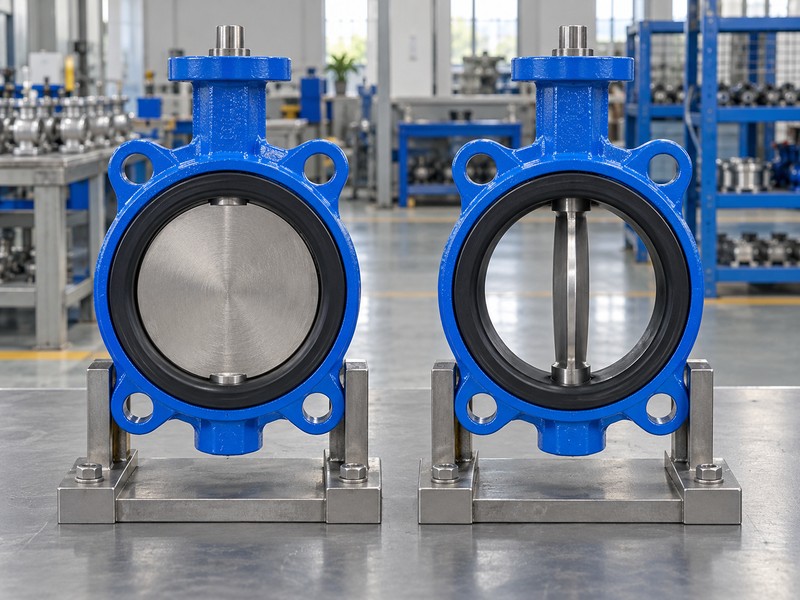
Use the selected drawing to define the accepted endpoints and viewing reference. In a simple concentric example, the open disc plane lies approximately parallel to the flow axis and the closed plane crosses it. Actual offset geometry and shaft indexing remain model-specific. The illustrations explain those references without proving the position or condition of the unit under review.
- Identify the actual valve and accepted assembly revision.
- State the physical endpoint and observer references.
- Name the observation method and acceptance requirement.
Key takeaway: Define the assembly, physical reference and observation purpose before accepting a position indication.
| Check | What you should confirm |
|---|---|
| Identity | The reviewed unit matches its accepted drawing |
| Reference | Defined endpoints and viewing direction guide observation |
| Purpose | The planned check has a stated acceptance scope |
2. What records support a butterfly valve open close position check?
The butterfly valve open close position record needs the accepted assembly drawing, actual operator information and selected installation, operation and maintenance instructions. Include the component identities and revisions that apply to the delivered unit. A general product leaflet cannot establish the particular coupling, pointer indexing, travel limit or feedback arrangement your inspection intends to assess.
How should the document review prepare the observation?
Match the valve, operator and relevant accessories with the order and drawing index. Identify who accepts the observation method and which conditions the selected instructions require. Record missing documents or differences before the check, with an owner for resolving each item. Keep travel, hydraulic-duty and pressure-test requirements on separate record lines.
- Match valve and operator identities with the accepted documents.
- Identify the governing method and responsible reviewer.
- Record missing revisions and unresolved differences before movement.
Key takeaway: Use accepted documents to resolve component identity, endpoint settings and the applicable instructions before inspection.
| Check | What you should confirm |
|---|---|
| Assembly file | Actual valve, operator and accessory identities |
| Instructions | Selected requirements match the reviewed configuration |
| Record structure | Travel, duty and pressure evidence remain distinct |
3. How do you authorize a butterfly valve open close position check?
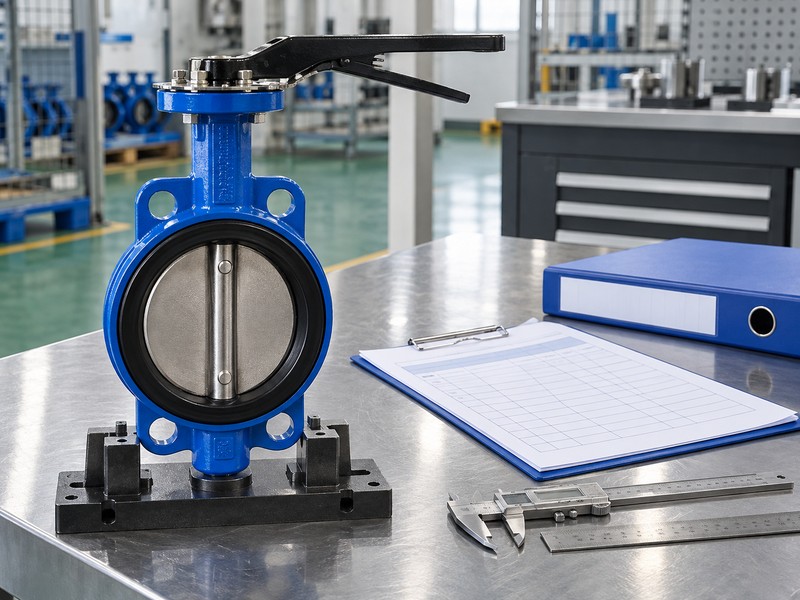
A qualified team should authorize the butterfly valve open close position check under the selected instructions and the site’s isolation arrangements. Identify the process and drive conditions that apply to the proposed observation. A closed indication cannot establish depressurization, eliminate stored energy or permit access to a bore or moving mechanism.
What must the permitted observation boundary cover?
State access control, permitted observations and approved equipment preparation, including pipeline pressure and drive energy. If pipe removal or end service is proposed, obtain the exact configuration’s separate qualification; a lug body or normal pressure marking cannot authorize it. This planning record does not replace the site’s isolation procedure or the selected equipment instructions.
- Name qualified personnel and the accepted observation boundary.
- Address process pressure, drive energy and controlled access.
- Review pipe removal or end service as a separate condition.
Key takeaway: Authorization connects the proposed observation with actual equipment preparation, keeping a position indication separate from permission to work on the assembly.
| Check | What you should confirm |
|---|---|
| Responsibility | The authorized team controls the observation |
| Conditions | Process and drive preparation follow the approved procedure |
| Special condition | End-service requirements have their own acceptance basis |
4. What if a butterfly valve open close position lever is detached?
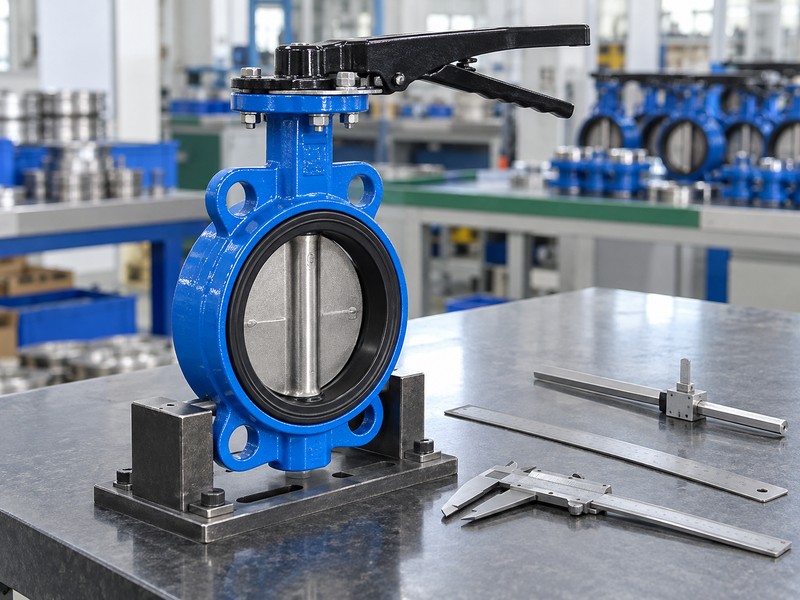
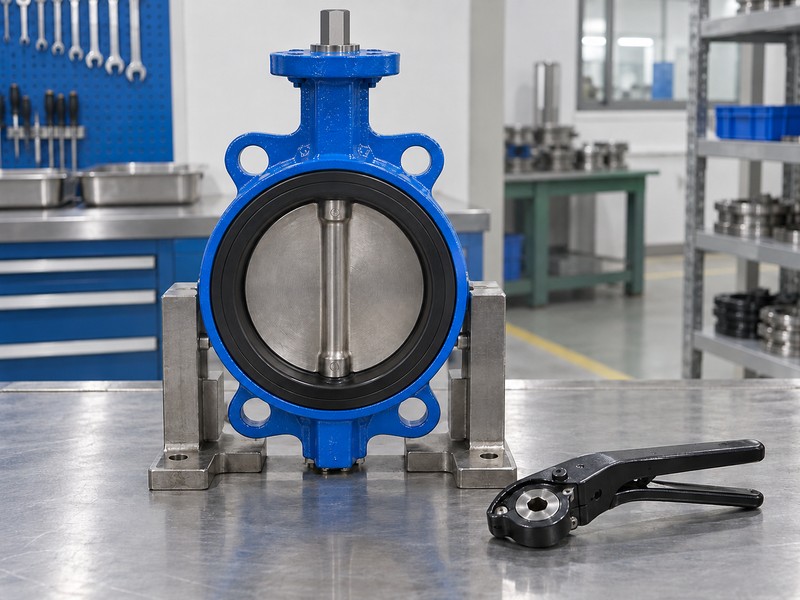
A detached lever cannot establish a linked butterfly valve open close position indication. Identify the actual lever, valve shaft and accepted assembly information before evaluating compatibility or indexing. The detached-component illustration presents an inspection question; it does not prove that the pictured parts belong together or form an operable position-indication assembly.
Which evidence should a compatibility review request?
Request the selected part references, connection details and permitted mounting arrangement from the accepted assembly documents. A familiar shaft profile or pointer shape cannot establish the indexing of another construction, and colour provides no universal position convention. Any reassembly or adjustment requires the selected instructions and authorized work arrangements, with the required relationship checked before the indication is accepted.
- Identify actual part references and connection requirements.
- Review fit and indexing against the selected assembly.
- Treat detached appearance as a question requiring evidence.
Key takeaway: Accept the indication only after the actual parts, connection and indexing relationship have been verified.
| Check | What you should confirm |
|---|---|
| Part identity | Valve and lever references belong to the accepted assembly |
| Fit | Selected connection and mounting details are verified |
| Indication | Required indexing evidence supports the displayed state |
5. How do you record a butterfly valve open close position stroke?
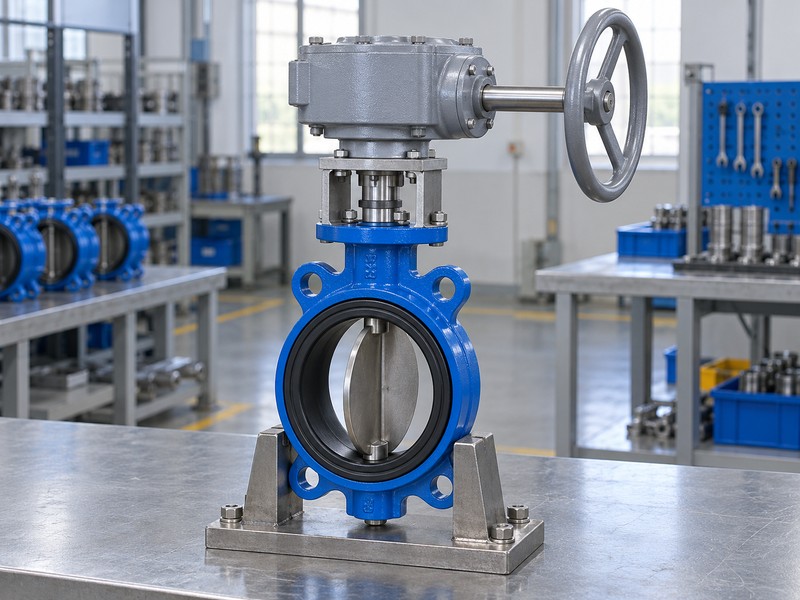
Record handwheel input and valve-shaft output separately during the authorized butterfly valve open close position stroke observation. A gearbox connects those movements through its selected gearing. Quarter-turn valve output cannot establish a universal handwheel turn count, and reaching an operator limit cannot independently prove that the disc reached its accepted endpoint.
What should the gearbox observation record identify?
Link the operator identity, accepted output references and available indication to the actual assembly. Record direction only with the specified observer reference and selected instructions. Note any mismatch between permitted travel and the indicated limit without prescribing extra turns or force. Keep the planned input, output and indication observations distinct.
- Separate handwheel input from accepted valve-shaft output.
- Identify the operator’s direction and viewing reference.
- Record limit mismatches without forcing the mechanism.
Key takeaway: A gearbox record should connect input and output through the actual operator information without treating its limit or pointer as independent disc evidence.
| Check | What you should confirm |
|---|---|
| Input | Actual handwheel movement follows the selected gearing |
| Output | Accepted shaft travel has defined physical references |
| Limit finding | Any mismatch is recorded for authorized review |
6. How do you log a butterfly valve open close position command?
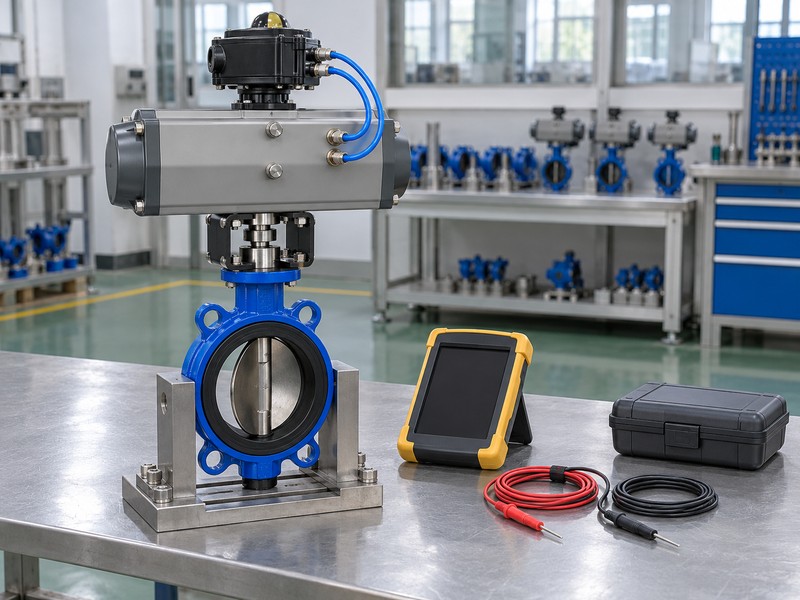
Keep command values, feedback indications and physical observations separate in the butterfly valve open close position record. Identify what each circuit or device reports and where it connects to the assembly. A requested endpoint, limit-switch signal and position output may share mechanical references, so agreement between them need not provide independent confirmation of disc travel.
What makes the signal-to-travel relationship reviewable?
Record the selected input mapping, relevant mode, feedback location and actual test conditions required by the plan. A sensor attached to the actuator side cannot by itself resolve hidden coupling or shaft-to-disc questions, and a configured position value cannot establish measured flow. Treat the disconnected bench illustration as preparation context, with no live calibration or successful response implied.
- Identify the command and each indicated quantity.
- Record feedback location and shared mechanical dependencies.
- Keep physical observation separate from correlated signals.
Key takeaway: A signal record becomes useful when its source and mechanical dependencies remain visible beside the separately required travel evidence.
| Check | What you should confirm |
|---|---|
| Request | The actual command and accepted mapping are identified |
| Indication | Sensor location and reported quantity are known |
| Travel evidence | Required physical relationship has its own verification |
7. What if a butterfly valve open close position endpoint disagrees?
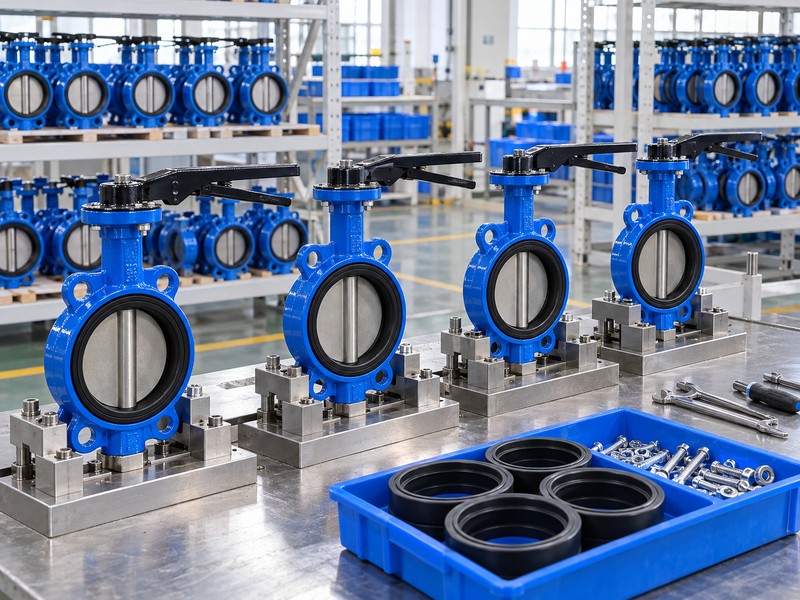
Document the discrepancy and hold the butterfly valve open close position finding for authorized review. State which expected reference and actual observation disagree, with the unit and conditions identified. A mismatch does not establish one failure cause, nor authorize pushing against a stop, adding closing force or changing settings to make an indication appear acceptable.
What should the finding help engineering distinguish?
Record whether the issue concerns indicated travel, physical movement, operating resistance or an unresolved connection. Incorrect indexing, travel limits, obstruction or transmission damage are possible review paths, rather than diagnoses from a pointer image alone. Identify the approved corrective decision and required reinspection before changing the assembly or returning it to its accepted status.
- Describe the expected and observed references precisely.
- Preserve conditions before an authorized corrective decision.
- Identify required verification after any approved change.
Key takeaway: Preserve the discrepancy so engineering can review its cause and authorize correction and reinspection.
| Check | What you should confirm |
|---|---|
| Finding | The actual discrepancy and conditions are recorded |
| Review | Candidate causes are checked against the selected design |
| Correction | Approved action and reinspection remain traceable |
8. Does a butterfly valve open close position check prove flow?
No; a butterfly valve open close position check does not establish measured process flow. Partial travel cannot be treated as the same percentage of flow, and full opening cannot establish zero pressure loss. A no-flow observation or a downstream pressure reading also cannot replace the authorized verification needed for secure isolation.
Which hydraulic evidence belongs beside the position record?
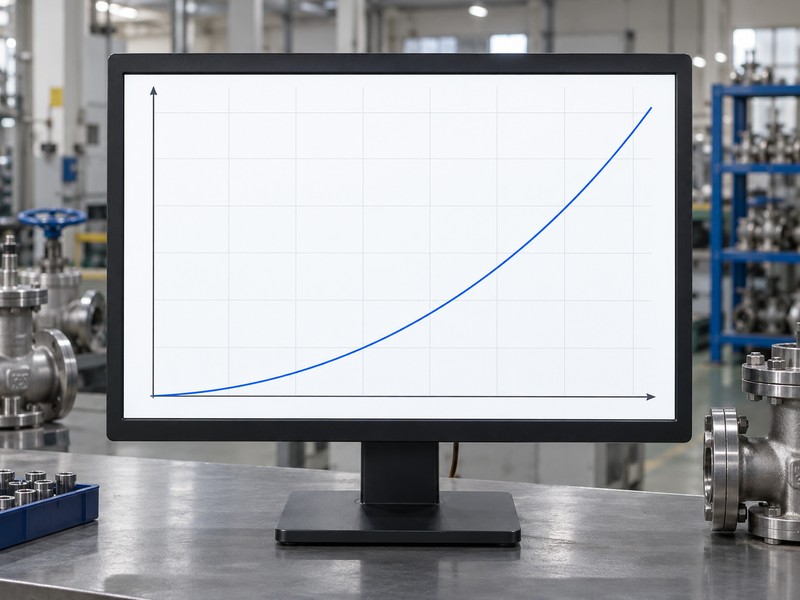
Request opening-dependent coefficient data and the actual fluid properties and system pressures when hydraulic performance is required. The conceptual curve holds liquid density and coefficient fixed while flow and pressure loss change. It does not represent every disc angle or a measured travel result. Keep any permitted intermediate-position duty and control requirement tied to the actual model’s accepted operating envelope.
- Separate mechanical travel from measured process flow.
- Use actual opening data, fluid and pressure conditions.
- Keep isolation and control qualification outside position-only evidence.
Key takeaway: Keep travel, hydraulic performance and isolation supported by their own defined evidence.
| Check | What you should confirm |
|---|---|
| Position | The record identifies a mechanical travel condition |
| Hydraulics | Model and system data support the required flow assessment |
| Isolation | Authorized verification remains a separate obligation |
9. Does a butterfly valve open close position check prove sealing?
No; a butterfly valve open close position check cannot replace the specified pressure-integrity and closure-leakage evidence. A verified physical endpoint does not establish seat condition or the agreed leakage result under pressure. Keep permitted working duty, test conditions and pressure direction identifiable so the reviewer does not convert a travel observation into a sealing or rating claim.
What should the separate pressure record contain?
Identify the actual product, selected method, medium, direction, pressure, duration and acceptance criterion. A contract-selected ISO 5208 procedure addresses its defined valve pressure-testing scope, without establishing position accuracy or increasing working-pressure limits. Match the result with the accepted configuration and inspection requirement. Required reverse-direction closure needs its own applicable rating and evidence rather than an assumed copy of forward performance.
- Separate physical closure from pressure and leakage results.
- Identify method, conditions and product revision on the report.
- Review direction-specific ratings and required evidence.
Key takeaway: A pressure record establishes its stated inspection result, while the travel record documents a separate question about movement and endpoints.
| Check | What you should confirm |
|---|---|
| Integrity | The agreed pressure-containing assembly check is identified |
| Closure | Leakage evidence records its direction and test conditions |
| Scope | The actual configuration matches the accepted requirement |
10. How do you close a butterfly valve open close position review?
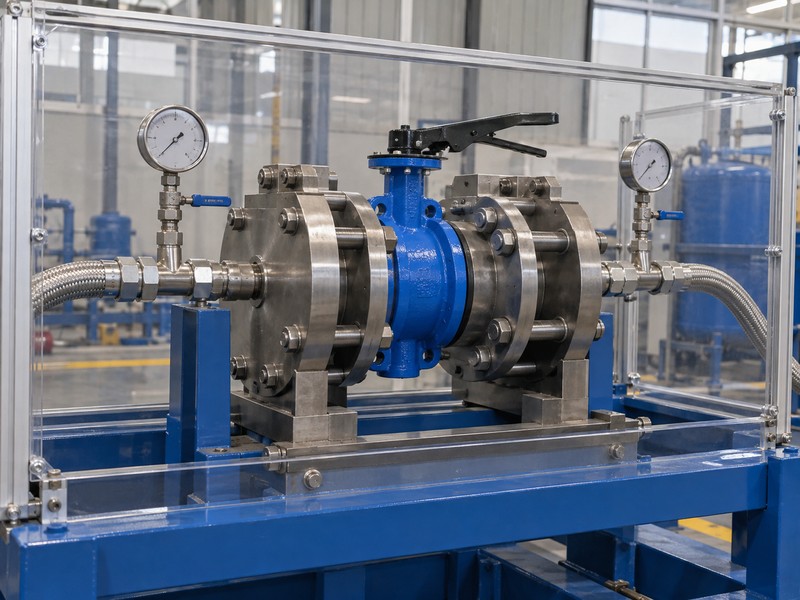
Close a butterfly valve open close position review when the responsible reviewer accepts the required observations, documents and corrective findings for the identified assembly. State what the check verified and which evidence supports separate requirements. An incomplete mapping, unresolved endpoint or missing required pressure record should remain visible instead of disappearing behind a completed checklist label.
What should the release file preserve?
Retain product identity, accepted drawings, selected instructions, observation conditions, findings and authorized reinspection results. Identify pending site checks separately from completed evidence. A later lever, coupling, gearbox or feedback change needs compatibility review and the specified verification before the revised relationship is accepted.
- Link the decision with product identity and accepted revisions.
- Close required findings and identify pending site evidence.
- Control later component changes and their re-verification.
Key takeaway: A complete release file preserves what the travel check established and keeps the remaining inspection, site and change-control requirements explicit.
| Check | What you should confirm |
|---|---|
| Evidence | Required observations and reports match the actual assembly |
| Findings | Corrective decisions and reinspection are retained |
| Handover | Accepted status and pending obligations are clear |
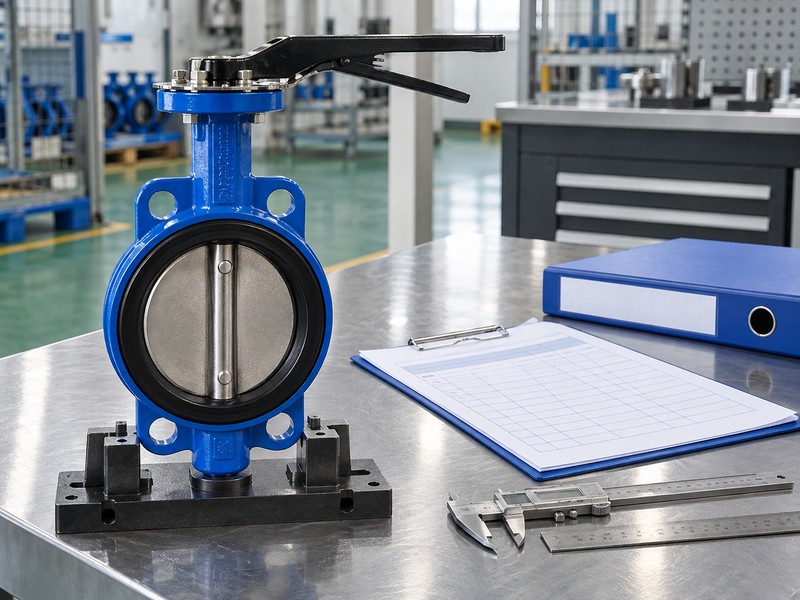
Send RUITO the valve identity, accepted drawings, service conditions, operator information and planned observations or recorded discrepancy. We can review the documented configuration and required interface, torque and inspection scope. Contact us before accepting an unresolved endpoint or approving a component change without its required verification.
FAQ
Q1: Can I accept two matching indicators as independent travel proof?
No. Check their mechanical references; signals linked to the same actuator or coupling can share the same unresolved relationship.
Q2: How do I know whether a detached lever fits this valve?
Use the actual part references and accepted connection drawing. Appearance alone cannot establish pairing, fit or indexing.
Q3: Can I add handwheel force when the pointer stops short?
Do not treat a mismatch as permission for extra force. Record the finding and use authorized review under the selected instructions.
Q4: What’s the best record for an endpoint discrepancy?
Identify the unit, expected reference, actual observation and conditions, with relevant drawings and any approved corrective or reinspection decision.
Q5: Can zero downstream flow or pressure prove safe isolation?
No. Use the authorized isolation procedure and required verification; a single process observation cannot establish that work is safe.