
Fix comparison mistakes by evaluating butterfly valve with positioner factories against one controlled assembly specification and the same acceptance gates. Give every candidate the duty, interfaces, required functions and evidence scope. Your purchasing decision should show which proposals meet that basis, which contain deviations and which still need verification.
If one candidate demonstrates an unloaded sample while another submits a loaded test for a different seat, the apparent performance difference may come from the test conditions. A lower quote may also leave mounting or calibration to your team. Freeze a common sample brief, allocate integration responsibility and record the evidence needed to move each candidate into production approval.
1. How do I compare butterfly valve with positioner factories?
Compare butterfly valve with positioner factories with one service sheet, assembly definition and acceptance plan. Identify the fluid, temperature, working pressure, closing differential pressure and intended operating range before asking for samples. Each candidate should state its proposed valve, actuator, positioner, mounting and accessories against those same requirements, with unresolved inputs clearly recorded.
What belongs in a common comparison sheet?
Use a requirement-by-requirement response sheet and separate acceptance gates for documents, samples and production. Start with the duty. RUITO’s engineering review uses actual service and installation inputs; the selected positioner also needs its own component evidence. A common worksheet should preserve each candidate’s construction, variant and exceptions so your team can compare defined proposals.
- Issue the same duty and interface information.
- Define document, sample and production acceptance gates.
- Record proposed configurations and open inputs side by side.
Key takeaway: A useful factory comparison shows how each identified proposal answers the same requirements and what evidence remains missing.
| Check | What you should confirm |
|---|---|
| Requirement | All candidates receive the same accepted inputs |
| Proposal | Actual assembly and deviations are identified |
| Gate | Evidence needed for each approval stage is stated |
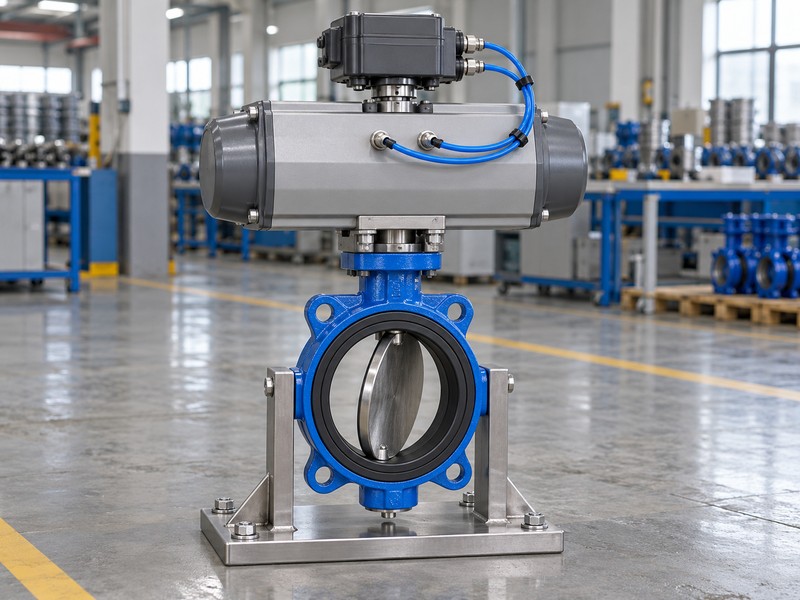
2. What must butterfly valve with positioner factories build?
Ask butterfly valve with positioner factories to build samples against the controlled specification and declare every proposed deviation before assembly. Give each sample an identity and record its actual component list and drawing revision. Candidate-specific alternatives can be reviewed, but an undocumented seat, coupling or positioner variant makes the resulting samples difficult to compare.
How do you preserve the benchmark build?
Freeze the required interfaces, functions and acceptance conditions with your sample brief. Check each proposed substitution. If candidates use different approved components, retain those differences and their supporting documents alongside the results, rather than presenting the assemblies as identical. Record which sample definition each test covers, then identify the same baseline in the proposed production route and inspection plan.
- Identify every sample and its actual component revision.
- Approve deviations before the candidate builds the sample.
- Connect sample results with the proposed production baseline.
Key takeaway: A controlled benchmark gives your team comparable evidence while keeping any accepted component differences visible in the decision.
| Check | What you should confirm |
|---|---|
| Build | Sample matches its accepted configuration definition |
| Deviation | Changed components and implications are documented |
| Production | Proposed batch preserves the reviewed sample baseline |
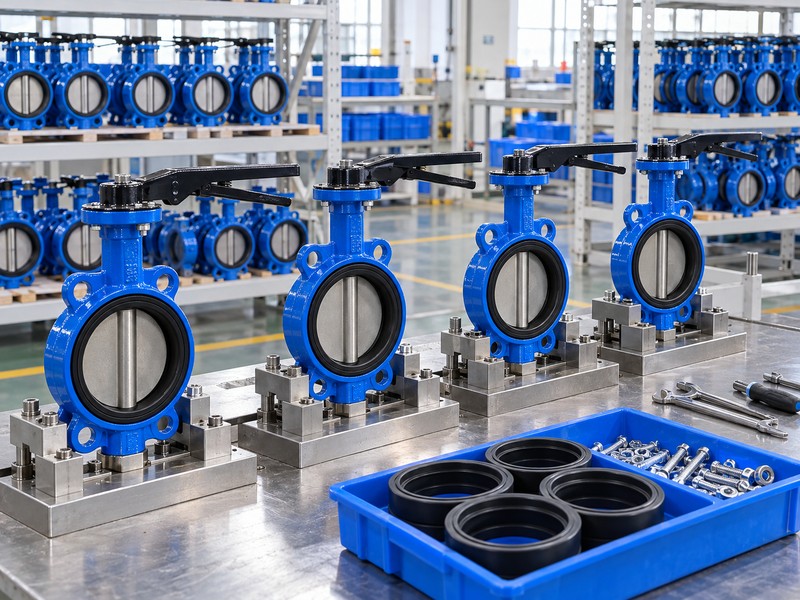
3. How do butterfly valve with positioner factories divide work?
Require butterfly valve with positioner factories to divide component manufacture, mounting, pneumatic assembly, calibration and final acceptance into named responsibilities. Identify purchased devices and external operations alongside the factory’s own processes. Your comparison needs one accountable integration owner for each proposal, including any work assigned to your installer or equipment team.
Where can responsibility gaps distort a quote?
Use the same supplied-scope checklist for every candidate. Follow the integration boundary. Compare who accepts incoming instruments, makes or purchases mounting parts, verifies porting and closes final inspection findings. RUITO’s Shijiazhuang team manages its controlled valve manufacturing and delivery scope; any selected actuator-positioner package still needs explicit integration responsibilities.
- Identify internal, purchased and externally performed operations.
- Assign mounting, air-circuit and calibration responsibility.
- Name the owner of complete-assembly acceptance.
Key takeaway: Compare complete responsibilities and deliverables so an apparent quotation difference does not conceal unassigned integration work.
| Check | What you should confirm |
|---|---|
| Components | Manufacturing and incoming-acceptance responsibilities are stated |
| Integration | Mounting, porting and calibration have named owners |
| Release | One accountable party closes assembly findings |
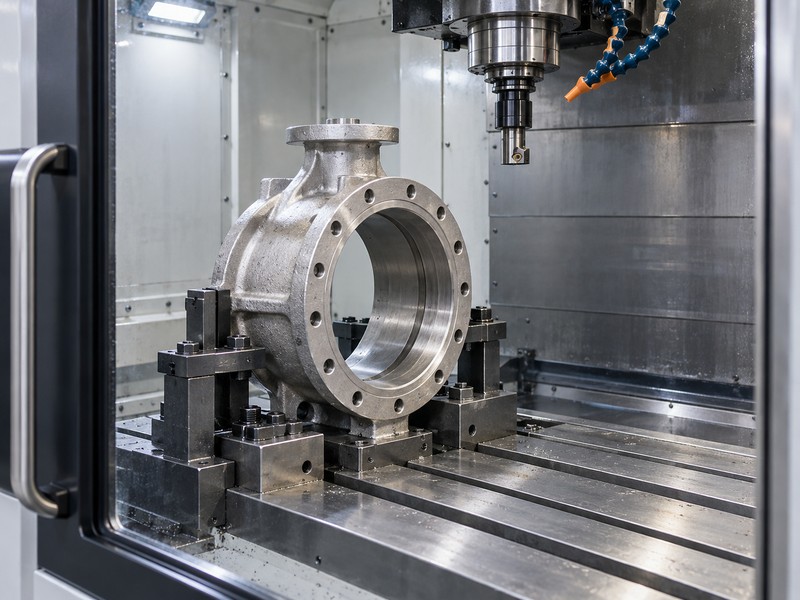
4. How do butterfly valve with positioner factories prove fit?
Require butterfly valve with positioner factories to prove fit against the same installation envelope and critical interface checks. Review flange details, disc clearance, valve-drive coupling, positioner bracket and feedback engagement for each actual sample. A common mounting-hole pattern cannot establish the shaft connection, permissible travel or acceptable loads of the complete assembly.
Which observations should every candidate provide?
Choose the drawing dimensions and movement checks your equipment depends on. Compare measured results. Require sample IDs, drawing revisions and measurement methods, then verify physical disc orientation and feedback engagement through the accepted stroke. If one candidate changes a bracket or coupling, review its dimensions, shaft loading and maintenance access against the same equipment requirements before treating it as an interchangeable interface.
- Use common installation and critical-dimension requirements.
- Compare physical travel and feedback engagement checks.
- Review changed mounting parts against the same envelope.
Key takeaway: Equivalent fit needs observed and measured evidence for the proposed interfaces, including the feedback connection and complete movement envelope.
| Check | What you should confirm |
|---|---|
| Pipe fit | Flange, length and disc-clearance requirements meet scope |
| Drive fit | Couplings and loading suit the actual shafts |
| Feedback | Engagement and observed travel match the definition |
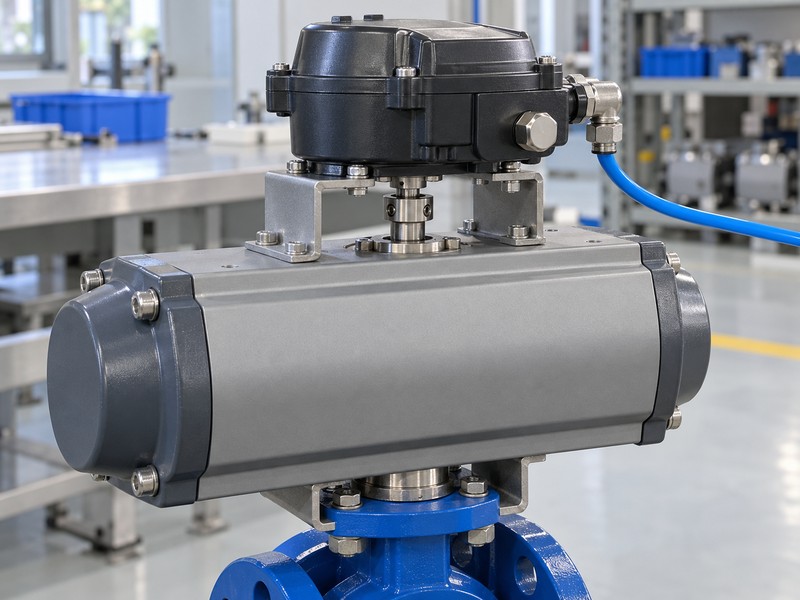
5. How do butterfly valve with positioner factories verify torque?
Ask butterfly valve with positioner factories to verify torque against the same valve duty, minimum available air supply and required stroke. Compare valve demand with actuator output under those conditions, including the applicable spring-return movement. Different nominal actuator sizes cannot provide a fair comparison when the seat, closing differential pressure or supply assumptions differ.
What should your technical reviewer normalize?
Check each sizing record’s fluid, seat, differential pressure and stroke conditions before comparing its result. Follow the return basis. Keep valve working pressure separate from closing differential and inspection pressure, and review coupling and shaft limits alongside actuator output. A springless double-acting actuator has no universal assured endpoint or indefinite hold, so each proposal needs its actual failure-event and accessory definition as well as normal operating torque.
- Use common duty and minimum-supply assumptions.
- Compare demanded and available torque through the stroke.
- Review return conditions and mechanical load limits.
Key takeaway: A fair torque comparison uses the same duty and available supply while preserving the actual actuator and return-action differences.
| Check | What you should confirm |
|---|---|
| Inputs | Fluid, seat and closing differential are comparable |
| Output | Minimum supply and stroke conditions are stated |
| Limits | Return action, shaft and coupling loads are reviewed |
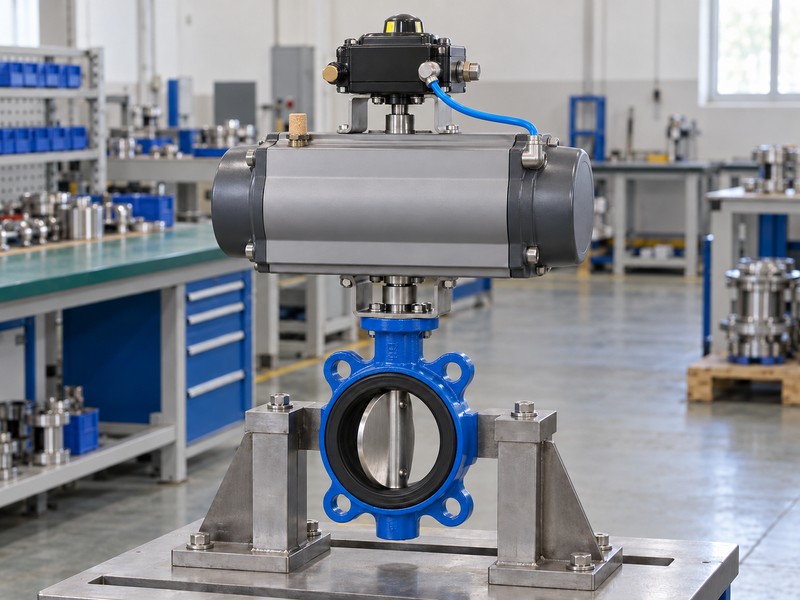
6. How do butterfly valve with positioner factories set commands?
Require butterfly valve with positioner factories to set command mapping, travel direction and feedback functions against one common interface schedule. Match those functions with the selected device documents and actual air circuit. Keep command input, position-feedback output and any electrical supply separate.
Which calibration checks should the benchmark require?
Give candidates common direction and physical-endpoint acceptance requirements, while following each selected manual’s procedure. Authorize isolation and movement before calibration. Automatic calibration can move the valve, and 4 mA normally represents the low command in a configured 4–20 mA input rather than an inherent fault. Retain sample identity, settings and observed shaft positions so the comparison can connect indicated travel with the real assembly.
- Specify command direction and required supported outputs.
- Authorize isolation and movement before calibration routines.
- Compare physical endpoints with retained settings and indication.
Key takeaway: Use common acceptance requirements for commanded movement, with calibration procedures and supported functions verified for each actual device.
| Check | What you should confirm |
|---|---|
| Interface | Inputs, outputs and supplies have defined functions |
| Procedure | Selected manuals and movement authorization govern |
| Calibration | Settings and physical travel connect with sample identity |
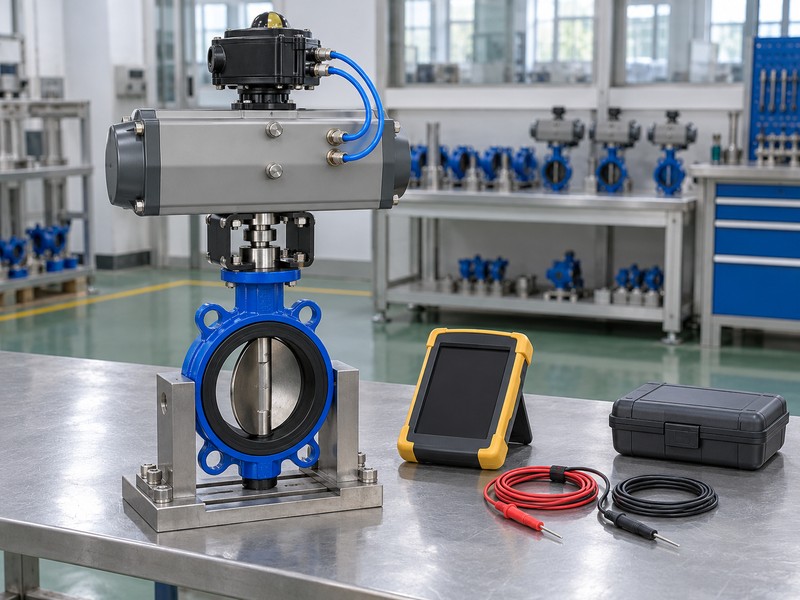
7. How do butterfly valve with positioner factories compare response?
Require butterfly valve with positioner factories to compare response under the same agreed command sequence, supply, load and measurement conditions. Define required travel error, repeatability, deadband or response metrics before reviewing results. Keep bench checks, loaded movement and process performance in separate evidence categories, so your team can identify what each sample demonstrated.
What should each response record explain?
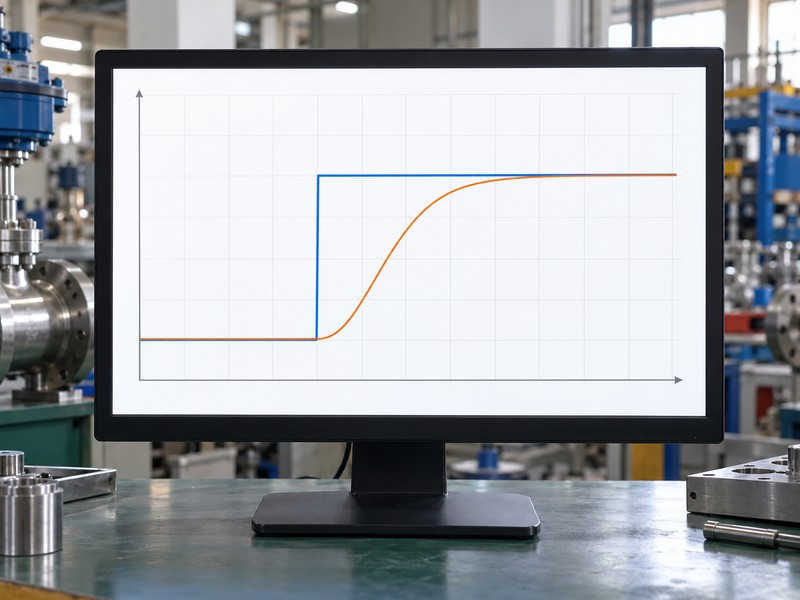
Record command and measured shaft travel together with the sample revision and instruments. Compare the operating conditions. The positioner measures travel; actual flow behaviour needs process measurement and approved hydraulic data, and the conceptual chart here cannot establish either candidate’s performance. Review air loss, signal loss and power loss as separate accepted events, with remaining utilities and observed action identified for the actual circuit.
- Use the same response metrics and test conditions.
- Retain command and shaft traces with sample identities.
- Compare each defined failure event under stated utilities.
Key takeaway: Compare like-for-like response records, then evaluate process and fault evidence against their own stated requirements.
| Check | What you should confirm |
|---|---|
| Response | Agreed metrics use comparable conditions and methods |
| Flow | Process evidence remains separate from shaft travel |
| Events | Air, signal and power loss records retain scope |
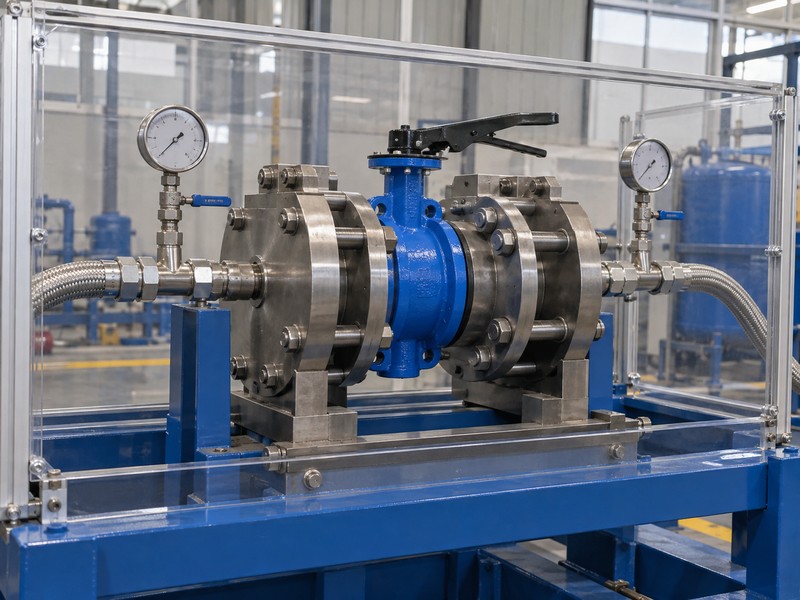
8. What records must butterfly valve with positioner factories show?
Ask butterfly valve with positioner factories to show the same agreed document categories, with results linked to their actual samples and proposed production configurations. Compare drawings, materials, assembly records, calibration and relevant pressure evidence. Each record should answer a defined requirement; a management certificate cannot establish complete-assembly approval or a passed command-response test.
How should you compare inspection and approval scope?
Agree the required test methods and document index before candidates submit acceptance files. Review coverage separately. A contract method such as ISO 5208 addresses its specified pressure-testing conditions and cannot establish control precision. Match required product or accessory approvals with the exact model, materials, sizes and destination, then record whether the evidence covers the actual sample, a supporting type or the delivered batch.
- Use one document index and inspection requirement set.
- Link results with sample and configuration identities.
- Separate system, product, pressure and response evidence.
Key takeaway: Comparable documentation preserves the identity and scope of every result, with required certificate coverage checked separately.
| Check | What you should confirm |
|---|---|
| Index | Required files and review conditions are common |
| Inspection | Methods and results identify their product scope |
| Approval | Exact configuration and destination coverage are checked |
9. How do butterfly valve with positioner factories prove capacity?
Ask butterfly valve with positioner factories to prove capacity with the actual production route, resource allocation and order-specific milestones. Check how the accepted sample definition reaches machining, mounting, pneumatic work and inspection stations. Annual output alone cannot establish a slot for your assembly or show that repeated builds preserve its measured interfaces and configured functions.
What evidence supports repeat production?
Agree the initial production checks and records needed to establish consistency after sample approval. Examine independent build records. Compare dimensions, component variants and required functional results against the accepted revision, with identified instruments and any corrections retained. Review component readiness, resource allocation and witness dependencies separately from international transport, then ask each candidate how a configuration change affects both repeatability and the release schedule.
- Review resources for the complete assembly route.
- Compare identified production builds against the sample baseline.
- Track component, inspection and release dependencies separately.
Key takeaway: Capacity approval should explain how the candidate can build and inspect your accepted configuration consistently within its actual resource plan.
| Check | What you should confirm |
|---|---|
| Resources | Relevant production and inspection slots are identified |
| Consistency | Build records preserve the accepted revision and checks |
| Schedule | Readiness and release dependencies are visible |
10. Can butterfly valve with positioner factories supply alternates?
Approve butterfly valve with positioner factories as alternate sources only after their own identified assemblies pass the agreed acceptance gates. Retain candidate-specific drawings, components, settings and qualified scope with each decision. A common specification supports comparison, but it cannot make unreviewed mounting, porting, material or failure-action differences interchangeable across sources.
How should you control alternate and repeat orders?
Maintain the accepted baseline for each source and identify which differences your equipment team authorized. Follow the changed function. A substitute component or revised assembly needs an impact review and the relevant repeat checks before production release, including calibration review where feedback or settings change. Your reorder should name the accepted revision and spare-part references, with product IDs connecting the delivered batch to its own release evidence.
- Approve each alternate against the same acceptance gates.
- Retain its authorized differences and configuration baseline.
- Review changes and identify repeat-order revisions explicitly.
Key takeaway: An approved alternate remains an identified, verified configuration with controlled differences and its own repeat-supply evidence.
| Check | What you should confirm |
|---|---|
| Alternate | Its own configuration has accepted supporting evidence |
| Change | Affected functions and required verification are reviewed |
| Reorder | Revision, spares and delivered product IDs connect |
Send RUITO your common service sheet, assembly specification and sample acceptance plan. We can review the proposed valve duty, identify deviations and clarify the records needed for a comparable proposal. Contact us before approving the sample baseline, production scope or an alternate configuration.
FAQ
Q1: Can I compare factories using different positioner variants?
Yes, with declared differences. Apply the same functional requirements and acceptance conditions, then retain each variant’s interfaces, supported functions and evidence.
Q2: What’s the best way to keep sample comparisons fair?
Use one controlled brief. Give every candidate the same duty, minimum available supply, installation requirements and agreed test conditions.
Q3: How do I know if a sample represents production?
Check the baseline connection. Match its components and revision with the production route, then review the agreed initial-build and release records.
Q4: Can I approve an alternate from a matching catalogue description?
No. Verify its actual assembly, declared differences and required evidence through the same acceptance gates before treating it as an alternate.
Q5: Can one response graph establish flow-control performance?
No. A command-versus-shaft trace addresses recorded position behaviour; process flow needs its own measurement, hydraulic basis and acceptance evidence.